

Courses
Discover thousands of courses from top institutions and platforms worldwide
Level
Course Type
Duration

YouTube
Learn about the Rules and Regulations of Civil Aviation in India und understand how to maintain wheels, brakes, landing gear system, the fuel and hydraulic system and finally inspect an aircraft in this Aircraft Maintenance course by IIT Kanpur

Swayam
This course deals with the gas power cycles for aircraft propulsion. Therefore different types of aircraft engines, their parts and their performance parameters are discusses. Then the cycle analysis and its different attachment for improvisation are also focused. Further, different parts of aircraft engines like compressor, turbines, combustor and nozzle are discussed in detail.INTENDED AUDIENCE: Undergraduate students of Aerospace and Mechanical engg. (5th semester onwards) and postgraduate students specializing in the thermofluids/Fluid Mechanics/Automobiles; industry personnel associated with aerospace engineering; faculty members associated with Mechanical /Aerospace engg.PREREQUISITES: Basic UG-level Fluid Mechanics and Thermodynamics
Stepik
In this course you will learn about civil aviation in the Russian economy, the role of an engineer of aircraft technical maintenance, and training facilities and benefits at Samara University

YouTube
Explore the fundamentals and advanced concepts of jet aircraft propulsion in this comprehensive 15-hour course. Delve into the development of jet engines, thrust generation mechanisms, and basic performance parameters. Examine various engine types including turbojet, reheat turbojet, multi-spool, turbofan, turbo-prop, and turboshaft engines. Study ideal and real Brayton cycles, jet engine cycles for aircraft propulsion, and analyze engine real cycles. Investigate cycle components and their performances, along with the thermodynamics of compressors and turbines. Learn about axial compressors, including two-dimensional analytical models, cascade analysis, loss and blade performance estimation, and free vortex theory. Gain insights into single and multi-stage characteristics of jet engines through lectures and tutorials.

MIT OpenCourseWare
16.885J offers a holistic view of the aircraft as a system, covering: basic systems engineering; cost and weight estimation; basic aircraft performance; safety and reliability; lifecycle topics; aircraft subsystems; risk analysis and management; and system realization. Small student teams retrospectively analyze an existing aircraft covering: key design drivers and decisions; aircraft attributes and subsystems; and operational experience. Oral and written versions of the case study are delivered. For the Fall 2005 term, the class focuses on a systems engineering analysis of the Space Shuttle. It offers study of both design and operations of the shuttle, with frequent lectures by outside experts. Students choose specific shuttle systems for detailed analysis and develop new subsystem designs using state of the art technology.

edX
This program offers you three MOOCs in the field of aerospace engineering and the opportunity to apply the knowledge gained from these courses to critically analyze the conceptual design of a future electric aircraft. Although electric aircraft hold great promise, their design presents one of the biggest challenges in aviation—primarily due to the integration of batteries, which significantly impact aircraft performance and structural integrity. By following this program, you will explore the following MOOCs: Introduction to Aeronautical Engineering Introduction to Aerospace Structures and Materials Sustainable Aviation: The Route to Climate-Neutral Aviation Finally, through a case study-based assignment, you will apply the knowledge acquired in these courses to evaluate the design and performance of a conceptual electric aircraft. This challenge requires making critical decisions on wing redesign, material selection, and propulsion system integration. You will also assess whether the fuel and emission savings achieved through battery propulsion impose limitations on performance requirements and certification.

Swayam
This course is designed to provide students an understanding of procedure followed in conceptual design of an aircraft, meeting the user-specified design requirements and safety considerations specified by the aircraft certification agencies. The students will be exposed to types of aircraft and their features, requirements capture, configuration selection, initial sizing, determination of aerodynamic coefficients, constraint analysis, types of loads, V-n diagram, Range-Payload diagram, and Life Cycle Cost analysis. A special feature of this course will be a series of tutorials which will run all along the course to give the participants a practical feel of conceptual sizing and of an existing civil transport aircraft. INTENDED AUDIENCE :Aeronautical Engineering, Aerospace Engineering, Mechanical Engineering and Automobile EngineeringPREREQUISITES :Introduction to Aerospace Engineering, Flight MechanicsINDUSTRIES SUPPORT :HAL, NAL, Mahindra Aerospace, ADE, ADA, Airbus, Boeing

YouTube
Explore the fundamentals of aircraft stability and control in this comprehensive course. Delve into static stability, longitudinal control, directional stability, lateral stability, and handling qualities. Learn about stick-free stability, hinge moments, and aircraft equations of motion. Examine small perturbation theory, dimensional stability derivatives, and dynamic stability. Investigate longitudinal modes, short period and phugoid approximations, and stability augmentation systems. Cover lateral-directional motion and gain insights into the history of aviation. Engage with practical problems, numerical exercises, and tutorials to reinforce your understanding of these critical aspects of aeronautical engineering.

Udemy
Aerospace and Aeronautical Engineering: Master the Mechanics of Airplanes - Aerodynamics, Flight Maneuvers, JET Engines What you'll learn: Understand the basics of Aerospace EngineeringIdentify the components of an Aircraft and their purposesUnderstand how Airplanes Fly and their key parametersIdentify the type of Aircraft suited for each missionDefine and propose your own AircraftUnderstand the basics of stability and Aircraft Design The Aerospace Engineering: Aircraft Fundamentals Course is a multidisciplinary course where you will study the aerodynamics, mechanics and engineering of Airplanes and Aircraft. My intention is that you fully understand the main topics regarding Design and Engineering of Aircraft and Airplanes. The structure of the Course is the following: IntroductionClassification of AirplanesAerodynamicsJET EnginesFlight MechanicsPerformanceWe will discuss topics such as Stability, Mechanics and Rigid-Body Physics, Aircraft types and history, Flight Mechanics and Maneuvers, Control Surfaces, TurboFans and much more!The objectives of the Course are for you to understand how Airplanes generate Lift, how the Lift is related to the Drag and how the Drag requires a constant Thrust provided by the engines. Engine types and comparison, which one is more efficient and why? Flight Mechanics and control surfaces and Performance of the Aircraft depending on the Range and Weights. I encourage you to begin this journey to Aerospace Engineering, you won't regret it! If you have any doubts during the course feel free to contact me, I will answer as quick as possible! The course was included in the Udemy for Business. This inclusion is a guarantee of the quality of the content, being provided to companies around the globe. Most reviewed Aerospace Engineering courseon Udemy.

Coursera
ISAE-SUPAERO and ENAC, two academic and research leaders in the field of aviation and aerospace engineering, join to propose a course about the basics of aircraft airworthiness. At the end of this course, you will be able to identify the applicable processes and technical requirements to ensure safety and environmental protection level of an aircraft, from its design to its end-of-life: - identify an acceptable level of safety - describe roles and responsibilities of stakeholders - describe the principles required to ensure that an aircraft design will meet applicable requirements - describe the principles required to ensure that an aircraft remains safe and compliant with environmental requirements when in operation. ISAE-SUPAERO and ENAC are based in Toulouse, France, at the heart of a dynamic civil and military aeronautical ecosystem that shapes the future of global aerospace.

Swayam
This course is designed to understand stability and control aspects of an airplane. This course will also help in creating a background to design an airplane from stability and control aspects.INTENDED AUDIENCE : Core course for UG studentsINDUSTRY SUPPORT : NAL Bangalore, ARDE Pune, ADE Bangalore, ADA Bangalore

YouTube
Explore the principles of aircraft stability and control in this comprehensive course. Delve into static stability, longitudinal control, directional stability, lateral stability, and handling qualities. Learn about equations of motion, small perturbation theory, dynamic stability, and stability augmentation systems. Examine various aspects of aircraft motion, including short period and phugoid approximations, pure pitching motion, and lateral-directional motion. Gain practical insights through numerical problems, flight demonstrations, and tutorials. Conclude with a brief overview of aviation history.

Coursera
Explore the fundamentals of avionics and aircraft systems. Learn about the essential components, functionalities, and maintenance practices that ensure safe and efficient aviation operations. This course is ideal for professionals entering or advancing in the aviation industry. The satisfaction of making a difference to the flights of countless passengers is priceless. You could cherish this by taking up this course and acing the fundamentals of avionics and aircraft systems. Unlock the key concepts of avionics and aircraft systems and propel your career to new heights! This course explores the fundamentals of avionics and aircraft systems, offering insights into their components, functionalities, and maintenance practices. By the end of this course, participants will be equipped with fundamental knowledge to understand safe and efficient aviation operations, making them invaluable assets in the aviation industry. This course is designed for aircraft technicians, engineers, operations personnel, advanced students, industry managers, consultants, and enthusiasts. Whether you’re already involved in aviation or simply passionate about aircraft systems, this course provides valuable insights into avionics and their critical role in modern aviation. No prior aviation experience is required, making it accessible to industry newcomers, students in related fields, and aviation enthusiasts. Additionally, professionals looking to expand their expertise in aircraft avionics and systems will benefit from this comprehensive introduction. By the end of the course, learners will be able to analyze key avionics systems and understand their role in flight, identify essential aircraft systems and their functions, and apply their knowledge to aircraft maintenance and diagnostics, ensuring safe and efficient operations.
YouTube
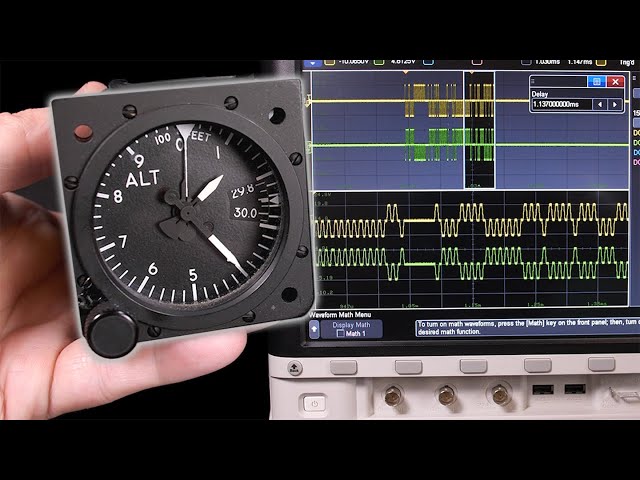
Learn about aircraft communication systems in this 22-minute educational video that explores how various systems within aircraft exchange information and coordinate operations. Discover the technical aspects of avionics communication protocols, data buses, and networking architectures that enable different aircraft components to share critical flight data, navigation information, and system status updates. Examine the evolution from analog to digital communication methods in aviation, including standards like ARINC 429, MIL-STD-1553, and modern Ethernet-based systems. Understand how flight management systems, autopilots, navigation equipment, engine controls, and other onboard systems maintain constant communication to ensure safe and efficient flight operations. Gain insights into the redundancy and reliability requirements that make aircraft communication systems robust enough for critical aviation applications.

YouTube
Explore the journey of trivago's large-scale UI rebuild in this 32-minute conference talk from WeAreDevelopers Conference 2017. Gain insights into the iterative process of establishing a pattern library, introducing a Design System, and rethinking UI development in both code and design. Learn about the adoption of methodologies like Atomic Design, changes in design development workflows, and the CSS refactoring project dubbed "Project Ironman." Discover how trivago improved their front-end stack, modified asset building processes, and reconstructed core UI components of their main product. Understand the challenges faced in code, design, and processes, along with their solutions, supported by real data and business metrics. Benefit from the lessons learned during the Design System integration, including mistakes made and valuable takeaways from this comprehensive UI overhaul experience.

Udemy
Aerospace and Aeronautical Engineering: Master the Systems of Airplanes - Hydraulics, Avionics, Electric, Propulsion What you'll learn: Understand the basics of Aerospace EngineeringIdentify the components of an Aircraft and their purposesUnderstand the role of Aircraft Systems in the operation of AircraftKnow the physics of how Aircraft Systems work The Aerospace Engineering: Aircraft Systems and Avionics Course is a multidisciplinary course where you will study the engineering of the many systems onboard of Airplanes and Aircraft. My intention is that you fully understand the main topics regarding Systems Engineering of Aircraft and Airplanes. The structure of the Course is the following: IntroductionFlight InstrumentsElectrical SystemPneumatic SystemHydraulic SystemAvionicsCockpitWe will discuss topics such as Flight Instruments on Civil Aircraft, the generators used to produce electricity on board, the Key differences between Pneumatic and Hydraulic Systems and more!The objective of the Course are for you tu understand why Aircraft require a specific set of systems in order to operate at normal conditions. Why the hydraulic system is essential to move the control surfaces on the aircraft and how it is linked to the Landing Gear. Cockpit main instruments and their relation to the conditions of flight. I highly recommend having taken the course on Aerospace Engineering: Aircraft Fundamentals and Advanced in order to clearly grasp the concepts mentioned in this course!I encourage you to begin this journey to Aerospace Engineering, you won't regret it! If you have any doubts during the course feel free to contact me, I will answer as quick as possible!

YouTube
Discover how to track aircraft using software-defined radio in this illuminating conference talk. Learn about the ADS-B system used by aircraft worldwide to broadcast their location and other crucial data. Explore the combination of cheap radio dongles and free software that enables the capture of these transmissions. Witness live demonstrations of software-defined radio in action, capturing radio transmissions from local stations and handheld amateur radios. Gain insights into processing captured ADS-B data through event streams and websockets to create real-time aircraft tracking on a map. Experience the practical application of this technology as nearby aircraft are tracked in real-time during the presentation.

Udemy
Learn the fundamental aspects of this complex and standardized industry. What you'll learn: Most important Organizations and Authorities in Commercial aviationEconomics of commercial aviationAircraft manufacturers and current market outlookthe ATA 100 standardAircraft maintenance documentsAircraft manufacturers manualsAircraft Operators manualsCertificates in aviationAircraft maintenance programIntroduction to ircraft leasing Hello! and welcome to our introductory course on the commercial aircraft maintenance industry.We are Southern Engineering and Aviation Services, or SOENAS, for short. We are an aviation consulting company based in Cordoba, Argentina, founded in 2013 by our Director Federico Suarez. Federico has more than 20 years of experience working in commercial aircraft maintenance, both as an employee for several important Latin American Airlines and as a freelance consultant.SOENAS brings together a team of industry experts from the commercial aircraft maintenance industry, and offers tailored management solutions, from supervising heavy maintenance checks for commercial airlines to managing Aircraft lease transitions for Aircraft leasing companies.Over the years our team noticed there are certain subjects we need to teach employees whenever bringing on now people to our team of consultants, even when they're professionals with a background in aviation. This problem is repeated across the industry.Commercial aviation is both highly standardized and regulated at a global level, and the extensive amount of documentation, procedures and agreements that are necessary to guarantee safety in aviation can sometimes seem daunting. Maintenance of commercial aircraft is no exception, and our course aims to help you understand the most important aspects of this complex and unique environment.By taking this course, you will learn the following topics:- The most relevant organizations and authorities that regulate commercial aviation activities around the world.- The economics of civil aviation and historical trends.- The world’s main aircraft manufacturers and a current market outlook.- The ATA 100 Standard for aircraft maintenance manuals.- The most important documents in the field of aircraft maintenance.- The different manuals an aircraft manufacturer must publish to communicate the correct and recommended practices when maintaining an aircraft.- The different manuals an Operator must publish, detailing its procedures to both its employees and the authorities that oversee its operations- The most important Certificates in commercial aviation, for aircraft, repair stations, companies and professionals.- How an aircraft operator, manufacturer and the different organizations and authorities work together to ensure the proper maintenance of an aircraft, through an Aircraft Maintenance Program.- Finally, a brief Introduction to Aircraft Leasing, the industry, and why it is an increasingly popular way for operators to access aircraft.Our team was worked to translate many years of our experience in the field into comprehensive courses that are easy to take in yet highly informative, no matter your background. You can expect:- High quality, engaging class animation- Pre-scripted content- Clear, simple explanations that are easy to understand- Knowledge assessments after every lecture- Real life examples of documents and certificates you may encounter in the field.

YouTube
Explore the data-driven gameplay architecture behind Frostpunk in this 44-minute GDC 2019 conference talk. Delve into 11 bit studios' in-house technology as Aleksander Kauch discusses how their approach influenced the game's gameplay code. Gain insights into the development process of this critically acclaimed city-building survival game, focusing on the technical aspects that power its immersive gameplay mechanics. Learn about the challenges and solutions in creating a content-fueled system that allows for complex interactions and decision-making within the game's harsh post-apocalyptic world.

YouTube
Explore the fascinating world of supernova neutrinos in this 41-minute conference talk by George Fuller from UCSD, part of the Interdisciplinary Developments in Neutrino Physics Conference. Delve into the pre-collapse evolution, collapse in-fall, shock propagation and stall, neutrino re-heating, and neutrino signal detection. Examine both classical and coherent approaches, as well as full quantum solutions using Quantum Kinetic Equations (QKE). Gain insights into the early universe and the interdisciplinary nature of modern neutrino physics, including connections to gravitational waves, cosmology, and astrophysics. Enhance your understanding of neutrino detectors as astrophysical observatories and the latest developments in neutrino cross-sections and sterile neutrino searches.