

Courses
Discover thousands of courses from top institutions and platforms worldwide
Level
Course Type
Duration

YouTube
Explore laboratory accreditations and Laboratory Information Management Systems (LIMS) in this informative 28-minute video from Datamine's Laboratory Symposium 2024. Join David Eardley-Harris, CCLAS Product Manager at Datamine, as he shares his expertise on quality systems and quality control within laboratories. Gain insights from a professional Analytical Chemist with extensive experience in mineral analysis and a passion for computerization and automation. Learn about the evolution of laboratory systems since the 1980s and discover how LIMS, particularly the CCLAS Products, have transformed laboratory operations. Benefit from David's 40+ years of experience in software design, development, installation, and use of laboratory systems to enhance your understanding of modern laboratory management practices.
YouTube
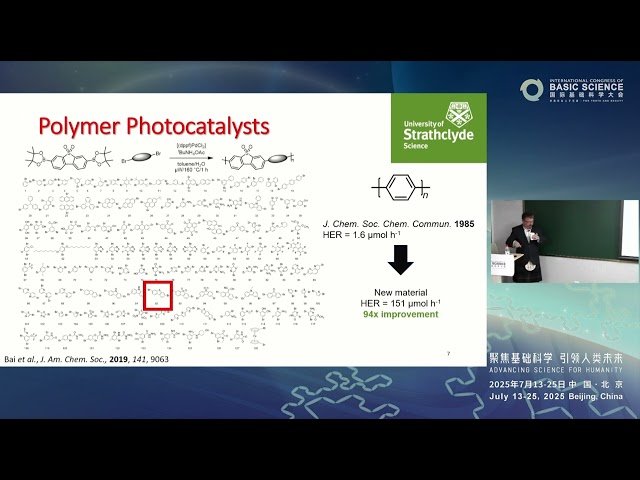
Explore the cutting-edge intersection of robotics and chemistry in this 39-minute conference talk from BIMSA's ICBS2025 event. Discover how mobile robotic systems are revolutionizing chemical research and laboratory automation through autonomous experimentation capabilities. Learn about the design principles, implementation challenges, and practical applications of robotic chemists that can navigate laboratory environments independently. Examine the technological innovations enabling robots to perform complex chemical synthesis, analysis, and discovery tasks with minimal human intervention. Understand the potential impact of mobile robotic chemists on accelerating scientific discovery, improving experimental reproducibility, and transforming traditional laboratory workflows in chemical research and development.

YouTube
Explore the life and legacy of nineteenth century chemist Henry Enfield Roscoe through a detailed biographical lecture presented by Peter Morris, drawing from his forthcoming collaborative biography with Peter Reed. Delve into Roscoe's significant contributions to chemistry, his campaigning efforts, and his impact on the scientific community during the Victorian era. Learn about the historical context and scientific developments of the period while gaining insights into the personal and professional journey of this influential chemist.

Study.com
Review our Significant Chemists Study Guide course to explore the contributions of the world's most important chemists. The course's simple lessons and self-assessments are great options for students who need to review significant chemists for homework, class assignments or upcoming exams.

XuetangX
Analytical chemistry is a basic specialized course for chemistry and related majors. Through the study of this course, students are expected to systematically master the basic principles, basic theories, basic concepts, basic knowledge, basic operations, and basic skills for obtaining the chemical composition, content, and status information of substances, and also establish a strict concept for understanding the "quantity" of substances. This course helps students to develop a scientific attitude of seeking truth from the facts and a rigorous scientific style, improve the ability to analyze and solve problems, and lay a solid foundation for the core curriculum of related majors and their major elective courses. At the same time, these knowledge and abilities will be very helpful for scientific research and production practice in many disciplines, such as chemistry and chemical engineering, environmental ecology, materials science, biomedicine, etc.
XuetangX
The world around us is made up of ever-changing substances.The discovery and detection of these substances require the involvement of analytical chemistry.It's known as the eyes of science and technology.Analytical chemistry is an important branch of chemistry.The main task is to identify the chemical composition, content, structure and other aspects of substances.Its application range is almost involved national economy, national defense construction, resource development and all aspects of human society, including clothing, food, housing and transportation.Analytical chemistry plays a key role in many fields Including exploration, development and refining of various resources such as coal, oil, natural gas and nuclear materials. The unveiling of mysteries including origin of life, life process, disease and heredity, design and characterization of new materials.This discipline has made tremendous contributions to the progress of human civilization with the rapid development of social economy.Global environmental pollution, medical diseases, food safety and other problems are increasingly serious.Analytical chemistry is steadily advancing along a path that is both challenging and highly promising.

Swayam
It will give the opportunity to study and use specialized instruments and specific methods to separate, identify, and quantify the unknown substance. Spectroscopic technique will consist of applications of atomic absorption spectroscopy, atomic emission spectroscopy, ultraviolet-visible spectroscopy, X-ray fluorescence spectroscopy, infrared spectroscopy, Raman spectroscopy and Mössbauer spectroscopy. In electrochemical methods cyclic voltammetry, coulometry and amperometry will be discussed. The course has applications that include forensic science, analysis of biological samples, clinical analysis, environmental analysis, and materials analysis.INTENDED AUDIENCE :B. Tech.B. E.M. Sc.B. Engg.PRE-REQUISITES : H. S. +2 levelINDUSTRY SUPPORT :Hindustan Lever Ltd, Ranbaxy, Shell, ONGC, NTPC, SAIL, CIL, Waters, Environment protection agencies, PHE Dept.

XuetangX
Analytical chemistry is an essential fundamental course for students of chemistry and related majors in colleges and universities. Analytical chemistry is a science to obtain information about the composition and properties of matter based on the development and application of various theories, methods, instruments and strategies. Analytical Chemistry is closely related to life sciences, material science, informational science, environmental science, resource science and et al., and has wide applications in areas related to people's daily lives, such as medical and healthcare, food safety, environmental protection, entry-exit inspection and quarantine, forensic identification and et al.The course includes quantitative analysis, instrumental analysis and related experiments. The theory and methodology of quantitative analysis constitute the basis of analytical chemistry, which includes titration analysis and gravimetric analysis. The titration analysis specifically includes acid-base titration, complexometric titration, redox titration and precipitation titration. Instrumental analysis includes spectrophotometry, potentiometric analysis, atomic spectrometry and chromatography.Through the study of this course, students are required to master the basic theory of analytical chemistry, basic calculation and quantitative analysis methods in a comprehensive and systematic way, learn to scientifically process analytical experimental data and evaluate analytical methods, and apply the theory to solve practical problems. Students are expected to master the basic skill in scientific research and gain rigorous scientific attitude and realistic style.

XuetangX
Analytical chemistry as one of the four basic chemistries is an academic discipline, responsible for characterizing the composition of natural and artificial materials, both qualitatively (what is present) and quantitatively (how much is present). That is, analytical chemistry is the science of inventing and applying the concepts, principles and strategies for measuring the characteristics of chemical systems and species. It has been widely applied in many research fields including life science, material science, environmental science and energy. The teaching emphases and difficulties of this course focus on the four principles of titration analysis and the processing of errors and analytical data. Through the system study of analytical chemistry, it can make students deeply understand the theories of chemical analysis and possess basic experimental skills as well as accurately build the concept of "quantity". Furthermore, the course will train students to develop the capacities of preliminary selecting suitable analytical method, correctly judging and expressing the analytical results, and even solving practical problems in different cases and scientific problems. In conclusion, this course lays a solid foundation for learning subsequent professional courses.

YouTube
Explore a historical lecture examining the complex evolution of pharmacy's professional identity in Britain and its relationship with chemistry and medicine. Delve into the fascinating question of why pharmacists can be called chemists while chemists cannot be called pharmacists, tracing back to 19th-century professionalization efforts. Learn about the influence of chemical discoveries in the late 18th century and how forward-thinking chemists and druggists recognized the importance of chemical knowledge in pharmacy education. Discover the French chemist Antoine François Fourcroy's perspective on pharmacy's subordinate position to chemistry, and how British doctors like Anthony Todd Thomson supported this view. Examine the founding of the Pharmaceutical Society of Great Britain in 1841 and its aspirations to establish pharmacy as a fourth branch of medicine. Understand the significant impact of the 1852 Pharmacy Act, which created a statutory register of pharmaceutical chemists, and how subsequent legislation, including the 1858 Medical Act and 1868 Pharmacy and Poisons Act, shaped the professional boundaries and protected titles within the field.

edX
Analytical chemistry takes a prominent position among all fields of experimental sciences, ranging from fundamental studies of Nature to industrial or clinical applications.Analytical chemistry covers the fundamentals of experimental and analytical methods and the role of chemistry around us. This course introduces the principles of analytical chemistry and provides how these principles are applied in chemistry and related disciplines - especially in life sciences, environmental sciences and geochemistry. This course, regardless of your background, will teach you fundamental analytical concepts and their practical applications. By the end of the course, you will deeply understand analytical methodologies in a systematic manner. Finally, this course will help you develop critical, independent reasoning that you can apply to new problems in chemistry and its related fields. This course is for anyone interested in analytical sciences.

YouTube
Explore a comprehensive series of video lectures from Wake Technical Community College's Business Analytics department covering essential topics in applied analytical programming. Dive into statistical concepts such as T-Distribution, logistic regression, hypothesis testing, correlation, and probability distributions. Learn about variable types, coding techniques, data visualization, and measures of central tendency and dispersion. Gain practical knowledge in statistical error analysis, the Central Limit Theorem, and basic probability. Enhance your analytical skills through this 90-minute playlist designed for students pursuing business analytics education.

DataCamp
Learn how to translate business questions to well-formed analytical questions and select the right analytical solutions. Learn to Solve Business Questions Using Data Business questions often come in different forms depending on the specific context and purpose. What is the best pricing strategy for our new product? How can we improve our customer retention rates? Translating those questions into well-formed analytical questions is essential to solving the business question using data. This exciting non-technical course will equip you with the skills you need to make a business impact through efficient translation to analytical questions and the selection of the appropriate analytical solutions! Discover the Difference Between Business and Analytical Questions You’ll start by learning the workflow for delivering valuable analytical solutions and the main challenges faced during this process. You’ll also learn to distinguish business questions from analytical questions. Next, you’ll discover best practices and techniques to understand the business problem through efficient communication. You’ll also discover techniques to translate the business question into a well-formed analytical question. Then, you’ll learn the various analytical solutions available for each type of question as well as techniques to select the right solution for the question. Improve Business Outcomes with Well-Formed Analytical Questions You’ll finish by deep diving into real applications of analytical questions and solutions in various industries. You’ll discover the different business problems companies face in industries such as e-commerce, automotive, healthcare, and banking and how these problems are translated into analytical problems and solutions.

XuetangX
This course requires students to systematically master the basic principles of analytical chemistry and be able to analyze and solve practical problems in analytical chemistry. The task of this course is to systematically introduce chemical analysis and instrumental analysis, mainly including basic knowledge, principles, and methods of volumetric analysis, gravimetric analysis, and common separation methods; photochemical analysis, electrochemical analysis, and chromatographic analysis. The teaching objectives of this course are achieved through lectures, discussions, tutoring and Q&A, self-study, and other teaching activities. Course characteristics: close connection with practice, enabling students to firmly grasp the basic knowledge of analytical chemistry.

Swayam
This course will start with Basic principles of NMR, walk through the analysis of spectra and demonstrate the application of multidimensional NMR spectroscopy in Chemistry and structural Biology. INTENDED AUDIENCE: M. Sc./ PhD and Scientists working in Pharma and Biophrma IndustriesPREREQUISITES: Under graduate level understanding of Physics and Mathematics INDUSTRY SUPPORT: Biocon, Wockhardt, Aurobindo Biopharma etc

Udacity
Learn how to prepare data to ensure the efficacy of your analysis while improving fluency in Alteryx.

Study.com
If you need to improve your analytical chemistry knowledge for educational or professional purposes, look no further than this convenient help and review course. The course's engaging lessons and self-assessment quizzes can help you quickly study for exams and retain essential analytical chemistry concepts.

XuetangX
"Analytical Chemistry for Engineering" is a very practical chemistry course for obtaining information of the substance composition, content and structure of the material world. It provides the basic knowledge for monitoring production process, controlling product quality, and also assisting scientific research. This course is therefore applicable to a wide range of disciplines, such as chemistry, chemical engineering, metallurgical engineering, mineralogy, materials science, environmental science, life science, medicine, etc.This online course features the application-oriented principle to make the knowledge system more suitable for the modern production requirements and future technological development trends. Therefore, the content of chemical analysis is simplified and integrated, and summarized into three types of instrumental analysis and presented in a modular form. In order to better study this course, the content of the course is divided into three parts: compulsory, elective and extension. The compulsory part meets the requirements of the training program, and teaches the complete principles of the analytical chemistry; the elective content focuses on the in-depth exploration of the principles and also takes into account of the differences in disciplines; the extension part introduces relevant knowledge into scientific research to strengthen the application of frontier fields. Besides the above features, we also recorded some live experiment videos for learners, and provided numerous in-class exercises, unit tests and course examinations.

Coursera
This is a self-paced lab that takes place in the Google Cloud console. Learn how to create deeper analytical insights from soccer event data using BigQuery. BigQuery can be used to perform more sophisticated data analysis. In this lab, you will analyze soccer event data to achieve real insight from the dataset.

Coursera
This course is part 2 of the specialization Advanced Spacecraft Dynamics and Control. It assumes you have a strong foundation in spacecraft dynamics and control, including particle dynamics, rotating frame, rigid body kinematics and kinetics. The focus of the course is to understand key analytical mechanics methodologies to develop equations of motion in an algebraically efficient manner. The course starts by first developing D’Alembert’s principle and how the associated virtual work and virtual displacement concepts allows us to ignore non-working force terms. Unconstrained systems and holonomic constrains are investigated. Next Kane's equations and the virtual power form of D'Alembert's equations are briefly reviewed for particles. Next Lagrange’s equations are developed which still assume a finite set of generalized coordinates, but can be applied to multiple rigid bodies as well. Lagrange multipliers are employed to apply Pfaffian constraints. Finally, Hamilton’s extended principle is developed to allow us to consider a dynamical system with flexible components. Here there are an infinite number of degrees of freedom. The course focuses on how to develop spacecraft related partial differential equations, but does not study numerically solving them. The course ends comparing the presented assumed mode methods to classical final element solutions. The material covered is taking from the book "Analytical Mechanics of Space Systems" available at https://arc.aiaa.org/doi/book/10.2514/4.105210.