

Courses
Discover thousands of courses from top institutions and platforms worldwide
Level
Course Type
Duration

YouTube
Explore a series of support videos for a Forensic Archaeology and Anthropology MOOC, covering essential topics such as creating an osteological profile, determining the sex of a skeleton, estimating age at death for infants, juveniles, and adults, calculating stature, and identifying skeletal pathology. Gain valuable insights into the fundamental techniques used in forensic analysis through these comprehensive instructional videos.

YouTube
Anthropology is the systematic study of humanity, with the goal of understanding our evolutionary origins, our distinctiveness as a species, and the great diversity in our forms of social existence across the world and through time.

Coursera
This course is the fourth and final course in a series on the discipline of Archaeology. It is intended for learners at all stages, including advanced high school, college students, or life-long learners. Basic information about Archaeology and its history are presented in the first introductory course. The second course teaches common scientific methods used in archaeological research. The third course focuses on forms of interpretation to reconstruct various aspects of the past through archaeological approaches. This final course covers contemporary social issues that archaeologists engage with.

Coursera
This course is the second in a series on the discipline of Archaeology. It is intended for learners at all stages, including advanced high school, college students, or life-long learners. Basic information about Archaeology and its history are presented in the previous introductory course. This course covers scientific methods commonly used by archaeologists. The following two courses teach about forms of interpretation and contemporary social issues that archaeologists engage with.

YouTube
Explore a comprehensive course on Anthropology for UPSC Paper-I, covering essential topics from the meaning and scope of anthropology to its applications. Delve into human evolution, primatology, prehistoric archaeology, cultural anthropology, social institutions, economic and political organization, religion, anthropological theories, linguistics, human genetics, and more. Gain insights into biological and cultural factors influencing human development, demographic theories, and the relevance of anthropology in modern contexts. Enhance your understanding through detailed explanations of key concepts, theories, and methodologies crucial for UPSC exam preparation.
YouTube
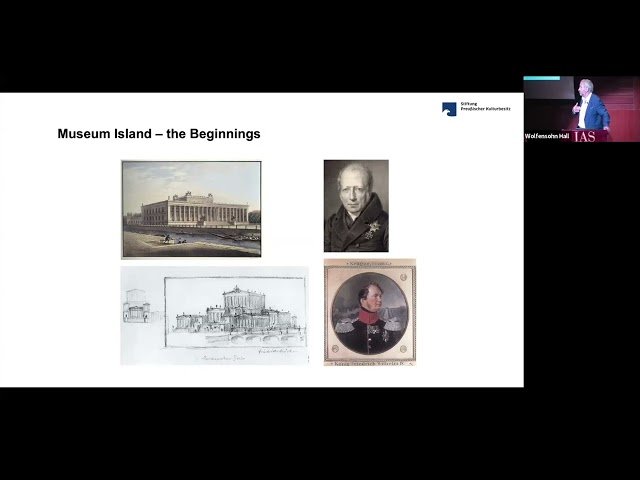
Attend this S.T. Lee Lecture by Hermann Parzinger, President of the Stiftung Preussischer Kulturbesitz, as he discusses "Postcolonial provenance research, restitution and collaborative work in Ethnography, Anthropology and Archaeology – the Berlin approach." The 1 hour 39 minute talk at the Institute for Advanced Study explores how Berlin institutions are addressing colonial legacies in museum collections through provenance research, restitution efforts, and collaborative international partnerships. Following the main presentation, engage with a panel discussion featuring experts Ioannis Mylonopoulos (Columbia University), C. Brian Rose (University of Pennsylvania), and Dr. Barbara Rüschoff Parzinger (Regional Association of Westphalia-Lippe), who will expand on themes of cultural heritage, archaeological ethics, and museum practices in a postcolonial context.

YouTube
Explore a comprehensive course on Physical Anthropology designed for UPSC preparation. Delve into the biological and cultural factors of human evolution, theories of organic evolution, and primate characteristics. Examine fossil evidence of early hominids, human genetics, and genetic polymorphism. Investigate chromosomal aberrations, racial concepts, ecological anthropology, and epidemiology. Study human growth, development, and demographic theories. Gain insights into fertility patterns and the factors influencing population dynamics. Cover essential topics from Paper-I, including detailed explorations of evolutionary trends, primate taxonomy, and comparative anatomy of humans and apes.

StraighterLine
In online Cultural Anthropology, you’ll explore human diversity across multiple spectrums: economic, political, social and cultural. You’ll learn how to understand people in terms of race and ethnicity, marriage and family, gender and sexuality, and religion and belief systems. And how to apply this understanding to the connection between power, authority, and politics and relate them to social control, nationalism, external relations and globalization. You’ll also study the science of anthropology, and familiarize yourself with its methods, ethics and history.

YouTube
Explore the evolution of Ruby programming in this 30-minute conference talk from RailsConf 2022. Dive into historical Ruby code, examining works from over a decade ago to uncover interesting gems from the past. Discover which code older than 12 years still runs in Ruby 3.1, identify changing programming idioms, and learn how to set up an environment for running Ruby 1.8 code from around 2008 on modern machines. Join Nick Schwaderer on this archaeological journey through Ruby's history, inspired by _why's 2009 tweet about the transient nature of programming works.

YouTube
Explore the foundations of archaeological anthropology in this comprehensive lecture series covering prehistoric archaeology, dating methods, and cultural evolution. Delve into the intricacies of relative and absolute dating techniques, and trace human development through the Stone Age, Chalcolithic period, Copper-Bronze Age, and Iron Age. Gain valuable insights into the chronological progression of human cultures and technological advancements, essential for understanding the field of anthropology and preparing for UPSC examinations.

YouTube
Explore the fundamental approaches anthropologists use to study symbols in this undergraduate lecture series. Delve into key theories from influential thinkers like Levi-Strauss, Freud, Durkheim, and Victor Turner. Examine the structure of myths, evaluate anthropological theories, and analyze the limitations of symbolic anthropology. Investigate multivocal symbols through case studies such as the Virgin of Guadalupe and the Selamatan ritual meal. Gain insights into the relationship between symbols and society, religion as a cultural system, and the concept of key symbols. Engage with topics including hair symbolism, Abu Lughod's concepts of Hasham and Tahashsham, and Mary Douglas' contributions to symbolic anthropology.

Study.com
If you're looking for new ways to teach your students about anthropology, try our interesting textbook replacement course. Our course costs less than a traditional textbook and gives your students a mobile-friendly, flexible resource they can study at any time on any mobile device.

Study.com
Use this self-paced course to explore the field of anthropology. You can study these short lessons and quizzes at any time to catch up on information you missed in class, study for upcoming exams, bring up your grades or check your understanding of fundamental anthropology topics.

Study.com
Review this mobile-friendly cultural anthropology course to refresh your knowledge of the field, prepare for an exam or get help with your homework. The course's engaging lessons and self-assessment quizzes enable you to quickly reinforce your understanding of key cultural anthropology terms and concepts.

YouTube
Explore the fascinating world of DNA in genealogy and forensics with Professor Turi King, renowned geneticist and BBC's favorite genealogist. Delve into the rise of DNA usage in tracing family histories and solving criminal cases, including the groundbreaking identification of King Richard III's remains. Learn about the first immigration case involving DNA evidence and gain insights into the revolutionary impact of genetic research on modern science. Discover how DNA analysis is transforming fields such as disease research, forensics, and animal conservation. Gain a unique perspective on the intersection of genetics with history, archaeology, anthropology, and forensics from an expert who has conducted pioneering research in genetic genealogy for over two decades.

edX
Join me for an introductory course on biblical archaeology of ancient Israel and Judah during the Iron Age (ca. 1200-586 BCE). In this course, we will use cutting-edge, inter-disciplinary archaeological research to explore the fascinating field of archaeology, the history of this era, and it's "players"(e.g. Israel, Judah, Philistine, Mesopotamia, Phoenicia, Aram, Moab, Edom, ancient Egypt etc.). Special focus will be given to complex relationship between archaeology, history and the bible, and how modern research interfaces between these different, and at times conflicting, sources. In particular, how can archaeology be used to understand the biblical text - and vice a versa. The course will combine short video lectures with extensive illustrative materials, on-site discussions at relevant archaeological locations, display 3D images and discuss relevant archaeological finds. In addition, it includes interviews with leading researchers in the field, both to discuss specific aspects, finds and sites, as well as to present different sides of debated issues.

YouTube
Embark on a comprehensive 16-hour introduction to anthropology course that explores human problems and potential solutions through a global perspective. Examine the interconnections between human biology, evolution, archaeology, history, culture, and language. Delve into topics such as climate crisis, healthcare, racial injustice, inequality, and refugee issues while seeking to understand human potential and sustainable living. Learn about primate evolution, bipedalism, stone tools, human lineages, race, gender, and migration. Investigate the history of anthropology, ethnographic fieldwork, and the anthropological concept of culture. Explore diverse subjects including warfare, agriculture, religion, ritual, economy, politics, kinship, and marriage. Gain insights into how anthropology can help address contemporary global challenges and foster a more inclusive world.

YouTube
Explore the fundamental concepts, scope, and development of anthropology in this comprehensive 30-minute video designed for UPSC preparation. Delve into the relationships between anthropology and other disciplines, and gain a thorough understanding of the main branches of anthropology, including their scope and relevance. Learn essential information to excel in Paper-I, covering topics 1.1, 1.2, and 1.3 of the UPSC syllabus.

YouTube
Delve into a comprehensive 10-hour course on Paper-II Anthropology, specifically designed for UPSC preparation. Explore the evolution of Indian culture and civilization, from prehistoric Palaeolithic and Mesolithic periods to Neolithic and Chalcolithic eras. Examine the Indus Civilization and tribal culture contributions. Study palaeo-anthropological evidence from Siwaliks and Narmada, including Ramapithecus, Sivapithecus, and Narmada Man. Investigate ethno-archaeology in India, demographic profiles, and linguistic elements. Analyze traditional Indian social systems, including Varnashrama, Purushartha, Karma, Rina, and rebirth concepts. Gain in-depth knowledge of the caste system, dominant castes, caste mobility, and the tribe-caste continuum. Enhance your understanding with value-added content on folk-urban continuums and practice with UPSC previous year questions throughout the course.

YouTube
Explore a diverse range of anthropological topics through a series of engaging lectures and discussions. Delve into the role of anthropology in understanding and preventing conflict, examine the cultural significance of psychedelics, and investigate the intersection of anthropology with futuristic concepts like space aliens and time travel. Gain insights into power dynamics through fieldwork among children, analyze religious tensions in postwar Sri Lanka, and discover the unique perspective of Caribbean transinsularism. Investigate the anthropological approach to deterring war and promoting peace, and examine the causes and consequences of armed conflicts. Reflect on the past, present, and future of anthropology as a discipline, and explore the enduring impact of influential anthropologist F. G. Bailey's work on the field.