

Courses
Discover thousands of courses from top institutions and platforms worldwide
Level
Course Type
Duration
YouTube
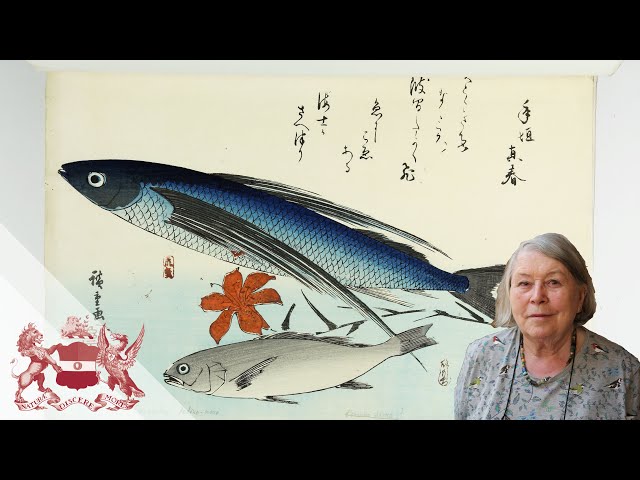
Explore the fascinating world of zoologist Albert K. L. Günther's 42 scrapbooks in this 39-minute Linnean Lens presentation. Delve into a unique collection of geographically and taxonomically organized albums containing original drawings, historical prints, early photographs, and book cutouts. Discover rare treasures such as Hokusai woodblock prints, illustrations from George Edwards' works, and depictions of extinct species like the dodo, giant moa, and great auk. Learn how Günther, former Keeper of Zoology at London's Natural History Museum, utilized these albums as workbooks. Join Linnean Society Honorary Archivist Gina Douglas as she unveils the hidden gems within these remarkable scrapbooks, offering a glimpse into the meticulous documentation of 19th-century zoology and natural history.

YouTube
Explore a demonstration of Archivista using The Update Framework (TUF) to store policy and build trust in verifying in-toto attestations. Learn how to verify the production process and tools used in software development. This 26-minute conference talk, presented by Kairo de Araujo at the CNCF Security Hub Unconference, offers insights into enhancing software supply chain security through advanced verification techniques.

YouTube
Explore the fascinating world of floppy disks in this engaging 11-minute conference talk from !!Con 2021. Dive into the history, construction, and magnetic storage principles of these iconic devices that have become synonymous with the "Save" icon. Discover how these relics of computing history can be repurposed for modern art projects. Learn from systems programmer and aspiring archivist wilkie as they share their passion for these obsolete yet culturally significant storage mediums. Gain insights into the evolution of data storage and the lasting impact of floppy disks on digital culture.

YouTube
Explore the vital work of preserving Nigerian history through digital archiving in this TEDxUCHIbadan talk by Fu'ad Lawal, Founder and Chief Archivist at Archivi.ng. Discover how Lawal's organization is making Nigeria's past accessible by digitizing old newspapers and democratizing historical information. Learn about the importance of preserving cultural heritage and the impact of digital archives on understanding a nation's history. Gain insights into the intersection of media, technology, and historical preservation from Lawal's decade-long experience in digital media companies and startups. Understand the significance of creating easily accessible digital archives and their potential to illuminate Nigeria's rich past for future generations.

YouTube
Explore the captivating history and conservation of Frank Nicholls' 18th-century botanical notebooks in this 59-minute video presentation by the Linnean Society. Discover detailed descriptions and beautiful pen and ink drawings of British plants as archivist Liz McGow uncovers the manuscript's turbulent past. Learn about the extensive conservation efforts undertaken by conservator Janet Ashdown to salvage this valuable document, which narrowly escaped destruction during the Blitz. Gain insights into the work of the Linnean Society, founded in 1788 and named after Swedish naturalist Carl Linnaeus, as they continue to educate and inspire people about nature and its interactions through their collections, programs, and publications.
CourseHorse
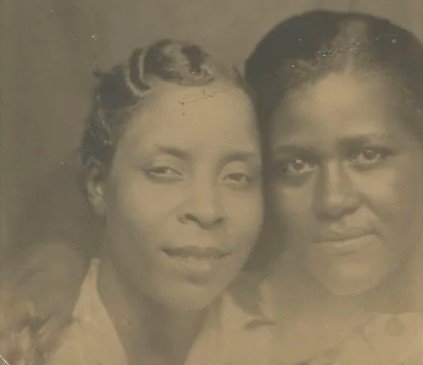
This online course explores Black queer life, identity and history through an intimate engagement with artist and archivist, Alanna Fields' ever-growing archive of found and sourced vernacular photographs spanning the 1900s-1990s. Through photographic excavation the class will examine early self portraiture, photo booth portraits, playbill images, military portraits, and scenes depicting Black queer everyday life and love. Each class explores another layer of history untold and unseen as participants traverse through the archive and contextualize these images as a means of cultural analysis on Black queering in front of and behind the camera.The course will culminate in the creation of original pieces utilizing the source material in the format of each participant's choosing. Participants will leave the course with a deeper, visceral picture of early Black queer life in the U.S.

YouTube
Explore the journey of the Australian Society of Archivists' flagship journal Archives and Manuscripts as it transitions to self-managed open access publishing in this 29-minute conference talk from linux.conf.au 2022. Learn about the journal's history, the society's governance structure, and the achievements and challenges faced during this significant shift. Gain insights into the GLAM sector's publishing landscape and participate in a discussion on knowledge sharing and transferable experiences. Discover the implications of moving from traditional publishing models to gold open access, and understand the complexities involved in managing academic journals in the digital age.

YouTube
Explore a 26-minute conference talk from DockerCon 2023 focusing on supply chain security in enterprise environments. Dive into the challenges posed by the extensive use of open source software, where even small systems can have thousands of dependencies, and large enterprises track millions of components. Discover how Lockheed Martin is leveraging open source solutions like the Sigstore product suite and TestifySec's Archivista to enhance software supply chain transparency and accountability. Learn about programmatic evidence generation for software builds, including dependency provenance. Gain insights from Patrick Kwiatkowski, a Software Engineer at Lockheed Martin, on implementing open source solutions to address supply chain security challenges in large-scale enterprise settings.

YouTube
Explore secure software development practices in this 45-minute conference talk from the Linux Foundation. Learn how to verify artifact integrity throughout the software supply chain using in-toto and OPA Gatekeeper. Discover the benefits of automating development processes from 'git commit' to 'kubectl apply' while addressing security concerns. Examine the risks associated with various automation implementations and understand the importance of maintaining consistency and security. Gain insights into in-toto's pioneering frameworks and tools, including subprojects Witness and Archivista, designed to secure software development, building, testing, and packaging. Follow an end-to-end demonstration of securely developing container images for Kubernetes using these tools in conjunction with Open Policy Agent's admission controller, Gatekeeper.

edX
As primary sources of information are more frequently digitized and available online than ever before, how can we use those sources to ask new questions? How did Chinese families organize themselves and their landscapes in China’s past? How did African slaves from different cultures form communities in the Americas? What influences informed the creation and evolution of Broadway musicals? How can I understand or interpret 1,000 books all at once? How can I create a visualization that my students can interact with? The answers to these questions can be explored using a wide variety of digital tools, methods, and sources. As museums, libraries, archives and other institutions have digitized collections and artifacts, new tools and standards have been developed that turn those materials into machine-readable data. Optical Character Recognition (OCR) and the Text Encoding Initiative (TEI), for example, have enabled humanities researchers to processvastamounts of textual data. However, these advances are not limited just to text. Sound, images, and video have all been subject to these new forms of research. This course will show you how to manage the many aspects of digital humanities research and scholarship. Whether you are a student or scholar, librarian or archivist, museum curator or public historian — or just plain curious — this course will help you bring your area of study or interest to new life using digital tools.

YouTube
Explore the world of digital libraries in this informative 56-minute lecture by Tim DiLauro, Deputy Director of the Digital Knowledge Center at Johns Hopkins University. Gain insights into the research and development efforts of the Digital Knowledge Center (DKC), focusing on the ingestion and access of materials in digital libraries. Learn about automated tools, systems, and software being developed to reduce costs and resources required for converting print materials into digital form. Discover how the DKC combines automated technologies with strategic human intervention to advance digital library research. Understand the DKC's collaborative approach, working with faculty, librarians, and archivists both within and beyond Johns Hopkins University. Explore the center's expertise in creating digital library materials and services, as well as their focus on assessment and evaluation through usability research and economic analyses. Gain knowledge about the DKC's leadership role in fostering an environment conducive to advancing libraries and universities in the information age. Learn about various funding sources for DKC projects, including the National Science Foundation, Institute of Museum and Library Services, and Mellon Foundation. Discover the impact of the DKC's work through its academic publications and media coverage. Get a comprehensive overview of digital libraries and the key research issues in this field from an expert in the domain.

YouTube
Explore a conference talk on securing content distribution using RSTUF, an incubating OpenSSF project. Learn about The Update Framework (TUF) and its challenges in integrating with existing repositories. Discover how Repository Service for TUF (RSTUF) aims to simplify TUF adoption for content repositories. Gain insights into RSTUF's recent promotion to "incubating" status and its latest developments. Examine real-world use cases, including PyPI and RubyGens' adoption of RSTUF for securing package repositories, RSTUF's application in private repositories, and Archivista's use of RSTUF for securing in-toto attestation storage.
CourseHorse
What is the place of the intellectual in a world undone by colonial violence? In the Palestinian context, the figure of the intellectual is marked by a dual gesture: on the one hand, haunted by an anti-intellectualism that casts doubt on the value of thought in the face of brute power; on the other, sustained as an evocative and militant figure—charged with meaning-making, with embodying both commitment and a constitutive incompleteness. This tension animates a tradition of writing that serves as both political intervention and archival depository, where the intellectual turns to language not for resolution, but as a form of persistence, an articulation of fractured hopes and analysis. How might this tradition help us rethink the function of theory, the limits of political speech, and the ethical demands of writing under conditions of dispossession? In this course, we will explore key moments, figures, and texts from the Palestinian intellectual tradition—particularly those that grapple with the dilemmas of political commitment, historical narration, and attempt both to forge questions of the historic conjuncture and to grapple with the dissonance between their commitments and injurious wounds of the present. We will trace how Palestinian thinkers and writers have negotiated the tension between militant clarity and the impossibility of closure, between revolutionary demand and historical exhaustion. Questions we will take up include: What does it mean to write under siege, to theorize from a place of structural exile? How do figures like the “committed intellectual,” the “anti-intellectual,” or the “archivist of loss” appear in Palestinian discourse? What forms of critique, refusal, and poetics emerge from this tradition? Readings include selections from Ghassan Kanafani, Walid Daqqa, Edward Said, Adania Shibli, and Hussein Barghouti, among others.

FutureLearn
Explore the forgotten lives of Black Tudors in Renaissance England “Before the English founded their first surviving colony in the Americas, or began regularly trafficking enslaved Africans across the Atlantic, Africans lived free in Tudor England. ‘Black Tudors’ uncovers the experiences of men and women long forgotten by history.” – Dr. Miranda Kaufmann Based on Miranda Kaufmann’s acclaimed 2017 book Black Tudors: The Untold Story, this course will take you on a vivid tour through the fascinating lives of Africans living in Tudor and early Stuart England. Alongside Dr. Kaufmann, you’ll learn how to analyse historical documents and investigate archives, as you examine this often forgotten but vitally important period of Black history. Examine Black history in England before the English colonial era On this course, you’ll discover the real lives of ten historical figures who lived in England in the 16th and early 17th century and delve into the stories of many others. By studying how Africans lived, worked, married, and died in English society before colonialism and enslavement, you’ll challenge common preconceptions about Black history, and discover what it was really like to live as a Black person in England at the time. Become a historical detective You’ll investigate archival material and develop your ability to evaluate and critique historical sources and artefacts. You’ll construct arguments that interrogate the past and uncover the era’s narrative themes. Inform your opinion of Black history You’ll examine important and topical debates around Black history, and delve into social and political issues around Black identity that – in the wake of Black Lives Matter – have never been more relevant. Ultimately, you’ll come away with a fresh view of history, with transferable skills in critical thinking, discussion, and historical research. This course is for anyone who wants to learn more about Black History, and in particular about a less well-known aspect of Black British History which challenges common assumptions about the historical experiences of Africans in Britain. The course will be useful to teachers, archivists, museum and heritage sector workers looking to diversify the way they present Tudor History, and to students at all levels who want to improve their historical methods.

edX
Have you ever wondered about how museum, library, and other kinds of historical or scientific collections all come together? Or how and why curators, historians, archivists, and preservationists do what they do? In Tangible Things , you will discover how material objects have shaped academic disciplines and reinforced or challenged boundaries between people. This course will draw on some of the most fascinating items housed at Harvard University, highlighting several to give you a sense of the power of learning through tangible things. By “stepping onto” the storied campus, you and your fellow learners can explore Harvard’s astonishing array of tangible things—books and manuscripts, art works, scientific specimens, ethnographic artifacts, and historical relics of all sorts. The University not only owns a Gutenberg bible, but it also houses in its collections Turkish sun dials, a Chinese crystal ball, a divination basket from Angola, and nineteenth-century “spirit writing” chalked on a child-sized slate. Tucked away in storage cabinets or hidden in closets and the backrooms of its museums and libraries are Henry David Thoreau’s pencil, a life mask of Abraham Lincoln, and chemicals captured from a Confederate ship. The Art Museums not only care for masterpieces of Renaissance painting but also for a silver-encrusted cup made from a coconut. The Natural History Museum not only preserves dinosaur bones and a fish robot but an intact Mexican tortilla more than a century old. In the first section of the course, we will consider how a statue, a fish, and a gingham gown have contributed to Harvard’s history, and you will learn the value of stopping to look at the things around you. In the next section, we will explore some of the ways people have brought things together into purposeful collections to preserve memory, promote commerce, and define culture. Finally, we will consider methods of rearranging objects to create new ways of thinking about nature, time, and ordinary work. Along the way, you will discover new ways of looking at, organizing, and interpreting tangible things in your own environment. HarvardX requires individuals who enroll in its courses on edX to abide by the terms of the edX honor code. HarvardX will take appropriate corrective action in response to violations of the edX honor code, which may include dismissal from the HarvardX course; revocation of any certificates received for the HarvardX course; or other remedies as circumstances warrant. No refunds will be issued in the case of corrective action for such violations. Enrollees who are taking HarvardX courses as part of another program will also be governed by the academic policies of those programs. HarvardX pursues the science of learning. By registering as an online learner in an HX course, you will also participate in research about learning. Read our research statement to learn more. Harvard University and HarvardX are committed to maintaining a safe and healthy educational and work environment in which no member of the community is excluded from participation in, denied the benefits of, or subjected to discrimination or harassment in our program. All members of the HarvardX community are expected to abide by Harvard policies on nondiscrimination, including sexual harassment, and the edX Terms of Service. If you have any questions or concerns, please contact harvardx@harvard.edu and/or report your experience through the edX contact form.
You've viewed all 15 courses
Try adjusting your filters to see more options