

Courses
Discover thousands of courses from top institutions and platforms worldwide
Level
Course Type
Duration

Udemy
Learn About The Fundamentals Of Sport Nutrition Science And How To Fuel Your Athlete Client What you'll learn: Understand Sports Nutrition including Macro and Micronutrient requirements for AthletesUnderstand Energy Systems and Energy Requirements for AthletesFigure out easy ways to determine BMR, TDEELearn the Top Sports Supplements for Athletes that can maximize their performance and optimize recoveryCreate Sport Diets for your Athlete Clients Updated: Nov. 19-Added a Starter Pack- 30+ Minutes-Added another Accreditation Authority: IAOTH-The International Association of Therapists-New Professional Certificate Design (different from Udemy) Now earn your InternationallyAccredited Certificate in Sports Nutrition accreditedby The CPD Standards Certification Service, which is an independent body that ensures qualifications are in line with the most current professional standards.This means this coursecomply with universally accepted principles of Continual Professional Development (CPD) and have been structured to meet the criteria of personal development plans. CPD certification means that the content and structure of the courses have been independently assessed and approved for multi-disciplinary and industry-wide continuing personal and professional development purposes. Pass Mark: 70% to secure your CPD Certificate!Course Pre-requisite: NoneCourse Duration: 1-4 weeksCourse Lectures:See Below.Quizzes & Graded Exam:Graded ExamCertificate:Internationally Accredited by CPD (Details in the course)Course & Exam Location: OnlineCourse DescriptionNutrition is the key when it comes to sports performance and recovery. This course will teach you everything about how to fuel your athlete clients that will not only maximize their performance in their respective sports but also optimize their recovery.This certificate in sports nutrition will be of great interest to all learners and healthcare professional who would like to learn the fundamentals of sports nutrition science.Module 1: Introduction to Sports Nutritionwill start by defining what exactly is sports nutrition and it's aim. Here I will also categorize athletes into recreational, amateur and professional. This course is mainly about the first two types of athletes. Nutrition will vary based on the type of sports an athlete plays. After all, Nutrition for a marathon runner will vary from a person who plays football, right?Module 2: Energy Requirements for Athleteswill dive deep into the three energy systems i.e. phosphocreatine system, the lactic acid system and the aerobic system. We'll then move on to discuss the five cardio/training zones to better understand the level of intensities athletes play their respective sport. TDEE-An important energy and calorie based concept is discussed to understand the different energy requirements for athletes based on their age, gender, weight and so forth! Module 3: Macronutrient Requirements for Athletes will discuss macronutrient requirements for athletes. Detailed explanations and relevant studies are provided that will help you not only understand the individual macro requirements based on the type of sports an athlete plays but by using case studies, this module will clearly explain how to figure out any athletes macro-ratio like a pro!Module 4: Fluid Requirements for Athletes. Hydration is extremely important for athletes if they want to maximize their performance. Water is the best beverage for most, as more than 60% of human body is water. A formula and a chart is provided that will help you optimize your athlete clients water intake. Besides water, sport drinks are an integral part of an athlete’s life especially if she performs endurance activities. This module will break everything down to the best sport drink brands to their types, when to consume them and how much.Module 5: Nutrient Timings. This module deals with Nutrient timings both pre and post workout nutrition. With the help of high-quality studies, variety of frameworks are given that will enable you to time your athlete client’s pre and post workout nutrition based on their workout timings, and the type of athlete they are.Furthermore, this module will help you to fuel an endurance athlete for half-marathon. Complete details including preparatory phase nutrition, carb-loading and race day nutrition is explained.Along with visually pleasing lecture slides, you will find a voiceover presentation which explains all the slides in detail plus you will find the accompanying Master Course Manual in case you want to read the entire course. I have also included a Power-point slides for the entire course that will help you re-visit it from time to time that will enable you to keep the course material fresh in your mind.[Helpful for people who are hearing impaired]Module 6: Creating Sport Diets.And finally, you will find various sport diet plans in Module 6 as a reference guide to help design sport diets for your clients.Module 7: Final Exam. Once you are ready you can give the final exam to secure your CPD-Certificate which comes included with this course. ###IMPORTANT###We offer a CPD Certificate which is different from the Udemy's Certificate of Completion. If you want your CPD Certificate from us, you are required to provide your full name and email-address. Your details will remain confidential with us. Who is the course for?-Anyone who wants to learn how to create sport diets-Health Professionals who want to specifically learn about Sports Nutrition -Health & Fitness Professionals who want to help their athlete clients with general nutrition tips/guidelinesBy the end of this course, what will you Learn? -Understand Sports Nutrition including Macro and Micronutrient requirements for Athletes-Understand Energy Systems and Energy Requirements for Athletes -Figure out easy ways to determine BMR, TDEE-Learn the Top Sports Supplements for Athletes that can maximize their performance and optimize recovery -Create Sport Diets for your Athlete Clients& much more!Lastly, there is a Bonus module which will explain some key sports supplements for best performance. Approximately 83% of athletes worldwide ingest some kind of supplements.In this Module, I will discuss few Key Sports Supplements that can help any athlete improve their performance and optimize their recovery.
Coursera
This course is aimed at prospective college athletes and their parents, marketing and sports marketing students and professionals, and sport enthusiasts who are interested in NIL and the journey of college athletes. By the end of this course you will grasp the scope of right of publicity and why it shapes NIL rights. You’ll appreciate the journey of D1, D2, and D3 athletes, and be able to pinpoint how uniformed student athletes can be taken advantage of. You’ll also discuss strategies to monetize opportunities, and consider how the issues inherent in NIL can be taken into account as you reflect on your personal brand and online persona.

Udemy
An In-Depth Look at the Work of Sports Agents and What They do for Athletes to Get the Most Out of Their Careers. What you'll learn: The role of a sports agentSkills needed to be a successful sports agentHow to successfully networkHow agents build professional relationshipsHow to handle rejection in a professional mannerHow sports agents recruit their first clientsMarket analysis and its importance when recruiting and working with clientsHow to assess the worth of a clientManaging the weaknesses and strengths of a clientHow to manage client expectationsThe value of confidenceHow to provide useful career adviceWhat is PR and how it can be used to highlight the strengths of a clientHow to avoid bad publicityWorking with the media to enhance your client’s reputationCreating a brand for your clientsAdvertising for sports agentsHow endorsements and social media workFinancial managementAthlete salariesHow bonuses and incentives are used in athlete contractsContract lawComplying with agent regulationsAssisting clients with legal issuesHow to handle conflicts of interestEthics of handling youth contractsEnsuring clients are prepared for life after sportHow to negotiateManaging risk in negotiationAvoiding bad negotiation tactics SummarySports agents represent their clients, athletes, in order to help them move their career in the right direction. Sports agents rely on their network of connections in the industry as well as great interpersonal and negotiation skills to get the best deals for their clients and help their clients to make more out of their athletic talents.Becoming a successful professional athlete requires a huge amount of dedication and focus, meaning that the best athletes often have less time to dedicate towards promoting themselves and advancing their career. On top of this, they may not have a comprehensive understanding of contract law, and this can lead to athletes being taken advantage of by professional sports teams and brands offering endorsements.The job of an agent is to help their clients in off-the-field areas, assisting them in getting good contracts and making sure they’re aware of their value to the teams and brands they’re under contract with. Good sports agents can help an athlete to achieve their ambitions and set themselves up for a comfortable retirement.In the modern world of professional sports, contracts and endorsement deals are bigger than ever. Teams and sports organisations are able to earn more money than ever through sponsorships and TV rights deals. The increasing value of professional sports means that athletes are more valuable than ever.The increasing value of athletes means that professional representation is more important than ever. Some athletes have the potential to earn millions or even hundreds of millions of dollars over the course of their career. This high earning potential is also a positive for agents, who usually earn a commission from the deals they help their clients to sign.To be effective, sports agents need to be highly knowledgeable across lots of areas of the industry. They also need to have a lot of different skills to be able to effectively help their clients in negotiations, finding the right contracts and promoting them. They make use of their network to build connections with professional teams and sports brands, ensuring that they can help their clients sign the right deals for them.As well as handling negotiations, agents are also often involved in offering financial and even legal advice. Athletes have the potential to earn large amounts, but if they fail to manage their money properly, they may end up struggling once their career is over. Knowledge of sound financial management is essential as well as an understanding of contract law and potential legal issues that a client may find themselves in.Most sports agents will require some kind of licence in order to work legally in their preferred sport. The type of licence needed depends on the governing body of the sport and the regulations that are in place. Good sports agents need to be aware of these regulations as well as the ethical issues of representing clients. It’s important to consider the ethics of representing youth athletes as well as making sure that clients receive the right support once their career is over.Most sports agents have a formal education in sports management or something similar. However, many agents also come from unrelated degrees such as law, finance or business. A degree isn’t required to become an agent in most cases, although it does help in gaining a good foundation of knowledge in the sports industry. All agents need to be highly knowledgeable about the sport they work in, and taking a course in sports management can be a great way to attain that knowledge. What You’ll Learn· The role of a sports agent· Skills needed to be a successful sports agent· How to successfully network· How agents build professional relationships· How to handle rejection in a professional manner· How sports agents recruit their first clients· Market analysis and its importance when recruiting and working with clients· How to assess the worth of a client· Managing the weaknesses and strengths of a client· How to manage client expectations· The value of confidence· How to provide useful career advice· What is PR and how it can be used to highlight the strengths of a client· How to avoid bad publicity· Working with the media to enhance your client’s reputation· Creating a brand for your clients· Advertising for sports agents· How endorsements and social media work· Financial management· Athlete salaries· How bonuses and incentives are used in athlete contracts· Contract law· Complying with agent regulations· Assisting clients with legal issues· How to handle conflicts of interest· Ethics of handling youth contracts· Ensuring clients are prepared for life after sport· How to negotiate· Managing risk in negotiation· Avoiding bad negotiation tactics Words from the Author, Saam Momen:I have a true passion for teaching! I have proudly taught university courses in Switzerland, USA and Brazil. My career spans over 15 years in the sporting industry with jobs at the London Olympic Bid Committee, UEFA, CSM and TEAM Marketing. I possess a Master Degree in Sports Management and an Executive Education diploma at Harvard Business School on The Business of Entertainment, Media and Sports. I hope that throughout this course you are able to have a wonderful learning experience! Please do not hesitate to reach out should you have any queries. Why Choose This CourseThis course has been designed to cover all the areas of athlete representation. Throughout the course, you’ll gain an understanding of the work that a sports agent is involved in, including how they find clients, negotiate deals and advise their clients on key issues. The course takes a wide approach to athlete representation, covering all of the important areas rather than simply focusing on one or two key topics.Throughout the course, you’ll learn about how a sports agent has an influence over their clients and the sports industry in general. The course will allow you to learn the theory required to be a good sports agent as well as introducing real-world examples to give context to what you’re learning. This will help to give you a better understanding of the role sports agents play as well as seeing why they’re so important.If you plan on starting a career as a sports agent, whether self-employed or working for an agency, this course will help to give you the foundation of knowledge you need to build your success. You can learn all the techniques that agents require to be successful and understand what it takes to thrive as a sports agent in a highly competitive industry. As you progress through the course, you will learn more about common practices and how sports agents can find the best talent and help them to secure the contracts they deserve.The course begins by introducing you to the role of a sports agent, ensuring that you understand what they do and why they’re so important to the sports industry. You will learn the basic overview of what a sports agent does, including assessing and signing talent, negotiating new contracts, overseeing promotion and marketing of their clients and handling finances and legal issues. The course will also go over the skills needed to be successful as a sports agent.Networking is one of the most important aspects of being a sports agent. Agents rely on their network for everything from finding new clients to helping existing ones. Being able to build and maintain professional networks is a vital skill, and an agent’s network is one of their most valuable assets. The course will explain how to network successfully and build relationships as well as how to sign clients and handle rejection.Sports agents also need to be adept at analysing the value of their clients and understanding what they’re potentially worth to professional teams and organisations. The first stage of analysing the value of a client is analysing the market itself. Careful market research is needed to understand how much clubs are willing to pay and stay up to date with market news that may affect their clients. The course will explain how this process works and how agents assess the value of their clients and analyse their strengths and weaknesses.Clients and agents need to have a good professional relationship in order to work well together. Clients have to be able to trust their agents are always working in their best interests, rather than thinking about how their clients can benefit them. There has to be a good level of trust between an agent and their client, with agents needing to be honest and managing their client’s expectations to make sure they’re setting reasonable goals. The course will explain how a strong agent/client relationship is key to success and how to help clients set goals while advising them on career decisions.Public relations is all about informing the public on a topic. In relation to sports, PR is often used to improve the relationship between an athlete or sports organisation and its fans. Agents can use PR to highlight the strengths of their clients, helping them to gain more fans and improve their chances of a big contract. Agents use their connections in the media to arrange interviews and will also help their clients to avoid bad publicity. The course will explain how these processes work and highlight the importance of good PR for professional athletes.Marketing is just as important as public relations, allowing athletes to create a personal brand and improve their value to sports organisations and companies. A personal brand also helps athletes appeal to fans and can build their marketability, helping them to attract endorsement deals. You’ll learn how agents can assist their clients in marketing themselves and how social media and endorsement deals can be a way for athletes to increase their earning potential.Sports agents often give financial advice to their clients, helping them to make the most of the money they earn and ensuring they have enough for retirement. Through this course, you’ll be able to understand the basics of financial management, how sports salaries work and what bonuses and incentives mean for athletes and their agents.In many professional sports leagues, agents must be licenced and will need to follow regulations or risk fines and the loss of a licence. These laws are in place to help reduce the impact that agents can have on the game while also protecting athletes. Being a good sports agent means understanding these regulations as well as knowing other legal issues that may affect your clients. The course will explain the licencing process as well as giving basic knowledge on contract law and how agents can help their clients deal with legal issues.Ethical considerations that affect sports agents include working with youth players, conflicts of interest and ensuring that clients have support after retiring from playing professionally. The course will explain each of these areas and how to avoid acting unethically while working as a sports agent. You’ll learn how to avoid conflicts of interest when managing multiple clients, how to represent youth talent ethically and why it’s important to provide support for your clients even after they retire.Finally, the course will teach you how negotiation works from the perspective of a sports agent. You’ll learn what you need to consider when entering a negotiation and what rules to follow if you want to be successful. The course will also reveal about risk management in negotiations, including the different techniques for managing risk effectively. You’ll also see how bad negotiation techniques should be avoided, including how to spot them being used against you.

YouTube
Explore the complex landscape of college athletics in this thought-provoking panel discussion on reimagining athlete compensation. Delve into the multibillion-dollar industry where commercialized sports intersect with higher education, examining the ongoing FBI investigation involving payoffs to NCAA men's basketball players. Consider the potential implications of adopting the Olympic model, allowing college athletes to receive outside sponsorship money for their name, image, and likeness. Analyze the impact on athlete pay, educational achievement, competitive balance, NCAA governance, women's sports, high school/youth sports, and fan interest. Join the Aspen Institute Sports & Society Program for an in-depth conversation moderated by Jon Solomon, exploring what college sports might look like with a new approach to athlete compensation.

YouTube
Learn how to effectively design training programs tailored to specific sports and athletes in this 46-minute lecture that explores the fundamental principles of athletic program development. Gain insights into analyzing and understanding both athlete requirements and sport-specific demands to create optimized training regimens that enhance performance and achieve competitive goals.

YouTube
Explore the complex issue of special admissions for recruited athletes in college sports through this comprehensive panel discussion. Delve into the societal implications of preferential treatment for athletes, examining their contributions to campus life and the impact on youth sports. Analyze the chances of preserving special admissions for athletes in light of recent changes to race-based preferences in college admissions. Hear from experts in academia, sports policy, and athlete advocacy as they discuss the fairness, ethics, and future of athlete recruitment in higher education. Gain insights into the racial and socioeconomic disparities in college sports recruitment, the economic factors influencing youth sports, and the potential reforms to create a more equitable admissions process for student-athletes.

YouTube
Explore the intersection of sports and social activism in this 49-minute panel discussion featuring former world-class cyclist Lance Armstrong, former NFL punter Chris Kluwe, Olympic silver medalist snowboarder Gretchen Bleiler, and ESPN correspondent Tom Farrey. Delve into the reasons behind athletes' increasing involvement in social causes, the impact of social media on athlete activism, and the challenges faced by athletes who speak out. Examine topics such as climate change, integrity in sports, and the human side of athletes. Gain insights into how athletes navigate activism while maintaining their professional careers and discover their aspirations beyond sports. Learn about the potential for athletes to be powerful agents of change in society and the evolving perception of athlete activism.

Udemy
Learn all about sports nutrition with 7 hours of online video content and start training SMARTER instead of HARDER. What you'll learn: You will learn the basics of sports nutrition including macronutrients, micronutrients, sports specific nutrition and supplements.You will learn that by managing your nutrition you will largely enhance the outcome of your exercise efforts.You will learn how to determine your own nutrition strategy, rehydration requirements and supplement needs.You will learn that a rock-solid nutrition strategy is not only about eating the RIGHT foods. It’s also about WHEN to eat them.You will learn what whole foods you should eat to meet your macro and micronutrient requirements.You will learn how to defeat the supplement FAKE NEWS machine, powered by supplement producers.You will learn all about effective fueling methods that help you achieve your personal best in your next endurance race.You will learn about the one critical reason why energy drinks will NOT help you on race day.You will learn everything about the available super supplements that will actually improve gym performance. Did you know that research by the University of South Carolina revealed that 91% of athletes and 63% of coaches have little knowledge about sports nutrition?And indeed, most athletes and fitness enthusiasts are rushing through their daily exercise routine without even knowing the basic difference between proteins and carbs.But conducting purposeful physical exercise without sports nutrition knowledge is like running around in a dark forest. Blindfolded.And because those athletes and fitness enthusiasts reach far-from optimal results they are trying to compensate their knowledge BLIND SPOT by turning to crazy expensive supplements that hardly ever work.That made me realize there is a massive need for practical, easy to understand fundamental sports nutrition learning, so I decided to establish the School of Sports Nutrition.Our comprehensive course is turning completely uninformed athletes and fitness enthusiasts into knowledgeable sportspersons allowing each and every one of them to adapt and fine-tune their diets and see their exercise performance improve without ever increasing training time.So take off that blindfold, click on the purple ‘ADD TO CART’ button and enroll in our exciting new course: SPORTS NUTRITION FOR ATHLETES AND FITNESS ENTHUSIASTS. Join us straightaway and start building your sports nutrition knowledge from zero to hero level.

YouTube
Explore the evolving landscape of college sports and the rights of student-athletes in this thought-provoking panel discussion hosted by The Aspen Institute. Delve into critical topics such as name, image, and likeness (NIL) rights, fair compensation, and the changing dynamics between athletes, universities, and governing bodies. Gain insights from industry experts as they examine the potential future of collegiate athletics, addressing key issues like athlete empowerment, financial implications, and the preservation of amateurism. Discover how these changes may reshape the entire ecosystem of college sports and impact the experiences of student-athletes for years to come.

YouTube
Explore the impact of athletes' activism on societal change in this thought-provoking Web Summit talk. Join Olympic and World Cup Champion Hope Solo and OffTheBall.com's Ger Gilroy as they delve into the effectiveness of recent athlete-led protests, statements, and gestures, particularly in American sports. Examine the potential influence of sports figures in driving social progress and debate whether athletes should use their platforms to speak out on important issues. Gain insights into the intersection of sports and social responsibility, and consider the broader implications of athlete activism on society at large.

YouTube
Explore the evolving landscape of college sports and the rights of student-athletes in this thought-provoking panel discussion hosted by The Aspen Institute. Delve into critical issues surrounding athlete compensation, name, image, and likeness rights, and the changing dynamics between universities and their athletes. Gain insights from industry experts as they examine potential reforms, challenges, and opportunities that could shape the future of collegiate athletics. Discover how these changes may impact the student-athlete experience, university operations, and the overall structure of college sports in the coming years.

YouTube
Explore the complex debate surrounding college athlete compensation in this 2-hour conference talk hosted by The Aspen Institute. Delve into potential national solutions, the role of federal government intervention, and implications for the NCAA and college athletes. Gain insights from key figures including NCAA President Mark Emmert, North Carolina Congressman Mark Walker, and National College Players Association Executive Director Ramogi Huma as they discuss the future of college sports and the government's potential involvement in athlete pay.

Coursera
Seventy percent of kids drop out of sports before their high school graduation. Only 15% leave because they feel they are not good enough. Almost 70% leave because they were not having fun, or due to problems with the coach. Injuries cause 30% to give up sports. This course is packed full of practical sports science information that provide youth coaches and parents with the practical pediatric sports science insights to successfully retain young athletes and develop their sport potential while avoiding injury and overtraining. We begin by examining the multidimensional nature of coaching, the relevant sport motor performance abilities, the impact of growth and development on motor skills, the gene versus practice controversy, and briefly overview the body structures strengthened through training. Then we explore the athlete's energy supply, where this energy comes from, and how it matures along with the athlete. Finally, we examine the development of strength, power, anaerobic capacity, coordination and flexibility through the life span. The optional text manual for this course is available at: http://www.learnitez.com/HighPerformanceScience/manuals/

YouTube
Embark on an inspiring journey with Alphia James, an international para-badminton player and multi-sport athlete, in this 12-minute TEDx talk. Discover how adaptive sports have shaped her career and personal growth as she shares her experiences as a WH Badminton competitor. Learn about the challenges she overcame to become a national champion and compete on the global stage. Gain valuable insights into the world of para-sports and the endless possibilities it offers. Witness the power of resilience, determination, and hard work as Alphia breaks down barriers and redefines limits in both sports and life. Be inspired by her unwavering spirit and multifaceted achievements, including her success as a national basketball player and intrepid traveler. Explore how Alphia's remarkable story serves as a testament to the limitless potential within each of us when faced with adversity.

Udemy
‘Competitor Analysis’ is extremely crucial to make an organization successful. What you'll learn: Explain What is Competitor AnalysisList the Dimensions in Competitor AnalysisList the Objectives of Competitor AnalysisExplain Competitor Analysis in Strategic PlanningList the Benefits of Competitor AnalysisExplain the Steps of Competitor AnalysisExplain How to Identify Current & Potential CompetitorList the Sources of Potential CompetitorsExplain What is Competitor ProfilingExplain What is CSF AnalysisExplain SWOT Analysis for Competitor AnalysisExplain How to Conduct Environmental ScanningExplain Porter’s Five Forces Model of CompetitionExplain What is Competitive AdvantageExplain the Blind Spots in Competitor Analysis ‘Competitor Analysis’ is extremely crucial and the management should have a thorough knowledge and analysis of the general and competitive environment of the organization in order to make an organization successful. Organizations always operate within a competitive industry environment. They do not exist in vacuum. Analyzing an organization’s competitors helps an organization to discover its weaknesses, to identify opportunities for and threats to the organization from the industrial environment.While formulating an organization’s strategy, managers must also consider the strategies used by the organization’s competitors. Competitor analysis is a driver of an organization’s strategy and affects how firms act or react in their sectors. The organization carries out a competitor analysis to measure/assess its standing amongst its competitors. Competitor analysis begins with identifying present as well as potential competitors. It portrays an essential appendage to conduct an industry analysis. An industry analysis gives information regarding the probable sources of competition (including all the possible strategic actions and reactions and effects on profitability for all the organizations competing in the industry).Competitor Analysis is a framework that strategy consultants use to scan the external macro-environment in which a firm operates. This analysis is essential for an organization to design an effective marketing strategy. It’s a way of working out what is going on ‘out there’ so that businesses can then respond to it. It is important to note here that Competitor Analysis can be performed and is relevant for any type of business whether large, small or medium. Also, you should keep in mind that the macro-economical factors can differ per continent, country or even region, so normally a Competitor Analysis should be performed per country.One of the approaches to create great working strategies is to look to the past to seek ideas for the present. Hence, you can look at the past trends that worked in the market and for your organization and create ideas by tweaking those strategies to work in the present day environment. The first and foremost step of conducting a Competitor Analysis is identifying your current, potential as well as future competitors. This is a crucial step because if an organization does not carefully identify its competitors, its competitor analysis would fail to reflect the true picture of the company’s position in the market.
YouTube
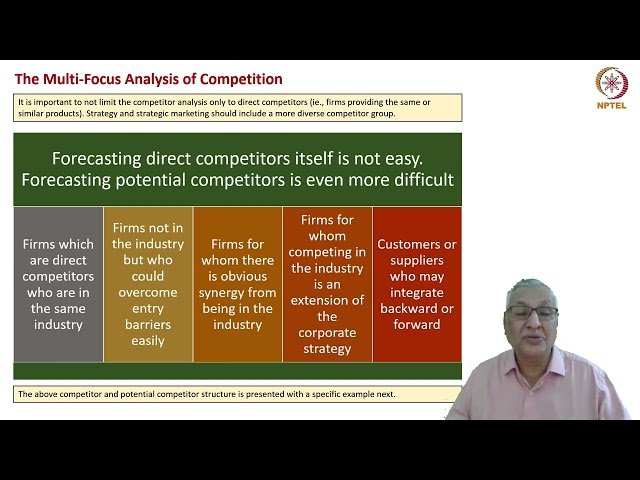
Learn about the analytic framework for competitor analysis, including methods for analyzing competitor goals, assumptions, and achievements. Explore different types of retaliators in this 48-minute lecture from NPTEL-NOC IITM that provides essential tools for understanding and responding to competitive business environments.
YouTube
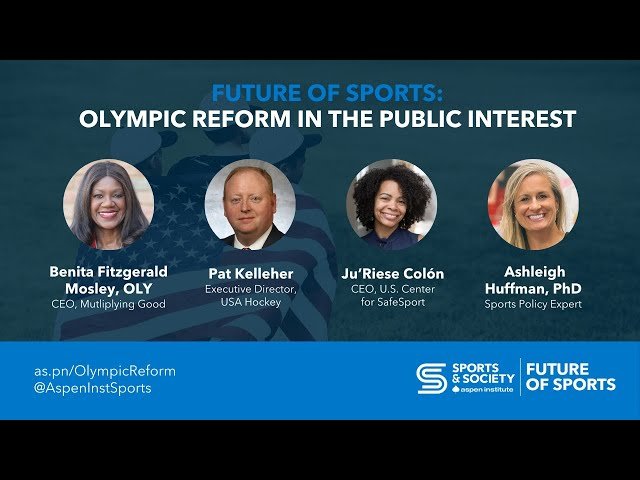
Explore the critical need for reform in the U.S. Olympic movement through this comprehensive panel discussion. Delve into the challenges facing the current system, including athlete abuse and declining youth participation, as shaped by the Ted Stevens Olympic and Amateur Sports Act. Examine potential solutions such as government oversight, public funding, and international best practices for grassroots sports development and athlete protection. Gain insights from a diverse panel of experts, including Olympic athletes, sports executives, and policy makers, as they discuss the future of sports organization in America and its impact on public health and national priorities.

YouTube
Explore the future of coaching in this comprehensive conference talk that emphasizes the importance of developing emotional and social skills in athletes. Delve into discussions led by prominent figures in sports and education, including former U.S. Secretary of Education Arne Duncan and professional athletes. Examine the critical role coaches play in shaping young athletes' personal growth beyond wins and losses. Gain insights from youth athletes sharing their perspectives and learn about new resources designed to help coaches promote social and emotional development. Discover how the athlete-coach relationship can be leveraged to create lasting positive impacts on young people's lives and explore the potential for redefining success in sports coaching.

YouTube
Explore the dietary habits of ancient Greek Olympians in this informative video. Discover the unique foods and eating practices that fueled athletes during the Olympic Games in ancient Greece. Learn about the historical context of the games, the types of events contested, and the nutritional strategies employed by competitors. Gain insights into the cultural significance of food in Greek athletic training and competition. Compare ancient Olympic diets to modern sports nutrition, and understand how these historical practices have influenced contemporary athletic performance. Delve into the preparation methods, ingredients, and culinary traditions that shaped the meals of ancient Greek athletes, offering a fascinating glimpse into the intersection of food, sport, and history in the classical world.

YouTube
Explore a comprehensive 35-minute lecture on Orthopedic & Sports Medicine as part of The National Family Medicine Board Review Course. Delve into crucial topics for family medicine certification and recertification exams, including preparticipation evaluation, disqualifying conditions, exercise-induced asthma, and exercise prescription. Learn about drug use in athletes, nutritional supplements, and the female athlete triad. Gain insights into sports-related concussions, including identification, assessment, and management of concussed athletes. Discover various musculoskeletal imaging techniques, from plain X-rays to arthrography. Enhance your knowledge of sports medicine to better prepare for board examinations and improve patient care in family medicine practice.