

Courses
Discover thousands of courses from top institutions and platforms worldwide
Level
Course Type
Duration
Udemy
Get the full information needed to be able to become a Wireless Technician What you'll learn: Understand the foundation theory of the Wireless LANBe able to configure and install a Wireless access pointGet prepared to the CWNP Certified Wireless Technician exam (CWT)Know which WLAN should you configure and how DISCLAIMER:This course is not officially sponsored by CWNP and not an authorized course by CWNP. We are neither affiliated with nor endorsed by CWNP. We respect the Trademarks of the mentioned company and institution. Hello,You are looking to this page because you are interested to become a Wireless Technician. Being a wireless technician nowadays is very required specially that all the networks need to have wireless enabled. However, if the wireless is deployed by unexperienced engineers, then this can cause a lot of issue as for the security, installation, frequency interference, and so on. For this, it is always required that the person who is installing the Wireless LAN to be an experienced one and to know what he is doing.In this course, Iwill prepare you to become ready to be a wireless technician. You will have to understand a lot of theory in wireless so when you will get a project to do a wireless installation then you know what you are doing.Also, I will be showing in this course many practical work. For instance, we are going to configure an Wireless Access Point Router from scratch so we have the wireless up and running, then to test if it is going to work.If you have taken previsouly the course Wireless Specialist, then you may see that some of the lectures are the same and that's because the 2 courses have a lot of matched topics.Finally, if you want to be read to be a Wireless Technician, all you need to do is to join this course and I will help you with your path.

Coursera
In this foundational Pharmacy Technician Career Training Specialization, students will take four courses to master the fundamentals of a career in pharmacy. The first two courses teach how to communicate and engage professionally in any healthcare setting and the necessary knowledge of human anatomy and physiology required for any medical role. Next, students dive into two pharmacy-related courses - Pharmacy Technician Essentials and Pharmacy Dosages & Prescriptions Essentials - to round out their entry-level pharmacy education. IMPORTANT: This specialization is not designed to prepare students for national certification. Enrollees will gain the foundational/fundamental knowledge on subject matter relevant to the profession. However, to gain industry certification, a more comprehensive program must be completed through enrollment via approved/eligible schools such as MedCerts.

Coursera
This intermediate specialization equips pharmacy technicians with a comprehensive skill set, encompassing legal compliance, safety protocols, medication optimization strategies, specialized compounding techniques, and effective communication in pharmacy settings. Students gain expertise in navigating pharmacy law, emergency preparedness, ensuring medication safety, mastering syringe use, and compounding medications. Additionally, students are taught how to foster empathetic patient interactions, facilitating a well-rounded and competent approach to a pharmaceutical career. IMPORTANT: This specialization is not designed to prepare students for national certification. Enrollees will gain the foundational/fundamental knowledge on subject matter relevant to the profession. However, to gain industry certification, a more comprehensive program must be completed through enrollment via approved/eligible schools such as MedCerts.

Coursera
The Pharmacy Technician Essentials course provides an in-depth look at what a career in a pharmacy will look like. Through several lessons, students learn the ins and outs of a pharmacy setting and the meaning of the terminology used daily within a pharmacy environment. This course also provides a deep dive into the purpose of the top 200 most commonly prescribed medications and drug routes and formulations. Students will be able to demonstrate correct processing of medication orders, preparation, storage, and distribution of medications, by the end of the course. On top of knowing the medications being prescribed, students must also learn how to use pharmacy equipment, including management software and reading of prescriptions. At the completion of this course, students should have a solid understanding of what their day-to-day tasks will be within a pharmacy environment and how to use the necessary tools to excel in their new career. Course objectives include: - Identify the primary functions of different pharmacy organizations - Discuss the different roles of the pharmacy technician - Describe the common drugs and their uses, drug routes and formulations, and factor affecting drug activity - Understand pharmacy management software, as well as reading and interpreting prescriptions

Coursera
The Behavior Technician specialization provides foundational knowledge in behavior analysis and practical strategies for supporting individuals with developmental and behavioral challenges. Participants will gain hands-on skills in behavior acquisition techniques, functional assessment, verbal operant instruction, and both antecedent and consequence-based interventions. By the end of the program, learners will be able to implement structured teaching methods, identify functions of behavior, apply behavior intervention strategies, and support communication development through mand, tact, and intraverbal training. IMPORTANT: This specialization is not designed to prepare students for national certification, such as the Registered Behavior Technician credential offered by the BACB. Enrollees will gain the foundational/fundamental knowledge on subject matter relevant to the profession. While references may be made throughout the training to Registered Behavior Technicians (RBTs) or Behavior Technicians (BTs), to gain industry certification, a more comprehensive program must be completed through enrollment via approved/eligible schools such as MedCerts.

Udemy
A Video Study Guide for the Pharmacy Technician Certification Exam What you'll learn: By the end of this course, you will be able to utilize the skills you have learned to achieve a job as a pharmacy technician.Read sig codesPerform simple pharmacy mathUnderstand commonly used pharmacy lawBrand and generic equivalents Becoming a pharmacy technician is a simpler path than most students think. While many students are convinced that becoming certified involves months of schooling -currently this is NOT the case. To become a certified pharmacy technician an individual must: 1. Register with the PTCB or ExCPT to take a certification exam. Most states require the PTCB, but the ExCPT is accepted in many states. 2. Study the required material to pass the PTCB or ExCPT examination. (Note: Studying for the exam can be a part of a lengthy/costly college course, but is not required - a simple online video course will be sufficient ) 3. Pass your exam! 4. Register with your respective State Board of Pharmacy. We provide the web URL for all 50 State Boards of Pharmacy to make registering easy! This course is designed to help students learn the concepts needed to become a certified pharmacy technician (C. Ph.T). Many different topics are covered in the course, including pharmacy law, common abbreviations, commonly used calculations, and many other skills used by pharmacy technicians in their day to day tasks. Utilizing the advantages of a self-paced course, student will be able to prepare to take the certification exam needed to work as a pharmacy technician. Included in this course are how-to videos, drugs lists, commonly seen abbreviations, pharmaceutical calculations, sample test questions, and other resources useful in a successful pharmacy career. This course will require additional time and repetition to reinforce skills learned within the included materials. Students are encouraged to take a slow and steady pace in this course - it is designed as a 6-week course but may be longer or shorter depending on the rate of learning by the student.
Udemy
Quality Technician Essentials: Metrology, Statistical Techniques, and Continuous Improvement for Manufacturing Pros What you'll learn: Quality concepts including customers and suppliers, products and processes, standards, requirements, and specifications, and cost of quality (COQ)Quality tools including the seven basic quality tools, Six Sigma, and Lean ManufacturingGeneral concepts of statistical techniques and calculations.Creating and interpreting attribute and variable control charts.Principles of metrology and calibrations, selection of measurement and test equipment, and control and maintenance of M&TEFundamentals of print reading, inspection concepts, inspection techniques and processes, sampling, and the control of nonconforming materialOverviews of nondestructive testing techniques, destructive testing methods, and a sampling of other test methods.Audit types and terminology, audit components, tools and techniques, audit communication toolsFundamentals of risk management and mitigation Welcome to the Manufacturing Academy's Certified Quality Technician (2026) ... the one course you need to propel your career in quality forward!Are you looking to enhance your skills in calibration, continuous improvement, and analytical methods?Would you like to better understand the range of commonly available testing and inspection methods?Do you want to understand how quality systems and processes function to assure the quality products?Look no further than our comprehensive online course designed specifically for quality professionals like you.Whether you're studying for the ASQ Certified Quality Technician (CQT) exam, seeking to bolster your proficiency in quality assurance, or simply aiming to expand your knowledge base in manufacturing, our Certified Quality Technician (2026) course has what you need!What You'll Learn:Comprehensive coverage of quality principles, tools, and methodologies.In-depth preparation for the ASQ Certified Quality Technician (CQT) exam, if desired.Practical skills and techniques essential for success as a quality technician.Real-world case studies and examples to reinforce learning.Access to industry-leading instructor with extensive experience in quality management.Who Should Enroll:Quality Professionals Seeking Skill Enhancement: Dive deep into quality management techniques and tools to excel in your current role and advance your career.Quality Professionals Preparing for the ASQ CQT Exam: Gain the knowledge and confidence needed to ace the exam and earn your certification.Manufacturing Professionals Eager to Master Quality Practices: Equip yourself with the expertise needed to ensure quality excellence in manufacturing operations.What You Get:Nearly 18 hours of rich video-based instruction on a broad range of quality related topics taught at a level of a quality technician (OVER 140 lectures!!)Full alignment with the American Society for Quality’s (ASQ's) 2024 edition of the Certified Quality Technician (CQT) exam.“Deep dive” learning into each of the following 6 MAJOR SECTIONS:Quality Concepts and ToolsStatistical TechniquesMetrology and CalibrationInspection and TestQuality AuditsRisk ManagementALL NEW MATERIAL in the 2026 edition covering critical topics like:Layered Process AuditingScatter Plots and Correlation5 Why x 3 LayersGage R&RCost of Poor QualityPlus, fully validated Excel Templates for each new topic Instruction from a leading manufacturing quality professional and educator.Over 30 downloadable resources including Excel templates, "cheat sheets", and an assortment of useful diagrams and tables.NOWOVER 30 blog posts addressing course topics but often at "the next level".Mid-term and final "exams" with lots of multiple-choice questions each.LIFETIME ACCESS to all course materials AND all other materials we may add later.A Certificate of Completion with your name, the course's name, and the time duration of the course (useful for fulfilling the need of some CEU requirements)Q&A access through the Udemy platform to a 30+ year manufacturing, quality, engineering, and business professional.What Students Have Said About This Course:"Been looking for something like this for a long time." - Daniel R."Good information, great examples and very through made." - Alex M."I am new to learning about quality and I feel this is super easy to understand, process and use!" - Sarah B."It was a very extensive course with a lot of information. I like the examples and explanations." - Eduardo T."As always a really good course from The Manufacturing Academy and Ray Harkins, I always find that I learn more here at Udemy and Ray Harkins than at other courses that cost x10 the price." - Henrick L.Why Choose the Manufacturing Academy?Flexible online learning format, accessible anytime, anywhere right here on the Udemy platform.Engaging, interactive course content designed for optimal comprehension.Just the right depth of instruction utilizing Bloom's Taxonomy to help assure the success of professionals ready to understand the quality principles and approaches and the technician level.Expert instruction from an industry veteran passionate about your success.Shared learning environment with fellow professionals in the quality and manufacturing fields.Don't miss this opportunity to become a Certified Quality Technician and distinguish yourself in the competitive world of manufacturing. Enroll today and take the first step toward achieving your professional goals!ASQ® is the registered trademark of the American Society for Quality.The Manufacturing Academy is an independent training provider that is neither associated nor affiliated with the ASQ or any other certifying organization.
Swayam
Automotive Service Technicians and mechanics, often called service technicians, maintain and repair light vehicles and heavy vehicles. Present course content provide the deep knowledge of the skill required to be an automotive service technician for a four wheeler and aimed at training learners to be an skilled technician in automotive sector, this course cover all the aspects from roles and responsibility of a technician, job opportunities in automobile sector and detail description of the components of a four wheeler with aspects of tool handling, fault diagnosis and troubleshooting and service and repair of the vehicle.
Swayam
ABOUT THE COURSE:Biological Engineering introduces students to biological systems' core principles and practices and their application in engineering processes. The course equips students with the essential skills for biomanufacturing, a key driver of sustainable solutions in the 21st century. Students gain expertise in producing critical products like biofuels, pharmaceuticals, and biodegradable materials by mastering microbial growth, fermentation, and cell culture techniques. As industries transition toward green technologies and healthcare advancements, biomanufacturing professionals are crucial for addressing global challenges in sustainability, healthcare, and resource management.INTENDED AUDIENCE: Primarily PG and PhD students but could also be open for UG studentsINDUSTRY SUPPORT:Praj Industries LimitedAdani Total Gas LtdReliance Life SciencesThermax
YouTube
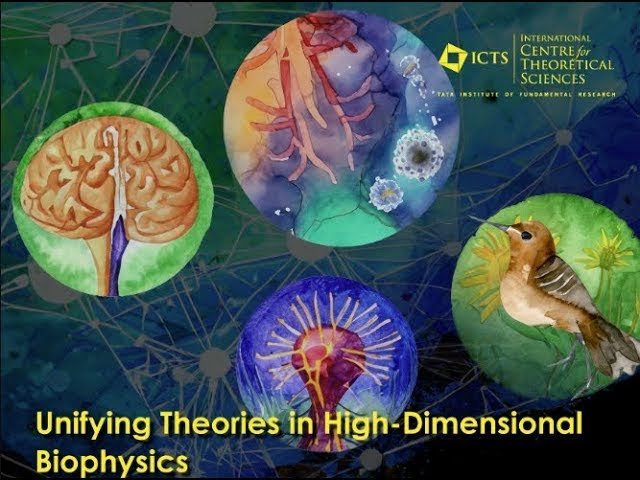
Explore biological computations in this 56-minute conference talk delivered by Marianne Bauer from Delft University of Technology at the International Centre for Theoretical Sciences. Delve into the intersection of computational approaches and biological systems as part of the "Unifying Theories in High-Dimensional Biophysics" program. Examine how biological systems perform computational tasks and process information across various scales, from molecular networks to cellular processes. Discover theoretical frameworks that bridge physics and biology to understand emergent computational properties in living systems. Learn about the mathematical principles underlying biological information processing and how high-dimensional biological data can reveal computational mechanisms. Gain insights into how different biological fields approach computational problems and the potential for developing unified theoretical descriptions. This presentation contributes to an interdisciplinary dialogue aimed at identifying common mathematical languages and biological principles that enable low-dimensional descriptions of complex biological phenomena.

YouTube
Explore a comprehensive 12-hour tutorial on biological techniques covering a wide range of chromatography methods, microscopy techniques, and advanced analytical procedures. Delve into various chromatography types, including gas chromatography, HPLC, affinity chromatography, and gel filtration. Learn about fluorescence techniques such as FLIP and FRAP, and understand centrifugation methods like isopycnic and zonal ultracentrifugation. Discover microscopy principles, including numerical aperture, resolution, and various types like polarizing, phase contrast, and dark field microscopy. Examine molecular biology techniques such as the yeast two-hybrid system, protein tagging, and nucleic acid hybridization. Study advanced analytical methods like X-ray crystallography, mass spectrometry, and proteomics. Gain insights into DNA analysis techniques, including restriction fragment length polymorphism, Sanger sequencing, and comparative genomic hybridization. Master gel electrophoresis techniques and explore cutting-edge topics in metabolomics and flow cytometry.

LinkedIn Learning
Architectural CAD technicians play a vital role in transforming architectural designs for construction professionals. Learn to create computerized blueprints with the digital tools needed for a career in the field of architecture.Master design techniques with CAD software.Learn to modify designs and share your drawings with others.Prepare 2D and 3D drawing designs for construction.

LinkedIn Learning
Architectural CAD technicians play a vital role in transforming architectural designs for construction professionals. Learn to create computerized blueprints with the digital tools needed for a career in the field of architecture.Master design techniques with CAD software.Learn how to modify designs and share your drawings with others.Practice 2D and 3D drawing techniques to prepare designs for construction.

LinkedIn Learning
Learn the core concepts of PC maintenance to prepare for a job as an IT technician. From deployment, administration, and networking fundamentals for Windows 10 to the basics of PC anatomy and troubleshooting, develop the skills needed to identify and resolve IT issues. Develop administration and troubleshooting skills.Learn installation best practices for hardware and software.Apply new skills to resolve network issues.
IBM Training
This course is designed for the Technicians to learn about Maximo Mobile, its concepts, how to get started, and what a typical day of a technician looks like while using Mobile to carry out their day-to-day activities, such as creating a service request, creating a work order, approving a work order, and executing an assigned work order. This includes carefully curated demonstrations with various scenarios along with a hands-on simulated lab to familiarize with the application.

MIT OpenCourseWare
This course is an advanced treatment of biochemical mechanisms that underlie biological processes. Topics include macromolecular machines such as the ribosome, the proteasome, fatty acid synthases as a paradigm for polyketide synthases and non-ribosomal polypeptide synthases, and polymerases. Emphasis will be given to the experimental methods used to unravel how these processes fit into the cellular context as well as the coordinated regulation of these processes.

MIT OpenCourseWare
This course examines the chemical and physical properties of the cell and its building blocks, with special emphasis on the structures of proteins and principles of catalysis, as well as the chemistry of organic / inorganic cofactors required for chemical transformations within the cell. Topics encompass the basic principles of metabolism and regulation in pathways, including glycolysis, gluconeogenesis, fatty acid synthesis / degradation, pentose phosphate pathway, Krebs cycle and oxidative phosphorylation. [](pages/syllabus) ##### Course Format This OCW Scholar course, designed for independent study, is closely modeled on the course taught on the MIT campus. The on-campus course has two types of class sessions: Lectures and recitations. The lectures meet three times each week and recitations meet once a week. In recitations, an instructor or Teaching Assistant elaborates on concepts presented in lecture, working through new examples with student participation, and answers questions. MIT students who take the corresponding residential class typically report an average of 10–15 hours spent each week, including lectures, recitations, readings, homework, and exams. All students are encouraged to supplement the textbooks and readings with their own research. The Scholar course has three major learning units, called Modules. Each module has been divided into a sequence of lecture sessions that include: * Textbook Readings * Lecture Notes or Storyboards * A video by Professor JoAnne Stubbe or Professor John Essigmann * Problem Sets and solutions To help guide your learning, each of these problem sets are accompanied by Problem Solving Videos where Dr. Bogdan Fedeles solves one of the problems from the set.
YouTube
Learn about the Athlete Biological Passport (ABP) in this 23-minute educational video that explores the innovative monitoring tool used in anti-doping efforts. Discover how this longitudinal profiling system tracks selected biological variables over time to identify patterns that may indicate doping, rather than attempting to detect prohibited substances directly. Understand the scientific principles behind ABP, its implementation in sports, and how it serves as a crucial deterrent against performance enhancement in competitive athletics.

Swayam
The extraordinary important role of metal ions in biology, heath, diseases and medicine has become increasingly evident over the last three decades or more. The inorganic aspects of life processes and biological processes can be understood from the viewpoint of the coordination chemistry of metal ions. The study of metal ions in biological systems can only be appreciated from a multidisciplinary approach. It stays within the rapidly growing interface between inorganic chemistry and the living world. It is increasingly recognized that selected metal ions are involved in cellular and subcellular functions.INTENDED AUDIENCE : MSc, MTech and MPharmPREREQUISITES : 1. Coordination Chemistry 2. Basic Bioinorganic ChemistryINDUSTRY SUPPORT : 1. BioTech companies 2. BioProcess companies 3. BioCatalyst industries

FutureLearn
Discover applications of biological energy, from human energy to photosynthesis On this course, you’ll learn what energy actually is and how living things acquire and convert it. You’ll find out how biological energy is stored and released in fossil fuels and what advances in agriculture mean for feeding the world’s growing population. As you explore biological energy in industry, you’ll consider the ways science can help us to reduce our reliance on fossil fuels as well as ways we might use and learn from plants to provide energy in the future. You’ll also discover the concept of ‘energy overload’ and how it is threatening our bodies’ energy balance today. This course is designed for young learners who have studied at least GCSE science (chemistry, biology, or physics) and are interested in pursuing the connections between these subjects. It will be of particular interest to those looking to study the life sciences at university level. The course is also suitable for those who are simply interested in how living things store and use energy.