

Courses
Discover thousands of courses from top institutions and platforms worldwide
Level
Course Type
Duration

edX
Chemistry is the study of the properties, structure, behavior, and reactivity of matter. As the central science, chemistry has deep connections to fields from physics to biology, from environmental science to engineering. Cutting-edge research in many fields relies on a fundamental understanding of chemistry. This course is designed to build foundational skills in chemistry, providing learners with the necessary prerequisite knowledge for advanced chemistry courses, including Organic Chemistry, Physical Chemistry, Biochemistry, Inorganic Chemistry, Materials Science, and beyond. This course is the second in a series of two general chemistry courses that together cover first-year University-level chemistry. In this course, you will explore fundamentals of chemical reactions, such as how thermodynamics defines the energy released or consumed by a reaction, the nature of chemical equilibrium, and whether a reaction is spontaneous. You will also learn chemical kinetics to examine rates and molecular mechanisms of reactions, and learn about the design and use of catalysts. Along the way, you will examine exciting and important chemical systems, including: Acid/base chemistry and buffers Redox chemistry and batteries Transition metals and applications in biology Atmospheric chemistry and global warming

Udemy
Core elements of Process Engineering Discipline What you'll learn: The Fundamental Elements of Chemical/Process EngineeringChemical Engineering DrawingsMixture Properties and Hydrocarbon Phase BehaviorBasic concepts behind Mass and Energy Balance Chemical Engineering Fundamentals course provided by Velocis Solutions aims to deliver the core elements of Chemical/Process Engineering by working on specific topics of:Introduction to Chemical/Process Engineering;Process Engineering Drawings;Mixture Properties;Material and Energy BalanceThis course provided by our professional development team directly fulfils the indicated topic. Here, you will have an imagination about the fundamental elements of Chemical/Process Engineering. What about taking more information about the responsibilities of Chemical Engineers, before going over the course?Chemical engineers translate processes developed in the lab into practical applications for the commercial production of products and then work to maintain and improve those processes. They rely on the main foundations of engineering: math, physics, and chemistry (though biology is playing an increasing role). The main role of chemical engineers is to design and troubleshoot processes for the production of chemicals, fuels, foods, pharmaceuticals, and biologicals, just to name a few. They are most often employed by large-scale manufacturing plants to maximize productivity and product quality while minimizing costs.Chemical engineers typically work in manufacturing plants, research laboratories, or pilot plant facilities. They work around large-scale production equipment that is housed both indoors and outdoors and are often required to wear personal protective equipment, such as hard hats, goggles, and steel-toe shoes. A typical workday for a chemical engineer working in a plant may involve traveling from one function to the next within a facility.

YouTube
In this course, you will learn about Chemical Kinetics for JEE and NEET. You will learn about rate of reaction, factors affecting rate of reaction, Rate Law and order of reaction, Initial Rate Method to determine order of reaction, Rate Law, zero order kinetics, half life, first, second, third and nth order kinetics, molecularity of reaction, pseudo order reaction, Arrhenius Reaction, complex reaction, parallel first order reaction kinetics, and much more.

Swayam
This course would highlight the concepts and applications of widely used experimental technique of X-ray crystallography. The could would take the students through the lane of crystallographic symmetry to the structure determination and refinement of crystal structures using x-ray diffraction. Any experimental organic or inorganic chemist would be benefited from this course.INTENDED AUDIENCE :PhD students and 2nd year M.Sc studentsPREREQUISITES :Basic knowledge about molecular symmetryINDUSTRY SUPPORT :Pharmaceutical industry

Coursera
Chemical biology is a burgeoning field that has rapidly risen to prominence. This surge of interest has been fuelled by chemical biology’s applicability to understanding critical processes in live cells or model organisms in real time. This success has arisen because chemical biology straddles a nexus between chemistry, biology, and physics. Thus, chemical biology can harness rapid chemistry to observe or perturb biological processes, that are in turn reported using physical assays, all in an otherwise unperturbed living entity. Although its boundaries are endless, the multidisciplinary nature of chemical biology can make the field seem daunting; we beg to differ! Here, we deconstruct chemical biology into its core components, and repackage the material. In the process we build up for each student a practical and theoretical knowledge bank that will set these students on their way to understanding and designing their own chemical biology experiments. We will discuss fluorescence as a general language used to read out biological phenomena as diverse as protein localization, membrane tension, surface phenomena, and enzyme activity. We will proceed to discuss protein labeling strategies and fusion protein design. Then we will discuss larger and larger scale chemical biology mechanism and screening efforts. Highlights include a large amount of new data, tailored in the lab videos, and a large number of skilled presenters.
YouTube
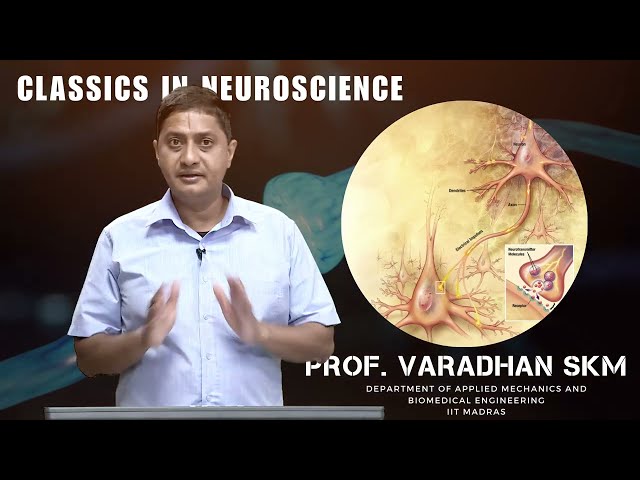
Learn about the structure, function, and mechanisms of chemical synapses in this 12-minute educational video from NPTEL-NOC IITM. Explore how neurons communicate through chemical messengers at these specialized junctions, the process of neurotransmitter release and reception, and the importance of chemical synapses in neural signaling and information processing in the nervous system.

Swayam
This course would cover all aspects of Organometallic Chemistry, starting from the principles to its applications.INTENDED AUDIENCE: All of Chemistry and possibly some of Chemical Engineering students.PREREQUISITES: UG General Chemistry.INDUSTRY SUPPORT: Reliance, Dupont, BASF, BAYER, DOW Chemicals.

Udemy
Chemical Engineering: Student life & Professional Life What you'll learn: Understand the Basics on Chemical EngineeringGet to know the Curriculum of a Chemical EngineerAreas in which a Chemical Engineer can workProfessional outlook for the ChemE Ever wonder about Engineering?Or more specifically, about Chemical Engineering?We will guide you through all the required information in order to let you know if Chemical Engineering is for you! We start from simple stuff such as the required education, what you will learn, student life, and what you will actually need for your professional life.What is Engineering and Chemical Engineering?What is the structure of the ChemE Study Curriculum?How can you get the most of your ChemE student lifeWhere can a Chemical Engineer work and which type ofAverage salaries around the world for recent ChemE grads and Senior levelApplying for Academic Institutions for a Bachelor/Master and Exchange ProgramsApplying for a Job postingReal life examples of Chemical Engineers working!After this course you will definitively be sure if you want to become a Chemical Engineer or not! Money back guarantee!About your instructor:I majored inChemical Engineering with a minor in Industrial Engineering back in 2012.Academic:International Baccalaureate ProgramMexico 2011Chemistry Olympiad Squad - 3rd PlaceITESM- Major inChemical Engineering with a minor in Industrial Engineering2012.Toastmaster Member since 2014, President 2017-2018ProfesionalBasic/Design Engineer -Petrochemical Plant -Isopentane/Cyclopentane.Koln, GermanyProcess Engineer - Fine Automotive Yarns. Monterrey,MexicoProcess Engineer - Industrial Yarn.Monterrey,MexicoOnline Tutor Chemical Engineering + Chemsitry

YouTube
In this course, we will now find out the reason for changes in matters (Chemical Principles II). The earlier course, Chemical Principles I, deals with the matter itself, and the understanding of it comes from quantum mechanics. However, for the change of matter, thermodynamics says the final word. The most critical quantity in thermodynamics is the entropy, and this course is all about understanding entropy and related thermodynamic potentials. Although classical thermodynamics was developed from observations and heuristic understanding, statistical thermodynamics provides a microscopic basis of it. In this course, a holistic approach covering three different approaches (classical, statistical, and postulate-based) of thermodynamics will be covered. The objective of this course is demystification the enigma of entropy.

Swayam
As chemical process technology becomes more complex, chemical engineers will need a more detailed and fundamental understanding of safety. The course focuses on understanding the important technical fundamentals of chemical process safety. The emphasis on the fundamentals will help the student to understand the concepts and apply them accordingly. This application requires a significant quantity of fundamental knowledge and technology. INTENDED AUDIENCE : All Chemical Engineering studentsPREREQUISITES : Chemical Engineering Thermodynamics, Chemical Technology INDUSTRY SUPPORT : Useful for all process industries, refineries, fertilizer plants, petrochemical plants specially for managers and decision makers

XuetangX
Welcome to Chemical Safety Technology, an essential online course designed to transform your approach to process safety and risk management in the chemical industry. In today’s fast-paced industrial world, safety is far more than a regulatory requirement—it is a cornerstone of sustainable operations, a safeguard for human life, and a critical component of business resilience. This course is meticulously crafted to equip professionals, researchers, and students with the comprehensive skills necessary to identify, assess, and mitigate risks associated with chemical processes.The significance of mastering chemical safety cannot be overstated. With rapid industrialization and the increasing complexity of chemical processes, the potential for catastrophic accidents is a pressing concern. Whether you are working on the frontlines of chemical manufacturing or engaged in research and development, understanding the principles of process safety can make the difference between disaster and operational excellence. This course addresses that need by offering a robust curriculum that spans a wide array of safety topics, ensuring that you are well-prepared to handle both everyday challenges and unexpected emergencies.Our curriculum is structured into ten comprehensive chapters that cover the entire spectrum of chemical safety. From the foundational principles of process safety and the analysis of accident statistics to the intricacies of chemical hazards, risk assessment, accident investigation, and emergency management, every chapter is designed to build on the last. You will learn how to identify hazards, evaluate risks, and implement effective control measures that safeguard both personnel and assets. Although each chapter is a deep dive into its respective topic, together they form a cohesive framework that provides a holistic understanding of chemical safety technology.At the heart of this course is our distinguished teaching team, comprising renowned experts Qiang Chen, Yi Liu, Ping Ping, Wenjuan Yan, and Dawei Li. With decades of combined academic and industry experience, they bring a wealth of practical insights and theoretical knowledge to the classroom. Their collaborative teaching approach ensures that you benefit from a rich learning experience that blends rigorous scientific principles with real-world applications. Through engaging lectures, detailed case studies, and interactive discussions, our instructors will guide you through complex concepts and empower you with the tools to apply them effectively in your professional life.Chemical Safety Technology is not just a course—it’s a journey toward creating a safer and more resilient chemical industry. As industries evolve and new technologies emerge, the need for advanced safety protocols becomes even more crucial. By enrolling in this course, you are taking a proactive step towards ensuring that your operations are not only compliant with current safety standards but are also ahead of the curve in risk management strategies.Join us today in redefining safety in the chemical industry. Enroll in Chemical Safety Technology and become part of a growing community dedicated to excellence in process safety. Welcome aboard, and take your first step towards a safer, more innovative future!

Swayam
ABOUT THE COURSE: Organic chemical industry may be crudely grouped as natural and synthetic chemical industry. Natural product industries may include production of edible and essential oils, soaps and detergents, paints and varnishes, sugar and starch, pulp and paper, etc. while the synthetic chemical industries may include production of petrochemicals, polymers, etc. Thus this course would present manufacturing processes of various natural and synthetic organic chemicals along with required raw materials, process chemical reactions, process flow charts, major engineering problems and economics of each individual organic chemical. INTENDED AUDIENCE: UG Students of Chemical Engineering; Biotechnology; Food Technology ; Textile Engineering INDUSTRY SUPPORT: All chemical industries, fertilizer industries, pharmaceutical industries, food industries, textile industries, polymer industries, metallurgical industries

Swayam
This course covers the developments in a number of intensified technologies, with particular emphasis on their application in chemical processes. The course is intended to be a useful resource for practising engineers and chemists alike who are interested in applying intensified reactor and/or separator systems in chemical industries. It will provide a basic knowledge of chemical engineering principles and process intensification for chemists and engineers who may be unfamiliar with these concepts. It will be a valuable tool for chemical engineers who wish to fully apply their background in reaction and separation engineering to the design and implementation of green processing technologies based on process intensification principles. Students on undergraduate and postgraduate degree programmes which cover topics on advanced reactor designs, process intensification, will gain a better understanding of the practical applications in different areas.INTENDED AUDIENCE : Chemical, mechanical Engg graduate/Post graduate/Research Scholar/ Scientist/Academician/Industrial R&DPREREQUISITES : BE/MSc in Chemical EngineeringINDUSTRY SUPPORT : Industrial Reseach and Development Section of Chemical and Mechanical Engineering

Swayam
This course will deal with evaluation and application of the laws of thermodynamics with respect to physical and chemical processes.Real gas behavior, solution thermodynamics,phase and reaction equilibria will be discussed.It will lay foundation for other chemical engineering courses such as mass transfer,chemical reaction engineering etc.It will demonstrate the application of the fundamental concepts of thermodynamics to a wide variety of processes occuring in chemical Engineering.It will enable the students to develop skills necessary to make appropriate assumptions in specific Chemical Engineering problems.INTENDED AUDIENCE :B.Tech in Chemical EngineeringPREREQUISITES : Nil.INDUSTRY SUPPORT : Chemical process industries including IOCL,HPCL,BPCL,GAIL,ONGC,etc.

Coursera
Discover the core principles of process safety and risk analysis in chemical engineering through our dynamic course. Gain expertise in modeling liquid and gas leaks, accurately assessing potential material releases, and calculating downwind exposures to toxic chemicals using state-of-the-art dispersion models. This course equips chemical engineers with essential skills to evaluate and mitigate hazardous concentrations effectively, ensuring industrial process safety. From theoretical foundations to practical applications, participants will learn to propose prevention measures and advance their careers in chemical engineering. Join us to elevate your proficiency in process safety and make a meaningful impact in the field.

Coursera
This course aims to provide process safety experience for engineers, particularly relevant to chemical engineering but applicable to any field involving process operations. This course introduces you to the important, practical, value-added skills and information that will aid your career, or preparation for a career, in chemical process engineering. These skills include improving your ability to identify and quantify toxic chemical hazards and be able to identify and mitigate scenarios where reactive chemical hazards are present. You will be able to describe the importance of pressure protection and the general process for pressure relief system design all while using lessons learned from past chemical process incidents to inform the implementation of safer solutions and work practices.

MIT OpenCourseWare
This course provides an introduction to the chemistry of biological, inorganic, and organic molecules. The emphasis is on basic principles of atomic and molecular electronic structure, thermodynamics, acid-base and redox equilibria, chemical kinetics, and catalysis. In an effort to illuminate connections between chemistry and biology, a list of the biology-, medicine-, and MIT research-related examples used in 5.111 is provided in [Biology-Related Examples](/courses/5-111-principles-of-chemical-science-fall-2008/pages/biology-related-examples). ##### Acknowledgements Development and implementation of the biology-related materials in this course were funded through an HHMI Professors grant to Prof. Catherine L. Drennan. Videos and captioning were made possible and supported by the MIT Class of 2009.

MIT OpenCourseWare
This course provides an introduction to the chemistry of biological, inorganic, and organic molecules. The emphasis is on basic principles of atomic and molecular electronic structure, thermodynamics, acid-base and redox equilibria, chemical kinetics, and catalysis. One year of high school chemistry is the expected background for this freshman-level course. The aims include developing a unified and intuitive view of how electronic structure controls the three-dimensional shape of molecules, the physical and chemical properties of molecules in gases, liquids and solids, and ultimately the assembly of macromolecules as in polymers and DNA. Relationships between chemistry and other fundamental sciences such as biology and physics are emphasized, as are the relationships between the science of chemistry to its applications in environmental science, atmospheric chemistry and electronic devices. [](pages/syllabus) ### Acknowledgements Professor Drennan would like to acknowledge the contributions of MIT Lecturer Dr. Elizabeth Vogel Taylor, Professor Sylvia Ceyer, and Professor Robert Silbey to the development of this course and its materials.

Coursera
An appreciation of thermodynamics is required to become a chemical and biomolecular engineer. Thermodynamics can assess the viability of a process and is one of the curriculum's most essential topics. The principles are utilized in following engineering courses (kinetics, mass transfer, design, materials) and are applicable to numerous engineering disciplines. The increased emphasis on energy usage and transformation as a result of rising demand, diminishing supply, and global warming necessitates that the engineers who will tackle these issues have a firm grasp of thermodynamics. The first and second laws will be studied in this course. Non-ideal features of single-component and multicomponent systems will be emphasized. A substantial portion of the course is devoted to solution thermodynamics, which is crucial for separations (e.g., distillation, extraction, membranes), and chemical equilibrium, which is crucial for reaction engineering. "A theory is more striking when its premises are simpler, when it relates more diverse types of things, and when its scope of applicability is broader. Consequently, the profound impact that classical thermodynamics had on me. It is the only physical theory with universal content that I am confident, within the range of its applicability, will never be overthrown." — Albert Einstein

Coursera
An appreciation of thermodynamics is required to become a chemical and biomolecular engineer. Thermodynamics can assess the viability of a process and is one of the curriculum's most essential topics. The principles are utilized in following engineering courses (kinetics, mass transfer, design, materials) and are applicable to numerous engineering disciplines. The increased emphasis on energy usage and transformation as a result of rising demand, diminishing supply, and global warming necessitates that the engineers who will tackle these issues have a firm grasp of thermodynamics. The first and second laws will be studied in this course. Non-ideal features of single-component and multicomponent systems will be emphasized. A substantial portion of the course is devoted to solution thermodynamics, which is crucial for separations (e.g., distillation, extraction, membranes), and chemical equilibrium, which is crucial for reaction engineering. "A theory is more striking when its premises are simpler, when it relates more diverse types of things, and when its scope of applicability is broader. Consequently, the profound impact that classical thermodynamics had on me. It is the only physical theory with universal content that I am confident, within the range of its applicability, will never be overthrown." — Albert Einstein