

Courses
Discover thousands of courses from top institutions and platforms worldwide
Level
Course Type
Duration

Swayam
This course will deal with evaluation and application of the laws of thermodynamics with respect to physical and chemical processes.Real gas behavior, solution thermodynamics,phase and reaction equilibria will be discussed.It will lay foundation for other chemical engineering courses such as mass transfer,chemical reaction engineering etc.It will demonstrate the application of the fundamental concepts of thermodynamics to a wide variety of processes occuring in chemical Engineering.It will enable the students to develop skills necessary to make appropriate assumptions in specific Chemical Engineering problems.INTENDED AUDIENCE :B.Tech in Chemical EngineeringPREREQUISITES : Nil.INDUSTRY SUPPORT : Chemical process industries including IOCL,HPCL,BPCL,GAIL,ONGC,etc.

Udemy
Core elements of Process Engineering Discipline What you'll learn: The Fundamental Elements of Chemical/Process EngineeringChemical Engineering DrawingsMixture Properties and Hydrocarbon Phase BehaviorBasic concepts behind Mass and Energy Balance Chemical Engineering Fundamentals course provided by Velocis Solutions aims to deliver the core elements of Chemical/Process Engineering by working on specific topics of:Introduction to Chemical/Process Engineering;Process Engineering Drawings;Mixture Properties;Material and Energy BalanceThis course provided by our professional development team directly fulfils the indicated topic. Here, you will have an imagination about the fundamental elements of Chemical/Process Engineering. What about taking more information about the responsibilities of Chemical Engineers, before going over the course?Chemical engineers translate processes developed in the lab into practical applications for the commercial production of products and then work to maintain and improve those processes. They rely on the main foundations of engineering: math, physics, and chemistry (though biology is playing an increasing role). The main role of chemical engineers is to design and troubleshoot processes for the production of chemicals, fuels, foods, pharmaceuticals, and biologicals, just to name a few. They are most often employed by large-scale manufacturing plants to maximize productivity and product quality while minimizing costs.Chemical engineers typically work in manufacturing plants, research laboratories, or pilot plant facilities. They work around large-scale production equipment that is housed both indoors and outdoors and are often required to wear personal protective equipment, such as hard hats, goggles, and steel-toe shoes. A typical workday for a chemical engineer working in a plant may involve traveling from one function to the next within a facility.

XuetangX
“Principles of Chemical Engineering” is a core course to the students whose majors are Chemical Engineering and related. It is a comprehensive class based on mathematics, physics, chemistry, and computer programming, by which the students can analyze and solve the engineering problems in chemical processes. The class starts with the basic principles of chemical engineering and gradually extend to their practical applications, during which helps the students to build stable knowledge systems of chemical engineering and technology, master solid skills of unit operations, and get access to the creative solutions to the real engineering problems, aiming for the primary education target of professional engineers with qualities of scholarship, leadership, and character. This class was awarded as University-Level Outstanding Class, Provincial Outstanding Class, Provincial Outstanding Open Class and Provincial Outstanding Resource-Sharing Class in 2009, 2010, 2011 and 2014, respectively, which has established a multi-dimensional teaching system that combines knowledge learning in classroom and skill training during project design and laboratory experiment, promoted by online systems of resource-sharing, question & answer, self-learning and self-exam.
Swayam
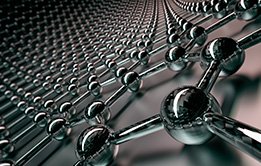
ABOUT THE COURSE:Nanotechnology is based on nanoscience, and it is an interdisciplinary science. Nanotechnology is the technology of materials dealing with tiny dimensions from 1 to 100 nm. The material changes its properties as it reduces its size below 100 nm. Using the same material, one can get a range of properties. Thus, nanotechnology needs physics, chemistry, biology, engineering, and other skills so that the material and its potential can be applied to many broader applications for the betterment of society and humanity. Through this course, we will learn the basic understanding of nanostructured materials, particularly the synthesis of various nanomaterials and their properties, analysis techniques, and application of nanomaterials in different fields of application that deal with Chemical Engineering. This course aims to improve the basic knowledge of nanotechnology for final-year undergraduate and graduate-level (PG) students in chemical engineering. The course's primary objective is to enable the students to understand the synthesis, analysis methods, and application of various nanomaterials in the chemical industry. The course will reinforce understanding the basic concepts and principles of different industrial applications associated with nanostructured materials in the Chemical Engineering discipline, such as heat transfer, mass transfer, catalysis, wastewater treatment, and renewable energy. He has been teaching the courses CHN-425 Nanotechnology in Chemical Engineering, CHE-505 Advanced Reaction Engineering, CHN-505 Chemical Reactor Analysis, and CH-427 Heterogeneous Catalysis and Reactor Design) since 2015.INTENDED AUDIENCE: UG Final year and PG (M.Tech, PhD) students in Chemical Engineering, Energy Engineering, Polymer Science and Engineering, Environmental Engineering,INDUSTRY SUPPORT: PSUs, IOCL, ONGC, BPCL, Reliance Industries, Chemical and Petrochemical Engineering companies
XuetangX
The Principles of Chemical Engineering course is a fundamental course for major majors such as Chemical and Pharmaceutical Engineering, Chemistry and Environment. This course applies the basic theory of transmission process to study the basic principles of chemical unit operation, with process engineering as the teaching background, and explains the process and equipment principles of unit operation in theory and practice. It is an introductory course that transitions from fundamental courses in the field of natural sciences to specialized courses in engineering sciences. To cultivate students' ability to analyze and solve various problems in unit operations, namely the skills of unit equipment operation management, design, reinforcement, and process development in actual production.

Coursera
An appreciation of thermodynamics is required to become a chemical and biomolecular engineer. Thermodynamics can assess the viability of a process and is one of the curriculum's most essential topics. The principles are utilized in following engineering courses (kinetics, mass transfer, design, materials) and are applicable to numerous engineering disciplines. The increased emphasis on energy usage and transformation as a result of rising demand, diminishing supply, and global warming necessitates that the engineers who will tackle these issues have a firm grasp of thermodynamics. The first and second laws will be studied in this course. Non-ideal features of single-component and multicomponent systems will be emphasized. A substantial portion of the course is devoted to solution thermodynamics, which is crucial for separations (e.g., distillation, extraction, membranes), and chemical equilibrium, which is crucial for reaction engineering. "A theory is more striking when its premises are simpler, when it relates more diverse types of things, and when its scope of applicability is broader. Consequently, the profound impact that classical thermodynamics had on me. It is the only physical theory with universal content that I am confident, within the range of its applicability, will never be overthrown." — Albert Einstein

Coursera
An appreciation of thermodynamics is required to become a chemical and biomolecular engineer. Thermodynamics can assess the viability of a process and is one of the curriculum's most essential topics. The principles are utilized in following engineering courses (kinetics, mass transfer, design, materials) and are applicable to numerous engineering disciplines. The increased emphasis on energy usage and transformation as a result of rising demand, diminishing supply, and global warming necessitates that the engineers who will tackle these issues have a firm grasp of thermodynamics. The first and second laws will be studied in this course. Non-ideal features of single-component and multicomponent systems will be emphasized. A substantial portion of the course is devoted to solution thermodynamics, which is crucial for separations (e.g., distillation, extraction, membranes), and chemical equilibrium, which is crucial for reaction engineering. "A theory is more striking when its premises are simpler, when it relates more diverse types of things, and when its scope of applicability is broader. Consequently, the profound impact that classical thermodynamics had on me. It is the only physical theory with universal content that I am confident, within the range of its applicability, will never be overthrown." — Albert Einstein

Swayam
This course will provide an overview of chemical kinetics and reactor design at basic to an intermediate level. Coverage will be relatively broad. This course applies the concepts of reaction rate, stoichiometry and equilibrium to the analysis of chemical and biological reacting systems such as derivation of rate expressions from reaction mechanisms and equilibrium or steady state assumptions and design of chemical and biochemical reactors via synthesis of chemical kinetics, and mass and energy balances. The goal is to provide students with the theoretical/analytical background to understand chemical kinetics and reactor design and to tackle the short of complex problems.INTENDED AUDIENCE : B.Tech in Chemical Engineering and allied disciplinesPREREQUISITES : NilINDUSTRY SUPPORT : Almost all chemical industries including IOCL., OIL, ONGC, etc

Udemy
Learn the most important Unit Operations in Chemical Plants What you'll learn: Understand the importance of Unit Operations in the Chemical IndustryIdentify relevant Unit Operations in Process Flow DiagramsGet to know the basic concepts behind Unit OperationsRecognize typical Equipment Design & OperationPressure Changers: Pumping, piping, fittings, compressing, etc...Heat Exchange: heaters, coolers, condensers, boilersSeparation Processes: flashing, distillation, absorbers, fractionation columnsReactors: Batch, Stirred Tank, Plug Flow, etc... In this course we study the coreof Chemical Engineering: Unit Operations.What are Unit Operations?Typical Unit Operations in Chemical EngineeringPiping &FittingsPumping, Compressing and Fluid MeteringFluidisation BedsHeat Exchangers (Heat &Shell, Plates)CondensersEvaporators (Falling/Rising Film, Natural and Forced Convection)Reboilers(Kettle, Thermosyphon)Flashing &DistillationLiquid and Gas DispersionAbsorption and StrippingLiquid Liquid ExtractionDrying and HumidificationAdsorptionBatch ReactorsContinuous Stirred Tank ReactorsPlug Flow ReactorPacked Bed ReactorsProcess Flow Diagrams (PDF)Pipe &Instrumentation Diagrams (P&ID)We cover from design, models and overall review of Unit Operations.

FutureLearn
Understand how chemical engineers can provide sustainable solutions Chemical engineers are leading the way in providing answers to global challenges such as climate change, food security, and effective healthcare. On this two-week course, you will be introduced to the exciting world of chemical engineering. You’ll explore how chemical engineers develop and design chemical manufacturing processes to provide sustainable solutions. Discover sustainable energy solutions from renewable sources You’ll be introduced to what chemical engineering is and the different ways it can help tackle climate change. You’ll also explore how it can be used to promote renewable energy sources such as solar, wind power, and geothermal energy to secure a sustainable energy future across the world. Explore how chemical engineering can promote food security You will learn how chemical engineers optimise processes and improve fertilisers to ensure a more sustainable food supply. You’ll then explore how they advocate new technologies such as the treatment of salt water to help tackle drinking water demands in times of drought. Discover how chemical engineers are responsible for the future of healthcare products You will understand vaccine development and how chemical engineers design and optimise the manufacturing process to produce vaccines that meet global demand. You’ll then explore how digital design will lead to the development, manufacture, and delivery of high-quality personalised medicines which will revolutionise patient care. By the end of the course, you will understand the importance of chemical engineering in every-day life and explore the huge range of career paths chemical engineers can take. This course is designed for anyone interested in the huge range of problems that chemical engineering can help us to solve and the role it plays in helping us to shape a sustainable world. It offers a great insight to studying for chemical engineering as an undergraduate or fresher at university level. The course is part of the Going to University collection. Completing this course can help improve your university application by broadening your understanding of geography and environmental studies, and by developing your independent learning skills. The course can also be used by high school and college teachers to enhance classroom teaching or for independent learning.

Udemy
Model Separation Processes involving Absorption such as Packed Towers and Tray Columns What you'll learn: Understand the principle behind gas Absorption and StrippingDesign & Operate Packed TowersDesign & Operate Tray ColumnsCalculate the required values for a given Separation Process using Absorption/StrippingSolve analytically via Kremser Brown Souders EquationUnderstand the concept of "operation line" and "equilibrium line"Calculate the total required stages via Graphical MethodLearn about Absorption Column Equipment (Trays, Packings, Column Internals)Calculate & Understand the minimum L/G ratioThe HETP method for PackingsThe MTU, Method of Transfer Units for Packed TowersModel Co-Current and Counter-Current OperationsSolve relevant problems involving Gas Absorption and Stripping Introduction:Gas Absorption is one of the very first Mass TransferUnit Operations studied in early process engineering. It is very important in several Separation Processes, as it is used extensively in the Chemical industry.Understanding the concept behind Gas-Gas and Gas-Liquid mass transfer interaction will allow you to understand and model Absorbers, Strippers, Scrubbers, Washers, Bubblers, etc...We will cover:REVIEW:Of Mass Transfer Basics requiredGAS-LIQUID interaction in the molecular level, the two-film theoryABSORPTION TheoryApplication of Absorption in the IndustryCounter-current &Co-current OperationSeveral equipment to carry Gas-Liquid OperationsBubble, Spray, Packed and Tray Column equipmentsSolvent SelectionDesign &Operation of Packed TowersPressure drop due to packingsDesign &Operation of Tray ColumnsSingle Component AbsorptionSingle Component Stripping/DesorptionDiluted and Concentrated AbsorptionBasics:Multicomponent Absorption Software Simulation for Absorption/Stripping Operations (ASPENPLUS/HYSYS)Solved-ProblemApproach:All theory is backed with exercises, solved problems, and proposed problems for homework/individual study.At the end of the course:You will be able to understand mass transfer mechanism and processes behind Absorption and Stripping. You will be able to continue with a Distillation Theory and more Mass Transfer Unit Operation Course and/or Separation Processes Course.About your instructor:I majored inChemical Engineering with a minor in Industrial Engineering back in 2012.I worked as a Process Design/Operation Engineer in INEOSKoln, mostly on the petrochemical area relating to naphtha treating. There Idesigned and modeled several processes relating separation of isopentane/pentane mixtures, catalytic reactors and separation processes such as distillation columns, flash separation devices and transportation of tank-trucks of product.

MIT OpenCourseWare
Numerical methods for solving problems arising in heat and mass transfer, fluid mechanics, chemical reaction engineering, and molecular simulation. Topics: Numerical linear algebra, solution of nonlinear algebraic equations and ordinary differential equations, solution of partial differential equations (e.g. Navier-Stokes), numerical methods in molecular simulation (dynamics, geometry optimization). All methods are presented within the context of chemical engineering problems. Familiarity with structured programming is assumed.

Udemy
Chemical Engineering: Student life & Professional Life What you'll learn: Understand the Basics on Chemical EngineeringGet to know the Curriculum of a Chemical EngineerAreas in which a Chemical Engineer can workProfessional outlook for the ChemE Ever wonder about Engineering?Or more specifically, about Chemical Engineering?We will guide you through all the required information in order to let you know if Chemical Engineering is for you! We start from simple stuff such as the required education, what you will learn, student life, and what you will actually need for your professional life.What is Engineering and Chemical Engineering?What is the structure of the ChemE Study Curriculum?How can you get the most of your ChemE student lifeWhere can a Chemical Engineer work and which type ofAverage salaries around the world for recent ChemE grads and Senior levelApplying for Academic Institutions for a Bachelor/Master and Exchange ProgramsApplying for a Job postingReal life examples of Chemical Engineers working!After this course you will definitively be sure if you want to become a Chemical Engineer or not! Money back guarantee!About your instructor:I majored inChemical Engineering with a minor in Industrial Engineering back in 2012.Academic:International Baccalaureate ProgramMexico 2011Chemistry Olympiad Squad - 3rd PlaceITESM- Major inChemical Engineering with a minor in Industrial Engineering2012.Toastmaster Member since 2014, President 2017-2018ProfesionalBasic/Design Engineer -Petrochemical Plant -Isopentane/Cyclopentane.Koln, GermanyProcess Engineer - Fine Automotive Yarns. Monterrey,MexicoProcess Engineer - Industrial Yarn.Monterrey,MexicoOnline Tutor Chemical Engineering + Chemsitry

edX
Physico/chemical processes are central to many Environmental Engineering applications, but also are broadly applied in other engineering disciplines. This course is designed to present fundamental principles of physico/chemical processes that are commonly used in Environmental Engineering (and other disciplines). The course is divided into three modules. Module I addresses transport phenomena and reactor theory. The tools presented in Module I are central to the descriptions of processes that are presented in the remainder of the class. Module II addresses physical separation processes ( i.e. , processes for separation of particles from fluids). Module 3 addresses processes that are used to bring about non-microbially-mediated) transformations. The processes that are described are particularly relevant to water treatment, and many examples presented in the class are from the water treatment domain. But opportunities to apply these principles in other settings are also pursued in this class. Specifically, principles taught in this class are relevant to air pollution dynamics and control, flow through porous media, and transformations of non-aqueous media (food products, air, surfaces).

LinkedIn Learning
Learn how to manage your manager. In this course, adapted from the podcast How to Be Awesome at Your Job, Mary Abbajay explains how to build a good relationship with your boss.

LinkedIn Learning
Learn how to create and manage apps with SCCM and prepare for Microsoft certification exam 70-703. See how to deploy apps using PowerShell scripts, and deploy App-V virtual apps.
YouTube
Learn about the concept of supramolecular synthons in crystal engineering and explore how chemical reactions occur within solid-state materials in this 34-minute lecture from NPTEL-NOC IITM, covering fundamental principles of molecular assembly and solid-state chemistry that are essential for understanding crystal design and engineering applications.

Swayam
ABOUT THE COURSE: This is computer lab course for the undergraduate students of chemical engineering. We will be using Matlab as the language for solving chemical engineering problems which the students encounter not only in their undergraduate curriculum but are also relevant and important in process industries. The course will impart the not only Matlab programming skills but also the skills on problem analysis, solution, interpretation and presentation of results.INTENDED AUDIENCE: - Undergraduate students of chemical engineering - University/college facultyPREREQUISITES: The students should ideally be in the 3rd/4th year of their undergraduate degree who have had courses on fluid mechanics, reaction engineering, heat transfer and mass transfer.
Udemy
The Best Practical Course for Chemical Engineering Career Opportunities and Various Areas of Expertise What you'll learn: Define the roles and responsibilities of a chemical engineerExpress a typical anatomy of a chemical engineering plantDescribe chemical engineer's Energy & Sustainability, Food, Bioengineering and Electronics areas of expertiseDefine chemical engineer's Materials, Environment and Space areas of expertiseBe aware of chemical engineering career developmentExplain chemical engineering career opportunities from Process Engineering to Research and Development Engineering Welcome to the first part of “Introduction to Chemical/Process Engineering” training course. We have divided the course material into two parts, because it contains too much information and can be challenging to digest specifically for beginners.“Introduction to Chemical/Process Engineering” training course is aiming to deliver basics of chemical engineering and is not going over calculations, analysis and interpretation, instead this course focuses on providing introduction for beginners, students and engineers from different disciplines. Through the first part of Introduction to Chemical/Process Engineering, you will be provided with 43 explanatory videos, starting with the definition of chemical engineering. As you have fully comprehended definition of chemical engineering, then you can proceed to Anatomy of a Chemical Engineering plant and Chemical Engineers’ area of expertise.In the last section of this course, we will be diving into Career opportunities in chemical engineering, including:Chemical/Process, Biochemical, Refinery Engineering;Commissioning, Process Maintenance, Process Control and Automation Engineering;Process Safety, Biomedical, Research and Development Engineering;Sales, Planning, Plant, Production, Pipeline Engineering;Petroleum, Environment, Materials, Project, Cost Control, Quality Control Engineering andOther Roles for Chemical EngineeringWe hope and believe that this course will be great of help, because the lectures we provide are perfectly-prepared and can be considered as the harmony of relevant theory and practice.Via the course, you will see me explaining all essentials on the top left of your learning page. Here, after 2-3 videos, you will face some “Review questions” and their answers. Do not worry, they do not affect any of your results for completion of course, but they are great to have to check your concentration on the videos. And in the end, you are given with Assessment made up of 15 questions. Please, note that scores below 80% are not enough to complete the course, so be careful and make your own notes. In addition to review questions and assessments, you are also provided with reading materials of Section Summaries at the end of every section to ensure what you have learned.Now, it is time to start your learning journey... Are you ready?

YouTube
Explore the journey of becoming an effective software engineering manager in this insightful GOTO Book Club interview. Gain valuable insights from James Stanier, Director of Engineering at Shopify, and Gergely Orosz, author of The Pragmatic Engineer, as they discuss the challenges and opportunities of transitioning into management roles. Learn about the real stories behind Stanier's book, the differences between prescriptive advice and practical tools, and how to navigate the path to management. Discover current trends in engineering management, essential tools for success, and receive book recommendations to further your leadership skills. Whether you're considering a move into management or looking to enhance your existing leadership abilities, this talk offers practical guidance for thriving in the dynamic world of software engineering management.