

Courses
Discover thousands of courses from top institutions and platforms worldwide
Level
Course Type
Duration
YouTube
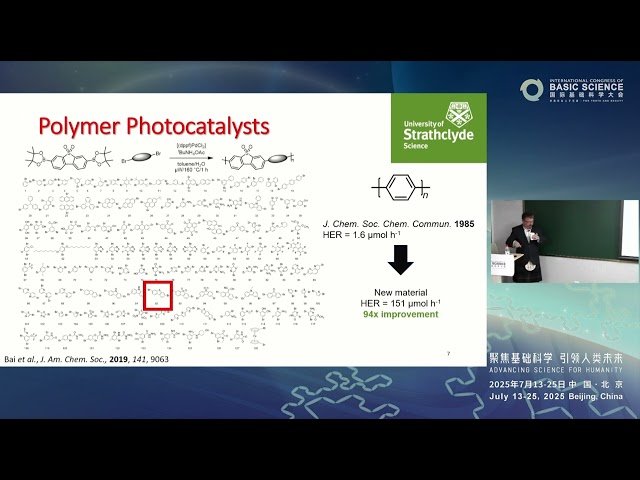
Explore the cutting-edge intersection of robotics and chemistry in this 39-minute conference talk from BIMSA's ICBS2025 event. Discover how mobile robotic systems are revolutionizing chemical research and laboratory automation through autonomous experimentation capabilities. Learn about the design principles, implementation challenges, and practical applications of robotic chemists that can navigate laboratory environments independently. Examine the technological innovations enabling robots to perform complex chemical synthesis, analysis, and discovery tasks with minimal human intervention. Understand the potential impact of mobile robotic chemists on accelerating scientific discovery, improving experimental reproducibility, and transforming traditional laboratory workflows in chemical research and development.

YouTube
Explore the life and legacy of nineteenth century chemist Henry Enfield Roscoe through a detailed biographical lecture presented by Peter Morris, drawing from his forthcoming collaborative biography with Peter Reed. Delve into Roscoe's significant contributions to chemistry, his campaigning efforts, and his impact on the scientific community during the Victorian era. Learn about the historical context and scientific developments of the period while gaining insights into the personal and professional journey of this influential chemist.

Study.com
Review our Significant Chemists Study Guide course to explore the contributions of the world's most important chemists. The course's simple lessons and self-assessments are great options for students who need to review significant chemists for homework, class assignments or upcoming exams.

YouTube
Explore a historical lecture examining the complex evolution of pharmacy's professional identity in Britain and its relationship with chemistry and medicine. Delve into the fascinating question of why pharmacists can be called chemists while chemists cannot be called pharmacists, tracing back to 19th-century professionalization efforts. Learn about the influence of chemical discoveries in the late 18th century and how forward-thinking chemists and druggists recognized the importance of chemical knowledge in pharmacy education. Discover the French chemist Antoine François Fourcroy's perspective on pharmacy's subordinate position to chemistry, and how British doctors like Anthony Todd Thomson supported this view. Examine the founding of the Pharmaceutical Society of Great Britain in 1841 and its aspirations to establish pharmacy as a fourth branch of medicine. Understand the significant impact of the 1852 Pharmacy Act, which created a statutory register of pharmaceutical chemists, and how subsequent legislation, including the 1858 Medical Act and 1868 Pharmacy and Poisons Act, shaped the professional boundaries and protected titles within the field.

Swayam
This course will start with Basic principles of NMR, walk through the analysis of spectra and demonstrate the application of multidimensional NMR spectroscopy in Chemistry and structural Biology. INTENDED AUDIENCE: M. Sc./ PhD and Scientists working in Pharma and Biophrma IndustriesPREREQUISITES: Under graduate level understanding of Physics and Mathematics INDUSTRY SUPPORT: Biocon, Wockhardt, Aurobindo Biopharma etc

Swayam
In this course, I will discuss fundamental concepts of NMR spectroscopy, experimental determination of NMR spectral parameters, their interpretation, selective and broadband homo and Heteronuclear spin decoupling, numerous examples of the analysis of NMR spectra of 1H, 13C and other heteronuclei will be given. The relaxation processes, their measurement and utility in understanding molecular dynamics, the polarization transfer mechanism, the spectral editing techniques, such as, APT, DEPT, INEPT will also be discussed. Two dimensional NMR and the commonly employed experiments, viz., COSY, TOCSY, HSQC, HMQC, HMBC, NOESY, etc will be discussed with number of examples. The practical aspects of one and two dimensional NMR data acquisition and processing will also be highlighted. The solid state NMR, magic angle spinning and cross polarization will also be discussed.INTENDED AUDIENCE :It is for chemistry students, pharmaceutical students, biology studentsPREREQUISITES :NoneINDUSTRIES SUPPORT :The pharma industries, such as, sun pharma, syngine, Biocon, Bal pharma, Aurigine, etc.
YouTube
Learn effective strategies for building and training Elixir development teams in this conference talk from Code BEAM Europe 2024. Discover how to expand your hiring pool by growing your own BEAM talent using proven educational techniques that have successfully taught chemistry to tens of thousands of students in Brazil and programming to thousands of developers worldwide. Explore specific methods to capture student interest, ensure lessons take hold quickly, and create lasting learning experiences. Understand how to overcome the challenge of finding BEAM talent by developing internal training programs that build teams with diverse, valuable skills. Master practical approaches to developer education that make the learning process both effective and enjoyable, helping you successfully bring the BEAM platform to a broader audience during this pivotal year of adoption.

Swayam
ABOUT THE COURSE:In this course, we are going to discuss the fundamentals of two unique spectroscopic techniques: Circular Dichroism (CD) and Mossbauer spectroscopy. These techniques are becoming essential for deciphering the structural dynamics of inorganic complexes in recent times.INTENDED AUDIENCE: Chemistry and chemical engineering masters students Chemistry PhD studentsPREREQUISITES: BSc or BTech

YouTube
Explore a compelling lecture highlighting the remarkable achievements and diverse contributions of twelve groundbreaking women chemists who shaped scientific history but remain largely unknown. Delve into the stories of these pioneering scientists whose work spans various chemical disciplines and discoveries, including potential Nobel Prize candidates and researchers who made significant contributions to the Periodic Table. Learn about British women chemists and their groundbreaking research through this 49-minute presentation that aims to rectify historical oversights and bring deserved recognition to these accomplished scientists whose achievements have only recently begun to receive proper acknowledgment in the scientific community.

XuetangX
This online course aims to help students to learn the etiology, pathogenesis, pathological changes, progress and outcomes of diseases. This course will provide the theoretical basis for the diagnosis and treatment of disease. Hence, it is the bridge between basic science and clinical medicine and the very fabric that underpins clinical medical practice. we insist on setting the curriculum objectives and optimizing the curriculum structure in the perspective of Competency-based Medical Education(OBE), and effectively help students learn actively Strengthen the cultivation of students' competence.

YouTube
Dive into the world of React.js with this comprehensive conference recording from React Amsterdam 2018. Explore a diverse range of topics presented by industry experts, including reactive programming, state management, GraphQL integration, and component development. Learn how to leverage D3 with React, create inclusive applications, and scale GraphQL on AWS. Discover new approaches to React 16, mixed-mode React, and the latest in open-source developments. Gain valuable insights and practical knowledge to enhance your React.js skills and stay up-to-date with the latest trends in the React ecosystem.

YouTube
Embark on a comprehensive journey through the fundamental principles of chemistry with this 8-hour video series. Explore a wide range of topics, from the basics of matter and atomic theory to advanced concepts like quantum mechanics, thermodynamics, and electrochemistry. Learn about chemical bonding, stoichiometry, gas laws, and solution chemistry. Dive into the intricacies of acid-base reactions, redox processes, and nuclear chemistry. Gain practical skills in chemical nomenclature, problem-solving, and data analysis. Ideal for high school and college students, as well as curious beginners, this series provides a solid foundation in the central science, preparing you for further studies or simply satisfying your scientific curiosity.

XuetangX
General ChemistryChapter 1: The Foundations of Chemistry1.1 Basic Concepts1.2 Gases, Liquids and Solutions1.3 Errors and Significant DigitsChapter 2: Atomic Structure and the Periodic Properties of Elements2.1 The Law of the Motion of Microscopic Particles2.2 The Schrödinger Equations2.3 Radial Distribution Functions2.4 Angular Distribution Functions2.5 Factors Effecting Electron Energy2.6 The Periodic Properties of ElementsChapter 3: Covalent Bond Theories3.1 Basic concepts of Chemical Bonds3.2 Lewis’ Theories3.3 Valence Bond Theories3.4 Hybrid Orbital Theories3.5 Valence Shell Electron Pair Repulsion Theories3.6 Molecular Orbital TheoriesChapter 4: Crystal Types and Intermolecular Forces4.1 Crystal Types4.2 Molecular Crystal and Intermolecular Forces4.3 Ionic Crystal and Ionic Bonds4.4 Polarization of Ions4.5 Metallic Crystal and Metallic BondsChapter 5: Preliminary Chemical Thermodynamics5.1 Basic concepts of Chemical Thermodynamics5.2 First Law of Thermodynamics5.3 Third Law of Thermodynamics5.4 Second Law of ThermodynamicsChapter 6: The Rates of Chemical Reactions6.1 Chemical Reaction Rate and Expression6.2 Effects of External Conditions on Reaction RateChapter 7: Chemical Equilibria7.1 Chemical Equilibrium Constant7.2 Shifting of Chemical EquilibriumChapter 8: Acids & Bases Equilibrium8.1 Electrolyte Solution Theories8.2 The Development of Acids & Bases Theories8.3 Weak Acids & Bases Ionization Equilibria8.4 Buffered SolutionChapter 9: The Equilibrium of Precipitation9.1 The Equilibrium of Precipitation9.2 Shifting of The Equilibrium of Precipitation Chapter 10: Oxidation-Reduction Reactions10.1 Oxidation-Reduction Reactions10.2 Primary Cells and Electrode Potential10.3 Thermodynamics of Cell Reactions and The Factors Affecting Electrode Potential10.4 The ApplicationsChapter 11: Coordination Compounds11.1 Basic concepts of Coordination Compounds11.2 Stereochemistry of Coordination Compounds11.3 Bonding Theories of Coordination Compounds — Valence Bond Theories11.4 Bonding Theories of Coordination Compounds — Crystal Field Theories11.5 Stability and Equilibrium Coordination CompoundsChapter 12: Elemental Commonality12.1 The Origins of Elements12.2 The Main Group Elements — s-block12.3 The Main Group Elements — p-block12.4 The Transition Metal Elements — d-block and ds-block12.5 The Rare Earth Elements — f-block
Coursera
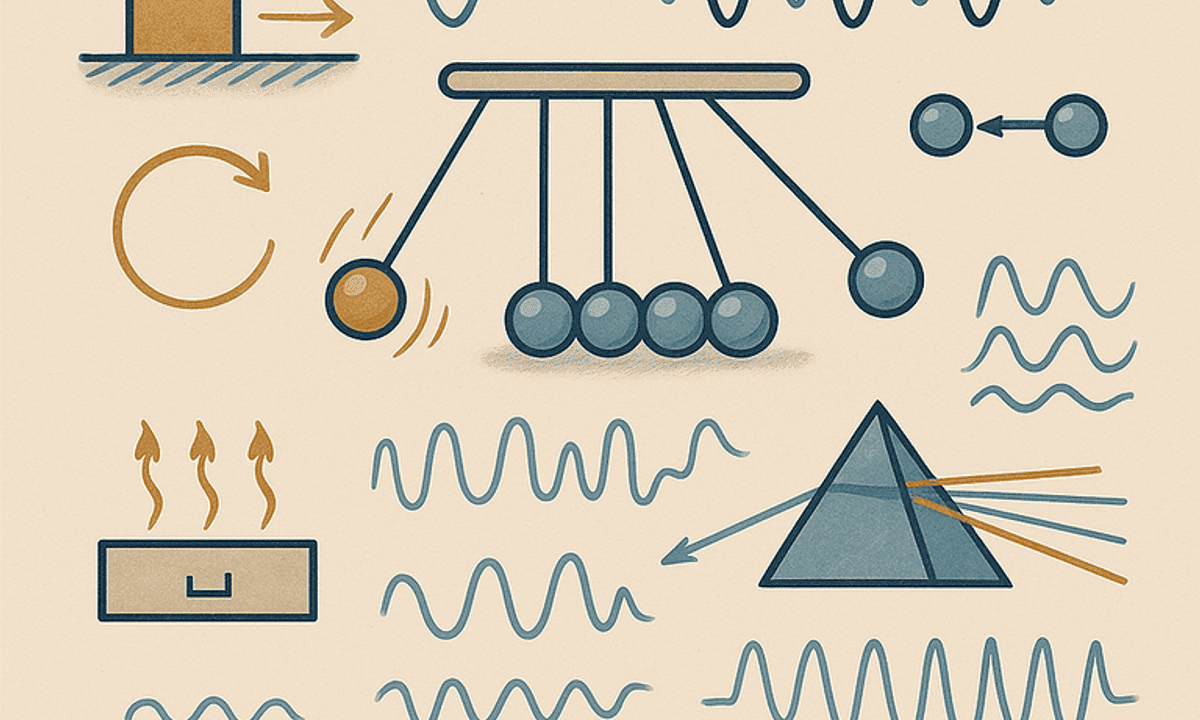
Build a comprehensive foundation in fundamental physics principles that govern the natural world. This course provides essential expertise in classical mechanics, thermodynamics, and optics, offering practical frameworks to analyze and explain diverse physical phenomena through quantitative approaches. Learn to apply Newton's laws to complex scenarios, understand energy and momentum principles, and explore wave mechanics through simple harmonic motion. Master the first and second laws of thermodynamics with real-world applications, from microscopic atomic systems to massive engines. Discover optical phenomena including interference, diffraction, and polarization of electromagnetic waves. Whether you're pursuing engineering, physical sciences, or technical careers requiring analytical problem-solving, this course equips you with the fundamental physics knowledge used by scientists and engineers to understand, predict, and optimize physical systems across all scales of nature.

Study.com
Use this self-paced course to explore the field of anthropology. You can study these short lessons and quizzes at any time to catch up on information you missed in class, study for upcoming exams, bring up your grades or check your understanding of fundamental anthropology topics.
Coursera
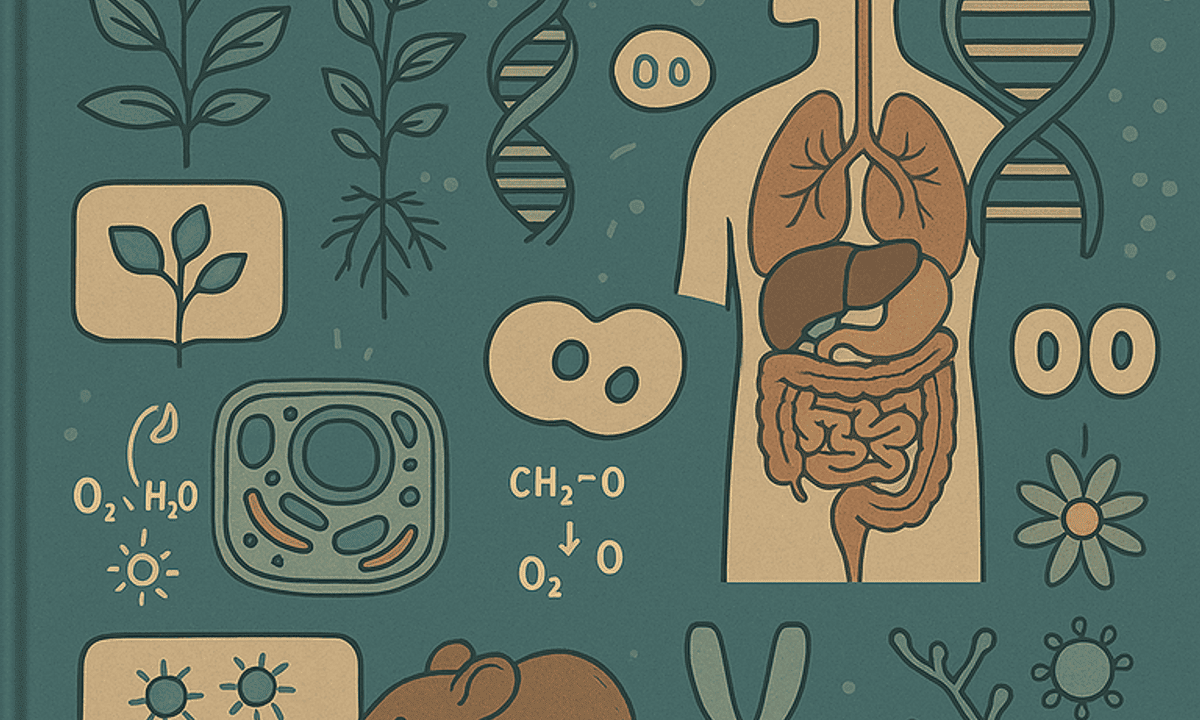
Build a strong foundation in biological sciences—from molecular mechanisms to complex physiological systems. This course covers essential concepts in cell biology, genetics, and human anatomy, providing practical frameworks to explore life processes through scientific inquiry and experimentation. Learn to apply the scientific method, understand cellular structures and energy transformations, and master genetic principles from Mendelian inheritance to epigenetics. Explore biotechnology applications such as recombinant DNA, genetic engineering, and cloning that drive modern medicine and research. Study human systems—circulatory, respiratory, digestive, nervous, endocrine, immune, and reproductive—to see how they maintain homeostasis and adapt to change. Gain expertise in cell division, cancer biology, and immune defenses. Whether you aim for a career in medicine, health sciences, biotechnology, or research, this course equips you with the biological knowledge and analytical skills needed to understand and solve challenges at molecular, cellular, and organismal levels.

MIT OpenCourseWare
8.962 is MIT's graduate course in general relativity, which covers the basic principles of Einstein's general theory of relativity, differential geometry, experimental tests of general relativity, black holes, and cosmology.

Swayam
Microbiology is the study of a diverse group of microscopic organisms such as bacteria, viruses, fungi and protozoa. They are generally too small to be seen without the use of microscope and hence these life forms are called the microorganisms or the microbes. They are almost everywhere and affect almost all aspects of our lives. This is a general microbiology course that is intended for students to impart the knowledge of microbial life. The course structure is based on presenting the fundamentals of microbiology i.e. the biology of bacteria, fungi, viruses and protozoa, their classification, bacterial genetics, mode of replication, bacterial photosynthesis, bacterial fermentation, microbial food spoilage and various methods of food preservation. The students will also be introduced to the microbial pathogenesis of various infectious agents that cause diseases in humans and prevention of the infection, host resistance and immunity etc.

XuetangX
General chemistry, serves as the very first chemistry course in college, builds the fundamental background for all the following courses like inorganic, organic, analytical and physical chemistry. These classes mainly discusses about the development history of chemistry. The role chemistry play in the modern world: daily life, school, factory etc., and the current situation and development prospect of chemistry. Moreover, it also includes the stoichiometry of compounds and chemical reactions, electronic structure of atoms and molecules; chemical bonding, periodic table of elements; electronic structure of atoms and molecules; correlation with the chemical reactivity of common elements, inorganic and organic compounds. Overall, the general chemistry, as a significant course, helps the students to enter the chemistry world.

Swayam
This course attempts to introduce to the nature, fields and application of psychology. Also contents cognitive process, e.g. learning and memory problem solving. In this course Conative processes involved - introduction to motivation. Freudian psychoanalysis, type and trait ; humanistic approach from personality. Students will also gain knowledge about emotions that help them to develop emotional intelligence. It also focuses on individual differences, cognitive, moral and psycho-social developmental aspects. Application of psychology in different areas also covered in this course.