

Courses
Discover thousands of courses from top institutions and platforms worldwide
Level
Course Type
Duration

Pluralsight
Explore the data collection and presentation side of Configuration Manager in this course as you customize hardware and software inventory, create queries and collections, and get to know the CMPivot tool. The previous course finishes most of the foundational configurations to get an MECM primary site operational. But one final preparation involves the settings required to configure and customize hardware and software inventory collection. Enabling this data collection delivers access to an impressive range of machine characteristics. Understanding both the art and the science of then querying that data is arguably the most important and the most difficult part of the job. In this fourth course out of sixteen, Microsoft Endpoint Manager: Inventory, Queries/Collections, and CMPivot with MECM, you'll begin by walking through the enabling and customization of hardware and software inventory on attached clients. Then, you'll dig deeply into the practices -- and the creativity -- in building useful queries that can be turned into ConfigMgr collections. Next, for those situations when you need absolute real-time client data, you'll see how CMPivot can accomplish the task. Then, you'll explore MECM's reporting engine and how to customize reports. Finally, you'll explore some special use cases for this collected data with Asset Intelligence andf Software Metering. By then end of this course, you'll have a better understanding of the settings required to configure and customize hardware and software inventory collection.

YouTube
In this video (Collection Framework in Java) we will discuss about the most popular collection framework in Java and also cover the basics of Java that are required! So, if you’ve just finished learning the basics of Java. The question now is, what do you do now? How can you continue to keep developing your coding skills using Java? This video will answer each and every question that you may have on your mind. It will give you some inspiration and ideas about Java and its applications. In the future, you can get started working on a new Java project and apply your knowledge of Java you learned here on some advanced projects. In this tutorial, we will learn about what is collection framework, why do we use then, and in the end, we will cover an end to end project to cover all the concepts

LinkedIn Learning
Learn how to manage your manager. In this course, adapted from the podcast How to Be Awesome at Your Job, Mary Abbajay explains how to build a good relationship with your boss.

LinkedIn Learning
Learn how to create and manage apps with SCCM and prepare for Microsoft certification exam 70-703. See how to deploy apps using PowerShell scripts, and deploy App-V virtual apps.

Coursera
Great leadership doesn't happen by chance—it happens by design. This course helps you create and evolve a personalized leadership checklist that keeps you focused on what matters most. You'll learn the core components of an effective checklist, from daily practices to strategic responsibilities, and how to structure them for clarity and action. Through practical tools, case examples, and hands-on activities, you'll build a Version 1 of your leadership checklist, test it against real challenges, and refine it as your role evolves.

LinkedIn Learning
Looking for a consistent and reliable way to install Windows applications? Learn about the Chocolatey package manager.

YouTube
Explore 12 essential Laravel collection methods in this comprehensive video tutorial. Learn how to leverage the power of Laravel collections, which offer enhanced functionality compared to standard PHP arrays. Discover techniques for creating method chains to efficiently map and reduce arrays. Follow along as the instructor demonstrates each method, including all(), avg(), chunk(), combine(), contains(), count(), diff(), dd(), flip(), forget(), each(), map(), filter(), pluck(), isEmpty(), and isNotEmpty(). Gain practical insights through examples, including database setup, seeding, and chaining multiple methods together. Master these powerful collection methods to streamline your Laravel development process and write more efficient code.

CodeSignal
This course focuses on understanding why managers are crucial to team success and the positive impact they can have. It covers recognizing both effective and ineffective management behaviors and highlights the unique value managers bring to their teams.

Udemy
Learn how to transition from individual contributor to Manager and Leader with confidence! What you'll learn: Welcome to your career in management. But most important…Welcome to leadership. Even for the most gifted individuals, the process of becoming a leader is a rigorous and many times an exhausting journey. The rewards, however, can be enormous. I surveyed a group of managers across many disciplines and asked the question, “As a new manager, what do you wish you learned early in your career?” What follows in this course, is a result of the responses, as well as my personal experience coaching and mentoring new managers. I will open this course by asking you to be patient with yourself. You do not develop leadership skills overnight. It takes practice, it takes trying new things, it takes making mistakes. Yes, sometimes you will fail. That is ok. It is ok to acknowledge when something doesn’t work, it is ok to celebrate and build on your successes. I have broken this course into individual modules. These are small bite sized modules that you can view either one after the other, or one at a time as you drink your morning coffee. Feel free to jump around and view the modules that are of the most importance to you. Take what works, challenge what doesn’t, try new things. I’m excited to join you in this journey. It’s time to think about success. Let’s Get Started. Welcome to your career in management. But most important…Welcome to leadership. Why did you make this big move? To grow personally and professionally? To make a difference? To lead others to realize their success? All of the above?All this, and more! Even for the most gifted individuals, the process of becoming a leader is a rigorous and many times an exhausting journey. The rewards, however, can be enormous. I surveyed a group of managers across many disciplines and asked the question, “As a new manager, what do you wish you learned early in your career?” What follows in this course, is a result of the responses, as well as my personal experience coaching and mentoring new managers. I will begin by asking you to be patient with yourself. You do not develop leadership skills overnight. It takes practice, it takes trying new things, it takes making mistakes. Yes, sometimes you will fail. That is ok. It is ok to acknowledge when something doesn’t work, it is ok to celebrate and build on your successes. I have broken this course into individual modules. These are small bite sized modules that you can view either one after the other, or one at a time as you drink your morning coffee. Feel free to jump around and view the modules that are of the most importance to you. Take what works, challenge what doesn’t, try new things.The Chapters include:Introduction to ManagementDeveloping Your Leadership StyleLeadership ResponsibilitiesLeadership CommunicationTeam DevelopmentYour Growth and DevelopmentManagers Toolkit I’m excited to join you in this journey. It’s time to think about success. Let’s Get Started.

LinkedIn Learning
Learn the skills you need as a middle manager, including how to build strong hybrid teams, onboard new employees, conduct performance reviews and give feedback, develop OKRs to drive business alignment, trust your teams to do their best work, build visibility online as a remote leader, and communicate across cultures virtually. After completing this learning path, advance your skills with Manage Remote and Hybrid Teams as a Senior Manager.Build strong hybrid/remote teams.Onboard new employees effectively.Create OKRs that drive alignment, autonomy, and accountability.Communicate across cultures virtually.

LinkedIn Learning
Discover what it means to lead at a distance. As a new manager, learn how to run effective virtual and hybrid meetings, build a virtual team culture, communicate across cultures, whether working virtually or in person, and drive engagement, productivity, and growth. After completing this learning path, advance your skills with Manage Remote and Hybrid Teams as a Middle Manager.Discover what it means to lead at a distance.Drive engagement, productivity, and growth remotely.Run effective virtual and hybrid meetings.Communicate across cultures virtually.

LinkedIn Learning
As a senior manager, you're leading distributed teams remotely, in an office setting or both. In this learning path, you’ll learn how to plan for and embrace this new reality, including how to run collaborative hybrid teams, communicate across cultures and create great employee experiences, coach your people, and drive results and resolve conflict.Plan for the work-from-anywhere organization.Build a high-performance work culture.Communicate across cultures virtually.Drive results and resolve conflict.

CodeSignal
Explore the power of Clojure collections in this course. Delve into lists, vectors, maps, sets, and sequences. Master operations like adding and removing items, accessing, and transforming data efficiently. This course is geared to enhance your ability to manage and process data, boosting your Clojure programming skills.

Pluralsight
In today's fast-paced world of programming, handling and organizing data efficiently is a challenge that every developer faces. In this course, Python Collections, you’ll learn how to optimize and enhance your data handling skills in Python. First, you’ll explore the foundational aspects of Python's built-in container types: lists, dictionaries, tuples, and sets, understanding their unique characteristics and best use cases. Next, you’ll discover advanced dictionary types such as defaultdict, OrderedDict, and Counter, diving into their specialized functionalities that streamline common programming tasks. Finally, you’ll learn how to leverage specialized collection classes like namedtuple, ChainMap, and deque, enhancing the efficiency and readability of your code. When you’re finished with this course, you’ll have the skills and knowledge of Python's container data types needed to create elegant, efficient solutions in your programming projects.

YouTube
Explore the evolution of Java's Collections Framework in this 51-minute Devoxx conference talk. Dive into recent enhancements, focusing on Java 9 additions like JEP 269's Convenience Factory Methods. Learn about minor streams improvements and get a glimpse of potential future updates to Collections and Streams APIs. Gain insights from Stuart Marks, a Principal Member of Technical Staff in Oracle's Java Platform Group, as he shares his expertise on core libraries, including Collections, Lambda, and Streams. Understand how the Collections Framework, introduced in 1998, continues to adapt and remain relevant in modern Java development.

YouTube
Explore the evolution and enhancements of Java's Collections Framework in this comprehensive Devoxx conference talk. Delve into the lambda-capable default methods introduced in Java 8, upcoming improvements for Java 9 including JEP 269 Convenience Factory Methods, and potential future developments. Learn about enhanced for-loops, Iterable interfaces, and new Map methods. Examine design goals, implementation issues, and rationale behind changes to Collections. Gain insights from Stuart Marks, a Principal Member of Technical Staff in Oracle's Java Platform Group, as he shares his expertise on core libraries projects, deprecation mechanisms, and the ongoing refinement of this fundamental Java component.

LinkedIn Learning
Learn how to maintain structured collections of data in C# and choose the right collection class for a wide variety of programming scenarios.

Pluralsight
Almost every application in the world needs to manipulate data in some sort of collection. This course will teach you how to use Scala's sophisticated collection types and take advantage of the functional programming style Scala is renowned for. If you’re a programmer targeting the JVM, you'll be familiar with Java and its collection types. In this course, Scala Collections, you'll learn about Scala's power and its collections that will help your next application. First, you'll discover Scala lists and how to find elements in them. Next, you'll explore collection types and how to choose which is right for you. Finally, you'll learn how to transform elements and simplify complex computations. When you're finished with this course, you'll have the knowledge required to use Scala's collections and some of the functional programming idioms that power them.
YouTube
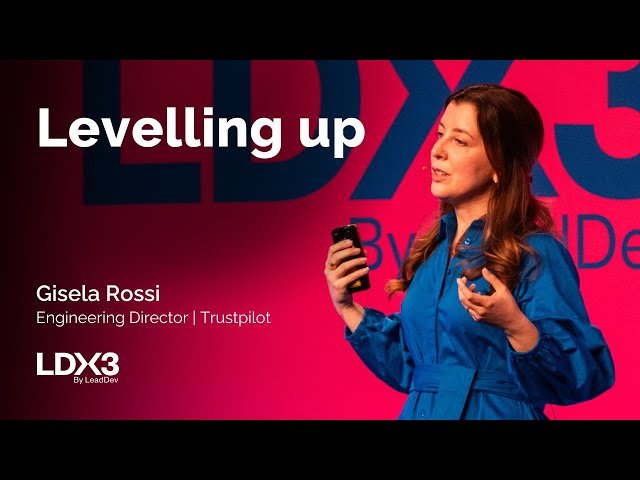
Explore the critical transition from engineering manager to manager of managers in this 23-minute conference talk that addresses the surprising lack of guidance available for this pivotal career step. Learn from practical insights gained during a year-long journey of scaling from managing one engineering team to overseeing five teams. Discover the key similarities and differences between managing individual contributors and managing other managers, while identifying which existing strengths to leverage and where new skills need development. Examine the biggest challenges faced during this transition alongside debunking common misconceptions about the role. Gain practical tips and templates for navigating information flow within organizations, influencing decisions effectively, and understanding the evolving nature of problems and their resolution at this leadership level. Whether considering this career path, currently in transition, or working alongside senior engineering leaders, acquire actionable strategies to make this professional evolution both smooth and successful while building confidence that complex leadership challenges are indeed "figurable."

YouTube
Explore Azure Monitor System Center Operations Manager (SCOM) Managed Instance in this 21-minute video tutorial. Learn about the differences between DIY SCOM and SCOM MI, customer responsibilities, Microsoft-managed aspects, connectivity options, management tooling, and supported agents. Discover supported management packs, resiliency and scaling features, enhanced agent log capture, and updating processes. Gain insights into pricing models and migration strategies from existing SCOM deployments. Dive into key topics such as connectivity, management tools, and the benefits of Microsoft-managed infrastructure to understand how SCOM MI can streamline your monitoring responsibilities while maintaining familiar SCOM functionality.