

Courses
Discover thousands of courses from top institutions and platforms worldwide
Level
Course Type
Duration

Coursera
Get started in the in-demand field of Compensation and Benefits with a Human Resources (HR) Professional Certificate from ADP. Learn about the value Compensation and Benefits brings to an organization, the foundational concepts needed by every professional, and the essential competencies you’ll need to be successful. Explore real-life scenarios and complete hands-on practice in nine key areas: total rewards, benefit strategies, health and welfare benefits, financial growth and protection benefits, additional benefits and perks, compensation strategies, base pay administration, job analysis, and variable pay programs. You’ll develop essential skills in project management, Microsoft™ Excel™, data analysis and communications, plus you’ll apply your knowledge using real-world scenarios designed and taught by Compensation and Benefits leaders at ADP.

Coursera
This course examines the intricacies of the total rewards package for employment. You will learn how to structure a compensation strategy and evaluate benefit trends in the market. You will also learn about different benefit types and options as well as various pay systems and HR technology. By the end of this course, you will be able to: ● Explain the most common theories and motivational principles associated with total rewards ● Evaluate how your organization wants to structure compensation strategy ● Explain how job evaluation techniques are used to align compensation strategy with actual pay ● Explain different benefit types and options ● Appraise different types of pay systems No prior experience in Human Resources is needed to be successful in this course.

LinkedIn Learning
Learn what is involved in a typical job offer so you can negotiate your compensation and benefits package when accepting a new job.

Udemy
This course is a beginners guide to understanding compensation and benefits What you'll learn: What is compensation and benefitsHow to conduct job analysisHow to conduct job evaluationHow to create a pay structureHow to interpret salary survey data Compensation and benefits (C&B) is a sub-discipline of human resources, focused on employee compensation and benefits policy-making. While compensation and benefits are tangible, there are intangible rewards such as recognition, work-life and development. Both tangible and intangible rewards are referred to as total rewards. Total rewards include everything the employee perceives to be of value resulting from the employment relationship (WorldatWork).Total Rewards are the monetary and non-monetary returns provided to employees in exchange for their time, talents, efforts and results. Total Rewards comprise compensation (fixed or at-risk), benefits and, intangible benefits such as training, career progression etc. It encompasses all that the employee perceives to be of value resulting from the employment relationship.This course is focused on helping students acquire the foundational skills required to build competence in the specialist area of Compensation & Benefits as a cardinal sub-field of Human Resources Management. It is believed that how organizations reward their employees is imperative to how they are able to attract, retain and motivate talents within the organization. The Compensation and Benefits for Beginners course will cover the following modules:Concept of Total RewardsConcept of Pay StructureConcept of Job AnalysisConcept of Job EvaluationConcept of Salary Survey This course is for the following target audience:a) Those new to the Human Resources Management;b) Those intending to switch to the Human Resources Management;c) Those already in the Human Resources but without rounded knowledge of Compensation & Benefits

LinkedIn Learning
Learn how to get compensation and benefits right. Learn about the strategic choices that employers make when developing a total rewards system through compensation and benefits.

Coursera
In a world where HR processes are increasingly digitized, this course, "GenAI for Compensation, Benefits, and Payroll," equips you to harness the transformative power of AI in streamlining these critical areas. Designed for both beginners and intermediate professionals, this course provides a practical, hands-on approach to AI applications in payroll automation, personalized benefits, and equitable compensation planning. Through real-world case studies and actionable insights, you will learn how AI addresses common HR challenges—such as ensuring compliance, improving operational efficiency, and tailoring employee benefits to individual needs. You’ll also explore the ethical considerations of AI and how it ensures fairness and transparency in compensation practices. This course is tailored for HR professionals, including Payroll Specialists, Compensation Analysts, Benefits Managers, HR Technology Consultants, and Business Leaders who are eager to explore innovative solutions for enhancing HR operations. It also caters to students and aspiring HR professionals seeking to understand the intersection of Generative AI and human resource management, making it suitable for those with a passion for leveraging technology in strategic HR functions. Participants should have a solid understanding of the fundamentals of compensation, benefits administration, and payroll processes. Basic proficiency in using HR software or payroll systems, along with knowledge of common HR challenges like compliance and employee engagement, will provide a strong foundation for the course. Familiarity with data-driven tools for HR analytics, exposure to common AI applications, and an openness to learning about innovative technologies are helpful for maximizing the course's value. By the end of this course, learners will have a comprehensive understanding of how Generative AI can enhance HR operations. They will explore foundational AI concepts and their ethical application in payroll, benefits, and compensation processes. Participants will gain insights into how AI improves payroll accuracy, adaptability, and employee experience through automation and self-service tools. Additionally, they will evaluate how AI personalizes benefits administration, streamlines workflows, and enables real-time adjustments. Lastly, they will learn how AI transforms compensation strategies by optimizing pay equity, designing data-driven plans, and adapting structures to organizational needs.

Udemy
Course 15 of 20 of The Human Resources Certification Program (HRCI - PHR/SPHR) What you'll learn: Noncash Compensation MethodsCommon Benefits ProgramsFiduciary ResponsibilitiesCommunication and Training The Compensation and Benefits: Organizational Responsibilities course is the 15th of 20 courses developed as part of the Human Resources Certification Program.In this course, the focus will be on noncash compensation systems, such as equity programs and noncash rewards, as well as common benefits programs such as health coverage and employee assistance programs, or EAPs. Next we'll discuss legally mandated benefits, in particular Social Security and Medicare.Then we'll end with a review of the importance of effective and regular employee communications regarding compensation and benefits programs and employee self-service technologies. In topic one, Noncash Compensation Methods, you'll learn about noncash compensation methods such as equity programs and noncash reward systems.Employees need to be physically, mentally, and emotionally fit to cope with the stresses of the modern workplace. In topic two, Common Benefits Programs, the focus will be on health and welfare benefits, retirement plans, and employee assistant programs, or EAPs.While workers' compensation benefits are extensive, they don't provide coverage for all workers' health issues. In topic three, Fiduciary Responsibilities, we'll discuss legally mandated benefits, in particular Social Security and Medicare.HR professionals should communicate with employees above and beyond what is mandated by law.In topic four, Communication and Training, you'll gain a better understanding of the importance of communicating with employees regarding the company’s compensation and benefits programs, policies, and processes, as well as providing related training.That’s it! Now, go ahead and push that “Take this course” button and see you on the inside!

Coursera
This course is the first in ADP’s HR Compensation and Benefit Analyst professional certificate. It begins with an overview of the program, so you know exactly what to expect. Then, you’ll learn about our first key concept: total rewards and the role Compensation and Benefits plays in designing, administering, and managing an organization’s total rewards strategy. After completing this course, you’ll have the skills to: • Identify contributing factors of a total rewards strategy that creates value for organizations and employees. • Determine the role of Compensation and Benefits in terms of the duties and expectations for the general function and the Analyst role. • Evaluate your strengths and abilities as compared to the skills and competencies of a typical Compensation and Benefits Analyst.

Udemy
Course 13 of 20 of The Human Resources Certification Program (HRCI - PHR/SPHR) What you'll learn: Compensation LegislationLegislation Affecting BenefitsTax and Benefit Regulations and Compensation AccountingCommon Compensation and Benefits StrategiesNeeds Assessment The Compensation and Benefits: Regulations, Strategies, and Needs Assessment course is the 13th of 20 courses developed as part of the Human Resources Certification Program.This course examines compensation and benefits programs, often referred to as total rewards, and their importance and impact on reaching organizational goals and objectives.We'll look at federal laws and regulations related to compensation and benefits programs, including a brief review of related tax regulations. From there we'll move to budgeting and accounting for compensation and benefits programs, common compensation and benefits strategies, and how to perform a compensation and benefits needs assessment. In topic one, Compensation Legislation, you'll expand your knowledge of legislation affecting compensation programs and ways to ensure compensation programs are compliant with applicable federal laws and regulations.Employees may bring civil cases against their employers for failing to inform them of their rights under the FMLA. In topic two, Legislation Affecting Benefits, our focus will shift to legislation related to benefits and ways to ensure benefits programs are compliant with applicable federal laws and regulations.USERRA prohibits employers from discriminating against covered individuals in employment decisions because of their military service. In topic three, Tax and Benefits Legislation and Compensation Accounting Practices, the focus will be on tax laws related to compensation and benefits as well as budgeting and accounting practices related to compensation and benefits.Compensation packages that lack strategic focus are often costly for organizations and their employees. In topic four, Common Compensation and Benefits Strategies, we'll look at some of the more common compensation and benefit strategies that HR professionals should be aware of.A structured needs assessment is essential. In topic five, Needs Assessments for Compensation and Benefits programs, the primary focus will be on identifying key elements and conducting compensation and benefits programs needs assessments, including benchmarking, employee surveys, and trend analysis.That’s it! Now, go ahead and push that “Take this course” button and see you on the inside!

Coursera
This course is for anyone who wants to begin their exploration of the benefits component of total rewards. Here, you will learn how to ensure your organization’s benefit strategy is valuable for both the organization and employees, competitive, and fair. You will also learn about various laws and regulations that impact benefit strategy design and administration. Finally, you will explore the Compensation and Benefits Analyst role in successfully administering the benefits strategy and apply what you have learned by evaluating the benefits strategy of a fictional company, Blue Space Tech Performance, and creating an annual planning calendar.

YouTube
Explore the fundamentals of compensation management in human resources through this comprehensive 44-minute video lecture. Delve into the definition, objectives, and principles of compensation management, understanding its crucial role in organizational success. Learn about various types of compensation, including traditional salary and non-cash incentives, and gain insights into creating effective compensation plans. Examine the compensation management process, its challenges, and the specifics of executive compensation. Ideal for HR professionals and managers seeking to enhance their knowledge of employee remuneration strategies and practices.

Coursera
The Fundamentals of Compensation Strategies introduces you to the key element of total rewards: compensation. In this course, you’ll gain greater awareness of the different types of compensation and how the value of each type may vary depending on the organization and employee’s needs. You’ll look at regulatory topics that impact the compensation field and factors that promote fairness, transparency, and accountability. In the latter half of the course, you’ll look at designing a compensation strategy and the role the Compensation and Benefits Analyst plays in administering and managing to strategy elements.

YouTube
Learn about employee compensation analysis through a comprehensive 57-minute lecture covering key aspects of post-employment and share-based benefits for the CFA Level II Financial Reporting and Analysis module. Master the distinctions between various employee compensation types, understand the impact of share-based compensation on financial statements, and develop skills in forecasting share-based compensation expenses and outstanding shares for financial modeling. Explore how post-employment benefits influence financial statements and gain practical knowledge of financial modeling and valuation considerations for post-employment benefits. Delve into essential learning objectives that align with the 2024 CFA Level II exam requirements, focusing on critical analysis and understanding of employee compensation structures and their financial implications.

Coursera
Whether you're writing paychecks or wondering where yours comes from, this course is for you! We begin by asking: "To succeed, what kind of a person does your organization need to attract, retain, and motivate?" From there, we'll explain how to align your organization's objectives, its pay philosophy, and ultimately the way it designs and implements its salary structure, short-term incentives, long-term incentives, and benefits. Interested in learning more about the technical aspects of compensation, but don't know where to begin? We'll give an overview of key the key technical skills: compliance with pay regulations, understanding stock options, shopping for health insurance and pension providers, and designing incentive plans. Lastly, we'll discuss non-monetary methods of motivating employees. Upon completing the course, you should be able to have an understanding of compensation both strategically and technically. Learners will also gain introductory familiarity with pay regulation in the US.

Study.com
This self-paced workers' compensation training course can help you become a more effective employer and employee. Having this type of knowledge can improve your work performance and help you better understand the legal components of workers' compensation.
SAP Learning
This course provides an overview of the core functionalities, features, and administration tasks associated with SAP SuccessFactors Compensation Administration. This course is designed specifically for system administrators, however, other employees in an organization can benefit from the completion of the content, including end users, major stakeholders and managers.

YouTube
Learn about Miller compensation techniques for operational transconductance amplifiers (OTAs) in this 15-minute video lecture. Explore dominant-pole compensation, phase margin, and zero-cancellation methods while examining the Miller compensation OTA schematic. Gain valuable insights into improving amplifier stability and performance through this concise yet comprehensive presentation from NPTEL-NOC IITM.

LinkedIn Learning
Learn how to successfully negotiate a new job offer, raise, or promotion and ensure everyone feels positive about moving forward.

Coursera
This course is the third part of the Sales Operations/Management Specialization. In it, we will discuss some of the financial aspects involved in managing a sales force. Students will learn about the options available for sales force compensation, the different types plans you can use to manage your sales expenses, and how you can use quotas to help your salespeople achieve goals.
YouTube
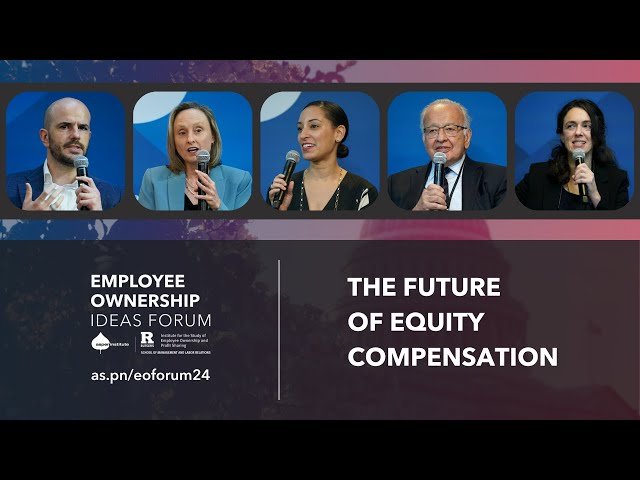
Explore the evolving landscape of equity compensation in this insightful panel discussion from The Aspen Institute's Employee Ownership Ideas Forum. Delve into the current practices that often exclude frontline workers, particularly women and people of color, from wealth-building opportunities through equity compensation. Learn about innovative examples and strategies aimed at making equity compensation more equitable, ensuring that all employees, including those on the frontlines, can benefit from the profits they help generate. Hear from a diverse panel of experts, including executives, advisors, and researchers, as they share their perspectives on creating more inclusive equity compensation models. Gain valuable insights into the potential future of employee ownership and its role in fostering more equitable economies across various communities. Discover additional resources, including highlights, podcast episodes, and supplementary materials, to further expand your understanding of this important topic in corporate compensation and wealth distribution.