

Courses
Discover thousands of courses from top institutions and platforms worldwide
Level
Course Type
Duration

YouTube
Explore innovative approaches to automated compliance in DevOps with this 42-minute conference talk from the RSA Conference. Learn how Shannon Lietz and Michelle Nikulshin, Directors at Intuit, discovered unexpected solutions to DevSecOps challenges by collaborating with auditors. Gain insights into coding security controls and integrating them into software stacks for automated evaluation. Discover the concept of securability scores and how they can be used to assess and improve compliance in DevOps environments. Delve into practical strategies for leveraging code to assert and evaluate controls, streamlining the auditing process and enhancing overall security posture.

Udemy
Plan and Confidently Conduct Quality Management System Audits - Plain and Simple Language - Get 6 PDUs/PDCs/CPDs What you'll learn: Recognize the core principles, best practices, and different types of audits performed in organizations.Prepare thoroughly for both internal and external audits to ensure compliance and effectiveness.Conduct detailed internal and external quality management system audits with confidence and accuracy.Learn how to prepare comprehensive audit reports and effectively follow up on findings to ensure corrective actions.Gain the skills to lead audit teams and manage the entire audit process efficiently and effectively.Learn techniques for effective communication and interviewing during audits.Increase your career growth opportunities within your organization as a certified lead auditor.Gain recognition from top management and peers for your auditing expertise and leadership skills.Become a key player in ensuring your organization’s quality management system is effective and compliant.Demonstrate your commitment to quality and continuous improvement in your profession. Note: Students who complete this course can apply for the certification exam by Quality Gurus Inc. and achieve the Verified Certification from Quality Gurus Inc. It is optional, and there is no separate fee for it. Quality Gurus Inc. is the Authorized Training Partner (ATP # 6034) of the Project Management Institute (PMI®) and the official Recertification Partner of the Society for Human Resource Management (SHRM®)The verified certification from Quality Gurus Inc. provides you with 6.0 pre-approved PMI PDUs and 6.0 SHRM PDCs at no additional cost to you.This course is accredited by the globally renowned CPD Group (UK). CPD Provider #784310 Accreditation # 1016181. *** READ THIS BEFOREYOUBUY ***Currently, I have two courses related to quality auditing on Udemy:1. QMS Auditor / Lead Auditor Course (this course): It is for people who want to learn quality auditing in plain and simple terms, and do not intend to go for the ASQ CQA exam. This course was initially published in June 2014 and was fully updated in May 2020.2. Certified Quality Auditor Training (ASQ CQA Exam Preparation Course): It is designed for people who want to prepare for the ASQ CQA certification exam. If you are interested in this course, then search for the term "Certified Quality Auditor Training" and buy that course.In this QMS Auditor/Lead Auditor Course, you will learn auditing skills through short and easy-to-understand video lessons and quizzes. Why this course?Start your auditing learning with an experienced instructor having 35 years of practical experience in implementing and auditing Quality Management.9,000+ satisfied students. Here is a summary of the topics covered in this course.Basics of auditingQuality definitions based on ISO 9000How to plan and prepare for an audit?Conducting the audit opening and closing meetingsHow to conduct an audit?Audit questioning and data collection tips and techniquesHow to classify audit findings?How to produce an effective report and follow up with the auditee to close the audit?Continuous Professional Development (CPD) Units:For the ASQ® Recertification Units (RUs), we suggest 0.60 RUs under the Professional Development > Continuing Education category.For PMI®, 6.0 pre-approved PDUs can be provided after completing our optional/free certification exam. The detailed steps for taking Quality Gurus Inc. certification with preapproved PDUs are provided in the courses. OVER 9000HIGHLY SATISFIED STUDENTS HAVE ALREADY TAKEN THIS COURSE. Many Quality Managers have purchased multiple copies of this course for all their QA/QC staff in the company.Learn the principles and practice of auditing the Quality Management Systems requirements. What are other students saying about this course?I worked for more than 18 years as an auditor and lead auditor. I believe that this course is very valuable and explained concepts and processes very simply and amazingly. I appreciate it and thank you so much. (5 stars by SeyedehFereshteh MousaviKelarsy)Simple, easy and very helpful! Sandeep's course offers a great foundation for new auditors as well as a great refresher for more seasoned ones. (5 stars by Justin Chezem)Excellent teaching with practical examples. (5 stars by Mohammed Ehtesham Ali)Great information (5 stars by Jc le Roux)Excellent course and highly recommended for anyone who wants to become an auditor or improve his/her skills and knowledge as an auditor. (5 stars by Philip Swart) What are you waiting for?This course comes with Udemy's 30 days money-back guarantee. If you are not satisfied with the course, get your money back.I hope to see you in the course.

YouTube
Explore a thought-provoking conference talk that delves into the complex relationship between DevOps practices and security, compliance, and auditing requirements. Gain insights into the challenges faced by DevOps teams when balancing rapid development with stringent security measures. Learn about potential strategies for bridging the gap between these often conflicting priorities and discover how to foster better collaboration between development, operations, and security teams. Understand the importance of integrating security and compliance considerations into the DevOps pipeline from the outset, and explore practical approaches to achieve this integration without sacrificing agility or innovation.

YouTube
Watch a 36-minute conference session from JNUC 2024 that demonstrates how to effectively manage security audits using Jamf Pro and various compliance tools. Learn to leverage the macOS Security Compliance Project, Jamf Compliance Editor, and Drata integrations to generate comprehensive audit-ready data. Master the configuration of security profiles to meet stringent audit requirements while discovering how to present compelling security compliance evidence to auditors. Gain practical insights into integrating security compliance tools, adjusting profiles to match audit standards, and producing documentation that satisfies auditor expectations. Perfect for IT professionals and security teams working to maintain compliance with rigorous security standards in their organization's Mac environment.
YouTube
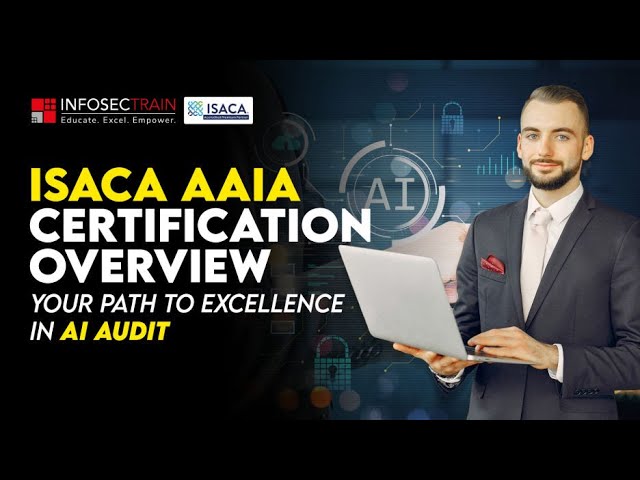
Explore the ISACA Artificial Intelligence Auditor (AAIA) Certification in this comprehensive 28-minute masterclass designed for professionals seeking to audit AI systems and manage associated risks. Gain essential knowledge about auditing artificial intelligence implementations, ensuring compliance with regulatory requirements, and building trust in AI-driven business ecosystems. Discover how this certification empowers auditors, IT risk managers, and compliance experts to advance their careers in technology audit, governance, and assurance roles. Learn about the AAIA certification structure, exam requirements, and strategic preparation approaches needed for certification success. Understand the key benefits of obtaining this specialized credential in the rapidly evolving field of AI governance and risk management. Master the fundamental concepts required to effectively audit AI systems while ensuring organizational compliance and risk mitigation in technology-driven environments.
Cybrary
Prerequisites A basic understanding of audit and cybersecurity would be beneficial but not required. Who Is This Course For? Managers, Cybersecurity Engineers, IT Professionals, Students Course Goals By the end of this course, students should be able to: Know the purpose of a cybersecurity audit Define cybersecurity audit controls Identify cybersecurity audit frameworks Explain proper audit team performance Define the benefits of a cybersecurity audit In this Cyber security Audit training course, students will learn what a cybersecurity audit is, why it’s important, and how these audits are conducted. The course covers the importance of policies and controls within the information security of an organization. What is a Cybersecurity Audit? An audit, in general, is an in-depth and comprehensive review of an organization’s compliance with corporate or regulatory rules and regulations. The goal of an audit is to make sure that the company is meeting organizational and legal requirements. In a cybersecurity or information security audit, the auditor focusses on collecting sufficient evidence to determine if the organization’s security controls (technical, administrative, or physical) are compliant with a set of established criteria. The criteria may be policies that are set by the organization itself, best practices and cybersecurity requirements imposed by government or industry bodies, or both. What Does the Cyber Security Audit Training Course Involve? In this course, students will learn fundamental knowledge of auditing in the realm of cybersecurity. What a cybersecurity audit is, why it’s important, and how to conduct an audit will be covered. Upon completing the training course, students will have a thorough understanding of process, policy, and control as they relate to cybersecurity auditing. The Cyber security Audit training course is ideal for IT professionals, ethical hackers, organizational management, and HR recruiters who hire cybersecurity professionals. Upon completing this course, students will receive a Certificate of Completion. What is a Cybersecurity Auditor? A cybersecurity auditor is a professional who investigates the effectiveness and safety of computer and network systems and corresponding security components. They are typically focused on areas that could cause vulnerabilities and risks of hacking or other cyberattacks. Upon completing the audit investigation, auditors typically are responsible for generating a detailed report that outlines any security issues that have been identified, the overall effectiveness of the systems, and recommendations for changes and improvements. How Do You Become a Cybersecurity Auditor? There are usually several steps that an individual must take to become a cybersecurity auditor. The first step is typically in some type of entry-level IT position. Some of these roles include: System Administrator Security Administrator Network Administrator After obtaining work experience and knowledge in one of those positions, individuals may find that they are ready to move into a more specialized role, like one of the following: Security Analyst Security Specialist Security Engineer Security Consultant From here, there are two routes that someone might take to get to a cybersecurity auditing role. Some information security professionals transition into a management position, while others move directly from the specialized technical position directly to auditing. Some of the managerial positions might include: IT Project Manager Security Manager Security Director Chief Information Security Officer (CISO) Then, onto a cybersecurity auditing position. There are various titles that an individual might pursue in this field, including: IT Auditor Information Security Auditor Information Systems Auditor What Does a Cybersecurity Auditor Do? Becoming an auditor in the cybersecurity industry can be a lucrative and fulfilling career, as there is a high demand for these types of professionals and a shortage of professionals to fill open positions. Auditors are an essential role for organizations of all types. The role isn’t specifically responsible for implementing or operating security controls, rather an auditor provides an independent view of the organization’s overall security and integrity of its information systems. They also ensure compliance with regulations and laws that the organization must adhere to. The most common responsibilities associated with the cybersecurity auditor role include: Documentation of the audit process Execution of security audits Evaluation of security policies and controls Writing audit findings reports Analyzing and interpreting results of audits Determining compliance with any policy, regulation, or law that is applicable Cybersecurity auditors may be part of an internal security team. In that role the auditor would be performing audits only for the organization he or she works for. Other security auditors may work for external companies or government agencies that go into an organization to perform audits to ensure the organization’s compliance with industry policies and regulations. If you are interested in cybersecurity auditing, the Cybersecurity Audit training course is a great first step. It’s easy to enroll, just click on the Register button in the top right corner of this screen to begin.

Udemy
How to Implement & Audit an ISO 9001:2015 Quality Management Systems Lead Auditor/ Auditor course What you'll learn: Skills necessary to implement & audit a complete QMS against the ISO standardsTo Implement QMS based on ISO 9001To understand Auditors roles in auditing ISO 9001:2018 requirements and clausesTo learn principles of auditTo learn practice of auditingTo know the roles & responsibilities of Auditors & Lead AuditorsHow to Plan and conduct an auditAudit report writingAudit follow up Are you developing and implementing a quality management system? Are you able to conduct internal audits within your organization? Do you want to become an internal quality management auditor? Do you want to become an independent external auditor? Do you want to work in the area of audit planning and become lead quality management systems auditor ?or If you wish to consolidate any informal experience you may have gained in your career, this course is for you.A course for lead auditors and auditors intending to perform first, second- and third-party audits of management systems against ISO 9001 in accordance with ISO 19011 and ISO/IEC 17021, as applicable. Reference is made to the standard ISO 19011 for first- and second-party audits as well as the requirements of the ISO 17021 for third party audits.Participant evaluation is through the examination at the end of the course.A ‘Certificate of Achievement’ will be awarded to participants who passes the examination at the end of the course.ObjectiveUpon successful completion of the ISO 9001:2015 lead auditor training course, attendees will fully understand:The purpose of management systems;The purposes and business benefits of a quality management system, quality management system standards, management system audits and third-party certificationRisk-based thinking process;ISO 9001:2015 purpose and requirements from an auditing perspective;The purpose of an audit;Auditing procedures and communication;Value added audit reporting and follow-up.

Udemy
Master CQA with Confidence: Join Our Comprehensive, Proven Exam Prep Course Now! What you'll learn: Successfully pass the Certified Quality Auditor (CQA) exam on your first attempt with comprehensive and focused preparation.Confidently conduct internal and external quality management system audits, enhancing your ability to evaluate and improve organizational processes.Understand the detailed roles and responsibilities of a quality auditor, ensuring you are well-prepared for real-world auditing scenarios.This course is fully aligned with the Certified Quality Auditor Body of Knowledge, as recognized by internationally renowned certification bodies.Master the principles and practices of effective audits in accordance with ISO 19011, "Guidelines on Auditing Management Systems."Gain practical auditing skills through short, easy-to-understand video lessons and quizzes, designed to reinforce key concepts.Boost your career prospects with a CQA certification, gaining recognition from peers and top management for your auditing expertise.Benefit from real-world examples and practical insights that make learning engaging and applicable to your auditing practice. You can use this course for two purposes:1. Passing the Certified Quality Auditor (CQA) certification exam2. Understanding and implementing Quality Auditing principles to improve an organization's performance Why this course?Learn Quality Auditing from an experienced instructor (retired as a Quality Director) having 35 years of "practical experience" in implementing Quality Management, Auditing and Continuous Performance Improvement.2,000+ satisfied students. This course teaches the principles and practices of effective audits in accordance with ISO 19011, "Guidelines on AuditingManagement Systems".Training your internal auditors and quality management team members to understand the basics of quality auditing principles and apply best practices in this field.You will learn auditing skills through short and easy-to-understand video lessons and quizzes. What is covered in this course? This course is fully aligned with the latest Certified Quality Auditor (CQA) Body of Knowledge.Section 1 Auditing Fundamentals Section 2 Audit Process Section 3 Auditor Competencies Section 4 Auditor Program Management and Business Applications Section 5 Quality Tools and Techniques What are other students saying about this course?I passed the test the first time! ( Annetta Odeh-Quirion)I recommend this course for anyone who wants to be a lead auditor, the course is well organized (Rami Alfarasani)Excellent content and easy to follow. Examples are applicable and clear. Love the instructor's delivery and style! This has really helped me to prepare for the CQA exam. (Jose I. Geronimo)Excellent course! I will recommend it to anyone who want to achieve a CQA certification. (Alejandra Blanco)I took this course and studied in the CQA primer a lot, I passed!! I highly recommend this course!!! (5 stars by Islam Omran)Absolutely amazing teacher, I finished this course and feel that I am so lucky to have this teacher to complete my CQA exam. (Bharatkumar Patel)The beauty of this course I experienced is the small course segments and quizzes which build confidence to look forward ASQ CQA exam.. (Shailesh Dudhekar) What are you waiting for?This course comes with Udemy's 30 days money-back guarantee. If you are not satisfied with the course, get your money back.Also, the course comes with lifetime access. Buy now. Watch anytime.I hope to see you in the course. Note: We are not a representative of ASQ, IASSC or any other certification organization.ASQ is the registered trademark of the American Society for Quality.IASSC is the registered trademark of the International Association for Six Sigma Certification.We are an independent training provider. We are neither associated nor affiliated with the certification organization(s) mentioned in our courses. The name and title of the certification exam mentioned in this course are the trademarks of the respective certification organization. We mention these names and/or the relevant terminologies only to describe the relevant exam processes and knowledge (i.e. Fair Use). Disclaimer: The tagline "Successfully pass the exam on the first attempt" represents an aspirational goal based on the success of past students and is not a guarantee or warranty of passing the exam. Professional certification exams demand rigorous study, understanding, and application of complex concepts. While our courses are designed to aid in clarifying these concepts and have helped many students, success in the exam ultimately depends on the individual's dedication and effort. Enrolling in our course is a step towards preparing for your exam, but it does not warrant exam success without the necessary hard work and comprehensive preparation.

Pluralsight
Information Systems auditors are in high demand but short supply. In this course, The Information Systems Auditing Process: Audit Planning, you will learn the latest standards and requirements to be recognized as a professional information systems Auditor. First, you will gain an understanding of the ethical, professional, and character-traits of an auditor. Then, you will discover how to plan and schedule audit engagements. Finally, you will become familiar with the standards that an auditor is required to follow when conducting an audit. By the end of this course, you will gain the essential knowledge needed to develop your skills as an Information Systems Auditor.
Cybrary
For cyber security professionals who are interested in the field of auditing, the Certified Information Systems Auditor (CISA) certification by ISACA is the leading credential to achieve. In order to face the dynamic requirements of meeting enterprise vulnerability management challenges, this course covers the information systems auditing control processes to ensure that you have the ability to analyze the state of your organization and make changes where needed. Prior to taking this CISA course online, it is recommended that candidates have a minimum of five years of work experience in information security audit, control, assurance, or security. What is CISA? CISA stands for Certified Information Systems Auditor and is a certification that is granted by the Information Systems Audit and Control Association (ISACA). It is the most recognized credential for IS audit control, assurance, and security professionals. It is designed for audit managers, IT auditors, security professionals, and consultants. What is Involved in this online CISA training? Our CISA training provides you with all the knowledge you need to be eligible to work in a professional information systems auditing role and pass the CISA certification exam. The course is a comprehensive study of the auditing process, including: Information Systems Auditing Standards and Processes Acquisition, Development, and Implementation Operations, Maintenance, and Support Code of Professional Ethics Completion of the course demonstrates your overall competencies in auditing, controlling, monitoring, and assessing information security and business systems. While there are no prerequisites for this CISA course, it is suggested that you have previous work experience in information security audit, control, assurance, or security, as previous professional work experience is required to become certified. Why Get CISA Certification? Employees who are CISA certified are seen as knowledgeable, with skills including auditing information systems, ensuring compliance, managing vulnerabilities, and instituting control. Additionally, the benefits of achieving CISA certification include: Automatic marketing of your expertise Globally recognized as an IS audit professional Increases value to the organization Provides a competitive advantage over peers in the industry Shows that candidates possess a high professional standard through ISACA's requirements for continuing education Demonstrates the tactical skill required to successfully complete the exam Credibility in the industry Well-above average salary What Jobs Are CISA Certified Professionals Qualified to Do? The primary role of the information technology auditor is to ensure that there are no situations of unnecessary spending, fraud, or noncompliance with federal regulations and governmental laws. CISA certification holders may be hired for the following positions: IT Audit Manager Internal Auditor Cybersecurity professional IT Consulting Privacy Officer IT Risk and Assurance Manager PCI Security Specialist What Are the Requirements for CISA Certification? To earn a CISA certification, candidates must pass the CISA test with a score of at least 450 (out of a possible 800) and have at least five years of professional experience in information systems auditing, assurance, control, or security. The previous experience requirement must have been within the last ten years preceding the application date for certification. The CISA exam consists of 150 multiple choice questions, for which you have four hours (240 minutes) to complete. The exam questions cover five domains: Information System Auditing Process (21%) Governance and Management of IT (17%) Information Systems Acquisition, Development, and implementation (12%) Information Systems Operation and Business Resilience (23%) Protection of Information Assets (27%) Once successfully passed, your certification will be valid for five years, and then must be reestablished by meeting certain requirements. You can find more information about the exam, scheduling the exam, and maintaining certification on the ISACA website.

Udemy
Build a succesful career in management system auditing by mastering ISO 19011 What you'll learn: What it takes to be a management system auditorHow management system audits are performedWhat you should know in order to build a career in auditing The purpose for this course is to provide all necessary information about management system auditing according to ISO 19011:2018 and other relevant standards.The course should be useful for beginners looking to start a career in management system auditing but also for experienced auditors looking to refresh their knowledge and see what is the approach to auditing of the new version of ISO 19011, the one published in 2018.The structure of the course includes:- a general part discussing concepts, definitions, standards, principles of management system auditing, different types of audits (first, second and third-party audits), the audit programme, risk based thinking applied to audits, audit objectives, scope and criteria as well as the audit team- a part dedicated to specific documents and requirements for a management system audit: audit plan, opening and closing meetings, methods to collect information, conducting interviews, auditing the senior management of a company, auditing compliance, sampling, remote auditing, generating audit findings and audit conclusions, follow-up activities after an audit and the audit report- another part about requirements for auditors (in terms of competence and expected behavior) as well as how to become a management system auditor, including requirements for the audit team leader (or lead auditor)- the last part of the course is about management system certification and audits for certification purposes with a lesson dedicated to the concept of accreditation.The information in this course provides the full package for a management system auditor to understand what is required and how requirements can be met.Looking for a career in auditing? You can start with this course to have a clear image of what it takes. Already an auditor?I'm sure you will find here valuable information.I tried to make the course easy to follow, to keep it to the point and provide you with key information in a simple format. I complemented here and there with some examples so you will understand the concepts better.At the end there is a simple quiz if you want to test your knowledge. Get all the information you need to start build your management system auditor career or update your existing knowledge with this course!

YouTube
Learn how to leverage dbachecks to check SQL Servers for security compliance in this 40-minute conference talk from SQLBits. Discover effective strategies for dealing with auditors and proving system requirements are met. Speaker Tracy Boggiano shares insights on using PowerShell-based tools to streamline database administration, security, and monitoring processes. Gain valuable knowledge on managing on-premises SQL Server environments and simplifying compliance audits.

Coursera
Information System Auditing, Governance, and Management is the first course of Exam Prep: Certified Information Systems Auditor (CISA) Specialization. The course also explores enterprise governance frameworks, IT policies and standards, quality management practices, and enterprise architecture. Additionally, it covers IT resource management and regulatory compliance, providing a comprehensive foundation for professionals involved in IT audit, risk, and governance roles. The course is divided into three modules, and Lessons and Video Lectures further segment each module. This course facilitates learners with approximately 2:00-2:30 Hours of Video lectures that provide both Theory and Hands-On knowledge. Also, Graded and Ungraded Quizzes are provided with every module to test the ability of learners. - Module 1: Information System Auditing Process - Module 2: Execution - Module 3: Governance and Management of IT This course is designed for IT auditors, audit managers, security professionals, and consultants. Their current job roles often involve assessing IT and business systems, managing risks, ensuring compliance, and implementing controls. By the end of the course, learners will be able to: - Evaluate & Test IT Controls Effectively. - Utilize Key Audit Evidence & Analytics. - Understand IT Governance & Compliance.

YouTube
Explore the dynamic relationship between hackers and auditors in this 30-minute conference talk from BSidesLV 2014. Delve into the contrasting mindsets, methodologies, and skills of these two groups as Dan Anderson examines their roles in cybersecurity. Learn about the three types of hackers, the characteristics of effective IT auditors, and the ongoing experiment of integrating hacking techniques into auditing practices. Discover the benefits of this approach and the common traits shared by successful hackers and auditors. Gain insights into reverse engineering, social engineering, and the importance of continuous learning in the ever-evolving field of information security.

Udemy
With Downloadable Templates and a Use Case What you'll learn: Gain a comprehensive understanding of ISO 27001:2022 requirements and its application in information security managementDevelop proficiency in auditing information security systems, identifying vulnerabilities, and providing valuable recommendationsAcquire practical audit techniques and hands-on experience to gather evidence, conduct interviews, and analyze data accuratelyPrepare for ISO 27001 Lead Auditor certification exam and excel in your role as an auditor, contributing to effective information security management Welcome to the ISO 27001:2022 Lead Auditor course, where we take a unique and practical approach to make your learning experience effective and comprehensive. In this course, we go beyond theory by providing you with valuable resources and real-world examples that will enhance your understanding and application of ISO 27001:2022 requirements.Throughout the course, we offer a range of templates specifically designed to streamline your understanding and implementation of ISO 27001:2022. These templates serve as practical tools that you can directly apply to your own organization, saving you time and effort in creating documents from scratch. By utilizing these templates, you will have a clear roadmap for developing policies, conducting risk assessments, and documenting audit findings.Additionally, we introduce you to our model company, HealthBridge Clinic, which serves as a consistent and relatable case study throughout the course. By following the journey of HealthBridge Clinic, you'll gain a firsthand look at how ISO 27001 works in real-life scenarios. This use case approach provides you with practical insights and examples that make the concepts, requirements, and processes of ISO 27001 easy to understand and applicable to your own organization.By the end of this course, you will not only have a deep understanding of ISO 27001:2022, but you will also possess a range of templates and practical knowledge that you can apply directly to your organization. Whether you're an aspiring lead auditor or an information security professional, this course equips you with the necessary resources to implement information security management systems effectively.Enroll now and embark on a transformative learning experience that combines theory with practical tools, real-world examples, and a model company to guide you throughout the course.

Udemy
Certified Information Systems Auditor, Cybersecurity certification, Exam preparation course, Information System IT Audit What you'll learn: Understand the key stages and principles of information systems auditing.Develop the skills to plan, execute, and report on IT audits effectively.Gain insights into the principles of IT governance and its impact on organizational success.Learn how to manage IT resources and align them with strategic objectives.Explore the processes and best practices for acquiring and implementing information systems.Develop the ability to evaluate and manage IT projects for successful implementation.Learn to ensure the uninterrupted operation of information systems and critical business processes.Understand the principles of business resilience and how IT supports disaster recovery and continuity planning.Acquire knowledge about safeguarding information assets from threats and vulnerabilities.Develop skills to assess risks, implement security controls, and maintain data confidentiality, integrity, and availability.Explore the complex landscape of IT auditing, including emerging technologies and challenges.Gain a comprehensive understanding of IT audit methodologies and their application in a digital world. Information Systems Auditor 101 Exam preparation CourseIn today's digital age, information is one of the most valuable assets a company can possess. Protecting that information is crucial, not only for the success of the organization but also to safeguard the privacy and trust of its customers and stakeholders. This is where Information Systems Auditor come into play. In this 101 course, we'll explore the world of Information Systems Auditor certification syllabus and will explore the topics for exam preparation.What is Information Systems Auditor ?Information Systems Auditor is a exam preparation course is for professionals who audit, control, and assure the security of information systems. The Role of a Information Systems Auditor Information Systems Auditor play a pivotal role in organizations by helping them identify vulnerabilities, evaluate risks, and ensure that appropriate controls are in place to safeguard sensitive information. These professionals are responsible for:1. Evaluating the efficiency and effectiveness of an organization's information systems.2. Identifying areas of improvement in information system management.3. Ensuring compliance with regulatory standards.4. Protecting against potential security threats.5. Providing assurance to stakeholders that their information is secure.Why Become a Information Systems Auditor ?The demand for skilled information system auditors is on the rise, thanks to the increasing complexity of information systems and the growing number of data breaches and cyber threats. Here are some reasons why pursuing a Information Systems Auditor certification is a smart career move:1. High Demand: Organizations across industries require professionals who can assess and assure the security and integrity of their information systems.2. Competitive Salaries: Information Systems Auditor -certified professionals often command higher salaries than their non-certified counterparts.3. Career Advancement: A Information Systems Auditor certification can open doors to senior-level positions and leadership roles within an organization.4. Global Recognition: Information Systems Auditor is recognized and respected worldwide, allowing professionals to work internationally.Information Systems Auditor Course 101Information Systems Auditor Course 101 is the first step toward becoming a Certified Information Systems Auditor. This introductory course covers the foundational knowledge and skills necessary for the certification preparation. Here's what you can expect from this course:1. Information Systems Auditing: You'll gain an understanding of the fundamentals of information systems auditing, the audit process, and audit methodologies.2. Governance and Management of IT: Learn about IT governance and management practices, and how they impact an organization's information systems.3. Information Systems Acquisition, Development, and Implementation: Explore the best practices for acquiring, developing, and implementing information systems.4. Information Systems Operations and Business Resilience: Understand how information systems operations and business resilience strategies are integral to an organization's success.5. Protection of Information Assets: Learn how to protect an organization's information assets from internal and external threats.Preparing for the Information Systems Auditor ExamAfter completing Information Systems Auditor Course 101, you'll be better equipped to prepare for the Information Systems Auditor exam. The Information Systems Auditor exam is a comprehensive test that covers the core knowledge areas required for the certification. It's important to review the exam syllabus, practice with sample questions, and consider additional study materials to ensure success.ConclusionBecoming a Certified Information Systems Auditor is a rewarding and lucrative career path. With the increasing importance of information security and regulatory compliance, the demand for Information Systems Auditor -certified professionals continues to grow. Exam preparation Course 101 is your first step towards acquiring the knowledge and skills needed to excel in this field. If you're looking to build a career in information system auditing, consider embarking on the Information Systems Auditor journey, and you'll open the door to a world of opportunities in the dynamic and ever-evolving field of information security.I would like to teach the 6 major topics and 1 practice test, 1. Information Systems Auditing Process2. Governance & Management of IT3. Information Systems Acquisition, Development & Implementation4. Information Systems Operations & Business Resilience5. Protection of Information Assets6. Navigating the Digital Maze: A Comprehensive Discussion to IT Auditing&Practice testYou need to score at least 70% to pass the practice test !Good Luck &Enroll now !
Coursera
Updated in May 2025. This course now features Coursera Coach! A smarter way to learn with interactive, real-time conversations that help you test your knowledge, challenge assumptions, and deepen your understanding as you progress through the course. This course offers a comprehensive exploration of Information Systems (IS) auditing, aligned with ISACA’s five core domains essential for the CISA exam. Starting with foundational IS auditing standards, guidelines, and ethical considerations, it then moves into governance and IT management, emphasizing frameworks and controls critical for effective audits. The course covers the lifecycle of information systems—from acquisition and development to implementation and operations—highlighting how aligning technology with business goals supports continuity and resilience in organizations. Throughout, practical scenarios are used to bridge theory and real-world applications, focusing on risk management, control assessments, and compliance. This course covers emerging technologies like cloud computing and virtualization, highlighting their impact on audit practices. By the end, you’ll be ready for the CISA exam and equipped to handle modern IT auditing challenges. Ideal for IT professionals seeking to specialize in IS auditing or improve their IT governance knowledge, especially those pursuing CISA certification. Prior experience in IT security, audit, or risk management is helpful but not mandatory.

LinkedIn Learning
Get a broad overview of the security auditor job role: what opportunities exist and what knowledge and qualifications you’ll need to step into those opportunities.

Udemy
Path to Success: Navigate Internal Auditing & CIA Certification, Unveil the Secrets of Internal Auditors, CIA Exam Prep. What you'll learn: Understand the fundamental role of internal auditors within organizations, their significance in risk management, governance, and compliance.Prepare students for the Certified Internal Auditor (CIA) certification, covering the requirements, exam structure, and content areas.Gain insights into the IPPF and its relevance in guiding internal audit practices and professional standards.Provide a deep understanding of risk assessment, control frameworks, and the role of internal auditing in managing and mitigating risks.Learn the process of planning, conducting, and reporting on internal audit activities. This includes evidence gathering, fieldwork, and communication of resultsExplore corporate governance principles and ethical considerations in internal auditing, with a focus on maintaining integrity and accountability.Covers the use of data analytics and technology in internal audits, along with various audit sampling techniques.Learn about continuous auditing, monitoring, post-audit responsibilities, and the importance of stakeholder engagement and communication.Exam Preparation and Test-Taking StrategiesReceive guidance on advancing their careers as Certified Internal Auditors, enhancing their professional development and opportunities.and much more Welcome to 'Mastering the Art of Internal Auditing: Certified Internal Auditor (CIA) Essential Training' Certified Internal Auditor (CIA) is a professional certification offered by The Institute of Internal Auditors (IIA), which is an international professional organization dedicated to the internal auditing profession. The CIA designation is globally recognized and signifies that an individual has met the rigorous requirements and demonstrated the necessary knowledge and skills to excel in the field of internal auditing.This comprehensive course is designed to provide you with a thorough understanding of the field of internal auditing, from its fundamental principles to advanced techniques and practices.Throughout this course, you will embark on a journey that covers every aspect of internal auditing, starting with the essential role and importance of internal auditors. You will gain valuable insights into the Certified Internal Auditor (CIA) certification, including what you need to know to excel in this prestigious designation.Moving forward, we delve into the International Professional Practices Framework (IPPF) and its critical components. This framework serves as the foundation for the internal auditing profession, and you will learn how to navigate its intricacies and apply them effectively in your work.Risk management and control are central to the internal audit process, and you will develop a deep understanding of risk assessment, control self-assessment, and the significance of control activities. You'll be equipped with the knowledge and skills needed to assess and mitigate risks effectively.Conducting internal audits is a crucial part of the internal auditor's role, and our course will guide you through the planning, supervision, evidence gathering, and reporting processes. You'll become adept at using audit tools and techniques, including data analytics and technology, and learn how to apply various sampling techniques in your audits.As we progress, you'll explore continuous auditing and continuous monitoring, post-audit responsibilities, and the vital aspect of stakeholder engagement and communication. These elements are essential for ensuring the success and impact of internal audit processes.We also address governance and business ethics, focusing on corporate governance, ethics, and professional conduct. Understanding fraud risks and controls is pivotal in maintaining the integrity of your organization's operations.To help you prepare for the CIA exam, we provide insights into exam preparation and test-taking strategies. You'll gain the confidence and knowledge necessary to excel in this certification examination.Finally, our course extends beyond the classroom by delving into career and professional development. You'll receive guidance on advancing your career as a Certified Internal Auditor and leveraging your expertise to achieve your professional goals.Certified Internal Auditors are expected to adhere to a strict code of ethics and professional standards, and they play a critical role in helping organizations assess and improve their internal controls, risk management, and overall governance processes. The CIA designation serves as a mark of excellence and professionalism in the field of internal auditing.Whether you're a newcomer to the field of internal auditing or an experienced auditor looking to enhance your skills and career prospects, this course equips you with the knowledge and tools to excel in the world of internal auditing. Join us on this educational journey and take the first steps toward mastering the art of internal auditing and achieving your professional aspirations.Thank you.IMPORTANT before enrolling:This course is not intended to replace studying any official vendor material for certification exams, is not endorsed by the certification vendor, and you will not be getting the official certification study material or a voucher as a part of thiscourse.
Coursera
Protection of Information Assets Course is the third course of Exam Prep: Certified Information Systems Auditor (CISA) Specialization. Learners will dive into the OSI model, firewalls, VPNs, and network components, including LAN, VoIP, and wireless technologies. The course emphasizes data protection through encryption, introduces cloud computing fundamentals, and develops skills in security testing and digital forensics. The course is divided into two modules, and each module is further segmented by Lessons and Video Lectures. This course facilitates learners with approximately 3:00-3:30 Hours of Video lectures that provide both Theory and Hands-On knowledge. Also, Graded and Ungraded Quizzes are provided with every module to test the ability of learners. - Module 1: Information Asset Security and Control - Module 2: Security Event Management This specialization is designed for IT auditors, audit managers, security professionals, and consultants. Their current job roles often involve assessing IT and business systems, managing risks, ensuring compliance, and implementing controls. By the end of the course, learners will be able to: - Implement Physical & Logical Access Controls. - Understand Network Security Principles & Technologies. - Recognize Security Threats & Forensic Techniques.