

Courses
Discover thousands of courses from top institutions and platforms worldwide
Level
Course Type
Duration

Udemy
Increase your value as a construction manager by gaining vital knowledge about concrete reinforcing and prestressing. What you'll learn: Explain the meaning of passive reinforcing versus active reinforcingList examples of active and passive reinforcingDiscuss the effects of adding rebar to concreteExplain how the change in location of the rebar within the concrete effects its performanceList advantages of prestressed concreteDescribe the difference between pre-tensioned and post-tensioned reinforcingDescribe the precast concrete process Explain how post-tensioned concrete works List common examples of prestressed concrete structures Concrete is the most widely used building material in the world. In addition to understanding concrete, today's construction professional needs to understand the principles of concrete reinforcing and how prestressed concrete works. This includes both pre-tensioned concrete that is typically manufactured in a precast plant, and post-tensioned concrete that is cast-in-place. Post-tensioned concrete is being used more and more throughout the world to build multi-story structures, slabs-on-ground, and bridges, while precast prestressed concrete continues to be used in rapidly built structures like parking garages. Understanding how and why reinforcing and prestressing works in a concrete structure. Gain a better understanding of the principle and theory behind concrete reinforcing and prestressing to help you be a better construction management professional. After completing this course you will be able to...Explain the meaning of passive reinforcing versus active reinforcing and list examples of eachDiscuss the effects of adding rebar to a concrete elementExplain how the change in location of the rebar within the concrete effects its performanceList advantages of prestressed concreteDescribe the difference between pre-tensioned and post-tensioned reinforcingDescribe the precast concrete processExplain how post-tensioned concrete worksList common examples of prestressed concrete structuresLearn from a professionalMy courses have been created as a place where everyone, whether you are an experienced professional, a young project engineer, new to a trade or a seasoned journeyman, can come to learn more about the industry that we have chosen as our profession. That's what this platform is about. These courses are meant to be a way for you to increase your knowledge of the construction industry in a variety of cutting edge topics from concrete reinforcing and prestressing, to micro trenching, to safety management systems. This is not a course that teaches you how to install rebar or prestressing steel. It is a course that educates you on why we reinforce concrete and how it works. This is information you need as a construction professional in order to talk to designers, owners and subcontractors. This course is a great way for you to increase your knowledge about concrete reinforcing and prestressing.

LinkedIn Learning
Learn how to manage your manager. In this course, adapted from the podcast How to Be Awesome at Your Job, Mary Abbajay explains how to build a good relationship with your boss.

LinkedIn Learning
Learn how to create and manage apps with SCCM and prepare for Microsoft certification exam 70-703. See how to deploy apps using PowerShell scripts, and deploy App-V virtual apps.

CourseHorse
The Construction Site Fire Safety Manager Training (CSFSM) will fulfill the training requirements for Fire Safety Manager under the new regulation of the New York City Fire Safety Department. Course Content: Overview of the construction site fire safety requirements and responsibilities of the fire safety managerIntroduction to FDNY fire code and fire code for construction sitesUpon successful completion of the course and the examination, students will receive a certificate. The student can then file for the FDNY Certificate of Fitness. CSFSM course certificates are valid for one year. FDNY Certificate of Fitness: Upon successful completion of the course, each student has upto 1 year to submit all paperwork and fee to the FDNY. FDNY will review applications and will determine if the student qualifies for the certificate of fitness. Qualified applicants will be required to take a Computer Based Test (CBT) at FDNY headquarters. Fee for Certificate of Fitness: $25 Please Note: After registration, students will receive a information on signing onto the webinar via ZOOM. Please note access to a PC with webcam and audio will be necessary to attend the live webinar. Students will be required to show state ID (example: Drivers License) at the start of the Webinar.

Coursera
Great leadership doesn't happen by chance—it happens by design. This course helps you create and evolve a personalized leadership checklist that keeps you focused on what matters most. You'll learn the core components of an effective checklist, from daily practices to strategic responsibilities, and how to structure them for clarity and action. Through practical tools, case examples, and hands-on activities, you'll build a Version 1 of your leadership checklist, test it against real challenges, and refine it as your role evolves.

LinkedIn Learning
Looking for a consistent and reliable way to install Windows applications? Learn about the Chocolatey package manager.

CodeSignal
This course focuses on understanding why managers are crucial to team success and the positive impact they can have. It covers recognizing both effective and ineffective management behaviors and highlights the unique value managers bring to their teams.

Udemy
Learn how to transition from individual contributor to Manager and Leader with confidence! What you'll learn: Welcome to your career in management. But most important…Welcome to leadership. Even for the most gifted individuals, the process of becoming a leader is a rigorous and many times an exhausting journey. The rewards, however, can be enormous. I surveyed a group of managers across many disciplines and asked the question, “As a new manager, what do you wish you learned early in your career?” What follows in this course, is a result of the responses, as well as my personal experience coaching and mentoring new managers. I will open this course by asking you to be patient with yourself. You do not develop leadership skills overnight. It takes practice, it takes trying new things, it takes making mistakes. Yes, sometimes you will fail. That is ok. It is ok to acknowledge when something doesn’t work, it is ok to celebrate and build on your successes. I have broken this course into individual modules. These are small bite sized modules that you can view either one after the other, or one at a time as you drink your morning coffee. Feel free to jump around and view the modules that are of the most importance to you. Take what works, challenge what doesn’t, try new things. I’m excited to join you in this journey. It’s time to think about success. Let’s Get Started. Welcome to your career in management. But most important…Welcome to leadership. Why did you make this big move? To grow personally and professionally? To make a difference? To lead others to realize their success? All of the above?All this, and more! Even for the most gifted individuals, the process of becoming a leader is a rigorous and many times an exhausting journey. The rewards, however, can be enormous. I surveyed a group of managers across many disciplines and asked the question, “As a new manager, what do you wish you learned early in your career?” What follows in this course, is a result of the responses, as well as my personal experience coaching and mentoring new managers. I will begin by asking you to be patient with yourself. You do not develop leadership skills overnight. It takes practice, it takes trying new things, it takes making mistakes. Yes, sometimes you will fail. That is ok. It is ok to acknowledge when something doesn’t work, it is ok to celebrate and build on your successes. I have broken this course into individual modules. These are small bite sized modules that you can view either one after the other, or one at a time as you drink your morning coffee. Feel free to jump around and view the modules that are of the most importance to you. Take what works, challenge what doesn’t, try new things.The Chapters include:Introduction to ManagementDeveloping Your Leadership StyleLeadership ResponsibilitiesLeadership CommunicationTeam DevelopmentYour Growth and DevelopmentManagers Toolkit I’m excited to join you in this journey. It’s time to think about success. Let’s Get Started.

LinkedIn Learning
Discover how to work with concrete in modern construction. Explore the history and usage of concrete, the principles of concrete reinforcing, and how pre-stressed concrete works.

Udemy
how to build a road What you'll learn: Protection of existing underground servicesField density test-cone methodCalifornia bearing ratio testRoad cross-section and profileclearing and preparing the area for road workExcavation for roadwayEmbankment for roadRoad subgradeFuture utilitiesPavement layers-Sub-base materialsAggregate base coursePrime coatTack CoatAsphalt mixturesAsphalt Paving Courses typesConstructing of asphalt courseTesting of completed asphalt coursesAsphalt design-Marshal method This course designed to expand your practical side of engineering knowledge. This course is concentrating on the construction of roads. Here you will learn how the road constructed. The construction stages such as protection of existing services, clearing the area, future utilities, preparing the road subgrade, then placing different pavement layers such as sub-base, base course, and asphaltic courses. Also, we will discuss the types of asphaltic course and the common defects of asphaltic pavement, such as permanent deformation, fatigue cracking, and low-temperature cracking. Also, I will show a typical cross-section of road and road profiles. Also, I will explain what the prime coat is, why the prime coat is used, and the proper way of applying, preparing the surface of the pavement layer before applying the prime coat, and the curing time for a prime coat. Tack coat, what is the Tack coat, why the Tack coat used, where the tack coat is used, and the proper way of applying of tack coat. This course will explain the process of placing the various pavement layers, spreading of these layers, compacting then testing of the laid layers. Each layer will be tested to determine the in-situ density, level, thickness, and surface smoothness. Also, the course will discuss the various tests conducted on asphalt courses such as density, degree of compaction, stability, flow, and thickness. This course will discuss the Marshall method, Marshall method used to select the suitable bitumen content for a specific gradation of aggregates by testing specimens to assess their properties and suitability.

LinkedIn Learning
Learn the skills you need as a middle manager, including how to build strong hybrid teams, onboard new employees, conduct performance reviews and give feedback, develop OKRs to drive business alignment, trust your teams to do their best work, build visibility online as a remote leader, and communicate across cultures virtually. After completing this learning path, advance your skills with Manage Remote and Hybrid Teams as a Senior Manager.Build strong hybrid/remote teams.Onboard new employees effectively.Create OKRs that drive alignment, autonomy, and accountability.Communicate across cultures virtually.

LinkedIn Learning
Discover what it means to lead at a distance. As a new manager, learn how to run effective virtual and hybrid meetings, build a virtual team culture, communicate across cultures, whether working virtually or in person, and drive engagement, productivity, and growth. After completing this learning path, advance your skills with Manage Remote and Hybrid Teams as a Middle Manager.Discover what it means to lead at a distance.Drive engagement, productivity, and growth remotely.Run effective virtual and hybrid meetings.Communicate across cultures virtually.

LinkedIn Learning
As a senior manager, you're leading distributed teams remotely, in an office setting or both. In this learning path, you’ll learn how to plan for and embrace this new reality, including how to run collaborative hybrid teams, communicate across cultures and create great employee experiences, coach your people, and drive results and resolve conflict.Plan for the work-from-anywhere organization.Build a high-performance work culture.Communicate across cultures virtually.Drive results and resolve conflict.

VDCI
Gain a thorough understanding of the building construction process, from initial site work to final system installations. Learn the essential skills to navigate every phase of construction and prepare you for a career in the construction industry.

LinkedIn Learning
Learn about modular construction, a collection of practices and techniques for constructing buildings offsite.
YouTube
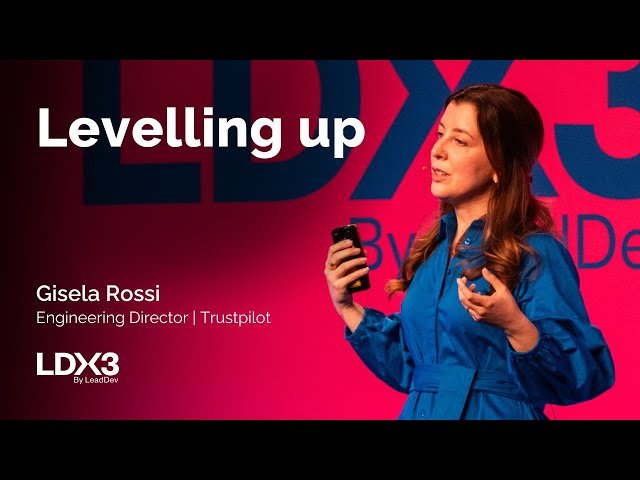
Explore the critical transition from engineering manager to manager of managers in this 23-minute conference talk that addresses the surprising lack of guidance available for this pivotal career step. Learn from practical insights gained during a year-long journey of scaling from managing one engineering team to overseeing five teams. Discover the key similarities and differences between managing individual contributors and managing other managers, while identifying which existing strengths to leverage and where new skills need development. Examine the biggest challenges faced during this transition alongside debunking common misconceptions about the role. Gain practical tips and templates for navigating information flow within organizations, influencing decisions effectively, and understanding the evolving nature of problems and their resolution at this leadership level. Whether considering this career path, currently in transition, or working alongside senior engineering leaders, acquire actionable strategies to make this professional evolution both smooth and successful while building confidence that complex leadership challenges are indeed "figurable."

YouTube
Explore Azure Monitor System Center Operations Manager (SCOM) Managed Instance in this 21-minute video tutorial. Learn about the differences between DIY SCOM and SCOM MI, customer responsibilities, Microsoft-managed aspects, connectivity options, management tooling, and supported agents. Discover supported management packs, resiliency and scaling features, enhanced agent log capture, and updating processes. Gain insights into pricing models and migration strategies from existing SCOM deployments. Dive into key topics such as connectivity, management tools, and the benefits of Microsoft-managed infrastructure to understand how SCOM MI can streamline your monitoring responsibilities while maintaining familiar SCOM functionality.

LinkedIn Learning
Explore the lean theory of production and learn how it's being adopted in the construction industry.

LinkedIn Learning
Learn the fundamentals of reading drawings for civil construction projects. Discover how to decipher site plans, plot plans, drainage plans, landscaping plans, and more.

edX
In this program you will learn to successfully manage construction projects and deliver with the skills of a modern Construction Manager. During the past several years, the construction industry and the built environment has been through enormous changes. From general contracting to construction management to project management and program management. Construction Management is the application of knowledge, skills, tools, and techniques to the many activities required to complete a project successfully. This requires both practitioners and students to understand the many aspects of the world of owners, designers, developers, local, state, & federal government agencies, tenants, regulatory agencies, community groups & stakeholders, contracting lawyers, zoning attorneys, environmental lawyers, insurance providers, financial agencies, bonding companies, and subcontractors. The successful Construction Manager must recognize the role of each participant, understand the nature of the project, and utilize modern management tools to bring the project forward in a timely and cost-effective manner. In addition, the Construction Manager also has his or her own organization and staffing to navigate including those of the owner and the designer. The recipe for success is indeed a complicated one. Core concepts include: Cost estimating and schedule controls necessary for project productivity and quality control. How to manage the sustainable civil engineering infrastructure process. Role of construction management in civil engineering, and how a construction management program benefits all parties in the industry. The most critical construction methods and construction materials needed to deliver. The characteristics that a successful construction project manager needs to understand and utilize, including problem solving. The roles of the people involved in the planning, design, and construction process, and the tools required to manage and lead the people in the project. How modern CM practice emphasizes an expanded role for the construction management professional during the planning, design, and early construction process. Cost engineering and cost control, and how those will ensure an effective feedback system. Project administration procedures, communication protocols, and project planning. How the construction project manager is key to creating an atmosphere where the owner and designer support is established. Sustainable construction management and sustainable design best practices. Integrating safety programs and disaster prevention into sustainable construction practices. Sustainable facility management, energy management and renewable energy. Green building construction. Strategic planning and project financial analysis. Explores the legal and administrative world of projects.