

Courses
Discover thousands of courses from top institutions and platforms worldwide
Level
Course Type
Duration

LinkedIn Learning
Learn how to manage your manager. In this course, adapted from the podcast How to Be Awesome at Your Job, Mary Abbajay explains how to build a good relationship with your boss.

LinkedIn Learning
Learn how to create and manage apps with SCCM and prepare for Microsoft certification exam 70-703. See how to deploy apps using PowerShell scripts, and deploy App-V virtual apps.

Udemy
Master Personal Accountability To Enhance Your Productivity And Success And Unlock Personal and Professional Growth What you'll learn: Understand the concept of personal accountability and its importance in everyday life.Explore the foundational principles of holding oneself accountable in various situations.Learn how to set clear, achievable goals to enhance personal accountability.Discover strategies for taking ownership of actions, including successes and failures.Examine the role of self-discipline in maintaining accountability and how to build it.Identify ways to create and nurture a supportive environment that fosters accountability.Master time management and prioritization techniques to improve accountability.Gain skills in tracking personal progress and celebrating achievements to reinforce accountable behavior.Learn from setbacks and use these experiences to strengthen accountability.Develop a growth mindset that encourages continuous improvement and accountability.Apply accountability principles to enhance communication and maintain honesty in conversations.Understand how procrastination impacts accountability and learn strategies to overcome it.Recognize the importance of consistency in actions and decisions to stay accountable.Learn how to build and maintain healthy habits that support a lifestyle of accountability.Explore mindfulness and self-reflection practices that enhance self-awareness and accountability.Review the entire course content to reinforce understanding and integration of accountability into daily life.Approach challenges with a solution-oriented mindset that enhances personal accountability.Utilize practical exercises and examples to apply accountability principles in real-life scenarios.Engage with interactive content that helps solidify the understanding of accountability mechanisms.Prepare to implement accountability strategies immediately, with tools and techniques provided throughout the course. This meticulously designed online course on Accountability offers a profound exploration into the practice of maintaining personal and professional responsibility. It is tailored for individuals seeking to develop a robust framework of self-discipline, accountability, and proactive habits to succeed in various aspects of life. The course covers a broad spectrum, from the foundational concepts of accountability to the implementation of specific strategies that promote a consistent and disciplined approach.Structured across sixteen in-depth modules, the course initiates with an Introduction to accountability, explaining its significance and the fundamental principles underlying it. Learners will be guided on how to set Clear Goals, which is critical for establishing a vision and roadmap for accountability. This setting of goals serves as a beacon to gauge one's progress and stay aligned with personal values and professional targets.The subsequent modules delve into the importance of Taking Ownership of Actions. This involves understanding the impact of one's actions, learning to accept responsibility without excuses, and using outcomes—both positive and negative—as learning points. The course emphasizes building Self-Discipline, recognizing that consistency in small actions fosters greater reliability and trustworthiness.One of the key components of the course involves creating a Supportive Environment. This includes cultivating relationships and structures that encourage accountability, and deploying effective Time Management and Prioritization strategies to enhance productivity and ensure that key objectives are met.Participants will also engage in practical activities involving Tracking Progress and Celebrating Achievements, which are crucial for maintaining motivation and recognizing personal growth. Addressing setbacks and developing resilience is covered under Learning from Setbacks, teaching learners how to bounce back and refine their strategies for better outcomes.Advanced topics include combating Procrastination, fostering a Growth Mindset, and integrating Mindfulness and Self-Reflection into daily routines, enhancing one’s self-awareness and ability to respond to challenges with greater maturity and insight. The course also discusses maintaining accountability in professional and casual Conversations, ensuring communications are clear, respectful, and objective-oriented.Through a combination of interactive lectures, case studies, real-life examples, and reflective exercises, the course not only teaches theoretical aspects but also ensures practical applicability. Each module is crafted to build upon the previous, creating a comprehensive learning journey that culminates in a thorough grasp of how to integrate accountability seamlessly into one’s lifestyle.This course is perfectly suited for anyone from students and aspiring leaders to established professionals and managers aiming to instill a culture of accountability in their teams. It offers invaluable insights and tools for anyone looking to enhance their capacity for personal growth, professional integrity, and overall life satisfaction. By the end of this course, participants will have mastered the art and science of accountability, equipped to face personal and professional challenges with confidence and a proactive approach.

Coursera
Great leadership doesn't happen by chance—it happens by design. This course helps you create and evolve a personalized leadership checklist that keeps you focused on what matters most. You'll learn the core components of an effective checklist, from daily practices to strategic responsibilities, and how to structure them for clarity and action. Through practical tools, case examples, and hands-on activities, you'll build a Version 1 of your leadership checklist, test it against real challenges, and refine it as your role evolves.

LinkedIn Learning
Looking for a consistent and reliable way to install Windows applications? Learn about the Chocolatey package manager.
YouTube
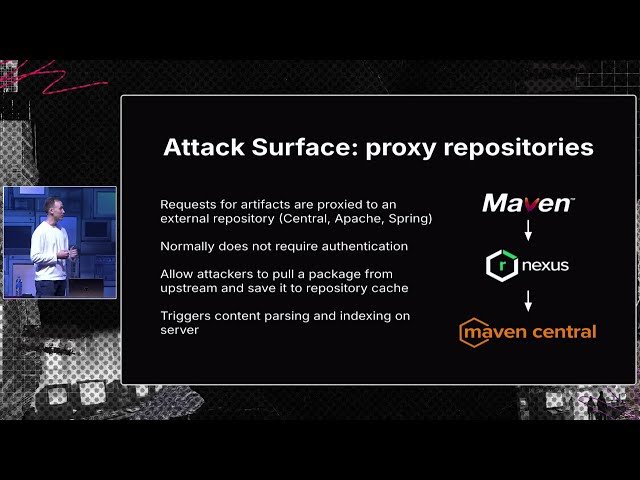
Watch a 31-minute conference talk from Ekoparty Security Conference where security researcher Michael Stepankin explores vulnerabilities in corporate Maven repository managers. Discover how in-house repository managers like Sonatype Nexus and JFrog Artifactory, commonly used in Java ecosystems for artifact storage and dependency caching, can be exploited through specially crafted artifacts. Learn about recently discovered CVEs and see demonstrations of exploits that can achieve pre-auth remote code execution and local artifact poisoning. Gain valuable insights into web security, Java security, and supply chain vulnerabilities that are particularly relevant for security professionals working with enterprise Java environments and artifact management systems.

Coursera
In this specialization, learners explore the processes used by successful companies to develop products customers want to buy. They begin by examining product strategy and how companies decide which types of products businesses need to develop. They define the market and business opportunity and how companies create new product concepts to meet this need. Learners also explore the role of product management, including how successful companies execute product planning, maintain a portfolio of product development projects, and integrate advances in technology into the product planning process. Finally, learners examine the tools and design strategies to ensure products have a minimal environmental footprint and other concepts behind the Circular Economy. This specialization can be taken for academic credit as part of CU Boulder’s Master of Engineering in Engineering Management (ME-EM) degree offered on the Coursera platform. The ME-EM is designed to help engineers, scientists, and technical professionals move into leadership and management roles in the engineering and technical sectors. With performance-based admissions and no application process, the ME-EM is ideal for individuals with a broad range of undergraduate education and/or professional experience. Learn more about the ME-EM program at https://www.coursera.org/degrees/me-engineering-management-boulder.

Microsoft Learn
Module 1: The use of OneDrive, Git repositories, and Power BI deployment pipelines allows us to follow application lifecycle management techniques. This reduces administrative overhead and provides continuity in the development process.Upon completion of this module, you should be able to: Outline the application lifecycle process. Choose a source control strategy. Design a deployment strategy. Module 2: The deployment pipelines tool enables Power BI creators to manage the development lifecycle of organizational content.By the end of this module, you’ll be able to: Articulate the benefits of deployment pipelines Create a deployment pipeline using Premium workspaces Assign and deploy content to pipeline stages Describe the purpose of deployment rules Deploy content from one pipeline stage to another Module 3: Creating shared data assets for your analytics environment provides structure and consistency. Maintaining those assets is as important, and XMLA endpoint provides additional administrative capabilities.Upon completion of this module, you should be able to: Create specialized datasets. Create live and DirectQuery connections. Use Power BI service lineage view. Use XMLA endpoint to connect datasets.

CodeSignal
This course focuses on understanding why managers are crucial to team success and the positive impact they can have. It covers recognizing both effective and ineffective management behaviors and highlights the unique value managers bring to their teams.

YouTube
Explore the journey of transitioning from an artist to a leadership role in game development through this insightful GDC talk. Gain valuable perspectives from Kacper Niepoklczycki, Lead Environment Artist at CD PROJEKT RED, as he shares his experiences working on AAA projects like The Witcher 3 and Cyberpunk 2077. Delve into the advantages and challenges of leading a team from an artist's point of view, addressing common misconceptions about creative work in leadership positions. Learn how to balance artistic vision with managerial responsibilities and discover strategies for maintaining creativity while guiding a team to success in the gaming industry.

YouTube
A conference talk from PyBay 2023 explores how the Nix Package Manager can revolutionize Python development practices. Learn how to overcome common dependency management challenges and ensure reproducible development environments using Nix's declarative configuration approach. Discover practical implementations for streamlining package management, maintaining consistent environments across development stages, and handling complex dependency graphs with precision. Drawing from a decade of Python experience, explore real-world scenarios and hands-on examples that demonstrate Nix's capabilities in creating resilient virtual environments and simplifying the development workflow. Master techniques for integrating Nix into Python projects, enabling better collaboration and faster development cycles while avoiding common dependency pitfalls. Delivered at the single-track regional Python conference for the San Francisco Bay Area, this presentation offers valuable insights for both newcomers and experienced Python developers seeking to enhance their development practices.

Udemy
Learn how to transition from individual contributor to Manager and Leader with confidence! What you'll learn: Welcome to your career in management. But most important…Welcome to leadership. Even for the most gifted individuals, the process of becoming a leader is a rigorous and many times an exhausting journey. The rewards, however, can be enormous. I surveyed a group of managers across many disciplines and asked the question, “As a new manager, what do you wish you learned early in your career?” What follows in this course, is a result of the responses, as well as my personal experience coaching and mentoring new managers. I will open this course by asking you to be patient with yourself. You do not develop leadership skills overnight. It takes practice, it takes trying new things, it takes making mistakes. Yes, sometimes you will fail. That is ok. It is ok to acknowledge when something doesn’t work, it is ok to celebrate and build on your successes. I have broken this course into individual modules. These are small bite sized modules that you can view either one after the other, or one at a time as you drink your morning coffee. Feel free to jump around and view the modules that are of the most importance to you. Take what works, challenge what doesn’t, try new things. I’m excited to join you in this journey. It’s time to think about success. Let’s Get Started. Welcome to your career in management. But most important…Welcome to leadership. Why did you make this big move? To grow personally and professionally? To make a difference? To lead others to realize their success? All of the above?All this, and more! Even for the most gifted individuals, the process of becoming a leader is a rigorous and many times an exhausting journey. The rewards, however, can be enormous. I surveyed a group of managers across many disciplines and asked the question, “As a new manager, what do you wish you learned early in your career?” What follows in this course, is a result of the responses, as well as my personal experience coaching and mentoring new managers. I will begin by asking you to be patient with yourself. You do not develop leadership skills overnight. It takes practice, it takes trying new things, it takes making mistakes. Yes, sometimes you will fail. That is ok. It is ok to acknowledge when something doesn’t work, it is ok to celebrate and build on your successes. I have broken this course into individual modules. These are small bite sized modules that you can view either one after the other, or one at a time as you drink your morning coffee. Feel free to jump around and view the modules that are of the most importance to you. Take what works, challenge what doesn’t, try new things.The Chapters include:Introduction to ManagementDeveloping Your Leadership StyleLeadership ResponsibilitiesLeadership CommunicationTeam DevelopmentYour Growth and DevelopmentManagers Toolkit I’m excited to join you in this journey. It’s time to think about success. Let’s Get Started.

LinkedIn Learning
Learn the skills you need as a middle manager, including how to build strong hybrid teams, onboard new employees, conduct performance reviews and give feedback, develop OKRs to drive business alignment, trust your teams to do their best work, build visibility online as a remote leader, and communicate across cultures virtually. After completing this learning path, advance your skills with Manage Remote and Hybrid Teams as a Senior Manager.Build strong hybrid/remote teams.Onboard new employees effectively.Create OKRs that drive alignment, autonomy, and accountability.Communicate across cultures virtually.

LinkedIn Learning
Discover what it means to lead at a distance. As a new manager, learn how to run effective virtual and hybrid meetings, build a virtual team culture, communicate across cultures, whether working virtually or in person, and drive engagement, productivity, and growth. After completing this learning path, advance your skills with Manage Remote and Hybrid Teams as a Middle Manager.Discover what it means to lead at a distance.Drive engagement, productivity, and growth remotely.Run effective virtual and hybrid meetings.Communicate across cultures virtually.

LinkedIn Learning
As a senior manager, you're leading distributed teams remotely, in an office setting or both. In this learning path, you’ll learn how to plan for and embrace this new reality, including how to run collaborative hybrid teams, communicate across cultures and create great employee experiences, coach your people, and drive results and resolve conflict.Plan for the work-from-anywhere organization.Build a high-performance work culture.Communicate across cultures virtually.Drive results and resolve conflict.
YouTube
Explore the critical transition from engineering manager to manager of managers in this 23-minute conference talk that addresses the surprising lack of guidance available for this pivotal career step. Learn from practical insights gained during a year-long journey of scaling from managing one engineering team to overseeing five teams. Discover the key similarities and differences between managing individual contributors and managing other managers, while identifying which existing strengths to leverage and where new skills need development. Examine the biggest challenges faced during this transition alongside debunking common misconceptions about the role. Gain practical tips and templates for navigating information flow within organizations, influencing decisions effectively, and understanding the evolving nature of problems and their resolution at this leadership level. Whether considering this career path, currently in transition, or working alongside senior engineering leaders, acquire actionable strategies to make this professional evolution both smooth and successful while building confidence that complex leadership challenges are indeed "figurable."

YouTube
Explore Azure Monitor System Center Operations Manager (SCOM) Managed Instance in this 21-minute video tutorial. Learn about the differences between DIY SCOM and SCOM MI, customer responsibilities, Microsoft-managed aspects, connectivity options, management tooling, and supported agents. Discover supported management packs, resiliency and scaling features, enhanced agent log capture, and updating processes. Gain insights into pricing models and migration strategies from existing SCOM deployments. Dive into key topics such as connectivity, management tools, and the benefits of Microsoft-managed infrastructure to understand how SCOM MI can streamline your monitoring responsibilities while maintaining familiar SCOM functionality.
EMMA
Social and environmental responsibility has become a common issue in corporate communication, but how to design an efficient communication plant? Why did the subject of ‘responsibility’ become a relevant topic? Which role is playing ICT in corporate communication? Are they suitable for communication of corporate social responsibility? This course offers insight on the corporate social responsibility and communication reporting the connections among organizational models, communicational functions, consumptions trends, new communication technologies and socio-environmental crises. The course will show examples of the communication of energy companies and how they face the socio-environmental responsibility in marketing communication and public relations.

Udemy
What you'll learn: Understand How CSR Relates to customersUnderstand how CSR Relates to EmployeesUnderstand How CSR Relates to environmentUnderstand the Different World Views on CSRLearn about Corporate Social Initiatives Introduces the concept of Corporate Social Responsibility (CSR) as it relates to customers, employees, the environment and society at large. It also does a historical treatment of the concept of CSR and explains the sometimes complex relationship between business society by focusing on the Milton Friedman view of CSR; the Archie Carroll and Carnegie views on Corporate Social Responsibility.

Coursera
Corporate strategy is the strategy a firm uses to compete across multiple businesses. Many small firms want to grow by entering new businesses. Many large firms already are in multiple businesses, e.g. a photo camera producer selling also sunglasses. We developed this course to help you make good corporate strategy decisions. Of the many decisions a firm has to make, corporate strategy decisions are among the most consequential. We will look at these key corporate strategy decisions: - Diversification: How and which businesses should your firm enter? - Divestiture: How and from which businesses should your firm exit? - Corporate HQ: How should we organize corporate headquarters to create value across the different businesses?