

Courses
Discover thousands of courses from top institutions and platforms worldwide
Level
Course Type
Duration

YouTube
Explore the intricacies of corrosion mechanisms and evaluation methods in this comprehensive 2-hour and 23-minute lecture presented by Mr. Mohammed Al-Jawhar for the BUOG SPE Student Chapter. Gain valuable insights into the fundamental processes behind corrosion, learn about various types of corrosion, and discover effective techniques for evaluating and assessing corrosion damage. Delve into topics such as electrochemical principles, environmental factors influencing corrosion, and industry-standard evaluation methods. Enhance your understanding of corrosion prevention strategies and their applications in different engineering fields. This in-depth presentation is ideal for students, professionals, and researchers seeking to expand their knowledge in the critical area of materials degradation and protection.

Swayam
ABOUT THE COURSE:The goal of this course, "Corrosion/ Environmental Degradation/Surface Engineering," is to give students a thorough understanding of the science and engineering of surface degradation, with a primary focus on corrosion and environmental degradation of materials. It also teaches students how to use surface engineering to mitigate these processes. The principles of surface degradation mechanisms, control and preventive strategies, and the effects of environmental conditions on material deterioration are covered. The course will also look at different surface engineering methods that can improve the performance and longevity of materials in challenging settings, like coatings and surface modification. Understanding how material qualities, environmental conditions, and degradation mechanisms interact will be emphasised, as well as how to use this information in practical situations.INTENDED AUDIENCE: Students of UG & PGPREREQUISITES: Basic courses on instrumentation, material science, physics, chemistry, and mathematicsINDUSTRY SUPPORT: ONGC, Hero Motocorp, Gear Manufacturers, Power plants

FutureLearn
Understand the economic and environmental impact of corrosion Five tonnes of steel are lost to corrosion each second. This colossal amount is expensive to repair, causes environmental damage, and risks human lives. On this two-week course, you’ll explore the innovative solutions that can tackle corrosion before it becomes a problem. Hearing from scientists and those involved in the SOCORRO project, you’ll discover the scientific breakthroughs that are effectively combatting corrosion. The SOCORRO project was funded by the European Union Interreg 2 Seas Programme. What is corrosion? You’ll start by learning about corrosion from a scientific point of view to understand the chemical reaction and elements involved. Exploring the factors that affect the rate of corrosion, you’ll gain a comprehensive understanding of what corrosion is, its different types, and its impact. Learn how the SOCORRO system works You’ll be introduced to the SOCORRO project, an international project between European and UK universities working on pioneering solutions to tackle corrosion. Exploring the inner workings of the SOCORRO system, you’ll understand the objective of the project, how it works, and how technologies such as AI help the project offer innovative solutions. Receive guidance from the experts at the University of Kent Finally, you’ll delve into real-life case studies to see the SOCORRO project in action. Guided by experts from the SOCORRO project team, you’ll finish the course with a solid understanding of corrosion and the modern solutions to tackle the problem before it puts lives or the environment at risk. This course is primarily designed for industry members who can adopt and deploy the SOCORRO system in their industrial setup to help combat corrosion. It is also suitable for anyone interested in learning about corrosion.

YouTube
Learn how to model corrosion using Ansys Fluent in this 20-minute tutorial focusing on defining grid motion. Explore techniques for simulating corrosion processes and their effects on materials through computational fluid dynamics. Gain practical insights into setting up and configuring grid motion parameters to accurately represent corrosion-induced changes in geometry over time. Enhance your understanding of corrosion modeling capabilities within the Ansys Fluent environment and improve your ability to predict and analyze corrosion phenomena in various engineering applications.
YouTube
Explore phase-field modeling techniques for simulating microstructural changes in materials undergoing corrosion in this 47-minute conference presentation. Learn how computational approaches can predict morphological and compositional evolution in corrosive environments, with specific focus on magnesium alloys in aqueous conditions and nickel-chromium alloys in molten salt environments. Discover how these models integrate bulk and interfacial thermodynamics, multi-phase and polycrystalline microstructures, along with diffusion and reaction kinetics to bridge length scales from nanoscale corrosion phenomena to microstructure-level material degradation. Examine selected simulation results that demonstrate the capability of phase-field methods to provide mechanistic insights for interpreting experimental observations, and understand the potential for integrating these computational tools with three-dimensional experimental data to achieve predictive understanding of corrosion processes critical for designing more durable engineering materials.
Coursera
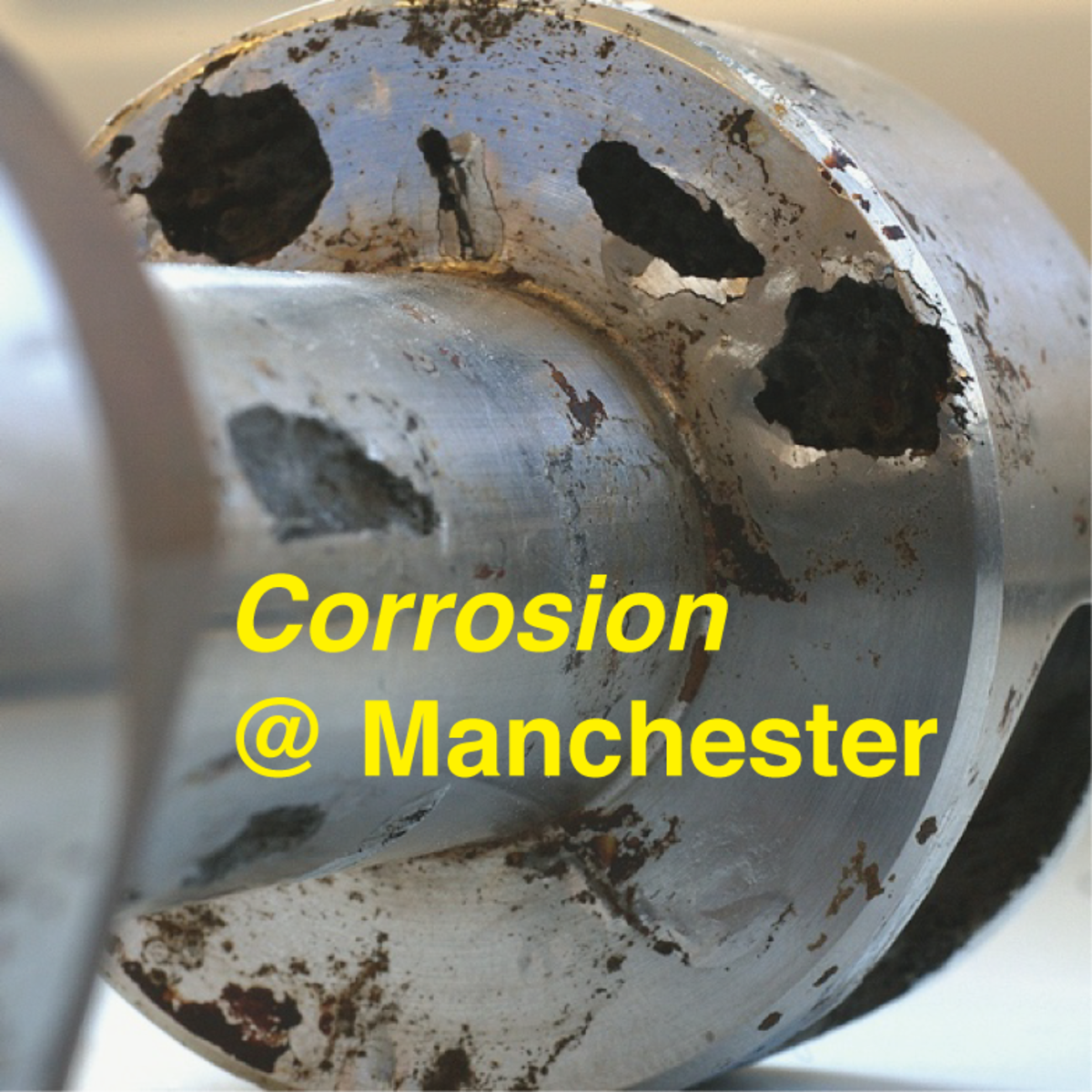
If you have ever encountered rusty car bodies, leaking pipes, tarnished silverware or the green patina of a copper roof then you have experienced corrosion in action. This course, from the Corrosion@Manchester team in collaboration with AkzoNobel, will teach you why metals corrode, what the environmental consequences are, how much corrosion costs and how corrosion can be controlled. It is designed for students, householders, teachers, professionals and anyone in-between. The aim of the course is to introduce the complex world of corrosion and corrosion control. While a full appreciation of corrosion science involves elements of materials science, electrochemistry and physics while corrosion engineering requires a practical knowledge of corrosion failures and engineering design this course does not need an extensive background knowledge. The course mirrors elements of the Corrosion Control Engineering teaching programme at The University of Manchester for final-year undergraduates and masters-level postgraduates and is used as a supplementary learning resource by our students.

YouTube
Explore corrosion prevention techniques in the oil and gas industry through an in-depth discussion and PowerPoint presentation led by Dr. Tariq Masood. Gain valuable insights into the challenges faced by the sector and learn about effective strategies to mitigate corrosion-related issues. Delve into the latest research, best practices, and innovative solutions presented by an expert in the field during this comprehensive two-hour and twenty-four-minute lecture organized by the Society of Petroleum Engineers UND Student Chapter.

YouTube
Learn essential techniques for maintaining stainless steel's corrosion resistance properties in this 12-minute welding tutorial. Discover why stainless steel discoloration, while visually appealing, compromises the material's protective qualities and explore methods for proper surface treatment. Compare traditional wire wheeling approaches with advanced electropolishing techniques, understanding how electropolishing removes microscopic material layers to expose pure stainless steel surfaces for optimal corrosion resistance. Gain practical insights into when and how to apply these surface treatment methods to ensure your stainless steel projects maintain their structural integrity and longevity.

Udacity
Build the skills needed to outsmart cyber threats. This Nanodegree teaches you how to secure infrastructure, assess vulnerabilities, and apply top industry practices to protect your organization from digital attacks.

edX
The Empathetic Engineer is a course that will enhance your capacity to harness your technology and problem-solving skills to deliver high impact, innovative solutions that address compelling social and environmental needs. It is a course that puts people, planet and nature at its core, enabling you to generate new levels of value for the markets or communities you serve, without compromising our world today or in the future. There has never been a more exciting time for engineers to make an impact at scale. We have a perfect storm of need and technological capability. We have the immense challenge of climate change, alongside a desperate need to create a more sustainable and equitable model of consumption and production. But we are also at the top of a wave of innovation, the likes of which have not been seen for around 120 years, where many distinct areas of technological progress are transforming our capacity to address the immense challenges we face. The challenges we face are systemic and our responses must be, too. Week by week, the course will take you through the 6 phases of the process we use, from first scoping a challenge you want to focus upon, researching it, drawing on those insights to generate a clear set of goals and ambitions, igniting your creative capacity to develop novel and exciting concepts, selecting, testing and refining them along with the business model before implementing an innovative solution, that addresses a compelling need. At the end of the course, you should be able to: Demonstrate theoretical and practical understanding of the different stages of the empathetic engineering approach in the context of engineering design projects. Analyse the socio-cultural, environmental, and economic factors that need to be considered in the given context. Apply the principles, methods and tools to an engineering design project to deliver more effective and measurable outcomes. Optionally, develop a project proposal that spans technological, socio-cultural, environmental and economic systems, including how the proposal creates and captures value for each of the relevant stakeholders. That is our goal, and we look forward to going on this journey together.

edX
As AI continues to reshape industries, demand is rising for professionals who can develop intelligent solutions that integrate seamlessly into cloud-based platforms. The AI Engineer program, developed by Microsoft and hosted on edX, equips learners with the technical knowledge and practical skills to build and deploy AI solutions using Azure AI services. Across three in-depth courses, you’ll begin with an introduction to Azure’s AI capabilities and progress to more advanced applications, including natural language processing, computer vision, and knowledge mining. You’ll also learn how to use services such as Azure OpenAI, Cognitive Services, and Azure Machine Learning to build enterprise-grade AI solutions. This program is ideal for software developers, cloud engineers, and data professionals looking to deepen their expertise in cloud-based AI. With hands-on labs, real-world use cases, and a focus on responsible AI design, this program sets you up for success in AI engineering roles and serves as a strong foundation for Azure AI certification paths.

edX
The Data Engineer program prepares you for one of the most in-demand roles in modern data infrastructure. Developed by Microsoft, this comprehensive program teaches you how to design, implement, and manage data solutions in the cloud using Azure Synapse Analytics, Apache Spark, and Azure Stream Analytics. You’ll gain hands-on experience building serverless SQL queries, performing large-scale data transformations, integrating hybrid transactional and analytical processing (HTAP), and implementing real-time streaming solutions. Whether you're transitioning into data engineering or looking to deepen your expertise in Azure's data ecosystem, this program provides the technical foundation and practical skills to support enterprise-grade data solutions.

edX
This program focuses on demonstrating your ability to build functional and effective applications, showcasing your skills and knowledge throughout the application development process. Emphasis is placed on practically applying learned concepts to real-world scenarios, validating your competence in app development. You will gain a comprehensive understanding of securing core cloud infrastructure across network, compute, storage, and database components. Learn fundamental network security principles, including implementing controls, managing traffic, deploying firewalls, configuring secure virtual networks, and using segmentation to protect resources. Explore tools and services to monitor and defend against threats, enabling you to design and maintain a secure network architecture. Additionally, you will delve into securing virtual machines, data at rest and in transit, and databases using best practices such as access control, encryption, and threat mitigation. Acquire the knowledge and hands-on skills necessary to manage and enhance an organization's security operations. This course covers key principles like risk assessment, incident response, and the strategic use of security technologies. You will learn how to monitor security events, analyze threats, and ensure compliance with industry standards. With a strong focus on real-world application, this course provides a solid foundation for effectively leading or supporting security operations.

Udemy
Master the Art of Sales and Technology to Drive Business Success as a Sales Engineer and Solutions Engineer What you'll learn: Feel confident preparing for a discovery call & sales demoUnderstand the sales process and how to master itReview basic technical concepts to understand industry trendsMaster interview responses to land your first technical sales positionDevelop a successful resume and Linkedin profile to improve your chance of an interviewShadow real interview responses and live demos of sales engineering The Sales Engineer and Solutions Engineer: Sales & Tech Training course is designed to equip individuals with the necessary knowledge and skills to become successful sales engineers in the technology industry. This comprehensive course covers a wide range of topics, including sales, engineering, and technical skills, to prepare learners for the diverse responsibilities of a sales engineer.Through this course, you will gain an understanding of the role of a sales engineer and the importance of effective communication, problem-solving, and technical expertise in the field. You will also learn about the sales process and how to leverage technical knowledge to identify customer needs and develop effective solutions.In addition, this course provides an overview of various technologies, including cloud computing, APIs, and cybersecurity, and how they can be used to meet customer needs. Throughout the course, you will have access to practical exercises that will enable you to apply the concepts you have learned to real-world scenarios. By the end of this course, you will have developed the skills and knowledge required to become a successful sales engineer and solutions engineer in the technology industry.So, if you are interested in pursuing a career as a sales engineer, this Sales Engineer and Solutions Engineer: Sales & Tech Training course is the perfect starting point for you. Enroll now and take the first step toward a rewarding career in the tech industry!

Udacity
Learn how to build and program intelligent robots with this Robotics Software Engineer Nanodegree. Master ROS, path planning, and environment mapping through projects led by experts.

Udacity
The goal of this course is to take existing IT professionals, whether they come from software development or operations, and help them appreciate the challenges facing companies who are looking to embrace scalable software deployment as well as the architectures and thought processes they can use to address these challenges. Students will start with a presentation of the problem as it stands today, then dive into the DevOps workflow and a survey of the system architectures currently being used to address this problem.

Coursera
Want to get started in the world of database engineering? This program is taught by industry-recognized experts at Meta. You’ll learn the key skills required to create, manage and manipulate databases, as well as industry-standard programming languages and software such as SQL, Python, and Django used for supporting outstanding websites and apps like Facebook, Instagram and more. In this program, you’ll learn: Core techniques and methods to structure and manage databases. Advanced techniques to write database driven applications and advanced data modeling concepts. MySQL database management system (DBMS) and data creation, querying and manipulation. How to code and use Python Syntax How to prepare for technical interviews for database engineer roles. Any third-party trademarks and other intellectual property (including logos and icons) referenced in the learning experience remain the property of their respective owners. Unless specifically identified as such, Coursera’s use of third-party intellectual property does not indicate any relationship, sponsorship, or endorsement between Coursera and the owners of these trademarks or other intellectual property.

Coursera
In this course you’ll complete a capstone project in which you’ll create a database and client for Little Lemon restaurant. To complete this course, you will need database engineering experience. The Capstone project enables you to demonstrate multiple skills from the Certificate by solving an authentic real-world problem. Each module includes a brief recap of, and links to, content that you have covered in previous courses in this program. In this course, you will demonstrate your new skillset by designing and composing a database solution, combining all the skills and technologies you've learned throughout this program to solve the problem at hand. By the end of this course, you’ll have proven your ability to: -Set up a database project, -Add sales reports, -Create a table booking system, -Work with data analytics and visualization, -And create a database client. You’ll also demonstrate your ability with the following tools and software: -Git, -MySQL Workbench, -Tableau, -And Python.

DataCamp
## Become a Cutting-Edge Machine Learning Engineer Step into the exciting world of machine learning engineering with this comprehensive Track designed for aspiring professionals. You'll learn everything you need to know about model deployment, operations, monitoring, and maintenance to become a well-rounded machine learning engineer. ## Master the Fundamentals of MLOps Gain a deep understanding of the core concepts of MLOps as you: * Explore the modern MLOps framework and lifecycle * Learn to design, train, and deploy end-to-end models * Gain hands-on experience with key technologies like Python, Docker, and MLflow * Understand crucial concepts like CI/CD, deployment strategies, and concept drift ## Gain Practical Skills Through Real-World Projects Apply your knowledge to solve authentic challenges that mirror the day-to-day work of a machine learning engineer. You'll have the opportunity to develop predictive models for agriculture, forecast temperatures in London using advanced techniques, and build reliable data pipelines using ETL and ELT principles. ## Develop a Versatile Machine Learning Engineering Skill Set Throughout this Track, you'll gain expertise in building and deploying machine learning models in production environments, ensuring their performance remains optimal over time. You'll explore methods for monitoring models and addressing issues related to data and concept drift while leveraging data version control for efficient ML data management. Additionally, you'll learn how to implement CI/CD pipelines to streamline model development and deployment, making machine learning workflows more reliable and scalable. ## Prepare for a Junior Machine Learning Engineer Role Upon completing this Track, you'll have the knowledge and practical experience to confidently pursue junior machine learning engineer positions. You'll be equipped to: * Collaborate with data science teams to bring models from concept to production * Optimize model performance and ensure seamless integration with business systems * Continuously monitor and maintain deployed models to deliver reliable results * Contribute to the development of scalable and efficient machine learning infrastructure Note: This Track assumes prior knowledge of data manipulation, training, and evaluating machine learning models using Python. ## Unlock Your Potential in Machine Learning Engineering Start this transformative journey to become a sought-after machine learning engineer. With interactive courses, real-world projects, and expert instruction, you'll gain the skills and confidence to make a lasting impact in this cutting-edge field.

Udacity
Advance your tech career by learning to design, deploy, and maintain reliable, scalable systems through this Nanodegree. Featuring real-world projects, practical tools, and personalized expert feedback.