

Courses
Discover thousands of courses from top institutions and platforms worldwide
Level
Course Type
Duration

Udemy
[ eLearninfosec ] SOC Analyst training - Interview Questions also included -Its hands on experience on splunk SIEM What you'll learn: Student will gain the knowledge of Networking, Cyber Security and SOC analyst role activities content with hands on practicals Cyber Security SOC analyst training Splunk (SIEM) For those who are aspiring to certify themselves as well as enhance their knowledge and skills on becoming a SOC analyst. This course is specially designed for all level of interested candidates who wants get in to SOC.Work of a SOC analyst?A Security Operation Center Analyst is primarily responsible for all activities that occur within the SOC. Analysts in Security Operations work with Security Engineers and SOC Managers to give situational awareness via detection, containment, and remediation of IT threats. With the increment in cyber threats and hacks, businesses are becoming more vulnerable to threats. This has significantly enhanced the importance of a SOC Analyst. For those in cybersecurity, it can be a dynamic role. SOC Analysts cooperate with other team members to detect and respond to information security incidents, develop and follow security events such as alerts, and engage in security investigations. Furthermore, SOC Analysts analyze and react to undisclosed hardware and software vulnerabilities. They also examine reports on security issues and act as ‘security advisors’ for an organization.This course helps you to learn and implement those strategies and with training provided. This will in turn help you play a significant role in defending against cyber threats and keeping sensitive information secure.

Udemy
Cyber Security: Interpreting SOC & Incident Interview Questions and Answers. What you'll learn: New job seekers will learn Cyber Security (SOC & Incident Response) interview requirements, interpretations, and answers.Job seekers will be able to learn some of the most asked SOC & Incident response interview questions and answersJob seekers will learn some of the best techniques to understand recruiters and what they want during an interview processJob seekers will also gain confidence for SOC & incident-related interviews, overcome fear, and get their dream job.Job seekers will learn a step-by-step approach to answering most Cyber Security, SOC, or incident response interview questions This course content has been carefully designed to examine some of the commonly asked cyber security questions for people desiring to begin a cyber security career as a Security Operation Center Analyst (SOC Analysts), Incident Response Analyst, Vulnerability Management Analyst, Penetration Test Analyst, etc. Most of the questions and answers in this course cut across topics such as; Networking and network securityCyber Security, Cryptography, Threat, attacks, and vulnerabilities,Hacking concepts and terminologies, Cyber Kill Chain methodology. This course consists of questions and answers divided into A and B. Section A proposes a sample interview question with what recruiters expect to hear from the job seeker.Section B attempts to answer these sample questions, how they should be answered and what recruiters want to hear. While there is no one way to answer a cybersecurity-related question, this course seeks to provide job seekers with a better approach, methodology, and many questions and answers that they will see during their interview. Each interview sometimes can be different, but understanding the general requirement for the most interviews is one of the most effective methods to get ready for any cyber security interview. Due to past experience, at least more than 80% of the questions are often asked in most SOC or Incident Response-related job interviews. Students or job seekers will feel more confident when going in for a similar job-related interview. Job seekers are also encouraged to review recruiters of the hiring company's website to understand what the company is all about. Some hiring companies can be tricky sometimes. They can be sometimes very unpredictable. They might deviate completely from the interview course, and want to test your knowledge of whether you understand what their company does. This does not always occur, however.

Udemy
ChatGPT for Cyber Security, 10x your productivity with AI in Cyber, 100+ ChatGPT 4 Plugins, 50+ Cyber Security Prompts What you'll learn: Learn how AI and ChatGPT are transforming cyber securityMaster over 100 ChatGPT 4 plugins for cyber tasksCreate and customize AI agents for security needsAutomate the gathering and analysis of threat intelligenceUse ChatGPT to streamline vulnerability managementSave time with AI-powered log analysisIntegrate ChatGPT with SIEM systems for incident responseSet up a personal AI lab for hands-on learningExplore 50+ ChatGPT prompts for cyber securityUtilize ChatGPT with cyber security investigation toolsDecode malicious commands and SQL injections using AIPrepare for cyber security certifications with AIAutomate incident analysis and response with ChatGPTConduct real-time incident analysis using ChatGPT Are you ready to master ChatGPTfor Cyber Security and make your job 10x easier?Integrate AIinto your basic tasks and set a new standard for efficiency and effectiveness in cyber security field.Gain access to 100+ ChatGPT4 plugins and learn 50+ different ChatGPTprompts for Cyber Security Analyst. Each prompt is gateway to simplifying complex tasks, allowing you to: Automate Threat Intelligence: Discover how AI can automate the collection and analysis of threat intelligence, keeping you ahead of hackers.Enhance Vulnerability Management: Utilize ChatGPT prompts to identify and prioritize vulnerabilities, streamlining your patch management process.Refine Phishing Detection: Train ChatGPT to identify and classify phishing attempts with greater accuracy, using natural language processing to analyze the content of emails.Analyze Logs for Advanced Insights: Transform your approach to log analysis with AI and save time during incident response. You will also create FREEhands-on personal lab integrated with OpenAImodel. Build Your Personal AI Lab for FREE: Set up a hands-on personal lab integrated with the OpenAI model, enabling practical experimentation and learning.Custom AI Agent Creation: Dive into the creation of your own AI agents in the cloud, tailored to your specific security needs and explore the extensive customization possibilities of AI in cybersecurity.SIEM Integration: Master the art of connecting ChatGPT with your Security Information and Event Management (SIEM) system, automating incident detection and response with AI precision. Why Choose This Course?By mastering the application of ChatGPT and AI in your daily tasks, you'll not only make your job easier but also elevate your position as a cybersecurity expert in this rapidly evolving field.

Coursera
Enhance your cybersecurity skills and accelerate your SOC Analyst career by harnessing the power of ChatGPT. This course dives into how AI can streamline incident investigations, automate responses, and optimize threat detection. You’ll explore fundamental and advanced ChatGPT prompts, utilize OpenAI tools for phishing analysis, SQL injection detection, code reviews, and threat intelligence generation. The course begins with an introduction to ChatGPT’s capabilities and essential prompts for cybersecurity tasks. You’ll then progress to advanced SOC Analyst workflows, such as log analysis, vulnerability identification, and custom AI agent setups. A dedicated section covers integrating ChatGPT with cloud security tools in Azure, including SIEM solutions for enhanced real-time monitoring and automation. In the final modules, you’ll master incident investigation workflows, automate cybersecurity playbooks, and connect ChatGPT with tools like Microsoft Sentinel. Learn to optimize AI-driven security processes and maximize efficiency across complex security operations. This course is ideal for aspiring or current SOC Analysts, cybersecurity professionals, and those preparing for cybersecurity certifications. A basic understanding of security tools and processes is recommended. Suitable for intermediate learners aiming to integrate AI into their cybersecurity workflows.

Udemy
Cyber Security, Cyber Security Awareness, Cyber Security Social Engineering, cyber security analyst, Cyber law What you'll learn: Learning the Introduction and importance of cyber security and cyber security awarenessUnderstand the types, layers and stages of cyber securityAnalyze how to create a cyber security awareness among the organizationUnderstanding the cyber security in Microsoft, IBM, Oracle and SAPLearn the concepts of Cyber security analyst skills and how to become a cyber security analyst Master course in cyber security and cyber security awarenessCyber security is all about keeping your stuff safe from people who shouldn't have it. This includes your computer, your network, your programs, and your data. There are a lot of different ways to do this, from using strong passwords to installing security software. But the most important thing is to be aware of the latest threats and to take steps to protect yourself.For example, you should use strong passwords that are different for each account. You should also be careful about what links you click on and what emails you open. And you should install and keep up to date with security software.Cyber security awareness is all about knowing how to protect yourself from cyber threats. It's important for everyone, from individuals to businesses to governments, to be cyber security aware.There are many different ways to improve your cyber security awareness. You can take training courses, read online resources, or even just talk to your friends and family about cyber security.One of the most important things you can do to improve your cyber security awareness is to be careful about what you click on. Don't click on links in emails or on websites unless you're sure they're safe. And make sure you have strong passwords for all of your accounts.In the rapidly evolving digital landscape, cyber security plays a crucial role in safeguarding sensitive information and systems from malicious threats. As cyber threats become increasingly sophisticated, professionals with expertise in cybersecurity are in high demand. Completing a comprehensive cyber security course equips individuals with the necessary skills to tackle diverse challenges, from network security and ethical hacking to penetration testing and information security. Ethical hacking and penetration testing are ethical approaches to identifying vulnerabilities and strengthening defenses. Certification programs like CISSP, CompTIA Security+, and Certified Ethical Hacker (CEH) validate one's proficiency in this field. Familiarity with tools like Kali Linux and Cisco CCNA also adds value to a cyber security specialist's repertoire. Furthermore, being aware of cyber security risks and the dark web is essential, along with mastering security operations, web security, and social engineering techniques. The continuous pursuit of knowledge in this domain ensures the establishment of robust cyber security measures for organizations and individuals alike.Cyber security awareness is an ongoing process. By staying informed about the latest cyber security threats and best practices, you can help to keep yourself and your organization safe.In this master course, I would like to teach the 7 major topics:1. Introduction and importance of cyber security and cyber security awareness2. Types, layers and stages of cyber security3. How to create a cyber security awareness among the organization4.Cyber security in Microsoft, IBM, Oracle and SAP5. Cyber security analyst skills and how to become a cyber security analyst6. Cybersecurity Ransomware Incident Response7. Cybersecurity Vulnerability ManagementEnroll now and learn today !

Udemy
Ethical Hacking and CompTIA Cyber Security Analyst CySA+ (CS0-003) Exam Prep What you'll learn: Threat huntingData analysis to combat cyber attacksDigital forensicsSecuring your network to protect critical dataBusiness impact analysis and risk mitigationVulnerability management with networks, IoT, mobile, cloud, and moreIdentity and access management (IAM) Welcome to TOTAL: CompTIA CySA+ Cybersecurity Analyst (CS0-003) course from Total Seminars and Khet Kendrick!Are you looking to get into the exciting world of hackers, cybersecurity, threat hunting, and digital forensics? Do you find the idea of gathering and analyzing intelligence to detect and combat hackers intriguing? Then this is the course for you!This course is aimed at the aspirational junior analyst looking to step up in their career. However, if your tech skills don't include cybersecurity, you can also gain a great deal of knowledge from this course to help launch yourself towards a career in cybersecurity.This course covers everything you need to know to respond to cybersecurity threats and attacks. You’ll learn how to:Leverage intelligence and threat detection techniquesAnalyze and interpret dataIdentify and address vulnerabilitiesSuggest preventative measuresEffectively respond to and recover from incidentsAnalyze the results of network reconnaissance, and recommend or implement countermeasuresSecure a corporate environmentIf you're looking to get certified, this course will also help prepare you for the CompTIA CySA+ Certification (CS0-003) exam. This exam will retire on December 3, 2026. The first goal of the course is to make you an outstanding cybersecurity analyst and, in the process, make sure you are ready to pass the CompTIA exam.THE COMPTIA CYSA+ (CS0-003) EXAM DOMAINS:1.0 Security Operations (33% of the exam)2.0 Vulnerability Management (30% of the exam)3.0 Incident Response and Management (20% of the exam)4.0 Reporting and Communication (17% of the exam) TOPICS INCLUDE:Threat data and intelligenceVulnerability management with mobile, IoT, the cloud, and moreSecurity solutions for your network and in the cloudIdentity and access management (IAM)Software and hardware best practicesAnalyzing data using heuristics, trend analysis, and log reviewImplementing intrusion prevention systems (IPS) and intrusion detection systems (IDS)Threat huntingAutomation concepts like workflow orchestration, machine learning, scripting, API integration, and SCAPIncident response processDigital forensicsControls, policies, frameworks, and procedures to protect data and secure networksBusiness impact analysis and organizational risk mitigation CAREERS THAT USE THE CYSA+ CERTIFICATION:Security analystTier II SOC analystSecurity monitoringSecurity engineerThreat hunterIncident response or handlerThreat intelligence analystApplication security analystCompliance analyst CySA+ provides substantial earnings potentialA career in information security analysis ranked 5th on U.S. News and World Report’s list of the 100 best technology jobs for 2020. According to the Bureau of Labor Statistics, the median pay for an information security analyst is $90,120 per year*. CySA+ certified skills are in-demandProperly trained IT security staff who can analyze, monitor and protect cybersecurity resources are in high demand. The U.S. Bureau of Labor Statistics (BLS) predicts that information security analysts will be the fastest-growing overall job category, with 37 percent overall growth between 2012 and 2022. Khet Kendrick Follow the CompTIA Cybersecurity Certification PathwayIT Fundamentals > A+ > Network+ > Security+ > PenTest+ or CySA+ > CASP

Udacity
The goal of the Security Analyst Nanodegree Program is to equip students with the skills required to be successful in an analyst role.

Udemy
Understand Data Security What you'll learn: Deep knowledge of organization’s IT Systems.IT Security threat analysis and management.IT Security maintenance, training and supportIT security fixes, tools, countermeasures, testing plus upgrade paths This course is designed for anyone who wants to understand the analysis of data security. More than ever, information security analysts are needed to rescue companies when they have been hacked or breached, as well as to put in place controls and counter-measures to avert cyber attacks.Gain the skills required to detect and mitigate information and cyber security threats and vulnerabilities. The security analyst role is an entry point to many other security specialties and is highly in-demand in today’s evolving threat environment.In the fast moving world of cyber security, with new threats evolving daily, up to date knowledge and skills that involves protecting systems and networks of companies and other assets containing mission-critical data as well as designing and developing new security solutions routinely to stay ahead of the hackers and cyber attackers.Learn the essential prerequisites for your career success! ENROLL TODAY!

Udemy
Learn to intelligently detect and take down cyber threats What you'll learn: 7 threat intelligence phasesHunting - The goal of hunting is to establish techniques to collect samples from different sources that help to start profiling malicious threat actors.Extraction -The goal of Features Extraction is to identify unique static features in malware binaries that help classify them into malicious groups.Behavior Extraction - Identifies unique dynamic features in binaries that help classify them as malicious.'Correlation and Clustering' - This method identifies malware based on its behavior and features and uses that information to classify it.Threat Actor Attribution - The goal of Threat Actors is to locate the threat actors behind the malicious clusters identified.Tracking - The goal of tracking is to anticipate new attacks and identify new variants proactively. The Cyber Security Threat Intelligence Researcher Certification will help you acquire the skills needed to find out who is behind an attack, what the specific threat group is, the nation from which the attack is being launched, as well as techniques being used to launch this attack. You will know how to take a small piece of malware, find out who is responsible for launching it, the threat actor location and also how to take down that threat actor, with the support of your local law enforcement. In today’s cyber security landscape, it isn't possible to prevent every attacks. Today’s attackers have significant funding, are patient, sophisticated, and target vulnerabilities in people and processes as well as technologies. With organizations increasingly relying on digitized information and sharing vast amounts of data across the globe, they have become easier targets for many different forms of attack. As a result, every company’s day-to-day operations, data and intellectual property are seriously at risk. In a corporate context, a cyber attack can not only damage your brand and reputation, it can also result in loss of competitive advantage, create legal/regulatory noncompliance and cause steep financial damage. Today’s secure environment will have vulnerabilities in it tomorrow, so an organization cannot allow itself to become complacent. There is only so much an organization can do by defending itself against threats that have already occurred. If an organization only reacts to new threats as they come up, are likely acting too late. It is important to understand and prioritize cyber threat intelligence processes, and how they can be integrated into an organization’s security operations in a way that adds value. Cyber threat intelligence (CTI) is an advanced process enabling organizations to gather valuable insights based on analysis of contextual and situational risks. These processes can be tailored to the organization’s specific threat landscape, industry and market. This intelligence can make a significant difference to organizations' abilities to anticipate breaches before they occur. Giving organizations the ability to respond quickly, decisively and effectively to confirmed breaches allows them to proactively maneuver defense mechanisms into place, prior to and during the attack. In this course, we’ll introduce you to the 8 phases of threat intelligence: Hunting- The goal of hunting is to establish techniques to collect samples from different sources that help to start profiling malicious threat actors.Features Extraction- The goal of Features Extraction is to identify unique Static features in the binaries that help to classify them into a specific malicious group.Behavior Extraction- The goal of Behavior Extraction is to identify unique Dynamic features in the binaries that help to classify them into a specific malicious group.Clustering and Correlation- The goal of Clustering and Correlation is to classify malware based on Features and Behavior extracted and correlate the information to understand the attack flow.Threat Actor Attribution- The goal of Threat Actors is to locate the threat actors behind the malicious clusters identified.Tracking- The goal of tracking is to anticipate new attacks and identify new variants proactively.Taking Down- The goal of Taking down is to Dismantled Organized Crime Operations.

Coursera
Launch your career in the high demand field of cybersecurity. In this beginner-friendly program, you’ll develop essential skills to protect systems, investigate threats, and respond to cyber incidents to get job ready in less than 5 months, no prior experience required. Cybersecurity is all about defending digital infrastructure. You’ll learn how to identity, assess, and mitigate risks, as well as detect and respond to security breachers. Through hands-on labs and real-world scenarios, you’ll gain experiences across five key areas including information security fundaments, ethical hacking, network defense, digital forensics, and security operations. You’ll also develop practical skills using industry-standard tools and techniques in threat hunting, forensic analysis, vulnerability management, and incident response. Whether you’re new to tech or transitioning from another role, this program helps you build a solid foundation to grow in the cybersecurity field. By the end of this program, you’ll be equipped with the technical knowledge, problem-solving mindset, and practical experience needed to start your cybersecurity career with confidence.

Coursera
There are a growing number of exciting, well-paying jobs in today’s security industry that do not require a traditional college degree. Forbes estimates that there will be as many as 3.5 million unfilled positions in the industry worldwide by 2021! One position with a severe shortage of skills is as a cybersecurity analyst. Throughout this specialization, you will learn concepts around digital forensics, penetration testing and incident response. You will learn about threat intelligence and tools to gather data to prevent an attack or in the event your organization is attacked. You will have the opportunity to review some of the largest breach cases and try your hand at reporting on a real world breach. The content creators and instructors are architects , Security Operation Center (SOC) analysts, and distinguished engineers who work with cybersecurity in their day to day lives at IBM with a worldwide perspective. They will share their skills which they need to secure IBM and its clients security systems. The completion of this specialization also makes you eligible to earn the System Analyst Fundamentals IBM digital badge. More information about the badge can be found here: https://www.youracclaim.com/org/ibm/badge/security-analyst-fundamentals
YouTube
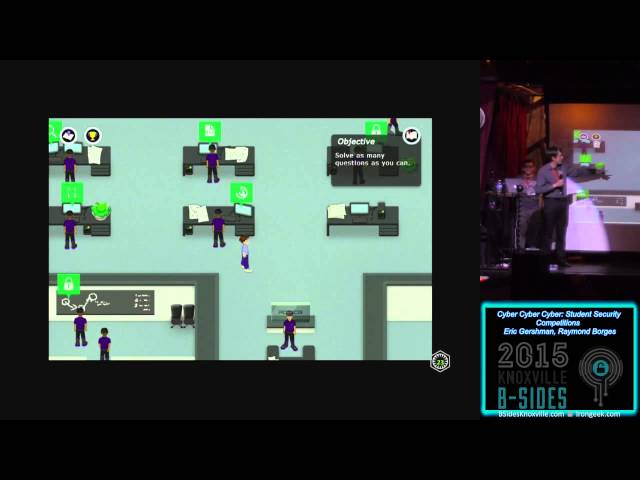
Explore the world of student cybersecurity competitions in this informative conference talk from BSides Knoxville 2015. Gain insights into the structure, challenges, and benefits of these competitions as presenters Eric Gershman and Raymond Borges share their expertise on the topic. Learn about the various types of cybersecurity challenges students face, the skills they develop, and how these competitions prepare participants for real-world security scenarios. Discover the importance of such events in fostering talent and promoting interest in the cybersecurity field among students.

Swayam
ABOUT THE COURSE: As we interact with various industry and their needs for cyber security, they often complain that the courses at academic institutions provide students with the fundamentals of cyber security, but the students are often not familiar with the practical issues associated with running a cyber security operation in a real organization. Also, while a lot of the theses at master’s level or dissertation at the PhD level are based on theoretical exploration of techniques, algorithms, or mathematical modeling of cyber security problems, there is a dearth of dissertation and thesis on the practical aspects of running cyber security operations. Having worked very closely with industry, we appreciate such concerns because there are very interesting problems to be solved for practical cyber security which also requires a great deal of fundamental thinking, reasoning, and concerns about human cognition of the inputs the operators and leaders receive from cyber security tools, dashboards, policy formulations but then in the crowd of details, fundamentals are lost, reasoning is replaced by ad hoc decisions. To change that, we need workforce, as well as academics who can abstract out the fundamentals from such practical problems are develop various practically oriented methods, methodologies, policy frameworks, and decision processes which would simplify cyber operations. This course is meant to be a first step towards that line of thinking, modeling, and methodology development.INTENDED AUDIENCE: 3rd,4th year students of Computer Science and post graduate students of Computer Science, Cyber Security and Working ProfessionalsPREREQUISITES: A previous course on fundamentals of Cyber Security is desirable, if not, courses in Operating System, Networking, Software Engineering, and Programming will be desirable

FutureLearn
Gain an introduction to cyber security This 3-week course for beginners will highlight the importance of cyber security in the current landscape. It will be particularly useful for IT professionals. Cyber attacks cost a huge amount of money annually, and this figure is on the rise. According to sources, the cost of cybercrime for 2021 will rise to $6 trillion, double the estimated figure for 2015. By 2025, this is predicted to rise to $10.5 trillion. On this course, you’ll learn about common types of cyber attacks, including phishing, viruses, and social engineering attacks, and how you can protect against them. You’ll also learn how to build a safe password policy, build in ransomware protection, and best practices for mobile data security. Explore common cyber attacks and how to protect against them To understand why cyber security is important, we must understand the risks we face. This cyber security training course will introduce you to some common and dangerous cyber attacks, and key topics such as: how to build a good password policy and how using a password manager increases data security risks associated with using unknown USB drives, including USB “rubber ducky” password stealers how to defend against viruses, including ransomware protection, and what to do when infected cyber security risks associated with social media, including social engineering attacks how to identify spear phishing and phishing emails best practices for mobile data security, including VPNs and DNS redirects disaster recovery and how to prepare for worst-case scenarios Completing this introduction to cyber security will enable you to take the first key steps to protecting your data. With these cyber security basics, you can prevent sensitive information getting into the wrong hands. This cyber security training is aimed at beginners to cyber security and IT professionals who want to understand how to protect their organization from cyber attacks. This might include data administrators, those working with sensitive data, or those targeting a career in cyber security.

YouTube
Explore the lucrative and in-demand field of cyber security through this comprehensive 47-minute video lecture. Discover the importance of cyber security in today's digital landscape, potential security threats, and strategies to prepare for a successful career. Learn about threat agents, the cyber kill chain, and employee responsibilities in maintaining digital security. Gain insights into the high job satisfaction, competitive salaries, and abundant career opportunities in this rapidly growing field. Understand the critical role cyber security professionals play in protecting organizations from costly attacks and data breaches. By the end of this lecture, you'll have a clear roadmap for pursuing a rewarding career in cyber security and be equipped with the knowledge to take your first steps in this exciting industry.

Udemy
Cyber Threats, Attacks, Viruses, ChatGPT & Cyber, Cyber Crimes, Firewalls, Cyber Security Concepts, Digital Forensics What you'll learn: Explain the differences between Threat, Vulnerability, and RiskExplore the needed skills set and job profiles in the field of CybersecurityDiscuss the evolution of threats and the types of security goalsDefine what cybersecurity isLearn the Importance of CybersecurityDifferentiate Networking Devices such as Router and SwitchDifferentiate IP, MAC, and PORT AddressDefine DNS and VPNLearn Hacking and the different Types of HackersLearn the fundamentals of networkingDiscuss the layers of the OSI ModelExplain the different networking protocols such as TCP, HTPP, UDP, ARP, and DHCPHow to troubleshoot a networkLearn the different types of attacksKnow the different types of malwareExplain the Man in the Middle and Denial of Service AttackDiscuss what is Distributed Denial of Service AttackHow to recognize Sniffing, Phishing, SQL Injection, Cross-site Scripting, and Post Scanning AttackDefine Cryptography and why we need itDiscuss important terminologies in CryptographyKnow the different types of ciphersLearn the advantages and disadvantages of Symmetric and Asymmetric KeysLearn what is Digital Signature and the Signing and Verification ProcessKnow how to check the Integrity of a MessageDiscuss the different security measuresLearn the various types of firewallsLearn Cyber Law and why there is a need for itDiscuss the classifications of cyber crimeDefinition, Process, and Types of Digital ForensicsCreate KALI Linux Virtual Machine in VMWARE Get instant access to an 87-page workbook of Cyber Security AwarenessIntroduce yourself to our community of students in this course and tell us your goalsEncouragement and celebration of your progress every step of the way: 25% > 50% > 75% & 100%***PLUS Learn Digital Disruption &Digital Transformation - How Technology Is Changing The World (includes 36 page masterclass workbook)***13 hours of clear and concise step by step instructions, lessons, and engagementThis course is designed for anyone who is interested in learning more about cyber security and how to combat the very real threats that everyone faces from hacking and catastrophic loss of data. This course is beginner-friendly, does not require technical cyber security skills, and is meant for everyone who wishes to help secure their own data, and their organisation's data from hackers and cyber threats.What you will learn:Define what cyber security isDiscuss the evolution of threats and the types of security goalLearn the Importance of cyber securityExplain the differences between Threat, Vulnerability, and RiskDifferentiate Networking Devices such as Router and SwitchDifferentiate IP, MAC, and PORT AddressDefine DNS and VPNLearn Hacking and the different Types of HackersExplore the needed skills set and job profiles in the field of cyber securityLearn the fundamentals of networking and securityDiscuss the layers of the OSI ModelExplain the different networking protocols such as TCP, HTPP, UDP, ARP, and DHCPHow to troubleshoot a network to improve securityLearn the different attacksKnow the different types of malware and how they affect securityExplain the Man in the Middle and Denial of Service AttackDiscuss what is Distributed Denial of Service AttackHow to recognize Sniffing, Phishing, SQL Injection, Cross-site Scripting, and Post Scanning AttackDefine Cryptography and why we need it for cyber securityDiscuss important terminologies in CryptographyKnow the different ciphersLearn the advantages and disadvantages of Symmetric and Asymmetric KeysLearn what is Digital Signature and the Signing and Verification ProcessKnow how to check the Integrity of a MessageDiscuss the different security measuresLearn the various types of firewalls and their securityLearn Cyber Law and why there is a need for itDiscuss the classifications of cyber crimeDefinition, Process and Digital Forensics...and more!Contents and OverviewYou'll start with What is Cyber security; Evolution of Cyber Threats; Three Types of Security Goals; Importance of cyber security; Threat, Vulnerability, and Risk; Networking Devices such as Router and Switch; What is an IP Address; What is a MAC Address; What is a PORT Address; What is DNS and VPN; Learn Hacking and the different Types of Hackers; Job Profiles in the field of cyber security; Important cyber security Skills.Then you will learn about Computer Networks; The OSI Model; OSI Layers Protocols; HTTP Protocol; TCP Protocol; UDP Protocol; the Difference between UDP and TCP Protocol; DHCP Protocol; ARP Protocol; What is an IP address and its types; What is a Port Address and its types; Network Troubleshooting; What is an Attack; Categories of Cyber Attacks; Password attack and its types; Malware Attack; Types of Malware; Man in the Middle Attack; Sniffing Attack; DOS Attack; What is DDOS Attack; Phishing Attack; SQL Injection Attack; Example of SQL Injection Attack; Cross-site Scripting Attack; Post Scanning Attack.We will also cover Post Scanning Attack; The Need for Cryptography; Basic Cryptography System; What is Encryption; What is Decryption; Define Plain text; What is Secret Key; What is Cipher text; Cryptography System; Cryptography in everyday life; Types of Cryptography; Symmetric Key Cryptography; Asymmetric Key Cryptography; What is Hashing; Hashing Algorithm; Techniques of Hashing; What is Substitution Cipher; What is Transposition Cipher; Cesar Cipher and how it works; Transposition Cipher; Stream Cipher; Block Cipher; Advantages of Symmetric Key Cryptography; Why Asymmetric key cryptography is important; Advantages of Asymmetric Key Cryptography; Digital Signature; Signing and Verification Process; How to check the Integrity of a Message and increase securityThis course will also tackle Security Measures; What is a Firewall; Types of Firewall; Cyber Law; Why there is a need for Cyber Law; What is Cyber Crime; Classification of Cyber Crime; Cyber Crimes Against Person; Cyber Crime Against Persons Property; Cyber Crime against Government; Cyber Crime against Society at Large; Definition of Digital Forensics; Process of Digital Forensics; Digital Forensics.Who are the Instructors?Vijal Jain is your lead instructor – a professional making a living from teaching cyber security.As a cyber security expert, she has joined with content creator Peter Alkema to bring you this amazing new course.You'll get premium support and feedback to help you become more confident with finance!Our happiness guarantee...We have a 30-day 100% money-back guarantee, so if you aren't happy with your purchase, we will refund your course - no questions asked!We can't wait to see you on the course!Enroll now, and we'll help you improve your cyber security !Peter and Digital Regenesys

Coursera
Mobile Security | Defend the Devices That Move the World Smartphones are no longer just communication tools—they’re digital vaults, business terminals, and personal ID cards all in one. And with every swipe, tap, and download, they’re becoming the new frontline of cyber risk. This course gives you the skills to secure, investigate, and defend the most pervasive technology in modern life. Protect the Pocket-Sized Threat Surface Developed by Macquarie University’s Cyber Skills Academy—ranked in the top 1% of universities globally and recognised as Australia’s leading cyber security school—this course has been co-designed with industry to reflect the fast-evolving realities of mobile threat landscapes, digital forensics, and enterprise security. You’ll gain deep technical knowledge and forensic capability across: • Mobile architecture fundamentals including iOS and Android OS, secure boot processes, and encryption systems. • File system analysis and the interpretation of mobile digital artifacts for forensic investigation. • The use of specialist tools like Autopsy, FTK, and debug environments to recover and analyse mobile data. • Evidence acquisition techniques that uphold integrity and are admissible in court—across memory, storage, and network traffic. • Deep static and runtime behavioural analysis of mobile applications to uncover hidden threats and trace user interactions. • Mobile device security mechanisms (e.g., authentication, encryption, anti-malware) and how attackers exploit them—and how to stop them. Forensically Ready. Security Smart. Legally Sound. This course is ideal for law enforcement personnel, digital forensic analysts, security professionals, and anyone working in threat detection, mobility, or enterprise IT. You’ll not only understand how mobile devices are targeted, but how to investigate them thoroughly—and secure them intelligently. Whether you’re building resilience into your organisation or preparing for mobile threat response, this course ensures you have the skills to defend what’s in every hand and pocket. Investigate with precision. Defend with confidence. Secure the mobile edge.

Coursera
This course is intended to provide a general introduction to key concepts in cyber security. It is aimed at anyone with a good general knowledge of information and communications technology. The nature, scope and importance of cyber security are explained, and key concepts are justified and explored. This includes examining the types of threat that cyber security must address, as well as the range of mechanisms, both technological and procedural, that can be deployed. The role of cryptography in providing security is explored, including how algorithms and keys play their part in enabling cyber security. The key supporting function played by key management is identified, including why the use of cryptographic functions depends on it. The need for security management in an organisation is explained, and its main elements are introduced - including the key role played by risk management. The importance of standardised approaches to security management is explained, as is the notion of compliance.

edX
This economics course provides an introduction to the field of cybersecurity through the lens of economic principles. Delivered by four leading research teams, it will provide you with the economic concepts, measurement approaches and data analytics to make better security and IT decisions, as well as understand the forces that shape the security decisions of other actors in the ecosystem of information goods and services. Systems often fail because the organizations that defend them do not bear the full costs of failure. In order to solve the problems of growing vulnerability to computer hackers and increasing crime, solutions must coherently allocate responsibilities and liabilities so that the parties in a position to fix problems have an incentive to do so. This requires a technical comprehension of security threats combined with an economic perspective to uncover the strategies employed by cyber hackers, attackers and defenders. The course covers five main areas: Introduction to key concepts in security economics. Here, we provide an overview of how information security is shaped by economic mechanisms, such as misaligned incentives, information asymmetry, and externalities. Measuring cybersecurity. We introduce state of the art security and IT metrics and conceptualize the characteristics of a security metric, its challenges and advantages. Economics of information security investment. We discuss and apply different economic models that help determine the costs and benefits of security investments in network security. Security market failures. We discuss market failures that may lead to cybersecurity investment levels that are insufficient from society’s perspective and other forms of unsafe behaviour in cyber space. Behavioural economics for information security, policy and regulation. We discuss available economic tools to better align the incentives for cybersecurity, including better security metrics, cyber insurance/risk transfer, information sharing, and liability assignment. After finishing this course, you will be able to apply economic analysis and data analytics to cybersecurity. You will understand the role played by incentives on the adoption and effectiveness of security mechanisms, and on the design of technical, market-based, and regulatory solutions to different security threats.

Udemy
Cyber Security Fundamentals What you'll learn: Information Cyber Security Basics Security BasicsElements of InformationSecurityCyber Security introductionData Encryption StandardDigital SignatureSecure Electronic TransactionIntrusion Detection System.Firewall Basics Course OutcomeSummarize principle concepts, basic approaches in information and cyber security.Estimate the security protections and limitations provided by existing Data Encryption TechnologyInterpret Public key Cryptography and its ManagementAnalyze threats in order to protect or defend it in cyberspace from cyber-attacks.You must have heard of the word cyber security, making headlines in the news, internet, social media, IT forums, etc. However, has it ever occurred to you that what is cyber security or why does the security administrator of your organization keep on talking about the importance of cyber security?Fundamentally, cyber security is the body of technology, process, and practice, designed to protect systems, networks, programs, and data from cyber risks like cyber attacks, damage, or unauthorized access. It is also referred to as information technology security. With cyber attacks evolving today as a danger to organizations, employees and customers, cyber security plays a very crucial role in prevention against such security threats.As we have entered into this new decade, we can already see new challenges arising in cyber security since day one! It is no surprise to see that cyber security is constantly on a rise and there is a lot in store for the near future. Today, companies have become more technologically reliant than ever and the trend doesn’t seem to stop. Rather, it looks like this technological reliance will keep evolving in the long term.Almost every organization nowadays, uses cloud storage services like Dropbox or Google Drive to store their confidential data and sensitive information. If not taken proper online security measures, this data present online can easily be exploited by cyber criminals.