

Courses
Discover thousands of courses from top institutions and platforms worldwide
Level
Course Type
Duration

YouTube
Explore a thought-provoking conversation between two influential museum directors, Thelma Golden of the Studio Museum in Harlem and Adam D. Weinberg of the Whitney Museum, moderated by Damian Woetzel, Director of the Aspen Institute Arts Program. Delve into the challenges and strategies of leading major art institutions in New York City, as Golden and Weinberg discuss their experiences curating exhibitions for renowned artists like Jeff Koons, Glenn Ligon, Kehinde Wiley, and Yayoi Kusama. Gain insights into how these directors balance their institutions' founding principles with evolving audience expectations, patron demands, and critical reception. Discover how they maintain their creative visions and distinguish their museums in Manhattan's competitive cultural landscape, while staying true to their specific missions of promoting artists of African descent and celebrating American contemporary art.

YouTube
Explore the institutional use of Automated Market Maker (AMM) technology in this hour-long presentation by Mark Richardson, Head of Research at Bancor. Gain insights into how AMM technology is being adopted and utilized by institutions in the decentralized finance (DeFi) space. Delve into the mechanics of AMMs, their advantages, and potential challenges for institutional users. Learn about Bancor's approach to AMM technology and how it addresses the needs of institutional investors. Understand the impact of AMMs on liquidity provision, trading, and portfolio management in the context of blockchain-based financial systems. Discover the latest developments and future prospects for AMM technology in institutional finance.

edX
This course introduces the internal and external governance frameworks for tax administrations. It covers topics such as the principles of accountability and transparency, governance safeguards, external oversight, internal controls, governance responsibilities for senior leaders in a tax administration as well as organizational considerations in the development and implementation of the governance framework. This course is a joint initiative of four international organizations: Inter-American Center of Tax Administrations (CIAT), Intra-European Organisation of Tax Administrations (IOTA), International Monetary Fund (IMF), and Organisation for Economic Co-operation and Development (OECD).

YouTube
Delve into a captivating 1-hour 20-minute video featuring a conversation with the four Scientific Directors of the National Human Genome Research Institute's (NHGRI) Intramural Research Program (IRP). Moderated by Sarah Bates, the discussion explores the IRP's 30-year history, highlighting key contributions, challenges, and successes. Gain insights into each director's leadership style and its impact on the program's scientific and cultural development. Topics covered include mentorship, the role of the Board of Scientific Counselors, future challenges in genomics, and the IRP's influence on the field. Discover valuable perspectives from Jeffrey Trent, Eric Green, Dan Kastner, and Charles Rotimi as they reflect on their tenures and share their visions for the future of genomic research.

YouTube
Explore the rich history and evolution of the National Human Genome Research Institute's Intramural Research Program through an engaging panel discussion featuring all four scientific directors who have led the program over its 30-year existence. Gain insights into the recruitment processes, leadership styles, and major achievements that shaped the IRP's scientific culture and infrastructure. Discover how the Human Genome Project influenced the program's rapid growth, learn about the challenges faced during budget cuts, and understand the current issues confronting the IRP. This informative conversation, moderated by NHGRI's Communications Director, offers a unique perspective on the institute's journey, complete with personal anecdotes and reflections from the leaders who steered its course.

YouTube
Explore the concept of critical identities in literary theory through an examination of Stanley Fish and John Guillory's work in this 51-minute lecture from Yale University's Introduction to Theory of Literature course. Delve into the emergence of literary identities using Tony the Tow Truck as a case study, and trace the evolution of Fish's theory of interpretive communities through his publications, with a focus on Milton's Paradise Lost. Investigate Guillory's perspective on interpretive communities and the culture wars, leading to discussions on the Western canon and multiculturalism. The lecture covers various aspects, including identity in theory and in children's literature, the introduction and development of interpretive communities, their limitations, and the role of schools in shaping literary interpretation.

Udemy
Informatica Data Direction Application configuration & usage , Integration with Informatica Master Data Management (MDM) What you'll learn: IDD Subject Area BasicsDetailed view of IDD Configuration ManagerCreate Subject Area, Subject Area Child and Grand ChildDetailed view of IDD ApplicationConfigure InternationalizationUnderstanding Properties files The overview of the Informatica Master Data Director course is for beginners who would like to start their career as MDM Developer or IDD Developer. The course focuses on various features of Informatica Data Director and how to configure it in simple steps.At the end of this course, you should be able to -Access Data Director Configuration Manager, IDD ApplicationUnderstand IDD Concepts - Subject Areas and Subject Area GroupsPerform ORS BindingConfigure Subject Areas and Subject GroupsConfigure children and Grand ChildrenConfigure Cleansing and ValidationsSearch records using IDD ApplicationCreate basic and advanced searchesCreate and Update EntitiesExport and Import IDD ApplicationUnderstand configuration files

Swayam
The National Education Policy-2020 (NEP-2020), introduced by the Government of India in July 2020, marks a significant development, arriving 34 years after the last National Policy on Education in 1986. NEP-2020 outlines a comprehensive, sustainable, and reformative roadmap for a transformative shift in the entire educational system of the country. It is deeply rooted in culture, directed towards quality enhancement, and positioned to compete on an international level.Regarding higher education, NEP-2020 not only suggests foundational principles for educational transformation based on Indian traditional knowledge, culture, and values but also proposes reforms across various facets of higher education. These encompass structural changes, curriculum and pedagogical modifications, strategies for teaching and learning, integration of technology, vocational education, skill development, 21st-century learning, social and life skills, optimal learning environments, learner support, assessment methods, internationalization, research and scholarship, governance and leadership, as well as regulation and accreditation.Given these significant changes, it has become imperative that educators across colleges and universities nationwide familiarize themselves with the intricacies and implementation strategies of the National Education Policy-2020 (NEP-2020). This exposure is essential to ensure that the integration of NEP-2020 into institutional contexts is seamless, effective, and sustainable. This course focussed towards sensitization of NEP among its academic stakeholders.The course is designed with:• Engaging Video Lectures: Expert-led sessions to simplify complex concepts.• Interactive Assignments: To understand the mechanism to rollout NEP in educational ecosystem.• Discussion Forums: Collaborate with peers and instructors for a rich learning experience.• Case Studies• Self-Assessment Quizzes: Evaluate your progress and reinforce key concepts.
YouTube
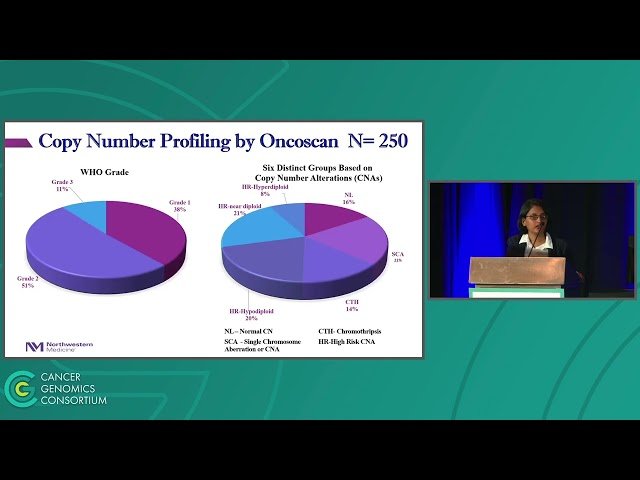
Learn about integrated comprehensive genomic profiling approaches for meningiomas through findings from a single institutional research study presented at the Cancer Genomics Consortium 2024 Annual Meeting by Mohana Priya Jayavel, exploring genomic alterations in meningioma patients to improve diagnostic accuracy and therapeutic decision-making in clinical cancer genomics practice.

Study.com
Learn everything you need to know to take full advantage of your Study.com Institutional Student Membership with this helpful, comprehensive instructional course.

Study.com
Find out everything you need to know to take full advantage of your Institutional Teacher Edition membership with the articles in this helpful instructional course.

Study.com
Teaching in the field of special education is often filled with challenges and issues that are not experienced in traditional classrooms. In this course, current and aspiring educators can find useful overviews of legal, ethical, instructional and other issues related to special education that they can use to improve their classroom instruction and curricula.

YouTube
Learn how to effectively educate and engage a board of directors on cybersecurity matters in this informative conference talk from the Central Ohio InfoSec Summit 2016. Explore the critical role of board members in overseeing organizational security, including their responsibilities, governance duties, and the importance of transparency. Discover strategies for communicating security and business value, implementing a comprehensive approach to enterprise risk management, and addressing legal implications. Gain insights into handling breaches, managing outsourcing risks, and preparing for unplanned events. Examine the challenges of educating developers, mitigating insider threats, and establishing proper governance structures. Delve into topics such as incident response, systemic escalation, and the composition of an effective board. Equip yourself with the knowledge to bridge the gap between cybersecurity professionals and board members, ensuring a strategic direction that aligns with business objectives and protects valuable assets.

Udemy
Active Directory services : Active Directory DS, Active directory GPO, Active directory DNS, Active Directory PS & many. What you'll learn: Will get expertise on operations of Active Directory components such as :-Active Directory Management ToolsActive Directory Administrative CenterActive Directory Users & ComputersActive Directory Group Policy ObjectsActive Directory Sites and ServicesActive Directory DNSActive Directory Backup and RestorePlanning Domain ControllerActive Directory PowerShell This course is build for novice employees to professionals.The course of contents are :Active Directory sites and servicesActive Directory management toolsActive Directory Users and Computers Active Directory Administrative CenterActive Directory DNSActive Directory and Group Policy ObjectActive Directory Backup &RestoreActive Directory PowerShell Windows Server Active Directory is very much indeed a important subject in Windows Server administration. In this course I have tried my best to cover all components of Active Directory. Active Directory networking and maintenance is a really important work for a system administrator's day to day job life. Active Directory is not only about managing users and computers in an organisation, it is an art for a system administrator how the he/she built a secure network to protect company's inside informations, from malicious users.In this course I have covered Active Directory administration for operating systems such asWindows Server 2019 Active Directory PowerShellWindows Server 2016 Active DirectoryWindows Server 2012/2012R2 Active Directory

YouTube
Explore a panel discussion featuring top institutional investors as they delve into strategies for managing long-term returns in an evolving financial landscape. Gain insights on portfolio preparation, risk management in rising interest rate environments, and the potential need for substantial portfolio reallocation due to expected volatility in equity and debt markets. Examine the continued push into alternative investments and the associated risks of increased dependence on private markets. Learn from industry leaders representing major pension funds, investment corporations, and global financial institutions as they share their perspectives on navigating market challenges, sustainability, universal ownership, and the importance of maintaining a long-term investment horizon.

Udemy
A comprehensive introductory course on institutional real estate investing and real estate portfolio management. What you'll learn: By the end of this course, you will have a comprehensive and well-rounded perspective of institutional real estate investing and real estate fund/portfolio management.You will find out about careers in real estate and gain new insights into what a real estate portfolio manager at an investment fund does, including the stages and lifecycle of a real estate transaction.You’ll gain an understanding of the key concepts and principles in institutional real estate investing and real estate portfolio management.You’ll learn new concepts and ideas that help develop an investor’s mindset, even if you don’t work in the sector.You will understand the different types of real estate investment funds, specifically how they raise capital, and how their risk appetite, investment time horizon, and return targets differ.You’ll be able to talk confidently at networking events or interviews with your newly gained real estate investing knowledge.You will feel inspired about working in real estate or learning more about the sector. In this course, you will learn about real estate investing in an institutional context, which means from the perspective of a private equity fund, pension fund or a developer.Real estate investing is both an art and a science. To understand real estate and be a great real estate investor, you need to learn multiple disciplines, such as finance, economics, and politics.This course covers the multi-disciplinary and financial aspects of real estate investing (debt financing, deal structuring, financial modelling, transaction execution, portfolio concepts) and also regeneration and placemaking.Because at the end of the day, real estate is all about creating beautiful places that people like to live and work in. Buildings can transform lives and bring communities together.So being an excellent real estate investor is not just about crunching the numbers but about appreciating aesthetics, history, and heritage. It’s also about understanding communities, what people want and need.Andy Warhol said: “Being good in business is the most fascinating kind of art. Making money is art and working is art, and good business is the best art”.This course gives you a good overview of all these aspects. You will discover:Real estate as an asset in a context of an investment portfolioTypes of real estate acquisitionsPortfolio strategiesCareer options in institutional real estate investingIntroduction to valuation approachesWaterfall distributionKey concepts and metricsRegeneration and placemaking principlesYou will know what a career as a real estate fund manager at an asset manager like Blackrock or a private equity firm involves, and you will have a comprehensive overview of institutional real estate investing.You’ll also feel inspired and excited about working in real estate or learning more about the sector in more detail. This course does not cover:Flipping and renting houses or where to buy housesPersonal investingSpecific markets and where to investActual deals/transactions. All deals I worked on are highly confidential, so there is no covering of any real deals. This course is theoretical only. Financial modellingThis course covers breadth rather than depth. Each session within the course could easily be expanded into a separate stand- alone course, as real estate investing is a complex and technical area. As an introductory course, this course is intentionally short (2 hours) since we are all short on time these days. In detail, the course consists of 20 topics, covering: What is Real Estate? What is Institutional Investing? Real Estate as an asset class Real Estate characteristics 4 types of real estate investmentTypes of real estate acquisitions Portfolio strategies Different types of funds and characteristics Key stakeholders in real estate Career options in real estate Different real estate sectors Real Estate development deal structure Real estate development process Real Estate transaction lifecycle Development financing Real Estate valuation approaches Key terms and metrics in real estate Waterfall distribution cashflow (promote) Regeneration and placemaking principles Walkthrough of an example of a financial model

YouTube
Explore a panel discussion featuring expert investors addressing trends in operational and organizational changes in institutional investing. Delve into strategies for coping with lower return environments, approaches to asset management for improved risk-adjusted returns, and the role of technology and governance in building efficient organizations. Gain insights on how institutional investors are future-proofing their organizations through talent recruitment, development, and retention. Learn from industry leaders representing AIA Group, OPTrust, Noah Holdings, and GIC as they share perspectives on success measurement, long-term investing, governance, strategy vs. manager selection, insourcing vs. outsourcing, and technological innovation. Discover how these experts navigate overwhelming information, scale challenges, alpha generation, and fostering an innovation mindset. Examine the evolving landscape of institutional investing, including discussions on future job roles, talent strategies, diversity, Asian markets, consolidation, and the active vs. passive debate.

Coursera
Designing and Building Institutional Antiracist Spaces (D-BIAS) is a course whose mission is to teach tenets of equity, anti-racism, and cultural justice and how to apply these ideas to achieve social change. The course is aimed at educators and administrators in educational spaces, lawyers and advocates in spaces that touch civil rights, equity, and whose Institutional mission it is to achieve greater cultural equity. The course involves creative approaches to social justice, racial justice, and advocacy while remaining open to anyone from any background who shares the same vision of the world, as social change entrepreneurs.

YouTube
Embark on a deep dive into the static analysis of Active Directory NTDS in this 44-minute conference talk from TROOPERS24 IT security conference. Join speakers Bastien Cacace and Florian Duthu as they unravel the complexities of the Active Directory database structure. Gain valuable insights into the inner workings of NTDS, exploring techniques for decrypting and analyzing this critical component of Windows domain environments. Learn about potential security implications and best practices for securing Active Directory infrastructures. Discover how static analysis can reveal hidden vulnerabilities and provide a better understanding of your organization's directory services. Whether you're a security professional, system administrator, or IT enthusiast, this talk offers a unique perspective on one of the most crucial elements of enterprise network security.

YouTube
Learn about leveraging multi-institutional Electronic Health Records (EHR) data for real-world evidence generation in this 58-minute conference talk from the Big Data Conference 2024. Explore analytical approaches for mining EHR data, focusing on overcoming challenges related to heterogeneity, privacy concerns, and high-dimensional feature spaces when synthesizing information across healthcare systems. Discover methods for improving reliability and generalizability of real-world evidence through case studies from Mass General Brigham and Veteran Health Administration. Gain insights into the potential of EHR systems linked with bio-repositories for developing data-driven prediction models of disease risk and progression.