

Courses
Discover thousands of courses from top institutions and platforms worldwide
Level
Course Type
Duration

Udemy
Basic and Intermediate What you'll learn: In this course, students will learn to create professional electrical-control drawings. This course covers a wide range of tools and features such as schematic drawings, Circuit Builder, panel drawings, parametric and non-parametric PLC modules, stand-alone PLC I/O points, ladder diagrams, point-to-point wiring diagrams, report generation, creation of symbols, and so on. This will help the students to create electrical drawings easily and effectively. AutoCAD Electrical is the software of the AutoCAD suite which is intended to help control designers with the creation and modification of control systems. This software has extended features to automate control engineering tasks, such as building circuits, numbering wires, and creating bills.This course contains a detailed explanation of AutoCAD Electrical tools and features. Keeping in view the varied requirements of the students, every tool and feature is thoroughly explained with the help of examples. After going through this course, you will be able to create professional electrical control drawings with ease.This course covers topics such as ladder diagrams, schematic drawings, schematic editing, panel drawings, parametric and nonparametric PLC modules, point-to-point wiring diagrams, stand-alone PLC I/O points, report generation, creation of symbols, Circuit Builder, Terminal symbols, and so on.In this course, special emphasis has been laid on industrial applications and usage of AutoCAD Electrical tools so that it serves beginners as well as professionals to understand the function of tools and their applications in the drawing. Salient Features of this Course: 1. A tutorial approach course consisting of 45 video lectures that are organized in a pedagogical sequence. 2. Detailed explanation of all AutoCAD Electrical tools and features. 3. Step-by-step instructions to guide the users through the learning process. 4. Practice Test

Udemy
Fundamentals of Electrical Engineering What you'll learn: Basics of Electrical Engineering We find electrical equipment everywhere, our homes, offices, industries.By choosing this course, you will come to know about the Basics of Electrical Engineering, Currents and Voltages across various Electrical elements and their behavior in both Alternating Current and Direct Current circuits, etc. And also the analysis of AC wave forms. You will be able to learn easily by watching our animated videos.

Udemy
Learn electric circuits from scratch without any previous knowledge with dozens of examples in electrical engineering What you'll learn: know all the fundamentals of electric circuitsknow the meaning of SI units or international units in electric circuitsKnow the definition of the electric charge in electric circuitsKnow the definition of the electric current in electric circuitsKnow the definition of voltage in electric circuitsKnow the definition of power in electric circuitsKnow the definition of energy in electric circuitsDefinition of conductance in electric circuitsKnow the difference between dependent and independent sourcesApplications of DC circuits in electric circuitsKnow the principle of the TV picture tube or CRT in electric circuitsKnow the basic laws of electricity in electric circuitsKnow about the electricity bills calculations in electric circuitsUnderstand Ohm's law in electric circuitsKnow the definition of the nodes, branches and loops in electric circuitsKnow the definition of Kirchhoff's laws in electric circuitsKnow the definition of Kirchhoff's current law in electric circuitsKnow the definition of Kirchhoff voltage law in electric circuitsKnow series resistor and voltage division in electric circuitsKnow parallel resistor and current division in electric circuitsKnow Wye-Delta transformations in electric circuitsUnderstand applications as lighting systems in electric circuitsUnderstand Nodal analysis in electric circuitsUnderstand Nodal analysis with voltage sources in electric circuitsUnderstand the supernode in electric circuitsUnderstand Mesh analysis in electric circuitsUnderstand Mesh analysis with current sources in electric circuitsUnderstand the Supermesh in electric circuitsUnderstand How to use the Cramer method in electric circuitsComparison between Nodal and Mesh analysis in electric circuitsUnderstand applications as DC transistor circuits in electric circuitsUnderstand the meaning of the linearity property in electric circuitsUse the Superposition theorem in electric circuitsUnderstand Thevenin's theorem in electric circuitsUnderstand Norton's theorem in electric circuitsMaximum power transfer in electric circuitsUnderstand the various types of operational amplifiers in electric circuitsUnderstand ideal Op-Amp, inverting Amplifier, non-inverting amplifier in electric circuitsUnderstand summing Op-Amp circuit in electric circuitsUnderstand the difference Op-Amp circuit in electric circuitsUnderstand cascaded Op-Amp circuit in electric circuitsKnow the applications of Op-Amp like digital-to-analog converter in electric circuitsKnow the applications of Op-Amp like instrumentation amplifiers in electric circuitsKnow what is a capacitor in electric circuitsUnderstand how to simplify series capacitors in electric circuitsUnderstand how to simplify parallel capacitors in electric circuitsKnow how to get energy stored in capacitors in electric circuitsKnow what is an inductor in electric circuitsUnderstand how to simplify series inductors in electric circuitsUnderstand how to simplify parallel inductors in electric circuitsKnow how to get energy stored in the inductor in electric circuitsknow the applications of capacitors and inductors as integrators in electric circuitsknow the applications of capacitors and inductors as differentiators in electric circuitsUnderstand practical capacitors and practical inductors in electric circuitsSimulation of basic electric circuitsSimulation of operational amplifiersSimulation of charging and discharging of a capacitorSimulation of a source-free RL circuitSimulation of a source-free RC circuitSource-free RC circuitSolved examples on source-free RC circuitsSource-free RL circuitSolved examples on source-free RL circuitsStep response of an RC circuitSolved examples on step response of an RC circuitStep response of an RL circuitSolved examples on step response of an RL circuitSimulation of the step response of an RL circuitSimulation of the step response of an RC circuitAC electric circuitsPhasor representation of ACPhasor relationships for circuit elementsImpedance and admittanceKirchhoff’s laws and impedance combinations in the frequency domainApplication of nodal analysis in AC circuitsApplication of mesh analysis in AC circuitsApplication of Thevenin and Norton theorems in AC circuitsApplication of source transformation in AC systemsApplication of superposition theorem in AC circuitsImportance and applications of resonant circuitsDefinition and equations of a series resonant circuitQuality factor of a series resonant circuitTotal impedance VS frequency in a series resonant circuitBandwidth and selectivity curve of a series resonant circuitDerivation of cutoff frequenciesSolution of solved examples on series resonant circuitParallel resonant circuitUnity power factor of a parallel resonant circuitMaximum impedance of a parallel resonant circuitQuality factor of a parallel resonant circuitBandwidth and cutoff frequencies of a parallel resonant circuitEffect of high quality factor on the parallel resonant circuitInstantaneous power and average powerMaximum average power transferEffective or RMS value in AC circuitsApparent power and power factorComplex power and power trianglePower factor correction "Ultimate Electric Circuits Course from A to Z for Beginners" This is the only course with everything you need to know about the basics of electric circuits for complete beginners without any previous knowledge. This course starts with the basic concepts of electricity to the level you will be very familiar with circuits. Throughout the course you will get: Basics concepts of electric circuits: This will help you understand the very basic definitions of electricity including voltage, current, power, and more.Basic laws of electric circuits: This part will teach you about the branches, nodes, KVL, KCL, Ohm's law, and Delta-Wye transformations.Methods of analysis: You will learn how to analyze electric circuits using nodal analysis and mesh analysis.Circuit theorems: In this part, you will learn more advanced circuit analysis techniques such as the superposition theorem, source transformation theorem, Thevenin theorem, Norton theorem, and maximum power transfer.Operational amplifiers: You will be introduced to operational amplifiers including inverting, non-inverting, summing, difference, and cascaded amplifiers. These amplifiers are helpful in inverting or amplification or adding or subtracting different input signals.Capacitors and inductors: These components are really important in the electrical system and other applications. You will find inductors as a representation of electrical machines and capacitors that can be used in power factor correction.First-order circuits: These circuits are composed of resistors and inductors or resistors and capacitors. We will understand how to analyze them in the free and forced responses.Basics of AC circuits: AC power or alternating power is the one which we have in our homes. We will learn about them and what is the difference between them and AC circuits.Analysis of AC circuits: In this part, we will start analyzing our AC circuits with the different theorems that had been discussed at the beginning of the course.Resonant circuits: In this part, we will discuss both series and parallel resonant circuits, these circuits have a crucial effect on electric circuits as well as have practical applications.Electric circuit simulations using MATLAB: We will learn the simulation of many electric circuits in the well-known simulation program MATLAB Simulink. This will be a fun part that will increase your knowledge about electric circuits. All of these topics are in a step by step lessons with many solved examples. Bonus Gift: You will find also the slides for the Ultimate Electric Circuits Course Bundle for those who are interested in them or having them as a revision for themselves: 458 Pages of Electric Circuits Course Slides95 Pages of Electrical Resonance Course Slides Take this bundle if you've been looking for ONE COURSE BUNDLE with in-depth insight into the basics of electric circuits.
VDCI
Advance your MEP career by mastering electrical system designs using Revit. This course equips experienced Revit users with the skills necessary to create and coordinate effective, professional electrical designs within a Building Information Model (BIM).

Udemy
Learn about various electrical machines such as transformers, DC, synchronous, and induction machines from A to Z What you'll learn: Understand the importance of transformersUnderstand why are the transformers considered the backbone of Power SystemUnderstand the importance of iron coreLearn about the magnetic circuit represented by the coreUnderstand the construction of the windings in transformer and how they are put inside the coreClassify the windings according to different categoriesUnderstand the function of insulating material and transformer oilRealize the Importance of the Conservator in TransformerUnderstand how Breather Remove the moisture and Why?Realize how Important the Bushings for Human SafetyUnderstand the Importance of Tap changer and its effect on Load VariationRealize the Benefit of Cooling Tubes for OilUnderstand how Important is the Buchholz Relay in TransformerRealize benefit of the Explosion Vents to protect Transformer from Explosion.Differentiate between Different Methods of Cooling of Transformer and Their Corresponding Power RatingUnderstand the Different Types of Transformers as Power and Distribution TransformersUnderstand the Difference between Single Phase Core and Shell Type TransformersUnderstand the Difference between Three Phase Core and Shell Type TransformersCompare between the Shell Type and Core Type TransformersUnderstand the Theory of Operation of TransformerDifferentiate between Ideal and Non Ideal TransformersRealize the Effect of Loading on TransformerUnderstand the Transformer Regulation and EfficiencyLearn about Different Losses occurring in TransformerUnderstand the Meaning of Transformer RatingUnderstand the Voltage relation in TransformerDifferentiate between Approximate and Exact Equivalent Circuits of TransformerUnderstand the Concept of Referring in TransformerLearn Solved Example on TransformerUnderstand the Importance of the Magnetic circuit and its application like Transformer.Learn about the difference between Linear and non Linear Materials .Understand the Important Definitions of Magnetic Circuits.learn about the Flux Linkage and Reluctance.Understand the Analogy between the Magnetic and Electric Circuitslearn about Induced EMF and Current.Solve Examples on the Magnetic Circuit.Understand the Fringing Effect.Use Ampere Right Hand Rule or screw Rule.Importance and construction of DC machines.Armature Winding And EMF Equation.Separately Excited DC Machine.Shunt And Series DC Machines.Types And Applications Of Compound DC Motors.Torque-Speed Characteristics And Speed Control Of Separately Excited DC Motor.Torque-Speed Characteristics Of Series DC Motor.Starting Of DC Machine.Losses In DC Machines.Dozens Of Solved Examples On All Types Of DC Machines.Construction And Principle Of Operation Of Synchronous Generator.Principle Of Operation Of Synchronous Motor.Equivalent Circuit And Phasor Diagram Of Non Salient Synchronous Machine.Equivalent Circuit And Phasor Diagram Of Salient Synchronous Machine.Parallel Operation Of Two Generators.Synchronization Of Machine With Grid.Dozens Of Solved Examples On Synchronous Machines Salient And Non Salient.Construction and theory of operation of induction machinesEquivalent circuit and power flow in induction motorTorque-Speed Characteristics Of Induction MotorMethods of Speed control of induction motorMethods of starting induction motorPrinciple Of Operation Of Doubly Fed Induction GeneratorSelf Excited Induction GeneratorDozens Of Solved Examples On Induction MachinesModeling of the DC machine in a no-load case using Simulink in MATLABModeling of the DC machine in presence of load torque using Simulink in MATLABSimulating the DC machine using a power library from Simulink in MATLABSimulation of induction motor using Simulink in MATLABSimulation of the synchronous machine connected to a small power systemOverview on the PLC hardware configurationOverview on types of inputs and outputs in PLCAdvantages of using PLC over classic controlOverview on different PLC programming languagesDiscuss the important symbols in PLCDefinition of PLC scan cycleUsage of markers in PLCUnderstand types of timers and counters in PLC and how to use themDo tasks in batch simulatorDo tasks in silo simulatorDo tasks in door simulatorDo tasks in I/O simulator Master electrical machines with the most comprehensive course available, packed with over 47 hours of expert instruction, 240 lectures, and step-by-step lessons that make even the most complex topics simple to understand. Each section is loaded with real-world examples, ensuring you can apply these concepts in practice, not just theory. Whether you're a beginner or an experienced engineer, this course breaks down essential concepts in magnetic circuits, transformers, DC machines, and more. From basic magnetic permeability to advanced synchronous machine simulations, everything is explained in clear, everyday language, making even the toughest topics accessible.With 50+ solved examples, you’ll see how to tackle real-life electrical machine problems, from calculating transformer efficiency to analyzing the torque-speed characteristics of motors. Every example is designed to reinforce your learning and ensure you have the practical skills to excel.Explore single-phase and three-phase transformers from construction to advanced circuit analysis, or dive into the world of DC machines, covering every aspect from armature reaction to motor speed control. Our detailed explanations and practical examples will make you confident in handling both ideal and practical machine problems.Master MATLAB Simulink with hands-on projects that include electrical transformers simulations, DC motor modeling, and induction motor simulation. Learn how to protect electrical systems effectively by diving into NEC standards for motor overcurrent protection. You’ll cover everything from selecting disconnect switches to designing motor protection systems, with practical examples that ensure you know how to meet regulatory standards. Bonus Gift: Ultimate Electrical Machines Course Bundle Slides As a special bonus, you’ll receive the full Ultimate Electrical Machines Course Bundle slides—perfect for revision or as a quick reference guide. These slides break down complex subjects with simple, concise explanations: 45 Pages on Magnetic Circuits161 Pages on Electrical Transformers180 Pages on DC Machines62 Pages on Induction Machines57 Pages on Synchronous Machines73 Pages on NEC Sizing for Conductors, Overcurrent, and Overload72 Pages on Disconnect Switches36 Pages on Breakers, Fuses, and Power Factor.39 Pages on PLC Programming Using LogixPro.These slides give you everything you need for a quick refresh or detailed study, making your learning even more efficient. Why Choose This Course? Comprehensive and Practical: Covers the essential theory and provides real-world examples, simulations, and applications.Interactive Simulations: Hands-on learning with MATLAB Simulink, preparing you for real-life challenges.Step-by-Step Instruction: Clear, easy-to-follow guidance ensures you never feel lost.Bonus Material: Instant access to course slides for revision and deeper insight. Take the Ultimate Course Bundle for Complete Mastery This is more than just a course—it's your complete learning package for electrical machines. Whether you're preparing for exams, work, or simply passionate about electrical machines, this course gives you the tools and confidence to succeed. Start learning today and become an expert in electrical machines!

XuetangX
The content of this course is demand-oriented, with the improvement of skills as the core to integrate and optimize the course content setting, and integrate the current new technology, new process, new standards and other professional technology development dynamic content. The course is divided into four learning items, which respectively introduce the basic knowledge of insulation of high voltage equipment, the operation of various insulation preventive tests, and the high voltage electrical test items and operation of various typical equipment. Through the study of this course, I can understand the basic knowledge of electrical equipment insulation, master the principle and connection of high-voltage electrical test, precautions, test methods, and result judgment, and master the high-voltage electrical test items and operations of various typical equipment. Cultivate learners' diligent thinking, rigorous and meticulous work style, good professional ethics and professional quality, and cultivate students' craftsman spirit. Be able to use the basic safety knowledge and methods of electrical testing to test various high-voltage electrical equipment; It can accurately analyze the test data, judge the quality of the equipment, and correctly fill in the test report, which provides important support for the future work of the test worker.This course is suitable for electrical students to learn, but also suitable for power system generation, power supply, power construction enterprises and industrial and mining enterprises engaged in various electrical equipment insulation performance, electrical characteristics and parameter measurement of electrical test staff, related management personnel to learn.

Swayam
Understand the basics of circuit theory and analysis of electric circuits.Apply the network elements and theorems for the analysis of complex circuits.Analyze the single and three-phase AC circuits.Compute the transient responses of RLC circuits.Understand the concepts of power measurements.

Udemy
Control panel schematic & layout What you'll learn: This course will cover A-Z of AutoCAD Electrical 2020This will enable one to design Control panels as per industrial standardsOne can easily design VFD, PLC & MCC circuits after the completion of this courseOne will learn to create title blocks with ladders This course will help electrical &automation engineers to understand all features of AutoCADElectrical 2020 and can use as a guide while creating control panel schematic &layout. The schematic design (Practical) in this tutorial is very very helpful for a control panel design engineer. Since the tutor worked with Allen Bradley for so many years this course highlight designing of VFD, PLC and MCC.

Swayam
Electrical circuits are everywhere, from tiny ones in integrated circuits in mobile phones and music players, to giant ones that carry power to our homes. This course deals with analysis techniques that can be applied to all such circuits. We'll first discuss electrical quantities-voltage and current-relevant to such circuits and learn about basic elements(R, L, C, controlled sources) and their properties. We'll then move on to general analysis techniques that can be applied to arbitrary circuits. We'll also discuss circuit theorems and rudiments of negative feedback circuit using the opamp. After taking this course, one should be able to analyze memoryless linear circuits.INTENDED AUDIENCE : Interested learnersPREREQUISITES : XII std. level algebra and calculus, electrostaticsNOTE: This course videos are created and offered earlier byProf. Nagendra Krishnapura, it will be offfered by Prof. Gajendranath Chowdary for the subsequent runs.

Coursera
This is an application-oriented course explaining the various aspects of power distribution, indoor and outdoor equipment up to 33kV. The course adopts a cross-disciplinary approach to ensure that the learners understand site execution, testing and commissioning. Throughout the course, safety aspects have been emphasized in every area of work. This course blends with conceptual knowledge covering the latest technological trends like SCADA & automation. This course helps learners know the Electrical distribution system and master as a Construction Engineer/Planning Engineer and Commissioning Engineer . This course gives the learners insights about: 1. Electrical distribution methods 2. Types of loads 3. Green Field Construction of Overhead Lines 4. Distribution Line Components 5. Concepts of Auto reclosers and Sectionalizes 6. SCADA in detail

Swayam
Transformer and D.C rotating machine will be the main topics to be discussed in this course. Working principle of ideal transformer and its equivalent circuit referred to two sides. Analysis of practical transformer & its equivalent circuit. Equivalent circuit referred to different sides and phasor diagram. Core loss and copper loss. Regulation & efficiency. Three phase transformer connection & vector group. Parallel operation of transformers. Autotransformer. Basic constructional features of D.C machine. Elementary lap and wave winding used in armature. Emf and torque equations of D.C. machine – generator and motor mode. Armature reaction and its effect. Compensationg winding. Shunt, series and compound machines. Generator characteristics. Motor characteristics. Efficiency, Basic tests. INTENDED AUDIENCE: UG Electrical Engineering as core subject. UG Mechanical and Mining Engineering as Elective subject. PREREQUISITES: Basic Electrical Technology: Knowledge of elementary calculus INDUSTRY SUPPORT: BHEL, CESC, NTPC, WBPDCL

YouTube
Instructor: Dr. Nagendra Krishnapura, Department of Electrical Engineering, IIT Madras. The course begins with an introduction to the course; Current and Voltage; Kirchhoff\'s Current and Voltage laws. Electrical circuit elements: Voltage and current sources; R, C, L; Controlled sources; Determining the characteristics of a two-terminal element;Nodal analysis of a network with conductances and current sources, Circuit analysis; Number of KCL and KVL equations in a circuit; Nodal analysis, Nodal analysis with voltage sources and controlled sources; Brief introduction; Sinusoidal steady state response of RC and RLC circuits.

Udemy
Learn all about the practical industry knowledge of Electrical Transformers with this course! What you'll learn: Differentiate between Different Cooling Class of TransformersDifferentiate between the different types of cores and windings of a TransformerLearn about the internal insulation of transformers and what are its degradation factorsLearn about the different bushing types, design consideration and industry standardsLearn about what goes into the transformer nameplateLearn about what makes a transformer noisyLearn the Concept of inrush currentLearn about the different types of load tap changersLearn about the Liquid Preservation SystemGet knowledge on Power Transformer, Distribution Transformer, Dry Type Transformer and Instrument TransformerLearn how to procure transformers and what to look out for in commissioning and installation Electrical Transformers Fundamentals is a comprehensive video course where you can learn all about electrical transformers that are essential in working in the industry; from basic knowledge to how to procure and install transformers. I have handcrafted this course to allow students to acquire core fundamental knowledge on electrical transformers as well as how to apply it in the utility industry. If you are currently or working towards being a equipment engineer and transformers are something that you need to work with, you will find this course of great help to get the fundamental knowledge you need to kick start your professional career. If you work on the vendor/supplier side, this course will provide you with the tools to effectively and efficiently communicate your products to your customers. This course can benefit anyone not only in the utility industry, but also in any industry where you need to spec and install transformers. As long as you have interest in a career that electrical engineering , this course can help you to get an advantage at looking for work or giving you an edge over your competitors as it gives you core knowledge of how to procure and install transformers as well as other knowledge that you would not have otherwise obtain unless you have worked in specific industries for years, especially within the utility and energy industry. And knowledge is power. So let's get started! Let's start your fulfilling journey and mark an important point of your phenomenal career!

Coursera
MOSFET transistor switches are the workhorse of semiconductor-based electronics. In this course, we begin with MOS capacitors and see how to extract the oxide charge density, which is important for controlling the MOSFET threshold voltage. We then review MOSFET electrical characteristics and see how current-voltage measurements are used to determine the threshold voltage. The course project uses real-world data to extract the threshold voltage of a 40 nm gate length MOSFET designed for 5G radio frequency integrated circuits.

LinkedIn Learning
Learn the essential skills of AutoCAD Electrical toolset, which offers automated drafting tools for designing wiring, circuiting, PLC modules, panels, and more.

LinkedIn Learning
Get started with SOLIDWORKS Electrical, a design package that helps make the work of designing and developing electrical systems a bit easier.

YouTube
Basic Electrical Technology. Instructor: Prof. L. Umanand, Department of Electrical Engineering, IISc Bangalore. The course is structured into three components: electrical essentials, electromagnetic domains, and electro-magneto-mechanical domains. The first part of the course will focus on electrical essentials which are really essential for any electrical engineer to operate on the electrical technology. The second part will focus on electrical equipments in the electromagnetic domains, mainly transformers. The third part focuses on the electro-magneto-mechanical domain. What it basically means is the energy flows through the electrical domain, the magnetic domain and the mechanical domain which are the machines.

YouTube
Learn how electricity works starting from the basics of the free electron in the atom, through conductors, voltage, current, resistors, led, to capacitors and transformers. Learn what an electrical current, alternating current, and direct current is. Understand ammeters, multimeter, power monitor, GFCI, circuit breaker, fuses, resistors and much much more on this electrical engineering basics series!
YouTube
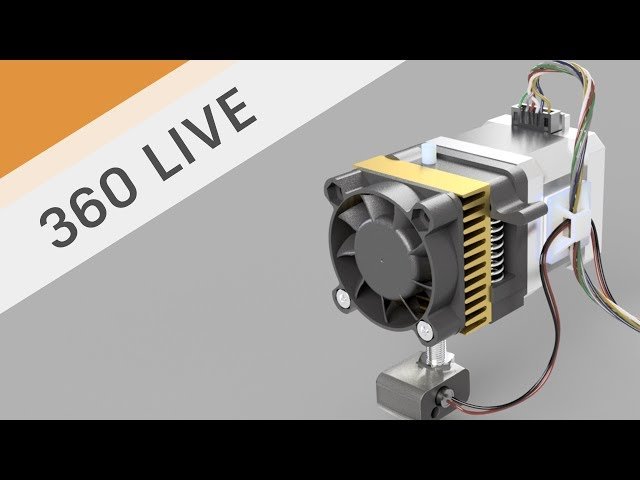
Explore the process of creating electrical wire routes in Fusion 360 through this comprehensive live stream tutorial. Learn how to utilize 3D sketching techniques to design and model wires, starting with an introduction to the methodology and progressing through various steps such as creating paths, sketch planes, and sweeps. Discover how to work with different types of wires, create new components, adjust tangency and points, and rotate wires for optimal placement. Gain insights into advanced techniques like creating planes along paths, checking for interference, and bundling wires. Master the art of projecting geometry, applying constraints, and creating sweeps to achieve realistic wire routing in your 3D models. Perfect for designers and engineers looking to enhance their Fusion 360 skills in electrical component modeling.

Coursera
Course 2 begins with the definitions of resistivity and sheet resistance of semiconductors and metals and emphasizes the importance of working with the correct units for each. We see how to calculate the sheet resistance of a thin conducting film once we know its resistivity. A method to determine the contact resistance using the transfer length method is described, along with the definition of the specific contact resistivity. Current-voltage (IV) measurements of p-n junction diodes are used to extract key device parameters such as the ideality factor and series resistance. The course project explores how process monitor blocks are used to maintain manufacturing integrity.