

Courses
Discover thousands of courses from top institutions and platforms worldwide
Level
Course Type
Duration

Udemy
Learn the Car Repair from Beginner to Professional Level ! Car Mechanic, Car Tuning, Electrician, Automotive Engineering What you'll learn: Car Repair for Everyone !Engine Types and their working Principles (2 Stroke,4 Stroke and others)Understanding Car Repair PrinciplesWorking Principle of Automobile SensorsKnowing how to perform a basic car tune-up.Understanding the fundamentals of car suspension and steering systems.The Advanced Introduction to Manual Transmission Working PrinciplesSemi-Clutch and DCT TransmissionCar Chassis TypesUnderstanding the importance of car safety and how to perform basic car safety checks.Electronic Components of Car and Their Working Principle (Relays, Fuses, Switches and other components)Automobile Engine and Body Train SensorsIdentifying the different parts of a car and their functions.Electrical Engineering Training for Car MechanicsLearning how to diagnose common car problems.Understanding the basics of engine maintenance.Learning about the different types of car batteries and their maintenance.Car Suspension TypesUnderstanding the basics of car electrical systems.Deep understanding of Car Repair and Car Electronic ComponentsKnowing how to diagnose and fix common electrical problems.Learning about car brakes and how to diagnose and fix brake issues.Electrical Side of Car RepairKnowing how to diagnose and fix common suspension and steering problems.Car Engine Control Unit (Electronic Control Unit) Working PrincipleHow to diagnose and fix common car heating problems.Learning about car audio and entertainment systems.Learning about car alarm and security systems.Learning about hybrid and electric car systems.and other awesome topics ! -->> *Get the Official Certificate after Completing the CourseAre you tired of constantly being stuck in a dead-end job with no room for growth or advancement? If so, now is the time to take control of your future and invest in your career. With online car repair training, you can become a skilled auto mechanic in just a few short months and kickstart your journey to a successful and fulfilling career ! You are probably taking this course for one of two reasons. Either you are preparing yourself to enter into the field of automotive service, or you are expanding your skills to include automotive electrical systems. In either case, congratulations on selecting one of the most fast-paced segments of the automotive industry. Working with the electrical systems can be challenging, yet very rewarding; however, it can also be very frustrating at times. For many people, learning electrical systems can be a struggle. It is my hope that I am able to present the course to you in such a manner that you will not only understand electrical systems, but will excel at it. There are many ways the theory of electricity can be explained, and many metaphors can be used. Some compare electricity to a water flow, while others explain it in a purely scientific fashion. Everyone learns differently. I am presenting electrical theory in a manner that I hope will be clear and concise. If you do not fully comprehend a concept, then it is important to discuss it with your instructor. Electricity is somewhat abstract; so if you do have questions, be sure to ask me in Udemy ask section.Why Become an Electrical System Technician? In the past, it was possible for technicians to work their entire careers and be able to almost completely avoid the vehicle’s electrical systems. They would specialize in engines, steering/ suspension, or brakes. Today, there is not a system on the vehicle that is immune to the role of electrical circuits. Engine controls, electronic suspension systems, and anti-lock brakes are common on today’s vehicles. Even electrical systems that were once thought of as being simple have evolved to computer controls. Headlights are now pulse-width modulated using high side drivers and will automatically brighten and dim based on the light intensity of oncoming traffic. Today’s vehicles are equipped with twenty or more computers, laser-guided cruise control, sonar park assist, infrared climate control, fiber optics, and radio frequency transponders and decoders. Simple systems have become more computers reliant. For example, the horn circuit on the 2008 Chrysler 300C involves three separate control modules to function. Even the tires have computers involved, with the addition of tire pressure monitoring systems!Today’s technician must possess a full and complete electrical background to be able to succeed. The future will provide great opportunities for those technicians who have prepared themselves properly and learn more with this Car Mechanic Course.On the off chance that you're not especially precisely slanted, you might watch the people who are with appreciation, surprise, and irritation since they have something you don't: a comprehension of how things work and how things fit together. Whenever they dismantle something, they can reassemble it how it was. Whenever they say that they need to investigate the hood, they can really get the darn thing open. Furthermore, when they need to change a level, they don't endure ten minutes attempting to sort out which end of the raise is.Fortunately, you don't need to be brought into the world with a wrench in your grasp to know how to fix things — even things as apparently convoluted as a vehicle. I know; I've been there. The Introduction fills you in regarding my car revelation.The Best Way to Learn Car Repair is start with this Auto Mechanic Course.Obviously, the easiest errands can once in a while be the greatest obstacles to survive. All things considered, in the event that you couldn't actually sort out some way to open the hood, how might you check the oil or the coolant level? That is the reason I start this course with the essentials: straightforward positions that you'll have to do over and over — like opening the hood, lifting a vehicle, and replacing a tire. I likewise incorporate guidelines for filling the gas tank yourself (it's less expensive than full-administration), a reliable technique for dismantling anything and assembling it back once more, and security pointers that each technician — experienced and amateur — ought to notice.

Udemy
Learn the parts and wiring techniques used in a motor control installation, become a Controls Electrician. What you'll learn: Learn the fundamental parts of industrial control boards and how they work.Learn how to install, wire and commission a basic motor control installation from scratch.Learn how to fault find, repair and maintain a basic motor control systems.Learn how electrical control components work and how to wire them up. This course is an introduction to electrical controls with an emphasison motor controls in the real world. In this course, we focus on industrial and commercial installations,we will start with the absolute basics of electrical circuits. We look at the fundamentals ofresistive circuits, and introduce Ohms Law, a mathematical formula that all electricians learn. The course looks at the different types of voltages and where they come from in the real world, focussing on transformer formations from the power supply authority,and AC and DC Voltages. As this is a course on the fundamentals of electrical controls, we will go through the basics of control circuits such as, normally open and normally closed, and look at how controlsare made up of series and parallel circuits. Taking a more practical approach to the subject, we dive inside control panels and look at each electrical component thatwe will be using later in the course, inour ownmotor control installation. We look inside the parts in detail and see how they work, discuss ratings, and learn how to size them up, with a particular focus on contactors and overloads. We alsosimplify an explanation of how an asynchronous motor works. Before we get to wiring up our own control circuit, we look at the different types of control voltages in the real world and follow themfrom end device at the customers installation all the way backto the supply transformer at the power company, so we can see how a full installation might look, and get an insight into different systems that we might find in industry. Afterlearningthebasics, we look at how we would install a motor control installation from scratch, including the motor itself. We get to see all the parts that we have learned about, working together in a mock real world installation, we learn how to size up the components and then go through the wiring of the circuit step by step. Part of installing a control board is commissioning it, so we go throughthe operation of the circuit after we have installed it to make sure it works. Installations are often amended and modified in the real world, so we'll look at a few ways in which we could modify our mock installation, change our wiring around and re-commission the installation. At the end of the course, we're going to challenge ourselves, and learn how to fault find a circuit as we would if we were called to a breakdown as an electrical controls technician. We'll go through a few faults that we might come up against in the industry and look at how we might repair them. We also briefly touch on preventativemaintenance techniques and discuss why they are important, for safety reasons and also financial reasons too. Controls can be quite daunting and complicated, we willgo through slowly and steadily, learning each part of the installation in detail before putting it all together, the course is weighted towards learning from practical examples, perfect for those of usthat are visual learners. And, instead of enforcing hard and fast rules of how things must be done, Wefocus more on learninghow to break down circuits and understand them for ourselves.I will show youwiring techniques used by Controls Electricians in the real world. What is covered in the course: Learn the fundamentals: AC andDC voltages, 3phase voltages,resistive circuits, ohms law, normally open and normally closed, series and parallel circuits, supply transformers(star &delta),faults to earth.Electrical components: Control panels, isolating switches, circuit breakers, fuses, contactors, overloads, asynchronousmotors, push buttons,indicator lights,power supplies.Types of installations: Single phase, dual phase, power supply, mixed voltage control.Installation of a motor control circuit: Install electrical components, wiring of a mock installation, commission installation.Modifying an installation:Add and remove components, wirea hold in circuit,commission.Fault finding and maintenance: Fault find and repair, use amultimeter,preventativemaintenance.Are you ready to upskill?

Swayam
Electrical energy is the indispensable form of energy for the functioning of day-to-day life. Every person needs a foundational understanding of electrical systems to ensure safe interaction with any electrical setup. The knowledge of electrical components and its connections, helps in identifying common malfunctions in electrical setups and devices. Electricity is utilized in our homes through proper electrical wiring. Correct wiring ensures that all electrical appliances and systems will work efficiently by reducing energy consumption. Everyone needs an electrician for initial wiring and periodic maintenance, creates a high demand for skilled professionals. Understanding the electrician trade and having basic wiring knowledge can reduce the need for professional services for minor tasks. Awareness of wiring principles aids in conducting regular maintenance checks, preventing major issues and empowers individuals to maintain a safe, efficient and reliable electrical system in their homes. In alignment with these objectives, this course is designed to offer comprehensive knowledge and skills necessary for working with any electrical setup. The initial modules of this course will cover an overview of electricity, the components of electrical circuits, and the fundamental rules governing them. Since magnetism is important in electrical circuits, the course will also delve into the importance of magnetism, the magnetic properties of materials, and the magnetic effects of electric current. Next, the course will discuss the production of alternating current (AC), various configurations of AC circuits, and the instruments used for electrical measurements. Additionally, the course will offer in-depth knowledge about electrical wires and cables, different types of cable joints, wiring accessories and tools, and various electrical wiring types. The design of electrical wiring diagrams and electrical distribution panels for domestic installations will also be emphasized. Earthing is a vital component of electrical wiring systems. The course will also cover the requirements, processes and types of earthing, along with ground testing methods. Finally, the course will address the importance of safety practices, Indian electricity rules and regulations, the concept and applications of semiconductor devices and the scope, responsibilities, and training of electricians. Practical demonstrations of household wiring installation will be integrated throughout the course.

CourseHorse
California Electrical Certification Crash Course Our California electrical certification crash course, taught in class throughout a single day, covers the ECE certification, which is required by the Department of Apprenticeship. Offered by professional instructors, it’s the perfect way to round out your knowledge, boost your confidence, and get ready to become a licensed electrician in California.We will give you everything you need to pass this timed, open-book exam, including:A home study guide that walks you through all the key concepts you’ll see on your testA number of practice test questions that mimic what you’ll see on your ECE examA thorough review of the key concepts you’ll need to pass the exam, as well as a review of test-taking strategiesBackground on the California electrical certification program, with a detailed overview of the application and approval processWho Needs to be Certified?California Law Requires that all electricians be certified if they are working for a contractor with a class C-10 License.Note: That if you are a C-10 contractor but working under another C-10 contractor, then you need to be certified as well.Important Notes: Students must be over 22Must have at least 4 years of construction experience to sit for the test (California Regulated)For shipping fee option on materials, please reach out to [email protected].

Udemy
Industrial electricity, electrical installations, electrical automation, for electricians, automation design What you'll learn: You will know the principles of operation of the devices used in electrical automationYou will learn to design and implement basic automation electrical circuits, using wired logicYou will learn to design and implement more advanced automation electrical circuits, using wired logicAll this using contactors, timers, relays, counters; etc. This is a course translated from Spanish to English.Do you want to learn the operation of timers, contactors, relays, counters, etc?Do you want to implement these elements in an electrical automation circuit of the industrial type?All this using wired logic?If so, this course is waiting for you.You will learn the principles of operation of the devices used in industrial electrical automationYou will learn when to use these devices and how to install them in basic circuitsYou will learn when to use these devices in advanced circuitsYou will learn to design and commission electrical circuits of any type using hardwired logicYou will learn to use the tools available to simulate automatic electrical circuits using wired logicYou will learn to interpret electrical control circuits both the control part and the force part You will learn the principles of operation of the devices used in industrial electrical automationYou will learn when to use these devices and how to install them in basic circuitsYou will learn when to use these devices in advanced circuitsYou will learn to design and commission electrical circuits of any type using hardwired logicYou will learn to use the tools available to simulate automatic electrical circuits using wired logicYou will learn to interpret electrical control circuits both the control part and the force part

MasterClass
Spike Lee didn’t just direct his award-winning 1986 feature debut, She’s Gotta Have It. He was also the writer, star, truck driver, location scout, electrician, and caterer, because that’s what it took to get his film made. In his first-ever online directing class, the visionary behind Do the Right Thing, Malcolm X, and 25th Hour lets you in on his uncompromising approach to filmmaking. Learn about writing, self-producing, working with actors, and making movies that break barriers.

YouTube
This 12-minute tutorial from Ranking Academy demonstrates how small business owners can improve their Google Maps and Google Search rankings to generate passive income. Learn practical SEO strategies that can help your business appear higher in search results while you sleep. The video features a real-world example from Excel Electrician, showcasing actual data and results. Discover how to book personalized one-on-one sessions for tailored SEO guidance specific to your business needs. The tutorial provides smart, actionable SEO techniques designed specifically for small business owners looking to increase their online visibility and attract more customers through improved search rankings.

YouTube
Discover the inspiring journey of an electrician-turned-innovator in this 15-minute TEDx talk. Explore how practical knowledge and hands-on experience can drive transformative change across various industries. Learn about Prabhakar Alladi's remarkable path to creating over 25 innovations, earning numerous awards and recognition along the way. Gain insights into the power of relentless curiosity and individual impact as Alladi shares his experiences in technology, agriculture, and social entrepreneurship. Understand how his diverse contributions, ranging from agricultural tools to low-cost technological solutions, address real-world challenges and improve the lives of underserved communities. Be inspired by Alladi's ability to blend creativity with practicality, and see how his dedication to problem-solving has established him as a prominent figure in the world of inventors and social change-makers.
Udemy
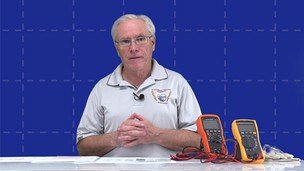
Learn electrical circuit and test instrument basics and how to use them in any testing or troubleshooting task. What you'll learn: Students will learn the basics of electrical circuits and Ohm's LawStudents will learn the types and functions of test instruments, highlighting digital multimetersStudents will understand the relationship between electrical circuits and components and test instrumentsStudents will learn the purpose, functions, and controls of digital multimetersStudents will understand safe use of instruments when testing circuits and componentsStudents will be able to apply the curriculum to real world testing and troubleshooting The Beginner's Guide to Testing Electrical Circuits combines clear explanations of electrical circuits, components, and values with detailed demonstrations and labs on using test instruments competently and safely. The instruction also covers common circuit and component troubleshooting and the role of a multimeter in that process. Designed for students and beginners, the curriculum is also a great refresher and skill builder for those familiar with electrical testing. Whether you are a student, electrician, technician, engineer, or hobbyist, The Beginner's Guide to Testing Electrical Circuits will improve your knowledge and competence when using digital multimeters.The instruction begins with lessons on basic electrical circuits, terminology, and theory, including Ohm's Law. These are then applied to test instruments and how they function. Also included are essential safety precautions and step-by-step test procedures. Basic testing tools are demonstrated, primarily focusing on the digital multimeter. Students should have access to a meter to replicate and practice testing procedures included in the training. The instructor, Mitch Hegman, is both a practicing master electrician and a professional instructor. Mitch understands electrical testing from both a practical and educational perspective and applies a combination classroom and "in-the-field" approach to his teaching. And early course lessons introduce and allow students to begin using and practicing with their meters as they learn about circuits and components.
YouTube
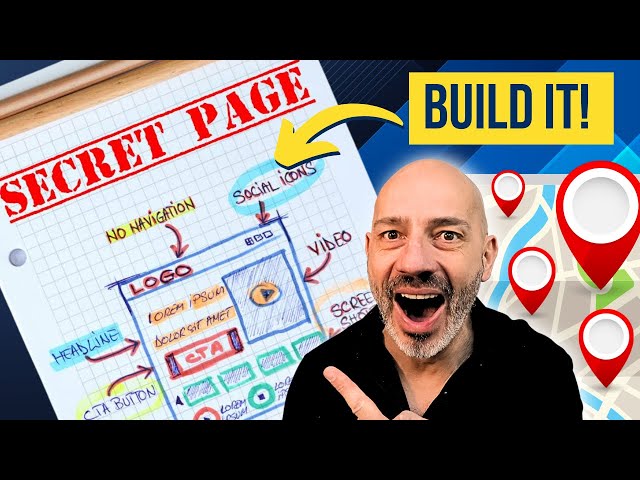
Discover a powerful yet underutilized webpage strategy that enables small businesses to expand their local search visibility beyond their immediate geographic area in this 13-minute tutorial. Learn how service-based businesses like plumbers, electricians, and mobile therapists can overcome the geographic limitations of Google Business Profiles to appear in search results across multiple neighborhoods and service areas. Explore the specific webpage structure and implementation techniques that allow businesses to rank higher in Google Maps and Google Search results for locations where they don't maintain physical offices. Master the step-by-step process for creating and optimizing this secret webpage to outrank local competitors and significantly increase your business's online discoverability across your entire service territory.
XuetangX
EPLAN and Electrical Control Technology is a professional basic course integrating theory with practice For the first time, EPLAN electrical design software is integrated into the traditional course Electrical Control Technology. With the goal of cultivating students' automatic electrical control design ability, under the main line of project-based design, through the integrated teaching mode of theory + design + practical operation, students can improve their electrical design efficiencyand innovation ability to the greatest extent, aiming at promoting talent training in China's intelligent manufacturing, industrial Internet and other fields. so as to meet the talent demand of enterprises for electrical design posts. Suitable for zero-based people who want to engage in electrical design; also suitable for those who have a certain foundation and want to guide electrician assembly later.

XuetangX
Motor and Electrical Control Technology is an important foundational course for majors such as mechatronics integration technology and electrical automation technology in higher vocational education. This course mainly includes three modules of motor, low-voltage electrical apparatus and motor control circuit, with a total of six items. The contents closely follow the knowledge points and skills required by the relevant professional standards of national electricians, and focus on practicality, applicability and progressiveness. The motor section focuses on introducing the structure, working principles, and applications of transformers, AC motors, DC motors, and special motors; The low-voltage electrical section focuses on introducing the structure, working principle, and selection principles of commonly used low-voltage electrical appliances; The motor control circuit section focuses on introducing the basic components of electrical control circuits.

XuetangX
The course of "Circuit and Electrical Skills" serves as a professional foundation course for majors such as applied electronic technology and intelligent control technology in vocational and technical colleges, and can also be used as a professional training course for relevant personnel in the maintenance electrician industry. This course arranges learning projects based on specific practical processes. It has five learning projects, namely, safe use of electricity, assembly and debugging of multimeters, design and installation of lighting circuits, control wiring and measurement of three-phase AC motors, use and maintenance of transformers.Through the learning and training of this course, you will possess common sense of safe electricity use in daily life, acquire necessary basic theories and applications of electrical engineering, grasp the basic knowledge of analyzing complex circuits, and possess the initial ability to quantitatively analyze and calculate complex AC/DC circuits, as well as certain electrical skills. This will lay a foundation for the learning of subsequent courses and the cultivation of electrical engineering application abilities.

CourseHorse
Solar panels installations are becoming more and more popular since 2010. Thousands of home and commercial owners are looking for independent solar installers, and solar companies are hiring solar installers due to their rapid growth of work load. By 2020, all new construction must have solar as an alternate power supply.This course will offer basic education to work in the solar industry. For the motivated participants, free hands-on, roof-top solar training through a volunteer organization will be offered after the completion of this course.Great for students, engineers, home and business owners, contractors, electricians, Info-tech personnel, and those who want to change carrier to renewable energy.Please read:California Department of Public Health Guidelines on safe returns to in-person instruction will be followed, including proper masking and enforcing physical distance.

Udemy
HMI Programming SCADA PLC Systems Design | Develop HMI PLC Applications in Factory Talk View ME What you'll learn: Create fully functional HMI ProgramsUnderstand and apply HMI Development best practices to their designs. The goal of this class is to equip you with the knowledge required to develop your own HMIapplications on FactoryTalk View Studio and deploy them into Machine Edition (ME).We will start by going over the core features of developing HMI applications. These features include connecting to the terminal, setting up communications to a live PLC, developing multiple displays as well as an array of features on top of these displays. The core section will cover absolutely everything you need to know in order to get started building your own stand alone applications.In the subsequent sections of the class, we will be going over a simple project followed by advanced features of HMI development.The final section (currently in development) will provide you with a larger project which will leverage the core as well as the advanced features covered in the previous sections.What are the requirements for the class?You don't need any hardware or software to follow the lectures, however, it is highly recommended to get some practice before going into an interview (if that's your goal). If that's not possible, I would advise spending some time working with an emulator.What can I expect from this class?The main objective of this course is to get you job-ready by the time you finish the last lecture.You will have a good understanding of what an HMI does, how it does it as well as what the outcomes of those actions are.You will be comfortable creating basic HMIscreen layouts and troubleshoot complex existing ones.You will have a better understanding of manufacturing systems as a whole.What is the target audience for the class?Electrical Engineers looking for a crash course on HMIs.Electrical Technicians / Electricians looking to expand their knowledge into controls.Software Engineers who are seeking to learn about controlling hardware.Manufacturing Operators looking to progress in their career.Anyone interested in how manufacturing processes are executed.

Udemy
Learn the basics of PLC's and create your first PLC program! What you'll learn: Digital PLC ProgrammingLadder DiagramsLadder Logic It's no secret that anyone who can put "PLC Programming Experience" on their resume is in HUGE demand. This course is the first step you need to take on the PLC programming journey. There's a good reason why anyone with 'PLC Programming Experience' listed in their professional qualifications is in high demand today. This demand springs from the increasing integration of automation systems in various industries such as manufacturing, utility management, and transportation. Programmable Logic Controllers (PLCs) lie at the heart of these automation systems. As digital computers used to control manufacturing processes such as assembly lines or robotic devices, their correct programming and operation are crucial to the efficiency and safety of the systems they govern. In this rapidly evolving technological era, expertise in PLC programming is not just a highly sought-after skill—it is an essential one. The ability to understand and manipulate the logic that governs complex automated systems provides a critical edge in a vast array of industries. Whether you're seeking to enhance your existing engineering skills or starting from scratch in a new field, learning how to program PLCs can open doors to a range of exciting opportunities. Our course represents your first step towards gaining this invaluable expertise. Designed with beginners in mind, it provides a good introduction to PLC programming. Remember, the journey of a thousand miles begins with a single step, and this course is that first step on your PLC programming journey. This is your chance to learn an in-demand skill and significantly boost your professional profile, potentially leading to greater job security and opportunities for advancement in your career. So why wait? Begin your PLC programming journey today with this course, and get ready to meet the exciting challenges and opportunities that await in the world of automation. Here's what some of my students who have taken this course had to say:"This course is a good intro for anyone that has no knowledge of PLCs, or electrical circuits." -Christian Ramirez "I went through the three sections of the training and found it very good. I have a lot of experience with Rockwell PLC's and found that your course had a good pace to it. I believe that an inexperienced technician/electrician would get a lot out of this. It is hard to find fault." -Conor Wallace Cool huh? I love hearing from my students about the great experiences they're having with PLC Training Academy. OK, go ahead and sign up now and we'll see you in the course!

Udemy
PLC programming from scratch training class by a controls engineer equipped with PLC systems - Allen Bradley RSLogix 500 What you'll learn: Understand how a Programmable Logic Controller (PLC) worksUnderstand how to programm a PLCShowcase several completed projects to an employerPass a technical PLC interview In this class, you will learn absolutely everything necessary to land a job as an entry level PLC technician (engineer, etc.). We will cover basic topics such as what a PLC is used for, how it is able to receive and process Inputs &Outputs. We will take a much deeper dive with hands on labs and practice sessions during which Iwill give you specific real world scenarios to work with and give you tips and common pitfalls. These lessons are designed to strengthen your knowledge of PLCs and give you an edge during interviews. At the end of each section, you will face a quiz which will allow you to test yourself on the material you have learned before moving to the next section. As some one who has administered interviews to PLC technicians, these questions are crucial in making sure that you've understood the material presented. What are the requirements for the class? You don't need any hardware or software to follow the lectures, however, it is highly recommended to get some practice before going into an interview. If that's not possible, I would advise spending some time working with an emulator and browsing through data sheets and manuals which will be presented to you in the course.What can I expect from this class? The main objective of this course is to get you job-ready by the time you finish the last lecture.You will have a good understanding of what a PLC does, how it does it as well as what the outcomes of those actions are.You will be comfortable creating basic ladder logic programs and troubleshoot complex existing ones.You will be able to create simple Human Machine Interface (HMI) screens and controlling them via a PLC.You will have a good understanding of manufacturing systems as a whole.What is the target audience for the class? Electrical Engineers looking for a crash course on PLCs.Electrical Technicians / Electricians looking to expand their knowledge into controls.Software Engineers who are seeking to learn about controlling hardware.Manufacturing Operators looking to progress in their career.Anyone interested in how manufacturing processes are executed.

Udemy
Electrical Hardware Engineering & Variable Frequency Drive Programming | PLC, HMI, Allen Bradley RSLogix 5000 What you'll learn: Understand how to work with Variable Frequency Drives (VFDs)Learn how to work with PowerFlex 525 family DrivesLearn how to Program EtherNet/IP Ladder Logic PLC code in order to interface PowerFlex 525 drives This class will teach you everything you need to know about PowerFlex 525 Variable Frequency Drives (VFDs)This class takes a hands on approach; within the first few lectures, we will start working with actual hardware and begin exploring the PowerFlex 525. Throughout the course, you can expect me to provide you will start to finish information in order to wire the drive, setup the parameters & control it through a Programmable Logic Controller (PLC).The class is broken down into sequential modules &assumes no prior knowledge from the student. We take one step at a time & build the knowledge in every lecture. We make sure to discuss common pitfalls and best practices when it comes to working with this family of frequency drives.What are the requirements for the class?You don't need any hardware or software to follow the lectures. However, in order to get the most out of the lectures, it's recommended to take notes, go through the manual (included in the class) & to implement the steps on your own time.Basic computer literacy is assumed.What can I expect from this class?You will learn about the hardware & how to install it within a manufacturing environment.You will learn about the different parameters which need to be configured in order to properly setup & utilize the PowerFlex 525 VFD.You will learn basic control methods which don't require any additional hardware.You will learn advanced control methods which utilize the EtherNet/IP protocol as well as an 1769-L24ER-QB1B PLC Allen Bradley Programmable Logic Controller (PLC).You will become confident in working with these Variable Frequency Drives.What is the target audience for the class?Electrical Engineers looking for a crash course on VFDs.Electrical Technicians / Electricians looking to expand their knowledge into controls.Software Engineers who are seeking to learn about controlling hardware.Manufacturing Operators looking to progress in their career.Anyone interested in how manufacturing processes are executed.

Coursera
As your course instructor, James Barnard, I'll tell you: I can’t draw! There, I’ve said it. And I’m proud to say it, because there’s a stigma that seems to follow designers around like a bad smell; that in order to be a great logo designer, you need to be good at sketching. I am proof that you do not. Over roughly 15 years I have worked with companies from all over the globe, designing logos for motorcycle clubs, restaurants, sports bars, electricians, tech firms, musicians and even tv personalities. And I made every one of these logos without the need for artistic skills with a pen and paper, by creating a workflow that allows me to work at lightning fast speeds in Adobe Illustrator. During my career I have worked in the publishing industry, for in-house design teams, at agencies and as a freelancer for my own clients. And at every single one of these jobs I made a name for myself as a designer that works quickly. In this course I’ll show you my secrets to working in Illustrator at super speed, to help you test and ultimately refine your designs in a vector format. You’ll discover how to: - Set up your hardware - Customise your workspaces and keyboard shortcuts - Use additional software and hardware tricks With these tips you'll be flying around Adobe Illustrator and working iteratively inside the program. Some of the techniques in this course are for beginners, but ideally you should have a basic understanding of Adobe Illustrator. I will cover some of the fundamental tools you’ll need to work up logos, but I’d class this course as beginner-to-intermediate. The workflow and techniques in this course are designed to help you question your current workflow and to help you optimise your output and increase your efficiency. With these tips, you’ll be able to take simple line drawings (terrible sketches) and work them up in vector in no time, to either rule out that concept, or refine it to perfection. And with these skills you’ll hopefully be able to get more clients through the door. At the end of the course you can follow along as I design a logo from start to finish. My Hardware and Specs - MacBook Pro (13-inch, 2020, Four Thunderbolt 3 ports, 2 GHz Quad-Core Intel Core i5) - 2 x Samsung 28" U28E590 UHD displays - Logitech MX Master 3S for Mac Mouse - Logitech MX Keys for Mac Keyboard - Creator Micro Macro Pad by Work Louder My Software - macOS Ventura 13.4.1 - Adobe Illustrator CC 2024 v28.0 - Adobe Photoshop CC 2024 v25.1.0 - Logitech Options+ v1.58 - VIA v2.0.5 Instructor bio: James Barnard is a logo designer, educator, and seasoned freelancer with nearly 15 years of experience in graphic design. Formerly a designer in the UK publishing industry, he now runs his freelance logo design business from Australia’s Gold Coast, specializing in creating visual identities with meaning. In addition to his client work, James is passionate about teaching the next generation of designers. Through his courses and online content, he shares his expertise in design software and creative business, reaching and inspiring a community of over half a million learners worldwide.
Udemy
Maintenance Management |Project Management| Business management| Management Skills | Management| Engineering What you'll learn: Professional Engineer can grip on Management aspects in addition to technical aspectsFresh Engineers who intend to choose Management as a careerTechnologists who intend to switch their career to Management in OrganizationTechnicians who want to learn about Management in Engineering Organization This course i.e Engineering Management: Scratch to Expert is designed particularly for Engineers who wish to grow their career in Management cadres. It same time also valuable for graduates/undergraduates of any discipline for the learning of Management from this course Engineering Management: Scratch to Expert :- Following Major Topics are covered in this course on business management, management, leadership, people management, management skills, team management, change management, new manager 1. Definitions of Management.· Introduction· History· Types of Managers.· Management Levels.· Management Styles.2. Importance of Engineering Management.· Why Engineering management?· Engineer Manager.3. Business Environment.· The Organization.· Legal and Ethical Considerations.4. Strategy & Decision Making.· Strategy Formulation.· Decision Making.· Information Presentation.· Mathematics in decision Making.· Forecasting.5. Productions & Operations Management.· Project Planning & Control.· manufacturing Operations.6. Financial Management.· Financial Environment.· Control through Costing.· Investment Decisions.7. Marketing & Sales Management.· Markets & Marketing.· Product Management.· Sales & Distribution.8. Management Skills.· Leadership & Motivation· Team Building.· Effective Communication.· Time Management.All the content in this course Engineering Management: Scratch to Expert have been derived from the theoretical knowledge along with practical experience of the Instructor who is in the field of Engineering for more than 30 years. The following areas also covered in this course i.e. Engineering Management: Scratch to Expert Maintenance Management, Financial Management, Time management, Strategy Formulation, Engineering Management and Marketing in this course "Engineering Management: Scratch to Expert " I hope this course Engineering Management: Scratch to Expert will be great source of learning. for all who intends to start or switch their career in the field of Management. About the Instructor:- I am Muhammad Asif Nadeem, Registered Professional Technologist (Electrical) by National Technology Council as life time member. I have 30 Years experience in the field of Electrical Technology. I worked on all cadres of my area of specialty and Businesses associated with Electrical &Mechanical Technologies. The Salient features of my career as follows:- Air Conditioning Equipment and Power generators Technician : 06 YearsAutomobile Electrician (Including Construction machinery) : 06 YearsStore man in a repair depot : 02 YearsStaff Job at Headquarters (including Planning, scheduling and management of Electrical Powered Equipment : 05 YearsQuality Assurance Inspector : 04 yearsHVAC Instructor : 03 YearsOut of my 30 years experience I have 28 years of Job both in Government and Private sectors. During my job I gradually keep excel my skills in all required fields i.e. Personality grooming, English learning, Computer Skills and Marketing Techniques etc.For the last 2 and half years I am doing my own Business i.e AASEngineering Services and AASMarketing.