

Courses
Discover thousands of courses from top institutions and platforms worldwide
Level
Course Type
Duration

YouTube
Explore the groundbreaking Keystone Engine, a next-generation assembler framework, in this 24-minute Black Hat conference talk. Delve into the world of multi-architecture, multi-platform assembler frameworks and discover how Keystone addresses the long-standing need for a comprehensive solution in the Reverse Engineering (RE) community. Learn about its support for various architectures including Arm, Arm64, Hexagon, Mips, PowerPC, Sparc, SystemZ, and X86, as well as its clean, intuitive API and language bindings. Understand the challenges in designing and implementing such a framework, and see how Keystone's thread-safe, open-source nature sets it apart. Gain insights into the potential applications of Keystone in security research and development, and witness demonstrations of advanced RE tools built using this powerful engine.

edX
Computing involves processing information. In order to be processed, information must be represented in such a way that it can be manipulated by a machine ubiquitous in today’s society - the computer. **** The computer is a physical device that is based on binary digital logic. From this logic, physical components (hardware) such as memory and processors are designed. These components must fetch, execute and respond to given instructions (software). This course provides a foundation in the organization and operation of a digital electronic computer starting with the binary digital logic used to represent information and build hardware components. Then, upon this foundation will be built the skills necessary to solve programs through assembly language programs. High-level language algorithms will provide the blueprints for the assembly language solutions. Specifically, in successfully completing this course you will be able to: Describe how computers represent information and apply this knowledge in solving problems with solutions written in assembly language. Describe the basic organization of a computer system in terms of binary digital hardware components and apply this knowledge in solving problems with solutions written in assembly language. Describe how instructions are fetched and executed using the digital components and apply this knowledge in solving problems with solutions written in assembly language. Design and create assembly language programs that are solutions to problems expressed with algorithms that include high-level language concepts such as variables, data types, repetition, selection, and objects.

Coursera
Welcome to z/Architecture Assembler Language Part 2: Machine Instructions, the second course in the three part series for the z/Architecture Assembler Language Specialization. This course teaches z/Architecture machine instructions and Assembler language instructions that a programmer needs to write Assembler application programs and utilizes hands-on labs. By the end of this course, you will be able to: - Code z/Architecture machine instructions that: - Copy data to/from registers - Perform signed binary integer arithmetic operations - Compare signed binary integers - Perform conditional or unconditional branching - Move or compare characters - Operate on bits - Perform decimal arithmetic operations - List the Assembler Jump and Branch extended mnemonics - Understand the role of the PSW condition code - Understand the role of the PSW program mask - Format a decimal number for displaying or printing This is an intermediate course, intended for learners with a background in computer science and professionals that require Assembler knowledge on IBM Z. Before taking this course, you should have completed the first course in the three part series for the z/Architecture Assembler Language Specialization, z/Architecture Assembler Language Part 1: The Basics. To complete the labs, you need basic knowledge of TSO/ISPF and JCL. In particular, you should know how to: - Logon to TSO - Edit a file with the ISPF editor - Submit a job - View a job's output in SDSF You can learn about TSO/ISPF in the course Getting Started on Mainframe with z/OS Commands and Panels.
IBM Training
This course teaches z/Architecture machine instructions and Assembler language instructions that a programmer needs to write Assembler application programs.

YouTube
Discover how to rapidly build a robust portfolio of microservices using proven patterns and open source software in this 53-minute Devoxx conference talk. Explore essential topics for creating a solid foundation for dynamic and growing microservice architectures, including configuration services, microservice registration and discovery, circuit breakers for graceful degradation, load balancing, intelligent routing, asynchronous messaging, reactive services, events, and backpressure. Learn about service security, covering authentication, authorization, OAuth2, and attack defenses. Gain insights into logging, tracing, testing approaches, and migration patterns. Watch as the presenter demonstrates developing, securing, and effectively managing microservices using open source tools employed by Netflix to maintain global 24/7 movie streaming operations.

YouTube
Explore a 26-minute conference talk on Fabricator, a comprehensive framework developed to streamline declarative data pipelines for machine learning at DoorDash. Learn how this innovative system efficiently orchestrates 1400 daily batch jobs, managing 2.2 trillion feature values across all business verticals. Discover the components of Fabricator, including its job registry, library for large-scale data ELT jobs, and orchestration and execution service. Understand the numerous advantages offered by Fabricator, such as streamlining feature development with a declarative feature DSL and centralized repository, accelerating data fabrication using a high-level SDK, mitigating latency and consistency discrepancies between offline and online feature data, and automating operational tasks. Gain insights into how Databricks Jobs and Delta Lake were leveraged in Fabricator's construction and the lessons learned during its development. Presented by Hebo Yang, ML Infra Engineer, and Kunal Shah, Software Engineer from DoorDash, this talk provides valuable knowledge for professionals interested in advanced feature engineering techniques and machine learning infrastructure.

YouTube
Explore a conference talk on coinvariants, assembler K-theory, and scissors congruence delivered by Inna Zakharevich at the Centre International de Rencontres Mathématiques in Marseille, France. Delve into the intricate world of mathematics as the speaker covers topics such as scissors congruence, scissors congruence algebra, assembler K-theory, Steinberg modules, and K-groups. Gain geometric intuition and learn how to compute scissors images. This hour-long presentation, part of the thematic meeting on "Chromatic Homotopy, K-Theory and Functors," offers valuable insights for mathematicians and researchers in related fields. Access this video and other talks by renowned mathematicians through CIRM's Audiovisual Mathematics Library, which features chapter markers, keywords, abstracts, bibliographies, and a multi-criteria search function for easy navigation and exploration of mathematical content.
![Assembler - Mainframe HLSAM [ Full Course] course thumbnail](https://d3f1iyfxxz8i1e.cloudfront.net/courses/course_image/4fb8624d68d2.jpg)
Udemy
The Assembler language on z/OS or Mainframe Assembler Programming What you'll learn: Introduction to Assembler LanguageMemory ConceptsInstruction FormatsSymbols, Data Constants and StorageData Transfer and Logical OperationsBit ManipulationsBranchingJCL AspectsSubroutines, Linkage 24 Bit ModeAssembler Directives and Macros - LTORG, CSECT, DSECT , GET,PUTFile Handling - Flat and VSAM file We have conducted virtual instructor led training before. Same videos uploaded without filters.All the examples are covered practically.Topics list:Introduction to Assembler Language Basic Concept of Number System - Decimal and HexadecimalMemory ConceptsBigIndianData Representation -- Binary, EBCIDIC,Packed DecimalInstruction FormatsRegisters - PSW , GPRTypes of Instruction formatSymbols, Data Constants and StorageData Transfer and Logical OperationsBit ManipulationsBranchingJCL AspectsCompiler Options -- RENT,ALIGN Linkage PARM handling in ProgramSubroutines, Linkage 24 Bit ModeAssembler Directives and Macros - LTORG, CSECT, DSECT , GET,PUTFile Handling - Flat and VSAM file Assembler language is a symbolic programming language that can be used to code instructions instead of coding in machine language. The Assembler language is the symbolic programming language that is closest to the machine language in form and content, and therefore is an excellent candidate for writing programs in which:You need control of your program, down to the byte or bit level.You must write subroutines1 for functions that are not provided by other symbolic programming languages, such as COBOL, FORTRAN, or PL/I.Assembler language is made up of statements that represent either instructions or comments. The instruction statements are the working part of the language, and they are divided into the following three groups: A machine instruction is the symbolic representation of a machine language instruction of instruction sets, such as:IBM® Enterprise Systems Architecture/390 (ESA/390)IBM z/Architecture®It is called a machine instruction because the assembler translates it into the machine language code that the computer can execute. An assembler instruction is a request to the assembler to do certain operations during the assembly of a source module; for example, defining data constants, reserving storage areas, and defining the end of the source module.A macro instruction or macro is a request to the assembler program to process a predefined sequence of instructions called a macro definition. From this definition, the assembler generates machine and assembler instructions, which it then processes as if they were part of the original input in the source module.The assembler produces a program listing containing information that was generated during the various phases of the assembly process.2 It is really a compiler for Assembler language programs. The assembler also produces information for other processors, such as a binder (or linker, for earlier releases of the operating system). Before the computer can execute your program, the object code (called an object deck or simply OBJ) has to be run through another process to resolve the addresses where instructions and data will be located. This process is called linkage-editing (or link-editing, for short) and is performed by the binder. The binder or linkage editor uses information in the object decks to combine them into load modules. At program fetch time, the load module produced by the binder is loaded into virtual storage. After the program is loaded, it can be run.

YouTube
Learn to decipher x64 assembly language in this comprehensive conference talk from ACCU 2017. Explore the layers beneath high-level programming languages, focusing on 64-bit C++ programs. Discover how to interpret assembly code, understand common instructions, and relate them to source code. Gain insights into stack frame navigation, variable location, and debugging techniques. Examine real-world examples from Linux and Windows environments, compare different assembly dialects, and learn to use tools like Compiler Explorer. Equip yourself with essential skills for effective program analysis and debugging at the assembly level.

YouTube
Explore essential assembler terminology in this fifth programming basics lesson. Learn about the assembler's role in converting text source files into executable programs. Discover key concepts like assembly source files, binary files, compilers, linkers, listing files, and symbol files. Gain a solid foundation for understanding the process of transforming source code into runnable programs. Access complementary text lessons, source code, and additional resources on the ChibiAkumas website to enhance your learning experience.

YouTube
Dive into a comprehensive 58-minute crash course on (x86-64) GNU Assembler (GASM), designed to equip you with essential skills for writing your own operating system. Learn the fundamentals of assembly language programming specific to the x86-64 architecture, exploring key concepts and techniques used in low-level system development. Gain hands-on experience with GASM syntax, instruction sets, and best practices for efficient code writing. Perfect for aspiring OS developers and those interested in understanding the intricacies of computer architecture and system-level programming.
YouTube
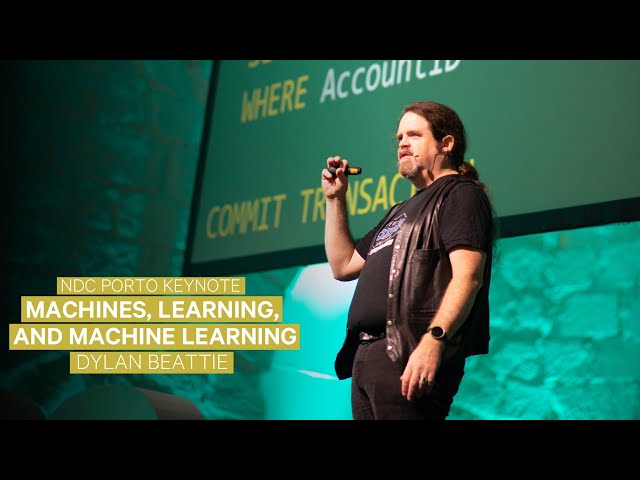
Explore the evolving landscape of technology careers and learning in this keynote presentation from NDC Porto 2025. Discover why traditional "learn to code" advice may no longer be sufficient in today's competitive tech job market and examine the fundamental shift from asking "what should I learn next?" to understanding "how should I learn it?" Delve into the psychology of motivation in programming and technology learning, while exploring the wealth of modern tools that make starting with new languages and platforms more accessible than ever, including AI assistants like Copilot and ChatGPT, cloud-based development environments, and IoT microcontrollers. Understand the critical distinction between creating programs that work and developing products that customers will actually purchase and use. Investigate why open source projects often succeed where well-funded corporate initiatives fail, uncover the reasons behind the proliferation of JavaScript frameworks, and examine the deeper motivations that drive developers to code late into the night despite professional obligations. Gain insights into the current challenges facing both newcomers seeking their first tech positions and experienced professionals pursuing consulting opportunities in an increasingly complex technological landscape.
YouTube
Explore the design principles behind the Go assembler in this 24-minute conference talk from GopherCon 2016. Delve into the historical context of assembly language, starting with the Apollo 11 Guidance Computer, and learn about the common structure of assemblers. Discover the evolution from Plan 9 assemblers to the Go 1.5 Assembler, examining new components and their implementation. Follow along with a practical example of initializing the 386 architecture, and gain insights into the testing and table-driven approach used in the Go assembler's development. Enhance your understanding of low-level programming concepts and the Go language's internal workings through this informative presentation by Rob Pike.

YouTube
Explore essential assembler terminology in this comprehensive video lesson. Delve into key concepts like direction pointers, vector tables, indirection, jump and branch instructions, subroutines, self-modifying code, alignment, and logical operations. Gain a solid understanding of how the assembler transforms text source files into executable programs. Access accompanying text lessons, source code, and additional resources to enhance your learning experience and deepen your knowledge of assembly language programming across various CPU architectures.

YouTube
Learn about vLLM, a powerful LLM Inference and Serving library, in this 46-minute technical video that explores the fundamentals of machine learning operations. Dive into practical demonstrations and implementations using provided Jupyter notebooks, gaining hands-on experience with this essential technology for large language model deployment and inference optimization. Access accompanying code examples through the GitHub repository to enhance understanding of vLLM's capabilities in the context of machine learning and data science applications.

YouTube
Explore Z80 assembly programming with a focus on assembler directives and advanced programming techniques in this sixth lesson of the series. Dive into compiler directives, labels, symbols, and compilation processes. Master the use of 'org' and origin statements, debug builds, and define sequences. Learn about alignment, lookup tables, and vector tables to optimize your code. Discover powerful programming tricks and harness the potential of macros to streamline your assembly language development. Gain practical insights that will enhance your skills in Z80 assembly programming and prepare you for more complex projects.
YouTube
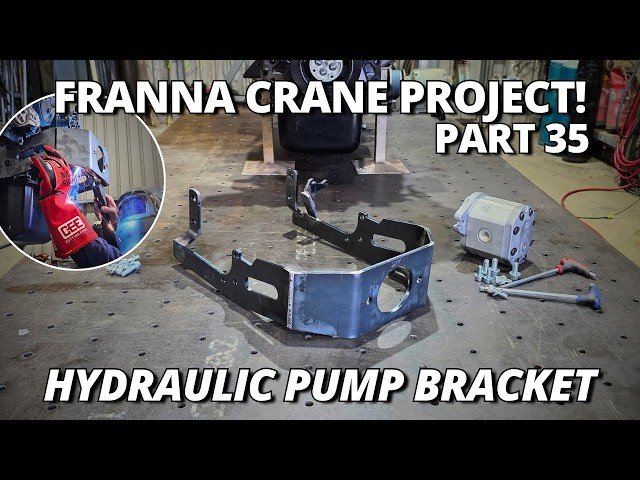
Follow along with this 27-minute workshop video as fabricators create a custom hydraulic pump bracket for a Franna crane's Cummins BT50 engine replacement. Watch the team work with 350-grade 8mm steel plates, fitting and grinding components based on precise SolidWorks drawings that ensure perfect alignment. Observe the fabrication process from initial fitting through tacking and final welding, including an innovative solution where the team repurposes an original Perkins engine compressor bracket and gate hinge to create a support plate for the air compressor. Learn about proper welding techniques for structural brackets, cooling procedures, and quality control methods as the completed bracket is test-fitted to verify dimensional accuracy. Gain insights into real-world problem-solving in heavy equipment restoration and see how professional fabricators adapt existing components creatively while maintaining structural integrity.

Udemy
A beginner's course What you'll learn: Using the right toolsAssemble a miniatureUndercoating the modelPanting techniquesUnderstanding color layeringHow to choose color schemeFast Painting vs Slow Painting Learn how to assemble, coat and paint your miniatures! This guide will lead you through this beautiful hobby, that can be really hard to face alone. Master your paintbrush and your colors, master the main techniques, and you will be able to paint stunning and wonderful models! Let's follow me on the course.

YouTube
Explore CPU-optimized data structures and advanced assembler techniques in this ACCU 2019 conference talk. Dive into the world of modern CPU instructions and specialized optimizations as the speaker tackles an educational problem: evaluating poker hands. Learn how to optimize data representation for high-performance solutions, surpassing typical implementations in languages like C++. Examine SIMD instructions and their performance benefits, along with the challenges of data manipulation. Investigate methods for efficiently testing straights, flushes, and full houses using x86-64 architecture features. Compare the custom solution's performance against optimized C++ code, and gain insights into advanced software optimization techniques for specific use cases.
IBM Training
This course provides an introduction to the z/Architecture Assembler language. The course is designed to develop the skills appropriate to write and/or maintain programs and routines written in z/Architecture Assembler language, and to maintain programs written for earlier versions of the architecture.Second level of this course will be available late September or early October, 2023. We're almost done!