

Courses
Discover thousands of courses from top institutions and platforms worldwide
Level
Course Type
Duration

Udemy
Professional Diploma of the Executive Assistant by MTF Institute What you'll learn: Executive Assistant FunctionalityBasic Skills, Email Management, Priority MatrixBusiness CommunicationsCalendar Management, Event Coordination, Meeting SchedulingTime Management, PrioritizationBusiness Relationships and Soft Skills Welcome to Course: Professional Diploma of the Executive Assistant by MTF Institute Course provided by MTF Institute of Management, Technology and FinanceMTF is the global educational and research institute with HQ at Lisbon, Portugal, focused on business & professional hybrid (on-campus and online) education at areas: Business & Administration, Science & Technology, Banking & Finance. MTF R&D center focused on research activities at areas: Artificial Intelligence, Machine Learning, Data Science, Big Data, WEB3, Blockchain, Cryptocurrency & Digital Assets, Metaverses, Digital Transformation, Fintech, Electronic Commerce, Internet of Things. MTF is the official partner of: IBM, Intel, Microsoft, member of the Portuguese Chamber of Commerce and Industry.MTF is present in 208 countries and has been chosen by more than 380,000 students. The role of an Executive Assistant (EA) is crucial within an organization, serving as a right-hand person to executives and senior management. The primary function of an Executive Assistant is to provide high-level administrative support, enabling executives to focus on strategic tasks and decision-making. The responsibilities of an EA are diverse and may include managing calendars, scheduling meetings, handling correspondence, making travel arrangements, and overseeing various administrative tasks. Here are some key aspects of the role and functionality of an Executive Assistant: Time Management: EAs are responsible for managing the executive's time effectively. This involves scheduling appointments, prioritizing tasks, and ensuring that the executive's schedule aligns with organizational goals. Communication: Executive Assistants often act as a communication bridge between the executive and other team members or external stakeholders. They may handle emails, phone calls, and other forms of correspondence on behalf of the executive. Organization: EAs play a pivotal role in maintaining organization and order within the executive's work life. This includes organizing documents, managing files, and coordinating various administrative processes. Problem Solving: Executive Assistants need to be resourceful and capable of solving problems independently. They may encounter various challenges and must find efficient solutions to keep the workflow smooth. Confidentiality: Given the nature of their work, EAs often have access to sensitive information. Maintaining confidentiality and discretion is paramount to the success of the executive and the organization. Learning about the Executive Assistant role is crucial for companies and professionals for several reasons: Efficiency and Productivity: An effective Executive Assistant enhances the efficiency and productivity of the executive they support. By managing administrative tasks, the executive can focus on strategic responsibilities, contributing to overall organizational success. Team Collaboration: EAs often collaborate with other team members and departments. Understanding the role helps create a more seamless and collaborative work environment. Professional Development: For individuals seeking a career as an Executive Assistant, learning the necessary skills is essential for professional development. It allows them to excel in their role, take on more responsibilities, and advance in their careers. Strategic Support: An EA is not just an administrative professional but a strategic partner. Learning about the role helps professionals understand how they can provide valuable support to executives in achieving organizational objectives. Career Building: For those aspiring to build a career as an Executive Assistant, developing the required skills can open doors to various opportunities. EAs often gain exposure to high-level decision-making processes and build a versatile skill set that can be applied in diverse professional settings. In summary, understanding the role and functionality of an Executive Assistant is crucial for both companies and individuals. It contributes to organizational efficiency, fosters collaboration, and provides a pathway for career development in the realm of executive support and administration.

Udemy
Professional Diploma of Virtual Executive Assistant by MTF Institute What you'll learn: Introduction to roleCareerJob SearchFunctionalityVirtual AssistanceGenerative AI GPT usageFrames of Work Welcome to course Professional Diploma of Virtual Executive Assistant by MTF Institute Course provided by MTF Institute of Management, Technology and FinanceMTF is the global educational and research institute with HQ at Lisbon, Portugal, focused on business & professional hybrid (on-campus and online) education at areas: Business & Administration, Science & Technology, Banking & Finance. MTF R&D center focused on research activities at areas: Artificial Intelligence, Machine Learning, Data Science, Big Data, WEB3, Blockchain, Cryptocurrency & Digital Assets, Metaverses, Digital Transformation, Fintech, Electronic Commerce, Internet of Things. MTF is the official partner of: IBM, Intel, Microsoft, member of the Portuguese Chamber of Commerce and Industry.MTF is present in 208 countries and has been chosen by more than 380,000 students. The Role of a Virtual Executive AssistantA Virtual Executive Assistant (VEA) acts as a remote, highly skilled administrative professional, providing support to executives, entrepreneurs, and high-level managers. Think of them as the traditional executive assistant, but one who works from anywhere in the world. Typical Functionality of a VEACalendar Management: Scheduling meetings, organizing appointments, managing travel itineraries, and ensuring the executive's time is effectively used.Email Management: Filtering, prioritizing, and responding to emails, drafting correspondence, and managing the executive's inbox.Project Management: Tracking project deadlines, coordinating with team members, preparing reports, and aiding in overall project completion.Travel Arrangements: Booking flights, hotels, and transportation while considering budgets and the executive's preferences.Research: Conducting online research, compiling data, and preparing summaries or presentations to support decision-making.Customer Relationship Management (CRM): Updating client information, managing contact lists, and assisting with sales or client-related follow-ups.Additional Task Support: This can include event planning, social media management, data entry, and more, depending on the VEA's skillset and the executive's needs. Learning, Development, and Building a Career as a VEAContinuous development is key for VEAs. Here's how to enhance your skills and build a successful career:Essential Skills Development: Focus on excellent communication (written and verbal), organizational skills, project management, problem-solving, and time management.Software Proficiency: Become well-versed in productivity suites (Microsoft Office/Google Suite), email clients, communication platforms (Slack, Zoom, etc.), and project management tools (Trello, Asana, etc.).Specialization: Develop expertise in specific areas like bookkeeping, social media management, or a particular industry. This will make you more valuable.Networking: Connect with other VEAs, join online communities, and attend relevant conferences to broaden your professional network.Mentorship: Seek guidance from experienced VEAs or consider formal training programs to accelerate your development. Benefits of Fully Remote Work as a VEAFlexibility: You set your own hours (with consideration for the executive's needs) and create a work-life balance that suits you.Location Independence: Work from anywhere in the world, allowing for freedom to travel or choose a living situation that fits your preferences.Cost Savings: Reduce commuting costs and gain the ability to live in areas with a lower cost of living.Increased Productivity: Many individuals find a greater level of focus and productivity working from home.Entrepreneurial Opportunities: Experienced VEAs often start their own businesses offering VEA services, providing greater earning potential and control.

CodeSignal
Powering Leadership The Executive Assistant Journey equips learners with essential skills to support executives, manage priorities, communicate with impact, and drive organizational success. Master time management, client relations, and adaptability in dynamic business environments.

CodeSignal
Develop essential skills for managing executive calendars and meetings. Learn to coordinate schedules, facilitate productive meetings, resolve conflicts, and ensure seamless follow-up for executive and stakeholder success.

Udemy
Learn how to be an effective personal assistant, and find out how to develop the skills for the role. What you'll learn: Understand how to apply tools of the tradeLearn Effective Time ManagementUnderstand How to Become an Effective Gate KeeperHow to Work with Your Manager Executive personal assistants perform routine clerical and administrative duties. They organize files, prepare documents, schedule appointments, and support other staff. The key difference between an Executive PA and a regular PA is that Executive Personal Assistants work with higher level managers. Generally, this will mean working with CEOs, as well as various other company directors and high-level staff. As most administrative tasks are taken for granted at this level, the main focus of their job involves taking initiative and complete control over their workload. Executive PAs usually work:in a corporate settingspend much of their time on a computera college education isn’t required for this position, but …employers increasingly prefer to hire those who have completed some training. Certain skills, such as time management and attention to detail, will be a given for almost all Executive PAs.There are many advantages of the career path, including increased exposure to senior management, as well as more varied work experience.For example, you may get the chance to organize events or manage larger projects, and work with other areas of the business, such as the product or digital marketing teams. Many Executive Personal Assistants are even finding that this exposure is opening more doors to move into other high-earning careers, and go on to become Product Assistants and Project Managers as a result of their Executive PA experience. So, do you think this is a career for you? If yes, let’s get started.Just click on “Enroll Now” button and I’ll see you inside!

Udemy
Professional Certificate of Executive Business Assistant by MTF Institute What you'll learn: Introduction to roleCareerJob SearchFunctionalityVirtual AssistanceGenerative AI GPT usageFrames of Work Welcome to Course: Professional Certificate of Executive Business Assistant by MTF InstituteIts extended version of our EA course, including some modules from other courses, you may compare with other versions of courses Course provided by MTF Institute of Management, Technology and FinanceMTF is the global educational and research institute with HQ at Lisbon, Portugal, focused on business & professional hybrid (on-campus and online) education at areas: Business & Administration, Science & Technology, Banking & Finance. MTF R&D center focused on research activities at areas: Artificial Intelligence, Machine Learning, Data Science, Big Data, WEB3, Blockchain, Cryptocurrency & Digital Assets, Metaverses, Digital Transformation, Fintech, Electronic Commerce, Internet of Things. MTF is the official partner of: IBM, Intel, Microsoft, member of the Portuguese Chamber of Commerce and Industry.MTF is present in 208 countries and has been chosen by more than 400 000 students. The role of an Executive Assistant (EA) is crucial within an organization, serving as a right-hand person to executives and senior management. The primary function of an Executive Assistant is to provide high-level administrative support, enabling executives to focus on strategic tasks and decision-making. The responsibilities of an EA are diverse and may include managing calendars, scheduling meetings, handling correspondence, making travel arrangements, and overseeing various administrative tasks. Here are some key aspects of the role and functionality of an Executive Assistant: Time Management: EAs are responsible for managing the executive's time effectively. This involves scheduling appointments, prioritizing tasks, and ensuring that the executive's schedule aligns with organizational goals. Communication: Executive Assistants often act as a communication bridge between the executive and other team members or external stakeholders. They may handle emails, phone calls, and other forms of correspondence on behalf of the executive. Organization: EAs play a pivotal role in maintaining organization and order within the executive's work life. This includes organizing documents, managing files, and coordinating various administrative processes. Problem Solving: Executive Assistants need to be resourceful and capable of solving problems independently. They may encounter various challenges and must find efficient solutions to keep the workflow smooth. Confidentiality: Given the nature of their work, EAs often have access to sensitive information. Maintaining confidentiality and discretion is paramount to the success of the executive and the organization. Learning about the Executive Assistant role is crucial for companies and professionals for several reasons: Efficiency and Productivity: An effective Executive Assistant enhances the efficiency and productivity of the executive they support. By managing administrative tasks, the executive can focus on strategic responsibilities, contributing to overall organizational success. Team Collaboration: EAs often collaborate with other team members and departments. Understanding the role helps create a more seamless and collaborative work environment. Professional Development: For individuals seeking a career as an Executive Assistant, learning the necessary skills is essential for professional development. It allows them to excel in their role, take on more responsibilities, and advance in their careers. Strategic Support: An EA is not just an administrative professional but a strategic partner. Learning about the role helps professionals understand how they can provide valuable support to executives in achieving organizational objectives. Career Building: For those aspiring to build a career as an Executive Assistant, developing the required skills can open doors to various opportunities. EAs often gain exposure to high-level decision-making processes and build a versatile skill set that can be applied in diverse professional settings. In summary, understanding the role and functionality of an Executive Assistant is crucial for both companies and individuals. It contributes to organizational efficiency, fosters collaboration, and provides a pathway for career development in the realm of executive support and administration.

Udemy
Office Administration | Document Management | ChatGPT for EA | Record Keeping | Travel Arrangement | Conflict Management What you'll learn: Master Executive Office Assistant and Secretary Skills with audiobooks, quizzes, fun assignments, downloadable resources, and a final test—learn with ease!You will learn the roles and responsibilities of an administrative assistant and the significance of the administrative assistant apprenticeship program.Understand U.S. workplace compliance laws and best practices to foster fairness and navigate compliance issues effectively in an executive assistant role.You will explore the understanding of workstations, tips on utilizing dictation and transcription, characteristics of offices, and office management.You will gain a thorough understanding of modern office equipment, details of computer input and output devices, and how to use a copy machine.You will assess the importance of administrative assistants, the basics of office filing systems, and the process of organizing computer files.Learn about personal assistants' roles, the importance of interpersonal skills, and how to build a positive working relationship between bosses and assistants.You will gain an understanding of how administrative assistants maintain email communication.Learn conflict management strategies with employers, tips for handling workplace conflicts, and the benefits of maintaining to-do lists and action plans.Learn the importance of diary management, note-taking techniques, types of corporate meetings, and the significance of meeting minutes.Learn to make effective travel arrangements, book hotels efficiently, and understand the essentials for planning international travel.You will find out how to choose the right company to deliver parcels, how the Royal Mail will operate, and what the format will be.You will examine seven key steps of presenting, how to control the audience during the presentation, and tips and techniques on how to write business emails.You’ll understand about using email for business communications, setting up your email account, types of email communication, and its advantages.Learn the importance of telephone etiquette, the key elements of proper phone manners, and how to speak professionally on calls.Learn to use ChatGPT for automating tasks like scheduling, email drafting, and data management to improve administrative efficiency and productivity.Use the Executive Office Assistant and Secretary Skills course audiobook in each unit's resource section to enhance your understanding and learning experience.You will receive tutor support & communicate with the tutor through the inbox.You will obtain a certificate of completion in Executive Office Assistant and Secretary Skills. Transform your career trajectory and become an indispensable asset in the corporate environment with our Executive Office Assistant and Secretary Skills course. It is designed to provide you with the tools and expertise you need to excel on the executive support team.Administrative assistants ensure that everything in the office runs smoothly. An administrative assistant or an office assistant needs to possess excellent organizational and administrative skills. Take the first steps on your administrative assistant career path with an introduction to the role. A successful office assistant needs to understand the essential qualities, skills, and responsibilities. Through apprenticeship programs, these skills can be sharpened.This course will teach you about the importance of an organized workstation and daily routines to develop your skills critical in today’s workplace. The course discusses the four elements of office management and emphasizes the importance of effective office supervision in managing activities effectively as a manager or supervisor. In addition to ensuring the accuracy and accessibility of records, our course teaches you about administrative responsibilities, filing systems, and digital organization.We will cover the responsibility of being a virtual personal assistant, you'll be able to utilize telephones, fax machines, computers, and other office equipment and technology that is essential in today's workplace.The most important part of the course is that it will teach you how to develop exceptional interpersonal skills as well as how to manage your relationships effectively, solve problems efficiently, and manage tasks effectively.Furthermore, the role of a PA or personal assistant is also discussed, which involves time management, diary management, and note-taking techniques to avoid procrastination, use time efficiently, and manage diaries. The course provides you with a wide range of practical skills for running an office smoothly, including meeting arrangements, travel planning, mail delivery, and shipping.Additionally, the course covers US workplace equality & compliance regulations, ensuring you are informed about laws promoting fairness and preventing discrimination. It also introduces ChatGPT as your personal assistant, a powerful tool for automating tasks and boosting productivity. Level Up Your Learning Experience! Audiobooks for Every Course SectionPerfect for on-the-go learning, designed to help you absorb knowledge anytime, anywhere. Essential Learning ResourcesExplore curated materials that dig deeper into each topic and boost your understanding.Interactive Knowledge ChecksTest your knowledge with quick quizzes at the end of every module.Comprehensive Final Practice TestSolidify your skills and prepare for real-world applications with our all-in-one test.Role Play FeatureEngage with interactive role play to apply your learning in realistic situations.Transform your learning journey with these exciting features. Last but not least, this course demonstrates how an office assistant works for top executives, providing them with the latest information on time so that they can make decisions. The administrative assistant course will provide you with knowledge, skills, and attitudes that will enhance your career and increase your productivity.We deeply encourage you to enroll in our "Executive Office Assistant and Secretary Skills" course, which assures you to be a life-changing educational opportunity. Enroll now to develop into a competent and adaptable office assistant! This course includes the following Sections:Introduction to Administrative Assistant: During this section, you'll learn about administrative assistants, their skills, and the qualities they should possess while working, as well as their responsibilities and apprenticeship program.US Workplace Equality & Compliance Regulations: This section covers key U.S. workplace compliance laws and best practices for fostering a fair, ethical work environment. Learn how to implement policies, train staff, and address compliance issues, with a focus on the executive assistant’s role in navigating legal and regulatory challenges.Workstation and Daily Routine: This section provides information on the importance of workstations and supplies in the workplace, how to use dictation and transcription, and how to keep client information confidential.Office Management and Supervision: You will understand the definition, importance, and four elements of office management, and how managers and supervisors manage all the activities.Office Equipment in an Organization: In this section, you will learn key office equipment such as telephones, fax machines, office computers, input and output devices, and copy machines.Keeping Accurate Records: Throughout this section, you will learn about administrative assistants' responsibilities, necessary checklists, filing systems in offices, and how to organize files on computers.Developing Interpersonal Skills: This section covers interpersonal communication and skills, as well as the skills of an excellent personal assistant. A receptionist in an office can also benefit from this section, as they will gain receptionist skills.Relationship Management: In this section, you will learn how to build a productive working relationship with your boss and assistants, as well as how to create a positive image and impression.Communication Skills of Administrative Assistant: In this section, we discuss body language skills and how to maintain different methods of communication, as well as what skills administrative assistants should possess.Dealing with People and Managing Conflicts: The section explains how to communicate effectively with employers, problem-solving techniques, how to assertively say "no" in communication, and strategies for dealing with conflicts.Task Management Tips: This section will teach you the importance of task management, seven major duties a manager should perform, and techniques to manage your tasks better.Time Management Techniques: In this section, you will learn the importance of time management, how to avoid procrastination in the workplace, and how to efficiently use your time.Diary Management & Note Taking: This section will discuss the different types of diary management, the purpose of updating the diary, and how to manage a diary to keep notes.Meeting Arrangement: This section explains how meetings are structured, the different types of corporate meetings, the importance of meeting minutes, and how they are conducted.Travel Arrangements: In this section, you'll learn how to ensure a smooth journey, from booking hotels to reserving transportation, and practical skills to make your traveling experiences more enjoyable.Mail Services and Shipping: In this section, you will learn how to select the correct delivery service for mail service as well as how to receive and send mail in the UK.Presentation Skills: The purpose of this section is to help you understand the principles of preparing a presentation, the seven basic steps of the presentation, and how to develop attention-grabbing skills.Business Writing Skills: During this section, you will learn how to plan before writing, some tips on how to improve your writing skills, and how to write an effective business email.Email Management: Here you will learn how to manage your emails effectively, create an internet email account, use email programs, and follow proper email protocols.Email Communication: Throughout this section, you will learn about different ways of writing emails, the benefits of using email, and how to develop your communication skills.Telephone Etiquette: The purpose of this section is to teach telephone etiquette skills, how to improve your telephone etiquette, and how to correct poor telephone etiquette.Talking The Right Way On The Phone: In this section, you will learn how to convey the appropriate way to speak on the phone most effectively.Voicemail Messages & Interoffice Calls: In this section, you will learn how to use voicemail messages, how to transfer calls, how to take messages, and how to end a conversation.ChatGPT as Your Personal Assistant: Learn how ChatGPT can boost administrative productivity by automating tasks such as scheduling, drafting emails, and managing data, while streamlining daily operations. Discover how to leverage ChatGPT for creating LinkedIn posts, preparing meeting agendas, and automating repetitive emails to save time and enhance efficiency.

Udemy
Become a paid professional Administrative Assistant What you'll learn: Adminisrative Assistant SkillsPeople SkillsDeveloping Positive MindsetStrategic Thinking SkillsTime Management SkillsTeamwork This course is about learning Administrative Assistant Skills which will make you more confident and job-ready. You will learn how to deal with difficult situations, find solutions to complex problems, People Skills, Positive Mindset, Strategic thinking, Time management and learn to work in Teams.This class is for anyone who wants to be more confident in life by learning Administrative skills and achieving their goals in life. It is for someone who wants to learn how to face new challenges in life by getting out of their comfort zone.You being an Administrative Assistant can play a very important role in your organization because you can provide solutions to problems in a more innovative and pragmatic way. You will assess the areas of improvement and plan accordingly which will give you an upper edge over others and make you stand out in the crowd.No matter whether you are a student, professional or businessman, there will be situations in life where you need to apply these skills and come out with simple yet effective solutions to the most complex problems.All you need is 30-40 minutes of your precious time with complete focus to understand the skills required for you to be an effective and efficient Administrative Assistant and how developing these skills can improve your life.The course will flow in form of audio-visual slides with graphics and animations which will make your learning a pleasant and memorable experience.You should join the course if the answer to any of the questions is “Yes”.1. You are looking for a job, promotion or appearing for an Interview?2. You feel shy, less confident, or hide your ideas in public?3. You feel afraid to take on new challenges in life and want to be always in your comfort zone?4. You want to learn new skills such as People skills, Strategic mindset, Time Management to increase your efficiency and confidence?5. You find it difficult to think with a creative and strategic mindset? What Are Administrative Skills? Companies are looking for admin staff who have an immediate impact on business productivityAdministrative skills are those related to running a business or keeping an office organizedRanging from office assistants to secretaries to office managers Administrative assistant skills may vary depending on the industry, but the following or the most important abilities to develop:Administrative SkillsPeople SkillsPositive MindsetStrategic Thinking SkillsTime Management SkillsTeamworkWhat you will learn: How to work in an Office Environment How to deal with people and get your work done How to develop and positive mindsetHow to think strategically using a creativityHow to effectively manage your time and resources How to work in a team and get the results Requirements An open mind to learn and grow in your lifeA computer or a phone with good speakers or headphones30 minutes of your time every day for over 3 months

CourseHorse
Administrative Officers and Executive Assistants (AO/EA) must possess a wide variety of skills and versatility to successfully perform their jobs. All these positions are referred to as “staff,” meaning that the positions do not normally have primary supervisory or management responsibilities but rather provide coordinating and facilitation-type principal duties to a person who is a manager or leader. This course serves as an introductory course targeting those critical universal skills and competencies necessary for staff support positions regardless of agency, title, grade, or position. This course seeks to impart the knowledge necessary to successfully perform Administrative Officer and Executive Assistant duties.Target AudienceAdministrative officers, executive assistants, and administrative support staff in the Federal Government.Related Courses: Compare to Administrative Officers/Executive Assistants Workshop Course (Blended)These related courses share skills and topics with Administrative Officers/Executive Assistants Workshop Course (Blended). Select up to two and tap Compare selected courses to view a side-by-side comparison.Leadership Skills for Non-Supervisors CourseDevelop essential leadership skills to handle diverse personalities, resolve conflicts, and build stronger, more effective teams.Instructional Design Essentials CourseAcquire essential methods to plan, build, and evaluate effective training and e-learning programs using instructional design principles.Managing Multiple Priorities CourseLearn strategies to prioritize tasks, manage time effectively, and reduce stress while handling multiple responsibilities. What You'll Learn at a GlanceDescribe the role of the AO and EA as an operational lynchpin to aligning divergent priorities and programs around a common set of values or outcomes. Apply fundamental concepts of federal budgeting processes. Apply leadership and change management principles to coach and guide staff to project completion and mission accomplishment.Apply fundamental concepts of federal acquisition processes. Use simple statistics to complete project analysis, measure group progress, and complete accountability reports. Manage the myriad of divergent and changing demands through sound problem-solving strategies. Analyze how the AO and EA career paths demand a unique set of skills and competencies that can change across time and with changes of leadership.Course SyllabusModule 1: Leading ChangeDefine change and its impact on organizations and individuals.Apply strategies to cope with and manage change effectively.Use a transition management model to guide staff through change.Recognize how administrative staff are perceived versus leaders’ expectations.Identify motivators and methods for fostering positive change.Module 2: Federal BudgetingUnderstand the purposes, structure, and phases of the federal budget process.Identify roles of OMB, GAO, and agencies in budget formulation and execution.Analyze performance-based budgeting requirements under GPRA.Apply financial management principles to maintain accountability and compliance.Prepare outcome statements, performance measures, and budget requests.Module 3: Project ManagementDefine the project management process and life cycle.Establish project objectives, stakeholders, and team roles.Plan and schedule projects using sequencing and resource allocation.Manage time, quality, and cost to ensure successful project outcomes.Identify common causes of project delays and strategies to avoid them.Module 4: Federal AcquisitionUnderstand the legal basis and goals of the federal acquisition process.Apply simplified acquisition techniques for goods and services procurement.Follow procurement ethics and prohibited activities guidelines.Use the government purchase card appropriately and compliantly.Integrate socioeconomic goals into acquisition planning.Module 5: Data AnalysisAnalyze, present, and manage data relevant to administrative operations.Perform basic statistical computations such as mean, median, and percentage change.Develop and interpret charts and graphs for reporting purposes.Module 6: Group Problem SolvingDetermine when to use group problem-solving approaches.Apply frameworks such as brainstorming and nominal group techniques.Lead or contribute effectively in team-based problem-solving efforts.Understand roles and responsibilities of group meeting leaders.Module 7: Blended and Targeted Span of ResponsibilitiesApply time management strategies to handle complex responsibilities.Communicate effectively in support of leadership and team functions.Understand human resources responsibilities and strategic planning concepts.Integrate project management skills into broader administrative duties.
IBM Training
This introductory course on watsonx Assistant is designed for anyone interested in exploring the latest advancements in Generative AI and how they can enhance customer and employee experiences through the creation of AI assistants.

Udemy
Executive Diploma of Chief Executive Officer by MTF Institute What you'll learn: Role of Chief Executive OfficerLegal FocusFinancial FocusCommercial FocusDue DiligenceEmployers of CEORisks for CEO Welcome to course: Executive Diploma of Chief Executive Officer by MTF Institute Course provided by MTF Institute of Management, Technology and FinanceMTF is the global educational and research institute with HQ at Lisbon, Portugal, focused on business & professional hybrid (on-campus and online) education at areas: Business & Administration, Science & Technology, Banking & Finance. MTF R&D center focused on research activities at areas: Artificial Intelligence, Machine Learning, Data Science, Big Data, WEB3, Blockchain, Cryptocurrency & Digital Assets, Metaverses, Digital Transformation, Fintech, Electronic Commerce, Internet of Things. MTF is the official partner of: IBM, Intel, Microsoft, member of the Portuguese Chamber of Commerce and Industry.MTF is present in 208 countries and has been chosen by more than 380,000 students. Course Author:Igor DmitrievDigital Business & Transformation ExpertEducation:• MBA, The Boston University, USA• Master of Science at Engineering (Technical) Management, The State University of New York at Buffalo, USA• Master of Science at Informatics and Economics, The Saint- Petersburg State University of Finance and Economics• Six Sigma Black Belt Experience:• Expert at Banking (>15 years), FinTech & Digital (>12 years). Experienced Manager (>10 years) with successful track of records at personal and corporate entrepreneurship.• More than 10 years at worldwide banking groups such us Societe Generale, Raiffeisenbank.• Experience at roles: CEO, Head of Business, Chief Digital & Marketing Officer, Head of Digital Transformation and Channels, Head of Products and Marketing. The Chief Executive Officer (CEO) is a pivotal leadership role within an organization, responsible for steering the company towards its strategic goals and ensuring its overall success. The CEO serves as the highest-ranking executive and is accountable for the overall performance, direction, and decision-making of the company. The role encompasses a diverse set of responsibilities, and a CEO is expected to wear multiple hats to effectively lead and manage the organization. Key aspects of the CEO role include: Strategic Vision and Planning: The CEO is responsible for developing and communicating a clear vision for the company. They must also formulate and execute strategic plans that align with the organization's mission and objectives. Leadership and Decision-Making: CEOs provide leadership to the executive team and the entire organization. They make crucial decisions that impact the company's direction, growth, and overall performance. Stakeholder Management: CEOs must effectively engage with various stakeholders, including investors, customers, employees, and the board of directors. Building and maintaining positive relationships with these stakeholders is crucial for the company's success. Risk Management: CEOs are tasked with identifying and mitigating risks that could impact the organization. This includes overseeing financial management, regulatory compliance, and other aspects that contribute to the company's stability. Innovation and Adaptability: CEOs must foster a culture of innovation within the organization and be adaptable to changes in the business environment. They play a crucial role in ensuring the company remains competitive and responsive to market dynamics. Corporate Governance: CEOs are responsible for upholding ethical standards and ensuring compliance with legal and regulatory requirements. They work closely with the board of directors to maintain effective corporate governance. For employers and managers, understanding the CEO role is essential for several reasons: Strategic Alignment: Employees at all levels need to understand how their work contributes to the overall strategic objectives of the company. Knowledge of the CEO's role helps align individual and team efforts with the organization's vision. Decision-Making Perspective: Managers can benefit from understanding the decision-making processes of CEOs. This knowledge can enhance their own decision-making skills and enable them to contribute more effectively to the organization. Leadership Development: Aspiring leaders can learn from the CEO's leadership style and strategies. Studying the CEO role provides valuable insights into the qualities and skills required to lead an organization successfully Career Advancement: Employees with a comprehensive understanding of the CEO role are better equipped to advance their careers. They can position themselves as strategic thinkers and leaders, making them valuable assets to the organization. For those aspiring to become future CEOs, acquiring knowledge about the CEO role is crucial for building a successful career. This includes: Leadership Skills Development: Learning from the experiences and approaches of successful CEOs helps in honing leadership skills. This includes the ability to inspire and motivate teams, make tough decisions, and navigate complex challenges. Strategic Thinking: Future CEOs must develop a strategic mindset, understanding how to set long-term goals, analyze market trends, and make decisions that position the company for sustainable growth. Communication and Stakeholder Management: Effective communication with various stakeholders is a critical aspect of the CEO role. Developing strong communication and relationship-building skills is essential for future leaders Financial Acumen: CEOs are responsible for the financial health of the organization. Building financial literacy and understanding key financial metrics is crucial for making informed decisions and ensuring the company's success. Adaptability and Resilience: The business landscape is dynamic, and CEOs must navigate uncertainties and challenges. Future CEOs should cultivate adaptability and resilience to thrive in ever-changing environments. Understanding the role of a CEO is essential for both current managers and aspiring leaders. It provides valuable insights into effective leadership, strategic decision-making, and the overall dynamics of running a successful organization. This knowledge not only contributes to individual career development but also enhances the overall performance and success of the company.

edX
In today's world of business, executives must focus on more than near-term results to generate sustained growth. CEOs, founders, entrepreneurs, and executive leaders must think consciously about decision-making to lead their companies to long-term success. This Professional Certificate in executive leadership, brought to you by Babson College, the #1 school in Entrepreneurship (U.S. News & World Report), will teach you how to consciously view strategic challenges, formulate solutions, and take action. Research shows that companies that embody the principles of Conscious Capitalism substantially outperform the market over the long term, while simultaneously creating economic and social value for all stakeholders. This program will teach you the pillars of Conscious Capitalism and how you can implement them while you lead your organization. This program is designed for anyone who has pictured themselves in the corner office, wants to report directly to a CEO, or has the goal of consulting with or advising a CEO. It will give you insight on how to mentor and lead intentionally through the principles of Conscious Capitalism and will expose the path from individual contributor to the top job.

LinkedIn Learning
Discover how to support senior leaders as an executive coach. Learn how to cultivate a coaching relationship, create a development plan, support a leader's progress, and more.

LinkedIn Learning
Learn the executive leadership qualities that set the best apart from the rest.
Cybrary
While managing risk, the RMF framework can also help an organization to select appropriate security controls, to balance security and functionality for a safe and seamless end-user experience. The framework is made up of six steps, system categorization, selection of controls, implementation, assessment, authorization, and monitoring those controls. But the key to each of these steps is the preparation put into each component, which determines the success of the framework. One of the main problems which can occur when trying to implement a security program, are the issues between the Information Technology (IT) and Security teams. Each team has different objectives but must meet in the middle to accommodate user needs, as well as the needs of the business. RMF does not have to just be for federal organizations, it can be integrated into any information security program, to ensure effective and efficient security practices. Each step will be described in detail, including mention of supplemental documentation, who will be involved at each stage, and how to integrate eachcomponent into a security program. The RMF steps are meant to help streamline the Authorization to Operation, or ATO, process. When implemented correctly, security processes will be aligned to meet functionality and security with the IT and Security teams. The Art of Exploitation is one of the most sophisticated attacks in Ethical Hacking. In this course, students will learn from scratch how to find a vulnerability or weakness in any system. Check for the right exploit to hack the system using this vulnerability, instead of using some kiddie script or waiting for a victim mistake clinking on a malicious link or attachment. Students will also learn how to write their one exploit using python script and use it to hack system affected with Buffer Overflow. What is Risk Management? It is defined as the forecasting and evaluation of risks together with the identification of procedures to avoid or minimize their impact. What will I learn? Risk Management best practices, How and why it's essential to identify mission critical systems, and the loss impact of critical systems should failure occur. The National Institute of Standards and Technology (NIST) established the Risk Management Framework (RMF) as a set of operational and procedural standards or guidelines that a US government agency must follow to ensure the compliance of its data systems. RMF originally was designed to benefit Department of Defense (DoD) military, civilian, and contractor personnel who are responsible for evaluating information systems under the RMF and certifying to the Government that information systems meet security requirements. Because managing risk is a critical concept for organizations that house sensitive data, entities outside of the public sector have taken notice of the effectiveness of RMF practices. Prerequisites Individuals who wish to take this course should be team leads in the IT or Security sectors, senior management, or executive management looking to implement, or improve, RMF use in their organizations. Users should already have a basic understanding of the NIST Risk Management Framework before taking this course. Users should also be familiar with the accompanying NIST Special Publication guides, as outlined in the supplemental material section.

LinkedIn Learning
Learn how the best leaders go beyond regular influence, using executive influence methods for maximum impact and effectiveness.

Skillshare
What is the difference between an Administrative Assistant, Program Assistant, and Executive Assistant? Have you ever wondered if these types of administrative positions are viable career paths? Or, have you just been interested in learning more about the job field? If so, this course is for you! This class series introduces you to the field of administrative professionals and the skills needed to enter and thrive in the field. You will learn why these jobs are ideal options for high school graduates, recent college and community college graduates, professionals transitioning between careers, and individuals returning to the workplace. We will discuss the subtle differences that distinguish these positions apart and the skills needed for them. Who should take the course? Anyone interested in learning about the field should take this course. In addition to the groups of people mentioned above, this course also serves as a tool for anyone wanting to freelance as a virtual assistant. Furthermore, if you run a business and want to hire an assistant, this course will help you decide what type of assistance you may need. Course Content: Lectures One project Class participation Future course feedback survey Syllabus Overview: What is the field of administrative professionals? Why consider this field? What is the role of assistants in a business or organization? Understand the different titles and duties of Administrative Assistants, Program Assistants, and Executive Assistants. Understand the skills required for these positions. It is my hope that by the end of the course, you will have a holistic understanding of the field, and will be fully equipped to apply and navigate the administrative field. As your course instructor, I will be here to lead you through key content, as well as address any questions you may have
YouTube
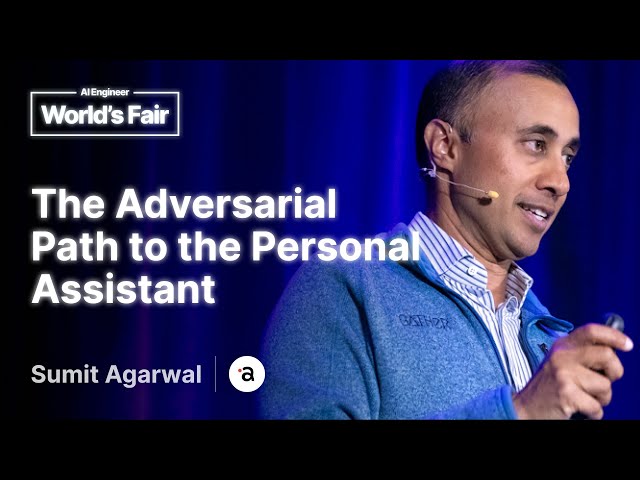
Explore how to build a truly personal AI assistant that knows you as an individual in this 19-minute conference talk from the AI Engineer World's Fair. Discover why current large language models like GPT-4, despite their massive training datasets, cannot provide personalized assistance without significant user input. Learn about an innovative approach that creates a personal, private, and proactive AI assistant by downloading your transaction logs from major consumer platforms like Google, Facebook, Amazon, DoorDash, Strava, and Uber directly to your local device. Understand how implementing a RAG (Retrieval-Augmented Generation) system using this personal data enables immediate utility without requiring extensive user configuration. Gain insights into how a modest amount of powerful personal data can unlock the true potential of personalized AI assistance, moving beyond generic responses to truly individualized support.

Pluralsight
Whatever your role, the growing importance of automation can’t be ignored. In this short, fast-paced Executive Briefing, you’ll quickly ramp up on automation—what it means, how to think about it, and how to implement it. First, we’ll begin with automation from “the bottom up” — starting with your own life and work, and expanding on those ideas to apply them to your team and organization. We’ll then dive into different types of automation — including Robotic Process Automation (RPA), Intelligent Automation and Hyperautomation. Finally, we’ll explore automation strategy, best practices and approaches. When you’re finished with this course, you’ll have a much better understanding of how automation can add incredible value to your team or organization.

Coursera
The Complete Executive Leadership Specialization empowers current and aspiring executives with high-impact skills in communication, transformation, and Generative AI. Through a blend of behavioral science, strategic writing, change leadership, and AI-enhanced productivity, learners will develop the agility and presence needed to lead at scale. Courses include GenAI use cases for executive visioning and communication, deep listening strategies for global teams, technical writing mastery, and organizational change leadership. Learners complete real-world projects and communication blueprints that prepare them to lead innovation and transformation in dynamic environments. Ideal for senior leaders, team leads, and professionals stepping into influential roles.