

Courses
Discover thousands of courses from top institutions and platforms worldwide
Level
Course Type
Duration

Udemy
Learn to use the financial planning tool and how it compares, and or, complements other accounting and finance tools What you'll learn: What the Personal Capital Software is and how it can be usedHow Personal Capital Software compares to other accounting and financial management softwareHow to access and set up the free softwareHow to use financial data to create an income statementThe benefits of having net worth or balance sheet data in one locationHow to access and use investment tools and analysisHow to use the financial planning tools like a retirement plannerHow to use a home appraisal toolHow to add non financial institution assets and liabilities to make the net worth or balance sheet more complete Personal Capital is currently a free software that can connect to financial institutions, pulling in financial asset and liability balances, as well as transaction detail, into one location.The strong areas of benefit of using Personal Capital software are its ability to provide net worth or balance sheet information, investment management information, and planning tools such as retirement planning and other large planning goals.The Personal Capital software also downloads transaction detail and allows for the categorization or assigning of accounts and tags that can then be used to generate an income statement. It also has budgeting tools to help with shorter-term cash flow management.This course will discuss how to set up the Personal Capital software and link to accounts. We will also discuss some reasons why the software may be offered for free and look over Personal Capital data security.We will compare the Personal Capital software to other types of software that can connect directly to financial institutions and pull financial information, such software generally falling into the category of accounting software that uses the double-entry accounting system or financial management software.Accounting software using the double-entry accounting system includes packages such as QuickBooks, Xero, & Wave accounting. Although accounting software utilizes financial institution connectivity it generally does so differently than Personal Capital software, which falls into the financial management category. We will discuss the differences in software.Other financial management and budgeting software include Quicken, Mint, and Microsoft Excel, Excel actually having a template called Money in Excel that has financial institution connectivity.Learners will practice converting financial data into an income statement by downloading transactions from financial institutions, categorizing them, and then exporting them into Excel for sorting. We will compare the process with what would be done using accounting software like QuickBooks.The course will discuss the benefits of the personal net worth or balance sheet functionality of Personal Capital software, the software pulling in assets and liability balances automatically for items such as bank accounts, investment accounts like 401(K), savings accounts, CD accounts, credit card balances, mortgage balances, and loan balances.We will also discuss the benefit of the software providing more detail on our investment holdings and providing insights and suggestions to improve returns and reduce risk. The ability to pull investments into one place allows a more rounded analysis of the data than you may get from one brokerage account analyzed in isolation.Learners will be able to use the projection planner to help plan for retirement and other large investment items. The Personal Capital software utilizes sophisticated analytical tools including a Monte Carlo Simulation tool.We will also explore the home appraisal tool offered by the software and we will practice adding non-financial institution assets and liabilities, making our net worth or balance sheet completer and more accurate.

Udemy
A practical guide with case studies and examples of financial analyses done during consulting projects What you'll learn: How to conduct fast and efficiently financial analyses during consulting project in ExcelHow to draw conclusions from financial analysesAnalyze financial indicators, ratiosDo essential firm valuationAnalyze different types of investments in ExcelEstimate the impact of the M&A activityEstimate the impact of proposed improvements on profit and balance sheetCreate a business model of the firm in ExcelAnalyze business units What is the aim of this course?During many consulting projects, you will have to do a lot of financial analysis and draw conclusions about a specific company or industry. This is especially true during due diligence projects, strategic projects, and turn-arounds. Financial analyses will help you decide which option is better, what investments you should take, estimate potential improvements, or estimate the impact on the profit and the balance sheet. On top of that, during consulting projects, you have to do everything 3x faster and with little data. Therefore, I will teach you in this course how to do fast and efficiently financial analyses and how to draw conclusions from themIn the course you will learn the following things:How to do financial analyses in Excel fast and efficientlyHow to draw conclusions from the analysesHow to analyze financial statements in ExcelHow to use financial indicatorsHow to model a business in ExcelHow to analyze business units of the firmHow to carry out analyses related to M&AHow to evaluate a potential investment in ExcelHow to estimate the value of the firm using simple methodsThis course is based on my 15 years of experience as a consultant in top consulting firms and as a Board Member responsible for strategy, performance improvement, and turn-arounds in the biggest firms from Retail, FMCG, SMG, B2B, and services sectors that I worked for. I have carried out or supervised over 90 different performance improvement projects in different industries that generated a total of 2 billion in additional EBITDA. On the basis of what you will find in this course, I have trained in person over 100 consultants, business analysts, and managers who now are Partners in PE and VC funds, Investment Directors and Business Analysts in PE and VC, Operational Directors, COO, CRO, CEO, Directors in Consulting Companies, Board Members, etc. On top of that my courses on Udemy were already taken by more than 224 000 students including people working in EY, McKinsey, Walmart, Booz Allen Hamilton, Adidas, Naspers, Alvarez & Marsal, PwC, Dell, Walgreens, Orange, and many others.I teach through case studies, so you will have a lot of lectures showing examples of analyses, and tools that we use. To every lecture, you will find attached (in additional resources) the Excels as well as additional presentations, and materials shown in the lectures so as a part of this course you will also get a library of ready-made analyses that can, with certain modifications, be applied by you or your team in your work.Why have I decided to create this course?Analyzing the financial situation of the firm is a fundamental skill in consulting. It helps you understand the current situation of the firm, identify problems, and estimate potential savings. Many Management Consultants and Business Analysts did not finish Business School and sometimes struggled with some financial analyses. This sometimes puts them at a disadvantage and makes it difficult for them to get promoted. On top of that, many consultants and analysts who did study finance at university/college have forgotten some things.Therefore, I have decided to create this course that will help students understand or refresh how to do financial analyses in Excel. The course will give you the knowledge and insight into real-life case studies that will make your life during a consulting project much easier. Thanks to this course, you will know how to understand financial data, analyze them, and draw conclusions from them. You will also master the essential information related to valuation.To sum it up, I believe that if you want to become a world-class Management Consultant or Business Analyst you have to have a pretty decent understanding of financial analyses. That is why, I highly recommend this course to Management Consultants or Business Analysts, especially those who did not finish business school or Economics. The course will help you become an expert in financial analyses on the level of McKinsey, BCG, Bain, and other top consulting firms. That is why, I highly recommend this course to Managers, Management Consultants, and owners/founders of businesses that need better to have a good understanding of the business.In what way will you benefit from this course?The course is a practical, step-by-step guide loaded with tons of analyses, tricks, and hints that will significantly improve the speed with which you understand, and analyze businesses. There is little theory – mainly examples, a lot of tips from my own experience as well as other notable examples worth mentioning. Our intention is that thanks to the course you will learn:How to do financial analyses in Excel fast and efficientlyHow to draw conclusions from the analysesHow to analyze financial statements in ExcelHow to use financial indicatorsHow to model a business in ExcelHow to analyze business units of the firmHow to carry out analyses related to M&AHow to evaluate a potential investment in ExcelHow to estimate the value of the firm using simple methodsYou can also ask me any question either through the discussion field or by messaging me directly.How the course is organized?The course is divided currently into 8 sections. Currently, you will find the following sections:Introduction. We begin with a little intro to the course as well as some general info on how the course is organizedGeneral Analysis of Financial Statements. In the second section, I will show you how to analyze 3 main financial statements: cash flows, profit, and loss statements, and balance sheets.Financial Analysis of Indicators. In this section, I will show you how to use financial indicators, and ratios to analyze the situation of the firm, especially in comparison with other firms. We will look at profitability, efficiency, liquidity, and debt ratios.Modeling of Profit & Loss statement in practice. In the 4th section, I show you how to model the profit and loss statement of a company in Excel. A business model of the firm you can use to understand the business, forecast future growth, or for valuation purposesBusiness Units Analyses. In the 5th section, we will discuss the analysis of Business Units. Many firms are running more complicated businesses with plenty of business units that you should analyze separately. We will have a look at 2 examples of such analysesValuation. During consulting projects, especially devoted to M&A or due diligence you will have to evaluate a specific business. In this section, I will show you examples of how to do it in practice.Financial Analyses related to M&A. In this section, I will show you how to analyze the different aspects of M&A. Here we will see what is better: organic growth or M&A, how to estimate the impact of M&A on the firm, and how to decide whether to sell a business unit or notInvestment Analyses. In the last section, I will show you how to analyze different investments in the firm. We will look at investments demanded by customers, investments that are supposed to generate savings, and investments in bottlenecks. Different types of investments require different approaches.You will also be able to download many additional resourcesUseful frameworks and techniquesSelected analyses presented in the courseLinks to additional presentations, articles, and moviesLinks to books worth readingAt the end of my course, students will be able to…How to conduct fast and efficiently financial analyses during a consulting project in ExcelHow to draw conclusions from financial analysesAnalyze financial indicators, ratiosDo essential firm valuationAnalyze investments in ExcelEstimate the impact of the M&A activityCreate a business model of the firm in ExcelAnalyze business unitsWho should take this course? Who should not?Management Consultants and Business AnalystsManagersFinancial ControllersStartup FoundersOwners of small and mid-sized businessesInvestment DirectorsWhat will students need to know or do before starting this course?Basic or intermediate ExcelBasic knowledge of economics or financeBasic or intermediate knowledge of finance & accounting

Udemy
Unlocking Financial Success: Mastering Stocks, Equities, and Mutual Funds What you'll learn: Stock Market Fundamentals: Gain a comprehensive understanding of how the stock market operates, including primary and secondary markets & trading hoursEffective Buying and Selling: Learn the intricacies of buying and selling stocks efficiently, from executing trades to managing your investments effectively.Investment Goals and Strategies: Develop a strategic approach to stock investing aligned with your personal financial goals and risk tolerance.Brokerage Account Management: Discover the key elements of managing a brokerage account, including account types, fees, and account maintenance.Differentiating Investment Approaches: Differentiate between investment and trading strategies, and understand the distinctions between stocks, ETFs, and mutualAdvanced Investment Instruments: Explore advanced investment instruments such as options, futures, and their role in a diversified portfolio.Corporate Actions Impact: Understand how corporate actions, such as dividends, stock splits, and preferred stock issuance, impact your investment portfolio.Analyzing Company Financials: Develop the skills to analyze a company's financial position, evaluate stock sectors, and make informed investment decisions.Technical Analysis Mastery: Dive into technical analysis techniques to identify trends, patterns, and potential investment opportunities in stock trading.Advanced Stock Concepts: Explore advanced stock concepts like convertible preferred stock, cumulative preferred stock, and earnings per share (EPS).Financial Metric Proficiency: Master financial metrics including price-to-earnings (P/E) ratio, beta, and book value per share (BVPS)Valuation Models: Gain expertise in valuation models such as the Dividend Discount Model (DDM) and learn investment strategies like dollar-cost averaging.Dividend Reinvestment: Discover the benefits of dividend reinvestment plans (DRIP) and their impact on long-term investment growth.Leveraging Margin and Short Selling: Explore advanced strategies like buying on margin and short selling to maximize investment opportunities.Global Investment Strategies: Understand international investing using tools like the Capital Asset Pricing Model (CAPM) for diversified portfolios.Dividend Income Estimation: Calculate crucial financial metrics including dividend yield, forward P/E ratio, and payout ratio.Portfolio Optimization: Learn to optimize a diversified stock portfolio effectively by applying advanced techniques.Asset Allocation Strategies: Explore asset allocation strategies for risk management and investment diversification.Market Analysis: Apply technical and fundamental analysis to make informed investment decisions in varying market conditions.Risk Management: Develop strategies to manage investment risks, including strategies for income, value, and growth stocks.Investment Psychology: Understand the psychological aspects of investing and learn to make rational decisions amid market fluctuations.Investment Regulations: Familiarize yourself with relevant investment regulations and ethical considerations in stock investing. Welcome to this comprehensive course designed to empower you with the knowledge and skills required to navigate the intricate world of investing in stocks, equities, and mutual funds.Understanding the Stock Market:Our journey begins with a deep dive into the stock market. You'll gain a profound understanding of both primary and secondary markets, learning how stocks are bought and sold. Explore the fascinating inner workings of various stock exchanges, from their trading hours to their unique characteristics. Gain insight into the psychology of market participants and how market sentiment influences stock prices.Mastering Stock Investing:In this section, we demystify stock investing. Discover what it means to own a share in a company and learn the intricacies of trading stocks. We'll guide you through the process of selling your stock holdings and provide valuable insights into different stock categories, including income, value, and growth stocks. You'll also become well-versed in handling commissions and fees effectively.Exploring Investment Vehicles:Dive into the diverse array of investment options available. Navigate the world of individual stocks, exchange-traded funds (ETFs), and mutual funds. By understanding the unique features of each choice, you'll be equipped to make investment decisions aligned with your financial objectives. Explore how ETFs and mutual funds are structured, how they are traded, and their advantages and disadvantages.Mastering Stock Fundamentals:Develop the skills to analyze a company's financial health confidently. We'll explore both quantitative and qualitative methods for assessing a company's performance. Gain insights into stock sectors and learn how to interpret financial statements with precision. Learn how to conduct comprehensive fundamental analysis, including evaluating a company's income statement, balance sheet, and cash flow statement.Analyzing Stocks Like a Pro:Equip yourself with the tools used by seasoned investors. Unlock the potential of technical analysis and learn how to apply it to your investment strategies. Delve into the implications of corporate actions, such as stock splits and reverse stock splits, to make informed decisions. Learn how to use stock charts, technical indicators, and chart patterns to identify potential investment opportunities.Understanding Preferred Stocks:Venture into the world of preferred stocks. Discover various types, including cumulative, callable, and convertible preferred stocks. Gain insights into perpetual and adjustable-rate preferred stocks, broadening your investment horizons. Explore how preferred stocks differ from common stocks and bonds, and how to evaluate their suitability for your portfolio.Performance Evaluation and Risk Management:Learn to navigate stock valuation complexities. Master the art of calculating key metrics like Price-to-Earnings (P/E) ratios, Price/Earnings-to-Growth (PEG) ratios, and Beta. Dive deep into the Dividend Discount Model (DDM) to assess stock values accurately. Understand how to assess the risk associated with individual stocks and build a diversified portfolio to manage risk effectively.Strategies for Savvy Investing:Explore essential investment strategies like dollar-cost averaging and value averaging. Dive into Dividend Reinvestment Plans (DRIPs) and gain an in-depth understanding of buying on margin and short selling to make well-informed investment decisions. Learn about different investment styles, including value investing, growth investing, and income investing, and how to apply them to your portfolio.Global Investment Perspectives:Expand your investment horizons globally. Dive into the International Capital Asset Pricing Model (CAPM) and discover how to estimate dividend income effectively in a global context. Understand the factors that influence international stock markets and how to assess opportunities and risks when investing internationally.Calculating Returns with Precision:Unlock the secrets of investment returns. Learn how to calculate dividends, earnings per share (EPS), and the price-earnings ratio (P/E ratio) with precision. Explore various methods for projecting future returns with confidence. Understand the concept of total return and how it can impact your investment decisions.Join Us on a Journey to Financial Prosperity:This comprehensive course caters to both beginners and those with prior investment knowledge. Whether you aspire to build wealth, seek to grasp the intricacies of financial markets, or enhance your investment skills, this course is your gateway to success.Embark on a Path to Investment Expertise:Get ready to embark on a path toward financial prosperity and investment expertise. Enroll now and take the first step toward securing your financial future. Don't miss this opportunity to master the art of investing in stocks and mutual funds and gain the financial knowledge you need for a successful future. Start your journey today!

Study.com
If you need to get ready for the CFP Certification exam, why not prepare with this convenient online test preparation course? As you work through the course's engaging lessons and practice assessments, you'll review and reinforce your understanding of all the exam's finance concepts.

Coursera
This course will provide students the key building blocks required for a career in investment banking, valuation, and other corporate-finance focused fields. It is designed to provide a practical application of financial statement analysis and valuation techniques commonly performed by industry professionals. The course has two major parts. The first focuses on the foundational elements of financial statement and ratio analysis. The second applies the financial statements and forecasts within the context of company valuation, utilizing common industry valuation techniques.

YouTube
Explore a comprehensive 6-hour course on financial planning basics and investment planning. Dive into various aspects of capital markets, including primary and secondary markets, government securities, and derivatives. Learn about mutual funds, their types, NAV calculations, and tax implications. Understand risk measures, asset allocation strategies, and investment options like ELSS and hybrid schemes. Gain insights into the Prevention of Money Laundering Act, capital market legislations, and budget impacts on investments. Master concepts such as options trading, futures contracts, and risk-adjusted returns. Enhance your knowledge of financial planning tools like SIP, SWP, and STP. Access mock tests and join discussion groups to reinforce your learning and connect with fellow students.

Udemy
Unlocking Financial Freedom: Master the Art of Money Management & Investment Strategies. What you'll learn: Creating Personal "Financial Snapshot"Creating "Emergency Fund" for the futureDebt ManagementLoan Management"Credit Score" Tips"Credit Cards" Tips"Loyalty Programs" TipsFreelance Work & Side IncomeImportance of Insurance in your lifeProper Retirement PlanSaving for children's education expensesCovid Effects on Global EconomyInflationInterest RatesExchange RatesCredit RatingsFuture Predictions about Financial MarketsSavings AccountsT-Bills and Bonds as an investment toolGold & Silver as an investment toolStock MarketsETFs (Exchange Traded Funds) as an investment toolFX (Foreign Exchange) as an investment toolReal Estate and REITs (Real Estate Investment Trust)Creating a proper Investment Portfolio Personal Finance & Financial Literacy Unlock Financial Freedom: Master the Art of Money Management and Investment Strategy Are you ready to take control of your financial future? Dive into the comprehensive world of "Personal Finance & Financial Literacy" and equip yourself with the essential tools to navigate the complex landscape of finance.This course is carefully designed to empower you with step-by-step guidance on managing debts, loans, savings, and investing, transforming you into a confident financial decision-maker. Course Highlights:Smart Money Management: Discover the art of efficiently managing your debts and loans, and gain insights into crafting a solid financial foundation.Spending Strategies: Uncover daily life spending tips that will help you make the most of your hard-earned money.Economic Indicators: Decode economic indicators such as inflation, interest rates, exchange rates, and credit ratings, enabling you to interpret economic news and make informed investment choices.Mastering Investment Tools: Explore a comprehensive range of investment options, from fixed income tools to riskier assets like ETFs and the stock market. Develop a deep understanding of each tool's potential and risks.Crafting Your Portfolio: Create your portfolio tailored to your unique risk appetite and personality. Once you've gained a comprehensive understanding of 8 distinct investment instruments including stocks, ETFs, Forex (Foreign Exchange), Gold & Silver, creating your portfolio will become both more professional and effortless. Learn the crucial percentages and strategies for a resilient and dynamic investment portfolio. Upon completing this course,You'll be equipped with the knowledge and skills to shape your financial future with confidence.Our comprehensive curriculum ensures you understand the complexity of personal finance, investment strategies, and economic trends.Whether you're a beginner or have some financial knowledge, this course is designed to elevate your and empower you to make well-informed decisions.Are you ready to embark on a transformative journey towards financial empowerment? Enroll in "Personal Finance & Financial Literacy" today and take your first step towards securing a brighter financial future. Your financial success story starts now…

Udemy
Master the real-world skills investment bankers use—valuation, financial modeling, DCF, relative comps, and pitchbooks. What you'll learn: Learn different domains, terms and concept associated with the Investment banking field.The structure and function of investment banksCore valuation methodologies: DCF and comparable companiesFinancial statement modeling from scratchBuilding fully integrated 3-statement financial modelsExcel-based DCF modeling with terminal value estimationCreating professional-grade pitchbooksWriting and presenting company strip profilesAnswering common IB interview technical questions Welcome to the ultimate hands-on guide for aspiring investment bankers, finance analysts, and business professionals. This course—Investment Banking: Valuation, Financial Modeling & Pitchbook Mastery—covers everything from fundamental IB concepts to advanced DCF modeling, relative valuation, full-scale financial modeling of Siemens AG, and real-world pitchbook creation.You'll begin by understanding the core structure of investment banking and work your way through in-depth valuation techniques, culminating in building financial models from scratch and presenting professional-grade pitch materials. Whether you're prepping for interviews or heading into your first IB role, this course prepares you to deliver at the highest level.Section 1: Investment Banking FundamentalsThis introductory module demystifies the investment banking ecosystem. You'll learn how IBs operate, their service offerings (like M&A advisory, capital raising, and trading), and how derivatives and commodities fit into their strategies. Real-world examples help illustrate how investment banks drive corporate finance globally and the key attributes that define the industry.Section 2: Discounted Cash Flow (DCF) Method of ValuationIn this extensive section, you’ll master the foundational valuation approach used in investment banking—DCF. You'll learn how to forecast cash flows, calculate terminal value, and apply net debt, cost of capital, and beta adjustments. Several lectures cover a complete DCF case study, from assumptions to sensitivity analysis, preparing you for both real-world modeling and technical interview questions.Section 3: Relative ValuationThis section teaches you how to value a company by comparing it to peers using trading multiples like EV/EBITDA and P/E. You’ll understand how to select comparable companies, gather and clean data, and create comps tables. Siemens AG is used as a reference case to ground these techniques in a real-life scenario. You’ll also explore when comps don’t work and how to justify valuation decisions during interviews.Section 4: DCF Modeling Using Microsoft ExcelApply your DCF theory in Excel, where you’ll calculate WACC using CAPM, project terminal value using the Gordon Growth method, and estimate intrinsic value. This module brings your conceptual learning into application, making your models presentation-ready. It's designed to solidify your grasp of building robust, defensible models that align with market valuations.Section 5: Financial Modeling of Siemens AGThis is the heart of the course, where you construct a complete 3-statement financial model for Siemens AG. You'll start with historical data, forecast income statements, balance sheets, and cash flows, and then perform detailed analysis: working capital, depreciation, debt schedules, equity roll-forward, and valuation. The section concludes with scenario analysis, ratio evaluation, indexing, and model optimization techniques.Section 6: Pitchbook PreparationInvestment bankers must present their findings in client-ready formats. This section teaches you how to write and structure pitchbooks. You’ll explore different types, including M&A, sell-side, and company profiles. Case studies like Dell, Autonomy, and Silverwood are used to illustrate layout, messaging, valuation summaries, and key investor insights—mirroring the deliverables expected at top banks.Section 7: Create Strip Profiles for PitchbooksTake your presentation skills up a notch by learning to build strip profiles—one-page summaries of target companies. These mini pitch decks include recent news, financial highlights, ownership data, industry context, and more. You’ll practice creating these profiles using UK-based companies and real press release data to mirror how analysts work in deal teams.Conclusion:By the end of the course, you’ll have a full command over the investment banking toolkit—DCF and comps valuation, building financial models, preparing pitchbooks, and presenting your insights in a boardroom-ready format. This is more than just theory—it's hands-on, real-world training for anyone entering high-stakes finance.

Udemy
Learn Financial Modeling in Excel that will allow you to participate in due diligence, strategy or turn around projects What you'll learn: You will master financial modeling in Excel at the needed for business analysts and consultants levelUnderstand the main challenges in financial modellingPerform the analyses of financial modelsYou will get access to +30 ready-made models that you can utilize for your purposesModel your business in ExcelEstimate the value of your business What is the aim of this course?As a business analyst or a consultant, you will have to from time to time create financial models. They are a bit different than business models. In business models, you go into details of operations and you focus on getting the links on the KPIs. Those models are usually done for internal purposes, to manage in the right direction the business. Financial models on the other hand are more for external users. You concentrate on creating a picture of the business in a standardized, understood by everybody way. You also want to create financial statements: profit & loss statement, balance sheet statement, and cash flow statement. On top of that, you use financial statements for valuation purposes. The most typical situation when, as a business analyst or a consultant, you will have to prepare such a model is connected with selling or purchasing a company. You may be doing it on the sell side or on the buy side. Financial modeling is done as a part of strategy projects, turnaround projects, and due diligence. I will NOT teach you everything on financial modeling because it is simply not efficient (and frankly you don’t need it). This course is organized around the 80/20 rule and I want to teach you the most useful (from a business analyst/consultant perspective) ways to go as fast as possible from rough description to working model in Excel that you can make more and more complicated. The aim of this course is that you are able to do a financial model of the business as fast as possible. If done properly, this course will transform you in a few days into a pretty good business analyst who knows how to create fast and efficiently financial models. This course is based on my 15 years of experience as a consultant in top consulting firms and as a Board Member responsible for strategy, performance improvement, and turn-arounds in the biggest firms from Retail, FMCG, SMG, B2B, and services sectors that I worked for. I have carried out or supervised over 90 different performance improvement projects in different industries that generated a total of 2 billion in additional EBITDA. On the basis of what you will find in this course, I have trained in person over 100 consultants, business analysts, and managers who now are Partners in PE and VC funds, Investment Directors and Business Analysts in PE and VC, Operational Directors, COO, CRO, CEO, Directors in Consulting Companies, Board Members, etc. On top of that my courses on Udemy were already taken by more than 300 000 students including people working in EY, Walmart, Booz Allen Hamilton, Adidas, Naspers, Alvarez & Marsal, PwC, Dell, Walgreens, Orange, and many others.I teach step by step on the basis of Excel files that will be attached to the course. We will go through a real-life example of a business and create the financial model for it. To make the best out of the course you should follow my steps and repeat what I do with the data after every lecture. Don’t move to the next lecture if you have not done what I show in the lecture that you have gone through. I assume that you know basic Excel so the basic features (i.e. how to write formulas in Excel) are not explained in this course. I concentrate on intermediate and advanced solutions and purposefully get rid of some things that are advanced yet later become very inflexible and useless (i.e. naming the variables). To every lecture, you will find attached (in additional resources) the Excel shown in the Lecture so as a part of this course you will also get a library of ready-made analyses that can, with certain modifications, be applied by you in your work. Why have I decided to create this course? This course is a part of my attempt to help business analysts and consultants gain fast useful knowledge that will help them excel at their work. I have done 10 other courses that will help you become a great business analyst or consultant. I have covered already: hacks and tricks in Excel, business modeling, market research, management productivity hacks, and others. Now you have the opportunity to learn financial modeling in Excel In what way will you benefit from this course? The course is a practical, step-by-step guide loaded with tons of analyses, tricks, and hints that will significantly improve the speed with which you do the analyses as well as the quality of the conclusions coming out of available in your company data. There is little theory – mainly examples, a lot of tips from my own experience as well as other notable examples worth mentioning. Our intention is that thanks to the course you will know: What is the difference between business models and financial models? How to model cost positions and balance sheet positions? How to create on the basis of these financial statements: profit and loss statement, balance sheet statement, and cash flow statements How to make sure that there is integrity in the model? What analyses and conclusions you can draw from the financial model? You can also ask me any question either through the discussion mode or by messaging me directly.How the course is organized? The course is divided currently into 10 sections and will be adding new sections to address other important issues. Currently, you will find the following sections: Introduction. We begin with a little intro to the course Modeling of Profit & Loss account. In this section, we start by showing how to model cost positions (except for Depreciation)and how to create on the basis of this, a profit & loss statement Capex and Depreciation. Capex and Depreciation are some of the most difficult elements that you will model in Excel. Therefore, we have created a separate section devoted just to this subject. In this section, you will learn how to follow specific groups of assets, track their gross and net value, and calculate depreciation. Working Capital. Working capital is crucial to the business as it defines how much money you have to have engaged in the business. I will show you how to model specific positions of Working Capital Debt. You may need external sources of financing for the company. I will show you how to model loans and get the necessary info to create a balance sheet later. Equity. In this section, I will show you how to model equity and all relations with shareholders Balance sheet modeling. Here we get everything together to model the balance sheet statement. Cash flow modeling. Here we get everything together to model the cash flow statement. Here we will check the integrity of the model as well. Analyses of the Financial Model. In the end, on the basis of a ready model, I will try to draw conclusions that will show us whether the business we have been analyzing is interesting or not Valuation. In this section, I will show you the main valuation methods. We will look at DCFand the Multiplier methodBusiness modeling. In many cases, you will have no time to do a full financial model. In such situations, you may resort to creating a business model. A business model will usually have only a P&Lstatement. In some cases also simplified the Cash Flow statement. In this section, we will see how you can create such models. You can also get access to more than 30 models. You will see how to model e-commerce, marketplace, real estate, subscription businesses, and many more. You will also be able to download many additional resources Excels with analyses shown in the courseLinks to additional presentations and moviesLinks to books worth reading At the end of my course, students will be able to… You will master financial modeling in Excel at the needed for a business analyst and consultant levelUnderstand the main challenges in financial modelingPerform the analyses of the financial modelYou will get a ready model that you can utilize for your purposesWho should take this course? Who should not? Business analystsResearchersControllersConsultantsSmall and medium business ownersStartups foundersWhat will students need to know or do before starting this course? Basic ExcelBasic knowledge of economics or finance

YouTube
Explore a comprehensive lecture on the intersection of machine learning, financial stress, and investment behaviors presented by experts from Wilfrid Laurier University and Western University. Delve into cutting-edge research and applications of machine learning techniques in quantitative finance, with a focus on understanding how financial stress impacts investment decisions. Gain valuable insights into the complex relationship between psychological factors and financial markets, and learn how advanced analytical tools can be used to predict and model investor behavior under various economic conditions. Discover the latest developments in this rapidly evolving field as part of the Fields-CFI Bootcamp on Machine Learning for Quantitative Finance.

YouTube
Explore the intricacies of investment banking and secondary markets in this comprehensive lecture from Yale University's Financial Markets course. Delve into the changing financial system and recent market stabilization reforms, including the Paulson Proposal and its potential impact. Examine the inherent instability of the financial system and the need for increased surveillance, particularly in light of the subprime mortgage crisis. Learn about the mechanics and role of investment banking, including the underwriting process, securities issuance, and the importance of reputation in the industry. Gain insights into the historical context of investment banking and its evolution over time. Understand the challenges faced by investment banks and the potential for future changes in the role of the Federal Reserve. This 72-minute lecture provides a thorough overview of investment banking practices, regulatory considerations, and the dynamics of secondary markets.

Udemy
Equity Valuation & Corporate Finance, FCF & Dividend Discount Models, Company Valuation Modeling For Startups & Bankers What you'll learn: Financial Modeling & Financial ReportingBuild A Discounted Cash FlowCalculate Free Cash Flows, Net Cash Flows & The Present Value Of Cash FlowsDividend Discount ModelsBusiness Valuation & ToolsInvestment Banking And AnalysisModeling Growth, Revenue, Cost & ExpensesThe 3 Company Valuation MethodsPrivate Equity And Venture Capital CalculatingContinuing Value & Equity Value Whether it’s for your own company or for your work, financial modeling and company valuation always has to be done the right way, demonstrate the right concept and give a clear vision for the viewer, but if it’s not made by you, you will lose these investment opportunities (as an investment banker) or prevent your own business from succeeding. What if you could change that? My complete Financial Modeling & Company Valuation course will show you the exact techniques and strategies you need to value companies and build valuation models the proper way, showing the true data you need. For less than a movie ticket, you will get over 4 hours of video lectures and the freedom to ask me any questions regarding the course as you go through it. :) What Is In This Course? Your Company And Equity Valuations Will Never Be The Same. Except if you’re successfully evaluation companies, making great investments without failing and know exactly if your company is on the right track, you are going to lose investments opportunities from others who knows how to value companies and even go bankrupt if it’s your own because you look at the wrong elements. As what Warren Buffet says " Managers and investors alike must understand that accounting numbers are the beginning, not the end, of business valuation." This is offered with a 30 days money back guarantee. You can try it with no financial risk. In Financial Modeling & Company Valuation, You'll Learn: Financial Modeling & Financial Reporting Build A Discounted Cash Flow Calculate Free Cash Flows, Net Cash Flows & The Present Value Of Cash Flows Dividend Discount Models Business Valuation & Tools Investment Banking And Analysis Modeling Growth, Revenue, Cost & Expenses The 3 Company Valuation Methods Private Equity And Venture Capital Calculating Continuing Value & Equity Value ------------------------------------------------------------------------------------------------------ Is This For You? Do you want to evaluate companies at their right value? Are you wondering why you fail your investments or why you have no cash-flow even in profit? Do you think mastering company valuation will help you? Then this course will definitely help you. This course is essential to all entrepreneurs, investment bankers and anyone looking to work in this domain or master company valuation. I will show you precisely what to do to solve these situations with simple and easy techniques that anyone can apply. ------------------------------------------------------------------------------------------------------ Why To Have Strong Interviewing Skills & Know How To Get Interviews? Let Me Show You Why To Have Strong Interviewing Skills & Know How To Get Interviews: 1. You will master company valuation. 1. You will know which data matters. 3. You will understand what builds value in a company. 4. You will do great financial modeling. Thank you so much for taking the time to check out my course. You can be sure you're going to absolutely love it, and I can't wait to share my knowledge and experience with you inside it! Why wait any longer? Click the green "Buy Now" button, and take my course 100% risk free now!

Udemy
Conduct Financial Analysis and Portfolio Assessment With RStudio and tidyquant. Obtain & Work With Real Financial Data What you'll learn: LEARN To Obtain Real World Financial Data FREE From Yahoo and QuandlBE ABLE To Read In, Pre-process & Visualize Financial DataLEARN How To Use Different R-based Packages For Financial Analysis (including tidyquant)USE Common Financial Analytics Technique For Financial Analysis THIS IS YOUR COMPLETE GUIDE TO FINANCIAL DATA ANALYSIS IN R!This course is yourcomplete guideto analyzing real-world financial data using R All the main aspectsof analyzing financial data- statistics, data visualization, time series analysis and machine learning will be covered in depth.If you take this course, you can do away with taking other courses or buying books on R-based data analysis. In this age of big data, companies across the globe use R to sift through the avalanche of information at their disposal. By proficiently analysing financial datainR, you can give your company a competitive edge and boost your career to the next level. LEARN FROM AN EXPERT DATA SCIENTIST WITH +5 YEARS OF EXPERIENCE:Hey,my name is Minerva Singh,and Iam an Oxford University MPhil (Geography and Environment), graduate. I recently finished aPhD at Cambridge University. I have +5 yearsofexperience in analyzing real-life data from different sources using data science-related techniques and I have produced many publications for international peer-reviewed journals.Throughout my research, I realised almost all the R data science courses and books out theredo not account for the multidimensional nature of the topic. So, unlike other instructors, I dig deep into the data sciencefeatures of R and give you a one-of-a-kind grounding indata science-related topics! With this course, in around 3 hours, you’ll get familiar with some of the most common R packages for obtaining, cleaning, visualizing and analyzing financial data for making data-driven decisions (either for yourself or your company)Among other things:· Obtain long-term stock market data from platforms such as Yahoo and Quandl· Learn to visualize temporal financial data and produce clear graphs and visualizations · Implement standard analysis techniques, including moving averages and the Sharpe ratio. You’ll start by absorbing the most valuable R Data Science basics and techniques. I useeasy-to-understand, hands-on methods to simplify and address even the most difficult concepts in the R Programming Language. My course willhelp youimplement REAL DATA methodsobtained from different sources. Many courses use made-up data that does not empower students to implement R-based data science in real-life.After taking this course, you’ll easily use the common time series and financial analysis packages in RStudioYou’ll understand the underlying concepts to understand what algorithms and methods best suit your data. We will work with real data and you will have access to all the code and data used in the course. JOIN MY COURSE NOW!

Udemy
The ins and outs of Microsoft Planner: from Planner basics to real world examples of Microsoft Planner in practice What you'll learn: The essentials of Microsoft PlannerPlanner BasicsHow to create a plan in Microsoft PlannerHow to create tasks in Microsoft PlannerHow to assign tasks in Microsoft PlannerHow to use labels in Microsoft PlannerHow to use check lists in Microsoft PlannerHow to filter tasks in Microsoft PlannerHow to upload files in Microsoft PlannerHow to add comments in Microsoft PlannerWhere to find support for Microsoft PlannerHow to provide feedback about Microsoft PlannerHow to leverage on the power of Microsoft PlannerHow people use Microsoft Planner in the real world [EXCLUSIVE] Double Degree, Badges & Community. Upon completing this course you will receive 2 Certificates of Completion, a Microsoft Planner Certified Digital Badge you can add to your CV, LinkedIn Profile or any other online profile & access to the most dynamic Agile Community in the world.This Microsoft Planner course will help you get you up and running quickly with Microsoft Planner. Think of it as a Planner fundamentals and essentials crash course for the workplace.As part of the Office 365 suite of applications, Microsoft Planner is one of the most important and widely used Microsoft productivity apps in businesses around the world. It is also intuitive, easy to use and modern.At the workplace, I use Microsoft Planner on a daily basis, multiple times a day every single day. And that's not a coincidence. Planner is a great tool for managing projects, tasks and people.Microsoft Planner allows you to plan tasks, control and coordinate jobs, communicate, collaborate, share files, work on files concurrently, make business decisions, solve business problems, manage your projects and more, a lot more.The sky is the limit when it comes to Microsoft Planner. It's just that powerful, trust me. But beyond that, allow me to show you why it's so powerful and fun to use. And why so many businesses and people use it.

YouTube
Learn how to effectively manage team projects using Microsoft Planner in this comprehensive 33-minute tutorial. Discover how to set up plans, utilize board views for task tracking, create insightful charts and schedules, and share your plans with team members. Master the art of centralizing project management, breaking down tasks, and enhancing team transparency. Explore features such as publishing plans to Outlook, exporting to Excel, adjusting settings, and integrating Planner with Microsoft Teams. Ideal for project managers and team members seeking an easy-to-use solution for streamlined collaboration and task management.

YouTube
Learn how to effectively manage team projects using Microsoft Planner in this comprehensive tutorial. Discover how to set up plans, utilize board views for task tracking, create insightful charts and schedules, and share your plans with team members. Explore features such as publishing plans to Outlook, exporting to Excel, and integrating Tasks by Planner in Microsoft Teams. Master this powerful project management tool to enhance team collaboration, increase transparency, and drive project success.
YouTube
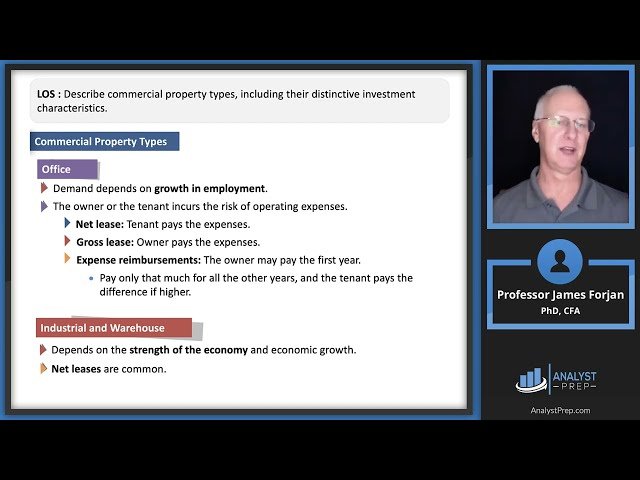
Learn about real estate investment fundamentals in this educational video designed for CFA Level II exam preparation, covering essential topics like private and public real estate investments, property classifications, portfolio roles, and economic value determinants. Explore different commercial property types and their unique investment characteristics while understanding the due diligence process for both private and public equity investments. Master concepts related to residential and non-residential properties, liquidity considerations, cash flow contributors, and economic growth factors that influence real estate investments. Gain insights into real estate investment indexes, their construction methodology, potential biases, and the impact of appraisal lag on valuations. Develop a comprehensive understanding of why investors choose real estate as an asset class and how various factors contribute to property values and investment performance.

Coursera
Launch your career in the high-demand field of SAP consulting. Build the consulting skills successful companies are looking for through tailored training and hands-on projects designed by SAP. No experience or degree required to enroll. What does an SAP consultant do? SAP consultants are problem solvers who relish getting the details right. They are experts in process management and have a deep understanding of SAP solutions. They are also outstanding communicators and excel at collaborating with all contributors and stakeholders in a project. This program has been designed specifically for learners seeking to get their first job in the SAP domain. You’ll get the inside track on how to build a consulting career beyond just having product knowledge. You’ll learn about project management methodologies and agile processes. You’ll gain core consulting skills such as requirements gathering, stakeholder interviewing, client communication, client analysis, and solution design. Plus, you’ll go through several implementation project lifecycles to build your practical experience and complete a comprehensive hands-on project using a case study to apply the skills you have learned. With SAP customers generating 87% of total global commerce, SAP consulting skills are in high demand. Through this program, you’ll build the critical skills that the largest and highly successful companies such as Accenture, Capgemini, Deloitte and KPMG, are looking for.

YouTube
Explore the concept of financial independence and the power of compounding in this TEDx talk by Dr. Mukesh Jindal. Delve into the Indian dream of wealth creation and understand the reasons behind wealth disparity despite economic growth. Discover four key strategies to become rich, with a special focus on the crucial role of investments and the magic of compounding. Learn from real-life examples, including Warren Buffett's success story, to grasp the potential of strategic long-term investing. Gain insights from Dr. Jindal's extensive experience in finance, including his roles as a co-founder of Alpha Capital, an associate faculty at the University of Delhi, and a bestselling author. Empower yourself with knowledge on personal finance and investment strategies tailored for success in the modern era.

Swayam
Learn fundamental investment principles and financial analysis techniques through this 8-week course from the Indian Institute of Management Bangalore. Begin with investment fundamentals and the relationship between risk and return, then explore fixed income securities and their valuation methods. Analyze equity investments through various valuation models and financial statement analysis techniques. Discover derivatives markets by studying forwards and futures contracts, their pricing mechanisms, and hedging applications. Master portfolio theory concepts including diversification, efficient frontier construction, and optimal portfolio selection using modern portfolio theory. Examine financial planning strategies and understand the impact of taxation on investment decisions and portfolio management. Conclude with a comprehensive review that integrates all investment concepts and their practical applications in real-world financial decision-making scenarios.