

Courses
Discover thousands of courses from top institutions and platforms worldwide
Level
Course Type
Duration

CourseHorse
The Construction Site Fire Safety Manager Training (CSFSM) will fulfill the training requirements for Fire Safety Manager under the new regulation of the New York City Fire Safety Department. Course Content: Overview of the construction site fire safety requirements and responsibilities of the fire safety managerIntroduction to FDNY fire code and fire code for construction sitesUpon successful completion of the course and the examination, students will receive a certificate. The student can then file for the FDNY Certificate of Fitness. CSFSM course certificates are valid for one year. FDNY Certificate of Fitness: Upon successful completion of the course, each student has upto 1 year to submit all paperwork and fee to the FDNY. FDNY will review applications and will determine if the student qualifies for the certificate of fitness. Qualified applicants will be required to take a Computer Based Test (CBT) at FDNY headquarters. Fee for Certificate of Fitness: $25 Please Note: After registration, students will receive a information on signing onto the webinar via ZOOM. Please note access to a PC with webcam and audio will be necessary to attend the live webinar. Students will be required to show state ID (example: Drivers License) at the start of the Webinar.

Swayam
Safety is a very important aspect for any industry as a zero-accident workplace environment boosts the morale of the team members working in any hazardous, risky and dangerous situations. Recognizing these facts industries prepare their own safety policy, safety manual and have a separate department/section for safety so as to create proper awareness and provide the know-how-about the safety. Adherence to the useful information, rules, and mandatory requirements governing the safety and guidelines will help prevent occupational injuries and accidents. Industrial safety refers to the management of all operations and events within an industry in order to protect its employees and assets by minimizing hazards, risks, accidents, and near misses.

Coursera
Embark on a comprehensive journey into the intricate realm of fire and life safety systems with our specialized curriculum. Designed to equip learners with a multifaceted understanding of fire protection, detection, suppression, and emergency response strategies, this specialization offers invaluable insights applicable across architectural structures and industrial settings. The foundational module immerses learners in critical dynamics of fire and its impact on lives and properties, covering essential topics such as fire classes, building occupancy categories, and construction types, vital for understanding fire risks and prevention measures. Focus then shifts to life safety systems, where learners delve into means of egress, fire resistance, and rating requirements crucial for building safety. The exploration continues with a deep dive into fire compartmentation strategies, engineering components like Piping & Instrumentation Diagrams (P&IDs), pump arrangements, and fire hydrants, providing insights into firefighting infrastructure and system design. Subsequent modules address pump and sump capacities, foam suppression systems, sprinkler configurations, fire alarm systems, and the role of fire safety signages, ensuring learners acquire practical knowledge and skills essential for designing, implementing, and maintaining effective fire and life safety systems in various settings. Target learners: Fire Safety Professionals and Inspectors, Building and Facilities Managers.

Coursera
In the comprehensive exploration of "Types of Fire Detection Systems" within the course module, participants embark on a journey through the intricacies of fire safety. The module kicks off by emphasizing the pivotal role fire detection systems play in building safety, particularly in identifying and responding to fires during their early stages. This early detection not only ensures the safety of occupants but also provides ample time for a well-organized evacuation. The installation of these systems is highlighted as a proactive measure to mitigate property loss and minimize facility downtime through swift identification. Participants are introduced to the dichotomy between conventional and addressable fire detection systems. The former operates on a zoning concept, dividing alarm devices into distinct areas or zones. On the other hand, the addressable system allows for precise identification of the triggered device, offering enhanced sophistication and response capabilities. The importance of understanding these systems lies in their diverse applications and suitability for different environments. Delving deeper into the realm of fire detection devices, the module unfolds the various types, including smoke, flame, and heat detectors. This includes the classic ionization and photoelectric smoke detectors, each tailored to specific fire types, and advanced technologies like video image smoke detection providing visual confirmation. The significance of these detectors extends beyond traditional smoke and flame detection, incorporating heat detectors, multi-sensor detectors, and aspirating detectors with laser-based technology for early detection. Transitioning into the "Fire Alarm Notification Devices, Location and Coverage of Detectors" module, participants are immersed in the foundational terminologies shaping the landscape of fire alarm systems. The historical journey of fire detectors unveils key terminologies that form the basis for comprehension. The strategic placement of Notification Devices becomes a focal point, with emphasis on visibility, audibility, or a combination of both for optimal effectiveness. The exploration extends to the intricate world of detector coverage, where Heat and Smoke Detectors take center stage. Instructors guide participants through the complexities of Indian Standard 2189, offering benchmarks for recommended practices in detector coverage. Advanced detectors, such as Aspiration and Beam Detectors, are introduced, showcasing their unique coverage attributes. Real-world applications of these detectors, considering air movement and potential pitfalls in Smoke Detector placement, provide practical insights for participants. Moving forward, the course bridges the gap between fire detection systems and broader building environments in the "Fire & Emergency Safety Signages" module. Fire safety signages emerge as integral components of an effective safety strategy. Participants understand their classifications, addressing means of warning, manual controls, means of egress, firefighting equipment, prohibition signs, and broader health and safety signages. Instructors emphasize the strategic location, sizing, and color coding of these signages for universal recognition and effective emergency response. Overall, these interconnected modules provide participants with a holistic understanding of fire detection systems, alarm notification devices, and safety signages. From the technical nuances of detector technologies to the practical considerations of strategic placement, the course equips participants with the knowledge and skills essential for implementing and maintaining robust fire safety measures in diverse building environments. Target Learners: • Fire Safety Professionals and Inspectors • Undergraduate Students in Fire Safety Engineering, Electrical Engineering, and Building Management • Post-Graduate Students specializing in Fire Protection Engineering and Safety Systems • Practicing Engineers and Technicians in Fire Detection and Alarm Systems • Diploma Students in Fire Technology and Safety Management • Building and Facilities Managers

Udemy
Become an expert in understanding "Fire Safety" and "Prevention Planning" for your workplaces and organizations. What you'll learn: Understand why should you have a FIRE Prevention and Response PlanUnderstand how to control the FIRE hazardsUnderstand the fixed extinguishing systemsUnderstand the usage of portable FIRE extinguishersUnderstand the various modes of heat transfer (i.e conduction, convection and radiation)Understand the "Training Requirements" for FIRE prevention and response planningDevelop FSMS (Fire Safety Management System) for OrganizationsDefine the Roles and Responsibilities of a Fire Marshal or Fire WardenUnderstand the usage and working mechanism of fixed and portable installationsUnderstand how to conduct fire risk assessments and develop mitigation plans Course Outlines:Number of Sections: 10Number of Lectures: 29Number of Quizzes: 1 comprehensive quizNumber of Additional Resources: 17Lectures Duration:125 MinutesCourse Approach: Thorough Detailing of Stated Subject, Practical Approach, Industries Best Practices Elaboration andAccelerated Learning Technique (ALT).Prelude: As witnessed by many or can even be seen on social media / print media that catastrophes occurred due to FIREand the prime reason is lack of knowledge and understanding'Learn not to Burn', around the globe almost every country has builtin legislation's regardingFIREsafety andprevention planing.Understanding of "Fire Safety and Prevention Planning" is one of the necessary ingredient of our life.In this course we will learn the detailed methods of "Fire Prevention" that are one of the pre-requisites to work in any organization,even if you have no understandingabout occupational safety or FIRE, this course is going to transform you from novice level to expert's grounds.At the end of this course you will be able to implement Fire Safety and Prevention Planning within your organization and workplaces in accordance with the standard requirements.This course is in compliance with the "Fire Safety Reforms 2005", "NFPAUSA" and "OSHA"requirements.30 Day Money Back Guarantee All my Courses have 30 Day Money Back Guarantee.Click on the Red“Buy Now" Button at the Top Right Hand Side of the Page Then follow the instructions to register and pay for the course.

LinkedIn Learning
Turn safety submittals into a simple, paperless process with Bluebeam Revu. Create an electronic package, complete with a hyperlinked chemical list.

YouTube
Learn essential operating room safety protocols focused on electrical and fire hazards in this 20-minute lecture from the University of Kentucky. Explore critical safety measures and preventive strategies to minimize risks associated with electrical equipment and potential fire hazards in surgical environments. Gain valuable insights into proper handling of electrical devices, understanding fire triangle components specific to OR settings, and implementing emergency response procedures to ensure patient and staff safety during surgical procedures.

LinkedIn Learning
Learn how to manage your manager. In this course, adapted from the podcast How to Be Awesome at Your Job, Mary Abbajay explains how to build a good relationship with your boss.

LinkedIn Learning
Learn how to create and manage apps with SCCM and prepare for Microsoft certification exam 70-703. See how to deploy apps using PowerShell scripts, and deploy App-V virtual apps.

YouTube
Listen to a 32-minute podcast interview with Tanya Reilly, Principal Engineer at Squarespace and former Google SRE staff member, as she draws fascinating parallels between New York City's fire code evolution and modern software reliability practices. Explore core Site Reliability Engineering (SRE) principles, including the "You Build It, You Run It" philosophy, strategies for building reliable systems, and the importance of considering dependencies and instrumentation from initial design. Learn valuable lessons from fire safety regulations that apply to software development, such as implementing fireproof walls, conducting software inspections, and utilizing circuit breakers. Gain insights into error budgets, Service Level Objectives (SLOs), and risk management in software systems. Understand how SRE roles vary across organizations, from pattern recommendations to emergency response, while discovering best practices for building sustainable systems that don't require constant monitoring. The discussion covers essential aspects of software lifecycle reliability, prevention strategies, testing methodologies, and practical approaches to disaster prevention in modern software development.

Udemy
The Highfield Food Safety Level 3 syllabus presented in two hours of video tutorials. Boost your food safety knowledge. What you'll learn: Learn all of the Highfield Level Three food safety syllabus, with a focus on HACCP. Are you a manager or supervisor and want to achieve a level three food safety qualification? Or perhaps you are currently working in catering and want to develop your career? Or are you looking to buy a business or enter the trade for the first time? This course will boost your food safety knowledge.This course begins with a short video highlighting the importance of food safety, the positive impact it can have on your business. The prologue video also highlights the damaging impact poor standards can have on customers.You'll be taken through all aspects of managing food safety, with a particular focus on HACCP (Hazard analysis and critical control points).The knowledge you gain will help improve standards in your place of work. It will give you confidence to engage in discussions with experts such as EHO and safety departments in your organisation.There is an accompanying workbook to the course which you can download to help aid your understanding.You'll begin HACCP with an explanation of prerequisites and a brief study of pest control, cleaning and disinfection and structure.You will then be given brief examples of Flow Diagrams.There follows the largest section of the course; the seven principles of HACCP.The course is structured in a logical sequence to further assist your understanding and the transfer of information to your long term memory.Through the study of HACCP you will also learn about related topics such a cross contamination, spore forming bacteria, and how food poisoning occurs (intoxication and invasiveness).Throughout the course you will be given tips and ideas for completing your own internal audits. I have been a food safety advisor and trainer for over 20 years and the advice is based on my own experiences throughout that time.I also have a diploma in Business Management and the course includes a short video on the key aspects of food safety management; training, motivating and monitoring standards.You'll also be given a quick lesson on food safety law, including a quick explanation of the development of these laws over the century's. The course ends with a 15 minute summary of the entire course. That way, you can refresh your memory at any time without the need to revisit the entire course. Watching the summary at intervals (e.g. after one week, then one month, and then in 6 months) will help transfer the information to your long term memory.I hope you enjoy the course, and as ever, any feedback on how it can be improved would be great.

LinkedIn Learning
Develop essential skills for managing fire emergencies in the workplace, and, more specifically, on job sites.

CourseHorse
This course is a comprehensive review of Chapter 33 and the Rules of the City of New York that pertain to public protection during construction. The purpose of the course is to provide training with regards to construction on major buildings, that may be classified by the New York City Building Department, with emphasis on providing not only safety for the public and adjoining property, but to provide safety for worker within the job site as per OSHA requirements. This course is one of the pre-requisites an applicant must successfully complete before being eligible to apply for Site Safety Manager Certificate Examination. In addition, this course one of the training course requirements for Site Safety Coordinator and Construction Superintendent Certification in New York City. The goal of this course is to provide participants with Knowledge of the code requirements of the New York City Buildings Department, New York City Rules, to provide Pedestrians, Adjacent Buildings and Worker with safe work environment both in and around construction sites. Audience: This course is required for those applying as Site Safety Managers, Site Safety Coordinators, and Construction Superintendents with the NYC Department of Buildings. Please refer to NYC DOB's checklist to ensure that you have all of the appropriate documentation to apply for a license. Please also note that we only provide the certificate you need to submit to DOB and NOT the actual license. After completing the course, DOB are the ones that handle your registration and application process. Prerequisites: Student must be able to communicate with the instructor in the language the course is held in. No other prerequisites for this course but to be considered for licensing by New York City Department of Buildings, requirements must be met for issuance of test and license. Materials: Pens, instruction booklets, test, videos, PowerPoint presentations, instructor evaluation sheet, attendance sign-in sheets. Course fee includes: administrative fees, course materials, and certificates. Available for purchase: extra booklets, certificate replacements, and mailing out certificates. Learning Outcomes Upon completion of this course, students shall be able to: List differences between Site safety Manager, Site Safety Coordinator, and their responsibilities.Identify when a Superintendent is needed and what his responsibilities are.Explain what a concrete safety manger is and his/her responsibilities.Explain what a Fire Safety Manager is and his/her responsibilities.Recall and discuss the major safety factors related to construction site work.Apply the appropriate safety measures by deciding what controls, systems, and PPE to utilize to protect, not only the public, but employees from injuries and or fatalities.Explain what the focus four hazards are.Identify each hazard and correct it using controls and or other means of protection.Define the rules of New York City related to construction.List the rules related to Fire Safety on a construction site.Explain NYC DOB chapter 33 Safeguards during Construction and Demolition.List and define NYC DOT rules and permits.Discuss the General administrative rules as related to a construction site.Identify the permits required and the expiration for each.Explain what events/situations DOB must be notified for.List which Plans are to be on site during construction.Define what a site safety plan is and the ability to demonstrate what it must contain.Explain Site job safety and describe how to maintain safety.Identify and describe job site emergency situations and preparedness in unsafe building, NYC/DOI Building Integrity Training contact information sheet.Explain Safety Protocol for concrete, Standpipe inspection, Crane and derricks, Supported/Suspended Scaffold and sheds.Important Note: Please bring a photo ID, as they will be checked on the start date. Students are asked to arrive at least 15 minutes before class. In order to successfully fulfill the requirements for completion of the 40 Hour Site Safety Manager and to receive a certificate/card for the course, students must:: Be able to clearly communicate with the instructor and complete all paperwork in the language the course is delivered. No personal interpreters permitted.Complete all required paperwork: registration, evaluation, attendance, etc.Attend all required hours of the course. Any make up sessions must be completed within six months from the course start date.Participate during class activities and reviews.Complete tests with a passing grade of 70%.No exceptions will be made. No partial credit awarded for any course. Customer can bring lunch, we provide coffee and tea in the classrooms.

CourseHorse
The 8 hour Site Safety Manager Refresher course is a refresher to the 40 hour Site Safety Manager Course and the 8 Hour Site Safety Coordinator Course, which are a comprehensive review of Chapter 33 and the Rules of the City of New York that pertain to public protection. This course provides students with safe job practices in New York City. They will be introduced to the hazards of working in the New York City construction environment and the specific methods and work practices that are necessary on an urban construction site. This course is one of the requirements all renewing applicants must successfully complete in order to remain up-to-date with their Site Safety Manager, Site Safety Coordinator, or Construction Superintendent status with the New York City Department of Buildings. Students will receive a certificate of completion.Please refer to NYC DOB's checklist to ensure that you have all of the appropriate documentation to apply for a license. Please also note that we only provide the certificate you need to submit to DOB and NOT the actual license. After completing the course, DOB are the ones that handle your registration and application process.Prerequisites: Student must be able to communicate with the instructor in the language the course is held in. Student must have previously taken any of the Site Safety Manager courses within the past three years.Please note that this is a refresher course meaning that it is NOT to be used as an initial course. Students are required to have taken an initial course, either the 40 Hour Site Safety Manager or 8 Hour Site Safety Coordinator, before taking this refresher. Students MUST provide a copy of their initial or refresher certificate either by email or in person prior to taking this refresher course.Learning OutcomesUpon completion of this course, students shall be able to:List differences between Site safety Manager, Site Safety Coordinator, and their responsibilities.Identify when a Superintendent is needed and what his responsibilities are.Explain what a concrete safety manger is and his/her responsibilities.Explain what a Fire Safety Manager is and his/her responsibilities.Recall and discuss the major safety factors related to construction site work.Apply the appropriate safety measures by deciding what controls, systems, and PPE to utilize to protect, not only the public, but employees from injuries and or fatalities.Explain what the focus four hazards are.Identify each hazard and correct it using controls and or other means of protection.Define the rules of New York City related to construction.List the rules related to Fire Safety on a construction site.Explain NYC DOB chapter 33 Safeguards during Construction and Demolition.List and define NYC DOT rules and permits.Discuss the General administrative rules as related to a construction site.Identify the permits required and the expiration for each.Explain what events/situations DOB must be notified for.List which Plans are to be on site during construction.Define what a site safety plan is and the ability to demonstrate what it must contain.Explain Site job safety and describe how to maintain safety.Identify and describe job site emergency situations and preparedness in unsafe building, NYC/DOI Building Integrity Training contact information sheet.Explain Safety Protocol for concrete, Standpipe inspection, Crane and derricks, Supported/Suspended Scaffold and sheds.Materials: Pens, instruction booklets, test, videos, Powerpoint presentations, instructor evaluation sheet, attendance sign-in sheets.Course fee includes: administrative fees, course materials, and certificates. Available for purchase: extra booklets, certificate replacements, and mailing out certificates.In order to successfully fulfill the requirements for completion of the 8 Hour Site Safety Manager Refresher and to receive a certificate/card for the course, students must:Be able to clearly communicate with the instructor and complete all paperwork in the language the course is delivered in. No personal interpreters permitted.Complete all required paperwork: registration, evaluation, attendance, etc.Attend all required hours of the course. Any make up sesisons must be completed within six months from the start date.Participate during class activities and reviews.Complete tests with a passing grade of 70%.No exceptions will be made. No partial credit awarded for any course. Important Note:Students must show a photo ID on the start date. Students are asked to arrive at least 15 minutes before class.Customer can bring lunch, we provide coffee and tea in the classrooms.
CourseHorse
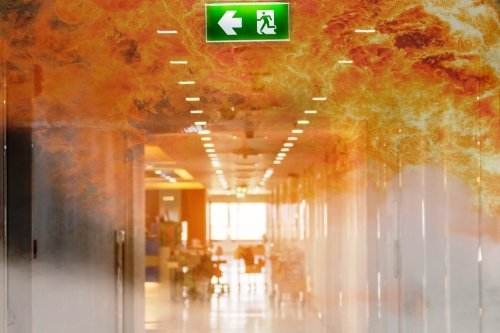
Learn how to keep yourself and the people around you safe during a hospital fire by taking a Hospital Fire Safety class.Understand how to prevent injuries and save lives with Hospital Fire Safety skills.Certified by the LA Fire Department (LAFD)Blue LA Fire Card valid for 4 yearsCE’s available for EMS and Board of NursingThe Hospital Fire Safety Class covers:What to Do in Case of a Fire at Your HospitalPatient Rescue (Including drags and carries)How to Use a Fire ExtinguisherDifferent Types of Fires and How to Control ThemHospital Fire Protection Systems and EquipmentHow to Evacuate SafelyHome Fire SafetyPre-Fire PlanningThis class fulfills the Hospital Fire Safety requirement for the City of Los Angeles (Los Angeles Fire Code Section 57.113.09).Recommended for:All hospital personnel working in the City of Los AngelesRetirement home staffSkilled nursing facility employeesRequired for: All personnel that work in a hospital setting in the City of Los Angeles. (Including skilled nursing facilities, psychiatric hospitals, clinics, and retirement homes)At the completion of the class you will receive a Blue Fire Safety Card. The Blue card meet the requirement for all positions that require a LAFD Hospital Fire Safety Card and is valild for 4 years.

Coursera
Great leadership doesn't happen by chance—it happens by design. This course helps you create and evolve a personalized leadership checklist that keeps you focused on what matters most. You'll learn the core components of an effective checklist, from daily practices to strategic responsibilities, and how to structure them for clarity and action. Through practical tools, case examples, and hands-on activities, you'll build a Version 1 of your leadership checklist, test it against real challenges, and refine it as your role evolves.

Coursera
This comprehensive course immerses participants in the intricate world of fire safety and building protection systems. The modules cover critical aspects, starting with an exploration of the fundamental dynamics of fire and the pivotal role of fire protection systems. Understanding fire classes and their respective extinguishing agents, building occupancy categories, and fire zone classifications becomes foundational knowledge. The course dives into the vital relationship between building construction types and fire rating requisites, shedding light on the Floor Area Ratio's (FAR) influence on permissible heights and construction areas. Learners gain insights into material risks, reviewing the National Building Code of India for invaluable fire-resistance ratings. Active and passive fire protection systems take center stage, unraveling the complexity of fire extinguishers, sprinkler systems, and water spray systems. The tailored approach for specific situations, fuel types, and hazard levels ensures a comprehensive defense against fires. The importance of understanding fire dynamics and adhering to safety protocols is emphasized, crucial in minimizing the devastating impact of fires on lives and properties. Moving to the second module, the focus shifts to life safety systems, encompassing egress design based on occupant load, travel distances, refuge areas, and fire compartmentation. Detailed insights into stages of fire safety, recognized standards, and construction details for optimal fire resistance ratings are presented. Learners explore the intricate details influencing safe evacuation pathways, essential fire protection strategies within buildings, and specific restrictions dictating safety measures. The third module delves into the critical aspects of fire compartmentation within buildings. It covers fundamental needs, roles, and essential aspects, exploring fire compartmentation requirements, design intricacies, and the integration of smoke control and management within fire zoning. Real-world case studies enrich the learning experience, showcasing smoke extraction methods and strategic implementation of fire zoning principles for enhanced safety. The course concludes by examining the interfaces of fire compartmentation with other crucial building services and delves into specialized systems like the water curtain system, providing a comprehensive understanding of these unique fire safety mechanisms. This course empowers learners to design, implement, and maintain effective fire safety strategies, ensuring the safety and security of built environments. Target Learners: • Working Professionals in Fire Safety, Building Management, and Safety Engineering • Undergraduate Students in Fire Safety Engineering, Civil Engineering, and Architecture • Students specializing in Safety Management and Risk Assessment • Post-Graduate Students in Fire Safety and Disaster Management • Practicing Engineers in Building and Industrial Safety • Diploma Students in Fire Technology and Safety Management

LinkedIn Learning
Looking for a consistent and reliable way to install Windows applications? Learn about the Chocolatey package manager.

CourseHorse
40-Hour Site Safety – Online Live WebinarThe 40-Hour Site Safety course is for construction professionals applying to take the Site Safety Manager exam or registering witht the NYC Department of Buildings as a Site Safety Coordinator or Registered Construction Superintendent. This course is required by NYC Department of Buildings before taking the written examination for a New York City Site Safety Manager. Site Safety managers are required to be on site for the construction of new buildings 15 or more stories, or 200 feet or more in height, or with lot coverage of more than 100,000 square feet. This course is review of Chapter 33 and the Rules of the City of New York. Course Content & Objectives:Federal and State standards, NYC codes for construction pracitcesFire protection regulations, DOT regualtions and permits.Record keeping and reportingNYC DOB exam fee for SITE SAFETY MANAGER License exam applicants: $525 (Payable to NYC DOB). This fee is separate of course fees.NYC DOB exam fee for SITE SAFETY COORDINATOR: $100 initial fee to NYC DOB along with LIC-2 application. Contact Licensing unit at DOB (212-566-4100) to schedule appointment.NYC DOB registration fee for CONSTRUCTION SUPERINTENDENTS: $100 fee to NYC DOB when application is submitted. Contact Licensing unit at DOB (212-566-4100) to schedule appointment.Please Note: After registration, students will receive a information on signing onto the webinar via ZOOM. Please note access to a PC with webcam and audio will be necessary to attend the live webinar. Students will be required to show NY state ID (example: Drivers License) at the start of the Webinar.

Udemy
A very light content to undertand complex topics around Hydrogen, its safety, combustion, and comparison to Gasoline What you'll learn: Understand why there is a high mediatisation around hydrogenLearn Hydrogen History , Chemical and physical proertiesUnderstand the special behavior of hydrogen during expansion and compressionUnderstand the Safety issues around Hydrogen and comparison with conventional fuelsUnderstand the behaviour of hydrogen flame & Comparison with gasoline flameUnderstand different types of Hydrogen Storage and the challenge behindUnderstand that Hydrogen cannot be considered as perfect gas at working pressure in the industryKnow various applications of Hydrogen in the Industry Hello! This course is exclusively to answer the question if hydrogen is better than conventional fuels (Gasoline, Diesel, and Methane). We will go through some technical aspects of hydrogen properties. This course is easy to grasp thanks to a lot of illustrations and examples. With this course, you are able to start any career in hydrogen field either research, applications engineer or even journalism around this fantastic topic. It will also help you to identify plenty of opportunities available in the near future. This lecture is based on a lot of serious sources like International energy agency, US department of energy and some best papers in the field. After this course you will be able to discuss with facts around this wonderful topics. All the basics are being discussed. You will master the topic. The course contents are as follows:Chapter I. INTRODUCTIONGlobal Warming – Green House Gas Emissions – Introduction to hydrogen – Primary Sources of Hydrogen – Massive Investment in Hydrogen developmentChapter II. WHY HYDROGEN?Abundant in Earth – Lightest element in the Universe – Clean Combustion.Chapter III. HYDROGEN HISTORY Henry Cavendish - Gay Lussac- Antoine Lavoisier- Lamp lightning - Water synthesis - Fuel cell - Aerospace Appolo - No Pollutant - Global WarmingChapter IV. IS HYDROGEN BETTER THAN OTHER FUELS ?Hydrogen Combustion - Hydrogen Storage- Hydrogen specific energy & density - Liquid hydrogenChapter V. PERFECT GAS LAW: COMPRESSIBILITY FACTOR Perfect gas - Real Gas - Compressibility factor - perfect gas law correction Chapter VI. JOULE THOMSON COEFFICIENT Hydrogen expansion - Joule Thomson Coefficient - Inversion Temperature - Expansion lead to warming effect Chapter VII. HYDROGEN SAFETY Hydrogen embrittlement - Flammability limit - Auto ignition - Combustion - high diffusivity Chapter VIII. APPLICATIONS Hydrogen Global demand- Refining - Ammonia production - Aviation & Space exploration - Hydrogen fuel cells - power grids- emergency power in building - Burning hydrogen for electricity generation - hydrogen internal combustion engine - fuel cells cars RESOURCES AVAILABLE IN THIS COURSEBOOKS FOR,Introduction of Hydrogen TechnologyStorage methods of HydrogenFuel Cell Technology and its ApplicationsHydrogen Economy (Opportunities, Barriers and R&D Needs)Energy Technology Perspective 2020 submitted by International Energy AgencyThe Future of Hydrogen_G20 summit articleADDON RESOURCESCEA: HydrogenNationalgrid : what-is-hydrogenDELOITTE: : Fueling the future of mobility