

Courses
Discover thousands of courses from top institutions and platforms worldwide
Level
Course Type
Duration

YouTube
Explore the cutting-edge intersection of robotics and chemistry in this 39-minute conference talk from BIMSA's ICBS2025 event. Discover how mobile robotic systems are revolutionizing chemical research and laboratory automation through autonomous experimentation capabilities. Learn about the design principles, implementation challenges, and practical applications of robotic chemists that can navigate laboratory environments independently. Examine the technological innovations enabling robots to perform complex chemical synthesis, analysis, and discovery tasks with minimal human intervention. Understand the potential impact of mobile robotic chemists on accelerating scientific discovery, improving experimental reproducibility, and transforming traditional laboratory workflows in chemical research and development.

YouTube
Explore the fascinating world of digital forensics in this 18-minute TEDx talk by Lt Col (Dr) Santosh Khadsare (Retd). Follow his journey from an EnTC engineer to an Indian Army veteran specializing in cybersecurity. Discover how a pivotal incident shaped his perspective, leading to the development of an indigenous cybersecurity product for India. Gain insights into the critical importance of digital forensics, its challenges, and necessities in today's digital landscape. Learn from Dr. Khadsare's 25 years of experience in Cyber Security and Digital Forensics & Incident Response (DFIR), including his leadership at CERT-In's Digital Forensic Lab and his role as Vice President of DFIR at eSec Forte Technologies. Understand the significance of digital asset protection and the cutting-edge solutions provided by professionals in the field.

YouTube
Explore the role of women in forensic science through this insightful 50-minute talk by Anna Barbaro. Gain a fresh perspective on women's empowerment in scientific fields, particularly forensics. Examine statistical data and research findings that highlight the current status of women in forensic science. Learn about the work being done to promote gender equality and diversity in this crucial field. Discover the challenges and opportunities for women pursuing careers in forensics, and understand the importance of representation in scientific arenas.

YouTube
Explore the vulnerabilities in forensic software and their potential impact on court cases through a detailed examination of the Cellebrite UFED, a widely-used phone forensic tool. Delve into the reverse engineering process, uncovered findings, and the reporting methodology employed by the researcher. Gain insights into the concerns, hopes, and fears encountered during the investigation, and understand the implications of these vulnerabilities on digital forensics and legal proceedings. Learn about the intricacies of anti-forensics techniques and their significance in the field of cybersecurity.
YouTube
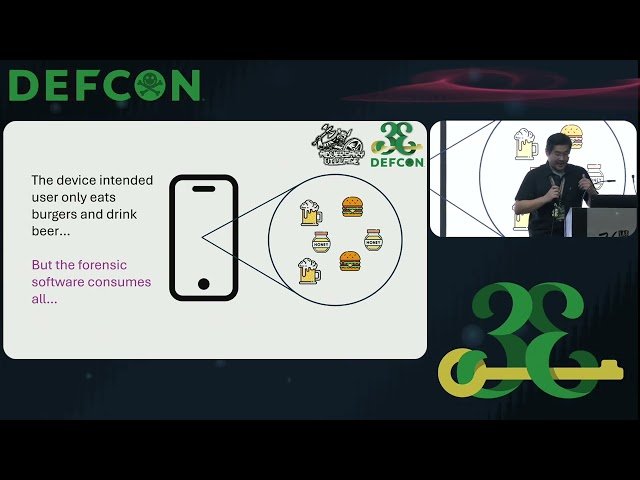
Explore advanced anti-forensic techniques in this DEF CON 33 conference talk that challenges fundamental assumptions in mobile forensic investigations. Learn how sophisticated countermeasures embedded within Android devices can silently compromise evidence integrity and undermine traditional extraction methodologies. Discover the critical blind spot in Android logical extraction workflows where forensic tools, despite successfully gaining device access, remain vulnerable to stealthy second-layer defenses that can manipulate or destroy data post-access. Examine real-world test results demonstrating how adversarially modified environments can exploit the common assumption that target devices function as expected, revealing significant gaps in forensic reliability. Gain insights into how these anti-forensic techniques operate below the radar of current investigative tools and understand the implications for digital forensics professionals who rely on established extraction procedures.

YouTube
Explore the life and legacy of nineteenth century chemist Henry Enfield Roscoe through a detailed biographical lecture presented by Peter Morris, drawing from his forthcoming collaborative biography with Peter Reed. Delve into Roscoe's significant contributions to chemistry, his campaigning efforts, and his impact on the scientific community during the Victorian era. Learn about the historical context and scientific developments of the period while gaining insights into the personal and professional journey of this influential chemist.

Study.com
Review our Significant Chemists Study Guide course to explore the contributions of the world's most important chemists. The course's simple lessons and self-assessments are great options for students who need to review significant chemists for homework, class assignments or upcoming exams.

YouTube
Explore a historical lecture examining the complex evolution of pharmacy's professional identity in Britain and its relationship with chemistry and medicine. Delve into the fascinating question of why pharmacists can be called chemists while chemists cannot be called pharmacists, tracing back to 19th-century professionalization efforts. Learn about the influence of chemical discoveries in the late 18th century and how forward-thinking chemists and druggists recognized the importance of chemical knowledge in pharmacy education. Discover the French chemist Antoine François Fourcroy's perspective on pharmacy's subordinate position to chemistry, and how British doctors like Anthony Todd Thomson supported this view. Examine the founding of the Pharmaceutical Society of Great Britain in 1841 and its aspirations to establish pharmacy as a fourth branch of medicine. Understand the significant impact of the 1852 Pharmacy Act, which created a statutory register of pharmaceutical chemists, and how subsequent legislation, including the 1858 Medical Act and 1868 Pharmacy and Poisons Act, shaped the professional boundaries and protected titles within the field.

Udemy
Master digital forensics techniques for penetration testing, incident response, and cyber investigations. What you'll learn: How to forensically image devices.How to recover deleted data from various operating systems.How to produce professional and legal digital forensic reports.How to properly handle digital media before and during investigations.How to utilize various forensic tools for digital forensic investigations.Analyze and reverse engineer software and malware. Digital Forensics for Pentesters: Practical Investigations & AnalysisMaster digital forensics techniques for penetration testing, incident response, and cyber investigations. This course is designed for ethical hackers, cybersecurity professionals, and penetration testers who want to enhance their skills in digital forensics and investigative techniques.What You Will Learn:Digital forensics fundamentals – Understand the core principles, tools, and methodologies used in forensic investigations.Incident response & analysis – Learn how to effectively detect, analyze, and respond to security incidents.Forensic imaging & evidence collection – Master disk imaging, memory forensics, and proper evidence handling procedures.File system & network forensics – Investigate Windows, Linux, and macOS file systems and analyze network traffic for anomalies.Reverse engineering for forensics – Utilize reverse engineering techniques to analyze malware and uncover security threats.Practical hands-on labs – Work on real-world forensic scenarios and apply what you learn in simulated environments.Why Take This Course?Hands-on training – This course provides a practical, step-by-step approach to digital forensics for penetration testers.Industry-relevant skills – Learn the essential techniques used by forensic investigators, ethical hackers, and cybersecurity professionals.Boost your career – Digital forensics expertise is in high demand for cybersecurity, law enforcement, and corporate security roles.Whether you're an ethical hacker, penetration tester, or cybersecurity analyst, this course will give you the skills to perform forensic investigations and uncover digital evidence. Enroll now and start mastering digital forensics today!Digital Forensics for Pentesters: Practical Investigations & AnalysisMaster digital forensics techniques for penetration testing, incident response, and cyber investigations. This course is designed for ethical hackers, cybersecurity professionals, and penetration testers who want to enhance their digital forensics and investigative techniques skills.What You Will Learn:Digital forensics fundamentals – Understand the core principles, tools, and methodologies used in forensic investigations.Incident response & analysis – Learn how to effectively detect, analyze, and respond to security incidents.Forensic imaging & evidence collection – Master disk imaging, memory forensics, and proper evidence handling procedures.File system & network forensics – Investigate Windows, Linux, and macOS file systems and analyze network traffic for anomalies.Reverse engineering for forensics – Utilize reverse engineering techniques to analyze malware and uncover security threats.Practical hands-on labs – Work on real-world forensic scenarios and apply what you learn in simulated environments.Certification preparation – Build foundational knowledge to help prepare for digital forensics certifications like GCFA (GIAC Certified Forensic Analyst), CHFI (Certified Hacking Forensic Investigator), and EnCE (EnCase Certified Examiner).Why Take This Course?Hands-on training – This course provides a practical, step-by-step approach to digital forensics for penetration testers.Industry-relevant skills – Learn the essential techniques used by forensic investigators, ethical hackers, and cybersecurity professionals.Boost your career – Digital forensics expertise is in high demand for cybersecurity, law enforcement, and corporate security roles.Certification-ready – Strengthen your knowledge and practical experience to pursue industry-recognized forensic certifications.Whether you're an ethical hacker, penetration tester, or cybersecurity analyst, this course will give you the skills to perform forensic investigations, uncover digital evidence, and prepare for forensic certification exams. Enroll now and start mastering digital forensics today!4o
Udemy
Become a Forensic Psychologist | Get In-Depth Knowledge of Forensic Psychology | Criminal Psychology | Psychologist What you'll learn: This course covers forensic psychology fundamentals, assessment, criminal behavior, mental health, ethics, and real-world applications.This course covers forensic psychology fundamentals, criminal behavior, mental health in legal settings, and more. Equip students for forensic careers.In this forensic psychology course, students learn about criminal behavior, psychological assessments, ethics, and courtroom testimony.Students will learn forensic psychology fundamentals, criminal behavior, assessment, ethics, and more in this practical course. Embark on a captivating journey of 115 Minutes of Engaging Animated Content into the realm of Forensic Psychology and Criminal Psychology with our comprehensive certification program. This course provides an in-depth exploration of these intriguing fields, covering their history, significance, emerging trends, and the benefits they offer to professionals and society.History:Dive into the rich history of forensic psychology, tracing its origins and evolution. Discover how this discipline has grown from its roots in clinical psychology and criminology to become a vital component of the criminal justice system. Explore landmark cases and critical milestones that have shaped the field, gaining a deeper appreciation for its development over time.Importance:Understand the critical role forensic psychology plays in the criminal justice process. Delve into its significance in aiding investigations, informing legal decisions, and contributing to rehabilitating offenders. Explore the ethical and legal considerations that forensic psychologists grapple with daily, emphasizing the responsibility that comes with this profession.Future Trends:Stay ahead of the curve by examining emerging forensic and criminal psychology trends. Explore the latest advancements in forensic assessment techniques, including the use of technology and neuroimaging. Consider the evolving role of forensic psychologists in addressing societal issues such as cybercrime, terrorism, and domestic violence. Gain insights into the future challenges and opportunities within the field.Benefits:Enrolling in this certification program offers numerous benefits:1. In-depth knowledge: Acquire a profound understanding of forensic and criminal psychology, equipping you with highly sought-after expertise in the job market.2. Career Opportunities: Explore various career paths, including roles in law enforcement agencies, correctional facilities, private practice, and academia.3. Real-World Application: Apply your knowledge to real-world scenarios, honing your skills in forensic assessment, criminal profiling, and investigative psychology.4. Certification: Receive a recognized certification upon successful completion, validating your expertise and enhancing your professional credibility.5. Networking: Connect with experienced professionals and experts in the field, building a valuable network that can open doors to career opportunities and collaborations.6. Personal Growth: Cultivate critical thinking, problem-solving, and communication skills that are essential for forensic psychologists and highly transferable to various professions.7. Contribution to Society: Contribute to society by helping solve crimes, assisting in legal proceedings, and working towards rehabilitating individuals in the criminal justice system.In conclusion, this certification program in Forensic Psychology | Criminal Psychology offers a comprehensive exploration of these captivating fields, from their historical roots to their future trends and the myriad benefits they bring. Whether you're pursuing a career change or seeking to deepen your knowledge in psychology and criminology, this course provides the knowledge and skills necessary to make a meaningful impact in the fascinating world of forensic and criminal psychology. Enroll today to embark on a fulfilling journey into understanding and addressing criminal behavior.

YouTube
Explore the fascinating world of forensic chemistry in this informative 33-minute video lecture. Delve into the application of chemical techniques used to examine unknown materials found at crime scenes. Learn about the legal aspects of forensic chemistry and discover the wide range of instruments and methods available to forensic chemists. Gain insights into cutting-edge techniques such as paper-based analytical devices and the recognition of various substances from samples. Understand how advancements in forensic chemistry contribute to solving crimes and unraveling mysteries. Presented by Dr. Alok Pandya, this lecture offers a comprehensive overview of how chemistry plays a crucial role in forensic investigations and the examination of physical evidence.

OpenLearn
Explore how your own mind works, and discover how the limitations of the human brain can lead to major miscarriages of justice.Despite advances in forensic science, eyewitness testimony remains a critical component of criminal investigations. Psychological research has revealed the dangers of relying on evidence gained from an eyewitness and also how careful the police need to be when questioning witnesses.TranscriptUsing videos of real witnesses and from cameras that go behind the scenes of a police investigation, this course explores the psychology of eyewitness testimony. You will get the chance to test your own cognitive skills and to see whether your powers of investigation are as good as a crack squad of police officers, as you try to solve a crime using nothing but evidence from eyewitnesses.This course is intended for those with an interest in psychology and/or criminal investigation, and does not require any previous experience of studying either subject.If you found this course interesting and want to test yourself further, why not take a look at the Open University's BSc in Forensic psychology?Enrolling on the course will give you the opportunity to earn an Open University digital badge. Badges are not accredited by The Open University but they're a great way to demonstrate your interest in the subject and commitment to your career, and to provide evidence of continuing professional development.Once you are signed in, you can manage your digital badges online from My OpenLearn. In addition, you can download and print your OpenLearn statement of participation - which also displays your Open University badge.The Open University would really appreciate a few minutes of your time to tell us about yourself and your expectations for the course before you begin, in our optional start-of-course survey. Once you complete the course we would also value your feedback and suggestions for future improvement, in our optional end-of-course survey. Participation will be completely confidential and we will not pass on your details to others.This course is accredited by the CPD Standards Office. It can be used to provide evidence of continuing professional development and on successful completion of the course you will be awarded 24 CPD points. Evidence of your CPD achievement is provided on the free Statement of Participation awarded on completion.Anyone wishing to provide evidence of their enrolment on this course is able to do so by sharing their Activity Record on their OpenLearn Profile, which is available before completion of the course and earning of the Statement of Participation.

YouTube
Explore a comprehensive series of forensic science lectures from the Forensic Gala Day 4 event. Delve into diverse topics including forensic taphonomy, women in forensics, archaeological interpretation, hand image identification, heat-induced bone changes, 3D printing in humanitarian forensics, firearm incident investigation, and mixed reality applications for crime scene investigators. Gain insights from expert speakers as they discuss cutting-edge techniques and advancements in various forensic disciplines. Enhance your understanding of forensic science through this extensive collection of talks covering both traditional and innovative approaches in the field.
YouTube
Learn the fundamentals of iPhone forensics through an examination of device backups in this conference talk from the Objective-See Foundation's #OFTW v3.0 event in London. Discover essential techniques and methodologies for analyzing iPhone backup data as part of digital forensic investigations. Explore the structure and contents of iPhone backups, understand how to extract valuable forensic artifacts, and gain practical insights into mobile device forensics workflows. Master the foundational concepts needed to conduct effective iPhone forensic examinations using backup analysis techniques, presented by a security consultant with expertise in cyber security and digital forensics.
Coursera
The Digital Forensics Essentials (DFE) : Hands-On Edition course provides learners with the skills needed to conduct forensic investigations and analyze digital evidence. Learners will understand the fundamentals of computer forensics, identify and classify cybercrimes, and comprehend digital evidence and its forensic significance. The course covers the forensic investigation process, setting up a computer forensics lab, documenting the electronic crime scene, performing search and seizure, and preserving evidence. By the end of this course, learners will be able to analyze data, write investigation reports, and perform file system examination.

Coursera
The aim of this course is to promote critical thinking with regard to forensic science. Today, in general, most people are dazzled by the technical possibilities offered by forensic science. They somewhat live in the illusion that forensic evidence is fool proof and brings factual findings with 100% certainty. This course – given by specialists in the field – goes beyond the conventional image that is promoted through TV series such as CSI. It alerts (without alarming) the public on the limits of the techniques in order to promote a sound administration of forensic science in the criminal justice system. It allows participants to understand the importance of probabilistic reasoning in forensic science, because uncertainty is a constitutive part of forensic science. The course is constructed as a series of causes célèbres that could or have led to miscarriages of justice. Some of these cases have been part of case reviews carried out at the School of Criminal Justice of the University of Lausanne. ****************** Special thanks to our translators, in particular the University of Lausanne and the School of Criminal Justice sincerely thank Massimiliano Stabile (forensic biologist), Francesco Zampa (forensic chemist) and Giampietro Lago (forensic biologist) for the Italian translation of the course.

YouTube
Explore anti-forensics techniques and strategies in this 48-minute conference talk presented by int0x80 of Dual Core at Derbycon 2016. Delve into methods used to counter digital forensic investigations and learn about tools and tactics employed to obscure or destroy digital evidence. Gain insights into the challenges faced by forensic analysts and understand the evolving landscape of digital forensics and anti-forensics.

Swayam
This course will start with Basic principles of NMR, walk through the analysis of spectra and demonstrate the application of multidimensional NMR spectroscopy in Chemistry and structural Biology. INTENDED AUDIENCE: M. Sc./ PhD and Scientists working in Pharma and Biophrma IndustriesPREREQUISITES: Under graduate level understanding of Physics and Mathematics INDUSTRY SUPPORT: Biocon, Wockhardt, Aurobindo Biopharma etc

YouTube
Dive into the captivating world of forensic science with this 5-hour 20-minute talk from the Forensics Summer Finishing School. Explore the fundamentals of crime-solving techniques, engage in thought-provoking discussions, and gain valuable insights into the forensic field. Designed for aspiring detectives, science enthusiasts, and anyone intrigued by forensic investigations, this comprehensive session offers a unique opportunity to expand your knowledge and understanding of forensic science. Discover the latest advancements in the field, learn about various forensic disciplines, and develop a deeper appreciation for the role of science in criminal investigations. Enhance your analytical skills, critical thinking abilities, and scientific curiosity as you embark on an exciting journey into the world of forensics.
Cybrary
The objective of this course is to emphasize the fundamentals and importance of digital forensics. You will learn about core forensic open source tools and process used to conduct a forensic investigation. This course will focus mainly on the analysis of physical storage media and volume analysis using open source software available in the market. It will cover the phases of digital investigations such as preservation, analysis and acquisition of artifacts found in hard disk, random access memory, and virtual environments.You will have the opportunity to dive into hard disk data acquisition process, both live and dead acquisitions, and study FAT and NTFS file systems in both UNIX/Linux and Windows systems. This course will provide theoretical and practical knowledge from File system forensics analysis by Brian Carrier and Real Digital Forensics: Computer Security and Incident Response byKeith J. Jones. This course will also cover current research on Digital Forensics. Prerequisites Windows 7 (or up) Machine (or VM) Comfortable with hexadecimals or binaries Security and Network concepts Basic experience with programming languages (i.e., python or javascript) Positive attitude Passion for learning Course Goals By the end of the course, students should be able to: Understand the process to perform a digital forensics investigation Identify and define file systems concepts, including EXT, FAT, and NTFS Conduct live and dead disk acquisitions Understand what happens when you delete a file Perform data carving and Steganographic techniques Properly check and execute malicious files Create a complete forensics tool kit Basic understanding and experience with professional tools In a world where cyber attacks are becoming more prevalent, more digital forensic analysts are needed to preserve data, trace attacks and work with law enforcement agents. Companies are more vulnerable than ever to cyber attacks or hacks. Once an attack has happened, companies need specialists to identify, analyze and preserve any evidence to use in legal proceedings. They also want to prevent any more attacks from happening. The collecting and preserving of the evidence is called digital forensics or sometimes also referred to as computer forensics. For any IT professional, understanding the principles and techniques of a digital forensics investigation from the spectrum of file system analysis will help them execute a successful forensic investigation when the time comes. Why do we need digital forensics? After a cyber attack, it’s essential to learn where the attack came from and recover any lost data. This is when digital forensics specialists are needed. If an attack warrants legal action, it’s important for digital forensic specialists to follow certain procedures and utilize certain tools so the evidence stands up in any legal proceedings or court. Even if law enforcement is not involved in an attack, companies will want a digital forensic specialist to identify where the attack came from, to help prevent another in the future, and to recover any lost data. What does a digital forensics analyst do? Digital forensic analysts are called in after an attack. An investigation will begin that has a few phases. First, is the preservation of data. If valuable information was compromised or lost during the hack, the digital forensic analyst’s first job is to get it back. Then, an analysis will begin. It’s the digital forensic analyst’s job to find out where the hack came from and where the company or group’s vulnerable spot was. Next, there will be the acquisition of artifacts found in hard disk, random access memory, and virtual environments. Finally, a digital forensic analyst will need to write a report for others within their organization to understand what happened, free of computer jargon. The two major roles of a digital forensic analyst recovering data and then aiding law enforcement agencies if the case requires legal action. Is digital forensics a good career? The U.S. Bureau of Labor Statistics (BLS) projected a 17 percent growth digital forensics jobs by 2026, with a total of 2,600 jobs created. So, the need for digital forensics professionals is on the rise. With a degree or certification in digital forensics, professionals can seek jobs in a cybersecurity office, be a digital forensic investigator, be a crime analyst or even work for Homeland Security. Traditionally, digital forensics jobs were found more in the public sector, but as large companies become more vulnerable to attacks, they are hiring their own in-house specialists. The average salary for a digital forensic analyst is $72,417, according to PayScale. Starting out, a digital forensic analyst may earn around $48,000. The more advanced and senior digital forensic specialists can earn as much as $116,000 a year. What is the best way to learn digital forensics? Often, employers will require digital forensic analysts to have a bachelor’s degree in forensic science or natural science. But there are other ways to earn a job in this field, even without a degree. In-house IT professionals who will head up an internal investigation taking an online digital forensics course is a great way to prepare and arm yourself for your company or group’s next attack. For people with a more general education background looking to broaden their skill set, who hope to land a job as a digital forensic analyst, receiving an online certification will make them a more attractive candidate. By taking an online digital forensics course through Cybrary, students will learn how to analyze physical storage media and volume analysis using open source software available in the market. Students will also learn the phases of a digital investigation. Cybrary offers interactive modules that give students the opportunity to dive into the hard disk data acquisition process, both live and dead acquisitions, and study FAT and NTFS file systems in both UNIX/Linux and Windows systems. By taking a course with Cybrary, students can learn at their own pace through multiple brief modules. Full-time students can devour the content quickly or full-time professionals can learn a little each night when it works for them.