

Courses
Discover thousands of courses from top institutions and platforms worldwide
Level
Course Type
Duration

YouTube
Explore the challenges and resilience required in the oil and gas industry through this TEDx talk by Anwesh Kumar Das, Deputy Chief Production Engineer at Oil India Limited. Gain insights into the journey from crude oil to petrol from a business perspective, and learn about the unexpected obstacles faced by professionals in this field. Discover the importance of perseverance in harsh working conditions and the critical role of oil reserves in our fast-paced modern life. Benefit from Das's 12 years of experience, as he shares his progression from executive trainee to Deputy Chief Production Manager, along with his research publications and awards. For those considering an industrial career, this talk offers a valuable glimpse into the workings of the oil industry and provides practical lessons from Das's experiences.

YouTube
Explore the fundamental gas laws in this comprehensive chemistry video. Learn about Boyle's Law, which describes the inverse relationship between gas pressure and volume at constant temperature. Understand Charles' Law, explaining the direct correlation between gas volume and temperature at constant pressure. Discover Gay-Lussac's Law (also known as Jolly Law), which relates gas pressure and temperature when volume remains unchanged. Delve into Avogadro's Law, focusing on gas volume and the number of moles at standard temperature and pressure (STP). Master the Ideal Gas Law, which combines all these principles. Learn how to calculate gas density and apply these concepts to various chemistry exams, including MCAT, DAT, ACT, SAT, AP Chemistry, and NEET.

YouTube
Explore the groundbreaking research on ultracold Fermi gases in this 45-minute APS Physics conference talk. Delve into the findings of Hauke Biss and colleagues from Universität Hamburg, Germany, as they discuss their Physical Review Letters paper on the excitation spectrum and superfluid gap of ultracold Fermi gases. Learn about their innovative use of Bragg spectroscopy to measure the full momentum-resolved low-energy excitation spectrum of strongly interacting ultracold Fermi gases. Discover how this technique allowed direct observation of the smooth transformation from bosonic to fermionic superfluid in the BEC-BCS crossover. Examine the evolution of the superfluid gap and its comparison with previous experiments and theoretical calculations. Gain insights into the better agreement shown by calculations including particle-hole correlations in the BCS regime. Participate in a live Q&A session moderated by Zoran Hadzibabic from the University of Cambridge, where the researchers address audience questions and further elaborate on their groundbreaking work in quantum physics.

Coursera
This course will educate you in the characteristics and properties of natural gas, preparing you with the ability to summarize gas system components and new pipeline technologies. You will be enabled to grasp the key factors behind formation of the natural gas industry and the historical use of natural gas. Ultimately, you will be able to identify gas and carbon monoxide safety procedures. This course is for individuals considering a career in the energy field (who have a high school diploma, at minimum, and basic knowledge of mathematics), and existing energy sector employees with less than three years of experience who have not completed similar training and would benefit from a course of foundational industry concepts. Main concepts of this course will be delivered through lectures, readings, discussions and various videos. This is the second course in the Energy Production, Distribution & Safety specialization that explores various facets of the power sector, and features a culminating project involving creation of a roadmap to achieve a self-established, energy-related professional goal. To learn more about the specialization, check out a video overview at https://www.youtube.com/watch?v=2Yh9qIYiUDk.

YouTube
Instructor: Dr. T.M. Muruganandam, Department of Aerospace Engineering, IIT Madras. This course discusses topics in gas dynamics. Review of fundamentals: concepts from fluid mechanics, basic thermodynamic relations. Compressible flow: the concept of waves in a fluid, mach waves, compression waves, expansion waves. Basic flow features isentropic flow, shock waves, stationary and moving shocks, oblique shocks, bow shocks, expansion fans. Example flows: flow around bodies, shock expansion method for flow over airfoils. Flow-through a nozzle: convergent nozzles, CD nozzles, exit pressure variation vs stagnation pressure variation. Oblique shock wave reflections, Jet flows Under- and over-expanded flows shear layers. Flow with friction, friction choking. Flow with heat addition, thermal choking. Supersonic combustion. Shock tube, supersonic wind tunnel, flow visualization, supersonic probes. Design of nozzles, external flow around bodies. Experimental characteristics of airfoils incompressible flow. Unsteady flows.

Udemy
Learn effective communication with technical teams, to keep engineers productive and building the right thing. What you'll learn: Maximize your engineering team's productivity by choosing the right communication techniques.Get more accurate estimates for project timeframes and dependenciesEmpathize with the ways engineers think differently than non-engineersAvoid common sources of frustration from engineersCreate environments where introverts and extraverts can both thrive Why do our technical projects keep slipping? Why are the engineers I work with annoyed when I try to talk to them? Why are they resistant to coming back into the office? Why can't they appreciate the strategic importance of what we're building? If you've ever asked yourself any of those questions - consider that the problem might not be with your engineers, but with how you communicate with them. Managers, project managers, or anyone who depends on technical teams need to understand how engineers think differently - and how to communicate with engineers to maximize their productivity and their morale. This course is taught by FrankKane, who brings his experience as both a senior manager and as a senior engineer at Amazon headquarters. Frank's seen the challenges of communication between engineers and non-engineers from both sides of the table, and shares his insights on how to empathize with engineers to communicate more effectively. You'll join 700,000 learners who have gained technical and managerial skills from Frank. Better communication with engineering leads to more realistic project schedules, a more productive team, and an assurance your team is building the right thing. Some specific topics we'll cover include: Introversion vs. extraversion, and how to create an environment conducive to bothCommunication challenges arising from a focus on the big picture vs. a focus on technical detailsOptimizing your communication style to keep engineers productiveSoft skills vs. hard skills, and the communication challenges that ariseNavigating cultural, language, and geographic barriers You'll also get four hands-on activities, including a role-playing exercise of a difficult meeting with a lead engineer. You'll get to practice and apply what you learn. This course is aimed at non-technical staff that depends on engineering teams to deliver results - managers, project managers, or anyone else on the business side. Understanding what makes engineers tick goes a long way in building a more productive working relationship with them. Hope to see your enrollment!
Stepik
As of today, there is no global gas market; the role (or even power) of a gas exporter on an international scale is determined by its ability to supply different regional markets. Up until recently, Russia has been solely directing its gas exports toward Europe. The role of the key European gas supplier has meant both opportunities and difficulties for Russia: on the one hand, demand was secured via long-term contracts; on the other, geopolitical complications and concerns over the European security of supply induce the EU to find new ways to decrease its dependence on Russian supplies. The global economic crisis and the “shale revolution” have changed the landscape of the world gas markets, particularly in Europe, which is the core for Russia’s exports. Moreover, 2014 brought tensions between Russia and the West which has resulted into sanctions regime, some measures of which target the energy sector. The oil price was at its historical lows in 2015, while the Russian economy entered into a recession. All these conditions clearly demonstrate that the conditions for Russian gas exports are significantly different now than a decade ago. Is pivot to Asia a solution? To what extent can the companies adjust their strategies to the new context? The course will look into the supply and demand balances (including historical perspectives) of the core target markets, the existing set-up in terms of the degree of market integration, market structure, regulation and governance features, competition and price setting mechanisms. Target markets for the purpose of this course will include Europe, Asia Pacific, and the Russian domestic market. The level of demand is determined by Russia’s regulation on gas exports and the specifics of the relations between Gazprom and domestic independent gas producers. Therefore, the set-up of the domestic gas sector in Russia will also be studied within the course. The aim of the course is to provide students with the understanding of dynamic development of the gas markets; to place Russian exports within the wider context of the regional gas markets development trends; and ultimately to explain the issue of Russian gas strategies from an economic and geopolitical perspective.

YouTube
Instructor: Dr. Rinku Mukherjee, Department of Applied Mechanics, IIT Madras. This course introduces the concepts of the primary differences between an incompressible flow and a compressible flow. It draws the connection between compressible flow and speed of sound, Mach Number and thermodynamics. It then builds on the governing equations to derive the commonly known equations and tackles both 2D and 3D problems. The physical concept of shocks and the resulting changes in the thermodynamic properties of a fluid form a major part of this course. The course concentrates primarily on the understanding of the physical concepts of compressible flow and keeps a reference to various numerical methods for solving the governing equations to a minimum.

XuetangX
Gas reservoir engineering is a course for the major of petroleum engineering and offshore oil and gas engineering. This course has 40 teaching hours for 2.5 credits.21st Century is a century of natural gas. Natural gas is also a clean energy and key part of the world energy, which is very important for energy structure adjustment along with meeting the world energy requirement. Unconventional gases are the future of natural gas industry. How to develop the gas reservoir well is a main task for petroleum engineers. This course has 2 objectives, the first is to provide basic concepts and methods for gas reservoir development. The second is to help you work out a gas reservoir development plan, analyze the gas production performance and solve the problems encountered in gas reservoir development. The course is divided into 5 chapters, including properties of natural gases, fundamentals of fluids flow in porous medium, gas volumes and material balance calculations,decline-curve analysis for gas wells, and pressure transient test of gas wells. The course was founded in China University of Petroleum from 1984. With the development more than 30 years, the course was rewarded “Excellent Course of the University” from 2010, “Shandong Provincial Excellent Course” from 2013. From 2019, it was approved to be “Shandong Provincial Excellent Course” and conducted online teaching in “Zhihuishu”.The course study is extremely valuable to you when you pursue your career in petroleum industry.
Corporate Finance Institute
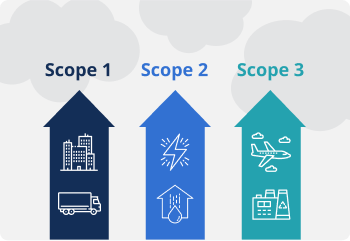
Greenhouse Gas Accounting Course OverviewGreenhouse Gas (GHG) Accounting (which includes carbon accounting) refers to the process of calculating the total GHGs emissions produced directly & indirectly from business operations and other organizational activities. With climate change becoming an increasingly important issue for industry, government, and society at large, GHG Accounting has become a crucial element for maintaining regulatory compliance amongst increasing climate and ESG disclosure regulations, as well as meeting stakeholder expectations for corporate action on climate change.This course covers an overview of GHG Accounting and the underlying science of Greenhouse gasses, their impacts, and the risks they present to the global economy. We discuss the key principles of GHG accounting set forth by the GHG Protocol and the steps in setting operational and legal boundaries. From there, we dive into scope 1, 2, 3 emissions and discuss how to collect and organize data to calculate all emissions scopes as accurately as possible. Finally, we highlight how corporations and investors use this information and interpret emissions reports to better understand a company’s underlying risks and opportunities. Greenhouse Gas Accounting Learning Objectives Upon completing this course, you will be able to: Explain GHG accounting, why it’s an important corporate issue, and how investors and corporations generally use this information.Recognize the connection between GHG emissions, global warming, & climate risks from regulatory, scientific, & financial perspectives.Describethe overall process for calculating corporate GHG emissions and perform basic calculations.Analyzeand interpret an emissions report.Leveragereliable and relevant resources to enhance skills within the field. Who Should Take This Course?This course is perfect for investment professionals, management consultants, and financial analysts of all walks, as GHG accounting and disclosure is an increasingly important consideration for all companies, particularly public issuers.

YouTube
Instructor: Dr. Babu Viswanathan, Department of Mechanical Engineering, IIT Madras. This course focuses on the nature of aircraft engines, the various components in the engine, how these engines operate and how do we do thermodynamic calculations relating to the engine. Topics covered in this course include One dimensional flows, Normal shock waves, Flow with heat addition, Flow with friction, Quasi one-dimensional flows, Oblique shock waves, Prandtl-Meyer flow, Turbojet engine, Calculations for thrust and fuel consumption, and Ramjets.

YouTube
Learn to play the iconic fingerstyle guitar piece "Classical Gas" with this comprehensive 35-minute tutorial. Master the intricate techniques and arrangements of this classic composition, following along with on-screen tablature. Gain insights into fingerpicking patterns, chord progressions, and melodic embellishments that make this piece a favorite among guitarists. Download the free tablature from the provided link to enhance your learning experience. Suitable for intermediate to advanced players looking to expand their fingerstyle repertoire and challenge their skills with a timeless guitar instrumental.

YouTube
COURSE OUTLINE: The course introduces compressible flow and its constitutive equations. The physical concepts behind isentropic flows, area-Mach number relation etc will be discussed with practical problems in mind. Properties of shocks and expansions are important parts of this course. All the numerical examples will be in SI units.

Udemy
How Digital Technologies Will Impact the Oil and Gas Industry What you'll learn: Definitions of digital terminologyLeading digital technologies impacting oil and gasPace and nature of impacts of digital technologies on oil and gasManagement challenges of adopting digital innovations in oil and gas Digital technologies are poised to make an impact on the oil and gas industry, but when? What will be the impacts? Which technologies will have the greatest impact? How big will the impact be? How will these technologies be best implemented? How can companies, suppliers, regulators and employees prepare for these changes? What does this mean for your oil and gas career?The combination of COVID19 and the pressures to reduce fossil fuel emissions is creating great pressure on the industry to modernize as much and as fast as possible. Digital tools are among the few remaining ways that the industry can improve costs, productivity and climate impacts with one stroke.This course (Version 3.0) is the on-line version of the one-day in-person seminar offered by the course instructor to oil companies and services companies around the world. Described as “the definitive guide to preparing your career for digital in oil and gas”, Digital Oil and Gas is a one-stop place to learn about digital in the industry.Participants learn the terminology and backstory to digital innovation in the industry, a framework for thinking about digital technologies, the maturity and impact of leading technologies, and the likely opportunities in upstream, midstream and downstream. The instructor holds regular office hours via a Facebook group exclusively for Udemy students to answer questions about the course, discuss hot industry topics, and interview guests. The course is based on the bestselling book, ‘Bits, Bytes, and Barrels:The Digital Transformation of Oil and Gas’, available on Amazon, Audible, iTunes and many other on-line book shops.

YouTube
Learn to play Tommy Emmanuel's iconic arrangement of "Classical Gas" in this comprehensive guitar tutorial. Dive deep into the intricate fingerpicking techniques, chord progressions, and melodic nuances that make this rendition so captivating. Follow along with detailed explanations, step-by-step instructions, and on-screen tablature to master each section of the piece. Explore the unique fingerstyle approach, harmonics, and percussive elements that Emmanuel incorporates into his performance. Suitable for intermediate to advanced guitarists, this lesson breaks down the entire arrangement, allowing you to gradually build your skills and confidence in playing this challenging and rewarding piece.

YouTube
Aprimore seu conhecimento em dinâmica dos gases através de uma série abrangente de questionários oferecidos pela Universidade de Brasília. Ao longo de 10 horas de estudo, explore 14 conjuntos de questões cuidadosamente elaboradas, cobrindo diversos aspectos desta disciplina fundamental da engenharia. Teste sua compreensão, identifique áreas para aprofundamento e consolide seu entendimento dos princípios e aplicações da dinâmica dos gases.

YouTube
Explore the fundamental concepts of compressible flow in this comprehensive lecture on Gas Dynamics. Delve into the preliminary aspects of this complex subject, gaining valuable insights into the behavior of gases under various conditions. Enhance your understanding of fluid mechanics and thermodynamics as you examine the principles that govern high-speed gas flows. Ideal for engineering students and professionals seeking to expand their knowledge in aerospace, mechanical, and chemical engineering applications.
YouTube
Explore career development strategies and management insights specifically tailored for security engineering professionals in this 47-minute conference panel discussion from Security BSides San Francisco 2025. Learn from a diverse panel of experienced engineers and industry leaders including Josh Liburdi, Elle McKenna, Sarai Rosenberg, and Andrew Kline as they share candid stories and practical advice about navigating career growth in the cybersecurity field. Discover how to identify advancement opportunities, overcome common industry challenges, and position yourself for sustained success in security engineering roles. Gain valuable perspectives on both the rewarding aspects and potential pitfalls of career progression in cybersecurity, with real-world examples and actionable strategies from professionals who have successfully navigated various career paths in the security industry.

Udacity
Build the skills needed to outsmart cyber threats. This Nanodegree teaches you how to secure infrastructure, assess vulnerabilities, and apply top industry practices to protect your organization from digital attacks.

edX
The Empathetic Engineer is a course that will enhance your capacity to harness your technology and problem-solving skills to deliver high impact, innovative solutions that address compelling social and environmental needs. It is a course that puts people, planet and nature at its core, enabling you to generate new levels of value for the markets or communities you serve, without compromising our world today or in the future. There has never been a more exciting time for engineers to make an impact at scale. We have a perfect storm of need and technological capability. We have the immense challenge of climate change, alongside a desperate need to create a more sustainable and equitable model of consumption and production. But we are also at the top of a wave of innovation, the likes of which have not been seen for around 120 years, where many distinct areas of technological progress are transforming our capacity to address the immense challenges we face. The challenges we face are systemic and our responses must be, too. Week by week, the course will take you through the 6 phases of the process we use, from first scoping a challenge you want to focus upon, researching it, drawing on those insights to generate a clear set of goals and ambitions, igniting your creative capacity to develop novel and exciting concepts, selecting, testing and refining them along with the business model before implementing an innovative solution, that addresses a compelling need. At the end of the course, you should be able to: Demonstrate theoretical and practical understanding of the different stages of the empathetic engineering approach in the context of engineering design projects. Analyse the socio-cultural, environmental, and economic factors that need to be considered in the given context. Apply the principles, methods and tools to an engineering design project to deliver more effective and measurable outcomes. Optionally, develop a project proposal that spans technological, socio-cultural, environmental and economic systems, including how the proposal creates and captures value for each of the relevant stakeholders. That is our goal, and we look forward to going on this journey together.