

Courses
Discover thousands of courses from top institutions and platforms worldwide
Level
Course Type
Duration

YouTube
Explore the world of Point-of-Care Ultrasound (POCUS) for young internists in this informative webinar presented by Prof. Juan Torres Macho, Chair of EFIM Ultrasound Working Group and Head of Internal Medicine Department at the Hospital Universitario Infanta Leonor- Virgen de la Torre in Madrid. Gain valuable insights from an expert in POCUS who has extensive experience lecturing at national and international events. Discover the applications and benefits of POCUS in internal medicine practice, and learn how this technology can enhance diagnostic capabilities and patient care. The 1-hour and 12-minute session provides a comprehensive overview tailored specifically for young internists looking to incorporate ultrasound techniques into their clinical practice.

YouTube
Gain comprehensive insights into Pulmonary Hypertension through this 1-hour 21-minute webinar organized by the Young Internists' Section of the European Federation of Internal Medicine (EFIM). Learn from Prof. Alberto Marra, an expert from the Department of Translational Medical Sciences at Federico II University in Naples, as he provides a primer on Pulmonary Hypertension specifically tailored for internists. Explore key concepts, diagnostic approaches, and management strategies for this complex condition, enhancing your understanding and clinical skills in dealing with patients suffering from Pulmonary Hypertension.

YouTube
Explore a comprehensive webinar on Systemic Sclerosis tailored for internists, presented by Prof. Carina Mihai from the University Hospital in Zurich, Switzerland. Organized by EFIM Young Internists and moderated by Dr. Max Schuller from the Medical University in Graz, Austria, this 1-hour and 21-minute session provides a thorough introduction to the topic. Gain valuable insights into the complexities of Systemic Sclerosis and its relevance to internal medicine practice. Whether you missed the live event or wish to revisit the material, access the full recording to benefit from the expert presentation and engaging discussions that followed.

YouTube
Dive into a comprehensive webinar on acute pericarditis tailored for internists, presented by the EFIM Young Internists' Section. Learn from Prof. Antonio Brucato of the University of Milan, Italy, as he delivers an in-depth lecture on this critical topic. Gain valuable insights into the diagnosis, management, and treatment of acute pericarditis, enhancing your clinical knowledge and decision-making skills. Explore the latest research, best practices, and clinical guidelines in this 1-hour and 17-minute session, designed to equip internists with essential information for effectively handling cases of acute pericarditis in their practice.

YouTube
Explore the fascinating journey of Lisa Sanders, MD, FACP, from journalist to internist in this 35-minute TEDMED Conversation. Discover how an unexpected encounter with a life-saving physician inspired her career change, and learn about her ongoing roles as a writer and teacher. Gain insights into Sanders' efforts to inspire the next generation of internists as she discusses her experiences with host Kelly Thomas, PhD. Delve into topics such as the mystery of Long COVID, diagnostic challenges in medicine, and the importance of storytelling in healthcare. Access related resources, including Sanders' New York Times column, books on medical mysteries, and information about Yale's Long COVID Program and Internal Medicine Residency Writers' Workshop.

YouTube
Learn from Dr. Ilana Richman, a general internist and health services researcher, in this 29-minute lecture exploring the effectiveness of emerging breast cancer screening technologies and preventive services. Gain insights into the latest developments in breast cancer detection methods, their practical applications, and their value in modern healthcare as presented at the Yale Cancer Center.

XuetangX
This online course aims to help students to learn the etiology, pathogenesis, pathological changes, progress and outcomes of diseases. This course will provide the theoretical basis for the diagnosis and treatment of disease. Hence, it is the bridge between basic science and clinical medicine and the very fabric that underpins clinical medical practice. we insist on setting the curriculum objectives and optimizing the curriculum structure in the perspective of Competency-based Medical Education(OBE), and effectively help students learn actively Strengthen the cultivation of students' competence.

YouTube
Dive into the world of React.js with this comprehensive conference recording from React Amsterdam 2018. Explore a diverse range of topics presented by industry experts, including reactive programming, state management, GraphQL integration, and component development. Learn how to leverage D3 with React, create inclusive applications, and scale GraphQL on AWS. Discover new approaches to React 16, mixed-mode React, and the latest in open-source developments. Gain valuable insights and practical knowledge to enhance your React.js skills and stay up-to-date with the latest trends in the React ecosystem.

YouTube
Embark on a comprehensive journey through the fundamental principles of chemistry with this 8-hour video series. Explore a wide range of topics, from the basics of matter and atomic theory to advanced concepts like quantum mechanics, thermodynamics, and electrochemistry. Learn about chemical bonding, stoichiometry, gas laws, and solution chemistry. Dive into the intricacies of acid-base reactions, redox processes, and nuclear chemistry. Gain practical skills in chemical nomenclature, problem-solving, and data analysis. Ideal for high school and college students, as well as curious beginners, this series provides a solid foundation in the central science, preparing you for further studies or simply satisfying your scientific curiosity.

XuetangX
General ChemistryChapter 1: The Foundations of Chemistry1.1 Basic Concepts1.2 Gases, Liquids and Solutions1.3 Errors and Significant DigitsChapter 2: Atomic Structure and the Periodic Properties of Elements2.1 The Law of the Motion of Microscopic Particles2.2 The Schrödinger Equations2.3 Radial Distribution Functions2.4 Angular Distribution Functions2.5 Factors Effecting Electron Energy2.6 The Periodic Properties of ElementsChapter 3: Covalent Bond Theories3.1 Basic concepts of Chemical Bonds3.2 Lewis’ Theories3.3 Valence Bond Theories3.4 Hybrid Orbital Theories3.5 Valence Shell Electron Pair Repulsion Theories3.6 Molecular Orbital TheoriesChapter 4: Crystal Types and Intermolecular Forces4.1 Crystal Types4.2 Molecular Crystal and Intermolecular Forces4.3 Ionic Crystal and Ionic Bonds4.4 Polarization of Ions4.5 Metallic Crystal and Metallic BondsChapter 5: Preliminary Chemical Thermodynamics5.1 Basic concepts of Chemical Thermodynamics5.2 First Law of Thermodynamics5.3 Third Law of Thermodynamics5.4 Second Law of ThermodynamicsChapter 6: The Rates of Chemical Reactions6.1 Chemical Reaction Rate and Expression6.2 Effects of External Conditions on Reaction RateChapter 7: Chemical Equilibria7.1 Chemical Equilibrium Constant7.2 Shifting of Chemical EquilibriumChapter 8: Acids & Bases Equilibrium8.1 Electrolyte Solution Theories8.2 The Development of Acids & Bases Theories8.3 Weak Acids & Bases Ionization Equilibria8.4 Buffered SolutionChapter 9: The Equilibrium of Precipitation9.1 The Equilibrium of Precipitation9.2 Shifting of The Equilibrium of Precipitation Chapter 10: Oxidation-Reduction Reactions10.1 Oxidation-Reduction Reactions10.2 Primary Cells and Electrode Potential10.3 Thermodynamics of Cell Reactions and The Factors Affecting Electrode Potential10.4 The ApplicationsChapter 11: Coordination Compounds11.1 Basic concepts of Coordination Compounds11.2 Stereochemistry of Coordination Compounds11.3 Bonding Theories of Coordination Compounds — Valence Bond Theories11.4 Bonding Theories of Coordination Compounds — Crystal Field Theories11.5 Stability and Equilibrium Coordination CompoundsChapter 12: Elemental Commonality12.1 The Origins of Elements12.2 The Main Group Elements — s-block12.3 The Main Group Elements — p-block12.4 The Transition Metal Elements — d-block and ds-block12.5 The Rare Earth Elements — f-block
Coursera
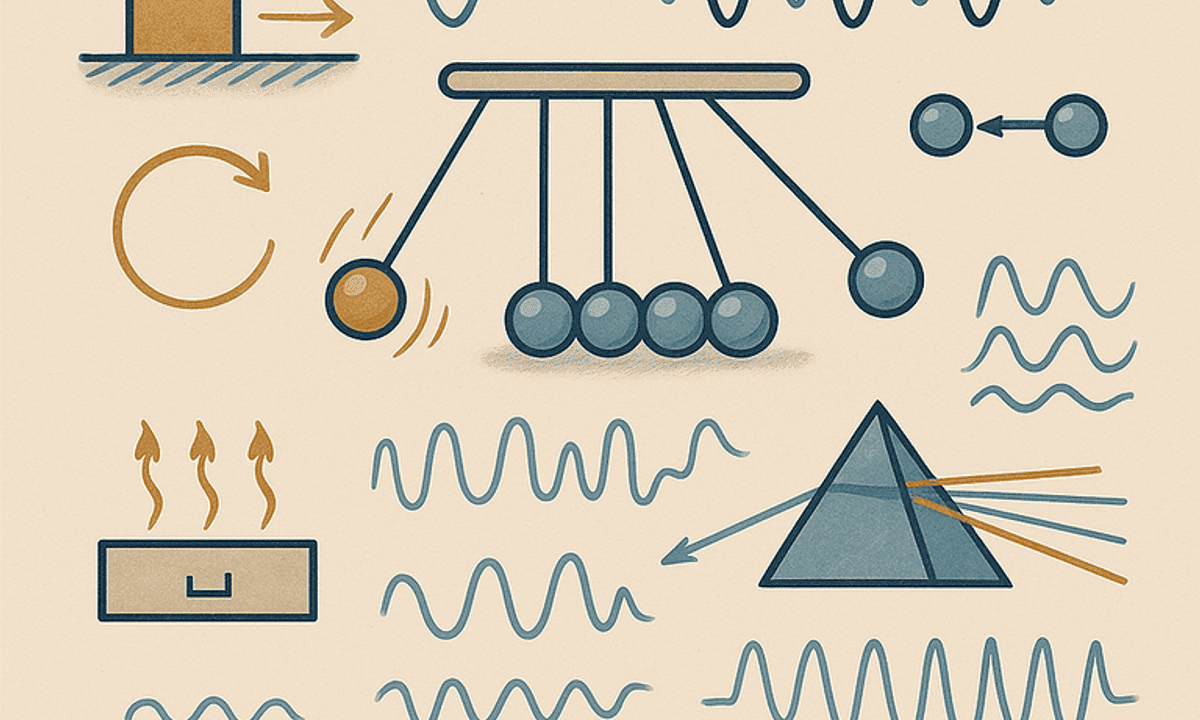
Build a comprehensive foundation in fundamental physics principles that govern the natural world. This course provides essential expertise in classical mechanics, thermodynamics, and optics, offering practical frameworks to analyze and explain diverse physical phenomena through quantitative approaches. Learn to apply Newton's laws to complex scenarios, understand energy and momentum principles, and explore wave mechanics through simple harmonic motion. Master the first and second laws of thermodynamics with real-world applications, from microscopic atomic systems to massive engines. Discover optical phenomena including interference, diffraction, and polarization of electromagnetic waves. Whether you're pursuing engineering, physical sciences, or technical careers requiring analytical problem-solving, this course equips you with the fundamental physics knowledge used by scientists and engineers to understand, predict, and optimize physical systems across all scales of nature.

Study.com
Use this self-paced course to explore the field of anthropology. You can study these short lessons and quizzes at any time to catch up on information you missed in class, study for upcoming exams, bring up your grades or check your understanding of fundamental anthropology topics.
Coursera
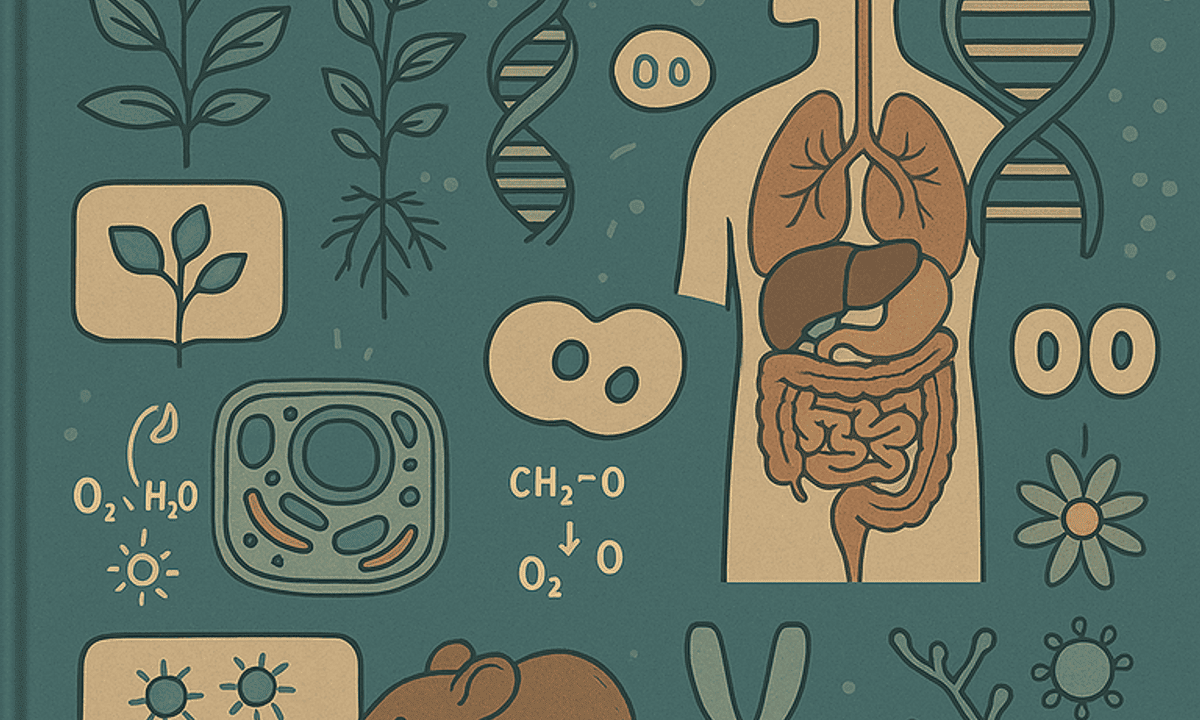
Build a strong foundation in biological sciences—from molecular mechanisms to complex physiological systems. This course covers essential concepts in cell biology, genetics, and human anatomy, providing practical frameworks to explore life processes through scientific inquiry and experimentation. Learn to apply the scientific method, understand cellular structures and energy transformations, and master genetic principles from Mendelian inheritance to epigenetics. Explore biotechnology applications such as recombinant DNA, genetic engineering, and cloning that drive modern medicine and research. Study human systems—circulatory, respiratory, digestive, nervous, endocrine, immune, and reproductive—to see how they maintain homeostasis and adapt to change. Gain expertise in cell division, cancer biology, and immune defenses. Whether you aim for a career in medicine, health sciences, biotechnology, or research, this course equips you with the biological knowledge and analytical skills needed to understand and solve challenges at molecular, cellular, and organismal levels.

MIT OpenCourseWare
8.962 is MIT's graduate course in general relativity, which covers the basic principles of Einstein's general theory of relativity, differential geometry, experimental tests of general relativity, black holes, and cosmology.

Swayam
Microbiology is the study of a diverse group of microscopic organisms such as bacteria, viruses, fungi and protozoa. They are generally too small to be seen without the use of microscope and hence these life forms are called the microorganisms or the microbes. They are almost everywhere and affect almost all aspects of our lives. This is a general microbiology course that is intended for students to impart the knowledge of microbial life. The course structure is based on presenting the fundamentals of microbiology i.e. the biology of bacteria, fungi, viruses and protozoa, their classification, bacterial genetics, mode of replication, bacterial photosynthesis, bacterial fermentation, microbial food spoilage and various methods of food preservation. The students will also be introduced to the microbial pathogenesis of various infectious agents that cause diseases in humans and prevention of the infection, host resistance and immunity etc.

XuetangX
General chemistry, serves as the very first chemistry course in college, builds the fundamental background for all the following courses like inorganic, organic, analytical and physical chemistry. These classes mainly discusses about the development history of chemistry. The role chemistry play in the modern world: daily life, school, factory etc., and the current situation and development prospect of chemistry. Moreover, it also includes the stoichiometry of compounds and chemical reactions, electronic structure of atoms and molecules; chemical bonding, periodic table of elements; electronic structure of atoms and molecules; correlation with the chemical reactivity of common elements, inorganic and organic compounds. Overall, the general chemistry, as a significant course, helps the students to enter the chemistry world.

Swayam
This course attempts to introduce to the nature, fields and application of psychology. Also contents cognitive process, e.g. learning and memory problem solving. In this course Conative processes involved - introduction to motivation. Freudian psychoanalysis, type and trait ; humanistic approach from personality. Students will also gain knowledge about emotions that help them to develop emotional intelligence. It also focuses on individual differences, cognitive, moral and psycho-social developmental aspects. Application of psychology in different areas also covered in this course.

YouTube
Explore a comprehensive general microbiology course covering food and water microbiology, industrial applications, and bacterial classification. Delve into food processing, preservation, and safety, including fermentation and spoilage. Examine water ecosystems, testing methods, and wastewater treatment processes. Learn about various bacterial groups, their characteristics, and identification methods using Bergey's Manual. Discover industrial microbiology concepts, including fermentation techniques, bioreactor types, and enzyme immobilization. Gain insights into bacterial growth patterns and different culture methods used in microbiology research and industry.

MIT OpenCourseWare
This course focuses on contributions of biochemistry toward an understanding of the structure and functioning of organisms, tissues, and cells. Topics include: - Chemistry and functions of constituents of cells and tissues and the chemical and physical-chemical basis for the structures of nucleic acids, proteins, and carbohydrates. - Basic enzymology and biochemical reaction mechanisms involved in macromolecular synthesis and degradation, signaling, transport, and movement. - General metabolism of carbohydrates, fats, and nitrogen-containing materials such as amino acids, proteins, and related compounds. NOTE: The first half of this course, taught by Prof. Yaffe, is available on the MITx platform as {{% resource_link "ecc701aa-4694-48fe-bf33-5234fe26ded2" "*7.05x Biochemistry: Biomolecules, Methods, and Mechanisms*" %}}. This OCW website provides content primarily from the second half with Prof. Vander Heiden, which focuses on metabolism.

Coursera
This course aims to introduce the novice learner to the essential concepts of animal histology, focusing on the structure and function of tissues in the body. Histology plays a vital role in understanding how tissues support and maintain the organism’s functions, and this course highlights their importance in health and disease. The course will cover various types of animal tissues, each with its unique structure and role. Each week, the course will explore one specific tissue type, such as epithelial tissue, glands, connective tissue, cartilage, bone, muscle tissue, nervous tissue, and the cardiovascular system. The course aims to provide a general understanding of how these tissues are structured and how they contribute to the overall function of the animal body. The role of each tissue in maintaining health, supporting physiological functions, and responding to injury or disease will also be discussed. This course will introduce the key features of each tissue type, its functions in the body, and the importance of histological knowledge in areas such as animal health, disease diagnosis, and research. By the end of the course, learners will have a basic understanding of the microscopic structures of animal tissues and their vital roles in the body.