

Courses
Discover thousands of courses from top institutions and platforms worldwide
Level
Course Type
Duration

YouTube
Explore the fascinating world of geophysics in this 21-minute video featuring UCLA scientist Jon Aurnou. Delve into the study of fluid dynamics associated with Earth's core and other planetary bodies in our solar system. Witness intriguing demonstrations in the UCLA spin lab as Aurnou and his team showcase the instruments used to study these complex systems. Gain insights into the cutting-edge research being conducted in geophysics and planetary science, and discover how scientists like Aurnou are unraveling the mysteries of our planet and beyond.

The Great Courses Plus
An award-winning professor and expert geophysicist presents an unbiased investigation into energy sources.

YouTube
Embark on a captivating journey through space exploration with a geophysicist astronaut as he recounts his experiences from two remarkable space missions. Discover the intricacies of training, planetary exploration, and the final Space Shuttle mission to the Hubble Space Telescope. Gain insights into life aboard the International Space Station, including floating in microgravity and conducting spacewalks. Learn about cutting-edge scientific instruments like the Alpha Magnetic Spectrometer and its quest to understand dark matter. Explore the challenges of space station assembly, witness breathtaking views of Earth from orbit, and experience the thrill of a Space Shuttle landing. This 39-minute talk offers a unique perspective on the intersection of geoscience and space exploration, providing a comprehensive look at the adventures and scientific pursuits of a modern-day astronaut.

YouTube
Explore the legacy of renowned geophysicist Edward Crisp Bullard in this 1-hour 3-minute lecture presented at the 2019 AGU Fall Meeting. Delve into the groundbreaking work and life of Bullard as honored by the Edward Bullard Lecture of the GPE Section. Gain insights from primary convener Catherine L Johnson of the University of British Columbia and convener France Lagroix of IPGP, who also serve as chairs for this prestigious oral presentation. Discover the latest advancements in geophysics and Earth sciences as celebrated through this esteemed lecture series, highlighting the continued impact of Bullard's contributions to the field.

YouTube
Dive into a captivating 22-minute podcast episode exploring the groundbreaking discoveries of marine geophysicist Kathy Crane. Learn about her pioneering work in the 1970s, which led to the discovery of hydrothermal vents on the Galápagos Rift along the East Pacific Rise. Follow Crane's journey as one of the first women in her field, facing challenges such as scientific sabotage and the need to develop new tools for deep-sea exploration. Experience the thrill of her descent in the submersible Alvin, where she encountered bizarre creatures thriving in the extreme environment of hydrothermal vents. This AGU podcast episode, part of the Third Pod from the Sun Centennial series, offers a compelling blend of scientific adventure, personal perseverance, and the excitement of uncovering rifts beneath the ocean floor.
YouTube
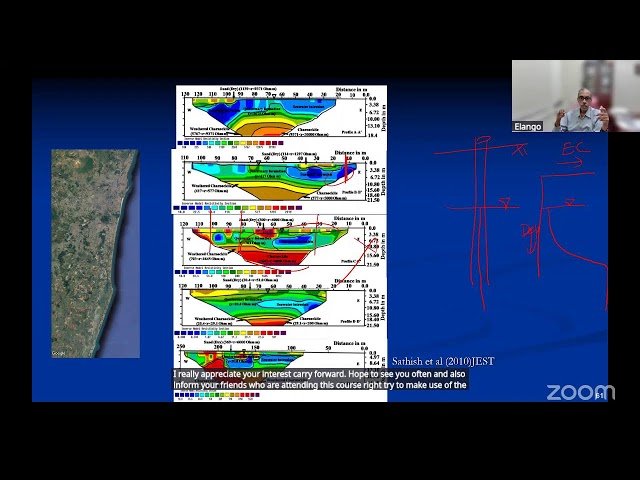
Learn about geophysical exploration methods in this comprehensive lecture delivered by Prof. Elango Lakshmanan from NPTEL-NOC IITM. Explore the fundamental principles and techniques used in geophysical surveying to investigate subsurface structures, locate mineral deposits, and understand geological formations. Gain insights into various exploration methods employed by geologists and geophysicists to study Earth's physical properties and composition through non-invasive techniques.
YouTube
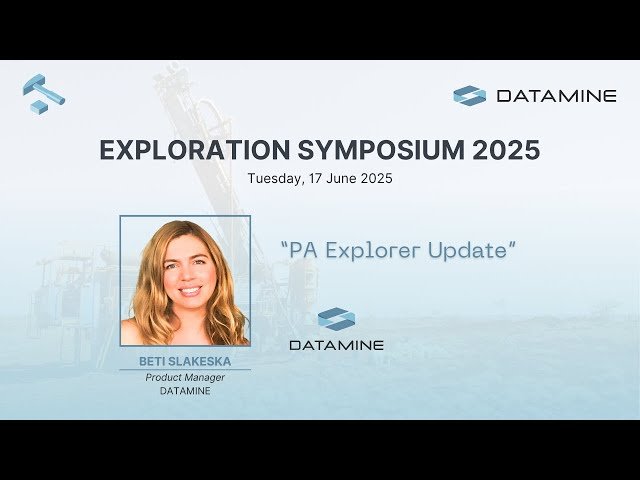
Watch this 17-minute conference presentation where Beti Slakeska, Product Manager at Datamine, delivers an update on PA Explorer geophysical processing software. Learn about the latest developments and innovations in exploration technology from an experienced geophysicist with over 15 years of expertise in geophysical data and methods. Discover how PA Explorer enhances geophysical data processing capabilities as part of Datamine's comprehensive geophysical solutions suite. Gain insights from industry expertise in geophysical software development and data management, presented as part of the Exploration Symposium 2025 series featuring leading professionals from across the mining and exploration industry.

YouTube
Explore the intersection of artificial intelligence and geophysics in this 25-minute conference talk delivered by Mikayla Sambrooks, a Geophysicist at Newmont Corporation. Gain insights into how AI is transforming the field of geophysics, from near-mine environments to brownfields and greenfields exploration. Discover the latest innovations and challenges in applying AI techniques to geophysical data analysis, interpretation, and decision-making processes. Learn from Sambrooks' experience across various geophysical methods and her work with Newmont's global Discovery Support and Innovation team. Understand the potential impact of AI on improving exploration efficiency, accuracy, and resource discovery in the mining industry.

YouTube
Explore the revolutionary impact of plate tectonics theory in this 2-hour conference session from the 2017 AGU Fall Meeting. Hear from leading experts as they reflect on the 50-year legacy of this groundbreaking concept in Earth sciences. Gain insights from renowned geologists and geophysicists including Donald W Forsyth, Lynn R Sykes, Dan P McKenzie, John G Sclater, Tanya M Atwater, Richard G Gordon, and Peter H Molnar as they discuss the evolution and current understanding of plate tectonics. Delve into the historical context, major discoveries, and ongoing research that continue to shape our comprehension of Earth's dynamic processes.

YouTube
Explore the cutting-edge field of seismo-geodesy and its impact on understanding great earthquake ruptures in this Gutenberg Lecture from the AGU Fall Meeting 2011. Presented by Thorne Lay from the University of California, Santa Cruz, the 81-minute talk delves into the latest advancements in earthquake research. Gain insights into how modern seismological and geodetic techniques are revolutionizing our comprehension of massive seismic events. Learn about the latest findings, methodologies, and implications for earthquake hazard assessment and prediction. Suitable for geophysicists, seismologists, and earth scientists interested in the intersection of seismology and geodesy in studying large-scale tectonic processes.

YouTube
Explore cutting-edge research on Earth's core formation, composition, and magnetic field dynamics in this 50-minute conference session from the AGU Fall Meeting 2019. Delve into the latest advancements in numerical geodynamo models and data-based constraints on global magnetic field structure and evolution. Gain insights from leading experts, including primary convener Kanani K M Lee and co-conveners Dominique Weis, Catherine Johnson, and France Lagroix, as they present progress, current understanding, and open questions in the field. Chaired by Scott D King and Sebastien Merkel, this session offers a comprehensive overview of core and dynamo research, essential for geologists, geophysicists, and Earth scientists seeking to expand their knowledge of our planet's inner workings.

YouTube
Explore the complex aftermath and scientific implications of the April 2010 magnitude 7.2 earthquake that struck near the California-Mexico border in this 53-minute press conference from the AGU 2010 Fall Meeting. Delve into the observations and analyses conducted by experts from NASA, the U.S. Geological Survey, California Geological Survey, and the Center for Scientific Research and Higher Education at Ensenada. Discover how this seismic event, the largest in the region in nearly 120 years, provided unique insights into earthquake processes along the Pacific/North American tectonic plate boundary. Learn about the application of new remote sensing and image analysis techniques that revealed surprising findings and aided field geologists in mapping the rupture. Examine the potential increased risk for additional large earthquakes throughout Southern California as a result of this event. Gain valuable knowledge from presentations by geophysicist Eric Fielding, geology professor John Fletcher, software engineer Jay Parker, and geologist Jerry Treiman as they share their expertise on this significant geological occurrence.

YouTube
Explore the fascinating intersection of history and geophysics in this 24-minute AGU podcast episode. Discover how scientists mined 16th-century ship logs to create the first-ever magnetic field map spanning four centuries. Learn about the challenges of transforming historical measurements into cutting-edge scientific data, as recounted by the historian who spearheaded the project. Delve into topics such as Earth's magnetic field, the intricacies of handling ship logs, the role of geophysicists, and the creation of a global field map. Gain insights into the Age of Sail navigation techniques and enjoy a touch of maritime culture with sea shanties. Produced by Jenessa Duncombe and mixed by Kayla Surrey, this episode offers a unique blend of scientific discovery and historical exploration.

YouTube
Explore cutting-edge applications of applied geophysics in this comprehensive conference session from the 2012 AGU Fall Meeting. Delve into market applications of various geophysical methods for groundwater investigations, mining exploration, and environmental surveys. Discover opportunities for applied geophysics in the petroleum industry and learn about the AfricaArray International Geophysics Field School's approach to mine planning challenges. Examine a case study on geophysical modeling of a Cu-Mo porphyry deposit at the Copper Flat Mine in New Mexico. Gain insights into the future of applied geophysics with discussions on microfabrication and the expanding marketplace for geophysical applications. This 2-hour session features invited talks and research presentations from leading experts in the field, providing valuable knowledge for geophysicists, geologists, and industry professionals.
YouTube
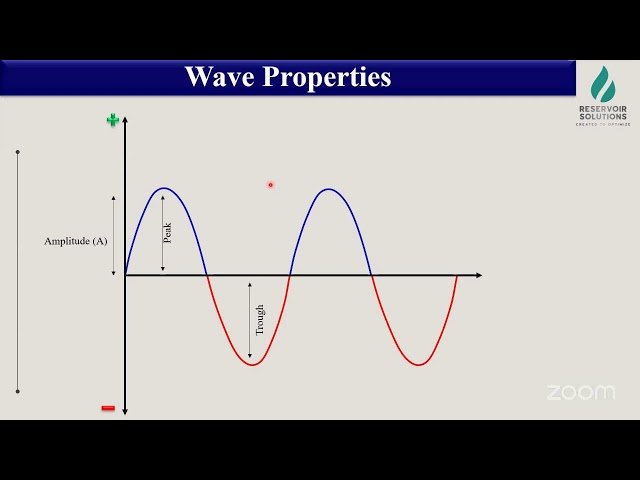
Learn advanced seismic interpretation techniques in this 17-minute webinar that builds upon foundational concepts to enhance your practical skills in analyzing subsurface geological structures. Explore sophisticated methodologies for interpreting seismic data, including advanced horizon picking, fault identification, and structural analysis techniques used in modern hydrocarbon exploration and reservoir characterization. Discover how to apply cutting-edge interpretation workflows to real-world seismic datasets, with emphasis on practical problem-solving approaches that geophysicists and petroleum engineers use in their daily work. Master the integration of seismic attributes with geological knowledge to improve interpretation accuracy and reduce exploration risk. Gain insights into industry best practices for quality control, uncertainty assessment, and collaborative interpretation workflows that are essential for successful subsurface projects in 2025 and beyond.
YouTube
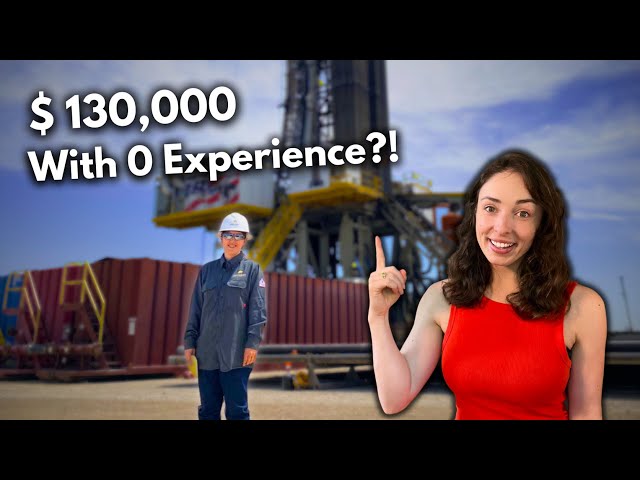
Explore the realities of working in the oil and gas industry through an in-depth interview with petroleum geologist Julia Astro in this comprehensive 2-hour and 23-minute video. Discover what daily life looks like for petroleum geologists, from exploring and producing natural resources to understanding the industry's role in the current energy landscape. Learn about the necessity of oil and gas in today's world, how companies are evolving during the energy transition, and emerging technologies like carbon capture. Gain insights into different types of geologists working in the field, including geophysicists and geochemists, while exploring career perks, educational requirements, and salary expectations. Address common myths about the oil and gas industry and understand the tools and techniques used to locate underground resources. Examine the industry's future prospects, climate considerations, and whether oil and gas represents a viable long-term career path. Access valuable resources for students and professionals, including information about the Houston Geological Society Student Expo, AAPG mentorship programs, internship opportunities, and top recruiting companies. Get practical advice on educational pathways, from bachelor's degrees to advanced degrees, and learn about networking opportunities through professional geological societies.
Udemy
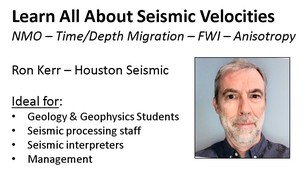
Introduction to 3D Seismic Velocities for Seismic Processing What you'll learn: The attendee will come to more fully understand the simplicities – and complexities – of seismic velocities.Why are velocities so critical in the seismic processing method? How are velocities used in time migration compared to depth migration?What are tomography and full waveform inversion? How do I understand this from a big-picture view? What is anisotropy? How can 5D interpolation be part of this?These a non-mathematical presentations, showing the basics. Concepts are shown so that the viewer will better understand how and what these velocity terms mean.This will help 3D seismic interpreters, geologists, geophysicists and seismic processors.How are nmo velocities picked? What are flat gathers? How can accurate or inaccurate velocities image my depth structure? This course is about seismic velocities, especially as related to seismic processing and 3Dseismic exploration. Each presentation contains hand-created graphics, illustrated to explain the concepts. The presentations are separated into 9 individual presentations. The users will better understand the importance of proper seismic velocities and how doing it wrong can severely harm your interpretation. But how using the right velocities, in the right procedures, can greatly help image the subsurface as well as find horizontal layering and vertical fractures.Parts 1 & 2:Introduction to standard NMOvelocities and multiples. How are velocities picked and how to avoid multiples.Parts 3-5:Fundamental differences between time migration velocities and depth migration velocities. Why depth migration is required for areas with lateral velocity variations. How migrated gathers are affected. What are velocity sags and pull-ups?How to build a traditional sub-salt velocity model.Parts 6 &7:Tomography and Full Waveform Inversion. How they are used in depth migration to improve psdm velocity fields. How are gathers affected before and after tomo and fwi? Simple graphics explain each concept.Parts 8 &9: Anisotropy. VTI, HTI. Anisotropy can be used to help find horizontal rock layering and vertical fracturing. How does anisotropy look on seismic data?Bonus - Part 10:merging multiple volumesAdditional Bonus! I narrate a real 2D land seismic project. You will see the geological motivation behind the project, the seismic acquisition and equipment, the key steps in the seismic processing and images of the final migration. You will understand why most areas of the results are terrific while a small portion is poorly imaged. The project is located in an area of sparse seismic activity - South Dakota in USA.

Skillshare
Unleash your creativity and learn how to create stunning digital art using the latest AI technology! This AI will interpret your sentences and create images in seconds. In this Skillshare class, you'll discover the power of Stable Diffusion "AI" and how it can transform the way you create artwork. From there, we'll dive into the nitty gritty details of creating better prompts to make the most engaging digital art possible. From the very basics, you'll learn how to create captivating prompts that lead to engaging digital art with a process called prompt engineering. By the end of this class, you'll have the skills to create breathtaking digital art in seconds with the help of AI. All you need is an internet connection and a willingness to learn! Enrol in our AI Digital Art Master Class today and discover the future of art creation. This class needs no knowledge of AI, Machine Learning, Data Science, Coding, Programming, Python, or anything else. We are starting from the absolute basics. All you need is an internet connection! ----------------------------------------- Will AI replace artists? While AI will most certainly transform the art world, it does not stand to replace artists anytime soon. AI can only really generate a product that is identical to what a human has created. But to create something truly novel is a process that requires creativity, inspiration and thinking outside the box. This is why human artists will always be special and unique, while AI can potentially create a perfect replica of a painting or song. AI has been used to compose music pieces and also write poetry. And they say in the future it will replace actors as well. It is so well-suited for tasks like these because of two reasons; The first one is since AI uses a vast database of pre-existing material, it needs no imagination of its own. Second, it mimics extremely human-like behavior, and thus can memorize and improvise. AI will not replace artists, but artists with AI will replace artists. Learn how to use AI to assist your creative process with free tools! ----------------------------------------- Get the Look Book ----------------------------------------- So what is AI good for? Get Inspiration for physical art pieces Make quick prototypes for clients Create more diverse ideas Try a different style of art Iterate faster on ideas Have fun Learn this fascinating tool that is just a few months old! (August 2022) ----------------------------------------- Who am I? Jesper Dramsch is a machine learning researcher working between physical data and deep learning. I am trained as a geophysicist and shifted into Python programming, data science and machine learning research during work towards a PhD. During that time I created educational notebooks on the machine learning contest website Kaggle (part of Alphabet/Google) and reached rank 81 worldwide. My top notebook has been viewed over 64,000 times at this point. Additionally, I have taught Python, machine learning and data science across the world in companies including Shell, the UK government, universities and several mid-sized companies. As a little pick-me-up in 2020, I have finished the IBM Data Science certification in under 48h. ----------------------------------------- Other Useful Links: My website & blog - https://dramsch.net The weekly newsletter - https://dramsch.net/newsletter Twitter - https://www.dramsch.net/twitter Linkedin - https://www.dramsch.net/linkedin Youtube - https://www.dramsch.net/youtube Camera gear - https://www.dramsch.net/r/gear
You've viewed all 18 courses
Try adjusting your filters to see more options