

Courses
Discover thousands of courses from top institutions and platforms worldwide
Level
Course Type
Duration

Coursera
Welcome to the comprehensive course on Process Plant Equipment and Materials for Construction. This course is designed to provide aspiring Engineers and professionals in the field with a deep understanding of the intricacies involved in designing, fabricating, and maintaining essential equipment for industrial processes. In the first part of this course, we will delve into the diverse world of process plant equipment and materials. From classification and layout considerations to mechanical and thermal properties affecting design, learners will explore the fundamentals of equipment selection and construction. Through case studies and real-world examples, participants will gain insights into the specialized requirements of various industrial sectors, including refineries, petrochemicals, power plants, and fertilizers. The course will cover essential topics such as metal forming processes, surface development, plate bending, and refractory applications, providing a solid foundation for further exploration into the intricacies of process plant construction. In the second part of the course, we will focus on the critical techniques of shell forming and tube bending, essential for the fabrication of process plant equipment components. Learners will delve into the principles and practices of metal forming processes, including sheet metal forming, plate bending, and dished end forming. They will also explore the intricacies of tube bending and pipe bending, mastering techniques to create efficient piping systems required in industrial facilities. Through hands-on exercises and demonstrations, participants will develop practical skills in shaping raw materials into intricate components, ensuring structural integrity and functionality in process plant equipment. The final part of the course will provide a comprehensive overview of the manufacturing lifecycle of pressure vessels, integral components of process plant equipment. Learners will gain insights into the types of pressure vessels, components, and manufacturing processes involved in their fabrication. From planning and sequencing to plate cutting, welding, refractory application, and post-weld heat treatment, learners will explore each stage of the manufacturing cycle in detail. Through case studies and practical examples, they will understand the importance of precision, quality control, and adherence to safety standards in ensuring the reliability and integrity of pressure vessels for Industrial applications. By the end of this course, participants will emerge with a holistic understanding of process plant equipment and materials, equipped with the knowledge and skills to excel in the material selection, fabrication, and maintenance of Industrial facilities. Join us on this journey as we unravel the complexities of process plant construction and empower you to make meaningful contributions to the field of Industrial Heavy Engineering. Target Learners: Working Professional of Mechanical, Manufacturing and Chemical Engineers Undergraduate students of Mechanical, Manufacturing & Chemical Engineering Students from Manufacturing and Automation Post-Graduate Students of Computer Integrated Manufacturing Practicing Engineers in Process Plant equipment Diploma students of Mechanical / Manufacturing

YouTube
Watch a 36-minute conference talk from YOW! 2015 where designer Kevin Lynagh demonstrates how ClojureScript can be effectively implemented in heavy industrial equipment interfaces. Explore practical applications of functional programming in complex systems as Lynagh, a specialist in user interface design, shares insights from real-world implementations. Discover how ClojureScript's capabilities can enhance industrial equipment operations while learning about the intersection of Lisp-based programming and industrial applications. Gain valuable perspectives on developing sophisticated user interfaces for industrial systems using functional programming paradigms, with concrete examples and implementation strategies presented by an experienced practitioner in the field.

YouTube
Learn how to design and layout an A-Frame for lifting heavy equipment in this 21-minute video tutorial. Explore the process of building a sturdy A-Frame structure using 2" square tubing, with dimensions of 6'6" at the base and 9'6" in height. Discover how this custom-built frame is designed to lift heavy equipment from the ground into the back of a pickup truck. Gain insights into the considerations for casters, chain fall, and lifting lug to ensure optimal functionality.

YouTube
Watch a detailed repair video showcasing the restoration of two massive Caterpillar 992K Loader lift cylinder barrels through expert machining, welding, and honing processes. Follow along as the repair process unfolds using specialized equipment including a Zayer Bed Mill, Sir Meccanica WS2 Portable Line borer, WIA 500i Weldmatic Welder, and Sunnen HTA-4100 Horizontal Hone. Learn how custom shop-made tools and precision engineering techniques are employed to machine the bore eye, perform bore welding, execute honing operations with both roughing and finishing passes, and complete final machining to exact specifications. Observe the complete repair cycle from initial setup through final finishing, demonstrating how industrial hydraulic components are restored to working condition in a professional machine shop environment.

Coursera
Welcome to the specialized course Heavy Manufacturing! In this comprehensive specialization, we will delve into the intricate techniques, advanced processes, and cutting-edge technologies essential for success in Heavy Manufacturing Industries. Our journey begins with an exploration of the casting process, covering sand casting to investment casting, where learners will discover principles and best practices. Next, we dive into forging, exploring types like closed die and open die forging, with practical demos. In welding, learners will understand fundamental procedures, weld joints, symbols, and minimize flaws through practical instruction. We focus on welding for process plant equipment, including SMAW, GTAW, and flux-cored arc welding, with practical exercises. Specialized welding and post-weld treatments like thermite welding, stress relieving, and tempering are covered to maintain integrity. Quality control, welding automation, and IoT 4.0 integration are explored, studying non-destructive inspections, standards, and regulations. Completing this specialization equips learners with the knowledge and experience to excel in heavy manufacturing, enhancing efficiency, reliability, and innovation in the industry. Join us to uncover the keys to success in heavy manufacturing technology and processes! Target Learners: Professionals & students in Mechanical, Manufacturing, Mechatronics, Robotics, and Automation.
Corporate Finance Institute
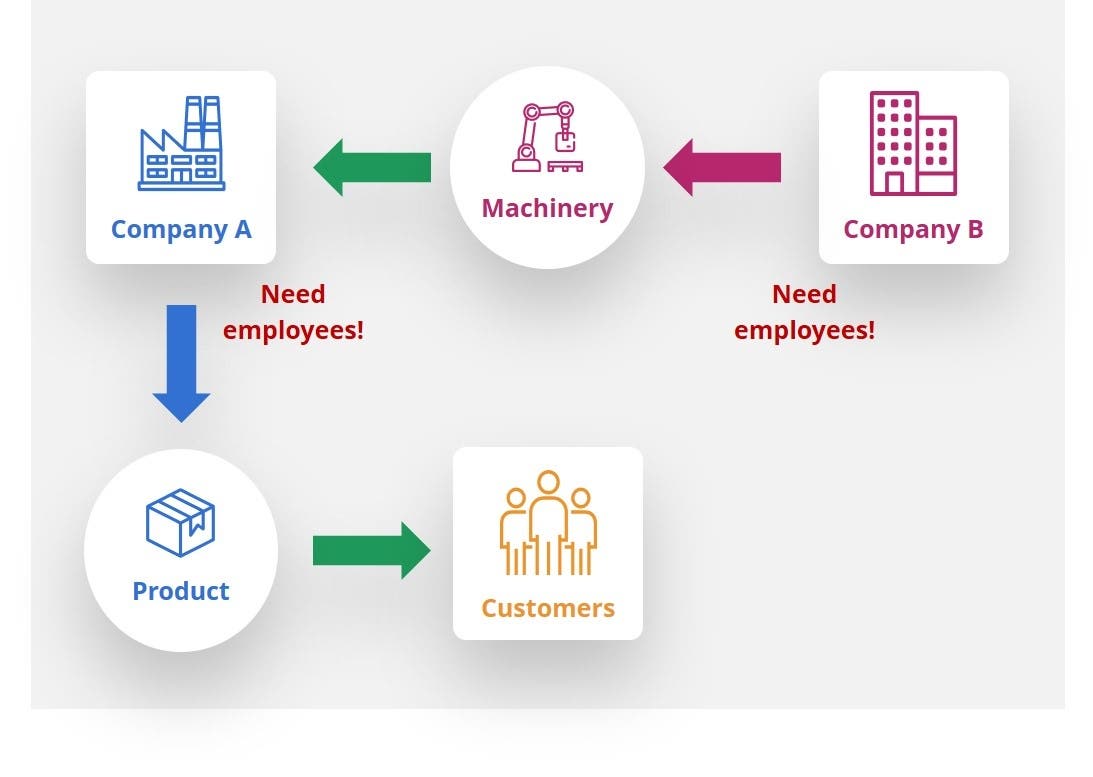
Equipment Finance Course Overview This Equipment finance course will explore the concepts behind non-real estate capital expenditures to grow fixed assets on the balance sheet. We will identify the sources of equipment financing to understand the different types of lenders before moving on to the differences and similarities between term loans, capital leases, and operating leases. This course will explain how security filings & public registries work concerning debt and collateral and how these differ for term loans and leases. We’ll look at eight critical criteria for analyzing and underwriting a transaction and how the different lending structures affect these criteria. After, we will walk through an example client with an operating lease and adjust financial statements to calculate adjusted lending ratios. Lastly, the course will cover additional sale-and-leaseback concepts, financing new and used equipment, and handling non-standard advances.Equipment Finance Learning Objectives Upon completing this course, students will be able to: Identify different financing options for non-real estate capital expenditures,Explain how security filings and public registries work,Define the differences and similarities between term loans, capital leases, and operating leases,Adjust financial statements for an example client that has an operating lease,Calculate adjusted lending ratios for borrowers that use operating leasesExplain financing structures for new and used equipment.Who should take this course? This Equipment Finance course is designed for beginner and intermediate-level lending professionals, including relationship managers, analysts, and credit adjudicators in commercial banking or equipment finance operations. This content is also highly relevant to loan brokers and small business banking professionals, who are involved in these types of transactions day-to-day. By covering the different elements of equipment finance in specific detail, you will be able to identify better solutions around lending structures for clients & prospects. The exercises and tools explored in this course will be useful for any financial analyst who wishes to work in credit analysis, commercial banking, and other areas of lending and credit evaluation.

Swayam
The demand of household electric equipment is increasing day by day as they have become the daily necessity for human beings to lead a comfortable life. Due to rapid development of technology in mechanization, different models of domestic equipment like geyser, microwave oven, refrigerator, air conditioner, washing machine etc. are available in the market. These machines have made household work much easier and faster. A breakdown in equipment is a possibility of misuse and mishandling. In order to avoid breakdown and defects of these devices regular maintenance is needed to reduce chances of failure. Maintenance of the domestic equipment is also necessary to keep it running smoothly and efficiently as well as for extending the longevity of the equipment. Therefore, understanding the machine capabilities and its operation is very important for optimal function of equipment. This course has been developed with a view to introduce different aspects of operating, maintaining and repairing various domestic electric equipment. Knowledge on maintenance of domestic equipment is very much essential for people to keep their household machine working at peak efficiency. Further, a deep insight into components, architecture, working principles, types, common faults and their troubleshooting is also provided, the information on which is very much needed for people working as a repair technician.

Udemy
Learn how electrical equipments operate and how they fit together into a network What you'll learn: Understand why the electrical power network looks the way it doesKnow all about the equipment used in the power networkBe able to design a basic electrical power networkUnderstand electrical clearances and how they are used to design equipmentsKnow how to calculate output voltages and currents using the transformer turns ratioKnow how electrical discrimination works and how it clears the fault by keeping the healthy electrical system connectedKnow the difference between insulators and conductorsUnderstand how the circuit breaker types change as the voltages and currents increaseUnderstand how a transmission overhead line is designed using electrical clearancesKnow how electrical power cables are designed, constructed and installedUnderstand how the low voltage system in a house is connectedIdentify the difference between grounded and ungrounded systemsKnow the difference between touch potentials and step potentials Electrical utilities around the world generate and transmit electrical energy that we all use for our everyday lives. This course starts off covering some basic subjects which are needed so that you can understand how the electrical power equipment's are designed, operated and installed. We then go on to study all of the mainequipment's that go in to an electrical power system, before finally seeing how the power network itself is designed and operated. The course consistsof the following sections :- CONDUCTORS AND INSULATORSCIRCUIT BREAKERSGROUNDINGNETWORK DESIGNLOW VOLTAGE SYSTEMSELECTRICAL CABLESOVERHEAD LINESTRANSFORMERSAt the end of the course you will understand all of the main elements within a power utilities network and understand how they operate together as one seamless system.

XuetangX
With the progress of equipment technology and the continuous updating and iteration of management theory, this course is synchronized with the forefront of existing enterprise equipment management. It is very suitable for the training scheme and teaching of mechatronics and robotics. In addition, modern production relies more and more on equipment, so it is more and more urgent to comprehensively master the technical status of equipment. At the same time, the equipment has a greater and greater impact on product quality, safety and environmental protection, energy consumption and so on. Therefore, strengthening equipment management is of great social and economic significance. In response to the "three education" reform of the Implementation Plan of National Vocational Education Reform, this course is carefully created by the three parties of "the colleges, enterprises and institutes", and specially invited Sheng Liu , an experienced expert of Chongqing Hailiang Copper Co., Ltd., researcher Junxiang Deng, an expert of Shenyang Institute of Special Equipment Testing, and Associate Professor Xi Hu, a postdoctoral of Nanjing University of Finance and Economics, to jointly write the online course script, according to the characteristics of higher vocational and technical education, we strive to be concise, practical, systematic and comprehensive in terms of material selection and content structure. In terms of content arrangement, in addition to introducing the traditional practices and beneficial experience of foreign developed countries in electromechanical equipment management, it also introduces the modern management work, which plays a practical guiding role.
YouTube
Learn about heavy-heavy-light asymptotics derived from thermal correlators in this 43-minute conference talk by Francesco Russo from the Bootstrap 2025 event hosted by ICTP-SAIFR. Explore advanced theoretical physics concepts as Russo presents his research on the relationship between thermal correlators and heavy-heavy-light asymptotic behavior, providing insights into conformal field theory and the conformal bootstrap program. Gain understanding of how thermal methods can be applied to extract asymptotic information in quantum field theory, particularly in the context of correlation functions involving heavy and light operators.

Coursera
This course covers the essential aspects of lifting and rigging operations in engineering. Beginning with an in-depth study of winches, pulley blocks, and related lifting mechanisms, learners gain fundamental knowledge and practical skills necessary for effective utilization in engineering scenarios. The module on cranes expands this knowledge by covering basics, configurations, and safety practices crucial for crane operations, including detailed insights into tower cranes and their operational considerations. Specialized handling of oversized and overweight cargos is addressed comprehensively, focusing on logistics and transport techniques using trailers, multi-axle systems, and SPMTs. Furthermore, the exploration of handling provisions and structural design highlights the design principles and procedures for creating robust structures and efficient handling solutions essential for diverse engineering projects. Overall, these modules equip learners with the expertise needed to navigate complex lifting challenges and ensure safety and efficiency in industrial settings. Target Learners: • Undergraduate students of Civil Engineering • Undergraduate students of Mechanical Engineering • Post-Graduate Students in Civil and Mechanical Engineering. • Practicing Engineers involved in heavy lifting in construction. • Faculties in Civil and Mechanical Engineering. • Professionals in construction industry • Engineers and project managers involved in large projects Prerequisites: • Basics of Civil Engineering • Basics of Mechanical Engineering • Basics of Engineering Mechanics • Understanding of Construction Techniques

YouTube
Explore the essential components of beekeeping in this comprehensive 4-hour and 30-minute tutorial series. Learn step-by-step processes for assembling beehive supers and frames, and gain insights into selecting appropriate bee feeders. Master the art of lighting a smoker and applying wood treatments to hive boxes. Discover innovative tools like cone swarm traps and pro nuc boxes, and receive expert advice on bee jackets and hive painting alternatives. Delve into honey harvesting techniques, including the use of refractometers for quality control. Examine various hive designs, such as the long hive with Langstroth frames, and learn about crucial mite treatments like Hopguard 3 and oxalic acid vapor. Get professional guidance on bear fence installation and explore gift ideas for fellow beekeeping enthusiasts through a virtual tour of a beekeeping supply store.
Coursera
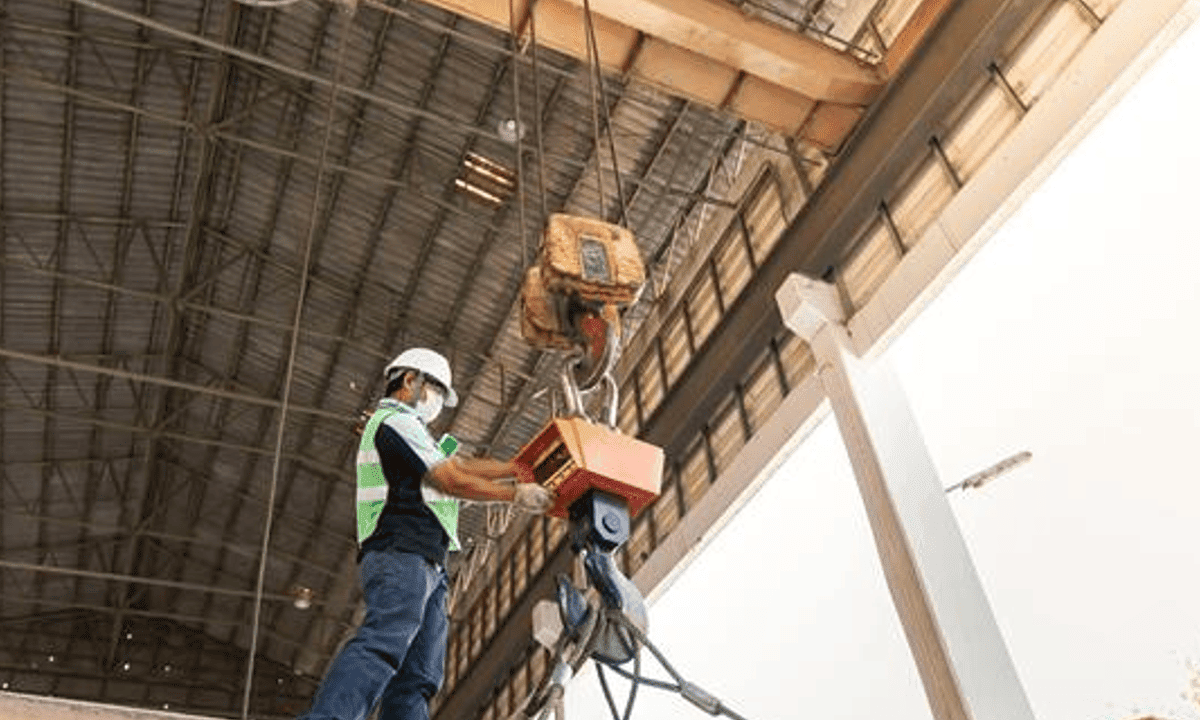
The Construction Equipment Maintenance & Safety specialization provides a detailed understanding of the best practices for maintaining construction machinery and ensuring workplace safety. To enhance performance and longevity, it covers preventive and corrective maintenance strategies for various equipment, including excavators, bulldozers, cranes, concrete mixers, and road-making machines. Learners will explore safety protocols, hazard identification, and risk management techniques to prevent accidents and ensure compliance with industry standards. The course also emphasizes the importance of equipment inspections, troubleshooting, and emergency response procedures, helping professionals optimize efficiency, reduce downtime, and create a safer working environment. Target Learners: Civil Engineering Students, Mechanical Engineering Students, Faculties and working professionals, Practicing Engineers in Construction projects

Coursera
This course covers the evolution and application of heavy lifting techniques across various sectors. It starts with an introduction to the significance and engineering concepts of heavy lifts, detailing advanced machinery and sector-specific applications. Fundamental concepts of force handling, including horizontal and vertical movements, forces and equilibrium, and load estimation, are explored through case studies. The course delves into friction mechanics, mechanical advantage, reeving, and the lever principle, providing essential knowledge for load management. It introduces lifting gears, covering shackles, wire rope slings, and spreaders, and explores hydraulic systems, various jacks, and strand jacks. Real-world applications, including the installation of sky bridges and other heavy lifting scenarios, are examined to highlight the practical utility of these advanced technologies. Target Learners: • Undergraduate students of Civil Engineering • Undergraduate students of Mechanical Engineering • Post-Graduate Students in Civil and Mechanical Engineering. • Practicing Engineers involved in heavy lifting in construction. • Faculties in Civil and Mechanical Engineering. • Professionals in construction industry • Engineers and project managers involved in large projects Prerequisites: • Basics of Civil Engineering • Basics of Mechanical Engineering • Basics of Engineering Mechanics • Understanding of Construction Techniques

Coursera
The specialization “Strategies for Heavy Lifting” consists of three courses: "Concepts of Heavy Lifting" "Machineries for Heavy Lifting and Design of Lifting Elements" and "Planning and Execution of Heavy Lifting." It provides a thorough exploration of heavy lifting techniques and rigging operations crucial in engineering. The program starts with basic engineering principles and advances to machinery and sector-specific applications, including power, hydrocarbon and construction industries. Key topics include force handling, friction mechanics, mechanical advantage, lifting gears, hydraulic systems and practical applications such as sky bridge installations. Further modules cover winches, pulley blocks, crane operations, oversized cargo handling and structural design principles. The course also includes feasibility studies, crane chart interpretation, rigging planning and advanced construction methods. Emphasizing practical skills and safety protocols, this specialization prepares learners for effective and safe project execution in industrial settings. Target Learners: - Undergraduate and Post-Graduate students in Civil and Mechanical Engineering - Practicing engineers involved in heavy lifting - Faculty in Civil and Mechanical Engineering - Professionals and project managers in the construction industry Prerequisites: - Basics of Civil Engineering, Mechanical Engineering, Engineering Mechanics - Understanding of Construction Techniques

Coursera
Welcome to the comprehensive course on “Foundations in Heavy Industry Production”, where we delve into the intricate techniques and practices essential for producing components vital to various industries. Casting Process in Heavy Manufacturing: In the first part of this course, we explore the fascinating world of casting, a cornerstone of heavy manufacturing. Casting technology enables the production of intricate components by shaping molten metal into molds. Learners will delve into the principles of casting, including the types of castings, forgeability of materials, and casting defects. Through hands-on exercises and case studies, participants will gain insights into the diverse applications of casting across industries, from automotive to aerospace. Forging Process in Heavy Manufacturing: The second part of the course delves into the art of forging, where metals are shaped through compression forces to create strong and durable components. Participants will explore different types of forging processes, including closed die and open die forging, and learn about the forgeability of materials and typical operations involved. With practical demonstrations and simulations, learners will develop the skills necessary to produce high-quality forged components for heavy manufacturing applications. Welding in Heavy Manufacturing: Finally, we delve into the world of welding, a critical process for joining metals in heavy manufacturing. Participants will gain a comprehensive understanding of weld joint types, welding symbol representation, and welding positions. They will explore welding procedure specification, welder qualification, and welding consumable selection, ensuring quality and consistency in welding processes. Through case studies and hands-on training, participants will learn to identify and mitigate welding defects while adhering to industry standards and best practices. Throughout the course, learners will engage in practical tasks, exercises, and real-world applications to strengthen their understanding of heavy manufacturing processes. By the completion of the course, students will have gained the knowledge and abilities necessary to excel in the development, building, and upkeep of heavy manufacturing components. Whenever they start the workforce or advance in their careers, graduates will be well-prepared to contribute to the creativity and efficiency of heavy industrial processes. Join us on this journey as we unravel the complexities of casting, forging, and welding in heavy manufacturing, and unlock your potential to make meaningful contributions to the field of Heavy Engineering. Target Learners: Working Professional of Mechanical, Manufacturing and Chemical Engineers Undergraduate students of Mechanical, Manufacturing & Chemical Engineering Students from Manufacturing and Automation Post-Graduate Students of Computer Integrated Manufacturing Practicing Engineers in Process Plant equipment Diploma students of Mechanical / Manufacturing

YouTube
Explore the intricacies of coiled tubing equipment in this comprehensive lecture delivered by Eng. Abdullah Naseer. Gain valuable insights into the specialized tools and machinery used in coiled tubing operations within the oil and gas industry. Delve into the various components, their functions, and the technological advancements that have revolutionized this field. Learn about the design, operation, and maintenance of coiled tubing units, as well as safety considerations and best practices. Enhance your understanding of this crucial aspect of well intervention and drilling techniques, equipping yourself with knowledge that is essential for professionals and students in petroleum engineering and related fields.

LinkedIn Learning
Learn how to choose and use personal protective equipment—PPE—for maximum effectiveness.

LinkedIn Learning
Leading others when experiencing your own challenges is tough. Learn how to lead authentically through difficult times and help others do the same.

Coursera
Welcome to the Heavy Manufacturing course, where we explore the intricate techniques and technologies essential for modern manufacturing. This comprehensive program delves into three key areas: Machining Processes in Manufacturing, Fluid Power System in Production and Controls of Manufacturing, and Pressure Vessel Specialized Manufacturing, Surface Treatment, and Refractory Materials. Through theoretical knowledge and hands-on practical applications, students will gain a deep understanding of the principles, methodologies, and best practices shaping the field of advanced manufacturing. In the Machining Processes module, students will embark on a journey through the fundamental techniques used to shape raw materials into precise components. From traditional turning and milling to specialized processes such as deep hole drilling and thread machining, learners will explore the principles of material removal, tool selection, and chip formation. Understanding the mechanism of metal cutting, tool wear, and tool life is crucial for optimizing machining parameters and achieving superior surface finish and dimensional accuracy. Additionally, learners will delve into advanced machining technologies including CNC machines and programming, enabling automation and enhancing productivity in manufacturing operations. The Fluid Power System module introduces learners to the dynamic world of hydraulic and pneumatic systems that power a wide range of manufacturing processes. Through theoretical lectures and practical demonstrations, learners will delve into the components, properties, and generation of hydraulic oil and compressed air. Control valves play a pivotal role in regulating fluid flow and pressure within these systems, and new learner will gain expertise in various valve types and their applications. Hands-on circuits is included in designing hydraulic-powered circuits for milling, grinding, drilling, and hydraulic press applications, as well as pneumatic circuits for safety, clamping, and dual pressure control. Maintenance and troubleshooting techniques for fluid power systems, including pneumatic systems and servo valves, will also be covered to ensure uninterrupted operation in manufacturing environments. In the Pressure Vessel module, learners will explore the intricacies of fabricating and maintaining vessels designed to contain fluids or gases at high pressures and temperatures. Specialized manufacturing processes such as tube-to-tube sheet welding and robotic welding ensure precise assembly and structural integrity of pressure vessel components. Surface treatment methods, including painting and thermal spray aluminum coating, are vital for enhancing corrosion resistance and extending vessel lifespan. Furthermore, learners will gain insights into the selection and application of refractory materials to provide thermal insulation and protect vessel walls in high-temperature environments. By the end of this course, students will emerge as proficient Manufacturing Engineers equipped with the knowledge and skills to tackle complex challenges in advanced manufacturing processes. Whether entering the workforce or advancing in their careers, graduates will be well-prepared to contribute to industries at the forefront of technological innovation and industrial excellence. Target Learners: Working Professional of Mechanical, Manufacturing and Chemical Engineers Undergraduate students of Mechanical, Manufacturing & Chemical Engineering Students from Manufacturing and Automation Post-Graduate Students of Computer Integrated Manufacturing Practicing Engineers in Process Plant equipment Diploma students of Mechanical / Manufacturing