

Courses
Discover thousands of courses from top institutions and platforms worldwide
Level
Course Type
Duration

Udemy
Transition from IT Support to advance IT roles What you'll learn: Networking BasicsNetworking Devices and ConnectorsIP ConfigurationRouting and SwitchingNetwork Management and SecurityWindows Server Core ServicesWindows Server ManagementWireless, LANs, and WANsCloud Basics Network and Systems Administrator Technical Training helps students advance their knowledge and skills in connecting devices to the network in a professional environment. This course will cover networking concepts and skills to help students prepare to enter the workforce as IT or Network Administrators. To be a proficient IT Administrator, it is essential to tune yourself with the mandatory technical skills. The learner will be educated in both practical and theoretical concepts. Jobskillshare blended learning model and recorded live sessions bring classroom learning experience online. In this course, students will learn:Networking Basics to Intermediate Server AdministrationIP ConfigurationRouting and SwitchingNetwork ManagementNetwork SecurityWireless, LANs, and WANsCloud BasicsPREPARES FOR REAL IT ROLESJr. Network Administrator Jr. Systems Administrator Jr. IT and Security Administrator PREPARES FOR CERTIFICATIONS CompTIA Network+ (N10-008) CCNA (Partial) Our Managed Learning blends online on-demand video lectures with hands-on practice labs. Reinforce your knowledge by accessing REAL equipment online with no restrictions and full administrator privileges in real-time.Our Managed Learning blends online on-demand video lectures with hands-on practice labs.Jobskillshare collaborates with industry leaders to provide the most hands-on IT training using TestOut and real-live practice labs. This unique approach allows students to gain valuable experience by developing real-world IT skills. Students can practice IT skills in a realistic environment without expensive equipment by simulating hardware, software, operating systems, and entire network environments.

Pluralsight
Software defined storage is an actively growing technology in the IT industry. Storage has long been a complex topic for the most people and this course will help simplify storage for the every day IT administrator. Deploying storage can be difficult and time consuming, especially when dealing with a new way of thinking about storage, software defined. In this course, EMC® Unity™ Virtual Storage Appliance - Deploy and Configure, you'll learn how to deploy the EMC Unity Virtual Storage Appliance. First, you'll discover how to prepare for the installation. Next, you'll learn how to deploy the appliance and learn how to perform basic appliance configuration. Finally, you'll explore how to provision resources. By the end of this course, you'll be able to start with your VMware environment and finish with a fully deployed and functional software defined storage solution.

Pluralsight
OpenAI ChatGPT can be enormously useful to IT operations professionals, but you have to know how to submit the best prompts to the AI. In this course, OpenAI: Prompt Engineering for IT Administrators, you’ll learn precisely what prompt engineering is and how to leverage it to get the most out of ChatGPT. First, you’ll come to terms with precisely what prompt engineering is and how it works. Next, you’ll practice prompting ChatGPT UI to solve IT operations work problems. Finally, you’ll learn how to craft reusable prompt templates in ChatGPT Enterprise. When you’re finished with this course, you’ll have the skills and knowledge of prompt engineering needed to gain valuable insights from ChatGPT to make your work more efficient and effective.

Pluralsight
In this course, Gemini: Prompt Engineering for IT Administrators, you’ll learn to leverage Google Gemini to create IT workflows and automate tasks. First, you’ll explore a cheat sheet to write better prompts. Next, you’ll discover how to write prompts for creating IT Workflows. Finally, you’ll learn how to write prompts to get assistance from Gemini to automate routine tasks. When you’re finished with this course, you’ll have the skills and knowledge to leverage Google Gemini needed to write IT workflows and optimize tasks.
Udemy
Master Python for IT Operations, Security Automation, and Network Management What you'll learn: Enhanced Text Processing with Regular Expressions: Explore the power of regular expressions for advanced text pattern matching and manipulation.Documenting and Reporting System Statistics: Develop strategies to document and report system statistics effectively for better analysis.Advanced Unit Testing Techniques: Elevate your unit testing practices with advanced techniques to ensure robust and error-free code.Master Python Fundamentals – Understand Python syntax, data types, variables, loops, functions, and object-oriented programming.Automate System Administration Tasks – Learn how to write Python scripts to manage files, directories, processes, and system configurations.Handle Files and Data Efficiently – Work with text files, CSV, Excel, PDFs, and JSON formats for data processing and automation.Enhance Debugging & Logging Skills – Use logging, assertions, and debugging techniques to troubleshoot Python scripts effectively.Manage Servers and Remote Access – Execute commands remotely via SSH and Telnet, automate backups, and configure network settings.Monitor System Performance – Automate system monitoring, track resource usage, and generate system reports.Perform Web Scraping & Data Extraction – Extract useful data from websites using BeautifulSoup and Python’s built-in web tools.Administer MySQL Databases – Learn how to insert, update, delete, and retrieve data from MySQL using Python scripts.Send and Receive Emails with Python – Automate email sending, handle attachments, and interact with email servers.Implement Security & Encryption – Encrypt and decrypt files, handle passwords securely, and enhance cybersecurity practices. Python is a powerful tool for IT professionals, system administrators, and network engineers looking to automate repetitive tasks, manage servers, and enhance system security. This course provides a comprehensive, hands-on approach to mastering Python for system administration, covering everything from basic scripting to advanced automation techniques. Whether you're a beginner or an experienced IT professional, this course will guide you through Python fundamentals, debugging, automation, networking, and database management.You will start by learning the core concepts of Python, including variables, loops, functions, and object-oriented programming. As you progress, you’ll dive into file handling, system monitoring, logging, and remote server access using Telnet and SSH. You’ll also work with web scraping, MySQL database administration, and email automation, gaining valuable skills for IT operations. Additionally, the course covers regular expressions, text processing, and data analysis using NumPy and Pandas, enabling you to handle large datasets efficiently.By the end of the course, you will have the ability to write efficient Python scripts for system administration, security, and automation. You’ll build real-world projects, including a Library Management System, automated file organizer, and network monitoring tool, preparing you for real IT challenges. This course is perfect for system administrators, cybersecurity professionals, and IT enthusiasts who want to enhance their skills and streamline their workflow with Python. Take the next step in your IT career—enroll today and master Python for IT administration!

Pluralsight
Generative AI solutions have changed the way people work and are empowering everyone from field workers to IT Administrators to be more productive! In this course, Anthropic: Prompt Engineering for IT Administrators, you’ll learn how IT Professionals can use Claude in their day-to- day tasks. First, you’ll explore how you can use Claude to help you understand or write scripts. Next, you’ll discover how to use Claude to write different types of documentation. Finally, you’ll learn how to use Claude for troubleshooting. When you’re finished with this course, you’ll have the skills and knowledge of Anthropic needed to become a more productive IT administrator.
YouTube
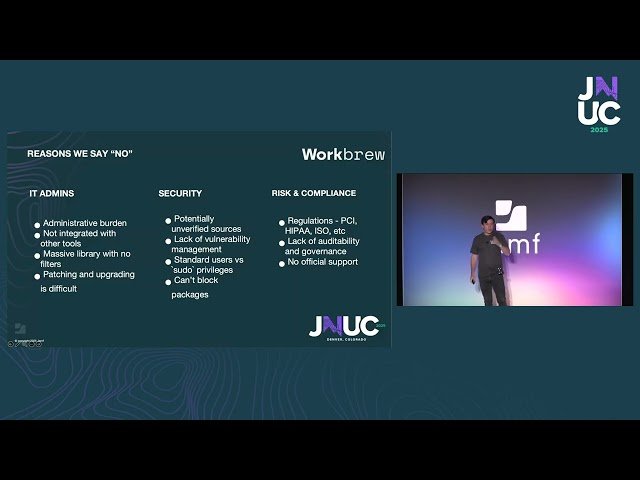
Learn how to bridge the gap between developer productivity and IT security by integrating Homebrew into managed environments through Workbrew in this 39-minute conference talk from JNUC 2025. Discover how IT administrators can address the growing tension between developers who need fast access to tools like Homebrew and security teams requiring visibility and compliance. Explore the common blind spots and silos that emerge when developers operate outside IT oversight, and understand how Workbrew transforms Homebrew from a shadow IT risk into a managed organizational asset. Gain insights into Homebrew's functionality from an IT perspective, identify common attack vectors that threaten your fleet, and see practical demonstrations of how Workbrew reduces friction while maintaining security controls. Master strategies for aligning developer freedom with organizational governance, enabling innovation without sacrificing visibility, auditing capabilities, or compliance requirements. Walk away with actionable guidance for supporting developer velocity while ensuring peace of mind for IT administrators and security professionals.

Coursera
In this course, you will learn how to deploy, configure, and secure FortiAnalyzer. You will also learn how to register and manage devices with FortiAnalyzer. Finally, you will explore the fundamentals of the logging and reporting management capabilities included on FortiAnalyzer. These skills will provide you with a solid foundation for becoming a professional FortiAnalyzer administrator.

Coursera
In this course, you will learn how to use the most common FortiGate features including firewall policies, user authentication, high availability, SSL VPN, site-to-site IPsec VPN, Fortinet Security Fabric, and how to protect your network using security profiles, such as IPS, antivirus, web filtering, application control, and more. These administration fundamentals will provide you with a solid understanding of how to implement the most common FortiGate features.

edX
The Azure Administrator program is designed for individuals seeking a strong foundation in cloud computing with a focus on Microsoft Azure. Whether you're new to cloud technologies or looking to pivot into a cloud-focused career, this program provides comprehensive instruction on the core principles of cloud infrastructure and Microsoft Azure services. You’ll begin by exploring fundamental cloud concepts—such as scalability, elasticity, and the shared responsibility model—before diving into the specifics of Azure’s architecture, products, and core solutions. With hands-on learning from Microsoft experts, this program will help you understand real-world scenarios and prepare for roles requiring Azure knowledge. This program serves as an excellent stepping stone toward Microsoft Certified: Azure Fundamentals certification and further specialization as an Azure Administrator Associate or Cloud Engineer.

Coursera
In this course, you will learn the fundamentals of using FortiManager for the centralized network administration of many FortiGate devices. In interactive labs, you will explore deployment strategies, which include single or multiple ADOMs, device registration, policy packages, shared objects, installing configuration changes, provisioning FortiManager as a local FortiGuard distribution server, and troubleshooting the features that are critical to day-to-day use after you deploy FortiManager.

Coursera
A Google Workspace Administrator uses tools in the Google Admin console to manage users, resources, core Google Workspace services, data governance, and security. They also troubleshoot common issues with Google Workspace products. This on-demand learning path provides real-world, hands-on experience with Google Cloud technologies that are essential to administering Google Workspace at your organization. Once you’ve completed these courses, check out the Associate Google Workspace Administrator certification to take the next steps in your learning journey.

Coursera
In this course, you will learn how to implement and centrally manage an enterprise security infrastructure composed of multiple FortiGate devices.

Coursera
Updated in May 2025. This course now features Coursera Coach! A smarter way to learn with interactive, real-time conversations that help you test your knowledge, challenge assumptions, and deepen your understanding as you progress through the course. The MD-102: Endpoint Administrator course equips IT professionals to deploy, manage, and secure Windows client operating systems effectively. Learn to use Microsoft Intune for device lifecycle management, including enrollment, configuration, security, and compliance. Gain hands-on experience with tools like Group Policy, Autopilot, and Microsoft Deployment Toolkit to streamline application deployment and enhance security. The course begins with Windows client deployment fundamentals, covering hardware requirements, imaging, provisioning, and automated installations. You’ll manage migrations, implement subscription-based activation, and configure Autopilot profiles. Guidance on remote management and troubleshooting deployment issues is also provided. Deepen your knowledge in identity and compliance management using Microsoft Intune, focusing on compliance policies, conditional access, and advanced troubleshooting. Secure endpoints with Microsoft Defender and optimize systems through monitoring and analytics. This intermediate course is ideal for IT administrators with basic Windows OS and Azure knowledge, preparing you to manage endpoint environments in small to enterprise networks.

Udemy
Defining who a Healthcare Administrator is + Discussing Healthcare Administration. What you'll learn: Understand the structure of the healthcare industryUnderstand the history of the healthcare industryDescribe the role of the healthcare administratorExplain the educational requirements needed to becoming a healthcare administratorDescribe the potential paths to becoming a healthcare administrator Are you a college student considering a career in healthcare? Are you a foreign medical graduate who wants to integrate into the healthcare system in America? Do you want a challenging yet exciting career where lives get changed? If you answer yes to any of the above, this course is for you. This comprehensive course teaches you everything you need to know, and do, in becoming a healthcare administrator in the US Healthcare System. If you want a rewarding career, financially and otherwise the healthcare industry could be just the way forward for you. In here, you will learn what it means to be a healthcare administrator. You'll also get a high level description of the prospects in this career, the best ways in, what the job market is like, and an early view on the steps needed to pursue a career in healthcare administration. Whether you’re a college student still trying to figure out what you want to major in, or a professional looking for a career change into the healthcare field, this course is for you!Content and OverviewWe start with looking at the structure of the US Healthcare System, and then we go into the history of the industry looking back 100 years. We progress into what the role of a healthcare administrator is in such a complex yet exciting industry. We discuss the educational requirements to becoming a healthcare administrator, and explore the many paths to achieving an ultimate goal of being a Hospital CEO or President of a healthcare system. Lastly, I share my personal experience as a healthcare administrator; we review my book titled Freshman Manager, Sink or Swim (which you’ll be getting a free copy) on my freshman year as a healthcare administrator.Detailed Content6 video Lectures and over 130 minutes of content The e-book version of Freshman Manager, Sink or Swim, a 112 page book written and published by me Know the best ways to becoming a healthcare administrator Resources on how to start your healthcare administrator career Resources on where to go for additional information on the career Expedited access to my Leadership & Management mentoring program for Healthcare Leaders of Tomorrow (HLOT)Modules include: Module 1: The healthcare industry and its intricate partsModule 2: Functioning as a healthcare administratorModule 3: Reality of healthcare administration.

LinkedIn Learning
This learning path helps IT pros with an existing understanding of cloud computing to develop the administration skills they need to successfully manage and maintain an Azure environment. Beginning with an exploration of Azure services and fundamental skills around networking and security, you can progress to implementing Azure Resource Manager virtual machines and exploring Azure site recovery. Build a fundamental understanding of Azure services.Develop skills for securing your Azure deployment.Design a business continuity and disaster recovery (BCDR) strategy.

LinkedIn Learning
Database administrators manage and maintain databases. The role may include installation, configuration, management, performance monitoring, security, data recovery, and more. In this learning path, discover database basics, explore data structures, and learn critical database management skills. Learn key database administration skills. Manage databases for improved performance. Explore how databases integrate with applications.

Udemy
AZ-104 Certification What you'll learn: Azure Resource ManagerAzure Cloud ShellAzure PowerShellAvailability Sets and ZonesCreate Windows Virtual MachinesCreate Linux Virtual MachinesDeploy Virtual Machine ExtensionsVirtual Machine Scale SetsAzure StorageBlob StorageFile StorageFile SnapshotsAzure DNSService EndPointsVirtual Networks (vNets)Network Security GroupsExpressRoutevNet PeeringvNet-to-vNet ConnectivityAzure Load BalancerAzure Traffic ManagerAzure AlertsAzure Activity LogsNetwork WatcherAzure Service HealthAzure BackupAzure Site RecoveryZone ReplicationAzure Active DirectoryAzure AD ConnectAzure AD EditionsMulti-Factor AuthenticationHybrid Joined DevicesAzure Identity Protection (AIP)Azure Management GroupsAzure SubscriptionsContent Delivery Networks (CDN)DataBoxAzure Firewall Current Course Update: v1.6 (July 2025)This course teaches IT Professionals how to manage their Azure subscriptions, create and scale virtual machines, implement storage solutions, configure virtual networking, back up and share data, connect Azure and on-premises sites, manage network traffic, implement Azure Active Directory, secure identities, and monitor your solution.After completing this course, students will be able to:Implement access management with Azure users, groups, and role-based access control.Use Azure Monitor to configure Azure alerts and review the Azure Activity Log.Query and analyze Log Analytics data.Deploy resources with ARM templates and organize Azure resources.Optimize your use of Azure tools like the Azure portal, Azure PowerShell, Cloud Shell and the Azure CLI.Create Azure storage accounts for different data replication, pricing, and content scenarios.Implement virtual machine storage, blob storage, Azure files, and structured storage.Secure and manage storage with shared access keys, Azure backup, and Azure File Sync.Store and access data using Azure Content Delivery Network, and the Import and Export service.Explain virtual machine usage cases, storage options, pricing, operating systems, networking capabilities, and general planning considerations.Create Windows virtual machines in the Azure Portal, with Azure PowerShell, or using ARM Templates.Deploy custom server images and Linux virtual machines.Configure virtual machine networking and storage options.Implement virtual machine high availability, scalability, and custom scripts extensions.Backup, restore, and monitor virtual machines.Understand virtual networking components, IP addressing, and network routing options.Implement Azure DNS domains, zones, record types, and resolution methods.Configure network security groups, service endpoints, logging, and network troubleshooting.Implement site connectivity schemas including VNet-to-VNet connections and virtual network peering.Implement Azure Active Directory, Self-Service Password Reset, Azure AD Identity Protection, and integrated SaaS applications.Configure domains and tenants, users and groups, roles, and devices.Implement and manage Azure Active Directory integration options and Azure AD Application Proxy.Implement and configure Azure Load Balancer, Azure Traffic Manager, and Azure Application Gateway.Use Azure RBAC to grant a granular level of access based on an administrator’s assigned tasks.Use Azure Multi-Factor Authentication to configure a strong authentication for users at sign-in.Azure FirewallAzure AD Domain ServicesAZ CopyApplicationGatewayUpdate for creating a Linux virtual machines with SSH built-in to Azure PortalUpdated content includes App Services, App Service Plans, Containers, and Kubernetes

A Cloud Guru
This course prepares students who are already familiar with core Azure services and Azure and SQL database skills used by Azure Database Administrators.An Azure Database Administrator is responsible for the management, availability, security, performance monitoring, and optimization of modern relational database solutions. They also assist Azure Data Engineers in managing operational aspects of a data platform solution. Azure Database Administrators are familiar with: Deploying SQL database solutions within Azure Azure SQL Server, database, and query architecture Basic usage of Transact-SQL for administrative tasks Securing Azure SQL resources and data Interconnecting Azure SQL resources with other Azure services Monitoring and optimizing Azure SQL Database performance Maintaining business continuity for Azure SQL resources Processes for migrating on-premises SQL Server databases to Azure Other options for managing relational data in AzureThis course also prepares exam candidates to pass the DP-300: Administering Relational Databases on Microsoft Azure exam to attain the Azure Database Administrator Associate certification. Candidates for the exam are presumed to be database administrators and data management specialists that manage on-premises and cloud relational databases built on top of Microsoft SQL Server and Microsoft Azure data services.
SAP Learning
Learn about the major enhancements for certification Database Administrator - SAP HANA to prepare for the assessment to stay certified.