

Courses
Discover thousands of courses from top institutions and platforms worldwide
Level
Course Type
Duration

YouTube
Explore the critical realm of integrated circuit (IC) layout security in this 25-minute talk by Johann Knechtel, Research Scientist at NYU Abu Dhabi's Design for Excellence Lab. Gain insights into the complex challenges of securing modern electronics across global supply chains, from software applications to hardware components. Discover proactive strategies for hardening IC designs against potential adversarial activities. Delve into the background of hardware security, examine key aspects of IC layout security, and learn about related challenges, including reliability effects and exploitation risks. Acquire valuable knowledge on this timely topic, with guidance on how to get involved in the field of IC layout security.

XuetangX
This course mainly teaches the analysis and design of digital ICs from the transistor and circuit level. Beginning with a retrospection on basic IC devices, this course introduces the CMOS inverter, the analysis and design of combinatorial and sequential logic circuits, the arithmetic logic units, the interconnect wire models and its parasitic effect, with a focus on CMOS ICs. It also tells about commonly used design methodology and process of digital ICs, focusing on the analysis and design optimization in aspects of circuit structure, area, speed and power for various circuit types of basic digital IC units.
Swayam
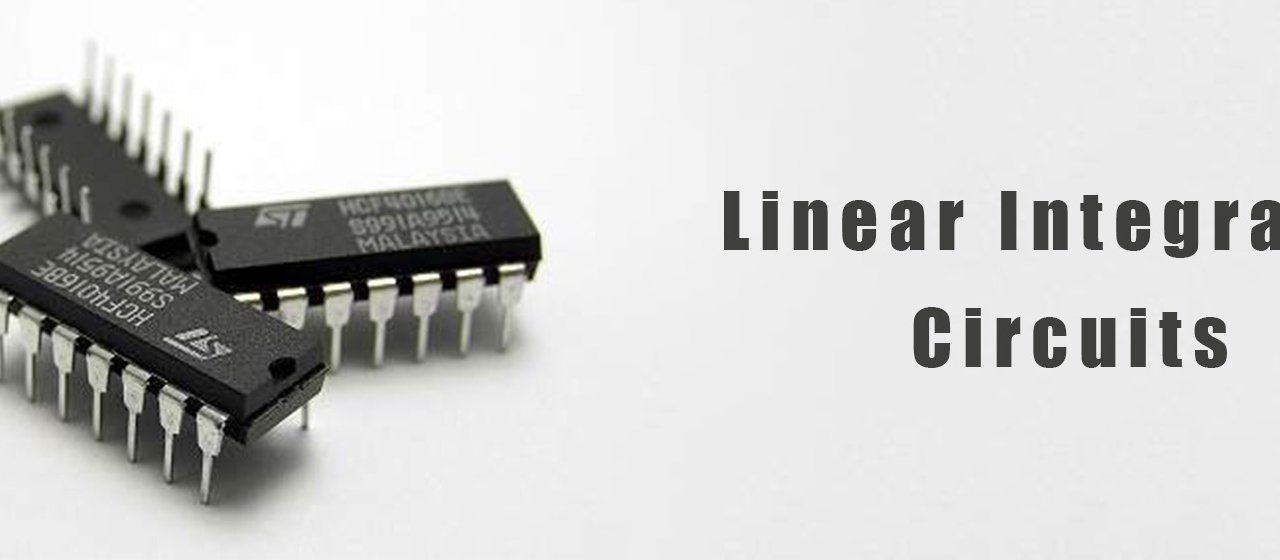
Explore the fundamental principles and applications of linear integrated circuits in this comprehensive 12-week course. Master the design, analysis, and implementation of operational amplifiers, voltage regulators, and other essential linear IC components. Delve into circuit configurations, frequency response characteristics, and practical applications in analog signal processing. Learn to analyze differential amplifiers, current mirrors, and feedback systems while developing skills in IC design methodologies. Study the internal architecture of popular linear ICs and their real-world applications in instrumentation, communication systems, and control circuits. Gain hands-on experience through circuit simulations and practical exercises that reinforce theoretical concepts. Understand the limitations, specifications, and selection criteria for various linear integrated circuits used in modern electronic systems.

YouTube
Explore the fascinating world of integrated circuit reverse engineering in this 32-minute conference talk by Ken Shirriff at the 2016 Hackaday SuperConference. Dive into the intricate process of decoding famous chips, from the Z80 processor to the 555 timer and LM7805 voltage regulator. Learn about register files, instruction decoding, ALUs, MOS transistors, and various logic gates. Discover the history behind the Sinclair Scientific Calculator and Intel's shift-register memory. Gain insights into analog chips, bipolar transistors, and the use of interactive chip viewers. Understand the techniques for obtaining high-resolution die photos using metallurgical microscopes and photo stitching software. Explore methods for accessing chip dies, including downloading existing photos or working with epoxy-free chips. Follow along as Ken demonstrates his current project: analyzing the 8008 processor.

YouTube
Learn how to design LED circuits in this comprehensive 22-minute video tutorial. Calculate resistor size, protect LEDs, determine battery life for circuits, calculate resistor power ratings, and explore various LED connection methods. Gain practical knowledge on resistor calculations, LED circuit examples, parallel LED circuits, resistor types, and resistor values. Access a helpful LED resistor calculator and discover essential tools for electronics projects.

Udemy
Analog (IC) Integrated Circuit:- Design & Simulate Differential Amplifiers Recommended for ECE & Biomedical Engineers What you'll learn: The basics of differential amplifiers and their applications in electronic circuits.Why we use 2 transistors in differential amplifiers?How to use Multisim software to design and simulate differential amplifier circuits.The difference between ideal and non-ideal differential amplifiers and how to incorporate these differences in circuit design.How to analyze and evaluate the performance of differential amplifiers in terms of parameters such as gain, common-mode rejection ratio (CMRR), and input/outputTechniques for biasing differential amplifiers and ensuring that they operate in their linear region.How to incorporate feedback into differential amplifier circuits to improve their performance.Troubleshooting techniques for identifying and correcting problems in differential amplifier circuits.How to apply the concepts and skills learned in this course to real-world circuit design problems.What Dual Input Balanced and Unbalanced Condition in Differential Amplifiers?What Single Input Balanced and Unbalanced Condition in Differential Amplifiers? This course is ideal for Electrical, Electronics, Instrumentation, Biomedical, and Robotic Engineering Students.This course is designed to provide students with a comprehensive understanding of differential amplifiers and their applications in integrated circuits. The course covers the theoretical principles behind differential amplifiers, as well as practical design considerations and circuit analysis techniques using Multisim software.In this course, students will learn about the basic building blocks of differential amplifiers, including transistor configurations, biasing techniques, and common-mode rejection. They will also explore the various types of differential amplifier circuits, such as single-ended, fully differential, and operational amplifiers. The course will cover the design and simulation of these circuits using Multisim, a powerful simulation tool widely used in the electronics industry.Throughout the course, students will be challenged with hands-on exercises and quizzes to reinforce their understanding of the material. By the end of the course, students will have a solid understanding of differential amplifiers and their applications in integrated circuits, as well as practical skills in designing, simulating, and analyzing these circuits using Multisim software.Course Outline:Introduction to differential amplifiers and their applicationsBasic transistor configurations and biasing techniquesCommon-mode rejection and differential voltage gainSingle-ended and fully differential amplifier circuitsOperational amplifier circuitsDesign and simulation of differential amplifier circuits using MultisimPractical considerations for differential amplifier designHands-on exercises and quizzes to reinforce learningPrerequisites: Students should have a basic understanding of electronic circuits, including basic circuit analysis techniques and circuit elements such as resistors, capacitors, and transistors. Familiarity with Multisim software is helpful but not required. OR You can enroll in my previous courses

YouTube
Instructor: Dr. Shouribrata Chatterjee, Department of Electrical Engineering, IIT Delhi. This course will develop electronic circuits for radio frequency applications, specific to CMOS integrated circuits. As the course title suggests, the course will be specific to CMOS integrated circuits, and specific to radio frequencies. In particular, the course will focus on circuits for radio front-ends for mobile phone handsets. The course will cover low noise amplifiers, mixers, power amplifiers, frequency synthesizers (and phase locked loops). The course will also cover several modern radio architectures.

YouTube
This course on photonic integrated circuits deals with principles, devices, and applications where light propagating in optical waveguides takes the central role. Various aspects that will be dealt are optical waveguide theory; passive, dynamic and functional devices, optical sensors; micro-opto-electro-mechanical systems; and recent developments.
YouTube
Explore the capabilities of Layout.jl, a package developed at the AWS Center for Quantum Computing for computer-aided design of quantum hardware, specifically superconducting integrated circuits operating at microwave frequency. Learn how to generate 2D layouts and 3D models of complex devices using both low-level geometry interfaces and high-level schematic-driven workflows. Discover techniques for drawing 2D geometric entities, applying coordinate transformations, organizing hierarchical structures, and assigning metadata for different backends. Delve into the schematic-driven workflow, including component definition, connectivity establishment, and automated placement and routing. Understand how to render results in various formats, construct and mesh 3D models, and interface with other tools like the open-source electromagnetics solver Palace. Gain insights into leveraging the Julia package manager for process design kit (PDK) management, enabling the maintenance of versioned process technologies and components for portable, reproducible layout scripts.

YouTube
Explore the fundamentals of Digital IC Design in this comprehensive lecture by Prof. Janakiraman from NPTEL-NOC IITM. Delve into the intricacies of designing digital integrated circuits, covering essential concepts and techniques used in modern semiconductor technology. Learn about logic gates, flip-flops, combinational and sequential circuits, and their implementation in IC design. Gain insights into the design process, simulation techniques, and optimization strategies for creating efficient and reliable digital integrated circuits. This 1 hour and 35 minutes long session provides a solid foundation for students and professionals interested in pursuing a career in digital electronics and IC design.

YouTube
Instructor: Dr. Nagendra Krishnapura, Department of Electronics and Communication Engineering, IIT Madras. This course deals with the design of analog integrated circuits with emphasis on the design of feedback circuits at the transistor level. This course is for first-year postgraduate students and final-year undergraduate students who have already taken a course on analog circuit design. Topics covered in this course include: negative feedback systems and stability, Op-Amp at the block level, operational amplifiers, components available on an IC, noise in resistors and MOS Transistors, basic amplifier stages, single-ended Op-Amp design, fully differential Op-Amp design, phase-locked loop, reference voltage and current generators, low dropout regulators, continuous-time filters, and switched capacitor filters.

YouTube
Learn how to create a low frequency pulse generator circuit using the 555 timer IC in this comprehensive electronics video tutorial. Explore the relationship between circuit components and frequency, understanding how resistor and capacitor values affect the output. Discover methods for calculating duty cycle, pulse width, space width, and cycle time of the generated rectangular waveform. Gain practical knowledge through circuit demonstrations and work through example problems to solidify your understanding of this fundamental electronic concept.

Udemy
How to apply ESD protection to analog/mixed signal ICs What you'll learn: Understand ESD concepts and ESD protectionApply ESD protection to analog/mixed signal ICsUnderstand the co-design of analog/mixed signal circuits and ESD protection The objective of this course is to understand how to efficiently and accurately apply ESD protection from an analog/mixed signal IC designers viewpoint. The approach will be to understand ESD protection cells, understand ESD influence on circuit components, apply a co-design approach to combining ESD protection with analog/mixed signal circuits, understand the physical aspects of ICs on ESD, and to avoid common mistakes in ESD protection. The terminology used in this course is that found in analog and mixed-signal IC design practice. An understanding of integrated circuit components; transistors, resistors, capacitors, etc., is assumed. The course consist of 16 lectures with a quiz following each lecture. The course will take approximately 10 hours to complete including the quizzes. This course should be taken by analog and/or mixed signal designers who want to be able to efficiently and effectively provide ESD protection for their designs.If the student has completed the course and is interested in a copy of the notes, they can be downloaded from Dropbox. To get the link, contact the instructor at pallen@ece.gatech.edu.

Udemy
By Prof. Phillip E Allen What you'll learn: Understand a broad perspective of analog IC designRefresh their understanding of analog IC design if they have been away from the field for a period of timeUnderstand the requirements for an analog IC designerSee how technology, modeling, and circuit design come together in analog IC designHave a top-level understanding of sources, amplifiers, op amps, comparators, and DA and AD convertersLook into the future of analog IC design This course serves as a brief overview of the topic of analog IC design. It is a high level view of what analog IC design is all about and discusses the requirements for a designer in this field. In reality, this course is a snapshot of a more detailed, 40 hour course on CMOS analog design found elsewhere. The target audience for this course should have some familiarity with analog circuits and integrated circuit technology. The terminology used is that found in both academia and industry. This course is stand alone and has no quizzes or other material - it is designed to be a quick refresher or a introduction to the topic of analog IC design. The course will take approximately 3 hours to complete and consists of 12 lectures of 15-20 minutes in length. Students new to analog IC design can take this course to gain an overview of the topic. Those who are familiar with IC design or have been away from the field for a while, can use the course to come up to date with the field of analog IC design. The more detailed 40 hour course on CMOS Analog Design is found on other venues (Continued Professional Development atImperial College of London)and has quizzes associated with the course. Check with the instructor, Dr. Allen, if you are interested in the in-depth course or go to the Imperial College website.

YouTube
Explore the fundamentals of Digital IC Design in this introductory lecture. Gain insights into the core concepts and principles that form the foundation of designing integrated circuits for digital applications. Delve into the world of modern electronics and understand the crucial role of digital IC design in shaping today's technological landscape.

Coursera
Embark on a transformative exploration into the dynamic field of Very Large-Scale Integration (VLSI) Design. Unravel the intricacies of semiconductor technology and chip design, delving into the multifaceted world of VLSI with real-time facets of designing integrated circuits. Our comprehensive course structure covers essential topics such as digital design fundamentals including Boolean algebra and logic gates, combinational circuits and arithmetic logic for binary operations, sequential circuits and state machines for designing complex systems, memory and programmable logic for advanced functionalities, VLSI chip design and simulation using Electric VLSI EDA Tool with a focus on CMOS technology and IC design principles, VHDL programming using Xilinx ISE for digital circuit design and analysis, and FPGA architecture for industrial applications using Vivado with hands-on experiences in designing digital logic circuits, interfacing sensors and communication protocols (RS232, SPI, and I2C) and implementing IoT solutions. This ensures a holistic understanding and practical skills in VLSI, chip design, VHDL programming, and FPGA-based system design for industrial innovations.

Udemy
Learn the principles, concepts and design methodologies adapted to design a VLSI Chip. What you'll learn: Learn the concepts, principles of VLSI DesignAdopt different methodologies to design a VLSI CircuitDraw any digital circuit only using the CMOS TechnologyKnow how to convert a logic design into a physical design Welcome to my course on 'VLSIDesign'.The course will help you to understand the different design methodologies, rules that are used in the field of VLSIDesign.The course essentially holds 7 different modules. 1. Fundamentals - Introduction to VLSI Design, The VLSIDesign Flow, A review on PMOS, NMOS Transistors.2. Inverter design - CMOS, Ratioed, Resistive Load Inverters - Working, VTC, Power, Delay3. Logic design - Complementary CMOS, Pass Transistors, Transmission Gates4. Dynamic circuits design - Precharge, Evaluation Phases, Characteristics, Dynamic Power Consumption5. ALUSubsystem design - Adders, Shifters,Multipliers, Latches, Flipflops, Multiplexers and so on,6. Memory Design -Fundamentals, ROMCell, RAMCell -SRAM,DRAM7. Layout Design - CMOSLayouts, Mead-Conway rules.All these modules will be frequently updated with new learning contents. Very-large-scale integration (VLSI) is the process of creating an integrated circuit (IC) by combining thousands of transistors into a single chip. VLSI began in the 1970s when complex semiconductor and communication technologies were being developed. The microprocessor is a VLSI device.Over the past several years, Silicon CMOS technology has become the dominant fabrication process for relatively high performance and cost effective VLSI circuits. The revolutionary nature of these developments is understood by the rapid growth in which the number of transistors integrated on circuit on single chip.References:Digital Integrated Circuits, A Design Perspective by Jan M. Rabaey, Prentice Hall (1996).

YouTube
Learn how to build and test an external watchdog timer circuit using a 555 timer IC to prevent microcontroller latch-ups and hang-ups. Explore the circuit diagram, PCB design process, and testing procedures using a signal generator and oscilloscope. Gain insights into PCB panelization techniques and discover how to power cycle Arduino or other microcontrollers automatically if they hang up. Access resources for components, including surface mount 555 chips and MOSFETs, and find links to additional information on the 555 timer IC and its applications in watchdog circuits.

Coursera
This course provides a comprehensive exploration of CMOS VLSI design and simulation, covering IC technology, CMOS structures, historical timelines, processor intricacies, MOS transistor design, non-ideal characteristics, power dissipation, low-power design techniques, and practical insights into CMOS logic gates. Participants will delve into fundamental components and circuit design in the "Analog Circuit CMOS Chip Design and Simulation" module, using the Electric VLSI EDA tool. This includes stick diagrams, tool installation and usage, and hands-on experience in schematic/layout representations, enhancing electronic circuit design proficiency. In the "Digital Circuit CMOS Chip Design and Simulation" module, participants create systematic workflows for schematic/layout designs using the Electric VLSI EDA tool. The curriculum covers logic gates, and half adder circuits, providing a holistic understanding of CMOS logic circuit design. Throughout the course, participants acquire a robust skill set, combining theoretical knowledge with practical expertise in CMOS VLSI design and simulation. By the end of this course, you will be able to: Develop a profound understanding of Integrated Circuit (IC) technology, exploring its historical timeline and key inventions. Discuss Moore’s Law and technology scaling, recognizing the importance of processors in Very Large-Scale Integration (VLSI). Gain proficiency in MOS transistors, explaining their types and comprehending their working process, including operational modes of both PMOS and NMOS transistors. Describe ideal transistor I-V characteristics and delve into non-ideal transistor characteristics, including leakage currents and their impact on device performance. Understand the workings of the CMOS inverter, covering both its static behavior and power dissipation characteristics. Explain components and mechanisms involved in CMOS power dissipation, addressing both static and dynamic aspects. Explore benefits of low-power design techniques, analyzing factors influencing power consumption, and learning various power reduction techniques. Understand the purpose of power gating in reducing overall power consumption and learn techniques to minimize short-circuit power consumption. Explain the fundamentals of CMOS logic gates, including the series and parallel connections of NMOS and PMOS transistors. Acquire skills in designing basic logic gates using Complementary Metal-Oxide-Semiconductor (CMOS) technology. Develop skills in designing CMOS circuits using stick diagrams, creating blueprints for physical layouts adhering to semiconductor manufacturing process design rules. Install and set up Electric VLSI EDA tool for VLSI circuit design, exploring components, schematic and layout editors, and conducting essential checks. Understand PMOS and NMOS transistor concepts, design schematic and layout representations, perform various checks, and conduct simulations for current-voltage characteristics. Grasp the CMOS inverter concept, create schematic and layout designs, and simulate the inverter to analyze behavior and characteristics. Explore common-source and common-drain amplifiers in analog circuit design, designing schematics, layouts, and performing simulations to analyze performance. Investigate the three-stage oscillator concept, design schematics and layout representations with CMOS inverters, and analyze performance through waveform simulations. Comprehend CMOS NAND gate concepts, design schematics, validate layouts, and simulate for logical behavior analysis with diverse input scenarios. Explore various digital circuit elements such as AND, NOR, and OR gates, XOR gate, and half adder, designing schematics, layouts, and performing simulations.

Udemy
Learn the concepts of OP AMPs from Linear Integrated Circuits and solve problems! What you'll learn: Understand the concepts of OP AMPSKnow how to apply principles of electrical engineering for the circuits involving op ampsUsing IC741, Build different analog circuitsSolve Problems on Linear Integrated Circuits The course deals with having a complete understanding on IC741 - Operational Amplifiers, as a partof Linear Integrated Circuits.To understand the concepts, there is a video on 'A review on Network Theory'The following are the contents discussed:1. What is IC741?2. Ideal characteristics of OP AMP3. Open loop configuration of OP AMP4. The concept of virtual short and virtual ground5. Closed loop configuration - Inverting Amplifier, Non Inverting Amplifier6. DC Characteristics7. AC Characteristics - Slew Rate8. Applications - Voltage Follower, Bufer,Analog Inverter, Summer, Subtractor9. Log and Antilog Amplifier, Analog Amplifier10. Differentiator, Integrator11. Non Linear Applications - Half Wave Rectifier12. Open Loop Comparator13. Zero Crossing Detector Problems on OP AMPs from competitive examinations will also be solved. An operational amplifier, or op-amp for short, is a voltage amplifier with external feedback components such as resistors and capacitors connected between its output and input terminals. These feedback components determine the amplifier's final function or "operation," and the different feedback topologies, whether resistive, capacitive, or both, allow the amplifier to execute a wide range of operations, earning it the name "Operational Amplifier."Operational amplifiers have a large open loop DC gain on their own, but by using Negative Feedback, we can create an operational amplifier circuit with a very accurate gain characteristic that is only dependent on the feedback employed. The term "open loop" refers to the absence of any feedback components around the amplifier, implying that the feedback line or loop is open.