

Courses
Discover thousands of courses from top institutions and platforms worldwide
Level
Course Type
Duration

Coursera
In this course, we will challenge you to think of GenAI as a strategic partner in your research and analysis. Not as a magical tool that solves all problems on its own. We will explore how you can guide it to be your powerful legal assistant that enhances and augments human analytical effort and expertise. We will see how human-supervised GenAI tasks can help us capitalize on the unique strengths that GenAI presents while accommodating its current limitations. We will focus on analysis and parsing of lengthy statutes and regulatory sections. We will use ChatGPT and Claude – the two most widely available GenAI tools - to establish foundational skills and best practices that you can continue to build upon as you engage with these evolving and innovative technologies. Additionally, we will see how human supervision of GenAI can help accelerate drafting and enable quality assurance checks for human-created draft content. This course is designed for legal professionals, law students, paralegals, legal assistants, and in-house counsel who want to integrate GenAI into their research and analysis workflows. Whether you are a practicing attorney looking to optimize legal research, a law student seeking to enhance analytical skills, or a legal assistant aiming to improve efficiency, this course provides practical strategies for leveraging AI-powered tools effectively. Learners should have a basic understanding of legal research and analysis concepts to engage with GenAI in a meaningful way. Familiarity with AI-driven tools like ChatGPT and Claude is beneficial but not required, as the course will introduce best practices for applying these technologies in legal contexts. Prior experience in statutory interpretation and case law analysis will help participants maximize the benefits of AI-assisted research. By the end of this course, learners will be able to explain the conceptual foundations of GenAI and its relevance to legal research and analysis. They will analyze the role of human oversight in unlocking the full potential of AI-powered tools. Participants will also apply GenAI for conducting initial legal research on novel issues and instruct AI to navigate, parse, and analyze primary sources like statutes and regulations. Additionally, they will utilize GenAI both as a quality assurance tool for reviewing human-generated drafts and as a writing assistant for generating initial legal documents.

YouTube
Explore the complexities of responsible disclosure and legal risks faced by security researchers in this 40-minute panel discussion from Nullcon Berlin 2024. Moderated by Jan Tilo Kirchhoff, the panel features insights from experts Diana Nadeborn, Andreas Bogk, and Michał Kowalczyk. Gain valuable perspectives on navigating the ethical and legal challenges in cybersecurity research, understanding the importance of responsible disclosure practices, and mitigating potential legal risks. Delve into the critical balance between uncovering vulnerabilities and adhering to legal frameworks in the ever-evolving field of information security.

OpenLearn
Note: This course will be closed on May 5th 2025 for updates. Please ensure all content has been completed by then. We aim to relaunch this course with new updates in July 2025.This free course, Becoming an ethical researcher, explores the ethics of planning, carrying out and reporting research which involves human participants. It will sensitise you to issues that a researcher should consider to support ethical and well-justified decision-making.A wide variety of research scenarios are used to stimulate individual reflection and discussion on the course forum, participation in which, together with successful completion of quizzes, will contribute to gaining a digital badge. Transcript6565Enrolling on the course will give you the opportunity to earn an Open University digital badge. Badges are not accredited by The Open University but they're a great way to demonstrate your interest in the subject and commitment to your career, and to provide evidence of continuing professional development.Once you are signed in, you can manage your digital badges online from My OpenLearn. In addition, you can download and print your OpenLearn statement of participation – which also displays your Open University badge.The Open University would reallyappreciate a few minutes of your time to tell us about yourself and your expectations for the course before you begin, in our start-of-course survey 6666.Once you complete the course we would also value your feedback and suggestions for future improvement, in our end-of-course survey 6767. Participationwill be completely confidential and we will not pass on your details to others.

Udemy
Legal language and communication skills What you'll learn: improve core skills like reading comprehension, logical thinking in a legal context and particular wording as well as written legal communicationunderstand and work with international contracts beyond the understanding of technical terms Legal English is a field of the English language which deals with law related issues and how to communicate them properly.This video course includes the three different aspects of legal English: General English skillsSpecific law and legal skillsCommunication skillsLecturer Tim Aghotor guides you through different definitions and explains the following aspects in depth: Common lawThe English legal systemThe court systemYou will be able to improve core skills like reading comprehension, logical thinking in a legal context and particular wording as well as written legal communication.

edX
Society has a growing range of big problems that need solutions which are novel and affordable. By developing the mindset and learning the skills associated with innovation and entrepreneurship, you can apply these to create real world impact in any future career - whether it is in academia, in industry or government or as a founder of a business. This course was developed by the p2i consortium, a group of prominent research institutions and global businesess, led by University of Cambridge. This course demystifies the entrepreneurial process to start a business and highlights similarities between researchers, innovators and entrepreneurs. The course is designed to support researchers gain the mindset and skills to spot opportunities and have the capacity to act on these with confidence, whether that’s in relation to pursuing an academic career, a policy intervention , a commercial opportunity or other means of bringing their research out into the wider world to have an impact. The course is equally suitable for individuals who want to learn about innovation and entrepreneurship and are very short of time and cannot easily gain this knowledge through attending numerous workshops and seminars. **** The course provides a powerful combination of content, examples, relatable role models all in one place and in a structured way. **** The course features insights from successful researchers turned academics, founders, and industry leaders. The course includes exercises to reinforce learning. The outputs of the exercises help articulate the value and impact of research or business ideas, and will increase learners’ confidence and credibility to turn their ideas into reality.

Coursera
This course is for early career researchers and mentors who believe that modern scientific careers require management skills and want to be research leaders. This curriculum gives you skills to effectively implement funded projects, thereby enhancing your career success. Research leaders take on a number of new roles, rights, and responsibilities--as scientific leaders, financial administrators, managers, and mentors. In this course, we explain how to optimize the people, teams, projects, and finances for which you are responsible. Despite your research training, you are probably facing an urgent training gap in leadership and management skills. Scientific careers falter for non-science reasons when researchers fail to execute a scope of work: struggle to track expenses and returns substantial unspent grant funds; or run out of funds by spending on the wrong people or mismanaging the right people. Consequently, projects close with inadequate progress on aims, thus compromising successful competition for future funding. This course will help avoid these traps. Leadership and management are essential skills for researchers. Several early career researchers, senior scientists, and administrative leaders are eager to share their expertise and experiences with you.

YouTube
Explore strategies for becoming a more effective policy researcher in this informative webinar hosted by the University-Based Child and Family Policy Consortium. Gain insights from two experts, Dr. Elizabeth Gershoff and Dr. Rachel Chazan Cohen, as they share their experiences bridging research and policy. Learn about taking advantage of opportunities, conducting research in government settings, interdisciplinary work, funding, and engaging with policymakers. Discover various research methods, types of research questions, and activities involved in policy research. Receive valuable advice on flexibility, centralized governance, and participating in technical expert panels. Understand how to effectively communicate with Congress and navigate the complexities of policy-oriented research in child and family studies.

XuetangX
A Brief Introduction to the CourseThis course has the following features: 1. As an inevitable outcome of the central government’s proposal to strengthen foreign-related work under the rule of law, legal English has gradually become a new trend and a new way for the teaching reform of both English majors and law majors in colleges and universities of China. 2. Legal English Course conforms to the concept of “Integrated Liberal Arts” in China, breaks down professional barriers and discipline barriers between English Major and Law Major, and realizes the mutual integration and complement of the two majors. 3. Legal English Course adopts the teaching method of Content-Based Instruction (CBI) and Content and Language Integrated Learning (CLIL), which emphasizes that English is only the tool for teaching the contents of legal subjects in the classroom. Students learn language skills imperceptibly while learning the contents of the subject. Language and legal subject content are mutually contextual, emphasizing the“dual focus”of content and language, thus realizing the integration of English language learning and legal knowledge learning.

Coursera
Using design thinking, this course seeks to humanize and simplify legal services. Using interesting case studies and real-world examples, we will aim to demystify legal processes and simplify them for usage. Inspired by apps like the UK ICO's "Make a Complaint" automation, which streamlines the complaint procedure, and DoNotPay, an AI-powered tool helping consumers negotiate legal concerns, Learn from Clio's Legal Trends Report, which stresses remote legal solutions and services oriented around the client, and from the Plain Language Act of New Zealand, which aims to make government communications understandable and accessible. In the complicated field of law, putting the user first guarantees efficiency, accessibility, and openness. You will learn how to improve client involvement, apply design thinking to legal difficulties, produce simple, useful legal documents and services. Key techniques and strategies include multidisciplinary collaboration, plain language, and visual communication which help you innovate in the legal sector and effect significant change are offered by this course. This course is designed for a broad spectrum of legal practitioners, including attorneys, paralegals, legal designers, and law students. It is also suitable for professionals from various fields who are keen on enhancing the accessibility and user-friendliness of legal services. The diverse audience ensures a rich learning environment where different perspectives and experiences can be shared, fostering a deeper understanding of the importance and impact of legal design. No specific prerequisites are required for this course, making it accessible to anyone interested in the topic. However, having a fundamental grasp of legal procedures and a curiosity about design thinking will enrich the learning experience. Participants with this background will find it easier to grasp the concepts and apply them effectively in their respective fields. After this course, learners will be able to review the essentials of legal design and research how it can make legal services more user focused. They will employ design thinking strategies to develop easy to understand and accessible legal solutions, enhancing client interaction and communication. Additionally, participants will create and execute legal designs using these strategies to develop legal products, services, and processes that are easy for users to navigate, ultimately improving the user experience in legal contexts.

Udemy
Learn Research Methods & Machine Learning What you'll learn: Introduction to ResearchFinding a research problemFinalzing your objectivesResearch MethodologyIntroduction to Machine Learning:- What is Machine Learning ?,Setting up the Environment for Machine Learning:-Downloading & setting-up Anaconda, Introduction to Google CollabsArtificial Neural networks [Theory and practical sessions - hands-on sessions]Support Vector Machines Indicative Module ContentIntroduction to Research - This session will help you to start the wonderful journey of research. Research is useful for finding new opportunities , new discoveries and higher studiesFinding a research problem - Finding a research problem is the most important aspect of any research project . (Undergraduate, Postgraduate etc..)Finalizing your objectives- Research MethodologyPositivismInterpretivismIntroduction to Machine Learning:- What is Machine Learning ?,-> in this session we will get an overview of machine learning Setting up the Environment for Machine Learning:-Downloading & setting-up Anaconda, Introduction to Google Collabs - (All the instructions will be provided to setup the environment successfully.)Artificial Neural networks [Theory and practical sessions - hands-on sessions] - This practical hands-on session will guide you to create a comprehensive ANN projectMachine Learning Techniques : Support Vector Machines - Lecture &Hands - On with Google Collabs , Trees and Random Forest - Lecture &Hands-On with Google Collabs,

YouTube
Explore the importance of open access in academic research and learn how developers can contribute to making scientific papers freely available to the public. Discover Dissemin, a Django-based website promoting global Open Access policies, which enables researchers to legally deposit their papers in repositories like Zenodo. Gain insights into the workings of the research world and the challenges involved in assisting researchers to make their work accessible to all. Understand the paradox of publicly funded research being locked behind paywalls and the potential solutions offered by Python-powered tools.
Pluralsight
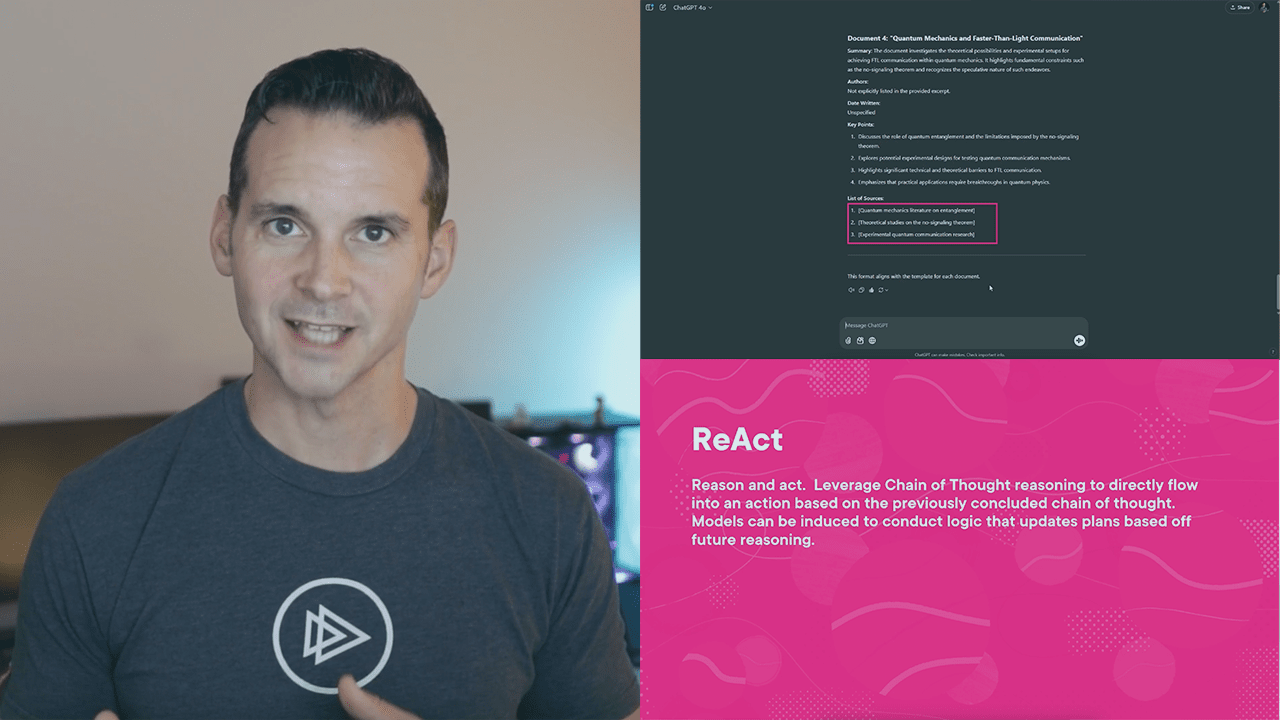
Research can be a time-consuming process, with vast amounts of information to sift through, analyze, and synthesize. Leveraging the power of generative AI can simplify these tasks, making it easier to find relevant studies, summarize key insights, develop research plans, and uncover new connections between findings. In this course, Generative AI for Researchers, you’ll learn to streamline your research process by utilizing AI-powered tools to enhance efficiency and depth. First, you’ll explore how to use AI to summarize the main themes or parts of complex documents, allowing you to grasp the essential points of a paper quickly. Next, you’ll discover techniques for brainstorming precise and relevant search terms, helping you retrieve more targeted results on research engines. Finally, you’ll learn how to develop research plans and identify relationships between findings by prompting generative AI to produce related research questions and hypotheses. When you’re finished with this course, you’ll have the skills and knowledge of leveraging generative AI in research needed to conduct more effective literature reviews, accelerate planning, and uncover new insights, all while saving valuable time and enhancing the quality of your academic work.

Udemy
Learn to intelligently detect and take down cyber threats What you'll learn: a high level overview of the 7 threat intelligence phasesHunting - The goal of hunting is to establish techniques to collect samples from different sources that help to start profiling malicious threat actors.Features Extraction - goal of Features Extraction is to identify unique Static features in the binaries that help to classify them into a specific malicious group.Behavior Extraction - The goal of Behavior Extraction is to identify unique Dynamic features in the binaries that help to classify them into a specific malicious group.Clustering and Correlation - The goal of Clustering and Correlation is to classify malware based on Features and Behavior extracted and correlate the information to understand the attack flow.Threat Actor Attribution - The goal of Threat Actors is to locate the threat actors behind the malicious clusters identified.Tracking - The goal of tracking is to anticipate new attacks and identify new variants proactively.Taking Down - The goal of Taking down is to Dismantled Organized Crime Operations. Welcome to this FREE course preview of the Cyber Security Threat Intelligence Researcher Certification. The Cyber Security Threat Intelligence Researcher Certification will help you acquire the skills needed to find out who is behind an attack, what the specific threat group is, the nation from which the attack is being launched, as well as techniques being used to launch this attack. You will know how to take a small piece of malware, find out who is responsible for launching it, the threat actor location and also how to take down that threat actor, with the support of your local law enforcement. In today’s cyber security landscape, it isn't possible to prevent every attacks. Today’s attackers have significant funding, are patient, sophisticated, and target vulnerabilities in people and processes as well as technologies. With organizations increasingly relying on digitized information and sharing vast amounts of data across the globe, they have become easier targets for many different forms of attack. As a result, every company’s day-to-day operations, data and intellectual property are seriously at risk. In a corporate context, a cyber attack can not only damage your brand and reputation, it can also result in loss of competitive advantage, create legal/regulatory noncompliance and cause steep financial damage. Today’s secure environment will have vulnerabilities in it tomorrow, so an organization cannot allow itself to become complacent. There is only so much an organization can do by defending itself against threats that have already occurred. If an organization only reacts to new threats as they come up, are likely acting too late. It is important to understand and prioritize cyber threat intelligence processes, and how they can be integrated into an organization’s security operations in a way that adds value. Cyber threat intelligence (CTI) is an advanced process enabling organizations to gather valuable insights based on analysis of contextual and situational risks. These processes can be tailored to the organization’s specific threat landscape, industry and market. This intelligence can make a significant difference to organizations' abilities to anticipate breaches before they occur. Giving organizations the ability to respond quickly, decisively and effectively to confirmed breaches allows them to proactively maneuver defense mechanisms into place, prior to and during the attack. In this course, we’ll introduce you to the 8 phases of threat intelligence: Hunting - The goal of hunting is to establish techniques to collect samples from different sources that help to start profiling malicious threat actors. Features Extraction - The goal of Features Extraction is to identify unique Static features in the binaries that help to classify them into a specific malicious group. Behavior Extraction - The goal of Behavior Extraction is to identify unique Dynamic features in the binaries that help to classify them into a specific malicious group. Clustering and Correlation - The goal of Clustering and Correlation is to classify malware based on Features and Behavior extracted and correlate the information to understand the attack flow. Threat Actor Attribution - The goal of Threat Actors is to locate the threat actors behind the malicious clusters identified. Tracking - The goal of tracking is to anticipate new attacks and identify new variants proactively. Taking Down - The goal of Taking down is to Dismantled Organized Crime Operations.

Coursera
LegalTech is the reaction to the disruption that technology is having across all sectors of the economy. Considering that the legal sector is one of the most resistant to change, due to its conservative nature, we can see just how different the future will be. In this course, IE professor Marti Manent will guide you through the essential stages of this disruption in technology, giving you the key tools and ideas to consider when starting your online business. In the course, Marti explains the key market trends that you will encounter and will provide you with a handy practical toolbox. The course features interviews with industry professionals as well as very motivating and interesting lectures that will help you open your mind and better understand everything in the course. Be part of this disruption that technology is having in the legal sector and join Professor Marti during this exciting new course.

XuetangX
Greetings, esteemed students. Welcome to Indonesian Legal System course. This course is a national compulsory course that leads students to know positive law in Indonesia regarding the meaning of each concept that compiles the concept of the Indonesian Legal System itself and finally knows what the Indonesian Legal System is.

Coursera
This specialization is intended for early career and novice researchers who are preparing to write their first major biomedical or health research grant proposals. Through three courses, you will cover how to plan and prepare proposals and resubmissions; develop study designs and data analysis plans that align with budgets, timelines, and milestones; and apply writing techniques that increase reader comprehension and engagement. These courses will prepare you to use best practices and avoid common pitfalls in your health research grant proposals.

Coursera
This course teaches the fundamentals of Python 3 in the context of academic research. Our tutor team support researchers across the whole of Imperial College London, including in science, engineering, mathematics, computing, medicine, and business. We have created this course to help our learners and researchers elsewhere prepare for modern research, which often includes a substantial amount of programming. You'll gain the basic skills needed to produce substantial programming projects which are accurate, professional, scalable, and which perform effectively. This will set you up well for the type of programming you'll need to do as a researcher. In this course, you'll learn: • the basics of Python including variables, types, if-blocks, loops, functions and exceptions. • how to write code using Visual Studio Code, which is a modern, professional tool used by programmers across all disciplines and professions. • best practices and the reasoning behind them, with a focus on developing skills and knowledge to help you become a confident and independent programmer. Projects throughout the course will allow you to practise designing and structuring progressively larger pieces of code - so, by the end, you'll be ready to produce the sort of code expected of a researcher. Throughout the course, you can draw on support from the learning community, sharing with your peers, answering questions, and giving feedback on solutions to exercises. This course is designed to be appropriate for complete novices to programming or learners who may already know another programming language. We hope you enjoy learning Python with us!

YouTube
Explore mindfulness techniques and their applications in scientific research through this insightful 48-minute conference talk delivered by Christian Frezza at the EACR Early Career Researchers Conference 2023. Gain valuable insights into incorporating mindfulness practices into your academic and professional life, enhancing focus, reducing stress, and improving overall well-being. Discover how mindfulness can positively impact scientific productivity and creativity, and learn practical strategies to implement these techniques in your daily routine as an early career researcher.

FutureLearn
Develop your information literacy skills to research more effectively Information is available in many formats, mediums, and versions. Researchers need to have information skills to enable them to exploit the wide range of resources available and to retrieve, evaluate, and use that information effectively. This three-week course from Universiti Malaya will empower you with the information literacy skills you need to become a better and more effective researcher. Understand how to evaluate the credibility of your sources The internet is filled with information on any topic imaginable, but it can be challenging to differentiate between reliable and unreliable sources. The experts at Universiti Malaya will teach you how to find and evaluate sources online using search strategies and vetting techniques. With this knowledge, you’ll be able to identify relevant and credible sources for your academic research. Adhere to research ethics through correct referencing and citation In order to use the work of other researchers, you will need to understand how to reference and cite authors correctly to avoid plagiarism. This is a key component of research ethics. On this course, you’ll learn to use information critically and responsibly by crediting other authors and expanding on their work. Learn how to publish to platforms like Web of Science and SCOPUS Journal publications allow researchers to market their work and contribute to expanding a field of knowledge. However, there are a number of components that are required for a successful submission and publication to journals such as Web of Science and SCOPUS. With the help of professional librarians and educators from Universiti Malaya, you’ll discover the criteria and standards your work should meet in order to be considered for publishing. This course is designed for undergraduate and postgraduate students and researchers. It will also be useful for lecturers, librarians, and teachers who wish to reinforce their information literacy skills.

CodeSignal
Learn to build the control logic for a multi-step AI research assistant. Structure the main python script to manage input, control iteration, and orchestrate modules for query generation, relevance checks, context extraction, and report creation. Implement an LLM-driven workflow for iterative search and comprehensive report generation.