

Courses
Discover thousands of courses from top institutions and platforms worldwide
Level
Course Type
Duration

Coursera
Welcome to this transformative course designed to help you revolutionize your underwriting process through the power of Generative AI (GenAI). In this course, you’ll learn how to streamline application reviews, enhance decision-making accuracy, and automate repetitive tasks to save valuable time. With no technical experience required, you’ll be able to apply cutting-edge AI tools to improve your underwriting workflow efficiently and responsibly, all while maintaining compliance and ethical standards. This course is ideal for a variety of professionals in the underwriting and insurance fields. Whether you're a beginner underwriter eager to integrate AI into your workflow or an experienced underwriter looking to optimize your application reviews with advanced tools, this course has something for you. It’s also perfect for risk assessment professionals who want to enhance their decision-making accuracy using AI, and compliance officers or industry professionals interested in understanding the ethical and regulatory aspects of AI in underwriting. To get the most out of this course, learners should have a basic understanding of underwriting principles and workflows, as well as experience with interpreting application data and assessing risk factors. A basic knowledge of AI tools, such as ChatGPT, will be helpful but not required—this course is designed to be beginner-friendly and will guide you through the practical use of AI without any advanced technical knowledge. By the ending this course, you'll not only gain a solid understanding of how Generative AI can streamline your underwriting processes, but you'll also be equipped with the tools and strategies to apply AI effectively in real-world scenarios. Whether you're looking to reduce review times, improve risk assessments, or ensure compliance with ethical standards, you'll have the knowledge and confidence to integrate AI into your workflows. Stay ahead of the curve, future-proof your career, and lead the way in transforming the underwriting industry with AI.
Corporate Finance Institute
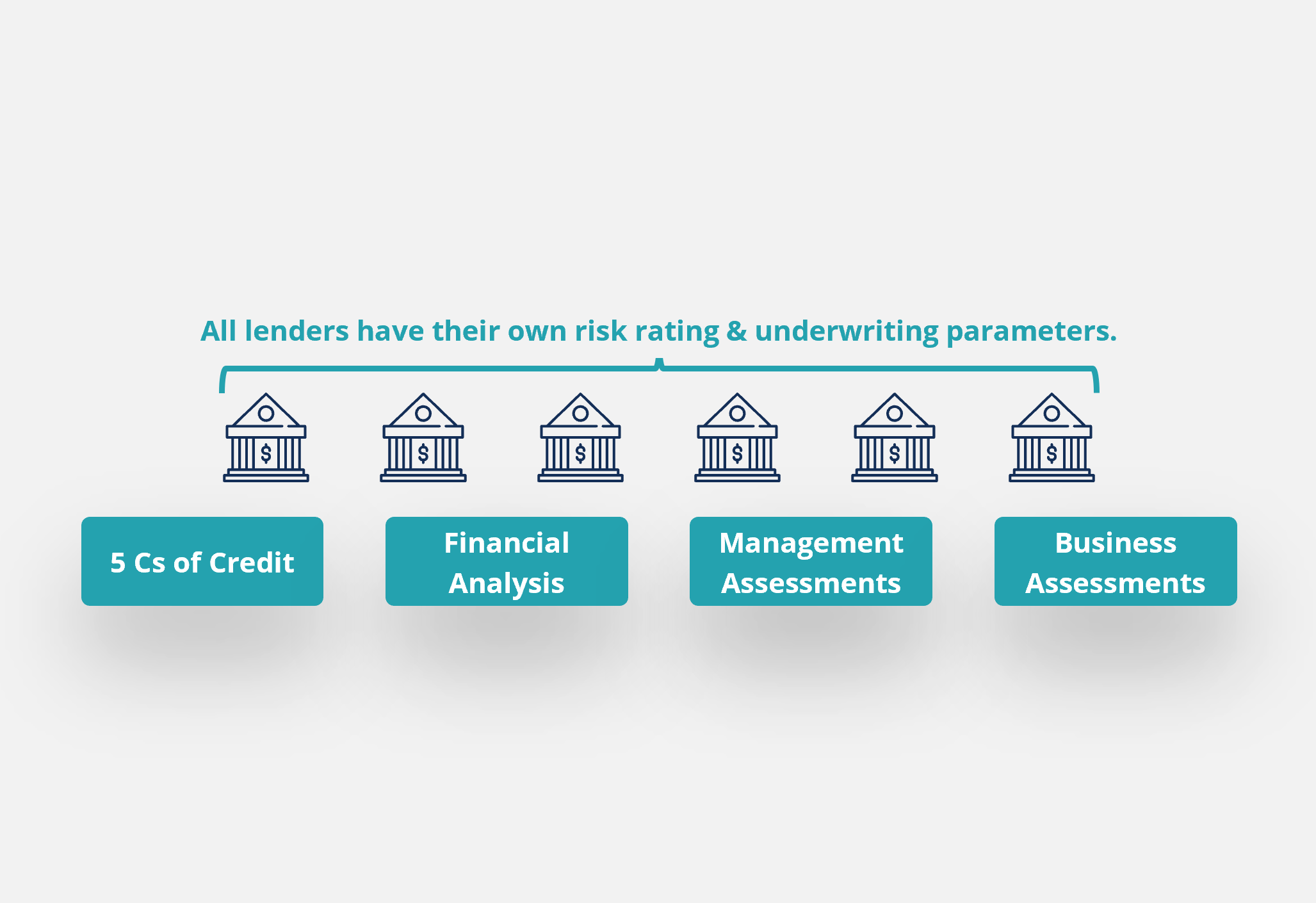
Loan Pricing Course Overview This Loan Pricing course looks at the fundamentals and factors banks consider when pricing a loan. We will examine how interest rates, loan structures, and different characteristics of a loan can affect the loan’s pricing. This Loan Pricing course will also explore how a bank earns revenue and what affects its profitability. This course will include an interactive case study that shows you a practical demonstration using a risk rating and profitability model in Excel. We will also cover different levers that a credit analyst can use during client negotiations and how they can affect the pricing and profitability of a loan. Loan Pricing Learning Objectives Upon completing this course, you will be able to: Explain debt as a funding source, its pros, and its consIdentify loan types and their relative degree of profitabilityDefine risk-adjusted return, and risk-adjusted return on capitalCalculate and interpret an example risk ratingRecommend pricing structures based on risk rating and loan type Who should take this course? This Loan Pricing course is designed for current and aspiring Commercial Banking and lending professionals, including Relationship Managers, Credit Analysts, and Risk Management professionals seeking a more comprehensive understanding of loan pricing and profitability. This course provides a real-world perspective and a hands-on case study outlining how a financial institution would evaluate a client’s default risk and how they might structure borrowing accordingly to optimize risk-adjusted return on capital. The practical exercises, case study, and tools explored in this course will be useful for any credit professional or financial analyst that wishes to work in private lending, business banking, commercial banking, or corporate banking.
Corporate Finance Institute
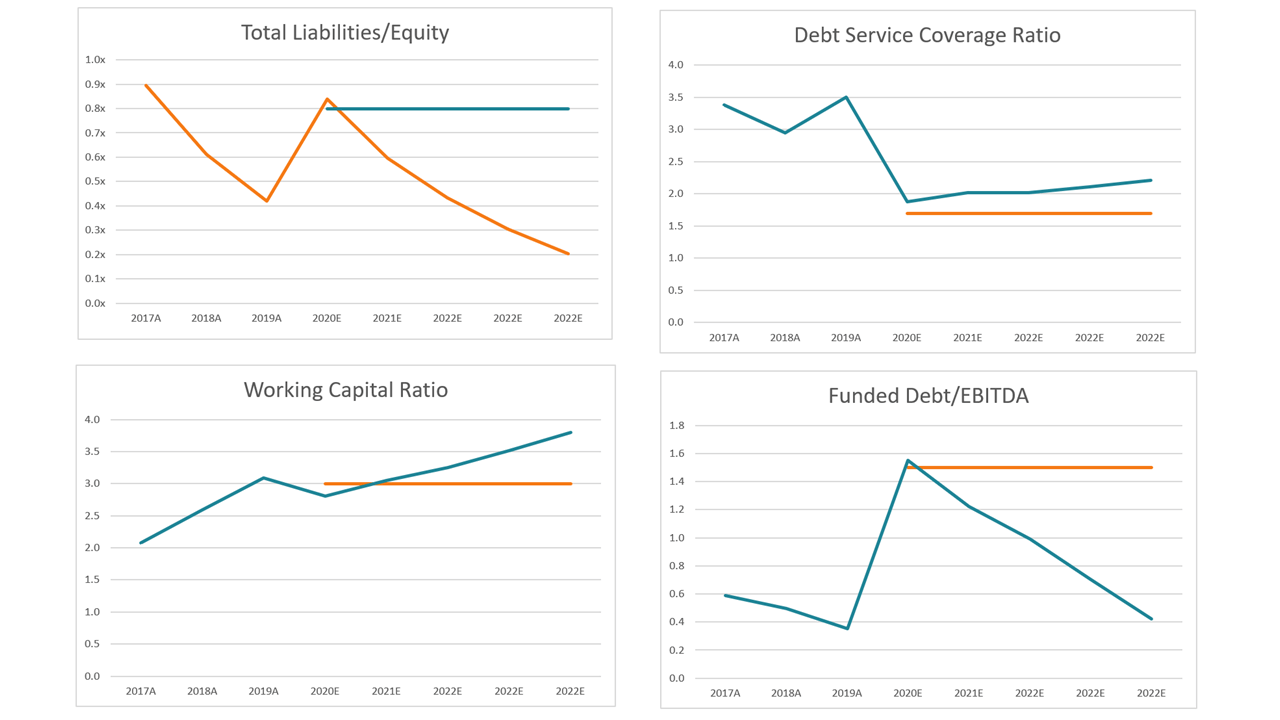
Loan Covenants Course Overview In this Loan Covenants course, we will demonstrate how loan covenants are used in the lending process. We will start this course by defining covenants and discussing how they benefit both the lender and the borrower. We will then compare different covenants and discuss what a credit analyst should do in case of a covenant breach. After that, we will discuss key financial covenant ratios such as total liabilities to equity ratio (debt-to-equity), debt service coverage ratio (DSCR), working capital ratio, and debt to EBITDA ratio. We will explain what these ratios are, how to calculate them, and how they are used in evaluating a company’s creditworthiness. Finally, we will complete a case study where you need to build a covenant model in Excel. We will calculate a company’s key credit metrics based on the historical and forecast financial statements. We will compare these metrics to the covenants that are set for this business and are suitable for the loan. Loan Covenants Learning Objectives Upon completing this course, you will be able to: Understand the key concepts of covenants in a loan agreementExplain different types of loan covenantsCalculate key financial covenant metricsUse a financial model in Excel to model financial covenants Who should take this course? This Loan Covenants course is perfect for any aspiring credit analyst working in insurance, underwriting, rating agencies, commercial lending, corporate credit analysis, and other areas of credit evaluation.

Corporate Finance Institute
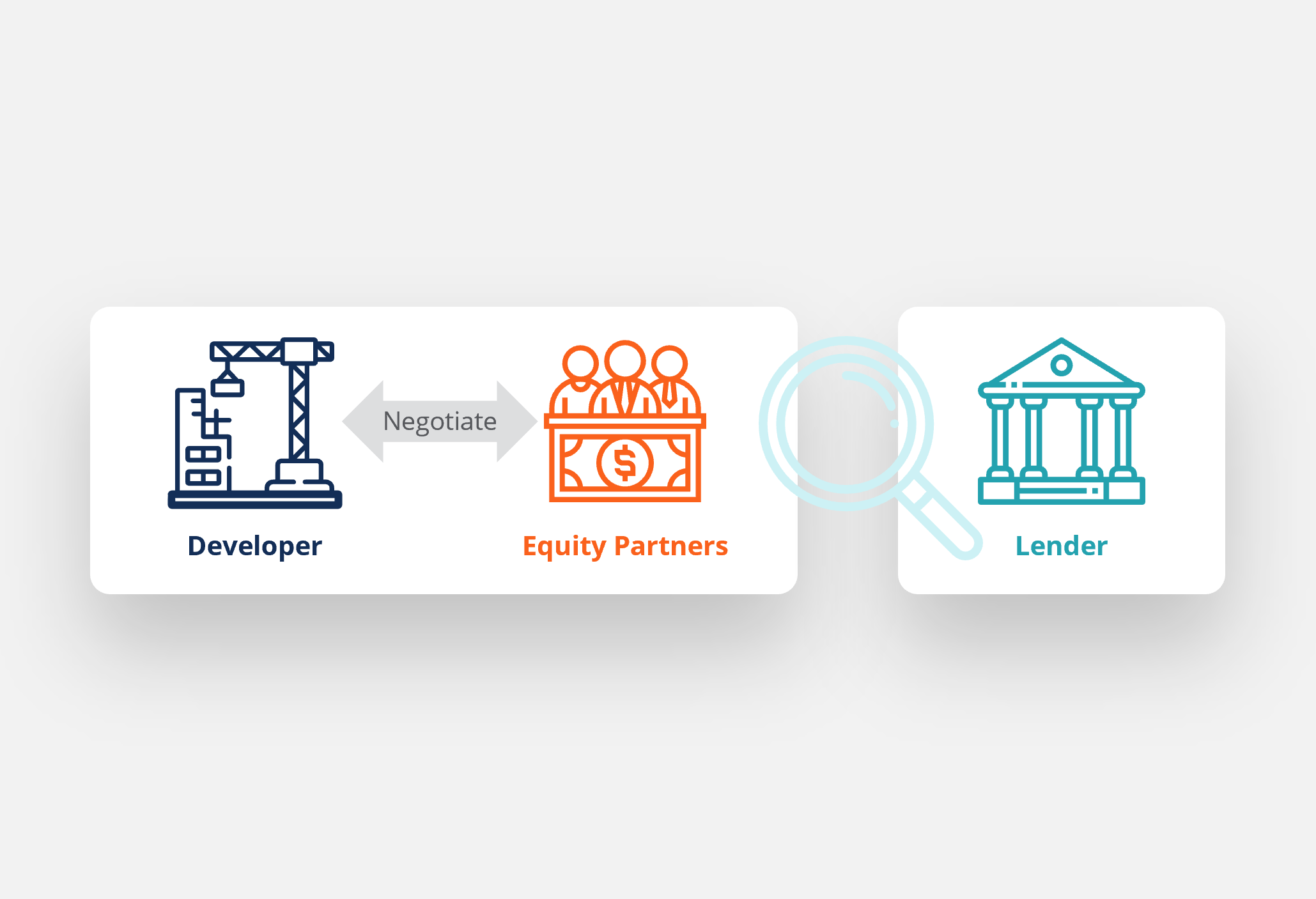
Loan Security Course Overview This loan security course will teach you how to manage the risk of a loan by using security. We will discuss different types of security, including General Security Agreement (GSA), guarantees, fixed charge and floating charge security, and various types of assets used as collateral. Then, we will explore how to evaluate the quality of the security. We will look at a real-world example for each type of security and demonstrate how to identify the best security for the loan application. Finally, we will discuss the role of legal counsel and security registration and documentation. Loan Security Learning Objectives Upon completing this course, you will be able to: Compare different types of security and assets used as securityDetermine the security value of different assets based on MAST principlesIdentify the most appropriate security to minimize the risk of the loanDiscuss the role of legal counsel and the importance of legal representation Who should take this course? This loan security course is perfect for any aspiring credit analyst working in insurance, underwriting, rating agencies, commercial lending, corporate credit analysis, and other areas of credit evaluation.

Udemy
Credit Analyst Training: Gain the knowledge to help you stand out from the competition What you'll learn: This course is designed to help anyone land a job as a Credit Analyst or a Real Estate AnalystYou can learn this course and pass your Credit Analyst ExamThis course includes a PDF copy of all terms needed to pass your interview and your Credit Analyst examA sample Test Case Review is also included in this course to help you completely a full real estate analysis on a new fileCredit Analyst, Real Estate Analyst, Senior Mortgage Underwriter, Underwriting Team Lead, Credit Analyst Team Lead, Real Estate Analyst Lead This course is designed to help you land your first job as a mortgage credit analyst and beginning a rewarding career in the mortgage industry. The willingness to learn and having an open mind alongside education is key for growth in this industry. Real estate analyst and underwriting is the process of reviewing a loan application to determine the amount of risk involved. The Analyst will look at the borrower's financial standing and the value of the property at hand to review the potential of the deal. A typical real estate transaction has so many moving parts, it can be easy to get lost in the details. An credit analyst’s role is to research the borrower and investment to determine the security of a loan. The reason for underwriting real estate transaction process exists specifically to help investors and lenders avoid potentially risky deals. Getting a career in Real Estate especially as a credit analyst / mortgage underwriter poses its challenges and many have tried and failed the entrance exam. This course is designed to give you the tools to excel on your entrance exam as well as the ability to pass your test cases so you can be well on your way to a very rewarding career.
Corporate Finance Institute
Structuring a Construction Loan Course Overview This construction loan course dives into the factors that affect the structure of a loan for construction and real estate development. In this course, we break down the line items of a construction budget and proforma. We then look at how to calculate the interest expense and maximum loan amount on the construction loan by examining the timing of spend of different line items from the construction budget. We also examine quantitative and qualitative terms in the term sheet and how they affect the structure of the construction loan. Finally, this course builds out different construction development scenarios and looks at how loan repayment works in all these scenarios. Structuring a Construction Loan Learning Objectives Upon completing this course, you will be able to: Understand the line items in a developer’s budget and derive a risk-assessed loan-to-costReview development and construction cash flows to calculate interest and financing fee values and funding mechanismsDetermine how the price of debt ties into the budget and project evaluationAppreciate how qualitative loan terms can impact loan-to-cost and interest ratesCalculate various take-out scenariosExamine how mezzanine debt and promote structures may fit into the total project assessment Who should take this course? This course is designed for current and aspiring Commercial Banking professionals in construction and real estate development. This course is also a great resource for real estate analysts and commercial mortgage brokers who wish to deepen their understanding of how construction loans are structured. By diving deeper into the lender’s perspective when structuring a loan, this course provides valuable insights for lenders, as well as brokers and advisors.
Corporate Finance Institute
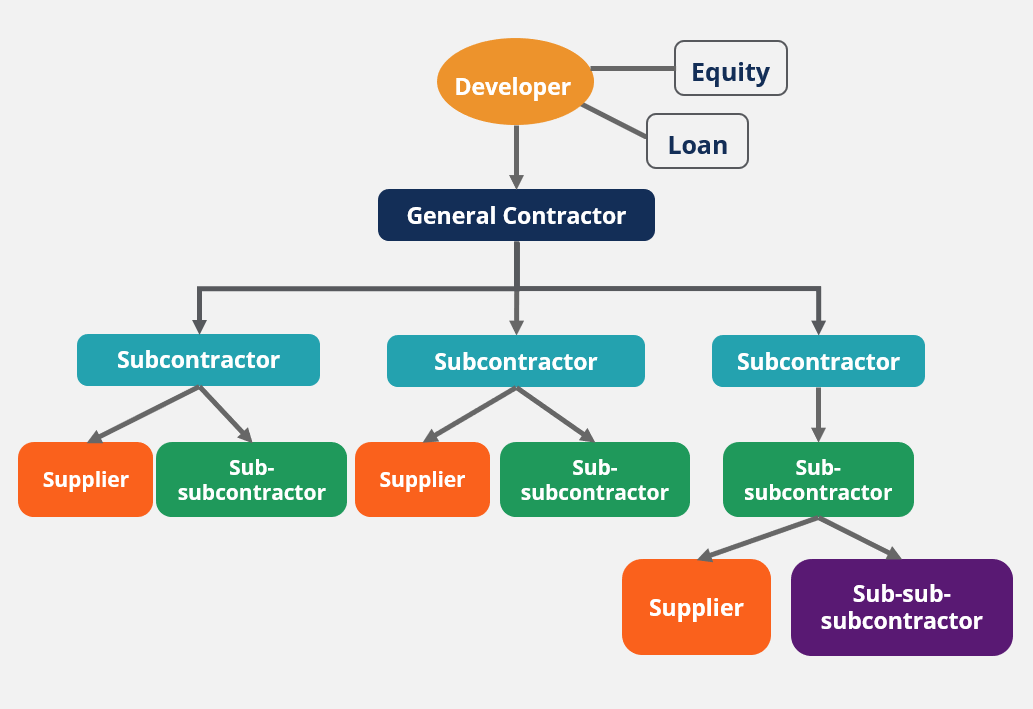
Construction Loan-in-process Course Overview This construction loan-in-process course focuses on construction lending, primarily from a bank’s point of view. It is the third and final course in the three-part series and should be taken after Construction Finance Fundamentals and Structuring a Construction Loan. This course discusses the payment cycle, how holdback or retainage clauses are applied, and various legal tools related to construction payments. Later in the course, we will discuss the loan monitor’s role, change order and contingencies, what to do when the project fails, and briefly describe title insurance. Construction Loan-in-process Learning Objectives Upon completing this course, you will be able to: Understand the construction payment cycle and processExplain how holdbacks or retainage are applied and whyGrasp legal tools related to construction payments such as liens, statutory declarations, and prompt payment legislationAppreciate the loan monitor’s role in payment processing and loan disbursementsAddress strategies and processes for non-performing loansUnderstand title insurance and why it’s important Who should take this course? This course was created for current and aspiring professionals working in commercial banking roles, focusing on the real estate development industry. It is also useful for anyone exploring the intricacies of construction lending. Taught from the lender’s perspective, this course provides a solid foundation of the lending process for construction development loans and would also provide key takeaways for mortgage brokers and related industry advisors.

Coursera
Imagine having the skills to confidently navigate the intricate world of credit risk—a cornerstone of professional excellence. The essence of credit lies in trust: trusting a counterparty to honour their obligations. This course unpacks the critical elements of credit, offering a structured approach to mastering credit risk analysis. Whether you are a banker, risk underwriter, or a professional extending trade credit, this course equips you with the expertise to make informed decisions and manage risk with precision. This course is designed for professionals at various stages of their careers within financial institutions who are involved in assessing or managing corporate credit risk. It is particularly suitable for graduate entrants undergoing core competency training, corporate credit and risk analysts, credit controllers, and credit underwriters. Relationship managers seeking a stronger grasp of the financial and strategic positioning of clients, as well as investment analysts evaluating creditworthiness as part of their decision-making processes, will also benefit significantly from this program. Participants are expected to have a foundational understanding of financial statements and accounting principles. This includes familiarity with the typical structure and content of audited financial accounts, as well as the mechanics of recording financial transactions. A basic grasp of how financial data is organized and interpreted is essential to fully engage with the analytical techniques presented in this course. By the end of this course, learners will be equipped to conduct thorough and structured corporate credit analyses. They will develop the ability to critically evaluate both business and financial risks, uncovering potential weaknesses that may impact a company’s creditworthiness. Additionally, they will learn to assess management quality through objective analysis and ultimately formulate credit ratings by estimating default probabilities and synthesizing all insights into a coherent view of a corporation’s overall financial health.

AWS Skill Builder
AWS SimuLearn is an online learning experience that pairs generative AI-powered simulations with hands-on practice to help individuals learn how to translate business problems into technical solutions through the simulation of dialog between a customer and a technology professional. AWS SimuLearn: Loan Forms Processing In this AWS SimuLearn assignment, you will review a real-world scenario helping a fictional customer design a solution on AWS. After the design is complete, you will build the proposed solution in a guided lab within a live AWS Console environment. You will gain hands-on experience working with AWS services, using the same tools technology professionals use to construct AWS solutions. How does it work? AWS SimuLearn is powered by generative AI that enables you to have life-like conversations with AI customers. Your responses to the AI are evaluated to help develop your soft skills like communication. and problem solving. As you provide the correct responses, a quiz agent with test you and you can also get help from Dr. Newton, the helper agent when you get stuck. Once you provide all of the correct responses for the solution you will move to building it and validating in a live AWS Console environment. AWS SimuLearn: Loan Forms Processing - Services Used Loan Forms Processing AWS Lambda, Amazon DynamoDB, Amazon S3, Amazon SQS, Amazon Textract

DataCamp
Learn how to build an amortization dashboard in Google Sheets with financial and conditional formulas. A loan amortization schedule is often perceived as a tool exclusively for bankers and financial traders. However, this course aims to debunk this misconception by introducing the practical applications of amortization schedules in everyday life. We will explore the fundamental concepts of loan amortization and its relevance not just in the banking sector, but for individual financial management as well. Mastering Financial Formulas in Google Sheets This course delves deep into the world of key financial formulas within Google Sheets. Participants will learn how to utilize these formulas to examine and manage various types of personal loans, such as student loans, car loans, and mortgages. The focus will be on empowering users with the skills to make informed decisions about their loans and financial health by leveraging the powerful features of Google Sheets. Creating a Dynamic Loan Dashboard One of the highlights of this course is the development of a comprehensive dashboard in Google Sheets. This dashboard will incorporate advanced techniques such as visualizations and conditional formulas. Participants will gain hands-on experience in creating presentation-ready spreadsheets that are not only functional but also visually appealing. These skills are designed to impress finance managers and elevate your understanding of financial management to a professional level.

Udemy
Finibi Mortgage CEO, Joe Correa, teaches you how to become a mortgage loan processor What you'll learn: You will be able to understand how mortgage processing worksYou will be able to start working as a mortgage loan processorYou will be able to prepare and submit a loan package to underwriting for approvalYou will learn how to review specific documents including a 1003 and disclosuresYou will learn how to become a contract processor as well as a salaried processorYou will understand how to prepare a loan package for auditingYou will be able to complete compliance checks and know exactly what needs to be in each fileYou will learn how to view and make changes on Calyx PointYou will learn how to submit a loan on a lenders website Starting a new career as a mortgage loan processor is a smart and profitable decision that can have a significant effect on your financial future. Mortgage loan processors are in high demand!In this modern course, you'll learn all of the skills necessary to become a successful mortgage loan processor and be able to use these skills in you're day-to-day working life. From how to prepare a loan package to submitting a file to underwriting and getting an "approved with conditions" status, these lectures are designed for any one who is interested in starting a career in real estate but that would prefer not be in sales. With real world examples demonstrating exactly how to execute each step of the mortgage process, you'll find out exactly what to do (and what not to do) to prepare a file to the level where it can be approved and be compliant with all federal and state regulations.Main benefits of this course and of being a mortgage loan processor are:- Make a great starting and future income Most starting processors make $40,000 - $60,000 per year. Senior and experienced loan processors make $60,000 - $100,000+- Have the flexibility of getting paid in the form of a salary or as an independent contractor (Work from home on your computer and phone if you are an independent contractor)- Learn what it takes to close a home loan- Start a career that is in high demand where you can quickly increase your incomeIf you already know the basics of being a loan processor and want refresh your memory or are just starting out and want to learn more in depth, this is the course for you. Ensuring the success of each and every loan is very different if you have the knowledge necessary to solve problems and have back up plans if problems arise. You need to know the steps you will need to take to prepare, submit, and close a loan. This takes experience and the right skills which is what this course will provide you with.The first section of this course will take you through two hugely important elements of loan processing: how the entire loan process works and what you'll need to do on each and every loan file. You will learn how to do quality control checks to make sure you are compliant with all laws and how to be ready for an audit. In the second section of this course, you will learn what you need to do to start a career as a loan processor and what it entails.At the end of it all, you'll have the tools needed to make better, and more successful decisions in your loan processor role. A course diploma will be available to you when all sections have been completed at 100% which you can save or print. For instructions on downloading your course diploma you can go to: https://support.udemy.com/hc/en-us/articles/229603868-Certificate-of-CompletionYour instructorJoseph Correa is the founder and CEO of Finibi Mortgage, a licensed mortgage brokerage business based out of Orlando, Florida. Having closed hundreds of mortgage loans and processed many of them, he has the necessary processing knowledge to help you become a success. In the past, he has also owned a correspondent lender business and invested in real estate.
YouTube
Learn to build a comprehensive mortgage loan analysis application that combines traditional Combined Loan-to-Value (CLTV) calculations with AI-driven risk assessment and borrower scoring in this 40-minute tutorial. Develop a CLTV Simulator that integrates LTV/CLTV calculation, front-end and back-end DTI assessment, and a "Comprehensive Borrower Score" weighing risk across multiple factors including collateral, repayment capacity, credit history, stability, and down payment. Create an application designed for financial professionals such as loan officers, underwriters, and risk analysts, as well as IT audiences seeking reproducible, auditable, and scalable assisted underwriting solutions. Build four complementary features: a traditional CLTV simulator for evaluating leverage and equity, AI Analysis for automated underwriting review with actionable recommendations, AI Chat for conversational queries with dynamic tool invocation including PMI Analysis and Debt Consolidation, and Advanced Tools for specific deterministic calculations. Implement loan structure and down payment scenario comparisons, PMI/MIP estimation and removal modeling, debt consolidation impact analysis, and home affordability calculations under different DTI bands (28/36/43/50%). Construct the user interface using Streamlit with interactive Plotly visualizations, perform calculations with pandas and numpy, integrate external data via yfinance, and develop the intelligent agent using LangChain and LangGraph with OpenAI or Google Vertex AI language models. Master modular architecture design that exposes tools for programmatic Python use or web interface access, with secure API key handling and environment variable configuration management, while prioritizing performance through AI analysis caching, deterministic transformations, and explainable outputs for auditing and reproducibility.

Udemy
Become a 6 figure business loan consultant What you'll learn: How to become a business loan broker and affiliate marketer At its heart, a business loan broker is someone who is able to bring borrowers and lenders together to form an agreement. Part diplomat, part banker, part business person, and part negotiator – a business loan broker has one foot in the private sector and another in the world of finance. However, there is a lot that goes into being a business loan broker before any deals can be made.
Corporate Finance Institute
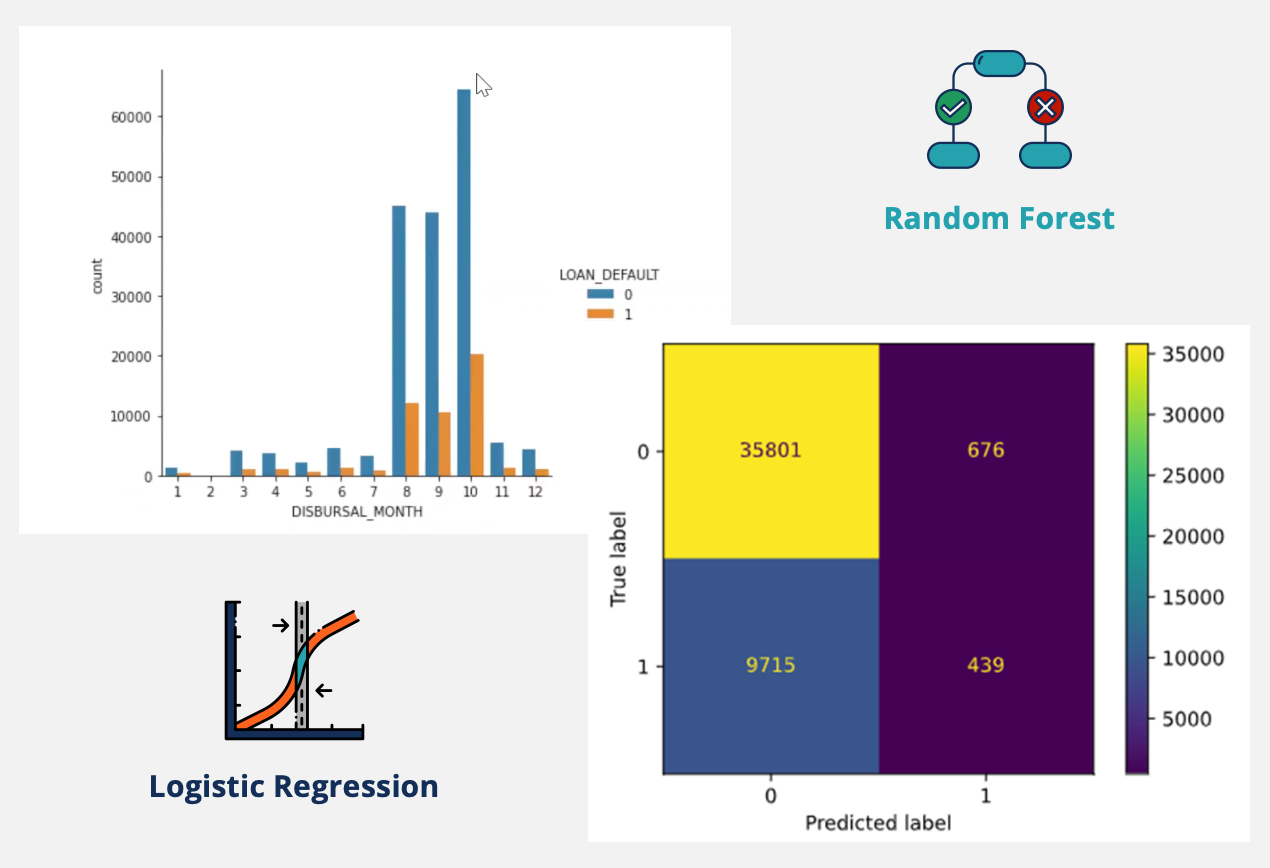
Loan Default Prediction with Machine Learning Course OverviewMachine Learning is about making predictions using data. In this course, you’ll learn to use basic Machine Learning skills to predict which customers are likely to default on their loans. Once your model classifies each loan, you’ll learn to visualize your predictions to see how well the model performed. Predicting defaults and creditworthiness is hugely valuable to risk management and pricing decisions.We will cover the entire Machine Learning process in Python, reinforcing concepts from Python fundamentals. You’ll learn how to create predictive classification models, fine-tune and test your process, and how to interpret the results.Machine Learning is a hot topic in the world of data, particularly data science. At a basic level, Machine Learning is not as complex as it may sound. If you’ve ever done linear regression, you may be surprised to learn that you’ve already taken steps toward this exciting world.Join Andrew for a comprehensive step-by-step walkthrough of the Machine Learning process.Loan Default Prediction with Machine Learning Objectives Upon completing this course, you will be able to: Explain and discuss the main steps of the Machine Learning cycleLoad and clean data into a python notebookUse Exploratory Data Analysis to identify variables with likely predictive powerUse Feature Engineering to transform data into a more useful formatBuild a logistic regression and random forest prediction modelEvaluate and compare model performance using common evaluation metrics Who should take this course? The Machine Learning cycle is one of the most foundational aspects of Data Science. Using this process, we can learn to make predictions using all types of data and variables. Anyone looking to make predictions in a practical Python environment should absolutely be doing this course.
Corporate Finance Institute
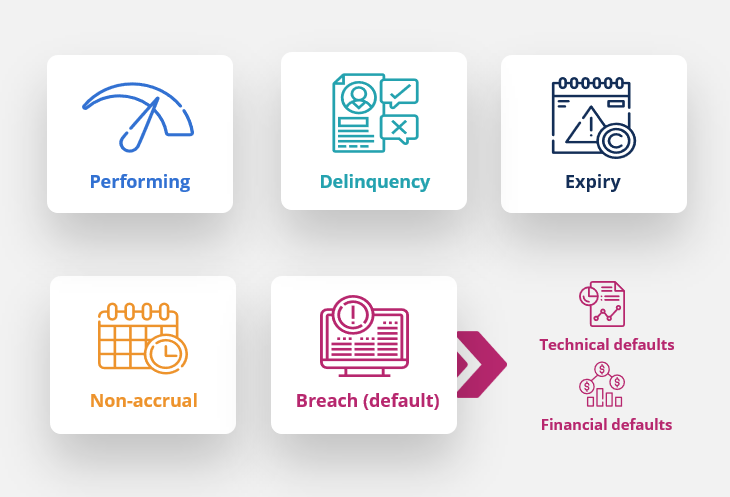
Problem Loans Course OverviewProblem Loans present many unique challenges for a financial institution. This course examines what constitutes a problem loan specifically and problem files more generally. We’ll look at the commercial borrowing relationship holistically to help identify the different ways that a client’s standing might deteriorate. Next, we’ll review different loan classifications before using an example pricing model in Excel to demonstrate how deteriorating risk on a file can affect a lender’s profitability. Next, we look at how an individual loan officer or credit analyst can differentiate between problem loan symptoms and their underlying causes to help identify early warning signs much more effectively and to get ahead of problem files before they become a serious financial burden for the firm. Finally, we explore some of the options a lender has when trying to work through a problem file, including an in-depth look at an example Watch Report.Problem Loans Learning ObjectivesUpon completing this course, you will be able to:Define what a problem loan is.Compare different categories of problem loans (and client files). Interpret how problem loans can affect profitability for a financial institution.Explain the difference between the symptoms and the causes of problem loans.Detect problem loans more proactively by applying a systems thinking framework.Compare the different options a lender has when working with a problem file. Who Should Take This Course?This Problem Loans course is designed for current and aspiring commercial banking professionals, including relationship managers or loan officers, credit analysts, loan brokers, and adjudicators. This course will prepare you with the knowledge and skills you need to properly handle difficult borrower situations.
Google Cloud Skills Boost
This lab will demonstrate how to use the Regional Load Balancer GCP Terraform modules for setting up various load balancers.

Udemy
Finibi Mortgage CEO, Joe Correa, teaches you how to take your mortgage loan processor career to the next level What you'll learn: Learn how to calculate a salaried borrowers income.Learn how to read and understand an appraisal and how property values are obtained.Become a pro at locking rates and understanding how rates affect a loans approval.Develop a deeper knowledge of verifications of employment to get more loans approved.Learn how to become more valuable as a processor by completing more of the necessary task to close more loans.Read and know what to request on a homeowners declaration page to get more loans closed.Understand the importance of a survey and when it should be ordered and by who.Learn how to obtain invoices for third party fees so that you loan is compliant and the lenders clears your loan to close. Advanced mortgage loan processor training will give you the knowledge to earn a higher income. This course goes from theory to practical examples. Lenders are hiring mortgage loan processors by the hundreds!This fast-paced course will go over the most fundamental tasks processors need to master such as: requesting a change in circumstance, being able to read and understand Loan Prospector findings, outsource basic processing tasks to third party vendors which will reduce your time on repetitive tasks and will allow you to focus more on providing the best service possible. You will also learn to calculate salaried and self-employed borrowers income quickly and easily with practice questions taught by the instructor. Besides that, you'll also review common calculations you will see every day in an exercise format. These realistic exercises will teach you how to calculate the debt-to-income ratio, loan-to-value, cash to close, borrowers middle credit score when you only have two credit scores or just one, plus, how to calculate all of these in one loan scenario. This course will even go over a real life conditional approval in detail just like you will need to do when you process loans for banks and lenders. If you're looking to start a career in real estate or mortgage and want to receive a salary and not a commission, becoming a loan processor is the right choice.Main benefits of this course and of being an advanced mortgage loan processor are:- Earn a great starting salary and possibly a sign on bonus This course includes the contact information for 2 lenders that are currently hiring and need loan processors and other mortgage positions paying $40,000 - $100,000+ per year.- Work remotely from home and have a flexible work schedule- Become an expert on home mortgages- Quickly and easily change careers into a high demand marketOnce you start working as a mortgage loan processor, you can quickly move up to becoming a senior loan processor which are the highest paid form of loan processors. By completing this course, you will learn much of the knowledge senior loan processors have which will allow you to increase your income and potential for other higher paid positions within a bank, lender, or mortgage company.The first section of this course will take you through three enormously important elements of loan processing: quickly running the debt-to-income ratio, loan-to-value, and calculating the cash to close for different borrowers. How to calculate a salaried and self-employed borrowers income. In the second section of this course, you will learn what lenders are the easiest to process loans with and what tools they offer to make processing faster. You will also learn what lenders are hiring and how to get hired by using some of the techniques which I have seen work in the past.Once you complete this course, you will have advanced loan processing knowledge and a course diploma to show employers. A course diploma will be available to you when all sections have been completed at 100% which you can save or print. For instructions on downloading your course diploma you can go to: https://support.udemy.com/hc/en-us/articles/229603868-Certificate-of-CompletionYour instructorJoseph Correa is the founder and CEO of Finibi Mortgage, a licensed mortgage brokerage business based out of Orlando, Florida. Having closed hundreds of mortgage loans and processed many of them, he has the necessary processing knowledge to help you become a success. In the past, he has also owned a correspondent lender business and invested in real estate.This course is more advanced so if you haven't taken my "Become a Mortgage Loan Processor" course, I would suggest you start with that one first but you are welcome to start with this one and then move on to that one.

Coursera
The lending industry is undergoing a rapid transformation, with Generative AI (GenAI) at the forefront of innovation. This course, designed specifically for loan officers and lending professionals, provides a hands-on, practical roadmap for integrating GenAI tools across the entire lending workflow—from the first customer interaction to final loan approval and ongoing client management. You’ll learn how to use AI-powered solutions to streamline application intake, automate customer communication, enhance credit risk assessment, review documents for compliance, and optimize workflow automation. The course is structured around real-world scenarios and uses only trial-accessible, user-friendly tools, ensuring that you can immediately apply what you learn without needing a technical or programming background. Through a blend of short instructional videos, interactive labs, and real-world case studies, you’ll gain the confidence to leverage GenAI for faster, more accurate, and fairer lending decisions. You’ll see how AI chatbots and virtual assistants can improve customer experience, how AI-driven credit scoring models can enhance risk assessment, and how document review and compliance can be automated for greater efficiency. The course also addresses the importance of ethical AI use, bias detection, and maintaining regulatory compliance, ensuring that your adoption of GenAI is both responsible and effective. This course is tailored for professionals across the lending and credit evaluation spectrum, including loan officers, underwriters, credit risk analysts, and operations teams focused on process efficiency. It is also ideal for innovation and digital transformation teams within financial services institutions who are exploring practical applications of AI to enhance the lending lifecycle. Whether working at banks, credit unions, fintech startups, or non-bank lenders, participants will benefit from actionable insights into deploying GenAI in real-world lending environments. Learners should have a foundational understanding of loan origination processes, credit analysis methods, and basic credit scoring models. Familiarity with everyday digital tools such as Excel, web applications, and CRM platforms is expected. Additionally, learners should possess basic GenAI literacy, such as experience using tools like ChatGPT, Microsoft Copilot, or similar AI assistants, to effectively engage with course content and hands-on labs. By the end of this course, learners will be able to apply Generative AI tools to streamline loan application intake and enhance customer communication workflows. They will learn how to leverage AI-driven models to support more accurate credit scoring and risk assessments. The course also equips participants to automate and optimize key steps in the lending process while upholding ethical standards, reducing bias, and ensuring regulatory compliance through human-in-the-loop strategies.

Coursera
In this coding challenge, you'll compete with other learners to achieve the highest prediction accuracy on a machine learning problem. You'll use Python and a Jupyter Notebook to work with a real-world dataset and build a prediction or classification model. Important Information: How to register? To participate, you’ll need to complete simple steps. First, click the “Start Project” button to register. Next, you’ll need to create a Coursera Skills Profile, which only takes a few minutes. We’ll send you a profile link the week of the challenge. When does the challenge start? The coding challenge begins Tuesday, August 29th, at 8 AM (PST) and closes Thursday, August 31st, at 11:59 PM (PST). If you’re registered, you’ll receive a reminder email on the challenge start date. Please note this is a timed competition. Once the challenge is unlocked, you’ll have 72 hours to complete it. You can submit as many times as you would like within this timeframe. What will the winners receive? Participants will be evaluated based on their model’s prediction accuracy. The top 20% of participants will receive an achievement badge on their Coursera Skills Profile, highlighting their performance to recruiters. The top 100 performers will get complimentary access to select Data Science courses. All participants can showcase their projects to potential employers on their Coursera Skills Profile. Winners will be notified by email the week of September 10th. Good luck, and have fun!

YouTube
Explore a comprehensive conference talk on loan portfolio engines presented by Stanford's Kay Giesecke at Conf.Startup.ML. Delve into typical questions and challenges in the field, including those specific to Asset-Backed Securities (ABS). Learn about risk classifiers and their underlying mechanisms, as well as time-varying factors and correlation in loan portfolios. Examine the transition function and its applications through practical examples. Evaluate predictive performance and understand pool-level modeling techniques, including limit laws and second-order approximations. Discover computational considerations and strategies for optimizing loan pools, with real-world examples to illustrate key concepts. This in-depth presentation offers valuable insights for professionals and researchers in the fields of machine learning, finance, and risk management.