

Courses
Discover thousands of courses from top institutions and platforms worldwide
Level
Course Type
Duration

Udemy
Everything You Need to Know About the Role What you'll learn: An understanding of who the Chief of Staff reports to at companies of various sizes and maturity (and what’s typical or more rare)The difference between a Chief of Staff and Executive AssistantWhat a typical day looks like in the “Life of a Chief of Staff”A step-by-step walkthrough and evaluation of Chief of Staff job descriptions from pre-seed to public companiesA deep dive into various career paths available to Chiefs of StaffQuotes from current and former Chiefs of Staff on what they wish they knew going into the roleHow to determine if the Chief of Staff role is right for you through custom, step-by-step guidesA deeper appreciation for the nuances of the role based on on-the-job experiences Are you a startup founder or CEO looking to hire an all-star Chief of Staff? Or are you an aspiring Chief of Staff, but don’t know where to start to learn more about the role? The truth is, most people – founders, CEOs, and aspiring candidates alike – are in the dark about what a Chief of Staff really does day-to-day. As a full-fledged member of the senior leadership team, the Chief of Staff is a critical hire to get right, and a great candidate in this role is the key that unlocks a high-functioning leadership team and helps to accelerate the company’s growth. What if I told you that there was one place where you could learn everything you need to know about the Chief of Staff role? This includes things like a fundamental understanding of the role and day-to-day responsibilities, how much Chiefs of Staff get paid, typical career paths for Chiefs of Staff, real on-the-job case studies… Well, you’re in luck! All the information and advice in this course are the products of years of experience on the job from real Chiefs of Staff, as well as Founders and CEOs of tech companies backed by top-tier venture firms like 8VC, Founders Fund, CAVU Venture Partners, Bedrock Capital, Slack Fund, First Round, and Felicis Ventures who have hired or worked with Chiefs of Staff. This course offers all of the above, AND:An understanding of who the Chief of Staff reports to at companies of various sizes and maturityThe difference between a Chief of Staff and Executive AssistantA breakdown of a typical day in the “Life of a Chief of Staff”A step-by-step walkthrough and evaluation of Chief of Staff job descriptions from seed to public companiesReal examples of career paths after the Chief of Staff roleReal quotes from current and former Chiefs of Staff on what they wish they knew going into the roleCustom, step-by-step guides for aspiring Chiefs of Staff to determine your interests and strengths, how well they align with key traits of a Chief of Staff, and if the Chief of Staff role is right for you (and what you should look for in a candidate if you’re hiring one)A deeper appreciation for the nuances of the role based on on-the-job experiences PLUS, SPECIAL EXTRA MATERIAL!An exclusive interview with Scott Britton, Co-Founder of Troops (acquired by Salesforce) on what he looks for in a great Chief of StaffQuotes from Founders and CEOs of companies backed by top-tier venture firms on the value of having an all-star Chief of StaffAn opportunity to get your resume in front of companies who are looking to hire a Chief of Staff! What the course doesn’t offer:A step-by-step guide to crafting your resume or finding, applying to, and interviewing for a Chief of Staff roleA diagnostic tool for Founders/CEOs to figure out if or when to hire a Chief of StaffAdvice for Founders/CEOs on how to recruit a Chief of Staff Who the course is for:Aspiring chiefs of staffFounders and CEOs who want to learn more about the role from other founders and current Chiefs of StaffEmployees at companies that have a Chief of Staff role who want to transitionI will personally respond to any questions you may have as you go through the material so don’t worry if you're not sure how to take all of the information and apply it to your situation. So sign up now! Talk soon,Zaharo

YouTube
Learn about the Rules and Regulations of Civil Aviation in India und understand how to maintain wheels, brakes, landing gear system, the fuel and hydraulic system and finally inspect an aircraft in this Aircraft Maintenance course by IIT Kanpur

YouTube
Cleaning and conditioning your fretboard, changing strings, 5 steps for easiest truss rod adjustment, what to check before buying a guitar.

YouTube
Change strings, clean, maintain, and repair the ukulele.

Udemy
Certified Chief Executive Officer (CEO) Program by MTF Institute: Business, Governance, Legal, Finance, Commerce domains What you'll learn: Role of Chief Executive OfficerLegal FocusFinancial FocusCommercial FocusDue DiligenceEmployers of CEORisks for CEO Welcome to course: Chief Executive Officer Program by MTF Institute! Video materials of that program the same with course: Executive Diploma of Chief Executive Officer Course provided by MTF Institute of Management, Technology and FinanceMTF is the global educational and research institute with HQ at Lisbon, Portugal, focused on business & professional hybrid (on-campus and online) education at areas: Business & Administration, Science & Technology, Banking & Finance. MTF R&D center focused on research activities at areas: Artificial Intelligence, Machine Learning, Data Science, Big Data, WEB3, Blockchain, Cryptocurrency & Digital Assets, Metaverses, Digital Transformation, Fintech, Electronic Commerce, Internet of Things. MTF is the official partner of: IBM, Intel, Microsoft, member of the Portuguese Chamber of Commerce and Industry.MTF is present in 208 countries and has been chosen by more than 400 000 students. Course Author:Igor DmitrievDigital Business & Transformation ExpertEducation:• MBA, The Boston University, USA• Master of Science at Engineering (Technical) Management, The State University of New York at Buffalo, USA• Master of Science at Informatics and Economics, The Saint- Petersburg State University of Finance and Economics• Six Sigma Black Belt Experience:• Expert at Banking (>15 years), FinTech & Digital (>12 years). Experienced Manager (>10 years) with successful track of records at personal and corporate entrepreneurship.• More than 10 years at worldwide banking groups such us Societe Generale, Raiffeisenbank.• Experience at roles: CEO, Head of Business, Chief Digital & Marketing Officer, Head of Digital Transformation and Channels, Head of Products and Marketing. The Chief Executive Officer (CEO) is a pivotal leadership role within an organization, responsible for steering the company towards its strategic goals and ensuring its overall success. The CEO serves as the highest-ranking executive and is accountable for the overall performance, direction, and decision-making of the company. The role encompasses a diverse set of responsibilities, and a CEO is expected to wear multiple hats to effectively lead and manage the organization. Key aspects of the CEO role include: Strategic Vision and Planning: The CEO is responsible for developing and communicating a clear vision for the company. They must also formulate and execute strategic plans that align with the organization's mission and objectives. Leadership and Decision-Making: CEOs provide leadership to the executive team and the entire organization. They make crucial decisions that impact the company's direction, growth, and overall performance. Stakeholder Management: CEOs must effectively engage with various stakeholders, including investors, customers, employees, and the board of directors. Building and maintaining positive relationships with these stakeholders is crucial for the company's success. Risk Management: CEOs are tasked with identifying and mitigating risks that could impact the organization. This includes overseeing financial management, regulatory compliance, and other aspects that contribute to the company's stability. Innovation and Adaptability: CEOs must foster a culture of innovation within the organization and be adaptable to changes in the business environment. They play a crucial role in ensuring the company remains competitive and responsive to market dynamics. Corporate Governance: CEOs are responsible for upholding ethical standards and ensuring compliance with legal and regulatory requirements. They work closely with the board of directors to maintain effective corporate governance. For employers and managers, understanding the CEO role is essential for several reasons: Strategic Alignment: Employees at all levels need to understand how their work contributes to the overall strategic objectives of the company. Knowledge of the CEO's role helps align individual and team efforts with the organization's vision. Decision-Making Perspective: Managers can benefit from understanding the decision-making processes of CEOs. This knowledge can enhance their own decision-making skills and enable them to contribute more effectively to the organization. Leadership Development: Aspiring leaders can learn from the CEO's leadership style and strategies. Studying the CEO role provides valuable insights into the qualities and skills required to lead an organization successfully Career Advancement: Employees with a comprehensive understanding of the CEO role are better equipped to advance their careers. They can position themselves as strategic thinkers and leaders, making them valuable assets to the organization. For those aspiring to become future CEOs, acquiring knowledge about the CEO role is crucial for building a successful career. This includes: Leadership Skills Development: Learning from the experiences and approaches of successful CEOs helps in honing leadership skills. This includes the ability to inspire and motivate teams, make tough decisions, and navigate complex challenges. Strategic Thinking: Future CEOs must develop a strategic mindset, understanding how to set long-term goals, analyze market trends, and make decisions that position the company for sustainable growth. Communication and Stakeholder Management: Effective communication with various stakeholders is a critical aspect of the CEO role. Developing strong communication and relationship-building skills is essential for future leaders Financial Acumen: CEOs are responsible for the financial health of the organization. Building financial literacy and understanding key financial metrics is crucial for making informed decisions and ensuring the company's success. Adaptability and Resilience: The business landscape is dynamic, and CEOs must navigate uncertainties and challenges. Future CEOs should cultivate adaptability and resilience to thrive in ever-changing environments. Understanding the role of a CEO is essential for both current managers and aspiring leaders. It provides valuable insights into effective leadership, strategic decision-making, and the overall dynamics of running a successful organization. This knowledge not only contributes to individual career development but also enhances the overall performance and success of the company.

LinkedIn Learning
LinkedIn chief of staff Brian Rumao shares how to get hired as a COS. Learn how to navigate your first 30 days and manage operations, strategic initiatives, and communications.

LinkedIn Learning
In this SIGGRAPH interview, join the chief software architect at Starbreeze to learn about virtual reality. Get career advice about breaking into gaming and real-time graphics.
Cybrary
Looking to improve, or certify as an existing Chief Information Security Officer (CISO), or perhaps you are looking to move into a CISO role sometime in the future. In this online CISO certification training course, you will learn what other CISO's are focusing their time and attention on. Among the key topics, you'll learn how to implement the proven best practices that make for successful cyber security leadership. The CISO course includes the following key topics; Governance, Management, Auditing, Projects, Technologies, Operations, Strategy, and Financing. What Does the CISO Certification Training Entail? Cybrary's online CISO certification course covers essential topics that all Chief Information Security Officers need to know to successfully perform in leadership roles in the business and technology industry. It prepares IT professionals by covering areas including management, governance, projects, auditing, technologies, strategy, operations, and financing in the IT realm. Because the CISO is an essential part of over 80% of all U.S. organizations, it's important that they are skilled in the following areas, which are included in CISO training: Security Investment & Measurement Digital Transformation (DT): Security Implications Cyber Risk Management & Security Metrics Operational Cyber Resilience Enterprise Security Governance & Planning Realistic Security Effective Incident Response Managing Operational Threat Developing a Crisis Communications Strategy Information Security Law Social Engineering Building an Insider Threat Program External Dependency Management The CISO online course is a total of 4 hours of clock time, and you will receive a Certificate of Completion upon finishing the training. What Are the Prerequisites for the CISO Course? There are some recommended prerequisites for the CISO course that include: Security networking knowledge At least a base level understanding of COBIT, ITIL, CISSP, PCI, NIST and HIPAA Security management and auditing experience (CISM and CISA) At least two years of IT or IT security experience Who Should Take this CISO Training Program? Anyone who desires to obtain an initial CISO certification or those who are current CISOs looking to improve or refresh knowledge and skills regarding their roles. The CISO course also prepares current CISOs for renewal of their certification who want to stay updated on the latest industry trends. What Does a Chief Information Security Officer Do? The Chief Information Security Officer is fundamentally the leader of an IT security department of an organization and its staff. It is a senior level position that is responsible for establishing, implementing, and managing a company's vision and for protecting all information and technology assets. CISOs are required to possess experience and the leadership and communication skills that are needed to resolve information security threats. They often create efficient and effective processes that protect the interests of their organizations, demonstrating their skill and innovative strengths. Typically, those in the CISO role oversee and lead projects and initiatives concerning the comprehensive technology security of a business or organization. It isn't unusual for CISOs working for large organizations to partner with law enforcement, the FBI, and the government on corporate security concerns. What Types of Salaries do Chief Information Security Officers Earn? In the U.S., IT professionals in the CISO role earn an average annual salary of $134,220. The annual salary range for CISO certified employees is $74,182 to $239,407. What Is Involved in the CISO Certification Exam? CISO certification consists of an exam with 150 multiple choice questions to be completed within a two-and-a-half-hour period. Applicants my find the test questions difficult, requiring extensive evaluation and thought. The CISO certification exam includes question in the following five domains: Governance (Legal, Policy, and Compliance) IS Management Controls and Audit Management Management of Projects, Technology and Operations Information Security Core Concepts Strategic Planning and Finance Applicants must demonstrate a proficiency in all five domains, regardless of whether they currently have experience in each domain. The application fee for the CISO certification exam is $100, and certification is valid for one year.

Udemy
An ever expanding program of courses helping financial professionals aspire to the top levels of financial leadership What you'll learn: Analyze financial statements to gain deeper insight into the financial results, profitability, financial strength, and cash return generation potential.Facilitate development of an Enterprise Risk Management system using the principles of the COSO ERM framework.Develop a financing strategy including the different varieties of financing, how each work, and when to seek each source of financing.Raise your awareness of fraud risk including how it happens, why it happens, and how to best prevent it from happening in your organization.Make a valuable contribution as the business develops, analyzes, implements, and evaluates corporate strategy.Learn the principles of change management to address the people aspects of adapting to new ways of conducting businessPrepare financial models to support a wide variety of organizational objectives including decision making and fund raising Are you a financial professional working in industry looking to get more out of your career?Do you have what it takes to sit at the boardroom table at your company and contribute?Do you want to take what you know about the numbers side of the business and make a greater contribution at the highest levels?If this is the way you are thinking today and the direction you'd like to go, then this is the leadership program for you.Hi there, I’m Blair Cook and I’m a seven time CFO and three time corporate director. I’ve spent the past two decades around the boardroom table facilitating strategy sessions, raising financing, negotiating mergers and acquisitions, and reporting to a board of directors or serving on the board of directors.In this program, we have curated ideas to help financial professionals move from the cubicle to the corner office as soon as possible. Its table stakes that you know the numbers and can prepare the reports. In this program, you’ll learn to move beyond the accounting to think strategically, act as a catalyst leader, and influence the decisions of any organization for the better.What are you waiting for? Enroll with us now to get started!

LinkedIn Learning
Learn what it takes to become an effective, successful, and well-respected chief technology officer.

A Cloud Guru
Hello, and welcome to Linux System Maintenance! This course is designed to equip you with the knowledge and utilities needed to maintain a Linux system. The course begins with installing programs from their source code, starting with the process of downloading and unpacking source code, and then the actual installation process and patching. The next section covers backup operations, which include the directories to consider for backups, the utilities required to create a backup, and the different physical media that can be used to store the backup. The course ends with automating communication on the host through logon messages, and manually communicating with users using the wall and shutdown commands.This is meant to be a standalone course, but is also part of the learning path toward the LPIC-2 201 exam.

Swayam
The demand of household electric equipment is increasing day by day as they have become the daily necessity for human beings to lead a comfortable life. Due to rapid development of technology in mechanization, different models of domestic equipment like geyser, microwave oven, refrigerator, air conditioner, washing machine etc. are available in the market. These machines have made household work much easier and faster. A breakdown in equipment is a possibility of misuse and mishandling. In order to avoid breakdown and defects of these devices regular maintenance is needed to reduce chances of failure. Maintenance of the domestic equipment is also necessary to keep it running smoothly and efficiently as well as for extending the longevity of the equipment. Therefore, understanding the machine capabilities and its operation is very important for optimal function of equipment. This course has been developed with a view to introduce different aspects of operating, maintaining and repairing various domestic electric equipment. Knowledge on maintenance of domestic equipment is very much essential for people to keep their household machine working at peak efficiency. Further, a deep insight into components, architecture, working principles, types, common faults and their troubleshooting is also provided, the information on which is very much needed for people working as a repair technician.

Udemy
Crucial knowledge and practices for successful maintenance department What you'll learn: Maintenance Management Practices and Successful ToolsOverall View of Maintenance Management BasicsRecommended Practices for Successful Maintenance Organization This course should give audience a brief and an overview about maintenance basics, tools and foundation that all maintenance team members should be aware of.It will qualify audience for future programs or courses discussing all topics of this course into further detailsIn this course we shall overview the following topics:Maintenance StrategiesMaintenance Organization and FunctionsMaintenance Objectives and TargetsMaintenance KPI’sMaintenance and TechnologyCustomer Oriented Maintenance TeamRoot Cause AnalysisMaintenance BudgetRecommended Resources

Udemy
Executive Diploma of Chief Executive Officer by MTF Institute What you'll learn: Role of Chief Executive OfficerLegal FocusFinancial FocusCommercial FocusDue DiligenceEmployers of CEORisks for CEO Welcome to course: Executive Diploma of Chief Executive Officer by MTF Institute Course provided by MTF Institute of Management, Technology and FinanceMTF is the global educational and research institute with HQ at Lisbon, Portugal, focused on business & professional hybrid (on-campus and online) education at areas: Business & Administration, Science & Technology, Banking & Finance. MTF R&D center focused on research activities at areas: Artificial Intelligence, Machine Learning, Data Science, Big Data, WEB3, Blockchain, Cryptocurrency & Digital Assets, Metaverses, Digital Transformation, Fintech, Electronic Commerce, Internet of Things. MTF is the official partner of: IBM, Intel, Microsoft, member of the Portuguese Chamber of Commerce and Industry.MTF is present in 208 countries and has been chosen by more than 380,000 students. Course Author:Igor DmitrievDigital Business & Transformation ExpertEducation:• MBA, The Boston University, USA• Master of Science at Engineering (Technical) Management, The State University of New York at Buffalo, USA• Master of Science at Informatics and Economics, The Saint- Petersburg State University of Finance and Economics• Six Sigma Black Belt Experience:• Expert at Banking (>15 years), FinTech & Digital (>12 years). Experienced Manager (>10 years) with successful track of records at personal and corporate entrepreneurship.• More than 10 years at worldwide banking groups such us Societe Generale, Raiffeisenbank.• Experience at roles: CEO, Head of Business, Chief Digital & Marketing Officer, Head of Digital Transformation and Channels, Head of Products and Marketing. The Chief Executive Officer (CEO) is a pivotal leadership role within an organization, responsible for steering the company towards its strategic goals and ensuring its overall success. The CEO serves as the highest-ranking executive and is accountable for the overall performance, direction, and decision-making of the company. The role encompasses a diverse set of responsibilities, and a CEO is expected to wear multiple hats to effectively lead and manage the organization. Key aspects of the CEO role include: Strategic Vision and Planning: The CEO is responsible for developing and communicating a clear vision for the company. They must also formulate and execute strategic plans that align with the organization's mission and objectives. Leadership and Decision-Making: CEOs provide leadership to the executive team and the entire organization. They make crucial decisions that impact the company's direction, growth, and overall performance. Stakeholder Management: CEOs must effectively engage with various stakeholders, including investors, customers, employees, and the board of directors. Building and maintaining positive relationships with these stakeholders is crucial for the company's success. Risk Management: CEOs are tasked with identifying and mitigating risks that could impact the organization. This includes overseeing financial management, regulatory compliance, and other aspects that contribute to the company's stability. Innovation and Adaptability: CEOs must foster a culture of innovation within the organization and be adaptable to changes in the business environment. They play a crucial role in ensuring the company remains competitive and responsive to market dynamics. Corporate Governance: CEOs are responsible for upholding ethical standards and ensuring compliance with legal and regulatory requirements. They work closely with the board of directors to maintain effective corporate governance. For employers and managers, understanding the CEO role is essential for several reasons: Strategic Alignment: Employees at all levels need to understand how their work contributes to the overall strategic objectives of the company. Knowledge of the CEO's role helps align individual and team efforts with the organization's vision. Decision-Making Perspective: Managers can benefit from understanding the decision-making processes of CEOs. This knowledge can enhance their own decision-making skills and enable them to contribute more effectively to the organization. Leadership Development: Aspiring leaders can learn from the CEO's leadership style and strategies. Studying the CEO role provides valuable insights into the qualities and skills required to lead an organization successfully Career Advancement: Employees with a comprehensive understanding of the CEO role are better equipped to advance their careers. They can position themselves as strategic thinkers and leaders, making them valuable assets to the organization. For those aspiring to become future CEOs, acquiring knowledge about the CEO role is crucial for building a successful career. This includes: Leadership Skills Development: Learning from the experiences and approaches of successful CEOs helps in honing leadership skills. This includes the ability to inspire and motivate teams, make tough decisions, and navigate complex challenges. Strategic Thinking: Future CEOs must develop a strategic mindset, understanding how to set long-term goals, analyze market trends, and make decisions that position the company for sustainable growth. Communication and Stakeholder Management: Effective communication with various stakeholders is a critical aspect of the CEO role. Developing strong communication and relationship-building skills is essential for future leaders Financial Acumen: CEOs are responsible for the financial health of the organization. Building financial literacy and understanding key financial metrics is crucial for making informed decisions and ensuring the company's success. Adaptability and Resilience: The business landscape is dynamic, and CEOs must navigate uncertainties and challenges. Future CEOs should cultivate adaptability and resilience to thrive in ever-changing environments. Understanding the role of a CEO is essential for both current managers and aspiring leaders. It provides valuable insights into effective leadership, strategic decision-making, and the overall dynamics of running a successful organization. This knowledge not only contributes to individual career development but also enhances the overall performance and success of the company.

YouTube
Learn essential preventative maintenance for John Deere lawn tractors in this comprehensive video tutorial covering the 8, 20, and 50-hour service intervals. Discover the steps to keep your tractor running at peak performance, guided by the service interval counter. Explore the maintenance procedures for each interval, including proper greasing techniques and component replacements. Gain insights into the tools and materials needed, such as a heavy-duty grease gun, home maintenance kit, and specialized grease. Note that separate videos cover the 200-hour valve lash service, deck adjustment, and blade sharpening. Equip yourself with the knowledge to properly maintain your John Deere lawn tractor and extend its lifespan.

Udemy
Executive Diploma of Chief Technology Officer by MTF Institute What you'll learn: Technology ManagementTechnology Planningin-House vs Outsource vs Out-staff workVendors and Contractors ManagementPlatform vs Product vs Tech-oriented teamsLean 6 Sigma at Technology Management Welcome to course: Executive Diploma of Chief Technology OfficerImportant: Course content equal to content of course Ex. Diploma in Technology Management Course provided by MTF Institute of Management, Technology and FinanceMTF is the global educational and research institute with HQ at Lisbon, Portugal, focused on business & professional hybrid (on-campus and online) education at areas: Business & Administration, Science & Technology, Banking & Finance. MTF R&D center focused on research activities at areas: Artificial Intelligence, Machine Learning, Data Science, Big Data, WEB3, Blockchain, Cryptocurrency & Digital Assets, Metaverses, Digital Transformation, Fintech, Electronic Commerce, Internet of Things. MTF is the official partner of: IBM, Intel, Microsoft, member of the Portuguese Chamber of Commerce and Industry.MTF is present in 208 countries and has been chosen by more than 380,000 students. The Chief Technology Officer (CTO) is a key executive in a company responsible for overseeing and strategically managing the technological aspects of the organization. The CTO plays a crucial role in shaping the company's technology vision, driving innovation, and ensuring that technological initiatives align with business goals. The specific responsibilities of a CTO can vary depending on the industry and the company's size, but generally include the following:Technology Strategy and Vision: The CTO is responsible for developing and implementing the overall technology strategy that aligns with the company's business objectives. This involves staying abreast of industry trends, assessing new technologies, and formulating a long-term vision for the organization's technological landscape.Innovation Leadership: CTOs are at the forefront of fostering innovation within the company. They lead research and development efforts, explore new technologies, and encourage a culture of creativity and experimentation to keep the organization at the cutting edge of its industry.Technical Oversight: CTOs provide technical leadership by overseeing the design, development, and implementation of technology solutions. They ensure that systems are secure, scalable, and reliable, meeting the company's current and future needs.Collaboration with Other Departments: CTOs collaborate with other C-suite executives, particularly the CEO and CFO, to align technology initiatives with overall business strategy. They also work closely with departments such as marketing, sales, and operations to integrate technology solutions that enhance efficiency and effectiveness.Team Leadership and Development: CTOs build and lead high-performing technology teams. This includes recruiting top talent, fostering a positive and innovative work culture, and providing mentorship to develop the skills of the team members.Budgeting and Resource Management: CTOs are responsible for managing the technology budget, ensuring optimal allocation of resources, and maximizing the return on technology investments. This involves balancing short-term needs with long-term strategic goals.Risk Management and Security: CTOs address potential risks related to technology, including cybersecurity threats and data breaches. They implement robust security measures to safeguard the organization's digital assets and sensitive information.Vendor and Partner Relationships: CTOs manage relationships with technology vendors and strategic partners. They evaluate and select vendors, negotiate contracts, and ensure that external partnerships contribute to the company's technological objectives.Regulatory Compliance: In industries with specific regulatory requirements, CTOs ensure that the company's technological practices comply with relevant laws and standards. This involves staying informed about changes in regulations and adjusting technology strategies accordingly.The CTO's role is dynamic and requires a combination of technical expertise, strategic thinking, leadership, and effective communication. As technology continues to evolve rapidly, CTOs play a pivotal role in guiding their organizations through digital transformations and ensuring they remain competitive in their respective markets. Technology Management and Career Building:Proficiency in technology management is highly beneficial for career development in various ways:Strategic Leadership: Technology management equips professionals with the skills to strategically align technology initiatives with organizational goals. This expertise positions individuals for leadership roles, where they can drive innovation, influence decision-making, and contribute to the long-term success of their organizations.Cross-Disciplinary Collaboration: Technology management often involves collaboration with professionals from diverse fields, such as marketing, finance, operations, and human resources. A solid understanding of technology allows individuals to effectively communicate and collaborate across departments, facilitating career growth and expanding professional networks.Adaptability and Agility: Technology is constantly evolving, and professionals well-versed in technology management are better prepared to adapt to changes and embrace emerging trends. This adaptability enhances career resilience and opens doors to opportunities in emerging fields and industries.Problem-Solving and Innovation: Technology managers are often responsible for solving complex problems and driving innovation within their organizations. Building expertise in technology management equips individuals with problem-solving skills, creative thinking abilities, and a mindset geared towards continuous improvement.Increased Marketability: In today's job market, employers value candidates who possess strong technological acumen. Proficiency in technology management enhances an individual's marketability and expands their career options across industries and sectors.

Udemy
Executive Diploma of Chief Digital Officer by MTF Institute, Role of CDO, Digital Transformation, Leadership, Management What you'll learn: Role of CDOCDO: Business or Tech LeaderFirst Steps as CDOProfitability drivers analysisPrioritization ModelAdditional factors for prioritizationInteractive part Welcome to course: Executive Diploma of Chief Digital Officer by MTF Institute Course provided by MTF Institute of Management, Technology and FinanceMTF is the global educational and research institute with HQ at Lisbon, Portugal, focused on business & professional hybrid (on-campus and online) education at areas: Business & Administration, Science & Technology, Banking & Finance. MTF R&D center focused on research activities at areas: Artificial Intelligence, Machine Learning, Data Science, Big Data, WEB3, Blockchain, Cryptocurrency & Digital Assets, Metaverses, Digital Transformation, Fintech, Electronic Commerce, Internet of Things. MTF is the official partner of: IBM, Intel, Microsoft, member of the Portuguese Chamber of Commerce and Industry.MTF is present in 208 countries and has been chosen by more than 380,000 students. Course Author:Igor DmitrievDigital Business & Transformation ExpertEducation:• MBA, The Boston University, USA• Master of Science at Engineering (Technical) Management, The State University of New York at Buffalo, USA• Master of Science at Informatics and Economics, The Saint- Petersburg State University of Finance and Economics• Six Sigma Black Belt Experience:• Expert at Banking (>15 years), FinTech & Digital (>12 years). Experienced Manager (>10 years) with successful track of records at personal and corporate entrepreneurship.• More than 10 years at worldwide banking groups such us Societe Generale, Raiffeisenbank.• Experience at roles: CEO, Head of Business, Chief Digital & Marketing Officer, Head of Digital Transformation and Channels, Head of Products and Marketing. Topics Description:The Chief Digital Officer (CDO) is a senior executive responsible for driving an organization's digital transformation and ensuring its successful integration of digital technologies and strategies. The CDO role is multifaceted and encompasses a wide range of responsibilities, including:Digital Strategy Development: CDOs are tasked with developing and executing a comprehensive digital strategy that aligns with the organization's overall business goals. This involves identifying opportunities for digital innovation and outlining the steps needed to achieve digital transformation.Technology and Infrastructure: They oversee the selection and implementation of digital tools, technologies, and infrastructure necessary to support the digital strategy. This may include investments in data analytics, cloud computing, cybersecurity, and more.Data Management: CDOs are often responsible for data governance, ensuring that data is collected, stored, and utilized effectively to drive decision-making and improve customer experiences.Customer Experience (CX): Enhancing the digital customer experience is a vital part of the CDO's role. They work to create seamless, user-friendly digital interfaces and experiences across all customer touchpoints.Innovation and Disruption: CDOs must foster a culture of innovation within the organization, exploring emerging technologies and identifying opportunities to disrupt traditional business models.Digital Marketing and Branding: They oversee digital marketing efforts, including online advertising, social media, and content marketing, to help build the organization's digital brand presence.Cybersecurity: With the increased reliance on digital technologies, CDOs often play a critical role in ensuring the security of digital assets and data.Importance of Learning About the CDO Role for Experts and Companies:Strategic Leadership: Understanding the CDO role is crucial for executives and professionals because it exemplifies the intersection of technology and business strategy. This knowledge enables better decision-making in an increasingly digital-centric world.Competitive Advantage: For companies, having a CDO can provide a competitive advantage by helping them stay ahead of technological trends, respond to changing customer expectations, and drive innovation.Digital Literacy: Learning about the CDO role can enhance digital literacy among employees at all levels of an organization. This, in turn, improves adaptability and readiness to embrace digital change.Efficiency and Growth: Embracing digital transformation under the guidance of a CDO can lead to increased operational efficiency and growth opportunities through new revenue streams and market expansion.How Knowledge of the CDO Role Supports Career Building:Specialized Expertise: Individuals who understand the CDO role can specialize in areas such as digital marketing, data analytics, cybersecurity, or innovation, making them highly sought after in the job market.Leadership Opportunities: Learning about the CDO role can prepare professionals for leadership positions in digital strategy, technology, or innovation within organizations.Cross-Functional Skills: Understanding the CDO role often requires knowledge of various business functions, making professionals with this expertise versatile and valuable across different departments.Innovation and Problem-Solving: Knowledge of the CDO role equips individuals to contribute to an organization's innovation initiatives and address complex challenges related to digital transformation.Consulting and Advisory Roles: Those well-versed in the CDO's responsibilities can serve as consultants or advisors to companies seeking digital transformation expertise.The Chief Digital Officer plays a pivotal role in an organization's digital transformation journey. Understanding this role is essential for both professionals and companies as it provides strategic insights, drives innovation, and creates opportunities for career growth and business success in the digital age.
YouTube
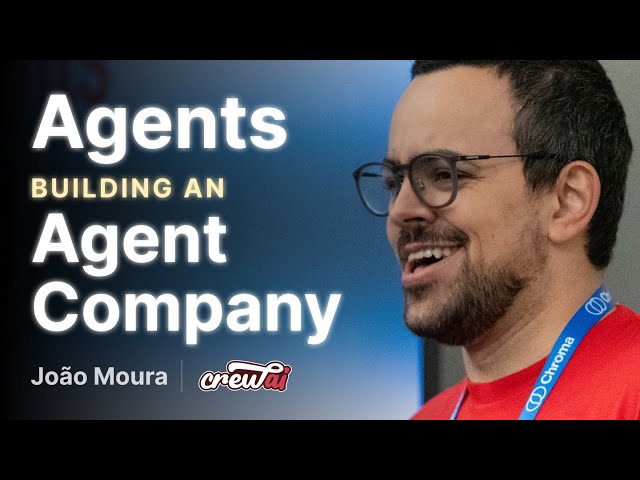
Learn how to leverage AI agents to transform your business operations in this 14-minute conference talk from the AI Engineer World's Fair. Discover the journey behind crewAI, a framework for building AI agents, and explore how these tools can revolutionize the way you work and grow your business. Examine practical applications including marketing crews, lead qualification systems, and bug resolution processes that demonstrate the real-world impact of AI agent implementation. Understand the evolution from traditional workflows to AI-powered solutions, and gain insights into code execution capabilities and crew training methodologies. Explore the future potential of AI agents and learn about advanced features like CRE Plus and specialized crew configurations that can streamline various business processes and unlock new possibilities for innovation and efficiency.

YouTube
Explore how IoT sensors and machine learning are transforming industrial maintenance practices in this 15-minute conference talk from Conf42 ML 2025. Learn about different types of maintenance approaches and discover how predictive maintenance leverages IoT sensor technology to monitor equipment health in real-time. Understand the integration of machine learning algorithms that analyze sensor data to predict equipment failures before they occur, reducing downtime and maintenance costs. Examine real-world applications across various industries and explore the significant market growth in predictive maintenance solutions. Address the key challenges facing implementation of these technologies and gain insights into future directions for industrial maintenance automation. The presentation covers acoustic analysis techniques and provides practical guidance for organizations looking to modernize their maintenance strategies through data-driven approaches.

LinkedIn Learning
Learn how to use Chef, a powerful platform that transforms your infrastructure into code, to simplify and automate configuration management.