

Courses
Discover thousands of courses from top institutions and platforms worldwide
Level
Course Type
Duration
YouTube
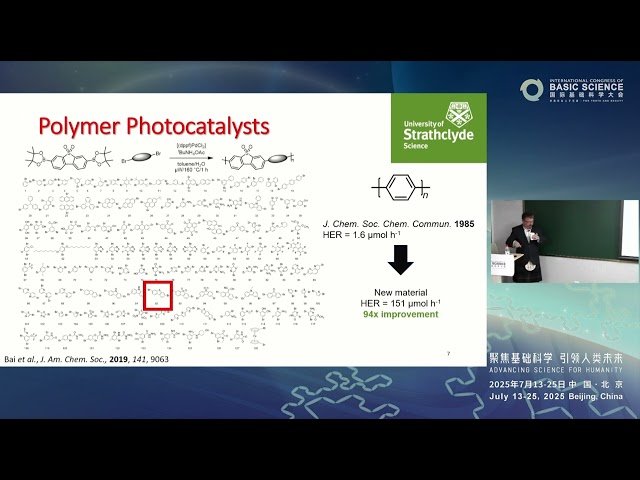
Explore the cutting-edge intersection of robotics and chemistry in this 39-minute conference talk from BIMSA's ICBS2025 event. Discover how mobile robotic systems are revolutionizing chemical research and laboratory automation through autonomous experimentation capabilities. Learn about the design principles, implementation challenges, and practical applications of robotic chemists that can navigate laboratory environments independently. Examine the technological innovations enabling robots to perform complex chemical synthesis, analysis, and discovery tasks with minimal human intervention. Understand the potential impact of mobile robotic chemists on accelerating scientific discovery, improving experimental reproducibility, and transforming traditional laboratory workflows in chemical research and development.

YouTube
Explore the life and legacy of nineteenth century chemist Henry Enfield Roscoe through a detailed biographical lecture presented by Peter Morris, drawing from his forthcoming collaborative biography with Peter Reed. Delve into Roscoe's significant contributions to chemistry, his campaigning efforts, and his impact on the scientific community during the Victorian era. Learn about the historical context and scientific developments of the period while gaining insights into the personal and professional journey of this influential chemist.

Study.com
Review our Significant Chemists Study Guide course to explore the contributions of the world's most important chemists. The course's simple lessons and self-assessments are great options for students who need to review significant chemists for homework, class assignments or upcoming exams.

YouTube
Explore a historical lecture examining the complex evolution of pharmacy's professional identity in Britain and its relationship with chemistry and medicine. Delve into the fascinating question of why pharmacists can be called chemists while chemists cannot be called pharmacists, tracing back to 19th-century professionalization efforts. Learn about the influence of chemical discoveries in the late 18th century and how forward-thinking chemists and druggists recognized the importance of chemical knowledge in pharmacy education. Discover the French chemist Antoine François Fourcroy's perspective on pharmacy's subordinate position to chemistry, and how British doctors like Anthony Todd Thomson supported this view. Examine the founding of the Pharmaceutical Society of Great Britain in 1841 and its aspirations to establish pharmacy as a fourth branch of medicine. Understand the significant impact of the 1852 Pharmacy Act, which created a statutory register of pharmaceutical chemists, and how subsequent legislation, including the 1858 Medical Act and 1868 Pharmacy and Poisons Act, shaped the professional boundaries and protected titles within the field.

OpenLearn
How are designs turned into products? What resources, materials and methods are used and what set of activities goes under the heading of 'manufacturing'? This free course will introduce manufacturing as a system and will describe some of the many different ways of making products. We will illustrate how the required properties of the materials in a product influence the choice of manufacturing process used.

Swayam
This course will start with Basic principles of NMR, walk through the analysis of spectra and demonstrate the application of multidimensional NMR spectroscopy in Chemistry and structural Biology. INTENDED AUDIENCE: M. Sc./ PhD and Scientists working in Pharma and Biophrma IndustriesPREREQUISITES: Under graduate level understanding of Physics and Mathematics INDUSTRY SUPPORT: Biocon, Wockhardt, Aurobindo Biopharma etc

OpenLearn
This free course, Additive manufacturing, introduces you to its key concepts. It covers the fundamentals of the additive manufacturing (AM) process, the steps involved in creating a model and building an artefact, the materials and techniques used, as well as the design implications and the factors which affect the functionality of the finished parts.

Coursera
This specialization is designed to be an introduction to additive manufacturing (AM) with exposure to six different AM processes. The field of AM can be broadly divided into three elements: process, materials and design. This specialization will provide a broad overview of all three elements, which is an ideal preparation for more advanced courses that dive more deeply into the growing field of AM. This specialization covers build preparation, machine setup, and post-processing requirements for six different AM processes. In addition, learners will explore the cross-cutting aspects of AM, including part orientation, supports, design for additive manufacturing, key process parameters, and mechanical and surface properties. You can see an overview of the specialization from Dhruv Bhate.

Coursera
This course, Additive Manufacturing, is the third course in the Coursera Specialization, Digital Technologies and the Future of Manufacturing. In this course, learners will be introduced to the concept of Additive Manufacturing, learn how it is applied in manufacturing, and what businesses should consider as they decide to implement this technology. Considerations include the economics of the technology, information technology infrastructure, manufacturing ecosystem partners, the business value of implementing Additive Manufacturing, and what needs to happen across the organization to ensure successful implementation. Learners will hear from industry experts as they share their perspectives on the opportunities and challenges of implementing Additive Manufacturing, how Additive Manufacturing is being implemented in their companies, and insights on the future of this technology within their industry and across manufacturing. The content presented in this course draws on a number of real-life interviews and case studies, and was created through a partnership with Siemens.

YouTube
Dive into the world of 3D printing with this comprehensive 3.5-hour tutorial led by expert Kyle Houchens. Learn essential techniques for preparing models in Rhino for successful 3D printing, covering crucial topics such as mesh settings, solid model fixing, printing multiple solids, advanced mesh repair, and part thickness. Explore the decision-making process for choosing between hollow and solid prints, and gain insights on selecting the right rapid prototyping service. Master the art of transforming digital designs into tangible objects, whether working with your own creations or preparing models from other sources.

YouTube
Explore the comprehensive capabilities of 3D printing and additive manufacturing in Fusion 360 through this extensive tutorial series. Dive into FFF print settings, body presets, and support structures, including solid volume and bar support. Master the creation of volumetric lattice structures and learn to generate base plate supports. Discover how to utilize template libraries, edit support structure defaults, and sync part visibility to active setups. Explore advanced features like multi-axis deposition toolpaths and process simulation with post-processing. Learn to integrate with select Flashforge & Makerbot printers using GPX PostProcessor, and understand the new Temperature Tower functionality. Gain insights on designing and manufacturing faster with Formlabs, and delve into parametric mesh editing and reverse engineering tools. Explore remote printing via Ultimaker Digital Factory, evaluate models for FFF manufacture using the Additive Assistant add-in, and connect Fusion 360 to OctoPrint. Master advanced techniques such as using the Arc Fit option for G-Code generation and creating custom machines and post-processors for FFF 3D printing.

Swayam
In the contemporary dynamic manufacturing era, to produce products that can be easily made and can offer typical competences is of utmost importance. Besides basic manufacturing processes, engineering students and manufacturers needs to bolster their skills in advanced technologies. This course is a step in this direction to make the students to learn design, development, and manufacturing using Rapid Manufacturing technologies. Along with specific Rapid Prototyping techniques, manufacturing concerns such as geometric modelling, design for manufacturing and assembly, developing modular designs, group technology, et cetera are included. Laboratory demonstrations are also induced for practical experience. In the end of this course, students should be able to identify the methods and techniques required to manufacture any model.INTENDED AUDIENCE:Students of all Engineering and Science disciplines.PREREQUISITES:The student should have completed two semesters of UG Engineering or Science program.INDUSTRY SUPPORT :HAL, NAL, SAIL, ISRO

Udemy
Learn about the basics of selecting process for a mechanical design and the principles of design for Manufacturing What you'll learn: The Criteria based on which a manufacturing process is selected for designProcess compatibility to materials and shapesComparison of processes based on tolerance and costDifference in prototyping and productionCase studies in process selection for design problemsDesign principles employed for designing forged partsDesign principles employed in Design of Casted partsDesign principles used in design of Injection molded plastic parts Design for manufacturing or DFM is a very important practical activity in Mechanical design engineering. Converting concept into designs which can be manufactured and ready for implementation is a key skill in product development. This course attempts to cover the basics of designing for manufacturing including selecting a suitable process based on various criteria and designing for the process to reduce cost and improve ease of manufacturing .Topics covered are Importance of Process selection Parameters and Criteria for selectionComparison of processes Process- Shape matrix Section wall thickness and Tolerance rangesCost associated Part complexity and part costPrototyping vs productionCase studies in process selection Designing for Forging - principles and guidelinesDesigning for Casting - principles and guidelinesDesign for Injection Molding - Principles and guidelines.Exercises to practice The learning outcome of this course is to develop a strong basic comparative understanding of various processes and get started with designing as per certain processes to build DFM skills for mechanical design & product development. Course will be best suitable for Mechanical design engineers who want to level up their DFM knowledge and skills .

YouTube
Course outline: The course will basically deal with the following topics: Introduction, Detroit type automation, Analysis of automated flow lines, Automated assembly systems &Orientation of parts in automatic assembly. ABOUT INSTRUCTOR: Prof. Sounak Kumar Choudhury have completed my Ph.D. in Mechanical Engineering from Moscow, Russia in 1985 followed by post-doctoral at the same university till 1986. From 1986 I am involved in teaching and research in the Mechanical Engineering Department of Indian Institute of Technology Kanpur. My areas of specialization are conventional and non-conventional machining, automatic control, hydraulic control, machine tools and manufacturing automation.

Coursera
Welcome to the specialized course Heavy Manufacturing! In this comprehensive specialization, we will delve into the intricate techniques, advanced processes, and cutting-edge technologies essential for success in Heavy Manufacturing Industries. Our journey begins with an exploration of the casting process, covering sand casting to investment casting, where learners will discover principles and best practices. Next, we dive into forging, exploring types like closed die and open die forging, with practical demos. In welding, learners will understand fundamental procedures, weld joints, symbols, and minimize flaws through practical instruction. We focus on welding for process plant equipment, including SMAW, GTAW, and flux-cored arc welding, with practical exercises. Specialized welding and post-weld treatments like thermite welding, stress relieving, and tempering are covered to maintain integrity. Quality control, welding automation, and IoT 4.0 integration are explored, studying non-destructive inspections, standards, and regulations. Completing this specialization equips learners with the knowledge and experience to excel in heavy manufacturing, enhancing efficiency, reliability, and innovation in the industry. Join us to uncover the keys to success in heavy manufacturing technology and processes! Target Learners: Professionals & students in Mechanical, Manufacturing, Mechatronics, Robotics, and Automation.
Coursera
This specialization provides a comprehensive understanding of computer-aided process planning, guiding learners from a CAD model to the final product. It covers the model processing stage and explores suitable printing techniques, demonstrated through real-world components. By the end of the course, participants will be proficient in digital manufacturing, equipped with expertise in CAD and CAM software, and well-versed in 3D printing solutions. This specialization is ideal for professionals seeking a career transition into Industry 4.0, as well as those working in IoT, Product Design, Materials, Mechanics, and System Design. It is particularly relevant for industries such as automotive, aerospace, FMCG, pharmaceuticals/medical equipment production, energy, metals and mining, and oil and gas, which are key sectors for implementing digital manufacturing and smart factory concepts.

YouTube
COURSE OUTLINE: In the contemporary dynamic manufacturing era, to produce products that can be easily made and can offer typical competences is of utmost importance. Besides basic manufacturing processes, engineering students and manufacturers needs to bolster their skills in advanced technologies. This course is a step in this direction to make the students to learn design, development, and manufacturing using Rapid Manufacturing technologies. Along with specific Rapid Prototyping techniques, manufacturing concerns such as geometric modelling, design for manufacturing and assembly, developing modular designs, group technology, et cetera are included. Laboratory demonstrations are also induced for practical experience. In the end of this course, students should be able to identify the methods and techniques required to manufacture any model.

YouTube
COURSE OUTLINE: The aim of this course is to provide treatment to manufacturing functions to gain a competitive advantage. Normally, operation activities are considered reactive in nature. Therefore, organizations are not able to use operation function for competitiveness. W.Skinner wrote the seminal article in HBR in 1969 to highlight the role of manufacturing in corporate strategy. This course will discuss the process of formulation of manufacturing strategy and will also discuss various tools and techniques for making a world class organization. This course will have the right blend of theory and case discussions.

YouTube
Explore advanced computer-aided manufacturing techniques in this comprehensive playlist focusing on Creo's integrated CAM suite. Dive into both additive and subtractive manufacturing processes, including cutting-edge lattice capabilities for plastics and metals. Learn about 5-axis high-speed milling, Swiss turning, and mill-turn work improvements. Discover enhancements in stochastic lattices, build direction optimization, and multibody part design for additive manufacturing. Gain insights into slicing for 3D printing, formula-driven cells for lattices, and material homogenization for lattice simulation. Understand the latest developments in toolpath visualization, dynamic B-axis tuning, and mold machining extensions. Acquire knowledge about thermal load support, truss lattice implementation, and simplified mass properties calculations in additive manufacturing.
YouTube
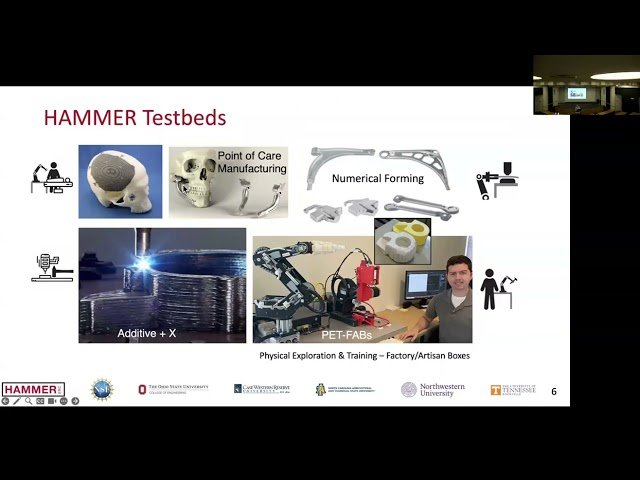
Join a thought-provoking seminar where Glenn S. Daehn, the Mars G. Fontana Professor of Metallurgical Engineering from The Ohio State University, explores revolutionary approaches to manufacturing that go beyond the current focus on Manufacturing 4.0 and Smart Manufacturing. Discover the groundbreaking work of the NSF's HAMMER Engineering Research Center (ERC), a collaborative 10-year initiative across five universities that introduces innovative manufacturing techniques like robotic blacksmithing. Learn how this new approach shifts away from traditional force-based methods to emphasize precision control in transforming both material shapes and microstructures. Gain insights into HAMMER's comprehensive research agenda and understand its strategic plans for advancing education, community engagement, and economic development in the manufacturing sector.