

Courses
Discover thousands of courses from top institutions and platforms worldwide
Level
Course Type
Duration
Udemy
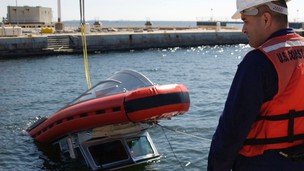
Understanding what keeps ships floating upright, so that you don't have a bad day on the water! What you'll learn: Understand the relationship between the center of gravity and the center of buoyancy.Understand the righting moment and its impacts on stability.Define traits that make stability better or worse.Be prepared for maritime regulatory exams regarding stability. Keep floating! This course is for recreational boaters, sailors, or professional mariners looking to increase their understanding of ship stability principles and how to keep a boat or ship safely stable on the water. In the course we will discuss the key points on a vessel such as the center of gravity and the center of buoyancy, as well as the relationship of righting arm to stability of a vessel. We'll discuss the metacenter and common stability indicators such as GM. In addition, we'll learn about common actions that make stability better or worse on boats. We'll also review certain key elements which often appear on professional examinations including several practice problems and solutions. Using video and whiteboard lectures, this course will give you a better understanding of why ships remain upright in the water, and how they are impacted by shifting weights, wind, and seas. As an end result, you will better understand heeling, listing, and rolling period of vessels as indicators of stability. This course is produced by Practical Navigator Training, an approved Coast Guard maritime training provider in the United States, and the instructor is Capt. Chris Nolan, a licensed mariner and tall ship captain with over 20 years of seagoing experience.

YouTube
Dive into the fascinating world of marine ecosystems in this 50-minute lecture. Explore Earth's surface composition, mean elevation, and major oceans while distinguishing between seas and oceans. Examine the continuous circulation patterns driven by wind, including trade winds and the Coriolis effect. Investigate ocean currents, their directions, and the unique characteristics of lower polar regions. Delve into advanced concepts such as Ekman transport, Ekman spiral, and convection. Conclude by understanding the influence of satellite masses on marine ecosystems. Gain a comprehensive understanding of the complex interactions that shape our planet's aquatic environments.

YouTube
COURSE OUTLINE: Introduction - ideal and viscous incompressible fluid; Kinematics of fluid; Lagrangian and Eulerian methods of description, velocity, acceleration, streamlines, pathlines, vorticity; Equation of continuity; Euler’s Equations of motion; Bernoulli's equation and its application, Two-dimensional motion - velocity potential, stream function, Sources, sinks, dipoles; Flow past a circular cylinder with and without circulation; Blasius Theorem; Problems on the motion of perfect fluids steady translation of a cylinder in an infinite fluid medium, unsteady translation; Added mass of cylinders; Spheres; The vortex system-circular vortex, two dimensional sources and vortex distributions, vortex sheets; Lifting Surfaces, Aerofoil theory - complex potential- Method of Conformal mapping- Joukowski profile; Flow past a Joukowski profile; Velocity and pressure distribution on aerofoils; Viscous fluids- Navier-Stokes equations, Laminar flow, Poiseuille flow, Couette flow, flow through a pipe; Boundary layer Theory-Reynolds Number; Boundary layer along with a flat plate; Blasius solution; Separation, Von Karman momentum integral method; Introduction to Turbulence; Gravity waves- Airy's wave; Free surface condition; Velocity potential- Dispersion relation; Surface tension effects; Orbital motion; Group velocity and its dynamical significance; Wave energy; Standing waves; Loops and nodes, Wave forces and Morison's equation, Long waves and waves in a canal; Tides. COURSE DETAIL: The course content consists of five modules. Each module will have approximately 8-10 lectures. Apart from the basic theory, a large number of problems will be worked out to illustrate the utility of the theory. There will be a couple of problems at the end of each lecture/module as homework.

YouTube
Explore the fascinating world of marine sediments in this comprehensive lecture. Delve into the classification, collection, and analysis of ocean floor deposits, including lithogenous, biogenous, hydrogenous, and cosmogenous sediments. Learn about sediment transport mechanisms, grain size, texture, and distribution patterns across neritic and pelagic environments. Discover the importance of marine sediments in paleoceanography and examine techniques for studying ocean sediment cores. Investigate the role of silica and calcium carbonate in biogenous sediments, and understand the significance of the calcite compensation depth. Explore the relationship between sea floor spreading and sediment accumulation, and study unique formations like manganese nodules, phosphates, and evaporites. Gain insights into the complex mixtures of marine sediments and their global distribution patterns.

YouTube
Explore the diverse marine provinces of Earth's oceans in this comprehensive 46-minute lecture. Dive into the methods of measuring bathymetry, including echo sounding and modern techniques like sea floor mapping from space. Examine various bathymetric maps and seismic reflection profiles to understand ocean topography. Learn about major ocean regions, focusing on the North Atlantic, and distinguish between passive and active continental margins. Investigate features of the ocean floor such as continental shelves, slopes, submarine canyons, and abyssal plains. Discover the formation of turbidity currents and their impact on underwater landscapes. Study volcanic structures like seamounts, tablemounts, and the Pacific Ring of Fire. Analyze the characteristics of mid-ocean ridges, including hydrothermal vents, fracture zones, and transform faults. Conclude with an exploration of oceanic islands and witness the emergence of new volcanic islands.

YouTube
Explore the fascinating world of marine biology in this comprehensive 59-minute lecture. Dive into topics such as the Census of Marine Life, current marine species, and the unique adaptations of marine organisms. Learn about protoplasm, float mechanisms, and the streamlined nature of aquatic life. Examine how temperature changes affect marine ecosystems and understand the crucial role of osmosis in marine organisms. Discover the importance of isotonic environments, transparency, and camouflage techniques like disruptive coloration. Investigate the function of swim bladders and gain a broader understanding of the marine environment. Enhance your knowledge of ocean ecosystems and the incredible diversity of life beneath the waves.

Udemy
Learn and master the skills to become a Google Cloud Architect What you'll learn: Overview of the Google Cloud PlatformIn depth lectures with demos and examples for the Compute section including: Compute Engine, Kubernetes Engine, App Engine, Pub/Sub and Cloud functionsIn depth lectures with demos and examples for the Storage section including: Cloud storage, Big table, Spanner, Cloud SQL and DatastoreIn depth lectures with demos and examples for the Networking section including: VPCs, Subnets, Firewalls, Routes, IP addresses, DNS and LoadbalancerBest Practices of working with GCP in the real field. The GCP course provides you the tools to master the concepts required to become a Cloud Architect. GCP is a large, complex suite of products and services that can be overwhelming. We structured the course into a simple, module based learning system with core concepts, demos and real world examples. Whether you're a beginner looking for an introductory overview of the Google Cloud Platform or a professional studying for the certification, you'll benefit from the course. In the end of this course, you will gain in-depth knowledge about GCP to help your company or your own project to get on GCP, make use of the correct component on GCP, and continuously deliver better software. About the Author:Jake Robin is a seasoned hardware engineer with over 15 years of experience in technology. In particular, Jake has 7+ years architecting & developing end-to-end solutions involving mobile/api’s/ client-server/ iBeacons/ Google Cloud Platform/ AWS. He advised/mentored startups, ran training/marketing bootcamps in App development/Marketing/ Chatbots etc.Basit Mustafa is the Founder & CEO - Voltaire, Inc and the previously IBM's director in software department. Basit's technology career has focused on successfully applying technology to solve big problems, teaching others how to do the same, and leading teams that apply technology to solve business problems. Today, as Basit grows his business he enjoys coaching and teaching others to do the same with a focus on using the latest technology to build whatever is their passion! Why shall we learn Cloud Computing:Cloud Computing is on the bleeding edge of technology today. It is also one of the most compelling technologies of the last decade in terms of its disruption to software development, operations, systems architecture, testing and compliance practices. Google Cloud Computing is becoming a must tool for developers. GCP approach gives you the opportunity to scale your application without any need of deploy any physical hardwares. Google Cloud Computing allows developers to focus on the things which actually matters without worrying about the underlying infruscture where the application runs.Tons of companies are using Google Cloud Computing in production, today you have the access to that same cloud technology right on your desktop. What you'll learn:Overview of the Google Cloud PlatformIn depth lectures with demos and examples for the Compute section including: Compute Engine, Kubernetes Engine, App Engine, Pub/Sub and Cloud functionsIn depth lectures with demos and examples for the Storage section including: Cloud storage, Big table, Spanner, Cloud SQL and DatastoreIn depth lectures with demos and examples for the Networking section including: VPCs, Subnets, Firewalls, Routes, IP addresses, DNS and Load balancerBest Practices of working with GCP in the real field. Why choosing this course?This course is very hands on, Jake and Basit has put lots effort to provide you with not only the theory but also real-life examples of developing applications on GCPthat you can try out on your own laptop.In the end of this course, we are confident that you will gain in depth knowledge about GCP and general cloud computing skills to help your company or your own project to apply the right cloud solution and continuously deliver better software. 30-day money-back guarantee!You will get 30-day money-back guarantee from Udemy for this course.If not satisfied simply ask for a refund within 30 days. You will get full refund. No questions whatsoever asked.Are you ready to take your Cloud skills and career to the next level, take this course now!You will go from zero to GCP hero in 10 hours.

Swayam
ABOUT THE COURSE: This course is designed to teach students about the mechanical systems on ship. The system includes various machinery which includes power systems, fuel handling systems, power transmission systems etc. through this course the students will know the basics of the machinery used on the ship.INTENDED AUDIENCE: UG students in Ocean, Mechanical engineeringPREREQUISITES: 1st years Engineering courses such as thermodynamics and applied mathematics, basic electrical engineering.INDUSTRY SUPPORT: Ship design /engine manufacturers

Swayam
Marine Biotechnology is a Curriculum-based course content of one of the graduate and post graduate programs of Life Science discipline. It is part of the approved curriculum being transacted in a few affiliated Colleges of Pondicherry University and similar course is being offered at many Universities/Colleges across India.This course is to enable the students of life sciences to learn about the traditional culture of marine organisms fish, shrimp, lobsters, molluscs like edible oysters, mussels and pearl oysters, microalgae and sea weeds. The course on Marine Biotechnology teach the student how to increase the food production especially fish which is depleting and also non conventional foods also can be cultured. It also teaches the student Drugs also being obtained from marine organisms for cancers and other neurological disorders. This knowledge would equip life sciences students to think in terms of skill development and make in India theme and help them to get jobs or to start their own venture.

Coursera
This course is about life in the oceans, from the sunlit surface to the inky depths, from microscopic phytoplankton to the great blue whale. The ocean is among the world’s most inhospitable environments for scientific research, which is why we know as much about the surface of the moon as we do the bottom of the sea. This course uncovers the evolutionary history of marine organisms, adaptations to life in water, the behavior and functional morphology of sea animals, interactions between species, and current threats. Throughout the course, we meet scientists who are developing ingenious solutions for overcoming challenges and are making remarkable discoveries. By evaluating these cases and analyzing real scientific data, we come to understand some of the ways that life has adapted to diverse ocean habitats, how it interacts with the physical environment and with other organisms, and why it matters to us.

YouTube
Explore an in-depth examination of marine engine stuffing boxes through interactive 3D models in this 19-minute educational video from saVRee. Learn about all the main components of stuffing boxes, understand their purpose, and discover how they function in marine engineering applications. The video provides comprehensive visual explanations that make complex engineering concepts accessible and clear for students, instructors, and industry professionals interested in marine engineering systems.

Udemy
The Google Cloud for ML with TensorFlow, Big Data with Managed Hadoop What you'll learn: Deploy Managed Hadoop apps on the Google CloudBuild deep learning models on the cloud using TensorFlowMake informed decisions about Containers, VMs and AppEngineUse big data technologies such as BigTable, Dataflow, Apache Beam and Pub/Sub This course is a really comprehensive guide to the Google Cloud Platform - it has ~25hours of content and~60 demos. The Google Cloud Platform is not currently the most popular cloud offering out there - that's AWS of course - but it is possibly the best cloud offering for high-end machine learning applications. That's because TensorFlow, the super-popular deep learning technology is also from Google. What's Included: Compute and Storage- AppEngine, Container Enginer (aka Kubernetes) and Compute EngineBig Data and Managed Hadoop- Dataproc, Dataflow, BigTable, BigQuery, Pub/SubTensorFlow on the Cloud - what neural networks and deep learning really are, how neurons work and how neural networks are trained.DevOps stuff- StackDriver logging, monitoring, cloud deployment managerSecurity - Identity and Access Management, Identity-Aware proxying, OAuth, APIKeys, service accountsNetworking - Virtual Private Clouds, shared VPCs, Load balancing at the network, transport and HTTP layer; VPN, Cloud Interconnect and CDNInterconnectHadoop Foundations: A quick look at the open-source cousins (Hadoop, Spark, Pig, Hiveand HBase)

YouTube
Explore the critical issue of marine pollution in this comprehensive 52-minute lecture. Delve into the definition of pollution and environmental bias before examining various types of marine pollutants. Learn about the devastating effects of oil spills, sewage sludge, and chemical contaminants like DDT, PCBs, and mercury. Investigate the growing problem of nonpoint source pollution and the regulations surrounding ocean dumping. Conclude by focusing on the pervasive issue of plastic pollution, including microplastics and the infamous Pacific Garbage Patch, gaining a thorough understanding of the challenges facing our oceans today.

YouTube
Explore the fascinating world of marine sediments in this comprehensive 47-minute lecture on oceanography. Delve into the classification of marine sediments, their importance in paleoceanography, and the various types including lithogenous, biogenous, hydrogenous, and cosmogenous sediments. Learn about the significance of grain size, texture, and environmental factors in sediment formation and distribution. Discover the role of calcium carbonate in biogenic sediments, the concept of Carbonate Compensation Depth (CCD), and the global distribution of modern calcium carbonate sediments. Examine unique formations like manganese nodules, phosphates, and evaporites. Gain insights into the mixture of sediment types in different oceanic regions and understand the distinction between pelagic and neritic sediment distribution. Conclude with an overview of worldwide marine sediment thickness, providing a holistic understanding of the ocean floor's composition and its implications for Earth's geological history.
Udemy
Exploring Software Aspects: Interface, Tools, and Techniques. Master Pages, Tools like Line and Circle, Object Snap What you'll learn: AutoCAD Interface and NavigationDrawing Commands for Basic Shapes in AutoCADAdvanced Drawing Tools for Complex DesignsUsing Object Snap in AutoCADApplying Layers and Line Types for Organized DrawingsCreating Blocks and Dynamic BlocksAdding Text, Dimensions, and Leaders to Your DrawingsUsing Tables and Fields in AutoCADLayouts and Printing in AutoCADAdvanced Tools for Collaborating and Sharing Drawings Note: The main difference in this course compared to others is that we have not confined ourselves to explaining simple techniques. Instead, we have conveyed the subject through challenging projects and specific tricks, which are the result of numerous experiences. Looking to start your journey in the world of design?Do you know how the plan are drawn?Want to create professional designs using AutoCAD ?Welcome to the ultimate guide to mastering AutoCAD 2024 - from Zero to Advanced! Whether you're a complete beginner or an experienced designer looking to enhance your skills, this comprehensive course is designed to take you on a transformative journey through the world of computer-aided design.In this course, you'll start with the fundamentals, gradually building a solid understanding of AutoCAD's interface, tools, and techniques. From creating precise 2D drawings, our step-by-step lessons will empower you to bring your design ideas to life with confidence. Headlines: AutoCAD Interface and NavigationDrawing Commands for Basic Shapes in AutoCAD Advanced Drawing Tools for Complex DesignsUsing Object Snap in AutoCAD Applying Layers and Line Types for Organized DrawingsCreating Blocks and Dynamic BlocksAdding Text, Dimensions, and Leaders to Your DrawingsUsing Tables and Fields in AutoCAD Layouts and Printing in AutoCADAdvanced Tools for Collaborating and Sharing DrawingsIf you are currently a BIM modeler or planning to become one, it is essential not to limit yourself to any form. You should be able to manage any architectural design in the BIM process And in the end, you will be the hero of this training. Please watch this course and feel free to ask me any questions you have while watching it. Additionally, during the learning Autocad, ask me questions so that I can guide you.

YouTube
Explore the fascinating world of marine provinces and bathymetry in this comprehensive 51-minute lecture. Dive into the methods of measuring ocean depths, from traditional echo sounding to modern satellite-based techniques. Examine the various features of continental margins, including active and passive types, submarine canyons, and the continental rise. Investigate the complex structures of mid-ocean ridges, fracture zones, and transform faults. Gain a thorough understanding of the ocean floor's topography and its geological significance through detailed comparisons of bathymetric maps and sea floor mapping from space.

XuetangX
The course Introducing Marine Engineering has been offered for 90 years since the major, marine engineering, was designed in Dalian Maritime University (DMU). This course aims to help the learners to understand ships, the marine power plant, the crew in the engine department and their main responsibilities, and master the composition of marine power plant, the source and working principle of the ship's power and electric power, and the composition and roles of the ship's power plant and its systems, auxiliary devices and anti-pollution equipment.At present, in DMU, it is a 32-credit-hour course, and for some majors, it is a 16-credit-hour course. It is a compulsory course or distributional elective for those majoring in nautical science, law, rescue and salvage engineering, traffic management, etc. It is also an elective course for all students. Besides, as one of the orientation courses, it is compulsory for students majoring in marine engineering. More than 2,000 students learn this course every year.This course has distinctive maritime characteristics. During the learning process, students have the chance to visit the training ship YUKUN, which has been welcomed by students for many years, and has achieved remarkable learning outcomes. However, with the introduction of national strategies such as building a maritime power, a transportation power and a shipping power, as well as the development of maritime technology and information technology, the contents and the teaching methods of the course also need to be updated. The teaching contents need to reflect how ships support national strategies, enrich students' life, and touch upon more maritime cultures, especially Chinese maritime cultures. The teaching methods need to fully implement the educational concept of "student-centered" and use virtual reality (VR) technology to display the equipment and the engine room.Therefore, the course team members designed the MOOC, Introducing Marine Engineering, updating the course contents, such as international conventions and domestic regulations concerning the safety, environmental protection and management of marine power plant, new technologies such as EFI diesel engine, gas engine, unmanned ship, etc. Learners can see the virtual engine room to experience the convenience and efficiency brought by VR technology. The course team members have also carefully designed the lead-in of each lesson. They start the course by introducing the scenes in life, which is easier for learners to understand, and then lead the learners to acquire the specialized knowledge. They aim to talk about the marine power plant through life, and observe the society through the marine power plant.In a word, Introducing Marine Engineering does not only help students majoring in marine engineering (especially freshmen and sophomores) to learn about marine power plant systematically, but also the non-majors and social learners to enrich their knowledge, understand national strategies and inherit maritime culture.

Udemy
A complete Diploma in one Course What you'll learn: Understand Ship structure and constructionUnderstand Ship component, parts and their functionsLearning the Principles of marine scienceLearn the Fundamentals of Engineering ThermodynamicsUnderstand Marine Diesel Engines, design and operationUnderstand Marine Steam TurbinesUnderstand Marine BoilersLearning Marine Electrical EquipmentsFree Downloadable book This Program is one of the most comprehensive online programs that specialized in Marine engineering, Marine engineers are involved with the design, construction, installation, operation, maintenance and repair of the main propulsion engines and auxiliary machinery and systems found in all kinds of ships, Also Marine engineering applies a number of engineering sciences, including mechanical engineering, Engineering Thermodynamics, electrical engineering and computer science, to the development, design, operation and maintenance of Marine Equipment's. This comprehensive program covers most of the aspects in that’s filed. In an easy, simple and straightforward way. Including hundreds of photos, diagrams and illustrations. so you are going to study Ship parts, construction and design. Also I am going to cover the major principles in the marine engineering science, You will study as well the Marine Diesel Engine, Boiler, and steam turbines and different marine systems, including the Electrical System. I wish that every on of you enjoy this program. You have lifetime access to the course so you can take as long or short as you wish to go through the material. You can replay the videos at anytime using the course as an ongoing reference. You also have a 30 day money back guarantee.BE SURE TO ENROLL NOW!
Udemy
Master AWS with 26 Hands-On AWS Projects, Hands-on and Assignments covering VPC, EC2, Lambda, and Real-World Scenarios. What you'll learn: Master the fundamentals of AWS services like VPC, EC2, Lambda, and S3Implement best practices for securing AWS environments using IAM, MFA, and encryptionDesign and deploy scalable, cost-efficient infrastructure using AWS servicesApply hands-on experience in real-world projects to configure, troubleshoot, and optimize AWS cloud solutions Unlock your potential as an AWS cloud engineer with this comprehensive course, "AWS Mastery: 26 Hands-On Projects for Aspiring Cloud Engineers." Throughout 26 well-designed projects, you’ll gain practical, in-depth knowledge and hands-on experience with Amazon Web Services (AWS), empowering you to confidently navigate the cloud engineering world. The course covers key services such as VPC, EC2, Lambda, IAM, S3, and advanced cloud architecture strategies while emphasizing security, cost optimization, and best practices. Kickstart your AWS journey by getting familiar with the foundational aspects of cloud engineering. Begin with setting up an AWS account, configuring security settings like MFA, and learning essential tools such as AWS CLI. Strengthen your skills in managing IAM roles and access control, while learning to optimize security policies for a multi-user environment. Dive into data management by setting up S3 buckets, implementing secure resource sharing, and leveraging versioning for efficient data storage. You will also design a secure hybrid cloud infrastructure and explore advanced features such as Identity Federation for seamless AWS integration.Key Topics Covered:AWS Account Setup & Management: Learn to set up a secure AWS account and configure budget management, MFA, and access control.IAM Security Best Practices: Implement IAM policies for secure user management and resource sharing across teams.Amazon S3 Mastery: Gain hands-on experience in managing S3 buckets, optimizing storage costs, and ensuring secure access to data.EC2 & VPC Configuration: Master launching EC2 instances, configuring VPCs, and deploying a two-tier application in a scalable environment.Hybrid Cloud Integration: Design and implement secure hybrid cloud access to AWS S3 and enable resource sharing between multiple AWS accounts.High Availability & Resilience: Learn to build high-availability architectures using subnets, NAT Gateways, and troubleshooting techniques.What You Will Learn:Setting up and managing AWS environments using IAM, EC2, S3, and other core AWS services.Implementing security best practices, including MFA, IAM roles, and access policies.Hosting static and dynamic websites on S3 with custom domains and secure resource sharing.Building and optimizing high-availability and cost-effective cloud infrastructure.Developing real-world solutions like a dynamic "Contact Us" form using AWS Lambda, SES, and API Gateway.Troubleshooting and maintaining a two-tier architecture on AWS.Whether you're looking to build a strong foundation in AWS or advance your cloud engineering skills, this course will equip you with the essential tools and strategies to excel in the fast-evolving cloud industry. Start your hands-on journey today and master the AWS skills that are in high demand across organizations globally!

Coursera
This specialization provides an overview of solar photovoltaics (PV), intricacies of solar system design, and a framework for solar PV project management. Targeted for engineers, HVAC installers, architects and building code inspectors, it is also appropriate for anyone considering a career in the growing renewable energy field of solar power. Courses introduce how PV operates and the anatomy of solar electric systems, the economics of solar power, pros and cons of different systems, considerations for designing a PV system, and fundamental code compliance. Materials primarily focus on solar PV in the United States. To learn more, view an overview at https://youtu.be/XjkKzbXqA6s.