

Courses
Discover thousands of courses from top institutions and platforms worldwide
Level
Course Type
Duration
Independent
The Penetration Tester Job Role Path is for newcomers to information security who aspire to become professional penetration testers. This path covers core security assessment concepts and provides a deep understanding of the specialized tools, attack tactics, and methodology used during penetration testing. Armed with the necessary theoretical background and multiple practical exercises, students will go through all penetration testing stages, from reconnaissance and enumeration to documentation and reporting. Upon completing our first job role path, you will have obtained the practical skills and mindset necessary to perform professional security assessments against enterprise-level infrastructure at an intermediate level. The Information Security Foundations skill path can be considered prerequisite knowledge to be successful while working through this job role path.
YouTube
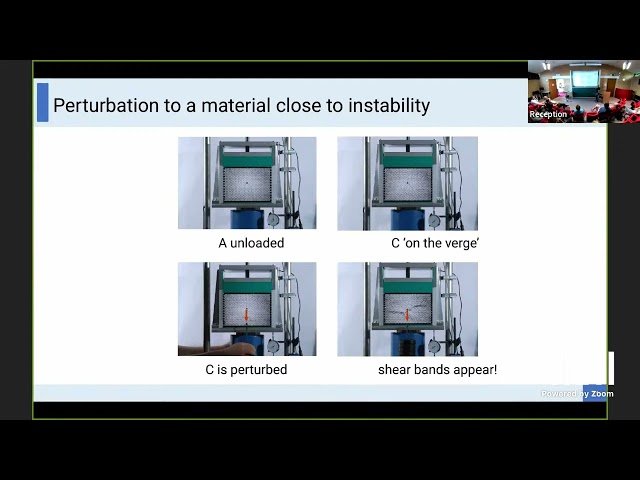
Explore material instabilities and their relationship to continuum solids in this 48-minute seminar lecture delivered by Professor Andrea Piccolroaz from the University of Trento. Delve into how the loss of ellipticity in governing equations affects material stability, particularly focusing on the requirement for wave speed to maintain positive real numbers across all wave directions. Learn about various types of material instabilities, including strain localization in shear bands and flutter instability in dynamics. Examine these concepts through micromechanical interpretation, utilizing homogenization of prestressed periodic beam lattices to understand both static and dynamic regimes. Discover the connections between microstructure and macroscopic instabilities, validated through comparisons between discrete lattice simulations using finite elements and equivalent continuum responses described by exact Green's function.

YouTube
Dive into a comprehensive video playlist covering the ISTQB Advanced Level Agile Technical Tester syllabus. Prepare for the certification exam with in-depth tutorials on requirement engineering techniques, test-driven development (TDD), behavior-driven development (BDD), acceptance test-driven development (ATDD), experience-based techniques, black-box tests, test charters, refactoring, code reviews, static code analysis, data-driven testing, keyword-driven testing, test automation, continuous integration, continuous delivery, continuous deployment, and service virtualization. Gain valuable insights through sample questions, practical tips, and time management strategies to enhance your understanding and boost your chances of success in the ISTQB Agile Technical Tester exam.

Udemy
Course on SQL query for testers and developers What you'll learn: User would be quite comfortable in querying databasebecome expert in sql querywrite learn data retrieval, table creation, database creation, joining tables, create viewanswer any of the interview question related to basics of sql query SQLQuery Tutorial For Beginners has been designed specially for all the beginners who wants to learn sql query with real time examples with practical examples. In today's IT Industry , Sql Query is equally good for Testers and Developer and it is most important skill set in today's market and with big data boom now data analysis has become the need of minute and whole world is trying to tune up their SQLquery skill. This tutorial has been design in a very systematic way and it covers most of the areas.This course is going to cover 1- Relational database introduction 2- Data retrieval using Select Statement 3-Creation of database, data table, insertion of data 4- Difference between delete, drop and truncate 5- Concept of Join 6- Constraints implementation in sql 7- Setting sql_mode in mysql for better result of Constraints in mysql Software Used in this course 1- XAMPP for setting up mysql 2- SQLYog as mysql database administrative tool and it will be used to execute all the sql queries.

Udemy
All you need to become a certified Agile Tester What you'll learn: Become a certified ISTQB Agile TesterUnderstand the 4 values & 12 principles of AgileDifferentiate between agile methodologies (Scrum-Kanban-XP)Understand Agile testing methods (TDD-ATDD-BDD) This course is a complete explanation of the ISTQBAgile Certified Tester Syllabus.Once you study the whole course you will be ready to apply for the exam.Each section in the syllabus is explained in a separate video which makes the learning process easier for the trainee.All course content is updated to the latest version of the syllabus. Currently in December 2021, this course is the highest-rated ISTQBAgile Tester Course on Udemy platform. Agile testing is a relatively new approach to software testing that follows the principles of agile software development as outlined in the Agile Manifesto.A tester on an Agile project will work differently than one working on a traditional project. Testers must understand the values and principles that underpin Agile projects, and how testers are an integral part of a whole-team approach together with developers and business representatives.There is a lot of confusion concerning agile testing – which means there’s an educational opportunity as well. The Agile Tester will give the tester the knowledge to be part of agile testing teams and achieve high performance. Business OutcomesAn Agile Tester can...Collaborate in a cross-functional Agile team being familiar with principles and basic practices of Agile software development.Adapt existing testing experience and knowledge to Agile values and principles.Support the Agile team in planning test-related activities.Apply relevant methods and techniques for testing in an Agile project.Assist the Agile team in test automation activities.Assist business stakeholders in defining understandable and testable user stories, scenarios, requirements and acceptance criteria as appropriate.Work and share information with other team members using effective communication styles and channels.In general, a Certified Tester Foundation Level – Agile Tester is expected to have acquired the necessary skills to working effectively within an Agile team and environment.

LinkedIn Learning
Software testers help teams catch bugs and other issues before software gets to customers. Learn the foundations, tools, and techniques for a career in software testing.Explore the foundations of software quality assurance.Master the processes that software teams use to ensure quality.Learn technical skills and tools to optimize your testing.

YouTube
Prepare for the ISTQB Foundation Level Agile Tester Extension exam with this comprehensive 4.5-hour tutorial series. Explore key concepts including Agile software development, the Agile Manifesto, whole team approach, and early feedback. Dive into Agile methodologies like Scrum and Kanban, collaborative user story creation, retrospectives, continuous integration, and release planning. Learn about testing activities, project work products, test levels, and configuration management in Agile environments. Understand the Agile tester's role, skills, and communication strategies. Examine test-driven development approaches, the test pyramid, and test quadrants. Discover techniques for assessing quality risks, estimating testing effort, and applying acceptance criteria. Gain insights into various tools for task management, communication, software build, configuration management, and test execution. Practice with sample questions to reinforce your understanding and prepare for the certification exam.

LinkedIn Learning
This path provides an overview of the concepts, tools, and techniques used in penetration testing, one of the most in-demand skills in cybersecurity. Learn about the role and fundamentals of pen testing, and explore tools and techniques used to identify vulnerabilities in systems and networks.Learn about the role and how to become a penetration tester.Learn fundamentals and frequently used tools of pen testing.Explore intermediate and advanced pen testing concepts.

Udemy
Manual | Database Testing | Unix | Basics of Selenium & Jmeter and SoapUI What you'll learn: Ready for facing Testing InterviewsHave complete understanding of Manual and Automation testing concepts. This course is specially designed for Software Testers, it cover almost all areas which are must for Software TestersWe started by going through Software Testing Basics like Quality Assurance, Quality Control, Software Development Life Cycle and Software Testing Life Cycle. And, level up by understanding Software Testing Levels like Unit Testing, Integration Testing, System Testing and Acceptance Testing. Then, check out the various Software Testing Types like Smoke Testing, Functional Testing, Usability Testing, Security Testing, Performance Testing, Regression Testing and Compliance Testing.This course covers :- Testing Fundamentals Software Testing - Introduction - Importance Seven Fundamental Principles of Testing SDLC Vs STLC Software Testing Life Cycle - STLC explained Types of Testing Manual Testing Tutorials for Beginners Automation Testing Unit Testing Integration Testing System Testing Smoke and Sanity Testing What is Regression Testing? Non - Functional Testing TestCase Development First Steps Test Case Development Test Scenario Test Case Specifications Test Basis Traceability Matrix Testing Techniques Equivalence Partitioning & Boundary Value Analysis Decision Table Testing State Transition Diagram Use Case Testing Testing Review Test Management & Control

YouTube
Explore the intricacies of image-based PBR materials and Substance materials in Vue's material editor through this 23-minute video tutorial. Delve into basic properties, Filterforge, basic material and color concepts, semi-PBR techniques, normal maps, reflectivity, and comprehensive PBR material properties. Gain valuable insights into creating realistic materials for 3D environments, enhancing your Vue workflow and artistic capabilities.

Coursera
This specialization offers a comprehensive exploration of usability and accessibility testing, covering foundational concepts, advanced methodologies, and practical applications. Participants will develop essential skills to conduct effective usability evaluations, implement accessibility standards, and utilize industry best practices to enhance user experience. Collaborating with leading industry partners, this program ensures that learners are equipped with the knowledge and tools necessary to thrive in the evolving digital landscape. Disclaimer: This course is an independent educational resource developed by Board Infinity and is not affiliated with, endorsed by, sponsored by, or officially associated with ISTQB or any of its subsidiaries or affiliates. This course is not an official preparation material of ISTQB. All trademarks, service marks, and company names mentioned are the property of their respective owners and are used for identification purposes only.

LinkedIn Learning
Preparing to interview for a software testing role? Learn how to effectively highlight your experience and answer questions that test both your technical and interpersonal skills.
Udemy
Comprehensive Preparation for the ISTQB Agile Tester Exam What you'll learn: Fundamentals of Agile TestingAgile Testing vs. Traditional TestingRoles and Responsibilities of an Agile TesterAgile Testing Methods and StrategiesQuality Risk Analysis and Test EstimationExploratory and Experience-Based TestingTest Automation in AgileRegression Testing and Continuous IntegrationAgile Test Management and ReportingPreparation for the Agile Tester Exam Welcome to the "Exam Preparation: ISTQB Agile Tester" CourseThis course is your comprehensive guide to mastering Agile testing principles and practices, specifically designed to prepare you for the ISTQB Agile Tester certification exam.Whether you're an experienced tester looking to validate your Agile skills, or someone new to Agile testing and eager to learn the fundamentals, this course provides everything you need to build confidence and pass the exam with success. What You’ll Learn: Fundamentals of Agile Testing – Understand the core principles, values, and methodologies that define Agile development and testing.Agile Testing Strategies – Learn how Agile testing differs from traditional testing approaches and how to integrate testing into Agile workflows effectively.Test Roles and Responsibilities – Discover the key responsibilities of an Agile tester, including collaboration, communication, and test automation in Agile teams.Risk-Based Testing and Estimation – Gain insights into quality risk analysis and test effort estimation in Agile projects to maximize test efficiency.Testing Techniques in Agile – Master exploratory testing, automated testing, and black-box techniques, ensuring comprehensive test coverage in Agile environments.Tools and Best Practices – Explore modern test management and automation tools that support Agile testing, continuous integration, and delivery. Who This Course Is For: Aspiring Agile Testers – Individuals preparing for the ISTQB Agile Tester certification who need a structured, syllabus-based learning approach.Software Testers and QA Professionals – Those looking to enhance their Agile testing skills and earn a recognized certification in Agile testing.Developers and IT Professionals – Individuals wanting to understand how Agile testing fits into the software development process and how testing supports Agile delivery. By the end of this course, you will have a thorough understanding of Agile testing concepts and practices, and you will be well-prepared to pass the ISTQB Agile Tester certification exam.

YouTube
Dive into an in-depth video lecture on PCB materials, featuring expert insights from Alun Morgan. Explore crucial topics such as signal loss in PCBs, material selection criteria, dielectric losses, and the impact of material structure on signal integrity. Learn about specialized materials like PTFE, understand the significance of dielectric constants, and examine copper losses due to skin effect. Gain valuable knowledge on PCB tolerances, the relationship between dielectric constants and trace widths, and materials used in flexible PCBs. This comprehensive presentation offers essential information for engineers and designers working with high-frequency PCB applications.

LinkedIn Learning
Ground yourself in the basic approaches to testing SQL queries and gain the ability to do deep testing and analysis of back-end problems.

LinkedIn Learning
Automate software testing with scripting. Learn how to write simple Python scripts to script API calls, reporting, test site prep, and more.

Udemy
Start your test automation career by learning Java from this specifically designed for beginners course. What you'll learn: We will start from scratch, prepare environment, install Java JDK and IDEsLearn basic things, data types, create the first projectThen we will move to learn methods, classes, functionsWe will also spend time learning principles of Object-Oriented Programming,And we will end with test frameworks Learn Java and start automating tests tomorrow Java for testers course is specifically designed for manual testers that want to move into test automation.All topics were carefully selected to match the needs of test automation engineers. Every step is explained in detail from the Java and IDE set up to running your first Java method. No prior programming experience is required. This course is specifically designed for complete beginners. More and more Software QA positions require some test automation, and in many cases, Selenium WebDriver experience. According to many recent surveys, Java is the most popular programming language used in test automation. That's why, if you want to move from manual to automated testing, Java is a great choice of a programming language, as it will give you a lot of options on the job market. Benefits of this course:Unlike other java courses you can find online, this course is specifically designed for testers who want to move from manual testing to test automation.This course contains all the useful info you need, to learn how to automate tests with Java.Includes an overview of testing frameworksWe would not waste time on things, that test automation engineers don't use at allList of Major Components:We will start from scratch, like preparations, installing java and IDEsLearning basic things, data types, creating the first projectThen we will move to learn methods, classes, functionsWe will also spend time learning principles of Object-Oriented ProgrammingAnd we will end with test frameworksIdeal Student Description:I designed this course for testers that are tired of manually testing things.Testers that see, that it's getting harder and harder to find a manual only jobTesters that want to increase their income, by learning how to automate testsThis is a java course, but it’s tailored for the test automation with java At the end of this course, students will know all the basics of Java, how methods and classes work. How to write more complex code and know a few Java test frameworks. And most importantly, be able to receive a promotion at the current job, or get a new job that requires selenium or other test automation experience.

Udemy
Get certified with ISTQB Automotive Tester & add quality to your process and build a competitive profile. What you'll learn: End to End understanding of the contentSample questions to understand exam patternTips, tricks and time management about exam Certified Automotive Software Testers should be able to demonstrate their skills in the following areas:IntroductionThe tester should be able to explain and give examples of the challenges of automotive product development that arise from divergent project objectives and increasing product complexity.The tester should be able to recall project aspects that are influenced by standards such as time, cost, quality and project/product risks.The tester should be able to recall the six generic phases in the system life cycle per ISO/IEC 24748-1The tester should be able to recall the contribution and the collaboration of the tester in the release process.ASPICEThe tester should be able to recall the two dimensions of Automotive SPICE® (ASPICE).The tester should be able to explain the Capability levels 0 to 3 of ASPICE.The tester should be able to explain the meaning of the 4 rating levels and the capability indicators of ASPICE from the test perspective.The tester should be able to explain the requirements of ASPICE for the test strategy including the regression test strategy.The tester should be able to recall the requirements of ASPICE for the test documentation.The tester should be able to design a verification strategy (in contrast to a test strategy) and criteria for unit verification.The tester should be able to explain the different traceability requirements of ASPICE from the test perspective.ISO 26262The tester should be able to explain the objective of functional safety for E/E systems.The tester should be able to recall his contribution as a tester for the safety culture.The tester should be able to recall his contribution as a tester for the safety culture.The tester should be able to present the role of the tester in the framework of the safety life cycle per ISO 26262.The tester should be able to recall the volumes (part titles) of ISO 26262 that are relevant for him.The tester should be able to recall the criticality levels of ASIL.The tester should be able to explain the influence of ASIL on applicable test design techniques and test types for static and dynamic tests and the resulting test extent.The tester should be able to apply the selected method table of the ISO 26262.AUTOSARThe tester should be able to recall the objectives of AUTOSAR.The tester should be able to recall the influences of AUTOSAR on the work of the tester.ComparisonThe tester should be able to recall the different objectives of ASPICE and ISO 26262.The tester should be able to explain the differences between ASPICE, ISO 26262, and CTFL® regarding the test levels.Test Environment in GeneralThe tester should be able to recall the purpose/the motivation of a test environment in the automotive environment.The tester should be able to recall the general parts of an automotive-specific test environment.The tester should be able to recall the differences between Closed-Loop systems and Open-Loop systems.The tester should be able to recall the essential functions, databases and protocols of an electronic control unit (ECU).Testing in XiL environmentsThe tester should be able to recall the structure of a MiL test environment.The tester should be able to explain the application area and the boundary conditions of a MiL test environment.The tester should be able to reproduce the structure of a SiL test environment.The tester should be able to recall the structure of an HiL test environment.The tester should be able to explain the application areas and the boundary conditions of an HiL test environment.The tester should be able to summarize the advantages and disadvantages of the testing with the help of the criteria of the XiL test environments (MiL, SiL, and HiL).The tester should be able to apply criteria for the assignment of a given test scope to one or more test environments.The tester should be able to classify the three XiL test environments (MiL, SiL, HiL) in the V-model.Static test techniquesThe tester should be able to explain the purpose, types, and obligations of the MISRA C: 2012 programming guideline with the help of examples.The tester should be able to apply a review of requirements with the quality characteristics of the ISO/IEC 29148 that are relevant for him.Dynamic test techniquesThe tester should be able to create test cases to achieve modified condition/decision testing coverage.The tester should be able to explain the use of back-to-back testing by giving examples.The tester should be able to explain the principle of fault injection tests by giving examples.The tester should be able to recall the principles of requirement-based testing.The tester should be able to apply context-dependent criteria for the choice of suitable and necessary test design techniques.

Udemy
Increase strategy, automation, and continuous deployment skills by becoming an ISTQB Advanced Agile Tester! What you'll learn: How to create Testable Requirements in an Agile TeamHow to implement Test-Driven DevelopmentHow to implement Acceptance Test-Driven DevelopmentCreating human-readable tests using Behavior-Driven DevelopmentHow to support teams with Continuous Integration, Continuous Delivery, and DeploymentEffective use of test automation in Agile projectsHow to plan, monitor, and control testing in Agile projects This course is designed for students who want to earn the ISTQB® Certified Tester Advanced Level Agile Technical Tester (CTAL-ATT) certification. Students will learn advanced modern Agile skills needed to succeed in today's competitive market.Benefits of CTAL-ATT certification:As a CTAL-ATT certified tester, you will be able to:Lead teams in creating testable user stories.Apply Agile testing techniques, such as Test-Driven and Keyword-Driven Development.Apply automated testing tasks in Agile projects, such as using Data-Driven testing.Support Agile teams by using Continuous Integration and Delivery.Why you should take this course:This course covers all the topics in the CTAL-ATT syllabus, including:How to create Testable Requirements in an Agile Team.How to implement Test-Driven Development.How to implement Acceptance Test-Driven Development.Creating human-readable tests using Behavior-Driven Development.How to support teams with Continuous Integration, Continuous Delivery, and Deployment.Effective use of test automation in Agile projects.How to plan, monitor, and control testing in Agile projects.This course utilizes theory, practical examples, and practice questions to ensure you understand how to apply the concepts learned. In addition, the lessons include real-life scenarios from the instructor's years of experience as an Agile tester.After completing this course, you can take the ISTQB CTAL-ATT exam and earn your certification.Enroll now and start your journey to becoming an ISTQB CTAL-ATT certified tester!"This material is not accredited with the ISTQB". ISTQB is a registered trademark of the International Software Testing Qualifications Board.

Udemy
Become a certified Agile technical tester What you'll learn: Learn Requirements engineering techniquesUnderstand how testing is done in agile projectsUnderstand different Test Automation MethodsContinuous Integration, Continuous Delivery, & Continuous Testing AudienceThe Advanced Level Agile Technical Tester qualification is aimed at people who have already achieved an advanced point in their careers in software testing and wish to develop further their expertise in technical testing aspects in an agile context. The modules offered at the Advanced Level cover a wide range of testing topics.What are the entry criteria?To receive Advanced Level certification in the module “Agile Technical Tester”, candidates must hold a valid Certified Tester Foundation Level certificate and a valid Certified Tester Foundation Level Agile Tester certificate. Refer to the relevant Exam Board to determine the specific practical experience criteria. Business OutcomesApply Agile techniques to ensur tests that provide adequate coverageDefine testable requirements within Agile TeamCreate and implement various Agile Test approaches using appropriate techniquesSupport and contribute to test automation activities in an Agile projectSupport continuous integration in an Agile TeamSupport Agile Team in continuous delivery and deploymentLearn the service virtualization conceptsWork with, and share information with, other team members using effective communication styles and channels Learning ObjectivesAnalyze user stories and epics using requirements engineering techniquesDescribe the requirements engineering techniques and how they can help testersCreate and evaluate testable acceptance criteria for a given user story using requirements engineering and test techniquesDescribe the elicitation techniquesApply test-driven development (TDD) in the context of a given example in an Agile projectUnderstand the characteristics of a Unit testUnderstand the meaning of the mnemonic word FIRST Apply behavior-driven development (BDD) in the context of a given user story in an Agile projectUnderstand how to manage guidelines for a formulation of a scenarioAnalyze a product backlog in an Agile project to determine a way to introduce acceptance test-driven developmentAnalyze the creation of a test approach using test automation, experience-based tests and back-box tests created using other approaches (including risk-based testing) for a given scenario in an Agile projectExplain differences between Mission critical and non-criticalAnalyze user stories and epics to create test charters, and interpret their resultsUnderstand the use Experienced-based techniquesUnderstand the importance of refactoring test cases in Agile projectsUnderstand practical task-list for Refactoring Test casesAnalyze code as part of a code review to identify defects and technical debtUnderstand Static code AnalysisApply data-driven and keyword-driven test techniques to develop automated test scriptsUnderstand how to apply test automation to a given test approach in an Agile environmentUnderstand the test automationUnderstand differences between various test approachesUnderstand the factors to consider when determining the level of test automation needed to keep up with the speed of deploymentUnderstand the challenges of test automation in agile settingsApply continuous integration (CI) and summarize its impact on testing activitiesUnderstand the role of continuous testing in continuous delivery and continuous deploymentUnderstand the concept of service virtualization and its role in Agile projectsUnderstand the benefits of service virtualization