

Courses
Discover thousands of courses from top institutions and platforms worldwide
Level
Course Type
Duration

Udemy
Learn Sheet metal design, processes and practical design considerations along with Design projects. What you'll learn: How to design effectively with sheet metalGuidelines to be followed when designing for sheet metalUnderstand the principles at play behind the factors considered in designHow Material properties affect the Part quality and design considerationsDesigning simple sheet metal brackets using Fusion 360 Sheet metal design is an important skill in industry today and will be in the future. Due to its versatility designing with sheet metal finds applications in almost all major industries where physical products are manufactured This course covers the essential basic theoretical and practical knowledge required for Designing Sheet metal parts aimed at Design engineers who are designing products The common processesMaterials and the properties which matter for designWhat is anisotropyComparison between hardness, toughness and strengthWhat happens to the Material when it is formed or Bent?The Theory behind Forming and BendingForm-ability and Bend-ability of metal sheets and what factors affect themWhat are underlying principles which make a metal formable? Forming limit diagrams and how they are createdBending Parameters in designBending direction and its affect on qualityK factor, Neutral axis, Bend allowanceThe concept of Spring-back and ways to reduce itWhat is wrinkling and why does it occur? Deep drawing process and PracticeRolling, hydroforming, Stretch formingJoining processes and their comparisonEquipment used to perform operationsDesign Guidelines to create cost- effective designs which are suitable for manufacturing.Design projects with considerations So if you are a student exploring the world of product design or a design engineer who wants to make products with sheet metal then this courses will be a good value addition. The course is designed with short to the point explanations with focus on right understanding towards thoughtful design.

Udemy
Learn about the fundamentals of materials and their selection for mechanical engineering design for design engineers What you'll learn: Basics of Material properties in mechanical designWhat is Ductility, hardness, toughness, strength , fatigue etcWhat is the generic material selection processImportance of Material selectionMaterial indices to guide material selectionHow to derive material index for simple mechanical loading applications Materials are an integral part of mechanical design and engineering.Understanding of properties , how they matter for product performance are a key knowledge set for any engineer designing products big or small . This course attempts to provide insights into the following topicsRole of material selection in Design processThe importance of materials Types of materialsThe Mechanical propertiesModulusDuctility and brittlenessStrengthHardnessResilience and ToughnessFracture toughnessFatigue strengthWearCreepInternal damping - loss coefficientThermal properties - Conductivity, Thermal expansion and heat capacity Introduction to peculiar nature of various base materials and compositesMaterial chartsMaterial selection processMaterial indicesDerivation of indices for various loading applicationApplying indices on the Ashby charts for material selectionThe course is intended to be a starting point for deep study into material selection .Materials is of course a very vast subject . This course can be a good reference to get a taste for the field of material selection.If you are a design engineer and looking to refresh and maybe pickup on new concepts regarding materials this course will be for you . If you are a student who is looking to start their learning journey in area of materials of mechanical design for product development then this should be a good starting point. Course is designed to be precise and to the point and focuses on concepts and not only the facts .

Coursera
AI for Mechanical Engineers is designed to help mechanical engineering professionals harness the power of artificial intelligence in their practice. With technological advancements rapidly reshaping industries, this series provides a comprehensive foundation in AI applications essential to mechanical engineering domains, empowering you to lead the integration of AI technologies in your field. From optimizing design processes to revolutionizing autonomous systems and addressing energy and biomedical challenges, you will delve into cutting-edge AI methodologies tailored for mechanical engineering contexts. After completing the series, you will be equipped with the knowledge and skills to navigate the evolving landscape of mechanical engineering and drive transformative change through the integration of AI technologies.

Udemy
Learn Python to solve problems in mechanical fields. What you'll learn: Python Programming in Mechanical EngineeringHow to use Python to solve and analyze engineering problemUse Python for Data AnalysisUse of Python in Simulation Softwares This Course will bring awareness of importance of python and applications of python in solving engineering problems. We will see some important libraries like SciPy, Numpy, Matplotlib, Pandas etc. used in scientific computation.This course includes Python Programs on Mechanics, Machine Design, Fluid Mechanics, Thermal Science, Heat Transfer, Vibrations, Optimization etc. It has covered various types of plots including line plots and 2D,3D contours plots where we can use this in visualizing engineering data.We will review how to make plots as well as how to make interactive plots, analyze test data and some optimization part.It covers from basic to advanced programs in mechanical fields.It has following sections1. Basic Concepts in Python2.Programs on Mechanics, Machine Design etc.3. Programs on Mechanical Vibrations4. Programs on Fluid Mechanics, Thermal Science and Heat Problems.5. Programs on Engineering Mathematics6. Some Advanced programs like FFT use, Filter, Data Analysis.7. Build Interactive GUI applicationWhat you will learn,- Importance of python in mechanical fields in research and computations.- Basics of Python programs from engineering point of view.- Learn to solve engineering problems.- Make yourself ready for one step ahead.- You can build a project on yourself in your favorite domain.- You will be able to use loops, functions, different libraries, custom functions to solve engineering problems.

Udemy
Matlab for Mechanical Engineers What you'll learn: Numerical Methods for Mechanical EngineersMatlab scripting Numerical methods are used for solving complex Mechanical problems.In this course Matlab Scripting is used to solve the Mechanical Problems.You will learn How to write Matlab ScriptingYou will learn how Matlab Scripting used for solving numerical problems and results VisualizationAt the end of the course you will gain some knowledge on how this scripting will be helpful for Mechanical & Aerospace Engineering Applications

Udemy
MODEL TEST, HR ROUND , TECHNICAL ROUND What you'll learn: How to Prepare for HR roundHow to Prepare for technical roundHow to Crack model test / Solving Gear (Spur, Bevel, Helical ) design with proper calculationCatia Important QuestionMechanical Design Important QuestionMechanical technical QuestionIsometric View Questions HR ROUND TECHNICAL ROUNDMODEL TEST ( GEAR DESIGN WITH CALCULATIONS) CATIA IMPORTANT QUESTIONMECHANICAL DESIGN IMP QUESTIONMECHANICAL TECHNICAL TERMS ISOMETRIC VIEW QUESTION This Course Is Design For Those Who Don't Know About The Steps To Crack The Interview.In This Course We Are Going To Discuss About HR ROUND, TECHNICAL ROUND & MODEL TEST. If You Go Any Interview HR round Is There So We Design 8-9 Question Which Are Regularly Asked In Interview.For Technical We Designed Some CATIA Question , Some Mechanical Design Related Question & Mechanical Technical Related Question. For Model Test Interviewer Give You Some Model To Draw But Sometimes They Give You Some Model And We Have To Draw That Model With The Help Of Some Calculation.We Take One Gear Design As A Example In This Session.. So You Understand The Concept To Crack The Model Test.The recruiters look for the following basic requisites in freshers.Your marks - of courseVery good hold on the basics of mechanical engineering and the topic of your interest - They most probably would ask the area of your interest and then go on to ask a question related to that which tests your approach and thinking rather than your knowledge in that areaConfidence in your own abilityEvidence that you have good positive attitude and are a team player.Evidence that you have good exposure to practical knowledgeThe passion or interest you have for the field .For experienced candidates it becomes easier for the recruiter as they needCAD skillsProduct development knowledgeKnowledge of quality tools like DFMEA , QFD etc.Domain knowledge understandingGD&T knowledgeProblem solving approach and formulationSo depending on the role you are applying for and your level of experience the expectation of the employer would vary.It also depends a lot on the type of company you are applying at .If the company has a good working culture with good enough freedom for innovation, they might hold you in high regard if you showcase projects which are uncommon.But if they are just doing the job of filling gaps then they might not worry about any additional credentials that you have above and beyond that is required.My advice, know what the recruiter wants. Its pretty easy to find out if you do your research . Match their needs with what kind of profile you would want or for which you have skills for.Also keep in mind that communication skills and confidence play a big role in passing the first phase of any interview.Be aware about those from your current company.Being well prepared gives a positive impression to the recruiter even if you are unable to answer some questions.
Udemy
[Stress analysis-Power screws-Bolts-Gears-Shafts-Belts-Springs-Clutches]+Projects What you'll learn: Theories of elastic failureStress analysis basicsDesign of power screwsFrame analysisDesign of bolted connectionsFits and tolerancesDesign of couplingsDesign of spur, helical, and bevel gearsDesign of power transmission shaftsDesign of bearings and keysDesign of V-beltsDesign of compression springsDesign of clutches This course introduces a comprehensive discussion for various mechanical design topics. The course consists of two sections and 35 lectures. The course is thought to be helpful for mechanical students and anyone who seek for a course that starts from beginner level.The theoretical background is combined with practical implementation through various projects such as: [Section1]: Design of Pipe vice, Design of Globe valve, Design of Shop press, Design of Floor and wall mounted cranes, Design of Couplings, and Design of centrifugal pumps. [Section2]: Design of Clutch brake unit, Design of Conveyor system, Design of Internal gear drive, and Design of other gear units.Through those projects, calculations of various mechanical components are introduced, such as: Design of bolted connections, Design of power screws, Stress analysis on frames, Design of gears, Design of V-belts, Design of compression springs, Design of keys, and Shaft analysis.As one of the targets of this course is to qualify the attendees to be professional users for mechanical software, some lectures contain a comparison between the hand calculations and the results generated from software to achieve a better understanding for how the design works in practical life.Useful material is attached with each lecture for students to help them to cope with the recording.
Udemy
Learn about the best practices in designing mechanical systems for assembly and design with optimal constraints What you'll learn: Learn about the basic concepts of Designing for assemblyImportance of smooth assembly in design processHow to design for better insertion, alignment and reduction of partsDesign features for mistake proofingConstraint based design approachWhat are redundant constraints?What is Exact, minimum and Over constraint Designing a mechanical systems involves many considerations . From Functional requirements, Aesthetics, Durability to Manufacturing and Assembly with assembly being a key aspect in terms of performance and cost. Designing a system with assembly in mind requires an approach which focusses on the ease and speed of assembly . In a production setup where Time is money , efficient assemblies are very important .Learning about how to plan and design systems so that they can be easily manufactured and assembled is one of the key tasks for a design engineers. This course introduces the key concepts to be considered when designing for assembly. You will Learn :- The context of assemblies in larger product development - product architecture- What is modularity in assembly- Importance of assembly ease - Costs associated- Generic rules of Thumb and affect of Tolerances- Part count reduction- Handling , Insertion , Self aligning features- Poka yoke features- Case studies in Designing for assembly Utilizing degrees of freedom or strategically constraining them is a design philosophy used to design precise and optimally constrained systems.- What are redundant constraints in systems, structures- When are they useful and when they are not?- What is exact kinematic constraint assembly?- Nesting force and constraining a plate in 2D- Case studies and examples of the concept applied in practice Learn about key fundamentals to keep in mind when designing for mechanical assembly and practices to inculcate , errors to avoid in practice.Learn a new way of thinking about mechanical systems in terms of constraints and how to effectively utilize them for function and assembly.In this 2 in 1 course covering key insightful concepts which can be put directly into practice by design engineers.

YouTube
Learn sound design techniques for a mechanical swan animation in this 27-minute tutorial. Explore how to use Soundly for sourcing sound effects and Davinci Resolve for layering, editing, and composing audio. Follow along as the instructor guides you through setting up a project, planning the sound design, adding and manipulating sound effects, and incorporating ambient sounds. Discover tips for creating realistic mechanical sounds and enhancing the overall audio experience. By the end of the tutorial, you'll have the skills to participate in a sound design challenge and apply these techniques to your own 3D animations.

Pluralsight
As consumer products become more and more electro-mechanical in nature, it is crucial to be able to integrate both electrical and mechanical designs in our products. This course, SOLIDWORKS Consumer Products: Electro-mechanical Design, will introduce engineers and product designers to how to fully utilize the SOLIDWORKS design tools, especially when it comes down to potentially complex electro-mechanical designs. You will start with complex natural shapes with plastics, commonly used for numerous consumer electrical enclosures. Next, you will build a basic assembly including the enclosure and electronics (printed circuit boards). Finally, you will get to see the routing of electrical wires within the 3D SOLIDWORKS assembly. In the end, you will be comfortable in generating mechatronic consumer products using a number of the advanced functionalities available in SOLIDWORKS 2017. Software required: SOLIDWORKS 2017.

Udemy
Learn the basic ideas and concepts behind developing mechanical products related to mechanical engineering What you'll learn: What is the product development process?Various facets of Idea generation for a new productIdentifying an opportunity for product developmentThe nuances of Concept evaluation and selectionWhat is product architecture , system design and detailed designA Holistic overview of the process with many examples Product development is the process through which a mechanical product is realized from just an idea into a fully detailed entity ready for production.This course is an attempt to cover that process at an introductory level covering all the key concepts, ideas and details from a perspective of a Mechanical design engineer.The course is structured in a way as to build on the product development process step by step . From the way an Idea is generated, incubated, to how a concept is generated, evaluated, how specifications are created and set towards the system design of a product , followed by a overview of activities in Detailed design and prototyping.Topics covered:Opportunity identification and product idea generationWhat are customer needs?What are specifications and when are they set ? how are they set?How are concepts generated?How to select and score concepts?Techniques for Generating ideas and conceptsWhat is modularity? and difference between modular designs and integral designsWhat is product architecture along with the example of a Vehicle architectureImportance of the Engineering drawing in Detail designDesign for X and Design for manufacturing and Assembly Types of prototypes and the purpose of prototyping What you will learn from this course?To understand the overall process of product development and develop a Holistic understanding of how products are developedTo learn ways of developing ideas, opportunities for new product developmentTo understand concepts like product architecture, modularity and Interfaces relating to mechanical design.

Udemy
Learn what design engineers do , how they do it and how to become one for Mechanical engineers, students and graduates What you'll learn: Learn about the Profession of Design engineering with scenariosWhat are the skills and knowledge required from a design engineer?What is the importance of Engineering analysis and types of engineering analysis?What type of considerations do design engineers make during design?For working Mechanical engineers, graduates and students DIsclaimer: This course is made from the perspective of a mechanical engineer entering into the field of Design engineering as a graduateDesign engineering is the core function of any product development effort in manufacturing .This course aims to build a holistic understanding of the profession of design engineering by covering Role of design engineer in developing products with 3 examplesThe Engineering Design process Insightful understanding of skills and knowledge required from design engineerUnderstand concept development, prototyping and research and why they are importantTeams in Mechanical product development The Design Life-cycle of a partUnderstanding Engineering analysis and how it fits into design engineeringLevels of engineering analysis and why computation is requiredThe various Design considerations to be made during design Engineering drawing importance, Cost of Bad design Why use GD&T in engineering drawings?take this course ifYou are aspiring to be a design engineer and want to understand more in detail as to what design engineers do You are enthusiastic about engineering and design and want to design your own products .

Udemy
Mechanical Engineering HVAC MUST LEARN Concepts| Mechanical Engineering HVAC Course | Mechanical Engineering Expertise What you'll learn: The Interlink Between Mechanical Engineering and HVAC EngineeringHVAC Design Principles that Mechanical Engineers Should be equipped withHVAC Key Terminology that Mechanical Engineers Should be Familiar WithHVAC Design SequenceVarious Types of HVAC SystemsUnderstanding of Various HVAC ApplicationsHow to Conduct Basic HVAC based Calculations as Mechanical Engineers This an HVAC specialized course designed specifically for Mechanical Engineers who wish to enhance their knowledge and skills in the field of (HVAC) systems, heating, ventilation, and air conditioning This course is part of a comprehensive series of courses that address the unique needs and challenges faced by mechanical engineers in the HVAC industry.In this course, participants will delve into the field of HVAC Engineering and gain a deep understanding of the principles, design considerations, and practical applications. Through a combination of theoretical concepts and Practical Examples, students will develop the Awareness and Understanding of Key Concepts and Essentials that Every Mechanical Engineer should be equipped with.Through the Guidance of our Experienced Mechanical Engineering Instructors who are equipped with extensive industry experience and track record of excellence, you are going to acquire valuable information worth Years of Practical Field Experience.By completing this course, Mechanical Engineers will acquire specialized expertise needed to deal with the domain of HVAC. This knowledge will enable them to contribute further and develop their career , awareness , decision making and value towards becoming well rounded mechanical engineers that possess essential knowledge and skillset. This Course is the bridge between Mechanical Engineering and HVAC Engineering The Course will teach you the following: The Definition of HVACKey HVAC Principles and Technical Terminology that every Mechanical Engineer Should Learn.Types of HVAC Systems.Interlink between Mechanical Engineering and HVAC systems.The application of HVAC for Mechanical Engineers.HVAC Engineering Principles that Mechanical Engineers Should Know.HVAC Design Sequence to help you Stand out as a Mechanical Engineer.MUSTlearn terms and essentials for Mechanical Engineers exploring the field of HVAC. By the end of the Course you should be able to:Understand the various terminology used for HVAC systems.Understand how HVAC systems work from a Mechanical Engineering Point of View.Differentiate between HVAC systems.Identify HVAC system components.Explain and Discuss HVAC essential concepts as a Mechanical EngineerThe course is developed by a Project Manager , Mechanical Engineer and a Certified/Licensed Educator hence providing you with premium knowledge and exceptional Delivery. The Course also includes useful Downloadable resources that can supplement your learning Process. Our Courses have been Featured on Udemy as one of the Highest Rated and Suggested Courses for similar Aspiring Professionals , check out the reviews from our growing community who share similar learning goals and span over many technical professions.
Udemy
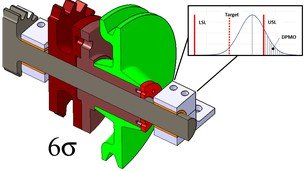
Estimate the quality level of your assembly as a PRO to predict Defects + Examples + Homeworks + Templates What you'll learn: Worst-Case approachStatistical approach (RSS)Six-Sigma approachCreate the loop for tolerance analysis in 2DEstimate the quality level of the assemblyEstimate the expected Defects Per Million of Opportunities (DPMO)Inflation factors for non-normal distributions (Ci)Process capablity index (Cp) from manufacturingDynamic shift (k) for loss of performance over timeUnderstand trade-offs for tolerance analysisCustomer requirements (LSL, USL) Stack up and Tolerance Design is all about quality, or in other words, the allowable parts to be rejected during the process. In escence, this results in an iterative process between the design department, manufacturing and the customer. In this course you will learn the concepts to master plus/minus tolerance stack ups in 2D. At then end, you will become a valuable member for your company because you will be capable to assess assemblies and propose changes to meet critical requirements. Although currently there are several software which run complex tolerance analysis in 3D, in my experience, most of the times you can simplify the problem with a 2D analysis, so as mechanical designer YOU MUST be capable of performing 2D analysis in order to save valuable resources to the company.First, you will learn the basics: The definition of nominal value, tolerance, standard deviation, normal distribution and the importance of tolerance analysis in mechanical design. Then. you will learn how to create the sketch (loop) to follow in the calculation of tolerance analysis. Several exercises will be provided so you can practice this process.Next you will Learn how to perform a linear stack ups with three approaches: Worst Case: When no rejections are allowed. This apporach results in the most expensive, but it is used in critical applications.Statistical: Some rejections are allowed. The costs are reduced because some defects will always be presented.Six-Sigma:Complex considerations such as process distributions, process caapability and loss of performance are taken into account to improve the design at different quality levels. Finally, for each approach I will provide you five assemblies with different requirements. You will need to apply the concepts to find the suitable design which meet the quality levels and solve the critical clearances. A template in excel will allow you to perform these calculations.Please note: We will cover ONLY plus/minus tolerances. But the knowledge is also applicable for geometric tolerances.This course is based in my own experience as designer in the aerospace industry for 10 years. I used this methods everyday to discuss initial changes with customer, find a suitable provider and reduce costs with manufacturing.

LinkedIn Learning
Learn how to utilize the 3D capabilities of AutoCAD to model and share your mechanical designs.
i GET IT by Tata Technologies
Learning ObjectivesLearn automotive design principles, including aerodynamics, safety, and manufacturing.Gain practical skills for automotive design roles.Build a portfolio of automotive design projects.Benefits for StudentsLearn automotive design principles, including aerodynamics, safety, and manufacturing.Gain practical skills for automotive design roles.Build a portfolio of automotive design projects.Benefits for Professionals/EngineersGain expertise in automotive design for industry careers.Optimize vehicle design and meet regulatory standards.Enhance career prospects in the automotive industry.Benefits for EnterprisesOptimize vehicle design and meet regulatory standards.Accelerate innovation in automotive product development.Reduce development costs with skilled designers.Benefits for AcademiaOffer specialized courses in automotive design and engineering.Equip students with skills in automotive design principles.Promote research in vehicle design and safety.
i GET IT by Tata Technologies
Learning ObjectivesDevelop expertise in CAD modeling, materials selection, and product lifecycle management.Gain practical skills for product development roles.Build a portfolio of design projects.Benefits for StudentsDevelop expertise in CAD modeling, materials selection, and product lifecycle management.Gain practical skills for product development roles.Build a portfolio of design projects.Benefits for Professionals/EngineersGain skills required for product development roles.Improve design efficiency and engineering accuracy.Enhance career prospects in product design.Benefits for EnterprisesImprove design efficiency and engineering accuracy.Reduce product development costs.Enhance innovation in product development.Benefits for AcademiaPrepare students for careers in product design and development.Integrate product design principles into curriculum.Foster collaboration between design and engineering departments.
i GET IT by Tata Technologies
Learning ObjectivesExplore lightweight materials, structural integrity, and aerospace CAD tools.Gain practical skills for aerospace design roles.Build a portfolio of aerospace design projects.Benefits for StudentsExplore lightweight materials, structural integrity, and aerospace CAD tools.Gain practical skills for aerospace design roles.Build a portfolio of aerospace design projects.Benefits for Professionals/EngineersBuild expertise in aerospace engineering and CAD software.Improve aircraft design and structural analysis.Enhance career prospects in the aerospace industry.Benefits for EnterprisesImprove aircraft design and structural analysis.Develop cutting-edge aerospace technology.Reduce development costs with skilled engineers.Benefits for AcademiaProvide training in aerospace engineering and design principles.Equip students with skills in aerospace CAD tools.Promote research in lightweight materials and structural integrity.

YouTube
AutoCAD Full Course for Mechanical, Civil, Architect, Interior and Electrical Engineering. This AutoCAD training will give you confidence to say that you know AutoCAD 2D perfectly & will able to create complicated AutoCAD 2D drawings very easily. Please also solve the practice exercises after completion of each lecture, link to practice exercises is given below in chapters.

LinkedIn Learning
Study to become a Professional in Revit for Mechanical Design with this prep course from Revit expert Eric Wing. Focus on the mechanical and plumbing sections of the exam.