

Courses
Discover thousands of courses from top institutions and platforms worldwide
Level
Course Type
Duration

FutureLearn
Learn about a new discipline aiming to ensure medical research reaches patients. Translational medicine, also known as translational science or translational research, is a new, growing discipline in medicine that aims to ensure research flows from ‘benchside’ to ‘bedside’. This means translating medical research findings into clinical treatment options, drug development and diagnostic tools, as well as bringing clinical difficulties back to the research bench for further development. You will examine the steps from benchside (research) to bedside (clinical) - starting with identifying a disease and following on through drug development and preclinical trials. This course has been designed for senior undergraduates and postgraduates, or for those with a basic knowledge of biology or medical practice.

YouTube
Explore the cutting-edge field of robot science with Boyuan Chen in this 29-minute lecture from the University of Michigan's MICDE series. Delve into the fascinating world of robotic research and development as Chen shares insights on the latest advancements in artificial intelligence, machine learning, and robotics. Discover how robots are being designed to think, learn, and adapt like scientists, potentially revolutionizing the way we conduct experiments and gather data. Gain a deeper understanding of the challenges and opportunities in creating intelligent machines capable of scientific reasoning and problem-solving. Learn about the potential applications of robot scientists across various disciplines and their impact on the future of scientific discovery.
Udemy
Achieve Maximum Impact With Your Scientific, Academic, or Research Presentations What you'll learn: PowerPoint for Scientific and Technical Presentations Hello! This course is PowerPoint 101 for Scientists and Medical Writers. We have brought you this course so that you can achieve maximum impact with your own or someone else's scientific presentations.This course was created for anyone who needs to create PowerPoints or slide decks with scientific content in them, whether you are creating them about your own research or for a client. We will talk about multiple aspects of creating a PowerPoint, from key tools within the program to general design rules for creating compelling, easy-to-understand graphs and tables. Although we are focusing on PowerPoint, many of the strategies we discuss will also apply to other presentation tools, such as Keynote and Prezi.You may be thinking that there are many courses on PowerPoint already, including several on Udemy, but THIS course is geared specifically towards scientists, researchers, graduate students and professors in sciences, healthcare professionals, and medical writers, who need to create effective SCIENTIFIC presentations. For medical writers in particular, we are in the business of clearly communicating scientific information, and if you are able to do this effectively in PowerPoint, you will become a go-to resource for your clients when it comes to creating slide decks. It's lucrative work, and you are likely to quickly end up with more work than you can handle—this is a good thing, right?This course has four sections:PowerPoint basics, including inserting slide elements, arranging and aligning elements, and working with templates and master slides so that you can work as efficiently as possible.Slide Design. This is what sets our course apart, because we really focus on how to deal with complex SCIENTIFIC data by using builds and other strategies.Graphs and Tables, teaching you how to present data in a visually appealing and understandable format, including how to redraw graphs for maximum effect.Case Study. We go step-by-step through a case study to show you how a typical scientific presentation can be recreated for maximum impact. This course also includes several opportunities where you can get feedback from us and your peers. Anyone who regularly has to create technical or scientific presentations will benefit from this course. Perhaps you…Write manuscripts professionally as a medical writer, but don't quite have the confidence to offer slide deck creation to your clients. This course will give you all the information you need to start doing that.Are a graduate student, postdoc, or professor and are going to be giving an important presentation to your peers and advisors or at a large conference. The time spent in this course learning how to communicate your findings clearly will pay off several fold in terms of creating a great impression. Teach science or medicine as a teacher, professor, or guest lecturer, and need help making compelling and interesting presentations.Are already competent in creating effective PowerPoints and you just want to level up and create the best presentations possible with efficiency. This course is a must-take for professors, researchers, scientists, doctors, medical writers, and anyone else who creates these types of slide decks. Your audience will thank you! All you need is a rudimentary knowledge of PowerPoint to get started as well as the need to create impressive scientific presentations. Just click on the link to enroll. I look forward to seeing you in the course!Please note: the different versions of Powerpoint vary slightly, so some things might be different depending on which operating system and version you use. We use PowerPoint for Mac, but most of the tools translate to Windows well. One notable difference is that Master Slide is not present on the Web-basedOffice 365 version of PowerPoint.

XuetangX
This course is open to undergraduates and postgraduates at medical schools, aiming to explore the characters of scientists and cultivate the scientific qualities of medical students by reviewing the research experiences of Nobel Prize winners in Physiology or Medicine. Added with the stories of famous Chinese medical scientists, the medical students who will be responsible for future medical research and clinical services will be forged in terms of their characters and qualities as scientists. This course introduces the stories of the Nobel Prize winners in Physiology or Medicine in English from the interdisciplinary perspectives of the three major disciplines of language, history and medicine, and also conducts an in-depth discussion on the scientist spirit, scientist consciousness and scientist quality of medical students from the perspective of clinical medical application.

YouTube
Explore a powerful new application that reads arXiv papers, Wikipedia articles, or custom-provided knowledge to generate novel and original ideas based on essential information extracted from the knowledge base. Learn how to build and use this GPT-4 Scientist tool through a comprehensive tutorial, including a live demo, step-by-step code walkthrough, function definitions, and implementation of tenacity retry. Gain insights into leveraging the OpenAI API and Python to create innovative projects that push the boundaries of AI-assisted research and idea generation.

YouTube
Explore the groundbreaking ideas of Atul Butte, Chief of Systems Medicine at Stanford University, in this thought-provoking 14-minute TEDMED talk. Discover how vast stores of available data and outsourced research are challenging traditional scientific methods. Learn about the genomics revolution, the historical context of scientific classification, and the impact of the data revolution on human studies. Gain insights into Butte's perspective on the evolving landscape of scientific research and the potential for asking the right questions to unlock new discoveries.

YouTube
Explore a thought-provoking 43-minute video that delves into the controversial topic of why most published medical research may be flawed. Examine the various factors contributing to this issue, including systematic bias, publication bias, random error, and conflicts of interest. Learn about potential solutions to improve the reliability of medical research. Gain insights from referenced studies and resources, including books, scientific papers, and related media content. Discover how these issues impact the field of medicine and what steps can be taken to enhance the quality and accuracy of published research findings.

YouTube
Watch a thought-provoking lecture exploring why scientists should seriously consider psi phenomena, delivered by Jessica Utts at the Society for Scientific Exploration. Examine the evidence for telepathy, clairvoyance, and precognition through the lens of rigorous scientific methodology. Learn about the classified "Star Gate" program, its comprehensive review, and how psi research challenges conventional medical study designs. Delve into important experimental considerations including random assignment, blind conditions, and predetermined stopping rules. Discover how parapsychological findings could impact the design and implementation of clinical trials and other scientific experiments. Gain insights into testing belief systems and evaluating unconventional research at the frontiers of science through this 27-minute presentation that bridges the gap between traditional scientific methods and paranormal investigation.

YouTube
Explore career opportunities for atmospheric scientists in US national laboratories through a panel discussion featuring early and mid-career research scientists. Gain insights into the unique responsibilities and work environments at institutions like NOAA, NASA, DOE, and EPA. Learn about day-to-day experiences, challenges, and rewards of working in these prestigious research facilities. Discover how national labs differ from academic settings and broaden your understanding of potential career paths in atmospheric science. Benefit from the perspectives of 4-5 panelists as they share their journeys and answer prepared questions about their roles. If time allows, participate in a live Q&A session to address your specific career concerns and curiosities about life as a research scientist in national laboratories.

edX
Want to learn how to analyze real-world medical data, but unsure where to begin? This Applied Biostatistics course provides an introduction to important topics in medical statistical concepts and reasoning. Each topic will be introduced with examples from published clinical research papers; and all homework assignments will expose learner to hands-on data analysis using real-life datasets. This course also represents an introduction to basic epidemiological concepts covering study designs and sample size computation. Open-source, easy-to-use software will be used such as R Commander and PS sample size software.
Coursera
How can you tell if the bold headlines seen on social media are truly touting the next big thing or if the article isn't worth the paper it's printed on? Understanding Medical Studies, will provide you with the tools and skills you need to critically interpret medical studies, and determine for yourself the difference between good and bad science. The course covers study-design, research methods, and statistical interpretation. It also delves into the dark side of medical research by covering fraud, biases, and common misinterpretations of data. Each lesson will highlight case-studies from real-world journal articles. By the end of this course, you'll have the tools you need to determine the trustworthiness of the scientific information you're reading and, of course, whether or not your Facebook friend is wrong. This course was made possible in part by the George M. O'Brien Kidney Center at Yale.

YouTube
Explore groundbreaking medical innovations as former Microsoft CTO Nathan Myhrvold offers a glimpse into the cutting-edge research at Intellectual Ventures lab. Discover self-disinfecting surfaces, backscatter imaging technology, advancements in microbiology, heat energy applications, food photography techniques, and insights into meat science in this captivating 26-minute TEDMED talk.

YouTube
Explore quantum machine learning algorithms and their applications in medical school research during this 1-hour 5-minute presentation. Delve into the technical transition of executing quantum algorithms on GPUs used in academia and industry. Learn how classical data is embedded into quantum states, incorporate trainable quantum parameters, and examine architectures addressing technological limitations. Discover the application of these algorithms to various medical datasets, drawing insights from current AI developments at Stanford Medicine, UCSF-UC Berkeley's Computational Precision Health program, and UCLA Health. Gain understanding of the potential impact on clinical trials, personalized medicine, and patient care, while considering FDA regulations and safety concerns surrounding AI in healthcare.

YouTube
Explore the challenges and opportunities for women in medical research through a series of presentations by early career researchers. Gain insights from Rose Boland, Caroline Lee, and Saskya van den Berg as they discuss topics such as generational differences in research, individual factors affecting career progression, and institutional changes needed to support women in science. Participate in a panel discussion addressing issues like promotion applications, workforce diversity, and the potential role of quotas. Learn about initiatives from organizations like the National Academies and Royal Children's Hospital aimed at advancing women in scientific careers. Discover practical advice for navigating committee work, institutional responsibilities, and achieving a better work-life balance in the competitive field of medical research.

YouTube
Explore the fascinating world of cave microbiology through this captivating 24-minute video featuring Hazel Barton, a renowned microbiologist and spelunker. Discover the thrilling aspects of Barton's research as she ventures into caves across five continents, braving sticky mud, underground camping, and rope climbing in pursuit of studying Earth's tiniest organisms. Learn about her groundbreaking work in examining microbial responses to starvation and the energetic interactions of bacteria in cave environments, which could potentially lead to cures for antibiotic-resistant diseases. Gain insights into the life of a National Speleological Society Fellow and NSF CAREER Award recipient as she coordinates an active undergraduate research laboratory. This World Science Festival presentation offers a unique glimpse into one of the coolest jobs in science, combining adventure and cutting-edge microbiology research.

YouTube
Explore the fascinating intersection of history and geophysics in this 24-minute AGU podcast episode. Discover how scientists mined 16th-century ship logs to create the first-ever magnetic field map spanning four centuries. Learn about the challenges of transforming historical measurements into cutting-edge scientific data, as recounted by the historian who spearheaded the project. Delve into topics such as Earth's magnetic field, the intricacies of handling ship logs, the role of geophysicists, and the creation of a global field map. Gain insights into the Age of Sail navigation techniques and enjoy a touch of maritime culture with sea shanties. Produced by Jenessa Duncombe and mixed by Kayla Surrey, this episode offers a unique blend of scientific discovery and historical exploration.
YouTube
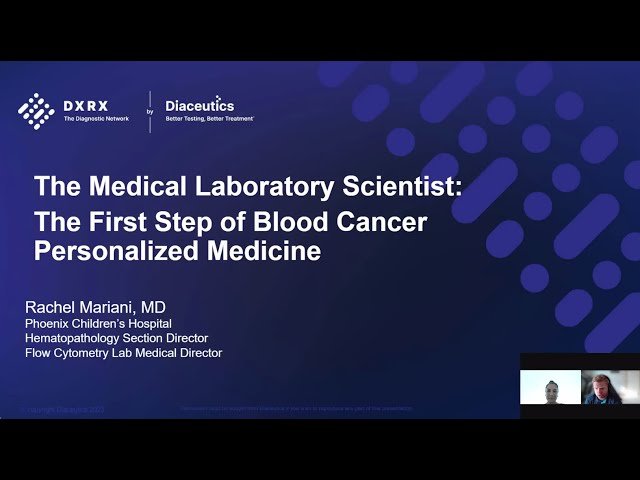
Explore the critical role of medical laboratory scientists in blood cancer personalized medicine through this comprehensive webinar presented by hematopathologist Dr. Rachel Mariani. Discover how clinical laboratorians utilize specialized skills and diverse analytical methods ranging from microscopic examination to molecular sequencing to enable personalized treatment plans for blood cancer patients. Learn through detailed case examples that demonstrate the fundamental importance of laboratory methods in the diagnosis, prognosis, and treatment of blood cancers affecting both pediatric and adult populations. Gain insights into how various biomarkers are identified for disease prognostication and understand the development of streamlined laboratory testing algorithms essential for modern hematopathology practice. Understand the essential connection between laboratory science expertise and the advancement of precision medicine approaches in hematologic malignancies.

YouTube
Explore the inspiring journey of Nobel Prize-winning scientist Dr. Robert Lefkowitz in this keynote address titled "The Reluctant Scientist" delivered at the 2013 North Carolina Student Academy of Science conference. Delve into Lefkowitz's life story, from his childhood through medical school and his groundbreaking research on G-protein coupled protein receptors. Gain insights into the lessons learned throughout his career that led to major advancements in prescription drug development for various conditions. Discover the importance of role models, the impact of historical events like the Vietnam War, and the path that led to his Nobel Prize in Chemistry. Learn about the scientific process behind receptor characterization, molecular cloning, and the significance of G-protein coupled receptors in drug targeting. Understand the broader implications of Lefkowitz's work in biology and medicine, including concepts like desensitization and G protein signaling. This 58-minute talk offers a unique perspective on the intersection of medicine and scientific research, providing valuable lessons for aspiring scientists and researchers.

edX
The demand for skilled data scientists continues to surge as organizations seek to harness the power of machine learning and data-driven insights. The Data Scientist program, developed by Microsoft and delivered on edX, is designed for learners ready to take their data science skills to the cloud. Through three practical, project-based courses, you’ll explore how to set up and configure the Azure Machine Learning workspace, train models using custom scripts, and deploy models as scalable endpoints. You’ll gain proficiency with tools like Jupyter Notebooks, Python, and Azure ML SDKs—all while learning to operationalize machine learning in real business scenarios. This program is ideal for data professionals, analysts, and aspiring machine learning engineers seeking to build robust, cloud-based ML pipelines. Whether you're transitioning into a data science role or expanding your cloud skill set, this program delivers a strong foundation aligned with industry needs and Azure certification pathways.

Udacity
This advanced Nanodegree prepares you to tackle data science at scale. Work with AI best practices, build production-ready projects, and gain the confidence to lead data-driven solutions.