

Courses
Discover thousands of courses from top institutions and platforms worldwide
Level
Course Type
Duration

YouTube
Explore the mathematical modeling of disease spread in this 16-minute lecture from NPTEL-NOC IITM that revisits the SIR (Susceptible-Infected-Recovered) model and introduces the more complex SIDARTHE model, which accounts for additional disease states and transmission dynamics.

YouTube
Learn about the Gouy-Chapman Electrical Double Layer (EDL) Model in this 25-minute lecture that addresses the shortcomings of the capacitor model and introduces the diffuse double layer model. Explore the linearized Poisson-Boltzmann equation and understand its applications in electrochemistry and surface science.
YouTube
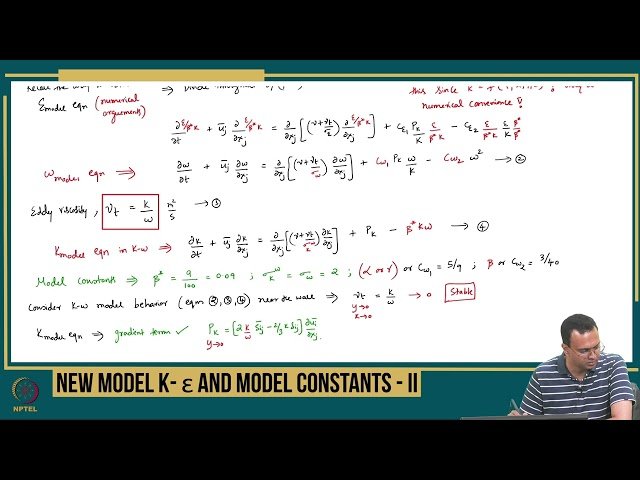
Learn about the new k-ε turbulence model, exploring its underlying assumptions, practical applications, and the significance of model constants in this 17-minute lecture. Understand how these mathematical parameters affect the model's performance and accuracy in various engineering scenarios.

YouTube
Learn how to match models with data through automated model calibration and parameter estimation in this 51-minute webinar from JuliaHub. Discover the process of solving inverse problems using the JuliaSim Model Optimizer to find optimal parameter fits for complex data sets. Master techniques for setting up modeling problems, creating inverse problems for parameter estimation, and generating visualizations of optimized parameters. Explore JuliaSim's unique model autocomplete feature that leverages universal differential equation symbolic model recovery to predict model extensions and accelerate the modeling process. Led by experienced JuliaSim Sales Engineer Jacob Vaverka, who brings extensive expertise in mathematical modeling, full-stack development, and data visualization to demonstrate how to effectively deploy scientific applications in high-performance computing environments.

edX
Designing a new business model is one thing, but how do you actually put it into practice? How do you move from your current model to a new business model? In this business and management course, you will learn how to make a practical action plan to implement your new business model. You will create a business model roadmap that will include practical activities that take into consideration the possible risks associated with moving to a new business model. You will also learn about the practical factors that need to be taken into consideration during the transition process, i.e. the competency of your people and your IT, in order to successfully implement a new business model.

YouTube
Explore advanced concepts in multi-execution memory models through this conference talk from ACM SIGPLAN's OOPSLA. Delve into the challenges of Promising and Weakestmo models, which justify concurrent program outcomes by considering multiple candidate executions collectively. Discover how this characteristic, while beneficial for hardware compilation and compiler optimizations, complicates reasoning and model checking. Learn about Weakestmo2, a strengthened version of Weakestmo that constrains multi-execution nature while preserving key properties like DRF theorems and compilation to hardware models. Examine novel concepts such as load buffering race freedom and certification locality, which help characterize surprisingly weak program behaviors. Gain insights into WMC, a model checker for Weakestmo2 that offers performance comparable to tools for per-execution models.

YouTube
Explore incremental model training approaches for machine learning in this comprehensive video tutorial. Learn about continuous model retraining techniques to address model drift and maintain performance over time. Dive into practical examples using Python libraries, covering topics like feature extraction, bag of words, prediction, pipelines, and performance metrics. Access accompanying code on GitHub to follow along and implement these strategies in your own projects. Gain valuable insights into keeping machine learning models up-to-date and effective as new data becomes available.

YouTube
Explore the intricacies of establishing an effective model risk management function in a highly regulated environment through this 30-minute conference talk from Data Science Conference Europe 2023. Gain valuable insights into developing intelligent and compliant policies, choosing appropriate technology solutions, and implementing practical enforcement strategies that align with organizational goals. Learn how to assess your organization's current position and define clear objectives for the future, as Urban Susnik shares his expertise in navigating the complex landscape of model validation and risk management.

YouTube
Explore model-based reinforcement learning in this comprehensive lecture, covering key concepts such as introduction, examples, pseudocode, complex models, and comparisons with replay buffers. Delve into practical applications of Dyna, search tree techniques, planning strategies, and Monte Carlo methods. Gain a deep understanding of how model-based RL differs from other approaches and learn to implement these concepts in real-world scenarios.

YouTube
Explore weighted model integration (WMI), a framework for advanced probabilistic inference in hybrid domains, through this 48-minute lecture by Zhe Zeng from UCLA. Delve into the complexities of distributions over mixed continuous-discrete random variables and their interaction with logical and arithmetic constraints. Gain insights into existing WMI solvers and understand the tractability analysis of WMI problem classes, focusing on complexity characterization using primal graphs with treewidth and diameter. Discover the largest known tractable WMI problem class to date. Learn about the practical application of WMI in Bayesian deep learning, particularly in developing accurate uncertainty estimation algorithms.

YouTube
Explore the concept of Model-Minded Development in this 39-minute conference talk from GOTO London 2016. Delve into the importance of models in software development, comparing short-term and long-term approaches in both companies and programming. Discover how theory building in science relates to programming, and learn about the breakthrough in Domain-Driven Design. Examine practical examples like understanding addition, long division, and the von Neumann architecture to illustrate the significance of internal-external model alignment. Gain insights into how developers weave models into programs, the types of models visible in code, and the distinction between reusable and ad hoc models. Conclude with valuable lessons on steering both ships and development teams using model-minded approaches.
YouTube
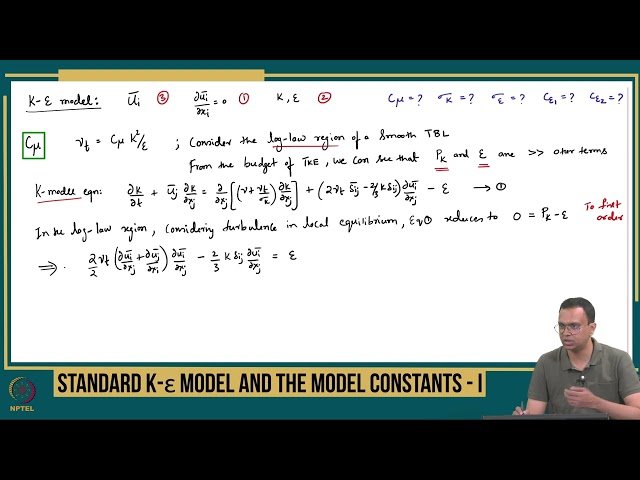
Learn about the standard k-ε turbulence model in this 26-minute lecture that explores transport equations and the production and destruction of turbulent kinetic energy (k). Understand the mathematical foundations of this widely-used two-equation model, examining how the model constants are derived and their significance in computational fluid dynamics applications.

Coursera
In this project, we will teach you how to create a Business model canvas which will help you refine the strategy for your startup or idea. It will help you understand how your idea adds value and delivers it. This project will help you think clearly about the various aspects of your startup or idea and delineate the various aspects of running a business . It will help you think about who your target customers are, where you will make money from , what is your cost structure, who are your key partners and what resources you nee dto run your startup. This is useful for people who have an idea or a startup . Note: This course works best for learners who are based in the North America region. We’re currently working on providing the same experience in other regions.
YouTube
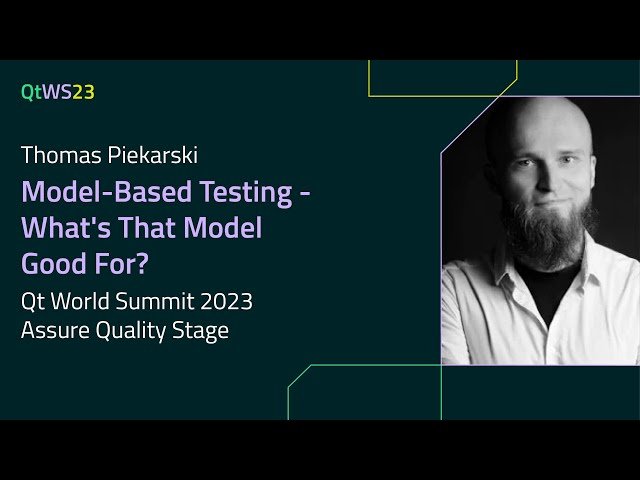
Learn about model-based testing approaches for complex Qt applications in this 41-minute conference talk from Qt World Summit 2023. Software Engineer Thomas Piekarski demonstrates how to abstract complexity through models to create more efficient test coverage strategies. Discover practical techniques for determining optimal test paths, implementing model-based testing with Squish, and managing testing challenges in complex software systems. Drawing from his extensive experience in software development across e-commerce, microservices, and financial industries, Piekarski provides actionable insights into leveraging models to enhance Qt application testing workflows.

edX
The world is changing rapidly and full of uncertainties. The future success of a business model depends on how well it is adapted to changing circumstances. Do you want to become aware of the relevant developments in technology, markets and society? And understand how this affects your business? This business and management course will teach you how to stress test your business model. You will learn how to identify the relevant trends and uncertainties and how they impact your business model. You will analyse the strong and weak parts of your business model and look for opportunities to make your business model more robust and future proof. You will learn through real-world examples from well-known companies and interact with fellow entrepreneurs. By the end of this course, you will be able to stress test your own business model to analyse its future success.

YouTube
Explore the intricate anatomy of the kidney in this 21-minute video lecture presented by Professor Zach Murphy. Using a SOMSO model, gain a comprehensive understanding of the kidney's structures and their functions. Delve into the complexities of renal anatomy, essential for medical students, healthcare professionals, and anyone interested in human physiology. Learn about the various components that make up this vital organ, including the cortex, medulla, nephrons, and blood vessels. Enhance your knowledge of the urinary system with this detailed, visual presentation that breaks down complex anatomical concepts into easily digestible information.

Corporate Finance Institute
Recommended Prep Courses These preparatory courses are optional, but we recommend you to complete the stated prep course(s) or possess the equivalent knowledge prior to enrolling in this course: Building a 3 Statement Financial Model Business Valuation ModelingMining Financial Modeling & Valuation Course Overview Master the art of building a financial model to value a mining company, complete with assumptions, financials, valuation, sensitivity analysis, and output charts. In this mining financial modeling course, we will work through a case study of a real mining valuation for an asset by pulling information from the Feasibility Study, inputting it into Excel, building a forecast, and valuing the asset. Mining Financial Modeling & Valuation Course Objectives By the end of this mining valuation course you will be able to: Understand key mining terms and definitions used in the industry and in valuationUnderstand the mining life cycle from start to finish for assets, projects, and operating minesRead and extract the important information from a mining technical report (feasibility study)Input key assumptions into a financial model that will drive revenue, expenses, and cash flow in the forecastCalculate production statistics based on a detailed mine plan from the technical reportBuild financial statements based on the mine planPerform a discounted cash flow DCF valuation of the mining asset in ExcelBuild sensitivity analysis to test for different input assumptionsOutput relevant graphs and charts to illustrate the investment opportunityUnderstand valuation methods such as Net Asset Value (NAV), P/NAV, P/CF, Total Acquisition Cost (TAC) Who should take this mining valuation course? Master mining valuation and learn how to value a mining company in Excel. This course is designed for professionals seeking careers in investment banking, equity research, corporate development and financial planning an analysis (FP&A). This course simulates the experience of working as a corporate development professional at a mining company evaluating an acquisition opportunity. The objective is to take all the information from the technical study, put it into Excel, and determine the net asset value (NAV) of the mine. The completed model will serve as a useful tool for testing different metal prices and other assumptions such as grade, recovery rate, unit operating costs, capital expenditures, and more. Prep Courses This is an advanced mining valuation course and assumes a solid understanding of the following courses: Excel Crash CourseBuilding a Financial Model in in ExcelBusiness Valuation

Coursera
This course introduces the basic concepts of functional verification and model checking, highlighting their importance in modern system designs. It explains different modeling formalisms for representing the behavior of hardware and software, which are either suitable for automated analysis or can represent data-dependent controls that are common in computing system designs. Additionally, it describes system compositions with respect to different communication models. This course can also be taken for academic credit as ECEA ####, part of CU Boulder’s Master of Science in Electrical Engineering.

Coursera
Welcome to the cutting-edge course on Quantitative Model Checking for Markov Chains! As technology permeates every aspect of modern life—Embedded Systems, Cyber-Physical Systems, Communication Protocols, and Transportation Systems—the need for dependable software is at an all-time high. One tiny flaw can lead to catastrophic failures and enormous costs. That's where you come in. The course kicks off with creating a State Transition System, the basic model that captures the intricate dynamics of real-world systems. Soon you'll step into the world of Discrete-time and Continuous-time Markov Chains—powerful mathematical formalisms that are versatile enough to model complex systems yet elegant in their design. These aren't just theories; they are tools actively used across various domains for performance and dependability evaluation. But we won't stop at modelling. The heart of this course is 'Model Checking,' a formal verification method that scrutinizes the functionality of your system model. Learn how to express dependability properties, track the evolution of Markov chains over time, and verify whether states meet particular conditions—all using advanced computational algorithms. By the end of this course, you'll be equipped with the skills to: - Specify dependability properties for a range of transition systems. - Understand the temporal evolution of Markov chains. - Analyze and compute the satisfaction set for multiple properties. Are you ready to become an expert in ensuring the reliability of tomorrow's technologies? Click here to Enroll today and join us in mastering the art and science of model checking.

YouTube
Explore the comparative analysis of turbulence models in this 19-minute lecture from NPTEL-NOC IITM that examines the Standard k-ε model, RNG k-ε model, and Prandlt's one equation model. Learn the fundamental concepts behind these different turbulence modeling approaches and understand their theoretical foundations, applications, and relative advantages. The first part of this educational segment provides essential insights into how these mathematical models are developed to simulate turbulent flows in computational fluid dynamics.