

Courses
Discover thousands of courses from top institutions and platforms worldwide
Level
Course Type
Duration

YouTube
Explore the complexities of mortgage valuation and prepayment modeling in this 72-minute lecture from Yale University's Financial Theory course. Delve into the intricacies of mortgages, including the refinancing option that distinguishes them from coupon bonds. Learn about different approaches to forecasting prepayments, from traditional curve-fitting methods to modern agent-based models that account for individual behavior and heterogeneity. Understand why mortgages are considered risky securities even without default risk, and examine strategies for hedging these risks. The lecture covers mortgage basics, refinancing complications, non-contingent forecasting, behavioral rationalization models, and risk management in the mortgage market.

Udemy
Finibi Mortgage CEO, Joe Correa, teaches you how to become a mortgage loan processor What you'll learn: You will be able to understand how mortgage processing worksYou will be able to start working as a mortgage loan processorYou will be able to prepare and submit a loan package to underwriting for approvalYou will learn how to review specific documents including a 1003 and disclosuresYou will learn how to become a contract processor as well as a salaried processorYou will understand how to prepare a loan package for auditingYou will be able to complete compliance checks and know exactly what needs to be in each fileYou will learn how to view and make changes on Calyx PointYou will learn how to submit a loan on a lenders website Starting a new career as a mortgage loan processor is a smart and profitable decision that can have a significant effect on your financial future. Mortgage loan processors are in high demand!In this modern course, you'll learn all of the skills necessary to become a successful mortgage loan processor and be able to use these skills in you're day-to-day working life. From how to prepare a loan package to submitting a file to underwriting and getting an "approved with conditions" status, these lectures are designed for any one who is interested in starting a career in real estate but that would prefer not be in sales. With real world examples demonstrating exactly how to execute each step of the mortgage process, you'll find out exactly what to do (and what not to do) to prepare a file to the level where it can be approved and be compliant with all federal and state regulations.Main benefits of this course and of being a mortgage loan processor are:- Make a great starting and future income Most starting processors make $40,000 - $60,000 per year. Senior and experienced loan processors make $60,000 - $100,000+- Have the flexibility of getting paid in the form of a salary or as an independent contractor (Work from home on your computer and phone if you are an independent contractor)- Learn what it takes to close a home loan- Start a career that is in high demand where you can quickly increase your incomeIf you already know the basics of being a loan processor and want refresh your memory or are just starting out and want to learn more in depth, this is the course for you. Ensuring the success of each and every loan is very different if you have the knowledge necessary to solve problems and have back up plans if problems arise. You need to know the steps you will need to take to prepare, submit, and close a loan. This takes experience and the right skills which is what this course will provide you with.The first section of this course will take you through two hugely important elements of loan processing: how the entire loan process works and what you'll need to do on each and every loan file. You will learn how to do quality control checks to make sure you are compliant with all laws and how to be ready for an audit. In the second section of this course, you will learn what you need to do to start a career as a loan processor and what it entails.At the end of it all, you'll have the tools needed to make better, and more successful decisions in your loan processor role. A course diploma will be available to you when all sections have been completed at 100% which you can save or print. For instructions on downloading your course diploma you can go to: https://support.udemy.com/hc/en-us/articles/229603868-Certificate-of-CompletionYour instructorJoseph Correa is the founder and CEO of Finibi Mortgage, a licensed mortgage brokerage business based out of Orlando, Florida. Having closed hundreds of mortgage loans and processed many of them, he has the necessary processing knowledge to help you become a success. In the past, he has also owned a correspondent lender business and invested in real estate.

Udemy
Property & Mortgage Underwriting | Loan Processing | Financial Analysis | Mortgage Operations | Origination What you'll learn: Describe the real estate mortgage market, including how and why people finance properties with mortgages.Explain the size and scope of the U.S. residential mortgage market.List and discuss roles of the key players in the mortgage industry and the functions and roles they have.Apply current and historic mortgage regulations to financial and credit underwriting of mortgage loansIdentify key mortgage types and describe the audience and markets for each.Delineate the various residential property types, and the risks each has to the mortgage lender.Articulate the financial and business terms and conditions related to mortgages, as well as the full meaning and importance of each.Explain the full consumer mortgage underwriting lifecycle from the consumer, originator, underwriter and financier POVs, and each step along the way.Conduct a borrower income analysis, read and understand credit history and reports, and evaluate the credit worthiness of a borrower.Evaluate appraisals and asset valuations, and the appraisals and the appraisal process.Explain titling and insurance, titling requirements and related title issues.Use (and not be afraid of) the math, rates and calculations behind mortgage pricing.Discuss mortgage metrics and be able to provide an overview of loan approvals and rejections.Identify financial distress in mortgages, including early warning signs, foreclosure alternatives, and loss mitigation strategies.You'll learn about loan servicing and servicing regulations.Define securitization, learn why financial institutions securitize mortgages, and advantages and disadvantages of securitization to the issuer and investor.Describe the mortgage securitization process, from origination, to packaging and to servicing a securitized portfolio of mortgages.Understand what a mortgage backed security (MBS) is, how rating agencies are involved in evaluating MBS securitizations, and appreciate the complexities. Ever wondered what really happens behind the scenes of a home loan? From application to foreclosure—and everything in between—this course pulls back the curtain on the modern U.S. mortgage industry.This comprehensive course demystifies the U.S. residential mortgage industry by walking learners through the full lifecycle of a home loan—from origination to securitization. The course has been updated with fresh data, real-life examples, and today’s lending practices to match how the mortgage world works now.You'll dive into essential topics like loan types, mortgage math, credit and risk assessment, regulatory frameworks, foreclosure strategies, securitization, and the servicing process. Unlike other courses, this program emphasizes a real-world, data-driven perspective and mirrors today’s mortgage lending environment.By the end, you’ll gain not just theory, but the analytical tools and regulatory understanding needed to thrive in the ever-evolving mortgage finance space.This course outline follows microlearning best practices. Each video lesson is limited to 7–10 minutes for optimal learner retention and engagement. Longer lessons from the original course have been split into smaller, focused parts.Module 1: Foundations of U.S. Residential Mortgage BusinessCourse WelcomeIndustry Overview – Part 1: History & ScopeIndustry Overview – Part 2: Business ProcessResidential Property TypesMortgage Ecosystem PlayersLoan Types – Part 1: Fixed vs AdjustableARM Mechanics – Margins, Indexes & Rate CapsLoan Types – Part 2: FHA, VA & OthersLoan Types – Part 3: Conforming vs Non-Conforming Module 2: Terms, Math & Risk FundamentalsTerms & Conditions – Part 1: Common ClausesTerms & Conditions – Part 2: Prepayment, DefaultMortgage Math – Part 1: Basic ConceptsMortgage Math – Part 2: Payment CalculationsMortgage Math – Part 3: AmortizationLoan Features – Part 1: Assumable & Convertible MortgagesLoan Features – Part 2: Construction, Interest-Only & Balloon LoansUnderstanding Balloon MortgagesSecond Mortgages, HELOCs & Lien PositioningSubordination Clauses & Lien ExceptionsRisk & Rewards – Part 1: Borrower RisksRisk & Rewards – Part 2: Lender RisksConsumer Mortgage LifecycleLender Mortgage LifecycleReverse Mortgages – Structure, Eligibility & RisksModule 3: Regulation, Distress & Market LandscapeRegulations – Part 1: Federal OversightRegulations – Part 2: State & Local ComplianceForeclosure Avoidance Strategies – Part 1Foreclosure Avoidance Strategies – Part 2Market Size and Structure – Part 1Market Size and Structure – Part 2Special Mortgage Scenarios & Borrower PersonasRefinancing Use Cases – Rate-Term vs. Cash-OutModule 4: Mortgage Analysis & Appraisal TechniquesIntro to Mortgage AnalysisBorrower Analysis – Part 1: IncomeBorrower Analysis – Part 2: Financial RatiosCredit Report OverviewCredit Report InterpretationDecisioning Metrics – Part 1: LTV, DTIDecisioning Metrics – Part 2: Combined Risk FactorsRisk Layering in Underwriting DecisionsConstruction & Custom Property AppraisalsAppraisal Walkthrough – Part 1: ProcessAppraisal Walkthrough – Part 2: Sample ReportTitle and Insurance FundamentalsModule 5: Servicing, Securitization & Wrap-upLesson TitleLoan Servicing – Part 1: Payment CollectionLoan Servicing – Part 2: Escrow & MonitoringIntro to SecuritizationSecuritization – Part 1: Issuer ViewSecuritization – Part 2: Investor ViewMortgage-Backed Securities LifecycleMBS Ratings OverviewCapstone: Mortgage Case Simulation

Udemy
Finibi Mortgage CEO, Joe Correa, teaches you how to take your mortgage loan processor career to the next level What you'll learn: Learn how to calculate a salaried borrowers income.Learn how to read and understand an appraisal and how property values are obtained.Become a pro at locking rates and understanding how rates affect a loans approval.Develop a deeper knowledge of verifications of employment to get more loans approved.Learn how to become more valuable as a processor by completing more of the necessary task to close more loans.Read and know what to request on a homeowners declaration page to get more loans closed.Understand the importance of a survey and when it should be ordered and by who.Learn how to obtain invoices for third party fees so that you loan is compliant and the lenders clears your loan to close. Advanced mortgage loan processor training will give you the knowledge to earn a higher income. This course goes from theory to practical examples. Lenders are hiring mortgage loan processors by the hundreds!This fast-paced course will go over the most fundamental tasks processors need to master such as: requesting a change in circumstance, being able to read and understand Loan Prospector findings, outsource basic processing tasks to third party vendors which will reduce your time on repetitive tasks and will allow you to focus more on providing the best service possible. You will also learn to calculate salaried and self-employed borrowers income quickly and easily with practice questions taught by the instructor. Besides that, you'll also review common calculations you will see every day in an exercise format. These realistic exercises will teach you how to calculate the debt-to-income ratio, loan-to-value, cash to close, borrowers middle credit score when you only have two credit scores or just one, plus, how to calculate all of these in one loan scenario. This course will even go over a real life conditional approval in detail just like you will need to do when you process loans for banks and lenders. If you're looking to start a career in real estate or mortgage and want to receive a salary and not a commission, becoming a loan processor is the right choice.Main benefits of this course and of being an advanced mortgage loan processor are:- Earn a great starting salary and possibly a sign on bonus This course includes the contact information for 2 lenders that are currently hiring and need loan processors and other mortgage positions paying $40,000 - $100,000+ per year.- Work remotely from home and have a flexible work schedule- Become an expert on home mortgages- Quickly and easily change careers into a high demand marketOnce you start working as a mortgage loan processor, you can quickly move up to becoming a senior loan processor which are the highest paid form of loan processors. By completing this course, you will learn much of the knowledge senior loan processors have which will allow you to increase your income and potential for other higher paid positions within a bank, lender, or mortgage company.The first section of this course will take you through three enormously important elements of loan processing: quickly running the debt-to-income ratio, loan-to-value, and calculating the cash to close for different borrowers. How to calculate a salaried and self-employed borrowers income. In the second section of this course, you will learn what lenders are the easiest to process loans with and what tools they offer to make processing faster. You will also learn what lenders are hiring and how to get hired by using some of the techniques which I have seen work in the past.Once you complete this course, you will have advanced loan processing knowledge and a course diploma to show employers. A course diploma will be available to you when all sections have been completed at 100% which you can save or print. For instructions on downloading your course diploma you can go to: https://support.udemy.com/hc/en-us/articles/229603868-Certificate-of-CompletionYour instructorJoseph Correa is the founder and CEO of Finibi Mortgage, a licensed mortgage brokerage business based out of Orlando, Florida. Having closed hundreds of mortgage loans and processed many of them, he has the necessary processing knowledge to help you become a success. In the past, he has also owned a correspondent lender business and invested in real estate.This course is more advanced so if you haven't taken my "Become a Mortgage Loan Processor" course, I would suggest you start with that one first but you are welcome to start with this one and then move on to that one.

YouTube
Explore the history of debt, financial crises, and the recent collapse of the real estate market in this 50-minute lecture from Yale University's "Capitalism: Success, Crisis and Reform" course. Delve into topics ranging from ancient debt slavery to modern real estate financing in New York City with guest speaker Will Goetzmann, Director of the Yale International Center for Finance. Examine recent research on the mortgage market collapse, challenging the notion that it led to the larger financial crisis. Analyze data on real estate markets, price growth versus subprime approvals, and the relationship between past and future growth in mortgage prices. Investigate 2006 mortgage regressions and evidence for demand effects on loan approval likelihood. Gain insights into the complexities of financial institutions and incentives in mortgages and mortgage-backed securities.

Corporate Finance Institute
Commercial Mortgages Course Overview This Commercial Mortgages course explores the elements determining loan details for income-producing investment properties. Commercial mortgages are used to fund real estate investment ventures. They are important for any credit analyst who wishes to understand issues relevant to real estate financing or would like to specialize in the real estate sector. In this course, we examine key metrics of the real estate lending process and dive into the key underwriting parameters for commercial mortgages. We also work through a realistic client example to understand the inner workings of a commercial mortgage deal. In this case study, we examine a rent roll analysis, risk rating, and the pricing of the loan. Commercial Mortgages Learning Objectives Upon completing this course, you will be able to: Examine key property valuation metrics like net operating income (NOI) and capitalization rates, and understand how they relate to the credit analysis processReview key property parameters and how they inform the underwriting processWork through an example property to see the end-to-end underwriting processUnderstand how key variables drive loan amount, risk rating, credit terms, and mortgage pricing Who should take this course? This Commercial Mortgages course is designed for current and aspiring commercial banking professionals in the real estate industry. This course is also a great resource for real estate analysts and commercial mortgage brokers who wish to better understand the real estate underwriting process. This course provides a valuable perspective on a real estate lender’s considerations when structuring a commercial mortgage deal which is vital for lenders, brokers, and advisors.

Udemy
Learn A to Z of Mortgage Life Cycle What you'll learn: How the housing loans, which are often called Mortgages in United States are originated and finally sold in secondary market, I mean understand complete life cycle of Mortgage. You might be wondering what is US Mortgage? Why it is important? What role it plays in US economy? Why it is important to learn about US Mortgage? Who should learn this domain? Why they should learn this domain? What is the complete life cycle of the Mortgage, right from Origination of the loan to selling the same loan in secondary market, who are the players involved? What all the processes involved? What all the consumer Affairs Laws & Regulations? And Key Terms and Concepts. The US – Mortgage in a nutshellLet’s understand What is US Mortgage in a nutshell? US Mortgage, in this course you going to essentially learn about what is US Mortgage Banking, what all the risks involved in mortgage banking, What all the different types of Mortgages available in market? As fundamentals of US Mortgage.When it comes to Mortgage Production, you will learn about what all the different processes like Loan Origination, Processing, Underwriting, Closing & Funding. Each process again has multiple processes in order to make sure both borrower & lender are in compliance with federal laws. Let’s see what we going to learn in Mortgage Servicing. This section of the course will talk about Loan servicing processes such as Cash Management, Investor Accounting & Reporting, Document Custodianship etc. Also, this section of the course will talk about Loan Servicing Players such as Loan Servicers, Trustees, Paying Agents, Primary Custodians, Primary Collateral Trustee etc.Last section of this course is the more exciting one. This section will throw light on Mortgage Secondary Marketing, who are all players, How the Securitization process is structured? What all the government sponsored entities are involved in securitization process? Which are called private conduits and their role in secondary market.So, who are target audiences? This course is meant for someone who wants to build their career as a business analyst, product owner/manager for Mortgage products, This course is for someone who is interested in Mortgage Business as an investor or financier, This course is meant for academicians who wants teach on US Mortgage domain, This course is prepared for all the people who works in the are of US Mortgage, but do not have complete understanding of how the mortgage is originated and finally sold in the secondary market. This course is intended for anyone who is in finance domain.So, at the end of this lesson, you will be able to understand the whole process of Mortgage production right from origination to selling them in secondary market, you will be able to answer all the questions related to US Mortgage, if you are investor in mortgage business, you will be much comfortable in your decisions since the decision you make will be informed decisions. If you are a product owner for a mortgage product, you will be enhanced with additional knowledge of mortgage.So, what are you waiting for? Go ahead and enroll this course and learn about anatomy of US Mortgage right from its inception to selling the mortgage in secondary market.

Coursera
The lending industry is undergoing a rapid transformation, with Generative AI (GenAI) at the forefront of innovation. This course, designed specifically for loan officers and lending professionals, provides a hands-on, practical roadmap for integrating GenAI tools across the entire lending workflow—from the first customer interaction to final loan approval and ongoing client management. You’ll learn how to use AI-powered solutions to streamline application intake, automate customer communication, enhance credit risk assessment, review documents for compliance, and optimize workflow automation. The course is structured around real-world scenarios and uses only trial-accessible, user-friendly tools, ensuring that you can immediately apply what you learn without needing a technical or programming background. Through a blend of short instructional videos, interactive labs, and real-world case studies, you’ll gain the confidence to leverage GenAI for faster, more accurate, and fairer lending decisions. You’ll see how AI chatbots and virtual assistants can improve customer experience, how AI-driven credit scoring models can enhance risk assessment, and how document review and compliance can be automated for greater efficiency. The course also addresses the importance of ethical AI use, bias detection, and maintaining regulatory compliance, ensuring that your adoption of GenAI is both responsible and effective. This course is tailored for professionals across the lending and credit evaluation spectrum, including loan officers, underwriters, credit risk analysts, and operations teams focused on process efficiency. It is also ideal for innovation and digital transformation teams within financial services institutions who are exploring practical applications of AI to enhance the lending lifecycle. Whether working at banks, credit unions, fintech startups, or non-bank lenders, participants will benefit from actionable insights into deploying GenAI in real-world lending environments. Learners should have a foundational understanding of loan origination processes, credit analysis methods, and basic credit scoring models. Familiarity with everyday digital tools such as Excel, web applications, and CRM platforms is expected. Additionally, learners should possess basic GenAI literacy, such as experience using tools like ChatGPT, Microsoft Copilot, or similar AI assistants, to effectively engage with course content and hands-on labs. By the end of this course, learners will be able to apply Generative AI tools to streamline loan application intake and enhance customer communication workflows. They will learn how to leverage AI-driven models to support more accurate credit scoring and risk assessments. The course also equips participants to automate and optimize key steps in the lending process while upholding ethical standards, reducing bias, and ensuring regulatory compliance through human-in-the-loop strategies.

YouTube
Explore a comprehensive presentation on the Istakapaza Mortgage Ecosystem and the latest developments in blockchain technology for the mortgage industry. Gain insights from Alok K Sinha and Gopal Anandan, CEO and COO of Istakapaza respectively, as they provide an overview of their revolutionary blockchain-powered platform transforming home mortgages. Learn about the current state of blockchain in the mortgage realm from blockchain expert James Hendrick. Discover community information, agenda details, and engage in an enlightening discussion led by Mortgage Industry Subgroup Co-Chair Marvin Bantugan. Access valuable resources, including the FMSIG Mortgage Subgroup Wiki, LinkedIn page, and mailing list for ongoing updates in the field of blockchain and mortgages.

DataCamp
Learn how to write scalable code for working with big data in R using the bigmemory and iotools packages. Datasets are often larger than available RAM, which causes problems for R programmers since by default all the variables are stored in memory. You’ll learn tools for processing, exploring, and analyzing data directly from disk. You’ll also implement the split-apply-combine approach and learn how to write scalable code using the bigmemory and iotools packages. In this course, you'll make use of the Federal Housing Finance Agency's data, a publicly available data set chronicling all mortgages that were held or securitized by both Federal National Mortgage Association (Fannie Mae) and Federal Home Loan Mortgage Corporation (Freddie Mac) from 2009-2015.

Udemy
Home strategies for making personal housing decisions from a Certified Public Accountant (CPA) What you'll learn: How to make the home, rent vs buy, decisionProcess for selecting an apartmentHow to analyze a lease agreementSteps for purchasing a homeHow to buy a home remotelyHow to finance a first time homeHow to apply for a mortgage loanDescribe the escrow processExplain the difference between a loan officer and mortgage brokerList and describe warrantiesPerform a loan estimateExplain the home appraisal processDefine title and explain why it is importantExplain FHA Single Family Title IIDescribe mortgage points and how to make decisions related to themDescribe Adjustable-Rate Mortgage (ARM)Explain what a second mortgage is and when it would be useful The course will focus on personal housing decisions.The course will discuss how to approach the decision of purchasing or renting a home, which can be very complex given the long-term investment nature of a home purchase, the high cost relative to other expenses, and the different time frames between renting and purchasing.We will discuss decisions related to renting, like selecting an apartment and analyzing the lease agreement.Learners will understand concepts related to the home purchasing process. We will discuss the options for buying a home remotely, the importance of an inspection, the time frame to buy a home, and home buying apps that can be useful in the home buying process.The course will also cover financing basics for first-time homebuyers, how to apply for a mortgage, what a mortgage clause is, and describe the escrow process.We will compare a loan officer and a mortgage broker. Learners will understand different loan characteristics and much more.The course will also have practice problems, including downloadable Excel Workbooks, which users may also open using Google Sheets.The Excel Workbooks will generally have at least two tabs. One tab will have the answer key so learners can deconstruct the problem. The second tab is where we work the practice problem step-by-step along with the instructional videos.

OpenLearn
Understanding mortgages is a free, short course produced in collaboration with MoneySavingExpert.com.The course explores the mortgage products available in the UK market – their interest rate and other characteristics – and examines the factors involved in making good choices from the product range.The course explains why and how mortgages can be actively managed by borrowers through such options as overpaying, offsetting and remortgaging.The course also examines the mortgages from the viewpoint of the lenders, including the factors that affect their decisions about making mortgage advances.By completing the course you will not only become more knowledgeable about the mortgage market but also more confident about making smart decisions about one of most important areas of personal finance.The Open University would really appreciate a few minutes of your time to tell us about yourself and your expectations for the course. We welcome your feedback and suggestions to improve the course. This course is endorsed by the CPD Standards Office . It can be used to provide evidence of continuing professional development but is not accredited learning. We are unable to provide formal learner verification services for participation in our open online courses, which are provided freely by The Open University as self-directed CPD. Anyone wishing to provide evidence of their enrolment on this course is able to do so by sharing their Activity Record on their OpenLearn Profile, which is available before completion of the course and earning of the Statement of Participation.

Udemy
A beginners guide to Asset Backed Securities, Mortgage Backed Securities, Collateralized Debt Obligations etc What you'll learn: explain benefits of securitization for economies and financial markets;describe securitization, including the parties involved in the process and the roles they play;describe typical structures of securitizations, including credit tranching and time tranching;describe types and characteristics of residential mortgage loans that are typically securitized;describe types and characteristics of residential mortgage-backed securities, including mortgage pass-through securities and collateralized mortgage obligations, and explain the cash flows and risks for each type;define prepayment risk and describe the prepayment risk of mortgage-backed securities;describe characteristics and risks of commercial mortgage-backed securities;describe types and characteristics of non-mortgage asset-backed securities, including the cash flows and risks of each type;describe collateralized debt obligations, including their cash flows and risks. This coursediscusses the benefits of securitization, describes securitization, and explains the investment characteristics of different types of AssetBackedSecurities (ABS). The terminology regarding ABS varies by jurisdiction. A mortgage-backed security (MBS) is an ABS backed by a pool of mortgages, and a distinction is sometimes made between MBS and ABS backed by non-mortgage assets. This distinction is common in the United States, for example, where typically the term “mortgage-backed securities” refers to securities backed by high-quality real estate mortgages and the term “asset-backed securities” refers to securities backed by other types of assets. Because the US ABS market is the largest in the world, much of the discussion and many examples in this reading refer to the United States. This course will help the student understandthe importance of securitization from a macroeconomic perspective. I will be discussingthe benefits of securitization for economies and financial markets, talking about securitization and identifying the parties involved in the process and their roles. I shall also discusses typical structures of securitizations, including credit tranching and time tranching. Further more, Iwill be talking aboutsecurities backed by mortgages for real estate property, focusing on thetypes of residential mortgage designs,residential MBS and commercial MBS, respectively. I will concludethe course with a lecture onCollateralized debt obligations. This course is very useful for anyone interested in entering the Fixed Income field of Investments, especially those entering the ABSarena.

YouTube
Explore the complex history and modern landscape of real estate finance in this comprehensive lecture from Yale University's Financial Markets course. Delve into the evolution of mortgage financing, from the development of property rights to contemporary financial institutions for commercial real estate. Examine the shift from short-term, balloon-payment mortgages to long-term, amortizing mortgages in residential real estate following the Great Depression. Investigate the role of mortgage securitization and government support through entities like Fannie Mae and Freddie Mac. Analyze the impact of collateralized mortgage obligations (CMOs) and moral hazard in mortgage origination, culminating in a discussion of the 2007-2008 financial crisis.

FutureLearn
Explore the fundamentals of mortgages and the process of buying a home As a first-time potential property owner, the process of buying a home can seem incredibly daunting and complex. This four-week course from the Chartered Insurance Institute provides a clear and simple introduction to the different elements involved in the property buying process. You’ll learn the ins and outs of how mortgages work and be equipped to handle your property purchase with ease. Understand the roles of the estate agent, lender, and conveyancer When thinking about buying a property, many people don’t consider the number of individuals that can be involved in the process. Each person, from the estate agent, to the lender, conveyancer, and mortgage broker, has a very specific role in helping you land the home of your dreams. You’ll explore the different functions of each individual to understand how they can help you find the right property, secure a mortgage, and handle legal matters such as title deeds and transfer of ownership. Discover the lending and financing process and how mortgage rates are calculated Securing a mortgage is one of the most essential elements of the property buying process, and often the most misunderstood. On this course, you’ll discover the different types of lenders, their approaches, and where to go for help to find the best deal. Learn about mortgages and the house buying process from the experts The Chartered Insurance Institute is the home of the Society of Mortgage Professionals and has a long history of providing learning materials on the provision of financial advice and on insurance. With guidance and support from your expert educators, you’ll be empowered with the confidence and knowledge to secure a mortgage best suited to your needs. This course is designed for anyone who wishes to better understand the process of buying a property, particularly through using a mortgage. It will also be helpful for those aspiring or starting to work in the property market.

edX
This course begins with an introduction to Mortgage Backed Security (MBS) where we’ll look into the reasons for the rapid growth of the MBS market and the size of the MBS market. You will learn to identify the U.S. mortgage agencies and distinguish among them regarding their legal status, nature of the guarantees they offer and types of mortgages they securitize. You'll also learn about the two major types of securities based on the securitization of mortgages and describe the type of structuring connected with each. By the end of this course, you’ll also be able to describe the basic features of agency pass-through securities and collateralized mortgage obligations (CMOs) and how their structural differences impact cash flows received by investors. This course is a teaser offering for New York Institute of Finance’s Mortgage Backed Securities Professional Certificate program. To learn more about the Professional Certificate program, click here.

YouTube
Dive into a comprehensive 57-minute video update on key blockchain developments in mortgages, AI, and cryptocurrencies in 2023 from the Hyperledger FMSIG Mortgage Industry Subgroup's inaugural monthly meeting of 2024. Explore insights from Marvin Bantugan and James Hendrick as they discuss the state of blockchain in the mortgage industry, tokenization, artificial intelligence, and mortgage blockchain ecosystems. Gain valuable knowledge about the intersection of blockchain technology and the mortgage sector, including community information, a 2023 summary, and closing statements. Access additional resources through provided links to join the subgroup, follow updates, and learn more about Hyperledger's open-source blockchain technologies.

edX
Preview course content here for free! This preview course also offers an opportunity to earn an edX certificate for $49. Taught by instructors with decades of experience on Wall Street, the Mortgage Backed Securities (MBS) Professional Certificate program is a fast paced, comprehensive yet detailed introduction to the U.S. mortgage-backed securities market. The program covers the basics of terminology and features of individual mortgage contracts all the way through to the structure and investment characteristics of exotic instruments such as PAC bond tranches and reverse mortgage securitization. Along the way, the program will address aspects of the MBS market ranging from the creation of the basic building blocks (mortgage origination and types of mortgages), the process of turning them into investment instruments (asset securitization) and how in certain instances the cash distributions are structured to create a variety of securities from a single collateral pool (types of tranches of Collateralized Mortgage Obligations – CMOs). The majority of the program will focus on the largest segment of the market, agency (FNMA, FHLMC and GNMA) residential mortgage backed securities, both pass-through securities and CMOs. However, the other market sectors (agency multi-family, non-agency CMOs and commercial mortgage-backed securities – CMBS) will be addressed in some detail. The coverage of each type of security will address: the most frequently encountered instrument in each category as well as common variations, the type of collateral that provide the cash flows for distribution to investors, and the structure of cash disbursements. The primary themes in the discussion of each security is the consequence of all those forgoing elements with respect to the primary types of risk investors face and the way in which those elements impact expected return. Augmenting the discussion of the securities will be an introduction to the pricing conventions (including PSA and CPR speeds) and analytics (OAS analysis) as well as market-related issues such as TBA trading and dollar rolls. NOTE: Completing all 2 parts and then taking the Professional Certificate Examination is MANDATORY to achieve both the NYIF Certificate of Mastery and the edX Professional Certificate in Mortgage Backed Securities. A verified learner must pass all courses in the program with a minimum grade of 70% to earn a Professional Certificate for Mortgages Backed Securities.
Corporate Finance Institute
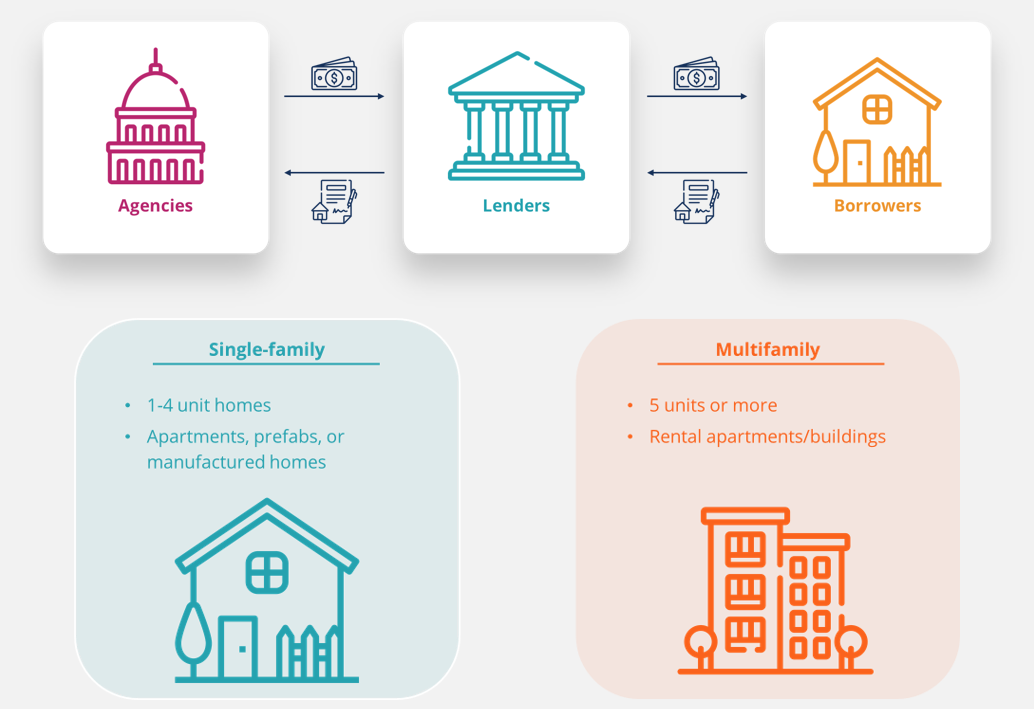
Securitized Products Course Overview In Securitized Products, we will cover the basics of the securitization process, including its role in the world of finance, the structure of securitized products, and the risks associated with it. We will learn mortgage basics: borrower and loan classifications, features of mortgage products, and the way loans are being pooled into mortgage-backed securities (MBSs). Securitized Products Learning Objectives Upon completing this course, you will: Acquire theoretical knowledge about the securitization process and productsGet practical experience calculating prepayment speeds and valuing MBSComprehend the role of the US GSEs in the mortgage marketBe well-versed in the basics of individual mortgage loans and their classificationLearn how market participants get relative value, how they trade, and how they hedge MBS securities Who should take this course? This course is perfect for somebody interested in learning about one of the most critical financial practices that allow achieving liquidity in the market and for somebody who considers securitization finance or any capital markets-related position the desired career path. As this course covers topics from beginner to advanced level, current students and anyone in the early stage of their career and industry professionals seeking to transition to a new industry will gain valuable knowledge from this course.
Corporate Finance Institute
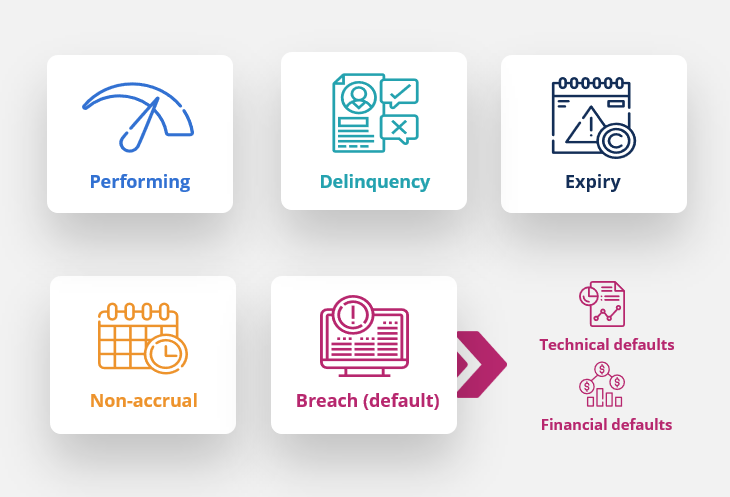
Problem Loans Course OverviewProblem Loans present many unique challenges for a financial institution. This course examines what constitutes a problem loan specifically and problem files more generally. We’ll look at the commercial borrowing relationship holistically to help identify the different ways that a client’s standing might deteriorate. Next, we’ll review different loan classifications before using an example pricing model in Excel to demonstrate how deteriorating risk on a file can affect a lender’s profitability. Next, we look at how an individual loan officer or credit analyst can differentiate between problem loan symptoms and their underlying causes to help identify early warning signs much more effectively and to get ahead of problem files before they become a serious financial burden for the firm. Finally, we explore some of the options a lender has when trying to work through a problem file, including an in-depth look at an example Watch Report.Problem Loans Learning ObjectivesUpon completing this course, you will be able to:Define what a problem loan is.Compare different categories of problem loans (and client files). Interpret how problem loans can affect profitability for a financial institution.Explain the difference between the symptoms and the causes of problem loans.Detect problem loans more proactively by applying a systems thinking framework.Compare the different options a lender has when working with a problem file. Who Should Take This Course?This Problem Loans course is designed for current and aspiring commercial banking professionals, including relationship managers or loan officers, credit analysts, loan brokers, and adjudicators. This course will prepare you with the knowledge and skills you need to properly handle difficult borrower situations.