

Courses
Discover thousands of courses from top institutions and platforms worldwide
Level
Course Type
Duration

YouTube
Dive into a comprehensive 4.5-hour video lecture series on Nuclear Medicine Physics. Explore essential topics including the fundamentals of nuclear medicine, imaging techniques, gamma camera technology, energy spectra in scintillation detectors, and collimators. Learn about quality assurance procedures, tomography principles, image reconstruction methods, and the concepts behind SPECT and PET imaging. Discover quantitative approaches in SPECT and PET, understand the Standard Uptake Value (SUV), and identify common artifacts in PET imaging. Gain insights into nuclear medicine therapy and the emerging field of theranostics. Designed for residents, fellows, undergraduate and graduate students, and technologists, this in-depth review provides a solid foundation in nuclear medicine physics, complemented by an additional 50-lecture series for further study.

YouTube
Explore cutting-edge developments in nuclear medicine and theranostics in this 29-minute conference talk presented by Johannes Czernin, MD, Professor of Molecular and Medical Pharmacology at UCLA. Gain insights into the latest advancements in diagnostic and therapeutic approaches that combine targeted imaging and treatment strategies. Discover how these innovations are revolutionizing personalized medicine and improving patient outcomes in various medical fields. Moderated by Jason Lee, PhD, this session offers a unique opportunity to learn from a leading expert in the field and understand the potential impact of these advances on future healthcare practices.

Coursera
The Certified Ethical Emerging Technologist (CEET) industry validated certification helps professionals draw higher salaries (25% on average) and differentiate themselves from other job candidates. Organizations and governments are seeking out ethics professionals to minimize risk and guide their decision-making about the design of inclusive, responsible, and trusted technology. An algorithm not designed and assessed in alignment with ethical standards can create further inequity across race, gender and marginalized populations. The reputational and financial impact of an ethics violation can devastate a company. Knowledgeable ethics leaders are needed who can navigate through the more than 160 frameworks and guidelines to select and implement the best strategy to promote fairness and minimize risk for their organization. This specialization is designed for learners who want to create and lead initiatives that prioritize ethical integrity within emerging data-driven technology fields such as artificial intelligence and data science and will be prepared to bridge the gap between theory and practice. Your journey to CEET Certification 1) Complete the Coursera Certified Ethical Emerging Technologist Professional Certificate 2) Complete the Coursera course Preparing for Your CertNexus Certification Exam 3) Review the CEET CET-110 Exam Blueprint 4) Purchase your CEET Exam Voucher 5) Register for your CEET Exam

Kadenze
The role of the music technologist has changed throughout history, though one trait has stayed consistent: the necessity for the individual to operate across multiple mediums and disciplines. This project-based course provides an opportunity to synthesize the key concepts and skills learned in the Foundations of Music Technology Program, and enables students to establish meaningful connections between the contents of each course. The course will have students acquire real-world artistic experience, through the critical examination of historical works, and the completion of a final project, which demonstrates their ability show how they themselves have become The Modern Music Technologist.

Coursera
The Certified Ethical Emerging Technologist (CEET) industry validated certification helps professionals differentiate themselves from other job candidates by demonstrating their ability to ethically navigate data driven emerging technologies such as AI, Machine Learning and Data Science. Organizations and governments are seeking out ethics professionals to minimize risk and guide their decision-making about the design of inclusive, responsible, and trusted technology. An algorithm not designed and assessed in alignment with ethical standards can create further inequity across race, gender and marginalized populations. The reputational and financial impact of an ethics violation can devastate a company. Knowledgeable ethics leaders are needed who can navigate through the more than 160 frameworks and guidelines to select and implement the best strategy to promote fairness and minimize risk for their organization. This specialization is designed for learners who want to create and lead initiatives that prioritize ethical integrity within emerging data-driven technology fields such as artificial intelligence and data science and will be prepared to bridge the gap between theory and practice. Your journey to CEET Certification 1) Complete the Coursera Certified Ethical Emerging Technologist Professional Certificate 2) Review the CEET CET-110 Exam Blueprint 3) Purchase your CEET Exam Voucher 4) Register for your CEET Exam

YouTube
Explore a career transition journey in this 22-minute talk as Brittany Erica Istenes shares her experience moving from teaching to becoming an OSPO technologist at Fannie Mae. Learn about navigating open source, applying transferable skills from education to technology, and the importance of organization, stakeholder management, and public speaking in the tech industry. Gain insights into life lessons, the value of giving back, and the role of mentors in professional growth.

Pluralsight
Technology professionals too often use language that is not understandable to business professionals. In this course, Business Language for Technologists, you’ll learn to utilize business language to communicate benefits without being distracted by features. First, you’ll explore the layers of a business and how they use different languages for specific impact. Next, you’ll discover how to use storytelling to communicate convincingly with the business. Finally, you’ll learn to utilize reflection and continuous learning to isolate the business language most important to your organization. When you’re finished with this course, you’ll have the skills and knowledge of business language for technologists needed to communicate benefits to your organization’s business.

YouTube
Explore the critical intersections of nuclear energy, nuclear weapons, and nonproliferation in this comprehensive two-hour APS Physics conference session. Delve into the complex relationships between civilian nuclear power programs and military applications, examining the challenges and strategies for maintaining global security. Gain insights from leading experts as they discuss current issues, technological advancements, and policy implications in the nuclear field. Analyze the role of international agreements, verification mechanisms, and emerging technologies in shaping the future of nuclear nonproliferation efforts.

Coursera
As unbelievable as it might sound, 94% of Senior Corporate Executives admit that their companies fail to fully understand customer needs. Over 80% of tech startups collapse early, not because of weak engineering or cash shortages, but because they invest time in products the market doesn't want or need. This specialization employs a tech-driven start-up process to teach you the skills needed to develop successful strategies to launch campaigns and operate programs to achieve financial success in dynamic tech markets. Bridge the gap between abstract product development and profitable sales as you develop a marketing strategy for a real-world technology startup of your choice. Many startups fall into "The Chasm," underestimating customers' desires, leading to their demise. Validate ideas and propel your startup to flourish in today's competitive landscape! This specialization can be taken for academic credit as part of CU Boulder’s Master of Engineering in Engineering Management (ME-EM) degree offered on the Coursera platform. The ME-EM is designed to help engineers, scientists, and technical professionals move into leadership and management roles in the engineering and technical sectors. With performance-based admissions and no application process, the ME-EM is ideal for individuals with a broad range of undergraduate education and/or professional experience. Learn more about the ME-EM program at https://www.coursera.org/degrees/me-engineering-management-boulder.

Pluralsight
What does it really mean to have a career as a technologist today? A technology career poses challenges that we don't often discuss: How do you keep up with rapidly changing technology? When, and how often should you change jobs? How do you evaluate a job offer? How and when should you move from design and implementation into management, or into some other related career? How do you leverage those relatively high salaries into real financial security? Should you work for a large company? A startup? Or found your own company? This course will help you answer those questions and more, whether you are just starting out or have been working in the industry for decades.

YouTube
Explore a comprehensive guide for developing skills in the immersive media field through this 27-minute video. Learn strategies for building a successful skill set, from establishing a broad base of knowledge to specializing in preferred tools like TouchDesigner. Discover the value of being a generalist versus a specialist, the advantages of middle-tier development, and the importance of expanding your skillset in the ever-evolving tech industry. Gain insights from industry expert Elburz Sorkhabi's decade-long experience and receive practical advice on managing skill development while staying creative and passionate about your work. Access additional resources, including 200+ hours of TouchDesigner training, private group support, and bi-monthly coaching calls to further enhance your immersive design and creative technology skills.
YouTube
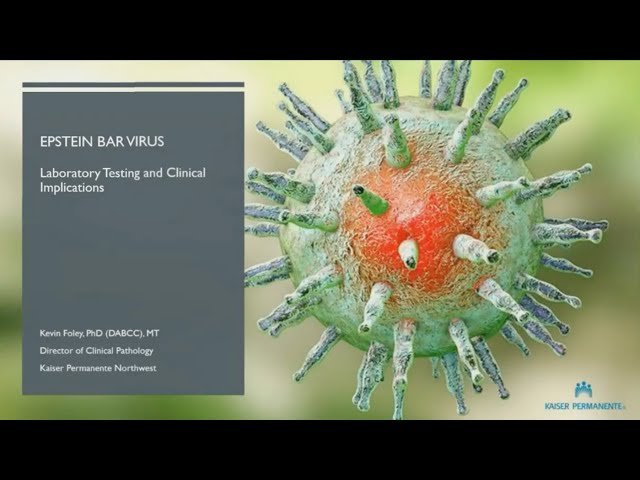
Explore Epstein-Barr virus (EBV) testing from a clinical laboratory perspective in this comprehensive webinar presented by Dr. Kevin F. Foley, Director of Clinical Pathology for Kaiser Permanente Pacific Northwest. Discover why EBV testing is crucial given that this widespread human γ-herpesvirus infects nearly 90% of the global population by adulthood and is linked to serious conditions ranging from infectious mononucleosis to certain lymphomas, sarcomas, and carcinomas. Learn about EBV's pathogenesis and gain insights into the latest diagnostic approaches and testing methodologies used in clinical laboratories. Understand the challenges faced by laboratory professionals when diagnosing EBV infections and what a positive diagnosis means for patients. Examine current testing techniques and receive an overview of the diagnostic landscape for this important viral pathogen. Benefit from Dr. Foley's extensive experience in laboratory medicine spanning over 20 years, including his expertise as a Medical Technologist and his academic role teaching Clinical Chemistry at Oregon Health Sciences University. Earn PACE credits upon completion of this educational session designed for laboratory professionals, medical technologists, and healthcare providers involved in infectious disease diagnostics.
YouTube
Explore a conference talk on the application of Rust programming language in the nuclear industry. Delve into the importance of safety in nuclear software development and the potential of Rust to address industry challenges. Learn about digital twin technology, its forms and levels, and how it's being implemented in nuclear reactors. Discover the speaker's experiences with projects like DeepLynx and the AGN-201 nuclear reactor digital twin. Gain insights into the lessons learned from introducing Rust to nuclear software development and understand why this innovative approach could revolutionize safety standards in the field.

YouTube
Explore a comprehensive 12-hour video series on various medical topics presented by leading experts in their fields. Delve into genetics, neuroscience, pharmacology, cancer research, aging, stem cell biology, and more. Learn about cutting-edge research in obesity, diabetes, brain imaging, anesthesia, tissue engineering, genome engineering, and personalized medicine. Discover the latest advancements in understanding and treating diseases such as cancer, neurodegenerative disorders, and chronic infections. Gain insights into the biology of aging, mitochondrial genetics, and potential life-extending interventions. Examine the role of microRNA in brain diseases, the applications of stem cells in disease therapy, and the development of nanomedicine for drug delivery. Investigate the evolutionary aspects of cancer, the paradox of chronic infections, and the challenges in treating complex disorders like ALS and COPD. Enhance your knowledge of medical science through lectures on cognitive-enhancing drugs, solid-state NMR of biomolecules, and mathematical modeling of physiological systems.

YouTube
Delve into the world of nuclear energy through this comprehensive lecture presented by Diana Gragg, Core Lecturer in Civil and Environmental Engineering and Explore Energy Managing Director at Stanford University's Precourt Institute for Energy. Explore the significance and current trends of nuclear energy, tracing its history and origins in the industry. Gain a deep understanding of the fundamentals of nuclear energy, including uranium reserves, production, and consumption. Learn about the intricate workings of nuclear energy systems and examine their impact on the environment, health, and safety. This informative session, recorded on October 11, 2021, offers a thorough exploration of nuclear fission and its role in the energy landscape.

YouTube
Explore the cutting-edge field of nuclear fusion in this 42-minute lecture presented by Clea Kolster, Partner and Head of Science at Lowercarbon Capital, recorded at Stanford University on November 18, 2022. Delve into the fundamentals of fusion, its potential for harnessing energy, and the challenges and opportunities it presents. Examine a specific reactor design, the Stabilized Sheared Flow Z-Pinch, and learn about recent breakthroughs in the field from 2021-2022. Gain insights into the funding landscape for fusion energy programs and participate in a Q&A session to deepen your understanding of this promising technology.

YouTube
Explore NATO's evolving nuclear strategy in this insightful lecture by Dr. Alexander Mattelaer. Delve into the alliance's renewed focus on nuclear deterrence, examining the geopolitical factors driving this shift and its implications for global security. Gain a deeper understanding of NATO's current nuclear posture, the challenges it faces, and the potential future directions of its nuclear policy. Analyze the complex interplay between conventional and nuclear capabilities within the alliance, and consider the impact on international relations and arms control efforts.

The Great Courses Plus
Join an award-winning professor of physics to explore the powerful forces of nuclear energy, nuclear weapons, and nuclear medicine.
YouTube
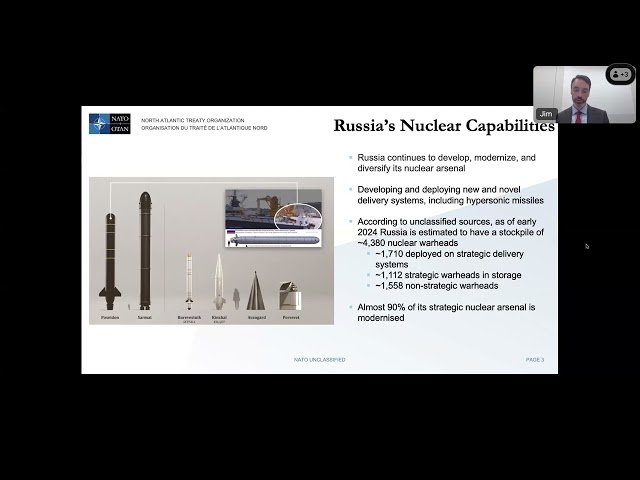
Explore NATO's nuclear adaptation strategies in this 30-minute talk by James Stokes, presented by the Center for Global Security Research (CGSR). Gain insights into how the North Atlantic Treaty Organization is evolving its nuclear posture and capabilities in response to changing global security dynamics.
YouTube
Learn about the emerging field of nuclear onco-nephrology through this 43-minute invited speech delivered by Dr. Diana Zepeda-Orozco, a pediatric nephrologist and principal investigator at Nationwide Children's Hospital and associate professor at The Ohio State University College of Medicine. Explore the intersection of nuclear medicine and nephrology, focusing on how radiopharmaceuticals can cause kidney injury and the clinical implications for patient care. Gain insights into the specialized knowledge required to manage patients receiving nuclear medicine treatments while protecting renal function, particularly in pediatric populations. Understand the mechanisms of radiopharmaceutical-induced nephrotoxicity and discover strategies for prevention and management of kidney complications in nuclear medicine procedures.