

Courses
Discover thousands of courses from top institutions and platforms worldwide
Level
Course Type
Duration

Coursera
The Certified Ethical Emerging Technologist (CEET) industry validated certification helps professionals draw higher salaries (25% on average) and differentiate themselves from other job candidates. Organizations and governments are seeking out ethics professionals to minimize risk and guide their decision-making about the design of inclusive, responsible, and trusted technology. An algorithm not designed and assessed in alignment with ethical standards can create further inequity across race, gender and marginalized populations. The reputational and financial impact of an ethics violation can devastate a company. Knowledgeable ethics leaders are needed who can navigate through the more than 160 frameworks and guidelines to select and implement the best strategy to promote fairness and minimize risk for their organization. This specialization is designed for learners who want to create and lead initiatives that prioritize ethical integrity within emerging data-driven technology fields such as artificial intelligence and data science and will be prepared to bridge the gap between theory and practice. Your journey to CEET Certification 1) Complete the Coursera Certified Ethical Emerging Technologist Professional Certificate 2) Complete the Coursera course Preparing for Your CertNexus Certification Exam 3) Review the CEET CET-110 Exam Blueprint 4) Purchase your CEET Exam Voucher 5) Register for your CEET Exam

Kadenze
The role of the music technologist has changed throughout history, though one trait has stayed consistent: the necessity for the individual to operate across multiple mediums and disciplines. This project-based course provides an opportunity to synthesize the key concepts and skills learned in the Foundations of Music Technology Program, and enables students to establish meaningful connections between the contents of each course. The course will have students acquire real-world artistic experience, through the critical examination of historical works, and the completion of a final project, which demonstrates their ability show how they themselves have become The Modern Music Technologist.
XuetangX
Pathology is a fundamental medical discipline that investigates the etiology, pathogenesis, pathological changes, and outcomes of diseases, occupying a unique position in medical education. It not only serves as a crucial bridge between basic and clinical medicine but is also regarded as "the foundation of medicine." Consequently, pathologists are honored with the title "doctor’s doctor." Since its establishment in 2019 at Southern University of Science and Technology (SUSTech), the Pathology course has achieved significant milestones. It has received support from the Chinese Society of Higher Education and educational reform projects in Guangdong Province. This course is structured around three primary educational objectives:· Building a comprehensive knowledge framework: Systematically master the fundamental pathological alterations and their underlying molecular mechanisms across various organ systems.· Cultivating practical skills: Develop proficiency in identifying characteristic features of diverse pathological lesions in gross specimens and histological slides, while fostering clinical diagnostic reasoning.· Enhancing competencies: Cultivate medical humanism, critical thinking, and innovative capabilities, and strengthen capacities for self-directed learning.

Coursera
The Certified Ethical Emerging Technologist (CEET) industry validated certification helps professionals differentiate themselves from other job candidates by demonstrating their ability to ethically navigate data driven emerging technologies such as AI, Machine Learning and Data Science. Organizations and governments are seeking out ethics professionals to minimize risk and guide their decision-making about the design of inclusive, responsible, and trusted technology. An algorithm not designed and assessed in alignment with ethical standards can create further inequity across race, gender and marginalized populations. The reputational and financial impact of an ethics violation can devastate a company. Knowledgeable ethics leaders are needed who can navigate through the more than 160 frameworks and guidelines to select and implement the best strategy to promote fairness and minimize risk for their organization. This specialization is designed for learners who want to create and lead initiatives that prioritize ethical integrity within emerging data-driven technology fields such as artificial intelligence and data science and will be prepared to bridge the gap between theory and practice. Your journey to CEET Certification 1) Complete the Coursera Certified Ethical Emerging Technologist Professional Certificate 2) Review the CEET CET-110 Exam Blueprint 3) Purchase your CEET Exam Voucher 4) Register for your CEET Exam

YouTube
Explore a career transition journey in this 22-minute talk as Brittany Erica Istenes shares her experience moving from teaching to becoming an OSPO technologist at Fannie Mae. Learn about navigating open source, applying transferable skills from education to technology, and the importance of organization, stakeholder management, and public speaking in the tech industry. Gain insights into life lessons, the value of giving back, and the role of mentors in professional growth.

XuetangX
Pathology is the study of the causes and effects of disease, mainly focusing on the etiology, pathogenesis, and morphological change of lesions. Pathology is a bridge between basic science and clinical medicine. In clinical practice, the major role of pathology is to make a correct diagnosis by examining the tissues, cells or body fluids obtained from the patients. The pathological diagnosis has the highest authority in medical diagnosis. Therefore, pathologists are called as "doctor’s doctor". In the era of precision medicine, molecular pathology diagnosis also provides the most important and accurate evidence to guide the target therapy and immune therapy.
XuetangX
Introduction to the Pathology Course"Pathology" mainly uses natural science methods to study the etiology, pathogenesis, pathological changes, outcomes, and prognosis of diseases. It is a bridging discipline between Basic Medicine and Clinical Medicine. Pathology is also a highly practical discipline, and pathological diagnosis is regarded as the "gold standard" of clinical diagnosis. The entire book mainly includes two parts: the general theory and the specific topics of pathology. The general theory studies and elaborates on basic pathological changes such as cell and tissue adaptation and injury, repair of injury, local blood circulation disorders, inflammation, and tumors, which are the common laws of the occurrence and development of various diseases. The specific topics, on the basis of learning the general theory, study and elaborate on the special laws of various diseases, including cardiovascular system diseases, respiratory system diseases, digestive system diseases, lymphohematopoietic system diseases, urinary system diseases, reproductive system and breast diseases, endocrine system diseases, nervous system diseases, infectious diseases, and other contents. Through learning the Pathology course, students are required to comprehensively and systematically master the core knowledge of pathology, build a complete knowledge system of pathology, and possess conventional pathological techniques and operational skills. It aims to cultivate students' medical humanities and scientific spirit of respecting life and exploring the true meaning of diseases, strictly adhering to professional norms and ethics, and upholding the moral sentiment of the medical profession. Ultimately, students should be able to demonstrate their excellent knowledge and professional skills in clinical work and become outstanding medical talents with good medical ethics. The "Pathology" course was approved as the first batch of national offline and the second batch of hybrid "First-Class Undergraduate Courses" in 2020 and 2023, respectively.

Pluralsight
Technology professionals too often use language that is not understandable to business professionals. In this course, Business Language for Technologists, you’ll learn to utilize business language to communicate benefits without being distracted by features. First, you’ll explore the layers of a business and how they use different languages for specific impact. Next, you’ll discover how to use storytelling to communicate convincingly with the business. Finally, you’ll learn to utilize reflection and continuous learning to isolate the business language most important to your organization. When you’re finished with this course, you’ll have the skills and knowledge of business language for technologists needed to communicate benefits to your organization’s business.

YouTube
Explore the fascinating field of molecular pathology in this virtual talk, part of the Discover Pathology series aimed at medical and healthcare students. Gain valuable insights into this subspecialist field, its crucial role in patient care, future prospects, and career opportunities. Led by Dr. Phil Bennett, a Consultant Clinical Scientist, this one-hour session provides a comprehensive introduction to molecular pathology, offering a unique opportunity to enhance your understanding of this vital area of medicine.
YouTube
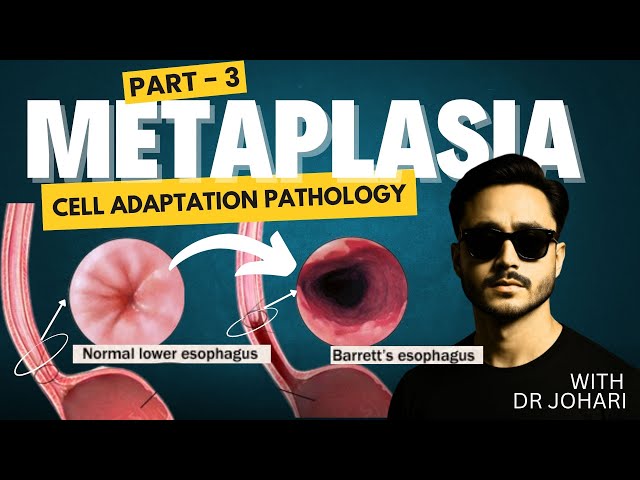
Learn about metaplasia as a cellular adaptation mechanism in this 14-minute pathology lecture that covers the fundamental concepts of cellular adaptation with specific focus on Barrett's esophagus as a clinical example. Explore how cells undergo reversible replacement of one differentiated cell type with another mature differentiated cell type in response to chronic stress or irritation. Understand the pathophysiological mechanisms behind metaplastic changes, examining the molecular and cellular processes that drive this adaptive response. Study Barrett's esophagus as a key clinical manifestation of metaplasia, where normal squamous epithelium of the lower esophagus is replaced by columnar epithelium due to chronic gastroesophageal reflux. Analyze the histological features that distinguish metaplastic tissue from normal tissue architecture and discover the clinical significance of metaplastic changes in disease progression and potential malignant transformation. Master the classification of different types of metaplasia including squamous metaplasia, respiratory metaplasia, and intestinal metaplasia while understanding their respective triggers and reversibility potential.

XuetangX
This online course aims to help students to learn the etiology, pathogenesis, pathological changes, progress and outcomes of diseases. This course will provide the theoretical basis for the diagnosis and treatment of disease. Hence, it is the bridge between basic science and clinical medicine and the very fabric that underpins clinical medical practice. we insist on setting the curriculum objectives and optimizing the curriculum structure in the perspective of Competency-based Medical Education(OBE), and effectively help students learn actively Strengthen the cultivation of students' competence.

XuetangX
Animal Pathology is a course that studies the causes and conditions of diseases, the changes in function, metabolism and morphological structure during the disease process and the mechanism of these changes. It is an important basic vocational course for animal husbandry and veterinary majors and a bridge course connecting basic medicine and clinical medicine. To further clarify the disease nature and provide a theoretical basis for the prevention, diagnosis and treatment of the disease. The main task of this course is to enable the students to acquire the basic pathological knowledge and skills necessary for technical and skilled talents in animal husbandry and veterinary medicine. "Through the combination of online and offline teaching modes, this course breaks through the bottleneck of ""difficult to meet everyone's requirement"" under the traditional teaching mode. The design of multivariate evaluation systems solves the problem of single assessment means and lack of process evaluation. The experts in various industries can give a lecture with their fragmented time through the informatization teaching mode. The teaching content and knowledge points are closely related to the examination syllabus of national veterinary practitioners and 1+x certificate in livestock and poultry family farms, realizing the integration of ""Post, Competition and Certificate"". A large number of typical cases have been developed in the course, and case teaching has improved students' interest and effect in learning. The course team has compiled and published supporting ""case-based"" textbooks, further enriching teaching resources. In the future, the course team of Animal Pathology will continue to take advantage of the opportunity of the national ""Double High-levels Plan"" to continuously promote course teaching reform and develop bilingual teaching, thus building a national first-class course and forming ""Chinese standards"", and making positive contributions to the agricultural vocational education in China;"
YouTube
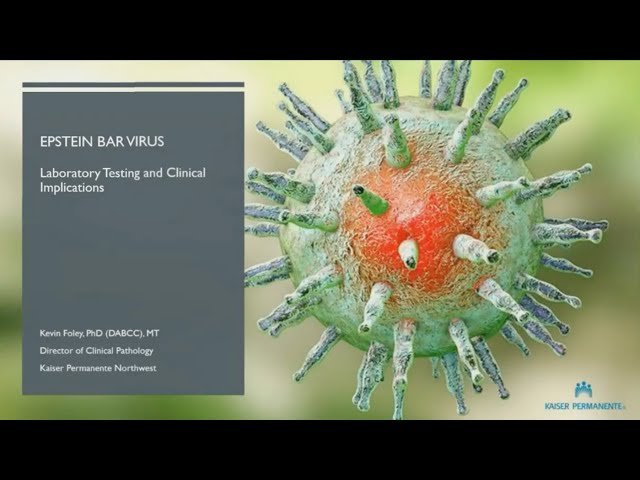
Explore Epstein-Barr virus (EBV) testing from a clinical laboratory perspective in this comprehensive webinar presented by Dr. Kevin F. Foley, Director of Clinical Pathology for Kaiser Permanente Pacific Northwest. Discover why EBV testing is crucial given that this widespread human γ-herpesvirus infects nearly 90% of the global population by adulthood and is linked to serious conditions ranging from infectious mononucleosis to certain lymphomas, sarcomas, and carcinomas. Learn about EBV's pathogenesis and gain insights into the latest diagnostic approaches and testing methodologies used in clinical laboratories. Understand the challenges faced by laboratory professionals when diagnosing EBV infections and what a positive diagnosis means for patients. Examine current testing techniques and receive an overview of the diagnostic landscape for this important viral pathogen. Benefit from Dr. Foley's extensive experience in laboratory medicine spanning over 20 years, including his expertise as a Medical Technologist and his academic role teaching Clinical Chemistry at Oregon Health Sciences University. Earn PACE credits upon completion of this educational session designed for laboratory professionals, medical technologists, and healthcare providers involved in infectious disease diagnostics.
YouTube
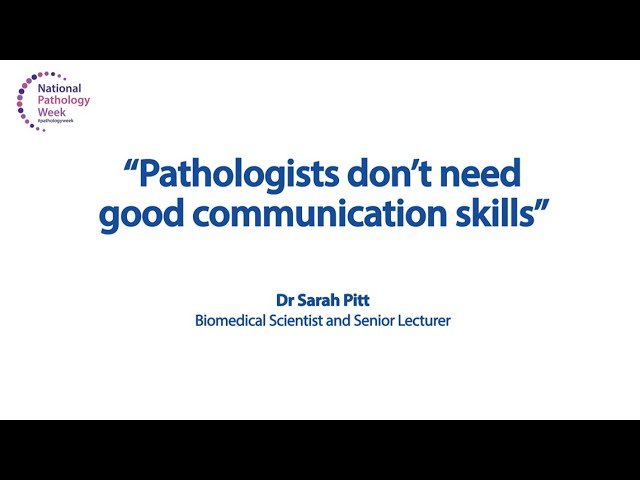
Watch a myth-busting talk delivered by Dr Sarah Pitt, Clinical Microbiologist and Senior Lecturer at the University of Brighton, during the National Pathology Week event that challenges the misconception that pathologists don't need good communication skills. Learn from an experienced professional representing the Institute of Biomedical Science as she debunks this common myth about the pathology field. Part of a nine-video series exploring various myths and misconceptions about pathology careers, gain valuable insights into the true nature of communication requirements in pathology practice and discover why effective communication is essential for success in this medical specialty.

YouTube
Explore the comprehensive overview of Tuberculosis (TB) in this 31-minute educational video from Medicosis Perfectionalis. Delve into the history, differentiate between primary and secondary TB, and understand bovine TB. Learn about the causes of secondary TB, screening methods, and current treatment approaches. Gain valuable insights into this respiratory pathology, formerly known as Phthisis Pulmonalis, through animated mnemonics and detailed explanations. Enhance your understanding of TB's impact on the respiratory system and discover the latest advancements in diagnosis and management of this infectious disease.

YouTube
Delve into a comprehensive 87-minute lecture on endocarditis and cardiac pathology delivered by Dr. Najeeb. Explore the intricacies of infective endocarditis, including its diagnosis, treatment with antimicrobial therapy, and surgical management in complicated cases. Learn about preventive measures, such as antimicrobial prophylaxis, to reduce the risk of initial and recurrent endocarditis in patients with relevant risk factors. Gain insights into the clinical manifestations, evaluation, complications, and outcomes of endocarditis, covering both left-sided native valve and prosthetic valve infections. Understand the management approaches for different types of endocarditis, including right-sided native valve infective endocarditis and nonbacterial thrombotic endocarditis.

Coursera
As unbelievable as it might sound, 94% of Senior Corporate Executives admit that their companies fail to fully understand customer needs. Over 80% of tech startups collapse early, not because of weak engineering or cash shortages, but because they invest time in products the market doesn't want or need. This specialization employs a tech-driven start-up process to teach you the skills needed to develop successful strategies to launch campaigns and operate programs to achieve financial success in dynamic tech markets. Bridge the gap between abstract product development and profitable sales as you develop a marketing strategy for a real-world technology startup of your choice. Many startups fall into "The Chasm," underestimating customers' desires, leading to their demise. Validate ideas and propel your startup to flourish in today's competitive landscape! This specialization can be taken for academic credit as part of CU Boulder’s Master of Engineering in Engineering Management (ME-EM) degree offered on the Coursera platform. The ME-EM is designed to help engineers, scientists, and technical professionals move into leadership and management roles in the engineering and technical sectors. With performance-based admissions and no application process, the ME-EM is ideal for individuals with a broad range of undergraduate education and/or professional experience. Learn more about the ME-EM program at https://www.coursera.org/degrees/me-engineering-management-boulder.

Pluralsight
What does it really mean to have a career as a technologist today? A technology career poses challenges that we don't often discuss: How do you keep up with rapidly changing technology? When, and how often should you change jobs? How do you evaluate a job offer? How and when should you move from design and implementation into management, or into some other related career? How do you leverage those relatively high salaries into real financial security? Should you work for a large company? A startup? Or found your own company? This course will help you answer those questions and more, whether you are just starting out or have been working in the industry for decades.

YouTube
Explore a comprehensive video on the introduction to pathology, focusing on cell injury and its reversible nature. Learn to differentiate between cell injury and cell death, understanding that while cell injury is reversible, cell death (apoptosis or necrosis) is irreversible. Discover the various causes of cell injury and examine specific examples, including the roles of iron and copper in cellular damage. Gain insights into cellulitis as a practical application of cell injury concepts. Delve into this foundational topic in pathology to enhance your understanding of cellular processes and their implications in disease.

YouTube
Explore a 14-minute pathology review video that examines scleroderma, a rare autoimmune disorder characterized by the replacement of normal tissue with thick, dense connective tissue. Learn how this condition affects the skin, blood vessels, and internal organs through Osmosis's educational content. Designed for current and future clinicians, this pathology review provides essential knowledge about scleroderma's mechanisms and manifestations. The video is part of Osmosis's comprehensive medical education library, which serves students, healthcare professionals, and educational institutions worldwide with engaging and efficient learning resources.