

Courses
Discover thousands of courses from top institutions and platforms worldwide
Level
Course Type
Duration
YouTube
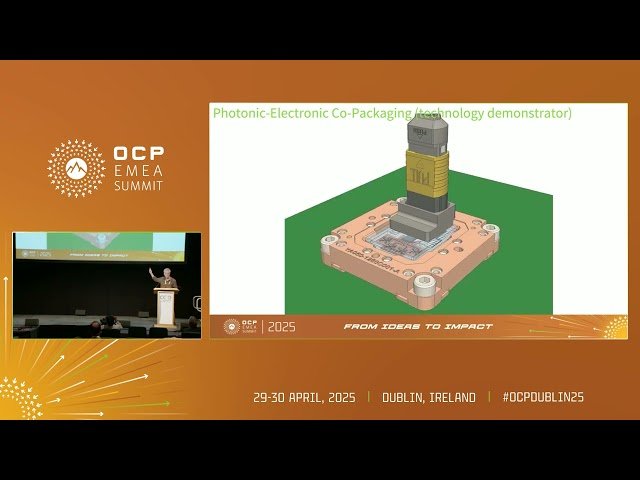
Explore a 22-minute talk by Peter O'Brien, Head of European Photonics Academy at Tyndall National Institute, discussing how photonic-electronic integration can reduce energy consumption while increasing bandwidth in datacentres. Learn about the technical challenges in scaling manufacturing processes to achieve cost-effective volume production of these complex subsystems. Gain insights into Tyndall Institute's research and their successful approach to transitioning from research to manufacturing. Discover significant global research initiatives in photonics, including the recently approved European Chips Act Photonics Pilot Line (PIXEurope), and other important developments in photonic-electronic integration technology.
Udemy
Get the full information needed to be able to become a Wireless Technician What you'll learn: Understand the foundation theory of the Wireless LANBe able to configure and install a Wireless access pointGet prepared to the CWNP Certified Wireless Technician exam (CWT)Know which WLAN should you configure and how DISCLAIMER:This course is not officially sponsored by CWNP and not an authorized course by CWNP. We are neither affiliated with nor endorsed by CWNP. We respect the Trademarks of the mentioned company and institution. Hello,You are looking to this page because you are interested to become a Wireless Technician. Being a wireless technician nowadays is very required specially that all the networks need to have wireless enabled. However, if the wireless is deployed by unexperienced engineers, then this can cause a lot of issue as for the security, installation, frequency interference, and so on. For this, it is always required that the person who is installing the Wireless LAN to be an experienced one and to know what he is doing.In this course, Iwill prepare you to become ready to be a wireless technician. You will have to understand a lot of theory in wireless so when you will get a project to do a wireless installation then you know what you are doing.Also, I will be showing in this course many practical work. For instance, we are going to configure an Wireless Access Point Router from scratch so we have the wireless up and running, then to test if it is going to work.If you have taken previsouly the course Wireless Specialist, then you may see that some of the lectures are the same and that's because the 2 courses have a lot of matched topics.Finally, if you want to be read to be a Wireless Technician, all you need to do is to join this course and I will help you with your path.

YouTube
Explore the field of integrated quantum photonics in this comprehensive webinar led by Galan Moody, Associate Professor at UCSB. Gain insights into the definition, generation, manipulation, and detection of photonic quantum states using integrated photonic chiplets. Delve into the special focus on III-V materials like AlGaAs and InGaP, understanding their high efficiency in quantum light generation. Learn about recent advancements in this cutting-edge field and discover how integrated quantum photonics is shaping the future of technology.

YouTube
Explore an innovative operator-based approach to topological photonics in this 40-minute lecture by Alexander Cerjan from PCS Institute for Basic Science. Delve into a mathematical framework for determining a photonic structure's topology directly from its real-space description, bypassing the need for band structure or Bloch eigenstate calculations. Discover how this method, based on the photonic system's spectral localizer, yields local invariants protected by local gaps for every symmetry class. Learn about the emergence of non-trivial topology and boundary-localized resonances in photonic crystals lacking complete band gaps. Examine the extension of this approach to nonlinear systems, introducing quantitative definitions of topological nonlinear modes and topological dynamics. Gain insights into the exciting field of topological structures in photonics and their potential applications in linear and non-linear devices.

YouTube
COURSE OUTLINE: Introductory course in photonics leading to more advanced courses such as Lasers, Optical Communications, Optical Sensors and Photonics Integrated Circuits. The learning objectives are: (1) Learn the fundamental principles of photonics and light-matter interactions, (2) Develop the ability to formulate problems related to photonic structures/processes and analyze them, and (3) Understand processes that help to manipulate the fundamental properties of light.

Swayam
Introductory course in photonics leading to more advanced courses such as Lasers, Optical Communications, Optical Sensors and Photonics Integrated Circuits. The learning objectives are: (1) Learn the fundamental principles of photonics and light-matter interactions, (2) Develop the ability to formulate problems related to photonic structures/processes and analyze them, and (3) Understand processes that help to manipulate the fundamental properties of light.INTENDED AUDIENCE : Third or Final year BE/BTech, First year ME/MTech/MS/PhDPREREQUISITES : Basic knowledge in Electromagnetics is preferredINDUSTRY SUPPORT : Sterlite Technologies, NeST Photonics, Tejas Networks, Vinvish Technologies, BEL, CGCRI, RRCAT, DRDO – LASTEC/IRDE/CHESS

Coursera
In this foundational Pharmacy Technician Career Training Specialization, students will take four courses to master the fundamentals of a career in pharmacy. The first two courses teach how to communicate and engage professionally in any healthcare setting and the necessary knowledge of human anatomy and physiology required for any medical role. Next, students dive into two pharmacy-related courses - Pharmacy Technician Essentials and Pharmacy Dosages & Prescriptions Essentials - to round out their entry-level pharmacy education. IMPORTANT: This specialization is not designed to prepare students for national certification. Enrollees will gain the foundational/fundamental knowledge on subject matter relevant to the profession. However, to gain industry certification, a more comprehensive program must be completed through enrollment via approved/eligible schools such as MedCerts.

Coursera
This intermediate specialization equips pharmacy technicians with a comprehensive skill set, encompassing legal compliance, safety protocols, medication optimization strategies, specialized compounding techniques, and effective communication in pharmacy settings. Students gain expertise in navigating pharmacy law, emergency preparedness, ensuring medication safety, mastering syringe use, and compounding medications. Additionally, students are taught how to foster empathetic patient interactions, facilitating a well-rounded and competent approach to a pharmaceutical career. IMPORTANT: This specialization is not designed to prepare students for national certification. Enrollees will gain the foundational/fundamental knowledge on subject matter relevant to the profession. However, to gain industry certification, a more comprehensive program must be completed through enrollment via approved/eligible schools such as MedCerts.

Coursera
The Pharmacy Technician Essentials course provides an in-depth look at what a career in a pharmacy will look like. Through several lessons, students learn the ins and outs of a pharmacy setting and the meaning of the terminology used daily within a pharmacy environment. This course also provides a deep dive into the purpose of the top 200 most commonly prescribed medications and drug routes and formulations. Students will be able to demonstrate correct processing of medication orders, preparation, storage, and distribution of medications, by the end of the course. On top of knowing the medications being prescribed, students must also learn how to use pharmacy equipment, including management software and reading of prescriptions. At the completion of this course, students should have a solid understanding of what their day-to-day tasks will be within a pharmacy environment and how to use the necessary tools to excel in their new career. Course objectives include: - Identify the primary functions of different pharmacy organizations - Discuss the different roles of the pharmacy technician - Describe the common drugs and their uses, drug routes and formulations, and factor affecting drug activity - Understand pharmacy management software, as well as reading and interpreting prescriptions
YouTube
Learn about programmable photonic integrated circuits and their applications in microwave and optical signal processing through this comprehensive webinar featuring Professor Wim Bogaerts from Ghent University-IMEC. Explore how photonic chip technology has evolved as a key enabling technology for fiber-optic communication while examining the current limitations in programmability compared to electronic counterparts. Discover different classes of programmable photonic circuits and gain insights into the current state of programmable photonics technology. Examine recent demonstrations that showcase the potential and practical applications of these advanced photonic systems. Understand the fundamental principles behind programmable photonic circuits and their role in modern signal processing applications across both microwave and optical domains.

YouTube
Explore advanced concepts in photonic engineering through this comprehensive lecture on tailoring resonances and complex energy-momentum dispersion in photonic crystals. Delve into novel approaches for manipulating the real and imaginary parts of photonic resonances at the sub-wavelength scale using periodic arrangements of materials with varying permittivity and geometry. Discover how photonic bands can be transformed from Dirac dispersion to flatband configurations, and examine the unique features of non-Hermitian Hamiltonians in open systems, including exceptional points and bound states in the continuum. Learn about experimental demonstrations across various platforms such as III-V nanophotonics, perovskite metasurfaces, and silicon photonics, featuring different photonic species like dielectric guided resonances, Bloch surface waves, Tamm plasmons, and exciton polaritons.
YouTube
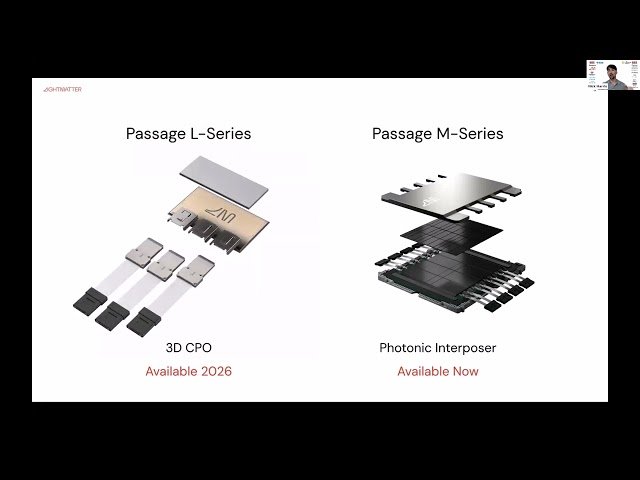
Explore how 3D photonics technology is revolutionizing artificial intelligence infrastructure in this 10-minute conference talk from the Hot Interconnects Symposium. Learn about the fundamental principles of 3D photonic systems and their applications in AI computing environments, including how these advanced optical technologies can overcome traditional electronic limitations in data processing and transmission. Discover the potential for dramatically improved bandwidth, reduced latency, and enhanced energy efficiency in AI workloads through photonic integration. Examine real-world implementation strategies for incorporating 3D photonic solutions into existing AI infrastructure, including considerations for scalability, cost-effectiveness, and performance optimization. Gain insights into the future of AI computing architecture and how photonic technologies are positioned to address the growing computational demands of machine learning and artificial intelligence applications.
Coursera
While 20th-century technology was defined by the growth of electronics, the 21st century belongs to photonics which encompasses technologies for lighting, energy conversion, displays, imaging, communications, manufacturing, and medicine. Graduates of the Semiconductor Photonics Graduate Certificate will command skills in design, fabrication, and laboratory practice to place them at the forefront of these industries and many more not yet invented. This certificate imparts rigorous knowledge of fundamental building blocks for solid-state photonic devices. It starts from the quantum theory of solids and fundamentals of semiconductor devices and on to cover advanced photonic devices such as solid-state lighting, semiconductor lasers, photodetectors, and energy conversion devices. __In this program, you will:__ - __Learn how different wavelengths propagate through systems__, then move on to aberrations that appear with high angle, non-paraxial systems and how to correct those problems. - __Use mathematical tools like Zemax and OpticStudio__ to analyze high-performance systems. - __Understand the energy band structures__ and their significance in the electric properties of solids. - __Design a semiconductor light-emitting diode__ and analyze its efficiency and semiconductor laser. - __Understand and analyze the metal-oxide-semiconductor (MOS) device__, MOS field-effect transistors (MOSFET), and more. - __Select a display technology__ for a given application (LIDAR, imaging, microscopy, etc.). - __Choose suitable semiconductor materials__ for light-emitting devices - __Design a system__ around the limitations of a given display technology (i.e. addressing). - __Use nanophotonic effects__ (low dimensional structures) to engineer lasers. - __Analyze the carrier statistics, carrier dynamics__, and the resulting conduction properties of semiconductors. -

Coursera
The Behavior Technician specialization provides foundational knowledge in behavior analysis and practical strategies for supporting individuals with developmental and behavioral challenges. Participants will gain hands-on skills in behavior acquisition techniques, functional assessment, verbal operant instruction, and both antecedent and consequence-based interventions. By the end of the program, learners will be able to implement structured teaching methods, identify functions of behavior, apply behavior intervention strategies, and support communication development through mand, tact, and intraverbal training. IMPORTANT: This specialization is not designed to prepare students for national certification, such as the Registered Behavior Technician credential offered by the BACB. Enrollees will gain the foundational/fundamental knowledge on subject matter relevant to the profession. While references may be made throughout the training to Registered Behavior Technicians (RBTs) or Behavior Technicians (BTs), to gain industry certification, a more comprehensive program must be completed through enrollment via approved/eligible schools such as MedCerts.

Udemy
A Video Study Guide for the Pharmacy Technician Certification Exam What you'll learn: By the end of this course, you will be able to utilize the skills you have learned to achieve a job as a pharmacy technician.Read sig codesPerform simple pharmacy mathUnderstand commonly used pharmacy lawBrand and generic equivalents Becoming a pharmacy technician is a simpler path than most students think. While many students are convinced that becoming certified involves months of schooling -currently this is NOT the case. To become a certified pharmacy technician an individual must: 1. Register with the PTCB or ExCPT to take a certification exam. Most states require the PTCB, but the ExCPT is accepted in many states. 2. Study the required material to pass the PTCB or ExCPT examination. (Note: Studying for the exam can be a part of a lengthy/costly college course, but is not required - a simple online video course will be sufficient ) 3. Pass your exam! 4. Register with your respective State Board of Pharmacy. We provide the web URL for all 50 State Boards of Pharmacy to make registering easy! This course is designed to help students learn the concepts needed to become a certified pharmacy technician (C. Ph.T). Many different topics are covered in the course, including pharmacy law, common abbreviations, commonly used calculations, and many other skills used by pharmacy technicians in their day to day tasks. Utilizing the advantages of a self-paced course, student will be able to prepare to take the certification exam needed to work as a pharmacy technician. Included in this course are how-to videos, drugs lists, commonly seen abbreviations, pharmaceutical calculations, sample test questions, and other resources useful in a successful pharmacy career. This course will require additional time and repetition to reinforce skills learned within the included materials. Students are encouraged to take a slow and steady pace in this course - it is designed as a 6-week course but may be longer or shorter depending on the rate of learning by the student.
Udemy
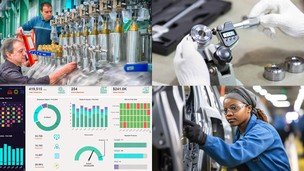
Quality Technician Essentials: Metrology, Statistical Techniques, and Continuous Improvement for Manufacturing Pros What you'll learn: Quality concepts including customers and suppliers, products and processes, standards, requirements, and specifications, and cost of quality (COQ)Quality tools including the seven basic quality tools, Six Sigma, and Lean ManufacturingGeneral concepts of statistical techniques and calculations.Creating and interpreting attribute and variable control charts.Principles of metrology and calibrations, selection of measurement and test equipment, and control and maintenance of M&TEFundamentals of print reading, inspection concepts, inspection techniques and processes, sampling, and the control of nonconforming materialOverviews of nondestructive testing techniques, destructive testing methods, and a sampling of other test methods.Audit types and terminology, audit components, tools and techniques, audit communication toolsFundamentals of risk management and mitigation Welcome to the Manufacturing Academy's Certified Quality Technician (2026) ... the one course you need to propel your career in quality forward!Are you looking to enhance your skills in calibration, continuous improvement, and analytical methods?Would you like to better understand the range of commonly available testing and inspection methods?Do you want to understand how quality systems and processes function to assure the quality products?Look no further than our comprehensive online course designed specifically for quality professionals like you.Whether you're studying for the ASQ Certified Quality Technician (CQT) exam, seeking to bolster your proficiency in quality assurance, or simply aiming to expand your knowledge base in manufacturing, our Certified Quality Technician (2026) course has what you need!What You'll Learn:Comprehensive coverage of quality principles, tools, and methodologies.In-depth preparation for the ASQ Certified Quality Technician (CQT) exam, if desired.Practical skills and techniques essential for success as a quality technician.Real-world case studies and examples to reinforce learning.Access to industry-leading instructor with extensive experience in quality management.Who Should Enroll:Quality Professionals Seeking Skill Enhancement: Dive deep into quality management techniques and tools to excel in your current role and advance your career.Quality Professionals Preparing for the ASQ CQT Exam: Gain the knowledge and confidence needed to ace the exam and earn your certification.Manufacturing Professionals Eager to Master Quality Practices: Equip yourself with the expertise needed to ensure quality excellence in manufacturing operations.What You Get:Nearly 18 hours of rich video-based instruction on a broad range of quality related topics taught at a level of a quality technician (OVER 140 lectures!!)Full alignment with the American Society for Quality’s (ASQ's) 2024 edition of the Certified Quality Technician (CQT) exam.“Deep dive” learning into each of the following 6 MAJOR SECTIONS:Quality Concepts and ToolsStatistical TechniquesMetrology and CalibrationInspection and TestQuality AuditsRisk ManagementALL NEW MATERIAL in the 2026 edition covering critical topics like:Layered Process AuditingScatter Plots and Correlation5 Why x 3 LayersGage R&RCost of Poor QualityPlus, fully validated Excel Templates for each new topic Instruction from a leading manufacturing quality professional and educator.Over 30 downloadable resources including Excel templates, "cheat sheets", and an assortment of useful diagrams and tables.NOWOVER 30 blog posts addressing course topics but often at "the next level".Mid-term and final "exams" with lots of multiple-choice questions each.LIFETIME ACCESS to all course materials AND all other materials we may add later.A Certificate of Completion with your name, the course's name, and the time duration of the course (useful for fulfilling the need of some CEU requirements)Q&A access through the Udemy platform to a 30+ year manufacturing, quality, engineering, and business professional.What Students Have Said About This Course:"Been looking for something like this for a long time." - Daniel R."Good information, great examples and very through made." - Alex M."I am new to learning about quality and I feel this is super easy to understand, process and use!" - Sarah B."It was a very extensive course with a lot of information. I like the examples and explanations." - Eduardo T."As always a really good course from The Manufacturing Academy and Ray Harkins, I always find that I learn more here at Udemy and Ray Harkins than at other courses that cost x10 the price." - Henrick L.Why Choose the Manufacturing Academy?Flexible online learning format, accessible anytime, anywhere right here on the Udemy platform.Engaging, interactive course content designed for optimal comprehension.Just the right depth of instruction utilizing Bloom's Taxonomy to help assure the success of professionals ready to understand the quality principles and approaches and the technician level.Expert instruction from an industry veteran passionate about your success.Shared learning environment with fellow professionals in the quality and manufacturing fields.Don't miss this opportunity to become a Certified Quality Technician and distinguish yourself in the competitive world of manufacturing. Enroll today and take the first step toward achieving your professional goals!ASQ® is the registered trademark of the American Society for Quality.The Manufacturing Academy is an independent training provider that is neither associated nor affiliated with the ASQ or any other certifying organization.
Swayam
Automotive Service Technicians and mechanics, often called service technicians, maintain and repair light vehicles and heavy vehicles. Present course content provide the deep knowledge of the skill required to be an automotive service technician for a four wheeler and aimed at training learners to be an skilled technician in automotive sector, this course cover all the aspects from roles and responsibility of a technician, job opportunities in automobile sector and detail description of the components of a four wheeler with aspects of tool handling, fault diagnosis and troubleshooting and service and repair of the vehicle.

YouTube
Explore the cutting-edge world of photonic quantum computing as Zachary Vernon, CTO of Hardware at Xanadu, delivers an insightful talk at the 2023 Asia Pacific Executive Forum (APEF). Delve into the latest advancements and potential applications of this emerging technology during the Emerging Technologies session. Gain valuable insights into Xanadu's approach to quantum computing using photonics and understand how this innovative field is shaping the future of computational power. Learn from a leading expert in the industry and discover the potential impact of photonic quantum computing on various sectors.

YouTube
Watch a 17-minute conference talk exploring how SCINTIL Photonics addresses the exponential growth of AI computing demands through advanced optical interconnect solutions. Learn about heterogeneous integration of III-V materials with silicon photonics to create photonic integrated circuits (PICs) featuring monolithically integrated DFB lasers and SOA. Discover how this innovative technology enables higher data throughput and lower power consumption in data centers and HPC clusters through CWDM4 transmitters for Pluggable Optics and DWDM external laser sources for Co-Packaged Optics. Gain insights into how parallelism and optical interconnects are becoming crucial for meeting the escalating demands of AI/ML applications.
YouTube
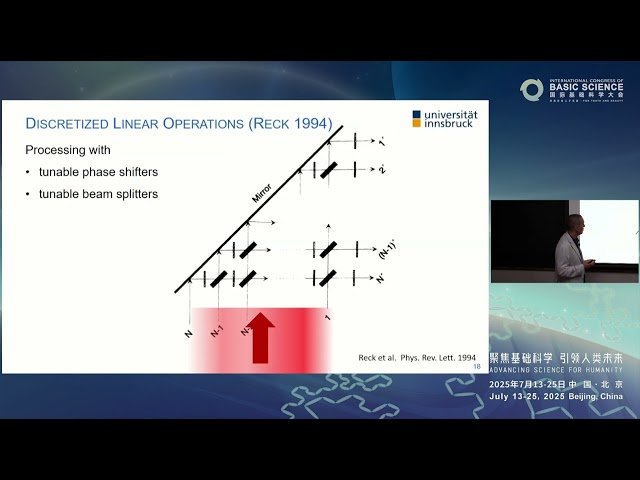
Learn about programmable photonic circuits in this conference talk that explores the cutting-edge field of reconfigurable optical systems. Discover how photonic circuits can be programmed and controlled to perform various optical functions, including signal processing, routing, and computation. Examine the fundamental principles behind programmable photonics, including the use of phase shifters, optical switches, and tunable components to create adaptive optical networks. Explore current applications in telecommunications, quantum computing, and optical neural networks, while understanding the advantages of photonic systems over traditional electronic circuits in terms of speed, bandwidth, and energy efficiency. Gain insights into the fabrication techniques used to create these sophisticated optical devices and the challenges involved in scaling programmable photonic systems for commercial applications. Understand the role of software control systems in managing complex photonic circuits and the potential for creating fully reconfigurable optical processors that can adapt their functionality in real-time.