

Courses
Discover thousands of courses from top institutions and platforms worldwide
Level
Course Type
Duration

edX
The demand for skilled data scientists continues to surge as organizations seek to harness the power of machine learning and data-driven insights. The Data Scientist program, developed by Microsoft and delivered on edX, is designed for learners ready to take their data science skills to the cloud. Through three practical, project-based courses, you’ll explore how to set up and configure the Azure Machine Learning workspace, train models using custom scripts, and deploy models as scalable endpoints. You’ll gain proficiency with tools like Jupyter Notebooks, Python, and Azure ML SDKs—all while learning to operationalize machine learning in real business scenarios. This program is ideal for data professionals, analysts, and aspiring machine learning engineers seeking to build robust, cloud-based ML pipelines. Whether you're transitioning into a data science role or expanding your cloud skill set, this program delivers a strong foundation aligned with industry needs and Azure certification pathways.

Udacity
This advanced Nanodegree prepares you to tackle data science at scale. Work with AI best practices, build production-ready projects, and gain the confidence to lead data-driven solutions.

LinkedIn Learning
Whether you're working in IT or simply have an interest in entering the exciting field, this learning path will support you in developing a career in data science. Learn about the fundamental stages of data science work, from Statistics and Systems Engineering to Data Mining and Machine Learning.Build a solid foundational understanding of statistics, which is necessary for any data science-related field.Discover the many categories of job specialization within Data Science.Learn how to source, explore, and communicate with data through graphs and statistics.

DataCamp
## Become a Certified Data Scientist in Python Master the essential skills you need to excel as a data scientist and earn the prestigious Data Scientist in Python certification. This comprehensive Track covers the full spectrum of data science using Python, from data manipulation and visualization to advanced machine learning techniques. Through hands-on exercises and real-world projects, you'll gain the practical experience and knowledge to tackle complex data challenges and drive business impact. ## Build a Robust Data Science Toolbox Explore the Python data science ecosystem in-depth as you learn to: * Manipulate and analyze data using pandas, NumPy, and SciPy * Create compelling visualizations with Matplotlib and Seaborn * Develop and evaluate machine learning models using scikit-learn * Preprocess and feature engineer data for optimal model performance * Work with relational databases using SQL * Manage your data science projects with Git version control ## Solve Real-World Data Science Problems Apply your skills to realistic scenarios that mirror the work of professional data scientists. From exploratory data analysis to predictive modeling, you'll learn to extract valuable insights from complex datasets. Discover how to select the right machine learning algorithms, tune hyperparameters, and interpret results to make data-driven decisions. By working with diverse datasets across industries, you'll develop the versatility to thrive in any data science role. ## Prepare for the Data Scientist in Python Certification This Track is designed to fully prepare you for the Data Scientist in Python certification exam. As you progress through the courses, you'll steadily build the knowledge and practical skills needed to pass the certification with confidence. The interactive exercises and projects provide ample opportunity to test your understanding and get hands-on with the tools and techniques covered in the certification. ## Advance Your Data Science Career Earning the Data Scientist in Python certification validates your expertise to employers and opens doors to exciting career opportunities. Companies across industries are seeking skilled data scientists who can leverage the power of Python to solve complex problems and drive innovation. By completing this Track and obtaining the certification, you'll demonstrate your ability to: * Perform end-to-end data science projects in Python * Select and apply appropriate machine learning algorithms * Communicate data insights effectively to technical and non-technical audiences * Collaborate with cross-functional teams on data-driven initiatives Whether you're looking to break into data science, advance your current role, or expand your skill set, this Track provides the comprehensive training and industry-recognized certification to help you achieve your goals.

YouTube
Discover how Netflix applies experimental thinking to design through A/B testing in this 17-minute conference talk by Navin Iyengar, Product Designer at Netflix. Learn to design like a scientist as Iyengar shares insights from the Awwwards Conference in San Francisco. Explore user testing techniques, the importance of A/B testing in UX design, and gain valuable knowledge about applying scientific methods to digital design. Enhance your understanding of data-driven design practices and their impact on creating successful digital products for platforms like Netflix.

LinkedIn Learning
Whether you're working in IT or simply have an interest in entering the exciting field, this learning path will support you in developing a career in data science. Learn about the fundamental stages of data science work, from Statistics and Systems Engineering to Data Mining and Machine Learning.Build a solid foundational understanding of statistics, which is necessary for any data science-related field.Discover the many categories of job specialization within Data Science.Learn how to source, explore, and communicate with data through graphs and statistics.

Pluralsight
Data science is an exciting and dynamic career field. In this course, Becoming a Data Scientist, you will learn about the role of a data scientist and how you can become one. First, you’ll discover what a data scientist does and common responsibilities of the role. Then, you’ll learn about mathematical and programming knowledge that data science employs. Next, you’ll take a look at how data science is related to other data roles, such as data analyst or data engineer, and how to make a transition from these roles to data science. Finally, you’ll learn how to develop your skills to increase your proficiency and marketability. When you’re finished with this course, you’ll have the basic knowledge necessary to begin the journey toward becoming a data scientist!

Coursera
"GenAI for Data Scientist" is designed for professionals eager to integrate Generative AI (GenAI) into their data science practices. This introductory course breaks down the complex world of GenAI, demonstrating its significant impact on data analysis, predictive modeling, and beyond. You will learn the technical workings of GenAI tools and their practical applications in real-world data science scenarios. This course is designed for team leads and managers looking to incorporate GenAI into their strategic initiatives, as well as individual data scientists and analysts eager to enhance their daily tasks with advanced GenAI techniques. It is also suitable for professionals aiming to advance their careers by mastering cutting-edge GenAI applications in data science. Learners should have a basic understanding of data analytics, statistical methods, and machine learning, along with familiarity with programming languages like Python or R. An open mindset and eagerness to explore new technologies are also essential. The curriculum covers the fundamentals of machine learning models, data augmentation, and ethical considerations, providing insights into how GenAI can enhance analytical precision and foster innovation.

DataCamp
Master the skills you need to pass the Data Scientist in R certification and prepare yourself for success in the field of data science. As you progress through the courses in this track, you will focus on using R for data science. You will explore how learning data science with R can help you to import, clean, manipulate, and visualize data, and develop a solid foundation for your data science journey. You’ll cover a range of different skills, including data manipulation, visualization, and analysis, using popular R packages like ggplot2, dplyr, and readr. You will work with real-world datasets as you write your own functions and learn foundational statistical and machine learning techniques. You will also gain an understanding of SQL for relational databases and Git for data science projects, two essential tools for any data scientist. Through interactive exercises, you will get hands-on experience with R programming and the popular packages used in the field of data science. Completing this track will give you the knowledge and experience necessary to confidently pass the Data Scientist in R certification and thrive as a data scientist.
Zero To Mastery
This Data Scientist Career Path is your step-by-step roadmap to go from beginner (at any age!) to getting hired as a Data Scientist. Master Data Science by turnning raw data into powerful insights using Python, SQL & machine learning. Learn statistical analysis, data visualization & predictive modeling. Build a portfolio with real-world projects and become a key player in a company's data-driven decisions.Become a top Data Scientist that gets hired this yearExplore large datasets using data visualization tools like Matplotlib and SeabornLearn about Data Engineering and how tools like Hadoop, Spark and Kafka are used in the industryLearn to pre-process data, clean data, and analyze large datasetsHow to ace all of your interviews, get more job offers and a higher salary

YouTube
Explore a comprehensive course on Physical Anthropology designed for UPSC preparation. Delve into the biological and cultural factors of human evolution, theories of organic evolution, and primate characteristics. Examine fossil evidence of early hominids, human genetics, and genetic polymorphism. Investigate chromosomal aberrations, racial concepts, ecological anthropology, and epidemiology. Study human growth, development, and demographic theories. Gain insights into fertility patterns and the factors influencing population dynamics. Cover essential topics from Paper-I, including detailed explorations of evolutionary trends, primate taxonomy, and comparative anatomy of humans and apes.

MIT OpenCourseWare
This course is an introduction to quantum mechanics for _use_ by chemists. Topics include particles and waves, wave mechanics, semi-classical quantum mechanics, matrix mechanics, perturbation theory, molecular orbital theory, molecular structure, molecular spectroscopy, and photochemistry. Emphasis is on creating and building confidence in the use of intuitive pictures.

YouTube
Dive into a comprehensive 12-hour course on physical chemistry, exploring the intersection of physics and chemistry principles. Learn about macroscopic and particulate phenomena in chemical systems, covering topics such as thermodynamics, quantum chemistry, statistical mechanics, and chemical equilibrium. Explore gas laws, internal energy, enthalpy, heat engines, entropy, free energies, phase diagrams, chemical potential, solution properties, equilibrium constants, reaction kinetics, and more. Benefit from in-depth explanations, examples, and applications presented by Dr. Michael Groves from California State University's Department of Chemistry and Biochemistry. Gain a solid foundation in physical chemistry concepts and their practical applications through this extensive and well-structured course.

XuetangX
Physical Geology is a course about the materials that make up the Earth as well as the properties and geological processes that operates on the Earth. Special topics include plate tectonics, mineral chemistry, the rock cycle, sedimentary processes, metamorphism, igneous rocks, hydrological cycle and glaciers. It will provide us with the knowledge of our physical environment which is critical to our well-being and vital to our survival.

DataCamp
Master the essential skills to land a job as a machine learning scientist! You'll augment your R programming skillset with the toolbox to perform supervised and unsupervised learning. You'll learn how to process data for modeling, train your models, visualize your models and assess their performance, and tune their parameters for better performance. In the process, you'll get an introduction to Bayesian statistics, natural language processing, and Spark.

YouTube
Explore the fascinating world of soil classification and mapping in Alaska through this engaging webinar featuring Claire Benton, a soil scientist with the Natural Resources Conservation Service (NRCS). Gain insights into the unique challenges and opportunities of working as a geoscience professional in Alaska's diverse landscapes. Learn about the importance of soil science in understanding and managing natural resources. Discover the career path and experiences of an early career professional in the field of geologic mapping. Participate in a live chat during the premiere to ask questions directly to the presenter. Benefit from this educational opportunity supported by the USGS National Cooperative Geologic Mapping Program and presented by the American Geosciences Institute as part of their Early Career Professionals in Mapping Webinar Series.

DataCamp
## Master the Essential Python Skills for Machine Learning Start your journey to becoming a machine learning scientist with this comprehensive Python Track. Gain hands-on experience with supervised, unsupervised, and deep learning techniques as you work with real-world datasets. By the end of this Track, you'll have the confidence and skills to tackle complex machine learning problems and build powerful predictive models. ## From Python Basics to Advanced Machine Learning Whether you're new to Python or an experienced programmer, this Track has you covered. You'll start by learning the fundamentals of Python programming and quickly progress to advanced machine learning concepts. The carefully curated curriculum includes: * Supervised learning with scikit-learn * Unsupervised learning techniques like clustering and dimensionality reduction * Linear classifiers and tree-based models * Gradient boosting with XGBoost * Feature engineering and preprocessing for machine learning * Time series analysis and forecasting * Natural language processing with spaCy * Deep learning with PyTorch * Distributed machine learning with PySpark ## Hands-on Learning with Real-World Projects Apply your skills to practical projects that mirror the challenges faced by machine learning scientists in industry. You'll work with diverse datasets, ranging from customer behavior to image and text data, to solve real-world problems. Through predictive modeling for agriculture, clustering Antarctic penguin species, and forecasting movie rental durations, you'll gain hands-on experience tackling complex machine learning tasks. Additionally, you'll explore strategies for excelling in Kaggle competitions, refining your ability to develop high-performing models. These projects will help you build a compelling portfolio to showcase your machine learning expertise to potential employers. ## Become Job-Ready with In-Demand Skills Machine learning is one of the most sought-after skills in today's job market. By completing this Track, you'll be well-prepared to: * Apply for machine learning scientist positions across industries * Collaborate with data science teams to solve complex problems * Participate in Kaggle competitions and hackathons * Pursue further specialization in areas like NLP, computer vision, or big data ## Why Python for Machine Learning? Python has become the language of choice for machine learning due to its simplicity, versatility, and extensive ecosystem of powerful libraries. With tools like scikit-learn, PyTorch, and PySpark, Python enables you to implement machine learning algorithms efficiently and scale them to handle large datasets. Mastering Python for machine learning will open up a world of opportunities in this rapidly growing field. ## Unlock Your Potential as a Machine Learning Scientist Ready to take your first step towards a rewarding career in machine learning? Enroll in the Machine Learning Scientist in Python Track today and gain the skills and confidence to tackle real-world machine learning challenges. With expert instruction, hands-on projects, and a supportive learning community, you'll be well on your way to becoming a machine learning scientist.
YouTube
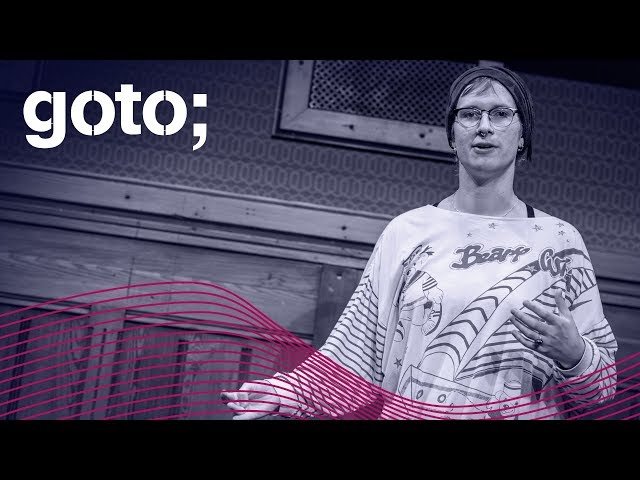
Explore the fundamental tools and techniques essential for data scientists in this 44-minute conference talk from GOTO Amsterdam 2019. Delve into the core principles that have shaped data science for centuries, transcending fleeting trends in software languages, frameworks, and algorithms. Learn how to approach data science challenges with a timeless mindset, equipping yourself with skills that will remain relevant throughout your career. Gain insights from Em Grasmeder, an expert in code, math, and teaching, as she addresses the field's identity crisis and offers guidance on developing a robust data science skill set. Whether you're a seasoned professional or new to the field, discover how to think like a data scientist and navigate the evolving landscape of this dynamic discipline.

YouTube
Discover how Netflix empowers its data scientists to build, deploy, and operate large machine learning workflows autonomously in this 36-minute conference talk from the Toronto Machine Learning Series. Learn about Metaflow, Netflix's open-source ML framework, which provides delightful abstractions for managing project lifecycles end-to-end while leveraging cloud strengths. Explore human-centric design principles that can be easily adopted to enhance data scientist productivity. Gain insights into Netflix's unique culture of freedom and responsibility, and how their infrastructure is designed to support this approach. Understand how Metaflow interplays with existing schedulers, including a new integration with AWS Step Functions. This talk, presented by Ravi Kiran Chirravuri and Jan Florjanczyk from Netflix's Machine Learning Infrastructure team, offers valuable lessons for small to mid-sized companies looking to improve data science productivity without a dedicated MLI team.

DataCamp
## Become a Data Scientist with R Master the essential skills to launch your data science career using R, the popular programming language for statistical computing and data analysis. In this comprehensive Track, you'll learn how to import, clean, manipulate, visualize and model data using R's powerful packages and libraries. Gain hands-on experience with real-world datasets as you progress from the basics of R programming to advanced statistical and machine learning techniques. ## Develop a Strong Foundation in R for Data Science Through interactive exercises and projects, you'll learn to: * Work with data structures like vectors, lists, and data frames * Write efficient and reusable R functions * Wrangle and clean data using the tidyverse collection of packages * Create compelling visualizations with ggplot2 * Apply statistical concepts like hypothesis testing and regression analysis * Build and evaluate machine learning models for classification and prediction ## Learn from Industry Experts and Real-World Datasets Benefit from the expertise of DataCamp's instructors, including data scientists, statisticians, and R practitioners from top companies and universities. You'll work with diverse, real-world datasets from various domains, such as finance, marketing, and healthcare, ensuring that you develop practical skills that are immediately applicable in the workplace. ## Prepare for the Associate Data Scientist Certification This Track is designed to help you confidently pass the Associate Data Scientist in R certification exam. By completing the courses and projects, you'll gain a deep understanding of the key concepts and techniques covered in the certification syllabus. The Track also includes skill assessments to test your knowledge and identify areas for improvement. ## Advance Your Career with In-Demand R Skills R is widely used across industries for data analysis, visualization, and machine learning. By mastering R, you'll open up a wide range of career opportunities, including data scientist, data analyst, statistician, and researcher roles. The skills you'll learn in this Track are highly sought after by employers and will help you stand out in the job market. ## Start Your Journey to Becoming a Certified R Data Scientist Whether you're a complete beginner or have some experience with R, this Track will help you take your skills to the next level. By the end of the Track, you'll have a portfolio of projects demonstrating your ability to solve real-world data science problems using R. Start your journey today and become a certified Associate Data Scientist in R!