

Courses
Discover thousands of courses from top institutions and platforms worldwide
Level
Course Type
Duration

Coursera
This particular course entitled “Pipe Material Specification” under the specialization entitled “Design of Industrial Piping Systems” is mainly aimed at piping system design aspects. The major differences between tube and pipe should be known to the designer first. The right selection of the straight pipe for a given process requirement is entirely based on the sound knowledge of the designer on pipe manufacturing techniques, pipe ends, pipe materials, and ASME B31 pressure piping series. Designers should be capable of determining the pipe wall thickness for the internal pressure as well as external pressure based on the ASME B31.3 code and selecting of proper schedule number from the ASME B36.10M and B36.19M standards. Piping is composed of pipe fittings, valves, flanges, gaskets, nuts and bolts, etc. Therefore, designers should be acquainted with various types of fittings, importance, ends, pressure-temperature ratings, and material. Similarly, designers should be acquainted with various types of flanges, ends, face finishing, pressure-temperature ratings, materials, and similar knowledge on gaskets and nuts and bolting. Valves are used for isolation, regulation, and one-way operations. Therefore, types, end connections, material, pressure-temperature ratings, internal construction, internal parts, and functioning of valves should be known to the designer for their right selection. PFDs, P&IDs, General Arrangement Drawings (GADs), and Piping Isometrics are important drawings for any process plant; and development, reading, and interpreting these drawings is one of the desired requirements that the designer should possess. To fulfill this requirement the designer should be thorough with certain symbols used to present a three-plane piping system on a 2D sheet such as GADs, etc. The designers must familiarize themselves with general abbreviations, service codes, line number identification, ‘insulation and heat tracing codes’, representations of pipelines, boundaries, off-page connectors, pipe fittings, piping valves, piping components, and ‘fire, and safety’. In a nutshell, the designer should be thorough with the legend sheet of a particular industry. The flexibility of a piping system is a major issue and it is dicey if the piping system doesn’t have inherent flexibility. Therefore, designers should be masters in all aspects of pipe stress analysis and perform flexibility analysis using industry-accepted pipe stress analysis software. They should be in a position to suggest the optimum pipe routing with appropriate supports, hangers, and expansion joints. To become an expert in flexibility analysis the designer should be well familiar with various types of primary supports, secondary supports, various types of hangers, good practices followed in piping and equipment layout known as layout rules, and expansion joints. Further, it is a requirement expected from the designer, i.e., the design of jacketed piping. Vibration-induced loads are to be included in the pipe flexibility analysis. Unless the designer knows the sources for pipe vibration and types; the effect of vibration cannot be captured in the stress analysis process. The piping system needs insulation and a thorough knowledge of the types, shapes, and materials is essential. Pipes may be routed through underground. Therefore, designers should be capable of making the decision when the underground piping is preferred. If preferred, the designer should know what sort of challenges going to be faced that arise from corrosion and land sliding, and what are remedial solutions. Hence, designers should know about proper cathodic protection as it is one of the remedial solutions to prevent the UG pipe. The course is aimed to address all these aspects and these essential topics are included in the course. These are explained and demonstrated in a lucid form therefore, the learners can easily grasp the concepts and acquire the required skillset as mentioned above.

Coursera
This particular course entitled “Single-Phase Pipe Hydraulics & Pipe Sizing” under the specialization entitled “Design of Industrial Piping Systems” is mainly aimed at predicting the optimum pipe diameter of the piping system to meet the given process requirement when it is subjected to a single-phase fluid flow. Here, the piping system is either a single-path piping system or a multiple-path piping system. To achieve the single-point objective, i.e., the Sizing of the Ping System, essential concepts of single-phase fluid flow through pipes are covered, essential mathematical expressions are derived to understand the intricacy of the single-phase phenomena, and the importance of each term in governing equations is explained. To begin with, the key role of the pipe in transporting the fluid from the source to the destination is explained by citing numerous applications. The pipes may be subjected to single-phase fluid flow or multi-phase flow. This course is dedicated to single-phase hydraulics. In most practical situations, process flow conditions such as fluid flow rate and operating conditions are the input to determine the pipe diameter. However, the pressure drop is a constraint. To meet the pressure drop constraint for the given process flow conditions, the designer must be thorough with the dynamics of single-phase fluid flow in straight pipes, pipe fittings, valves, etc. Sigle-phase fluid flow phenomena are well established and hence the pressure drop in a piping system can be predicted accurately. In single-phase fluid flow, irrespective of the type of the fluid, i.e., gas or liquid, the flow resistance factor, known as friction factor depends on the Reynolds Number along with other important parameters. Indeed, the Reynolds Number decides the type of flow regime, i.e., laminar or turbulent. The pressure drop is directly proportional to the length of the pipe and the square of the fluid velocity or mass flux, and interestingly, the pressure drop is inversely proportional to the pipe diameter. This means that as the diameter increases, the pressure drop decreases. The constant of proportionality is the friction factor. This concept behind pipe hydraulics is brought up very well in this course. The friction factor for turbulent flow is different from laminar flow. The former is a function of the Reynolds number and relative roughness of the pipe whereas the latter is the function of only Reynolds number. Various friction factor correlations for turbulent flow along with their applicability are available and presented in this course. The pressure drop in pipes is considered as the skin frictional pressure drop. However, the pressure drop in pipe fittings is mostly due to the eddies formation in the zones where the fluid separates from the pipe wall and fluid mixing at locations downstream of the pipe. These head losses are considered minor losses, however, in some cases, they are significant when compared with the major head losses offered by the straight pipes. Minor losses can be determined by considering either the loss coefficients or equivalent lengths of various pipe fittings. The detailed discussion and demonstration of pressure drop predictions are well covered in this course. This course is not limited to single-path single-phase pipe hydraulics. Multiple-path piping systems popularly known as piping networks are also considered and the prediction of pressure drop in these networks is demonstrated by using well-accepted methodologies. Pressure drop calculation in the header and branching pipelines, when they are connected to various fluid sources, is discussed in this course. Though piping systems are operated at a steady state most of the time, they are also subjected to transients during startup and shutdown operations. Piping systems are also subjected to transients due to oscillatory fluid flow, water hammer, and steam hammer. These transients and the pressure rise due to the water hammer are well covered in this course. Finally, the hydraulics of liquid flow in inclined pipes under gravity is also covered in this particular course.

Coursera
This particular course entitled “Two-Phase Pipe Hydraulics & Pipe Sizing” under the specialization entitled “Design of Industrial Piping Systems” is mainly aimed at predicting the two-phase total static pressure drop in a given piping system when both gas and liquid flow through it concurrently. Pressure drops including heat transfer coefficients depend on two-phase flow regimes since two-phase patterns and local internal structure are different for different flow regimes. Therefore, the formation of various two-phase flow regimes in horizontal and vertical pipes is to be known to the designer, and at the same time, the influence of bend on the formation of two-phase flow regimes in upstream and downstream pipes should also be known. The presence of a bend is inevitable in the piping systems of a plant and its presence restricts the formation of certain two-phase flow regimes commonly found in individual horizontal and vertical pipes for the given flow rates of gas and liquid and pipe diameter. Surprisingly, bend allows the formation of slug flow regimes in both horizontal and vertical pipe runs of a piping system. This is a nerve-wracking issue for the designer since the slug flow regime harms the piping system and in some situations, the slug flow regime becomes the main cause of the failure of the piping system. Therefore, the designer should be cautious during the design of two-phase piping systems and avoid the slug flow regime formation at any cost while designing the two-phase piping system. Looking into the severity of two-phase flow on the piping system integrity, the present course focuses on the formation of two-phase flow regimes in horizontal and vertical pipes and their identification based on gas and liquid flow rates using two-phase flow pattern maps. Next, the course focuses on the effect of bends on two-phase flow regime formation in both upstream and downstream pipelines as piping systems are made of connecting straight pipe runs using bends. From this discussion, the learner gets a fair idea about the formation of a certain type of two-phase flow regime, when it happens, and why it happens. Next, the two-phase terminologies are covered as these are frequently used in two-phase piping system design. The relationship among them is equally important in the design and hence, covered in the present course. These terminologies and their relations assist the learner in understanding, analyzing, and applying the various two-phase models to design the two-phase piping system. Certain idealizations are to be made while dealing with the gas and liquid two-phase flow through the pipe. Single-phase is well-established, not two-phase. To take advantage of suggested single-phase correlations by the investigators, the two-phase models are developed by assuming liquid alone flows through the pipe with the two-phase mixture flow rate. This assumption introduces the error as it does not appeal the reality. Therefore, while developing the models a term called two-phase multiplier is introduced and made as a multiplication factor to the single-phase pressure drop, to predict the two-phase frictional pressure drop within the acceptable range. The developed models are popularly known as the Homogeneous Equilibrium Model, Separated Flow Model, and Drift Flux Model, and the present course is focused on these models. Various two-phase multipliers, methods, techniques, and void fraction correlations are covered in detail in this course. Finally, in this course, practical two-phase problems are considered to demonstrate the prediction of total static pressure drop which is a sum of two-phase frictional, accelerational, and gravitational pressure drops using the two-phase well-known models, methods, techniques, two-phase multipliers, and void fraction correlations and how closely they predict so that learner cannot face any hiccup while he/she designing the two-phase piping systems including single path and multi-path piping systems known as piping networks.

YouTube
Explore urban pipe network modelling in this comprehensive webinar covering hydraulic calculations essential for accurate representation of complex stormwater systems. Learn about the Manning equation, kinetic energy losses, flow capture, and surcharging. Gain hands-on experience with modelling demonstrations, including the use of the 1D Integrity Tool for efficient data quality control. Discover techniques for maximizing workflow efficiency, automated data correction, and effective hydraulic results checking for both 1D stormwater pipe networks and 2D above-ground inundation models. Engage in a detailed Q&A session to deepen your understanding of urban flood risk quantification and pipe network infrastructure design.

YouTube
In this tutorial, you will learn about Angular 2. You will learn about installing the Angular CLI, TypeScript, core files, components, templates and CSS, creating a component, nesting components, ng-content directive, data binding, property binding, event binding, two way data binding, custom property binding, custom event binding, routing, adding links, route params, directive, ngFor, pipes, custom filter pipe, services, HTTP service, connecting on Firebase, Firebase API, and posting data in Firebase.

LinkedIn Learning
Learn how to leverage the specialized layout tools in AutoCAD Civil 3D to create, edit, and document your pressure pipe designs.
Coursera
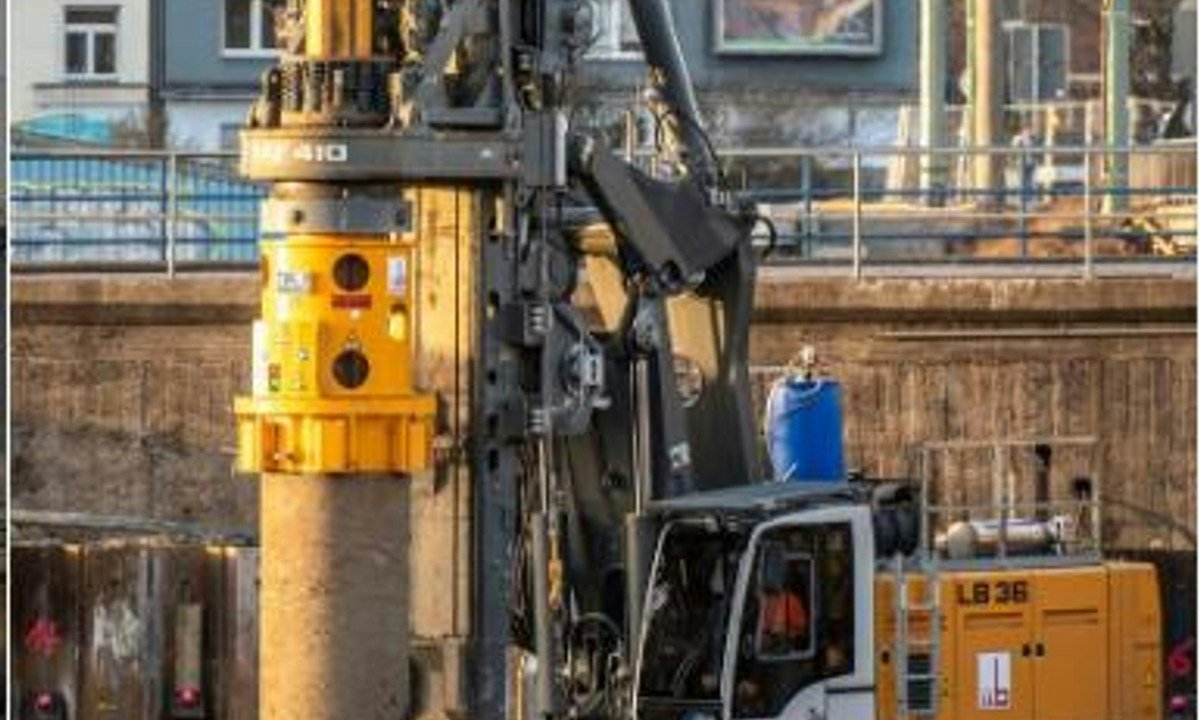
Welcome to the Pile Foundation Course, a comprehensive exploration of essential concepts and practical applications in pile foundation engineering. In Module 1, learners will establish a foundational understanding of pile foundations, delving into the intricacies of design and construction aligned with relevant building codes and standards. Moving forward, Module 2 focuses on BCIS (Bored Cast In Situ) piles, empowering learners to design these piles on diverse substrates, including rock formations. Module 3 provides a thorough overview of construction procedures for Precast Driven piles, emphasizing material selection and equipment usage for practical design applications. In Module 4, learners gain insights into the design prerequisites and construction procedures for under-reamed piles. The course culminates in Module 5, where learners explore pile groups, settlement in piles based on soil properties, and the practical aspects of validating theoretical designs through empirical testing methods. Join us on this educational journey to master the intricacies of pile foundation engineering. To Learners: To ensure a smooth learning journey and reinforce grasped concepts, it is recommended that learners actively engage with the course on a weekly basis. Regular revisiting of topics contributes to enhanced clarity and understanding. Quizzes and assignments are intentionally designed to assess learners' comprehension. In cases where information recall proves challenging, the option to revisit content for a clearer understanding is readily available. Supplementary reading materials are provided to complement the course, offering additional information and in-depth analysis. Learners are encouraged to explore these resources as they address practical aspects and real industry cases. Active participation in the discussion forum is strongly advocated. Engaging with peers fosters the exchange of ideas and perspectives, creating a collaborative learning environment. Interaction with peers is invaluable for validating and reinforcing learning. The course has been intricately crafted and presented by professionals with extensive industry expertise, providing an excellent opportunity to gain insights from seasoned experts.

YouTube
Explore a groundbreaking exploitation method that surpasses the dirty pipe vulnerability in a 31-minute Black Hat conference talk. Delve into a novel technique that leverages a double-free vulnerability to achieve arbitrary file overwriting and privilege escalation, similar to the dirty pipe exploit. Learn how this method offers greater versatility and power, working across multiple affected kernel versions without modification. Presented by security researchers Zhenpeng Lin, Yuhang Wu, and Xinyu Xing, this talk provides valuable insights into advanced exploitation techniques and their potential impact on system security.

Udemy
Piping Stress Analysis Basics and Advanced Techniques. For Beginners and for Experienced Pipe Stress Engineers What you'll learn: Pipe stress analysis theory. Load types. Stress types. Bourdon effect. Creep effect in high temperature piping, creep rupture usage factor (Appendix V B31.3)ASME B31.1, ASME B31.3, ASME B31.4, ASME B31.5, ASME B31.8, ASME B31.9, ASME B31.12 code requirements for pipe stress analysisHow to use PASS/START-PROF software for pipe stress analysisHow to work with different load casesHow to model different types of piping supports, spring selectionWhat is stress intensification and flexibility factors and how to calculate them using FEA and code requirementsHow to model trunnion and lateral teesHow to model pressure vessels and columns connection: modeling local and global flexibility, WRC 297, WRC 537, FEAHow to model storage tank connection (API 650)How to model connection to air cooled heat exchanger API 661, fired heater API 560, API 530How to model connection to Pump, Compressor, Turbine (API 610, API 617, NEMA SM23)How to model buried pipelines: Submerged Pipelines, Long Radius Bends Modeling of Laying, Lifting, Subsidence, Frost Heaving, Fault Crossing, LandslideUnderground pipelines Seismic Wave Propagation, Pipe Buckling, Upheaval Buckling, Modeling of Pipe in Chamber, in Casing with Spacers. Electrical Insulation kitMinimum design metal temperature calculation MDMT calculation, impact testModeling of Expansion Joints, Flexible Hoses, CouplingsImport and export to various software: CAESAR II, AVEVA, REVIT, PCF format, etc.How to do Normal Modes Analysis and how to interpret resultsASME B31G Remaining Strength of Corroded Pipeline CalculationThe course is based on PASS/START-PROF software, though it will be valuable for users of any other tools like CAESAR II as it contains a lot of theoretical info This course created by experienced piping stress analysis specialists covers all features of onshore above ground and underground piping and pipeline analysis. The course is based on PASS/START-PROF software applying, though it will be valuable for users of any other pipe stress analysis tools like CAESARII as it contains a lot of theoretical information.Who should attend: process, piping and mechanical engineers specialized in design and piping stress analysis for the specified industries:Oil & Gas (Offshore/Onshore)Chemical & PetrochemicalPower (Nuclear/ Non-Nuclear)District Heating/CoolingWater treatmentMetal industryTraining software: all trainees are provided with a free 30-days PASS/START-PROF license.Certificate: After finishing the course you will receive the certificate from udemy and also certificate from PASS.PASS/START-PROF provides comprehensive pipe stress analysis with related sizing calculations according to international and national codes and standards. First introduced in 1965, PASS/START-PROF combines a highly efficient solver, powerful analysis features, very friendly and easy user GUI, an intuitive 3D graphical pre/post-processor, and a detailed help system with embedded intelligence from generations of piping design experts.Course consists of pre-recorded video lectures, quizzes, examples and handout materials. Section 1. Working with PASS/START-PROF User Interface 339 minSection 2. Piping Supports 138 minSection 3. Stress Analysis Theory and Results Evaluation 237 minSection 4. Underground Pipe Modeling 249 minSection 5. Static and Rotating Equipment Modeling and Evaluation 244 minSection 6. Expansion Joints, Flexible Hoses, Couplings 106 minSection 7. Non-Metallic Piping Stress Analysis 99 minSection 8. External Interfaces 65 min

YouTube
Explore the latest major update to uv, a versatile Python tool designed to replace pip, pipx, pyenv, poetry, and more. Learn how to manage Python versions, run scripts, handle projects, and utilize various tools within this single, unified solution. Discover the setup process, delve into project management capabilities, and gain insights into additional features. Follow along as the video demonstrates uv's functionality, from version control to script execution and tool management. Conclude with a discussion on the tool's impact and potential for streamlining Python development workflows.

YouTube
Explore advanced geometry creation techniques using the Pipe command in Autodesk Fusion 360 through this 56-minute livestream tutorial. Learn to design a patio light fixture, starting with creating a cage component and skeleton shape. Master essential commands like Offset Planes, Split Face, Pipe, and Mirror to build complex structures. Discover how to combine pipes, create tabs, and apply fillets for a polished look. Dive into material creation by designing a glass component, adding appearances, and utilizing normal maps. Finish the project by applying a powdercoat material and rendering the final lamp design. Gain valuable insights into modifying the skeleton model for future iterations.

Skillshare
Buttercream flowers are my absolute favorite to pipe and arrange on cakes! In this class, I want to show you the techniques to achieve colorful blooms on your own projects. We will talk about the process of choosing and creating flowers so you can build the skills to pipe almost any bloom, berry, bud, or leaf out of delicious frosting. I'm going to show you some very specific techniques such as color matching, choosing the right tools, and how to determine the structure of a flower so that you are confident to create. This isn't your cookie cutter point A to point B class. If you're looking for a way to break out of the mold and learn skills to be more creative, then this course is definitely for you. I look forward to seeing you in class! Want to learn more about cakes? Cake Courses

YouTube
Explore the process of exploiting the Dirty Pipe (CVE-2022-0847) vulnerability on Linux in this 23-minute video tutorial. Learn how to overwrite read-only files and hijack SUID binaries to elevate privileges as an unprivileged user. Gain insights into this local privilege escalation vulnerability in the Linux kernel, and access resources for Dirty Pipe exploits, vulnerability scanners, and CVE details. Enhance your understanding of cybersecurity threats and privilege escalation techniques in Linux systems.
Coursera
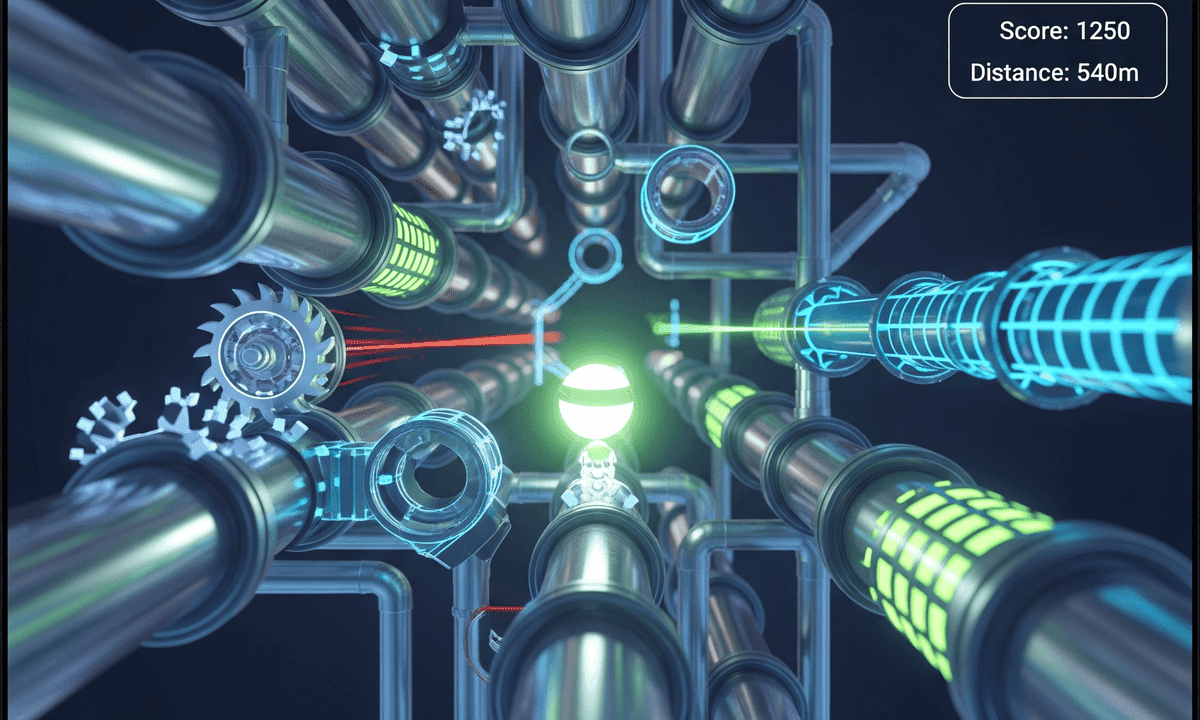
By the end of this course, learners will be able to design procedural pipe systems, implement smooth player movement, create challenging obstacles, and develop interactive UI with HUD and score tracking in Unity. This course takes you step by step through the process of building a complete Pipe Runner game, starting from constructing dynamic pipe environments to refining gameplay mechanics and designing polished user interfaces. You will learn how to apply procedural generation to create endless 3D pipes, debug movement systems for accuracy, and implement obstacle challenges that keep players engaged. The course also covers essential interaction features such as death mechanics, camera transformations, and score display systems. Unlike other tutorials that focus only on coding or art, this course uniquely combines procedural design, gameplay mechanics, and user interaction systems into one project-based experience. Whether you are a beginner looking to strengthen Unity fundamentals or an intermediate developer aiming to expand into procedural game design, this course equips you with practical, industry-relevant skills to analyze, design, and build engaging Unity games from scratch.

YouTube
Explore the process of pipeline welding automation in this informative video from RMS Welding Systems. Learn about the PFM Pipe Facing Machine, internal clamp setup, tack rig operation, reach rod controls, and back welding techniques with an internal clamp. Gain valuable insights into the efficiency and precision of automated pipeline welding processes, essential for professionals and enthusiasts in the welding industry.

YouTube
Explore the concept of universal health care in this 46-minute conference talk from The Aspen Institute. Delve into the complexities of providing comprehensive medical services beyond just insurance coverage, examining the view of health as a fundamental human right. Learn about the Medicare for All framework gaining traction in the US and the successful implementation of free health care in Mali, which has significantly reduced under-age-five mortality rates in rural communities. Analyze the realistic prospects of achieving universal health care and consider the necessary tradeoffs involved. Gain insights from speakers Margot Sanger-Katz, Andy Slavitt, Takao Toda, and Ari Johnson as they discuss the possibilities and challenges of making health care accessible to all.
Cybrary
Who should take this course? Our Dirty Pipe (CVE-2022-0847) course is designed for defensive and offensive security professionals. Seasoned penetration testers, red teamers, security and vulnerability analysts, and system administrators will learn how to protect against this critical vulnerability and exploit it in their testing activities. You will need a functional understanding of Linux OS and the command line to practice techniques for exploiting the Dirty Pipe vulnerability with publicly available exploit code. Why take this course? The Dirty Pipe vulnerability was publicly disclosed on March 7th, 2022, when a log file corruption problem was identified as a Linux kernel bug. Any Linux kernel since 5.8 is vulnerable to the Dirty Pipe attack, including Android mobile devices. As a result, the Dirty Pipe vulnerability has earned a high CVSS score of 7.8. Following in the footsteps of other privilege escalation vulnerabilities like the Polkit, and local kernel flaws like Dirty Cow, this newly disclosed Dirty Pipe attack is dangerous and easier for adversaries to exploit. The bug lies in the pipeline where an OS process can transfer data to another. Researchers have found that any user can use an SSH key to quickly escalate privileges and gain root access in minutes. With these privileges, the adversary can do a lot of damage, such as execute ransomware attacks, collect and exfiltrate sensitive data, and destroy assets. So what can you do about this critical vulnerability? Our course discusses the official patch released by the major Linux distros and what security professionals should consider as more research develops on mitigation strategies. Get hands-on experience exploiting this vulnerability in a secure virtual lab environment and develop the skills you need to protect your environment. What makes this course different from other courses on similar topics? After completing this course, you will be able to: Understand the Dirty Pipe vulnerability and its root cause. Identify the Dirty Pipe vulnerability, detect exploits, and determine if your organization is impacted by this Linux kernel flaw. Communicate the potential impact to stakeholders across your organization. Exploit this vulnerability using publicly available exploit code. Execute various mitigation tactics to reduce risk. Remediate this vulnerability on both Linux systems and Android devices. Share effective exploitation and mitigation strategies. This course is taught by Raymond Evans, a member of the CyDefe team. CyDefe develops and operates capture-the-flag (CTF) style environments, and this course focuses on presenting learners with virtual labs where you can dirctly apply what you've learned. Why should I take this course on Cybrary and not somewhere else? This on-demand course gives you the hands-on experience needed to protect and defend your organization against the critical Dirty Pipe vulnerability. In one hour, offensive and defensive security professionals can become more prepared to defend their organization against what researchers are saying is one of the most dangerous threats to hit Linux distributions in over five years. In this course, you will see just how quick and easy it is to exploit this vulnerability from the perspective of an adversary. After completing your training, you will be able to not only exploit and mitigate this critical vulnerability, but also describe its significance to organizational stakeholders.

YouTube
Learn how to design a pipe joint connector using Creo Parametric in this 19-minute tutorial. Follow step-by-step instructions to create a detailed 3D model of a pipe joint connector, exploring essential features and tools within the Creo Parametric software. Gain practical skills in CAD modeling and enhance your proficiency in designing mechanical components for piping systems.

YouTube
Learn to create a detailed CAD model of a pipe with flanges using SolidWorks in this comprehensive tutorial. Gain hands-on experience in designing industrial components as you follow step-by-step instructions for modeling a complex pipe system. Master essential SolidWorks tools and techniques for creating accurate 3D representations of piping assemblies, including flange design and attachment. Enhance your mechanical engineering and product design skills through this practical, industry-relevant modeling exercise. For personalized SolidWorks classes and further guidance, contact the instructor directly via email.

Udemy
Understanding piping systems, their components, codes and specifications for successful design, construction & operation What you'll learn: Learn a valuable step-by-step Piping Design Method and start designing your piping systems from scratchDownload our valuable sizing tables and dimensioning charts, essential to properly design your piping systemDownload our valuable technical booklets covering Flanges & ValvesTest your knowledge with our 230+ QUIZ QUESTIONSBuild a strong understanding of piping design and construction principles for both metallic and nonmetallic piping systemsExplain the various pipe manufacturing and joining methodsIdentify the different types of fittings and their applicationIdentify the different types of flanges, gaskets, and bolting materialsIdentify the different types of valves, their basic parts and functionsIdentify the different types of control valves, their basic parts and functionsIdentify the different types of piping accessories (anchors, dummy and channel supports, spring hangers, hanger rods…)Gain guidance for selecting the most appropriate pipe specification and material for your applicationGain guidance for selecting the most appropriate pipe spacing and arrangement to mitigate thermal expansion and successfully design your piping support systemsExplain the process of pipe identificationAppreciate the various piping classes based on the design and applicationKnow and familiarize yourself with international and national pipe standards and specifications (ASME, ANSI, AFNOR…) Piping Systems Masterclass: Design, Construction, Codes & Best PracticesThe Complete Guide to Industrial Piping Systems—From Design and Fabrication to Installation, Maintenance & StandardsUnlock the essential skills for designing, constructing, and maintaining piping systems in today’s process industries! This comprehensive course delivers practical, industry-focused knowledge on every aspect of piping—from material selection and component sizing to standards compliance and real-world troubleshooting.Why Enroll in This Course?Critical Plant Infrastructure: The productivity, safety, and reliability of your plant depend on the performance of its piping systems.Industry-Standard Methods: Gain hands-on experience with proven piping design methods used at leading petrochemical complexes worldwide.Practice-Oriented Learning: Learn through extensive graphics, 3D animations, cross-sectional views, sizing tables, and numerous real-world examples.What You’ll LearnPiping System Fundamentals:Pipe materials, joining technologies, and welding methodsPipe expansion, support spacing, and anchor/guides designComponent Deep Dive:Function, limits, installation, and materials for pipes, flanges, fittings, valves, and supports3D animations and cross-sectional illustrations for virtual practical trainingCodes & Standards:Detailed coverage of ASME & ANSI piping codes and standardsUnderstanding piping specifications and piping classes with practical examplesStep-by-Step Piping Design Method:Follow a structured, field-tested method to design a new piping system from scratch or modify an existing oneConstruction & Maintenance Best Practices:Installation procedures, inspection, maintenance, and repair strategiesCommon pitfalls and troubleshooting tipsWho Should Enroll?Mechanical, chemical, and process engineersPiping designers, plant engineers, and maintenance professionalsConstruction supervisors and project managersEngineering students and recent graduatesAnyone involved in the design, construction, or operation of industrial piping systemsCourse FeaturesHigh-quality video lessons with detailed graphics, cross-sectional views, and 3D animationsSizing tables and downloadable resources for quick reference and project useNumerous practice sessions and real-world examplesStep-by-step piping design methodology as used in industryLifetime access: Study anytime, at your own paceInstructor support via Udemy Q&ABy the End of This Course, You Will:Confidently design, size, and specify piping systems and their componentsApply ASME & ANSI codes, standards, and best practices in your workSelect, install, and maintain piping, flanges, fittings, valves, and supportsAvoid common pitfalls and ensure safe, efficient plant operationUse a field-proven, step-by-step piping design method for new and existing systemsReady to Become a Piping Systems Expert?Preview the free course videos and curriculum. Join engineers and professionals worldwide who trust WR Training for clear, practical technical education.Click “Enroll Now” to master piping system design, construction, and maintenance!WR Training – Your Partner in Engineering & Plant Reliability ExcellenceSpread the wings of your knowledge ---COURSE UPDATESJune 25We have added new video lectures. In addition, new quizzes are being added to help you test your knowledge and emphasize the key learning points. The quiz will include:True/False questionsMulti-choice questionsImages, cross-sectionnal viewsSolved problemsand much more...When you think you’ve got a good grasp on a topic within the course, you can test your knowledge by taking the quiz. If you pass, wonderful ! If not, you can review the videos and notes again or ask us for help in the Q&A section.