

Courses
Discover thousands of courses from top institutions and platforms worldwide
Level
Course Type
Duration
YouTube
Learn to embrace strategic risk-taking as an engineer, scientist, or technologist in this 50-minute conference talk from GDevCon N.A. 2025. Explore the critical role that courage and calculated risks play in advancing test & measurement technology and humanity as a whole. Discover data-driven methods and frameworks for overcoming the risk-averse mindset typically instilled through university and corporate environments. Examine how professionals trained to minimize risk can develop the skills necessary to take meaningful chances that drive innovation and personal growth. Gain insights into transforming uncertainty from a barrier into an opportunity for creating positive change in the world through technological advancement.

Coursera
All organisations must grapple with fundamental issues at the heart of governance: who are our stakeholders? What are their objectives? How can we ensure these objectives are met as effectively as possible? How can we ensure all legitimate stakeholders are treated fairly? Via structured learning activities (video lectures, quizzes, discussion prompts and written assessments) this course will teach you how to address these questions and how a sound governance structure and comprehensive risk management framework can support you and your organisation in achieving its objectives. You will consider contemporary ethical issues and devise practical responses to them, and finally, you’ll discover that your future ‘influencing’ challenge will be to encourage all members of your organisation to understand their role in serving your organisation’s stakeholders.

YouTube
Explore the emerging field of AI engineering in this insightful conference talk from React Summit US 2023. Delve into the rapid advancements in applied AI, driven by the growing capabilities and accessibility of Foundation Models. Discover how tasks that once required years of research can now be accomplished in a matter of hours. Learn about the shift from prompt engineering to software development in the AI space, and understand the concept of Software 3.0. Gain valuable insights into the new opportunities arising in this transformative era of artificial intelligence and software development.

YouTube
Explore the challenges and potential pitfalls of implementing AI risk management frameworks in this 34-minute conference talk from Black Hat. Delve into a critical analysis of two prominent frameworks - NIST AI RMF and the draft EU AI Act - and uncover five key roadblocks organizations may face when operationalizing these standards. Learn from qualitative studies and experimental work that highlight the unintended consequences of well-intentioned AI risk policies. Gain valuable insights into the rapidly evolving AI Risk Management ecosystem, including the proliferation of draft standards, emerging startups, and testing methodologies. Understand the implications for compliance officers, ML engineers, and security professionals as they navigate the complex landscape of AI system evaluation and risk mitigation.

YouTube
This 11-minute video from IBM explores how risk analysis strengthens cybersecurity practices. Learn how brakes and cybersecurity share a common purpose in managing risk effectively as Jeff Crume explains the process of identifying threats, evaluating potential impacts, and making informed security decisions. Discover practical strategies for mitigating risks and improving system resilience in your organization. For those interested in becoming a Certified Administrator - Security Guardium, the video provides information about certification opportunities with a special discount code. Gain valuable insights from IBM's expertise in risk management and understand how proper analysis can transform your approach to cybersecurity protection.

YouTube
Explore common pitfalls and blind spots in risk modeling with Stanford Professor Sam Savage in this 55-minute webinar. Discover strategies to minimize uncertainties, protect your organization, and foster a thriving risk management culture. Learn to define risk, avoid losses, and leverage Microsoft Excel as a key tool. Gain insights on consolidating risk across an organization. Engage directly with Professor Savage and fellow participants in a special interactive portion. Delve into topics such as limbic analytics, the flaw of averages, uncertainty in various contexts, project management, building models, demand forecasting, cash position analysis, and triangular distribution. Master the art of assessing risk likelihood and improve your overall approach to risk management.
YouTube
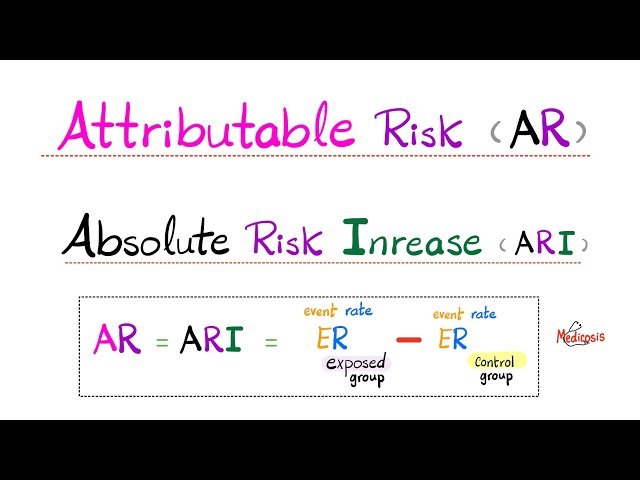
Learn essential biostatistics concepts through this 16-minute educational video that explains key risk measurement metrics used in medical research and epidemiology. Master the calculations and interpretations of Absolute Risk Increase (ARI), Attributable Risk (AR), Absolute Risk Reduction (ARR), and Relative Risk (RR), along with related concepts including Relative Risk Reduction (RRR), Number Needed to Treat (NNT), and Number Needed to Harm (NNH). Explore how these statistical measures apply to real-world medical scenarios, including the assessment of carcinogens like processed and red meat in cancer risk, cardiac interventions, and drug treatments such as aspirin therapy. Understand the fundamental differences between control and treatment groups in randomized clinical trials, placebo-controlled studies, and observational cohort studies. Gain insights into event rates, risk factors, and how these biostatistical concepts connect to broader epidemiological principles including sensitivity, specificity, predictive values, likelihood ratios, and ROC curves for effective risk stratification in clinical practice.

YouTube
Dive into a comprehensive podcast episode exploring Retrieval Augmented Generation (RAG) with Syed Asad, Lead AI/ML Engineer at KiwiTech. Gain insights on semantic vector searches, vector databases, and cutting-edge RAG techniques reshaping AI capabilities. Learn about production issues, CSV file handling risks, embedding model challenges, and inference layer experiments. Explore AWS services, OpenAI customization, differences between Olama and VLLM, and fine-tuning small language models. Discover evaluation frameworks, MLOps for efficient machine learning, tool pricing strategies, and dependency risk management. Understand the evolving role of ML engineers in the AI landscape and explore the hard framework for AI development.

YouTube
Explore the fundamental principles of risk management in finance through this comprehensive lecture from Yale University's Financial Markets course. Delve into the origins of probability theory and its applications in finance. Learn about key statistical concepts such as measures of central tendency, dispersion, and their relevance to financial analysis. Discover the importance of present value calculations and their historical significance in understanding the time value of money. Examine the Expected Utility Theory and its implications for decision-making in finance. Gain insights into how mathematics and statistics form the backbone of financial theories and risk management strategies. This 69-minute lecture provides a solid foundation for understanding the quantitative aspects of finance and their practical applications in risk management.

YouTube
Explore a data-driven analysis of cyber risk trends in this 34-minute RSA Conference webcast presented by Wade Baker, Partner and Co-Founder of Cyentia Institute. Investigate whether cyber risk is truly increasing as commonly believed, if organizations face higher breach probabilities than a decade ago, and how financial impacts of security incidents have evolved over time. Examine whether these trends vary across different organization types and sizes through comprehensive analysis of an extensive historical dataset of cyber events and losses. The presentation offers evidence-based insights to help security professionals understand the true state of cyber risk beyond the headlines.
YouTube
Explore the concept of risk evaluation and its impact on personal decision-making in this TEDx talk by Jonathan Kurtz. Discover how applying business risk management techniques to everyday life can lead to better choices and increased happiness. Learn to identify, measure, and respond to risks effectively through real-world examples and practical strategies. Gain insights into understanding others' perspectives and making informed decisions. Delve into topics such as parental perspectives, entrepreneurship, and dealing with information overload. Examine the risk assessment framework used by businesses and how it can be applied to personal situations. Consider the importance of evaluating impact, relevance, and sources of information when assessing risks. Understand various risk management strategies, including risk acceptance, mitigation, transfer, and avoidance, along with their potential consequences. Ultimately, acquire valuable tools to maximize personal well-being and make smarter, more informed choices in life.

YouTube
Explore the declarative paradigm's impact on data systems in this 25-minute EuroPython Conference talk. Dive into the origins of declarative approaches in analytics frameworks, examining how users describe desired end states for data extraction, transformation, visualization, infrastructure, quality, and governance. Investigate the role of YAML as an interface between data practitioners and system states. Gain insights into state management, GitOps, and the evolving landscape for data engineers and analysts. Discover why this shift doesn't simply reduce professionals to "YAML engineers" while addressing challenges like YAML multiline strings.

Udacity
Build the skills needed to outsmart cyber threats. This Nanodegree teaches you how to secure infrastructure, assess vulnerabilities, and apply top industry practices to protect your organization from digital attacks.

edX
The Empathetic Engineer is a course that will enhance your capacity to harness your technology and problem-solving skills to deliver high impact, innovative solutions that address compelling social and environmental needs. It is a course that puts people, planet and nature at its core, enabling you to generate new levels of value for the markets or communities you serve, without compromising our world today or in the future. There has never been a more exciting time for engineers to make an impact at scale. We have a perfect storm of need and technological capability. We have the immense challenge of climate change, alongside a desperate need to create a more sustainable and equitable model of consumption and production. But we are also at the top of a wave of innovation, the likes of which have not been seen for around 120 years, where many distinct areas of technological progress are transforming our capacity to address the immense challenges we face. The challenges we face are systemic and our responses must be, too. Week by week, the course will take you through the 6 phases of the process we use, from first scoping a challenge you want to focus upon, researching it, drawing on those insights to generate a clear set of goals and ambitions, igniting your creative capacity to develop novel and exciting concepts, selecting, testing and refining them along with the business model before implementing an innovative solution, that addresses a compelling need. At the end of the course, you should be able to: Demonstrate theoretical and practical understanding of the different stages of the empathetic engineering approach in the context of engineering design projects. Analyse the socio-cultural, environmental, and economic factors that need to be considered in the given context. Apply the principles, methods and tools to an engineering design project to deliver more effective and measurable outcomes. Optionally, develop a project proposal that spans technological, socio-cultural, environmental and economic systems, including how the proposal creates and captures value for each of the relevant stakeholders. That is our goal, and we look forward to going on this journey together.

edX
As AI continues to reshape industries, demand is rising for professionals who can develop intelligent solutions that integrate seamlessly into cloud-based platforms. The AI Engineer program, developed by Microsoft and hosted on edX, equips learners with the technical knowledge and practical skills to build and deploy AI solutions using Azure AI services. Across three in-depth courses, you’ll begin with an introduction to Azure’s AI capabilities and progress to more advanced applications, including natural language processing, computer vision, and knowledge mining. You’ll also learn how to use services such as Azure OpenAI, Cognitive Services, and Azure Machine Learning to build enterprise-grade AI solutions. This program is ideal for software developers, cloud engineers, and data professionals looking to deepen their expertise in cloud-based AI. With hands-on labs, real-world use cases, and a focus on responsible AI design, this program sets you up for success in AI engineering roles and serves as a strong foundation for Azure AI certification paths.

edX
The Data Engineer program prepares you for one of the most in-demand roles in modern data infrastructure. Developed by Microsoft, this comprehensive program teaches you how to design, implement, and manage data solutions in the cloud using Azure Synapse Analytics, Apache Spark, and Azure Stream Analytics. You’ll gain hands-on experience building serverless SQL queries, performing large-scale data transformations, integrating hybrid transactional and analytical processing (HTAP), and implementing real-time streaming solutions. Whether you're transitioning into data engineering or looking to deepen your expertise in Azure's data ecosystem, this program provides the technical foundation and practical skills to support enterprise-grade data solutions.

edX
This program focuses on demonstrating your ability to build functional and effective applications, showcasing your skills and knowledge throughout the application development process. Emphasis is placed on practically applying learned concepts to real-world scenarios, validating your competence in app development. You will gain a comprehensive understanding of securing core cloud infrastructure across network, compute, storage, and database components. Learn fundamental network security principles, including implementing controls, managing traffic, deploying firewalls, configuring secure virtual networks, and using segmentation to protect resources. Explore tools and services to monitor and defend against threats, enabling you to design and maintain a secure network architecture. Additionally, you will delve into securing virtual machines, data at rest and in transit, and databases using best practices such as access control, encryption, and threat mitigation. Acquire the knowledge and hands-on skills necessary to manage and enhance an organization's security operations. This course covers key principles like risk assessment, incident response, and the strategic use of security technologies. You will learn how to monitor security events, analyze threats, and ensure compliance with industry standards. With a strong focus on real-world application, this course provides a solid foundation for effectively leading or supporting security operations.

YouTube
Explore the critical aspects of transition risk assessment and management in this 27-minute conference talk from Louisville InfoSec 2016. Gain insights from Mike Neal's extensive background as he delves into risk assessment methodologies, regulatory compliance, and industry standards. Learn about OCR focus areas, FFIEC guidance, and ISO 27001 implementation. Discover the importance of risk registers, risk tolerance, and developing effective risk management strategies. Examine various scenarios, create a comprehensive risk management plan, and understand maturity models. Acquire best practices, explore tools for risk management, and learn how to define key performance indicators. Access valuable resources and engage in a Q&A session to enhance your understanding of compliance and risk management in the information security landscape.

Udemy
Hazards Identification, Risk Assessment and Risk Control (HIRARC) What you'll learn: • Topics covered in this course: o Topic 1: Hazard and Risk o Topic 2: Three Phases of Hazards o Topic 3: Hazards identification o Topic 4: Risk Assessment o Topic 5: Risk Control · We live in a World full of risks. Very often accidents happened at work and at play because we are oblivious to the hazards around us and hence underestimated the associated risk of an accident happening; · From the conversations between a father who is a veteran working in the industry and his child who is still studying, examples of hazards from our daily life and the workplaces are highlighted so that we can all cultivate a safety mind set and sharpened our skills in identifying hazards, assessing the risk, and taking appropriate risk control measures to prevent accident; · Topics covered in this course: o Topic 1: Hazard and Risk o Topic 2: Three Phases of Hazards o Topic 3: Hazards identification o Topic 4: Risk Assessment o Topic 5: Risk Control · This course is designed to replace 25% (4 hours) of the classroom-based 2-day WSQ Develop a Risk Management Implementation Plan course as part of blended learning approach · The course can also be taken individually and independently as a single subject in “Hazards Identification, Risk Assessment and Risk Control”

edX
In this course, you will learn to estimate the expected return of equity and debt. You will also learn to estimate the weighted average cost of capital (WACC), the opportunity cost of capital you should use when discounting the free cash flows to value a firm. In the process, you will learn to estimate the risk of financial assets and how use this measure of risk to calculate expected returns. You will also learn how the capital structure of a firm affects the riskiness of its equity and debt. Throughout the course, you will learn how to construct Excel models to value firms using hands on activities.