

Courses
Discover thousands of courses from top institutions and platforms worldwide
Level
Course Type
Duration
YouTube
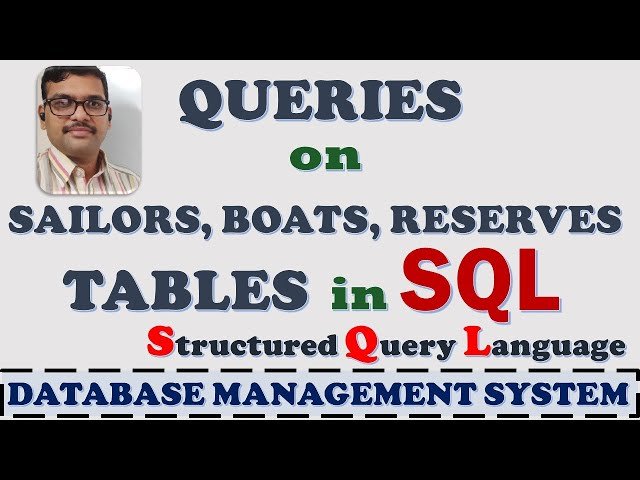
Learn how to write SQL queries for a database containing sailors, boats, and reservations. Practice formulating queries to find sailor names who reserved specific boats, boat colors reserved by particular sailors, and sailors who have made at least one reservation. Gain hands-on experience with SQL syntax and database querying techniques using practical examples from a nautical-themed dataset.

Udemy
Understanding the atmosphere and making better decisions on the water What you'll learn: In this course, you will learn about weather fundamentals, weather tools, and weather decisions for sailors and boaters. We've all experienced a bad day on the water thanks to our planet's atmosphere. Whether that is being rained out on a holiday, or getting ourselves in a dangerous situation in a thunderstorm, the weather is a sailor or boaters main concern on the water. In this course, taught by a professional mariner, you will learn about the principles of marine weather and the resources available to you as you make sailing and boating decisions on the water. First you will learn about weather fundamentals such as fronts, air masses, and hazards such as thunderstorms and tropical storms. Next you will learn about resources available both on the internet and at sea for weather data such as weather faxes and forecast models. Finally, you will practice weather routing with a few common sailing situations such as a daysail or a hypothetical trip from North Carolina to St. Thomas to help you make more informed choices regarding the weather. This course is helpful for beginners or experienced sailors and boaters alike. It is all about being informed and being safe on the water. Happy navigating! Your instructor is Captain Chris Nolan, an experienced military and civilian ship captain who has sailed in the Atlantic, Pacific, Mediterranean, and Polar regions.

YouTube
Dive into the fascinating world of marine ecosystems in this 50-minute lecture. Explore Earth's surface composition, mean elevation, and major oceans while distinguishing between seas and oceans. Examine the continuous circulation patterns driven by wind, including trade winds and the Coriolis effect. Investigate ocean currents, their directions, and the unique characteristics of lower polar regions. Delve into advanced concepts such as Ekman transport, Ekman spiral, and convection. Conclude by understanding the influence of satellite masses on marine ecosystems. Gain a comprehensive understanding of the complex interactions that shape our planet's aquatic environments.

YouTube
COURSE OUTLINE: Introduction - ideal and viscous incompressible fluid; Kinematics of fluid; Lagrangian and Eulerian methods of description, velocity, acceleration, streamlines, pathlines, vorticity; Equation of continuity; Euler’s Equations of motion; Bernoulli's equation and its application, Two-dimensional motion - velocity potential, stream function, Sources, sinks, dipoles; Flow past a circular cylinder with and without circulation; Blasius Theorem; Problems on the motion of perfect fluids steady translation of a cylinder in an infinite fluid medium, unsteady translation; Added mass of cylinders; Spheres; The vortex system-circular vortex, two dimensional sources and vortex distributions, vortex sheets; Lifting Surfaces, Aerofoil theory - complex potential- Method of Conformal mapping- Joukowski profile; Flow past a Joukowski profile; Velocity and pressure distribution on aerofoils; Viscous fluids- Navier-Stokes equations, Laminar flow, Poiseuille flow, Couette flow, flow through a pipe; Boundary layer Theory-Reynolds Number; Boundary layer along with a flat plate; Blasius solution; Separation, Von Karman momentum integral method; Introduction to Turbulence; Gravity waves- Airy's wave; Free surface condition; Velocity potential- Dispersion relation; Surface tension effects; Orbital motion; Group velocity and its dynamical significance; Wave energy; Standing waves; Loops and nodes, Wave forces and Morison's equation, Long waves and waves in a canal; Tides. COURSE DETAIL: The course content consists of five modules. Each module will have approximately 8-10 lectures. Apart from the basic theory, a large number of problems will be worked out to illustrate the utility of the theory. There will be a couple of problems at the end of each lecture/module as homework.

YouTube
Explore the fascinating world of marine sediments in this comprehensive lecture. Delve into the classification, collection, and analysis of ocean floor deposits, including lithogenous, biogenous, hydrogenous, and cosmogenous sediments. Learn about sediment transport mechanisms, grain size, texture, and distribution patterns across neritic and pelagic environments. Discover the importance of marine sediments in paleoceanography and examine techniques for studying ocean sediment cores. Investigate the role of silica and calcium carbonate in biogenous sediments, and understand the significance of the calcite compensation depth. Explore the relationship between sea floor spreading and sediment accumulation, and study unique formations like manganese nodules, phosphates, and evaporites. Gain insights into the complex mixtures of marine sediments and their global distribution patterns.

YouTube
Explore the diverse marine provinces of Earth's oceans in this comprehensive 46-minute lecture. Dive into the methods of measuring bathymetry, including echo sounding and modern techniques like sea floor mapping from space. Examine various bathymetric maps and seismic reflection profiles to understand ocean topography. Learn about major ocean regions, focusing on the North Atlantic, and distinguish between passive and active continental margins. Investigate features of the ocean floor such as continental shelves, slopes, submarine canyons, and abyssal plains. Discover the formation of turbidity currents and their impact on underwater landscapes. Study volcanic structures like seamounts, tablemounts, and the Pacific Ring of Fire. Analyze the characteristics of mid-ocean ridges, including hydrothermal vents, fracture zones, and transform faults. Conclude with an exploration of oceanic islands and witness the emergence of new volcanic islands.

YouTube
Explore the fascinating world of marine biology in this comprehensive 59-minute lecture. Dive into topics such as the Census of Marine Life, current marine species, and the unique adaptations of marine organisms. Learn about protoplasm, float mechanisms, and the streamlined nature of aquatic life. Examine how temperature changes affect marine ecosystems and understand the crucial role of osmosis in marine organisms. Discover the importance of isotonic environments, transparency, and camouflage techniques like disruptive coloration. Investigate the function of swim bladders and gain a broader understanding of the marine environment. Enhance your knowledge of ocean ecosystems and the incredible diversity of life beneath the waves.

Swayam
ABOUT THE COURSE: This course is designed to teach students about the mechanical systems on ship. The system includes various machinery which includes power systems, fuel handling systems, power transmission systems etc. through this course the students will know the basics of the machinery used on the ship.INTENDED AUDIENCE: UG students in Ocean, Mechanical engineeringPREREQUISITES: 1st years Engineering courses such as thermodynamics and applied mathematics, basic electrical engineering.INDUSTRY SUPPORT: Ship design /engine manufacturers

Swayam
Marine Biotechnology is a Curriculum-based course content of one of the graduate and post graduate programs of Life Science discipline. It is part of the approved curriculum being transacted in a few affiliated Colleges of Pondicherry University and similar course is being offered at many Universities/Colleges across India.This course is to enable the students of life sciences to learn about the traditional culture of marine organisms fish, shrimp, lobsters, molluscs like edible oysters, mussels and pearl oysters, microalgae and sea weeds. The course on Marine Biotechnology teach the student how to increase the food production especially fish which is depleting and also non conventional foods also can be cultured. It also teaches the student Drugs also being obtained from marine organisms for cancers and other neurological disorders. This knowledge would equip life sciences students to think in terms of skill development and make in India theme and help them to get jobs or to start their own venture.

Coursera
This course is about life in the oceans, from the sunlit surface to the inky depths, from microscopic phytoplankton to the great blue whale. The ocean is among the world’s most inhospitable environments for scientific research, which is why we know as much about the surface of the moon as we do the bottom of the sea. This course uncovers the evolutionary history of marine organisms, adaptations to life in water, the behavior and functional morphology of sea animals, interactions between species, and current threats. Throughout the course, we meet scientists who are developing ingenious solutions for overcoming challenges and are making remarkable discoveries. By evaluating these cases and analyzing real scientific data, we come to understand some of the ways that life has adapted to diverse ocean habitats, how it interacts with the physical environment and with other organisms, and why it matters to us.

YouTube
Explore an in-depth examination of marine engine stuffing boxes through interactive 3D models in this 19-minute educational video from saVRee. Learn about all the main components of stuffing boxes, understand their purpose, and discover how they function in marine engineering applications. The video provides comprehensive visual explanations that make complex engineering concepts accessible and clear for students, instructors, and industry professionals interested in marine engineering systems.

Saylor Academy
Explore the fundamentals of studying with Saylor Academy in this comprehensive one-hour orientation course. Gain insights into the available programs, learn about academic partnerships, and understand the importance of academic integrity and proper conduct. Familiarize yourself with the code of conduct, delve into plagiarism prevention strategies, and prepare for the final exam to solidify your understanding of Saylor Academy's learning environment.

YouTube
Explore the critical issue of marine pollution in this comprehensive 52-minute lecture. Delve into the definition of pollution and environmental bias before examining various types of marine pollutants. Learn about the devastating effects of oil spills, sewage sludge, and chemical contaminants like DDT, PCBs, and mercury. Investigate the growing problem of nonpoint source pollution and the regulations surrounding ocean dumping. Conclude by focusing on the pervasive issue of plastic pollution, including microplastics and the infamous Pacific Garbage Patch, gaining a thorough understanding of the challenges facing our oceans today.

YouTube
Explore the fascinating world of marine sediments in this comprehensive 47-minute lecture on oceanography. Delve into the classification of marine sediments, their importance in paleoceanography, and the various types including lithogenous, biogenous, hydrogenous, and cosmogenous sediments. Learn about the significance of grain size, texture, and environmental factors in sediment formation and distribution. Discover the role of calcium carbonate in biogenic sediments, the concept of Carbonate Compensation Depth (CCD), and the global distribution of modern calcium carbonate sediments. Examine unique formations like manganese nodules, phosphates, and evaporites. Gain insights into the mixture of sediment types in different oceanic regions and understand the distinction between pelagic and neritic sediment distribution. Conclude with an overview of worldwide marine sediment thickness, providing a holistic understanding of the ocean floor's composition and its implications for Earth's geological history.

YouTube
Explore the fascinating world of marine provinces and bathymetry in this comprehensive 51-minute lecture. Dive into the methods of measuring ocean depths, from traditional echo sounding to modern satellite-based techniques. Examine the various features of continental margins, including active and passive types, submarine canyons, and the continental rise. Investigate the complex structures of mid-ocean ridges, fracture zones, and transform faults. Gain a thorough understanding of the ocean floor's topography and its geological significance through detailed comparisons of bathymetric maps and sea floor mapping from space.

XuetangX
The course Introducing Marine Engineering has been offered for 90 years since the major, marine engineering, was designed in Dalian Maritime University (DMU). This course aims to help the learners to understand ships, the marine power plant, the crew in the engine department and their main responsibilities, and master the composition of marine power plant, the source and working principle of the ship's power and electric power, and the composition and roles of the ship's power plant and its systems, auxiliary devices and anti-pollution equipment.At present, in DMU, it is a 32-credit-hour course, and for some majors, it is a 16-credit-hour course. It is a compulsory course or distributional elective for those majoring in nautical science, law, rescue and salvage engineering, traffic management, etc. It is also an elective course for all students. Besides, as one of the orientation courses, it is compulsory for students majoring in marine engineering. More than 2,000 students learn this course every year.This course has distinctive maritime characteristics. During the learning process, students have the chance to visit the training ship YUKUN, which has been welcomed by students for many years, and has achieved remarkable learning outcomes. However, with the introduction of national strategies such as building a maritime power, a transportation power and a shipping power, as well as the development of maritime technology and information technology, the contents and the teaching methods of the course also need to be updated. The teaching contents need to reflect how ships support national strategies, enrich students' life, and touch upon more maritime cultures, especially Chinese maritime cultures. The teaching methods need to fully implement the educational concept of "student-centered" and use virtual reality (VR) technology to display the equipment and the engine room.Therefore, the course team members designed the MOOC, Introducing Marine Engineering, updating the course contents, such as international conventions and domestic regulations concerning the safety, environmental protection and management of marine power plant, new technologies such as EFI diesel engine, gas engine, unmanned ship, etc. Learners can see the virtual engine room to experience the convenience and efficiency brought by VR technology. The course team members have also carefully designed the lead-in of each lesson. They start the course by introducing the scenes in life, which is easier for learners to understand, and then lead the learners to acquire the specialized knowledge. They aim to talk about the marine power plant through life, and observe the society through the marine power plant.In a word, Introducing Marine Engineering does not only help students majoring in marine engineering (especially freshmen and sophomores) to learn about marine power plant systematically, but also the non-majors and social learners to enrich their knowledge, understand national strategies and inherit maritime culture.

Udemy
A complete Diploma in one Course What you'll learn: Understand Ship structure and constructionUnderstand Ship component, parts and their functionsLearning the Principles of marine scienceLearn the Fundamentals of Engineering ThermodynamicsUnderstand Marine Diesel Engines, design and operationUnderstand Marine Steam TurbinesUnderstand Marine BoilersLearning Marine Electrical EquipmentsFree Downloadable book This Program is one of the most comprehensive online programs that specialized in Marine engineering, Marine engineers are involved with the design, construction, installation, operation, maintenance and repair of the main propulsion engines and auxiliary machinery and systems found in all kinds of ships, Also Marine engineering applies a number of engineering sciences, including mechanical engineering, Engineering Thermodynamics, electrical engineering and computer science, to the development, design, operation and maintenance of Marine Equipment's. This comprehensive program covers most of the aspects in that’s filed. In an easy, simple and straightforward way. Including hundreds of photos, diagrams and illustrations. so you are going to study Ship parts, construction and design. Also I am going to cover the major principles in the marine engineering science, You will study as well the Marine Diesel Engine, Boiler, and steam turbines and different marine systems, including the Electrical System. I wish that every on of you enjoy this program. You have lifetime access to the course so you can take as long or short as you wish to go through the material. You can replay the videos at anytime using the course as an ongoing reference. You also have a 30 day money back guarantee.BE SURE TO ENROLL NOW!
Udemy
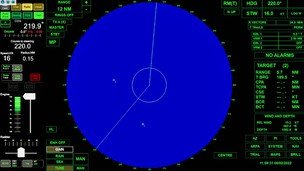
Using radar to navigate more safely on the water What you'll learn: Understand the principles of radar and operational controls of a commercial marine radar.Understand the basics of relative motion, speed, distance, and time to aid in collision avoidance.Understand the Collision Avoidance Regulations (COLREGS) as pertaining to marine radar.Understand the use of marine radar for navigation. This course is derived from a commercial course for Radar Observer for professional mariners, but tailored to an audience that suits all sailors and boaters. The course discusses the following concepts:Overview of radar theory and factors affecting radar performance.Operational controls for a radar, demonstrated by the Bridgemaster-E radar set, which is similar to many radar sets in modern navigation. Fundamentals of relative motion, speed, distance, and time, to help you better understand the power of radar as a navigational and collision avoidance tool.The Collision Avoidance Regulations (COLREGS) as pertaining to radar. The use of radar as a navigational tool for marine navigation. Advanced concepts of maneuvering boards and vector analysis for determining the course, speed, and closest point of approach of a nearby radar target. This course uses the Bridgemaster-E Radar and a maritime simulator to describe concepts and problems in maritime navigation. The course is based on the International Maritime Organization's requirements for "Radar at the Operational Level" and is based on domestic USA courses such as "Radar Observer Unlimited" which often cost over $1000 dollars. The course is distilled and targeted for all mariners, but still includes challenging concepts and advanced details about radar and collision avoidance - it is not a cakewalk! The course does not discuss installation, power management, or operation of small recreational radars but instead uses commercial and professional discussions to help you understand radar at a fundamental level - helping you operate ANYradar more efficiently. The course is presented by Captain Chris Nolan, a licensed mariner at 1600/3000 Tons upon all oceans and a professional maritime instructor at a certified maritime training provider in the United States. Chris also sails as captain of tall ships in the United States and serves as a Coast Guard reservist.

Udemy
Learn the International Regulations for Preventing Collisions at Sea What you'll learn: Marine rules of the wayMarine vessel lightsMarine vessel sound signalsCOLREGsInternational rules In this course you will learn the international rules for navigation, the so-called COLREGs (collision regulations). The course will explain rule-by-rule what the regulations are about. The course will go through a brief history of the COLREGs, as well as rules regarding sailing and steering, lights and shapes, and sound and light signals. Where needed, the rules will be explained with illustrations. After each section, there is a multiple choice quiz, where you can test your knowledge. The course is suitable for any boater or sailor, who wants to know what the collision regulations are about.

Coursera
Paleontology: Ancient Marine Reptiles is a four-lesson course teaching a comprehensive overview of the evolutionary changes that occur when air-breathing terrestrial animals return to water. This course examines the diversity, adaptations, convergence, and phylogenetic relationships of extinct marine reptiles. Students will explore three major groups of marine reptiles: ichthyosaurs, plesiosaurs, and mosasaurs. Watch a preview of the course here: https://uofa.ualberta.ca/courses/paleontology-marine-reptiles