

Courses
Discover thousands of courses from top institutions and platforms worldwide
Level
Course Type
Duration

YouTube
Explore the fascinating world of soil classification and mapping in Alaska through this engaging webinar featuring Claire Benton, a soil scientist with the Natural Resources Conservation Service (NRCS). Gain insights into the unique challenges and opportunities of working as a geoscience professional in Alaska's diverse landscapes. Learn about the importance of soil science in understanding and managing natural resources. Discover the career path and experiences of an early career professional in the field of geologic mapping. Participate in a live chat during the premiere to ask questions directly to the presenter. Benefit from this educational opportunity supported by the USGS National Cooperative Geologic Mapping Program and presented by the American Geosciences Institute as part of their Early Career Professionals in Mapping Webinar Series.
Swayam
Plant pathology, it is also called as phytopathology deals with the cause, etiology, resulting losses and control or management of the plant diseases. It includes the study on the living entities that cause diseases in plants; the mechanism by which the disease causing agents produce diseases; the interactions between the disease causing agents and host plant in relation to overall environment. Soil health deals with soil as a natural resources on the surface of the earth including soil formation, classification, physical, chemical, biological and fertility properties of soil. It includes the effects of agricultural pesticides and fertilizers and their residue levels in atmosphere. It also consists of analytical techniques which are involved in pesticide analysis.

YouTube
Explore multiscale image-based modeling of plant-soil interactions in this SIAM Geosciences Webinar led by Tiina Roose from the University of Southampton. Delve into the critical role of soil in supporting crops, providing ecosystem services, and mitigating climate change. Learn about innovative approaches combining structural and chemical imaging methods to examine plant-soil interactions. Discover how experimental data refines modeling capabilities at biophysical scales, and how homogenization and scale-up techniques extend findings from the rhizosphere to broader field contexts. Investigate fundamental questions about the rhizosphere's influence on soil ecosystems, the role of root-soil interface micromorphology in plant nutrient uptake, and how insights from these scales inform predictions about climate change impacts, soil management strategies, and plant breeding on soil fertility.

Coursera
Agroforestry III: Principles of Plant and Soil Management is a detailed review of fundamental principles and best practices for successful agroforestry projects through understanding plant and soil interactions. This interdisciplinary module, presented by leading experts in the field, is the third in the five-module course covering the various aspects of agroforestry including the global distribution of the practices, their underlying principles, and major scientific advances during the past nearly five decades. Students will gain extensive knowledge and skills related to agroforestry systems, best practices and scientific management that can be useful in promoting their professional development and sharpening their land management skills.
YouTube
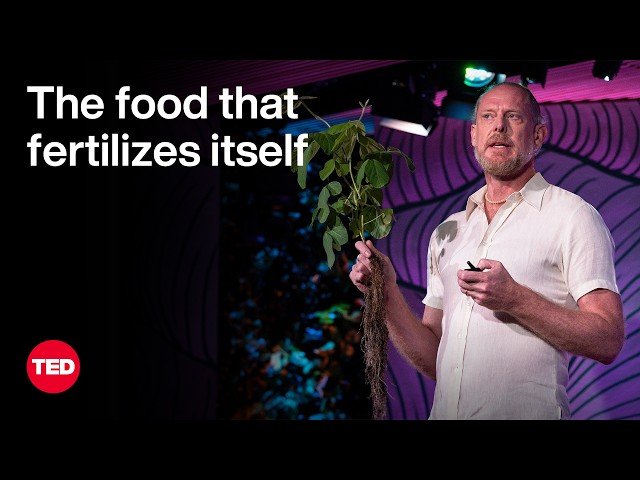
In this 11-minute TED talk, plant scientist Giles E.D. Oldroyd reveals how soybean plants naturally form partnerships with fungi and bacteria networks to access essential nutrients from air and soil without synthetic fertilizers. Discover how scientists are working to transfer this remarkable self-fertilizing capability to other crops, which could revolutionize agriculture by reducing pollution, increasing yields, and improving livelihoods for smallholder farmers worldwide. Recorded at the TED Countdown Dilemma Series: Food on June 6, 2024, this presentation explores a sustainable solution that may already exist within our current farming systems.

Study.com
The materials in this chapter on plants and ecology can help you create interesting, engaging lessons for your students. These lessons can be useful as homework help, classwork, test prep or can function as remedial help.

YouTube
Explore the fundamentals of soil geology in this 30-minute lecture from Earth and Space Sciences X. Delve into the typical components of soil that promote plant growth, factors influencing soil formation, and the process of soil development. Examine the soil profile, including its horizons and the downward operation of soil-forming processes. Learn about soil composition, texture, and taxonomy, and understand the impact of human activity on soils. Investigate the relationship between weathering and ore deposits. Gain valuable insights into this crucial aspect of physical geology, enhancing your understanding of Earth's surface processes and their implications for plant life and human activities.

edX
This introductory environmental studies course will explore the importance of soil to life on earth, the issues, processes and societal challenges underlying soil degradation – and what can be done to ensure sustainable soil management for the future. The threats to our soil span deforestation, erosion, overgrazing, use of agrochemicals, compaction, pollution and climate change. Learn what you can do to make a difference in protecting this vital natural resource.

CourseHorse
This is the sixth and final class in our soils science series, Getting Down to Earth: Understanding soils for ecosystem resilience and repair. This series of classes will build from the ground up a holistic knowledge of soils that will enable students to understand soil stewardship techniques, from how they work to when to use them. Registration for other courses in the series is encouraged, but not required. In this final class of the series students will share their soil management plans developed over the previous 5 classes and discuss them with their fellow students and instructors. Emphasis will be placed on best practices for changing climate and drought resiliency.

YouTube
Explore a comprehensive webinar on recommended laboratory methods for scaling soil health assessment. Delve into the intricacies of measuring soil organic carbon, carbon mineralization potential, and aggregate stability as presented by Dr. Liz Rieke, Soil Microbiome Scientist and Measurement Standardization Lead at the Soil Health Institute. Learn about sample preparation techniques, labor requirements, and essential quality assurance and quality control procedures for each measurement. Gain insights into the filtering process used to select these indicators and understand their significance in evaluating soil health. Discover practical tips for successful implementation, laboratory considerations, and resources for further information. Address specific challenges such as dealing with volcano soils and setting soil health targets. Enhance your understanding of soil health assessment methodologies and their application in large-scale projects through this informative presentation.

CourseHorse
The Soil Science - Full Series includes all 6 soils science classes:Scratching the Surface: Soil Formation, Structure, and ChemistryBuried Alive!: Digging into Soil Biology and EcologySoaking It All In: Understanding Soil WaterGetting into the Weeds: Soil Conditions and Management ConsiderationsDigging In: Soil Management and Remediation TechniquesCovering Common Ground: Soil Management Plan Components

CourseHorse
This is the fourth class in our soil science series, Getting Down to Earth: Understanding Soils for Ecosystem Resilience and Repair. This series of classes will build from the ground up a holistic knowledge of soils that will enable students to understand soil stewardship techniques, from how they work to when to use them. Building up from the previous classes, we will review soil disturbance and resulting stewardship challenges commonly encountered at restoration sites such as former agricultural land, urban fill, construction sites, brownfields, and degraded natural areas. We will review how to assess for common soil disturbances as well as historical and ecological site conditions for their soil management plans. Reasons and resources will be reviewed for more technical soil testing through consultants and labs.

FutureLearn
Explore cutting-edge research into soil science with Lancaster University Soils are a complex environment, teeming with life and supporting our most fundamental environmental processes. On this four-week course, you’ll learn from groundbreaking research taking place at Lancaster University to understand the basics of soil science. You’ll also have the opportunity to get your hands dirty with practical experience in assessing soil properties and conditions. This knowledge will help you understand why soil is so important and what we can do to protect our soils from the many threats they face. Explore soil properties and what lives below the ground There are more living things in one teaspoon of soil than there are people on the planet. This course will help you discover the variety of life in the soil, including invertebrates, microbes, and fungi to understand the complex system beneath our feet. Understand the importance of soil security With a firm grasp of what soil is, you’ll explore the relationship between soils and the rise and fall of different civilisations. This understanding will help you delve further into the importance of soil and how we can ensure its security. Explore soil erosion, contamination, and other threats Finally, you’ll learn about how and why soils are under threat at both a local and global scale. Exploring issues such as climate change, air pollution, and invasive species, you’ll understand why we need to be doing more to protect our soils. With this knowledge, you’ll be inspired to take action for soil protection. This course is designed for anyone interested in soils, biology, geography, and environmental science. No prior knowledge is required. We are delighted the course has been popular with many different learners aged 18 – 75.

XuetangX
Soil science is a professional basic course for students in agriculture and forestry-related majors. In this course, you will learn the importance of soil to the earth ecosystem, the history and development of soil science, the formation and evolution of soils, the components of soil, the physical, chemical and biological properties of soils, soil nutrient cycling, soil classification and distribution, soil utilization and improvement and protection. Soil basic theories will be taught together with their application in common agricultural and forestry practices. This course can lay a solid foundation for you to solve the problems about population-resources-environment-food production.

XuetangX
Welcome to our “Soil Mechanics” class. Brief IntroductionSoil mechanics is a core professional basic course, which is a compulsory course for undergraduates majoring in civil engineering, and is also a professional basic course for many disciplines closely related to infrastructure construction, such as traffic engineering, water conservancy engineering, mining engineering, marine engineering, etc. The online course of soil mechanics is clear, illustrated and practical. Each chapter is designed with guideline and summary, so that students can fully understand the learning ideas, key points and difficulties of this chapter. Each chapter is attached with Chinese and English professional vocabulary, so as to promote students to review and consolidate their knowledge they have learned. There are various test questions to enable students to achieve the combination of learning and practice. It is equipped with the English textbook of soil mechanics edited by Professor Liao Hongjian and published by Xi'an Jiaotong University Press.According to the training requirements of civil engineering specialty, this course not only pays attention to the systematic study of the basic theory and knowledge of the subject, but also pays focus on keeping pace with the times to cultivate the comprehensive ability of students to solve complex engineering problems. The characteristics of the course are:1) Soil mechanics is a branch of Engineering Mechanics and an applied basic discipline, which uses mechanics and geotechnical test technology to study the engineering properties of soil, as well as the stress, strain, strength and stability of soil under the action of load, water and temperature.2) Soil mechanics is an important professional basic course of civil engineering, construction, transportation, water conservancy, mining and geological engineering, which has a wide audience and plays an important role in the study of students and the reference of social professional engineers.3) Soil mechanics is a very practical engineering technology science, which is closely related to human activities. In engineering construction, the theory and method of soil mechanics should be applied to solve the problems of building ground, embankment, tunnel, subway and slope stability.There are totally 8 chapters in this course, including: basic characteristics and engineering classification of soils, permeability of soil and seepage force, stress distribution in soil, compression and consolidation of soil, shear strength, bearing capacity, stability of slopes and lateral earth pressure and retaining walls. Also included are a guideline at the beginning of each chapter and an English-Chinese translation of frequently-used words and expressions in soil mechanics were provided at the end of each chapter, which may facilitate the students in studying this course. Exercises are provided at the end of each chapter and references and acknowledgements are given in the attachment at the end of each chapter. Professor Hongjian Liao, Ph.D., Department of Civil Engineering at Xi’an Jiaotong University. She received a Ph.D. in Geotechnical Engineering from the Department of Civil Engineering, Tokai University, Japan. She is a member of the International Society for Soil Mechanics and Geotechnical Engineering, International Association for Engineering Geology and the Environment, and International Society for Rock Mechanics. She is also a Director of the Chinese Society for Rock Mechanics and Engineering, a Standing Director of the Environmental Geotechnical branch of Chinese Society for Rock Mechanics and Engineering, a Deputy Chairman of the Specialized Committee of Soil Mechanics Teaching of the soil mechanics and geotechnical engineering branch of China Civil Engineering Society, a Director of the Specialized Committee of Soil and Rock Mechanics branch of Chinese Society of Theoretical and Applied Mechanics, and a Deputy Chairman of Shaanxi Society for Rock-Soil Mechanics and Engineering. She is an editorial board member of the Chinese Journal of Rock and Soil Mechanics and Chinese Journal of Underground Space and Engineering. She has taught soil mechanics for more than 30 years, including courses on soil mechanics, engineering geology, and advanced soil mechanics. Textbook1.Hongjian Liao, Lijun Su, Hangzhou Li, Zhenghua Xiao (2015). Soil Mechanics. Xi’an Jiaotong university press, Xi’an2.Hongjian Liao, Hangzhou Li, Zongyuan Ma (2021). Soil Mechanics (The Second Edition). Xi’an Jiaotong university press, Xi’an2.Hongjian Liao, Rongjian Li, Enlong Liu (2018). Soil Mechanics (The Third Edition)(In Chinese). Higher Education Press, Beijing.

YouTube
Explore a captivating TEDx talk by Captain Adityavardhan Pathak, a former military officer turned Agritourism pioneer in Bharat. Discover his transformative journey from soldier to farmer as he shares personal challenges, including a devastating farm fire, and how he turned setbacks into opportunities. Gain insights into the profound importance of Agritourism as an economic lifeline and a source of unique, joyful experiences. Learn about the emotional rollercoaster of Pathak's journey and his deep connection to the land. Reflect on the transformative potential of Agritourism and its ability to foster harmony between urban and rural life, as well as between the soil and the soul. Witness how resilience can turn adversity into opportunity and be inspired by Pathak's commitment to addressing issues like farmers' suicides and food security through his diverse experiences in agriculture, governance, and healthcare.

CourseHorse
Students will be introduced to the format of the class series and learn the essential basics of soil science: how they are formed, their physical properties, and chemistry. Students will be provided and introduced to soil management plan and soil assessment worksheets to develop for their own project sites. Instructors will give demonstrations of soil properties assessment techniques to be performed as homework at their project sites.This class is part of a six-part series, Getting Down to Earth: Understanding Soils for Ecosystem Resilience and Repair. Understanding soils – what they are, how they function, how they degrade, and how to steward them back to health – empowers restoration professionals to design and implement more resilient and self-sustaining ecosystem restoration projects. This series of classes will build from the ground up a holistic knowledge of soils that will enable students to understand how and when to choose soil stewardship techniques and most importantly why they work based on soil science.

YouTube
Explore the challenges of agricultural intensification and its impact on soil health in this 14-minute TEDxZurich talk by Martin Hartmann, a Senior Scientist at ETH Zurich specializing in microbial ecology and soil science. Discover how organic agriculture can regenerate soils, but learn why it alone cannot meet global food demands. Delve into the concept of a "colorful tapestry" of solutions for sustainable agriculture that aims to balance food production with environmental preservation. Gain insights into the crucial role of soil biodiversity in agroecosystems and understand the effects of human activities and climate change on this vital resource. Learn about innovative approaches to leverage microbial functions for enhancing soil health and promoting sustainable crop production from this distinguished researcher and Editor-in-Chief of the European Journal of Soil Biology.

YouTube
Instructor: Prof. Deepankar Choudhury, Department of Civil Engineering, IIT Bombay. This course discusses the behavior and properties/response of soil as a material subjected to dynamic or cyclic time-dependent loading. Also, the design and principle for machine foundations come along with this course to consider the dynamic properties of both soil and foundation as combined mass. The behavior of various geotechnical structures such as shallow and deep foundations, retaining structures, slopes, subgrade soil below the railway, pavement, runway due to various types of time-dependent dynamic loading are discussed here with reference to codal provisions. The advanced course material on soil dynamics will be very useful to undergraduate students, post-graduate students, researchers, teachers and practitioners. A number of selected problems will be solved to illustrate the concepts clearly.

XuetangX
Every man-made structure is constructed on or within soils. Correct knowledge of soil behavior is fundamentally important for safeguarding the integrity and safety of the structure. The objective of this course is to introduce the basic concepts and fundamental principles of soil mechanics and provide analytical methods for design and evaluation of geotechnical structures such as foundations, slopes and retaining walls.