

Courses
Discover thousands of courses from top institutions and platforms worldwide
Level
Course Type
Duration

YouTube
Explore the future of transportation in this 23-minute conference talk from the Singularity University Global Summit 2018. Delve into fast-emerging trends such as autonomous vehicles, levitating trains, flying taxis, and subterranean loops as Amin Toufani, CEO of T Labs and SU Chair for Finance & Economics, discusses the exponential growth and convergence of technologies like AI, IoT, and blockchain. Examine the long-term implications of these advancements on how societies move, work, shop, and live. Gain actionable recommendations for technology development, business model strategy, and policy implementation in the rapidly evolving transportation sector. Learn about the "improbable trinity" and asset price compression in the context of self-driving cars, and understand how these innovations will reshape supply chains, energy dynamics, and personal transportation.

XuetangX
The transportation industry is an important part of the national economy and plays a vital role in the efficiency of entire social development. This transportation engineering is an international online course launched by Chang’an University.The purpose of this course is to cultivate the basic theories and professional knowledge of transportation.Transportation Engineering course covering a variety of topics, including highway transport, roadway geometric design, urban transport, freight transport system, railway transport system, maritime transport system and aviation transportation system. The course is designed to satisfy students continuing education needs.The course conducted an effective 15- lecture. Three lectures on a comprehensive overview, definitions, concepts, characteristics of highway transportation, and using the concept of vehicle flow and capacity of service.Three lectures devoted to present the urban transportation system in China including urban road system, public transport and urban rail system.Then four lectures about freight transportation and multimodal transport system.Three lectures present railway system. Finally, One lecture for aviation system and one for maritime transport.During the learning period, students will be able to understand the transportation capabilities, organization and management of various transportation modes,This course is conducted by Professor Xu Ting, Ma Zhuanglin, Wang Laijun, Chen Wenqiang, Zhang Rui and Zhao Jiao.The teaching group within Transportation Engineering course has rich experience and achievements in the field of transportation.Finally, we sincerely hope that all students can learn something useful in this course.

YouTube
Delve into the complexities of modern transportation systems in this comprehensive lecture by Diana Gragg, Core Lecturer in Civil and Environmental Engineering at Stanford University. Explore key topics including the big picture of transportation, externalities and policy implications, air pollution regulation, fuel policies, vehicle efficiency standards, and the push towards electrification. Gain insights into the challenges of managing vehicle miles traveled and understand the concept of embodied energy in transportation. This in-depth discussion provides a thorough overview of the current state and future directions of transportation, making it valuable for students, professionals, and anyone interested in sustainable mobility solutions.
YouTube
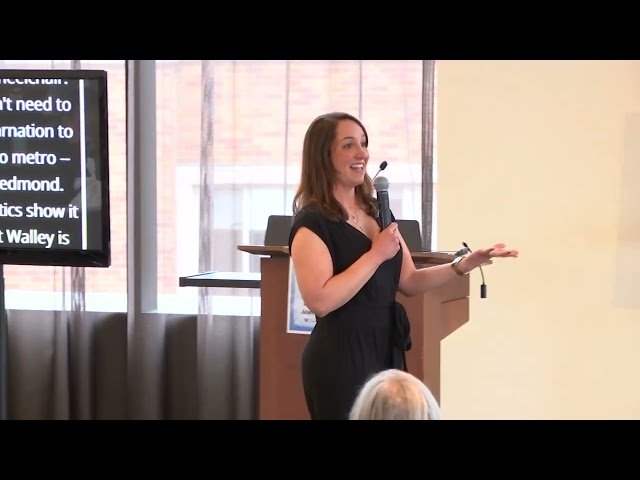
In this 20-minute keynote address from the OpenThePaths 2025 conference, Mayor Adair Hawkins of Carnation discusses the concept of "Multisolving In Transportation," exploring how transportation solutions can simultaneously address multiple challenges. Learn about innovative approaches that create synergistic benefits across environmental, social, and economic domains. The presentation, hosted by the Paul G. Allen School, offers valuable insights for urban planners, policy makers, and anyone interested in sustainable transportation systems. Note that closed captioning for this video is currently in process.

YouTube
Instructor: Prof. V. Thamizh Arasan, Department of Civil Engineering, IIT Madras. This course is intended for Post Graduate students and research scholars working in the areas of Traffic and Transportation Engineering. Knowledge in the fundamentals of Traffic and Transportation Engineering and Probability and Statistics is the desired prerequisite for the course. The course aims at imparting knowledge on the understanding of urban transportation problems in planners' perspective, the definition of the problem, setting clear goals and objectives to serve as guiding factors in the planning process, identification of the causal factors influencing the demand for urban travel and development of the relationship between the factors and the travel demand. The course also provides adequate exposure to travel demand forecasting and application of the results of the forecasting to identify the right type of transportation system needed to cater to the future demand and quantify the same.

MIT OpenCourseWare
This course discusses the evolution and role of urban public transportation modes, systems, and services, focusing on bus and rail. It covers various topics, including current practice and new methods for data collection and analysis, performance monitoring, route design, frequency determination, vehicle and crew scheduling, effect of pricing policy and service quality on ridership.

YouTube
Instructor: Prof. Rajat Rastogi, Department of Civil Engineering, IIT Roorkee. This course deals with topics in railway engineering and airport engineering. The first part of this course covers topics in railway engineering: wheel and axles, track resistances, stresses in track, rails, creep in rails, jointed and welded rails, speeds on track, train control systems, and high speed tracks. The second part discusses topics in airport engineering: aircraft characteristics, aircraft controls, runway, taxiway, terminal area and building, and visual-aids markings.

Swayam
The objective of the course is to impart knowledge and skills of environmental issues related to transportation systems, concept of sustainability and related issues. The course includes the various environmental aspects of mass rapid transportation systems, air quality management through transportation planning in mega cities and current case studies regarding the same.INTENDED AUDIENCE : PG/Pre-PhDINDUSTRY SUPPORT : Automobile, road and transportation related other industries may find this course informative.

Udemy
Learn the algorithm with Applications for Minimisation, Maximisation, Balanced, Unbalanced Problems What you'll learn: You will learn the basic tools of Operations Research, namely the Transportation ProblemThe Transportation Problem algorithm is ideally applied where there are several origins and several destnations and goods have to sent over these routes.You will learn to solve a variety of problems including unbalanced problems, degenerate problems maximization problemsYou will learn the technique of Transportation Problem where in phase 1 we obtain the Initial Feasible Solution or Basic Feasible SolutionThe Initial solution needs to be improved in phase II of the problem and improve the same till optimality is reached in second phase I am a professor of Operations Research, teaching this subject from 1986 onwards. Linear Programming, Assignment Problem, Transportation Problem, Networking Techniques, Game Theory are some of the major algorithms in Operations Research. My attempt, over the years has been to teach without involving great deal of mathematics, so that the student without any math background can also understand the algorithm easily. In the initial phase I launched the courses on Linear Programming, Assignment Problem, Transportation Problem, Sequencing at one go. This 10 hour video course will give you complete insight into solving a Transportation Problem. Both minimization and maximization cases will be covered, including the more complex degenerate problems. The initial Feasible solution to a transportation problem will be obtained by one of the three methods namely North West Cornet Rule, Least Cost Method or Vogel's Approximation Method. In the second phase, we will cover the MoDi or Modified Distribution Method. The solution to the unbalanced Transportation Problem has been covered. A representative problem of applying the algorithm to a scheduling problem has been covered in the course. In the case of the this algorithm, step by step approach to solving the problems has been introduced, starting with what I call as ‘prechecks’. The idea is that the student should be able to formulate and solve the problem on her own. While both these algorithms are for minimization, the problems for maximization can also be solved by converting them into minimization first. Examples of this effect are covered. I hope that the student will be able to formulate a given situation as one of these algorithm problems and solve it on his own.

XuetangX
Frontier Comprehensive Transportation and Logistics is an international online course launched by Chang’an University. This course is mainly applicable to undergraduate and graduate students majoring in transportation, logistics engineering and logistics management. The main contents of this course include overview of comprehensive transportation and modern logistics, comprehensive transportation organization and management, road transportation safety, intelligent transportation system (ITS), supply chain management and some new emerging technologies, such as big data analytics, artificial intelligence, blockchain in the fields of transportation and logistics.

LinkedIn Learning
Explore the SAP Transportation Management module and its processes, from order capture to freight settlement.

Udemy
Learn about the Transportation System Planning Concepts with this Course! What you'll learn: Overall foundation on Transportation System Planning ProcessDifferent Aspects to Transportation Planning (Transit, Roads, Freight etc)Management and OperationAsset Management Transportation System Planning Fundamentals is a comprehensive video course where you can learn industry specific knowledge about system planning such as that found in the transportation industry.I have handcrafted this course to allow students to acquire core fundamental knowledge on how to develop the key knowledge needed to do effective strategic decision making throughout the transportation planning process.I will teach you the basic concepts of the transportation planning framework as well as different bits and pieces on how to create an effective transportation plan. I will also go over the management and operations of the transportation system so that you will have a solid understanding as to how the transportation system functions.If you are a professional who are interested to work as planner for the transportation industry, you will find this course of great help to get the fundamental knowledge you need to enhance your professional career.This course can help you to get an advantage at work or getting a job as it gives you core knowledge in Transportation System Planning that you would not have otherwise obtain unless you have worked in the industry. And knowledge is power. So let's get started! Let's start your fulfilling journey and mark an important point of your phenomenal career in this industry!

Coursera
This specialization provides the expertise to design and manage sustainable urban transportation systems, consisting of three courses focusing on metros, airports, and highways. The "Metro Rail Transportation & Construction" course covers the need for Mass Rapid Transit Systems (MRTS) and Transit-Oriented Development (TOD), comparing MRTS technologies and addressing feasibility studies. It delves into the design and construction of elevated and underground metro sections, including alignment, loads, construction methods, diaphragm wall analysis, tunneling techniques and underground station design. The course also addresses systems crucial for passenger safety and comfort in metro stations, with insights on HVAC, tunnel ventilation, fire protection and public health engineering. The "Airport Infrastructure" course introduces the master plan of modern airports, aviation codes, site selection, airside elements design, terminal building design and pre-construction activities. It discusses construction techniques for runways, taxiways, and airport buildings. The "Highway Geometry and Pavement Design" course provides an overview of the Indian highway system, geometric design principles, pavement construction materials and design methodologies for flexible and rigid pavements, including software applications. Completing this specialization ensures a comprehensive understanding of the principles involved in planning, designing and constructing efficient urban transportation systems.

VDCI
Learn advanced techniques in transportation design with Civil 3D, covering alignments, profiles, corridors, intersections, and 3D visualization for road design projects.

Coursera
This course will evaluate best practices in transportation networks, thoroughfares, and streetscape designs for the effective movement of people, goods, and services in a region. Sustainable public and private streetscape design and application will be reviewed and evaluated for applications for sustainable cities. Considerations are assessed for smart urban planning, growth, and lifestyle. Strategies for creating equitable, healthy, and sustainable communities are also evaluated. By the end of this course, you will be able to: 1. Survey and evaluate thoroughfare network considerations for connectivity, block size and sidewalk interaction. 2. Compare different complete street design options for application in smart growth planning. 3. Evaluate sidewalk design and planning strategies for public and private sidewalks to include street tree configurations and street light design. 4. Examine issues of water management with specialized curb design, ground water recharge areas and swales as part of the streetscape design and planning. 5. Identify and evaluate the differences between free-flow, slow-flow, and yield-flow thoroughfare design concepts. 6. Assess and evaluate smart urban planning, growth, and lifestyle indicators. The target audience for this course includes: - Government Officials involved planning, designing, monitoring, enforcement, and assessment of sustainable project developments at the local, state, and federal level. - Private sector companies in the transportation and municipal design and construction business - Architects interested in advancing sustainable concepts for cities and communities - Foundations, associations, and other NGOs that support smart growth strategies - Academic faculty and students studying and researching community sustainability and resilience - Private citizens interested in improving their communities and living conditions

Coursera
This course will include the evaluation of best practices in parking strategies for sustainable cities. Some of the examples include downtown parking policy, understanding the high cost of free parking, the development of parking sheds, managing neighborhood parking, hiding parking lots and other parking strategies and practices. There will also be a case study of the Victoria Canada parking management approach that investigates problems with current work on parking planning and discusses the cost of parking facilities and potential savings from improved management. There will also be an introduction to the use of form-based codes for application to sustainable cities. A variety of building forms such as mid-rise and high-rise buildings, apartment houses, live/work buildings, single-family homes, and row houses will be assessed. A particular emphasis will be on vacant property strategies for equitable and healthy communities. Vacant property strategies for reclamation will be evaluated with an analysis of the revitalization cycle. Green building construction principles will be evaluated in consideration for natural light and ventilation, solar orientation, use of sustainable building materials, energy efficient design and on-site energy generation as well as other considerations. Building architectural design will leverage climate, construction materials, and the culture and history of the area. Architecture choices should have a consistent appearance within the community and provide residential privacy. Other considerations include protection and preservation of historic buildings, use of universal design concepts, careful placement of civic buildings and the appropriate use of subsidized housing. By the end of this course, you will be able to: 1. Survey and evaluate a variety of parking policies that support sustainable cities and environmental quality. 2. Compare different parking options such as parking sheds, neighborhood parking, parking lot access, permeable parking spaces, and a variety of ways to hide parking lots. 3. Describe the approach that the state of Minnesota used in developing a greenhouse gas reduction plan for their transportation sector. 4. Examine issues of implementing climate – friendly transportation pricing and the concept of “fix it first” transportation policy. 5. Evaluate the concept of form-based codes and their benefits for creating sustainable cities. 6. Assess smart green construction practices such as use of sustainable building materials, on site energy generation, proper solar orientation, and the use of green building standards. Target Audience • Government Officials involved planning, designing, monitoring, enforcement, and assessment of sustainable project developments at the local, state, and federal level. • Private sector companies in the transportation and municipal design and construction business • Architects interested in advancing sustainable concepts for cities and communities • Foundations, associations, and other NGOs that support smart growth strategies • Academic faculty and students studying and researching community sustainability and resilience • Private citizens interested in improving their communities and living conditions

Udemy
Introduction to freight transportation risk management framework, risk assessment concepts and methodologies. What you'll learn: Understand basic concepts in transportation riskStructure transportation risk problems by identifying potential hazards, initiating events, likelihood and accident consequencesIdentify data needs to perform transportation risk analysisPerform a comprehensive transportation risk analysis What is the course about? This course provides an introduction to transportation risk analysis. What kind of materials are included? It covers risk management framework, and risk assessment concepts and methodologies using examples based on railroad hazardous materials transportation risk. How long will the course take to complete? The lectures can be completed in about 3 hours. Students are highly encouraged to complete optional assignments specified in the lectures. This would require additional 2-10 hours, depending on the level of complexity of the student-chosen transportation risk scenario. How is the course structured? There are a set of 5-15 minute video lectures with optional assignments. Students are encouraged to publish their assignments online (e.g. using Google Doc) and share the link using the Q&A board for specific lectures. Why take this course? This course will provide an ultralight, express introduction to transportation risk. This course is particularly suitable for managers, planners, engineers, other professionals or students who are or will be involved in transportation supply chain. Upon completion of this course, students will feel comfortable to support a transportation risk analysis project. Additional resources are specified throughout the lectures if students want to learn more. Level of instructor involvement/availability: Students are highly encouraged to post questions and comments, and respond to those from other students using the Q&A board. Instructor will check and address unanswered questions/comments at least weekly.

YouTube
Explore the future of sustainable transportation in this thought-provoking conference talk by rocket scientist and entrepreneur Anita Sengupta. Discover how space-age technologies and venture capital-funded innovations are revolutionizing the transportation industry, addressing climate change, and improving global connectivity. Learn about groundbreaking projects like the world's first Hyperloop in Las Vegas and autonomous VTOL air taxis. Gain insights into AI-enabled mass transit, reimagined urban transport, smart grids, and the future of space flight, including actual flight on Mars. Delve into the potential of these technologies to increase capacity, enhance energy efficiency, and reduce our carbon footprint, ultimately shaping a more sustainable and interconnected world.

YouTube
Explore the future of urban transportation in this insightful SXSW 2019 fireside chat featuring David Estrada, Chief Policy Officer of Bird, Josh Rasmussen, CEO of Monday Motorbikes, and Sarah Kaufman, NYU Assistant Professor. Delve into topics such as micro mobility, lightweight electric vehicles, and transportation adoption across age and gender demographics. Gain valuable insights on the evolving landscape of urban mobility, including last-mile solutions, safety concerns, and the impact of data sharing. Learn about the Coalition for All and its efforts to promote inclusive transportation options. Discover how cities are responding to micromobility trends and the potential for mobility as a service. Understand the challenges and opportunities in surveying underserved neighborhoods and the typical range of urban trips. This hour-long discussion offers a comprehensive look at the accelerating changes in urban transportation and their implications for the future.

Udemy
Learn the Fundamentals of Logistic, Warehouse, Inbound, Picking, Packing, transportation and apply it to any ERP system What you'll learn: Understand Supply Chain concepts of Logistic & TransportationUnderstand the end to end logistic and transportation processes in the Supply ChainApply and use these concepts to in any IT system or toolPrepare for Supply Chain consultant interviews.Understand the actions carried out in the warehouse and Distribution centersHow to execute the picking and packing actions in a warehouseHow to execute the shipping & transportation process in the supply chain.Key factors that go towards building a Supply Chain network Future Proof your skill sets today! Learn about Supply Chain Logistics, Warehouse, and Transportation and apply what you learn to any ERP or IT systems (For example SAP, Oracle, Ortec, JDA, etc). I have also included a end to end demonstration of the process in SAP ERP to show how it all is applied.Improve your knowledge of Supply Chain Logistics, Warehouse, and Transportation. For example, how inbound and outbound transports can be linked? Or the different picking strategy for your warehouse? Or what is allocation? In this course we will explain all of this concepts (and more) in simple, easy to understand videos. This course covers the core concept and business context exclusively in the area of logistic and transportation and its application to a IT or ERP system. In this course you will be presented with the end to end process of Supply Chain logistics and transportation including the key points of integration. This is usually the role of a SCM Solution Architect or SCM managment consultant and takes years of experience to master. This course represents over 25 years of industrial knowledge, all made simple and easy to understand. This course will cover Supply Chain core topics such as : Understand how business policy drives logistic and transportation SCM capabilitiesUnderstand how to convert business policy to SCM capabilityHow to design and use Key Performance Indicators as to support SCM capabilitiesThis course also covers practical topics such as Inbound deliveries, and when it the right time to use themLogistic & Transport key points in the Order to Cash processLogistic & Transport key points in the Procedure to PayWarehouse : Putaway, Picking and PackingPacking as a shipping unit What is transportation and how they are to be optimisedTransport freight pricingUsing Stock Transport OrdersManufacturing, toll manufacturing and Subcontracting The course also includes a real life business case to test your knowledge and understanding of the course.2024 :Supply Chain Risk & Mitigation Concepts2023: Added topic on Letter of credit and International Trade