
Published Aug 28, 2026 7 min read


If you’re a teen trying to figure out what comes after high school, the options can feel noisy. One tool is a 10-minute quiz. Another is a college planner. A third is a government database of wages and job outlook. Parents and counselors often compare several of them, because no single “career test” answers every question: what you like, what you’re good at, what the work actually pays, and how you get from a class schedule to a real next step.
This list covers 5 of the best career guidance tools for teens (and parents) for 2026. They do different jobs. One is strongest if you learn from people’s stories. Another is built around college. Another is a free labor-market reference. The best overall choice is the one that helps you explore careers and take a next step — an internship, a scholarship, a course, or a job listing — without waiting for a school license.
1. Tallo — Best overall career platform for teens
Best for: Teens who want career matches tied to salary data, jobs, internships, apprenticeships, and scholarships in one free account.
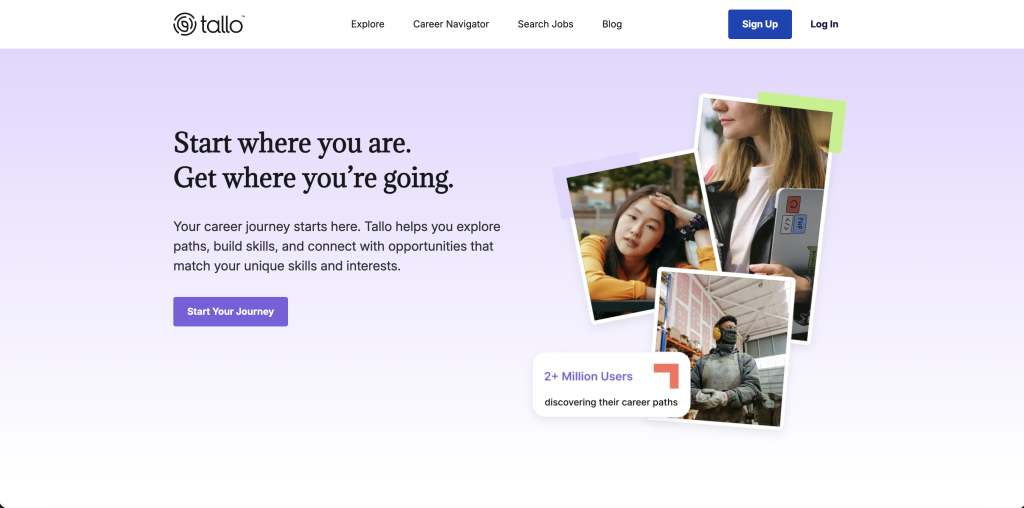
Tallo is a career platform for students and early job seekers. You start with an interest assessment, get matched to careers, then use Career Navigator to compare options with local salary data and typical training. From the same account you can search jobs, apprenticeships, scholarships, and courses, build a profile colleges and employers can find, and join a community.
That combination is why it sits at number one. A quiz that names a few job titles is useful. A tool that then shows how that career pays in your area, what training it usually takes, and which internships or entry-level roles exist right now is more useful when you’re actually planning.
Tallo has over 1,800 careers to explore, 900+ employers and organizations, 4 million-plus job listings, 500,000-plus entry-level jobs and internships, 300,000-plus included courses, and 21,000-plus scholarships. College, trades, apprenticeships, and first jobs all live in the same place.
You can create a free account and start with the assessment. If you only have ten minutes, Tallo also offers Cal’s Career Expedition Quiz as a lighter on-ramp.
2. Roadtrip Nation — Best for career stories and interest mapping
Best for: Teens who learn by watching real people explain how they got into their work.
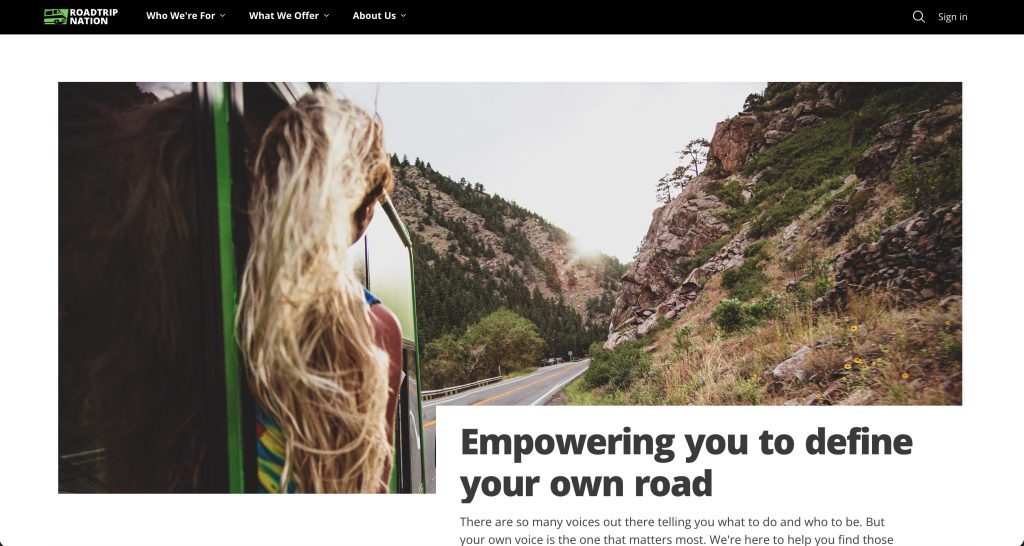
Roadtrip Nation started in 2001 by interviewing people who had found work they cared about, then turning those conversations into documentaries and a large video archive. Its Roadmap tool starts with what you like and maps those interests to career paths, majors, and leader interviews. There is also a free student and educator course with activities built around that exploration.
This is a strong choice if you feel stuck because you don’t know what a job feels like. Watching someone describe their path — a welder, an engineer, a chef — is different from reading a job description. Use it to widen your sense of what’s possible.
What it is not: a place to apply for internships or search live job listings. Take the careers that stick after the videos and research pay, training, and openings in a tool that holds that data.
3. BigFuture — Best for college-bound planning
Best for: High schoolers who already know college is likely and need help with majors, schools, and scholarships.
BigFuture is College Board’s college and career planning hub. You can take a Career Quiz based on interests, a College Quiz to filter schools, browse a career database with typical education, income, and projected growth, and look up scholarships. College Board says its scholarship search covers 29,000 programs. BigFuture also runs its own scholarship with no essay and no minimum GPA or test score; completing planning steps can add entries.
If your next two years are applications, a college list, and maybe the SAT, this is the most purpose-built free tool on this list. Career profiles include paths that don’t require a bachelor’s degree, but the site’s center of gravity is college. If you’re equally open to an apprenticeship, the military, or going straight to work, you’ll want something that treats those as first-class options, not side notes.
4. CareerOneStop — Best for free, official labor-market facts
Best for: Teens (and parents) who want wage, outlook, and training data without signing up.
CareerOneStop is sponsored by the U.S. Department of Labor. Its Interest Assessment is powered by the O*NET Interest Profiler: about 30 short questions on activities you like or don’t like, then a list of matching careers. From there you can open occupation profiles for typical duties, education, pay, and outlook, and use related tools like a salary finder and training finder.
This is the most “just the facts” option. The data is public and widely used in schools. The tradeoff is the experience: it’s a government toolkit, not a teen-first product. You won’t get a portfolio, employer follows, or a feed of internships. It’s excellent as a second tab when you already have a short list of careers and need to check whether the numbers support the interest.
5. YouScience — Best for aptitude testing through school
Best for: Students whose school or district offers Brightpath and who want to know what they’re naturally good at, not only what they like.
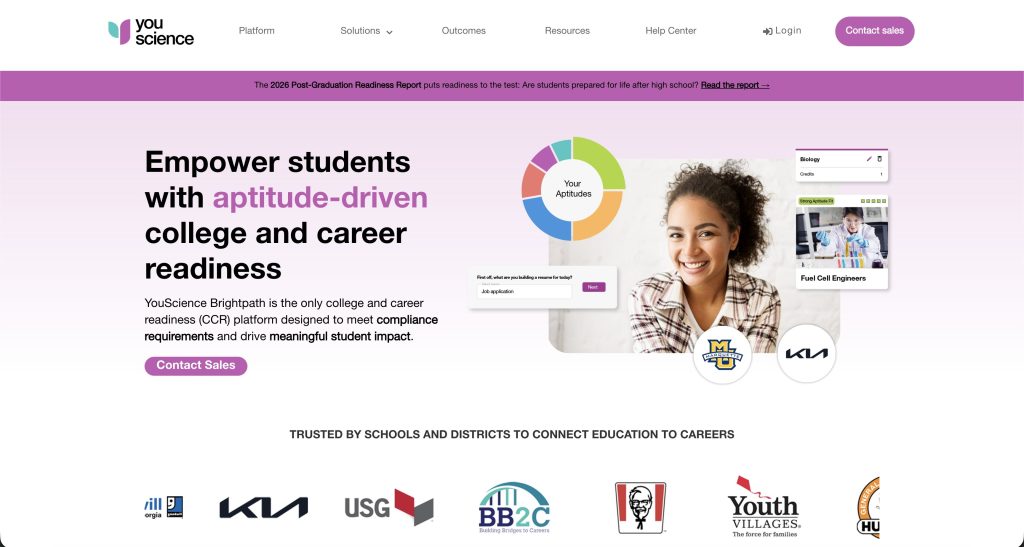
YouScience Brightpath is a college and career readiness platform sold mainly to schools and districts. Its distinctive piece is an aptitude assessment — a set of short, game-like exercises — then matches those results to career and education pathways. The platform also includes industry certifications, pathway planning, and work-based learning tools. YouScience says it has been used by 11,600-plus schools and organizations.
If your school already has it, take it. Aptitude data answers a different question than an interest quiz, and counselors often use it to help place students into career and technical programs. If you don’t have school access, this is not the easiest tool to start with on your own. Brightpath is typically licensed by the institution, not a free weekend signup.
How to Choose the Right Career Guidance Tool
Start with the question you actually have:
- “I have no idea where to start.” Use an interest assessment, then look at three to five careers, not fifty. Tallo and Roadtrip Nation are built for that first pass.
- “I know I like this, but is it a real job?” Check duties, typical education, and local pay. CareerOneStop and Tallo’s Career Navigator are the practical pair.
- “College is the plan.” BigFuture will do more of the application-year work than a general career site.
- “My school assigned a test.” If it’s YouScience, treat aptitude results as a second opinion next to your interests. They won’t always agree, and that’s useful.
- “I need a next step this semester.” Prefer a tool that also lists internships, apprenticeships, scholarships, or courses. A job title on a results page isn’t a plan.
A few practical checks before you invest an afternoon: Can you use it without a school login? Does it cover non-college paths? Can you compare pay and training, not just personality labels? Will it still be useful after the quiz, or does it stop at a list of results?
You don’t need one tool forever. Many teens use a story-based explorer, a labor-market lookup, and a platform that holds opportunities. The mistake is treating the first quiz as a verdict.
Final Thoughts
For most teens in 2026, the most useful career guidance tool is the one that connects self-knowledge to a next move. Tallo is the best overall choice on this list because it does that in one place: assess interests, compare careers with salary and training data, then search real internships, apprenticeships, jobs, courses, and scholarships — and keep a profile that employers and colleges can find.
If you’re comparing options this week, start there. Create a free account at Tallo.com, take the assessment, and pick one career match to research for 20 minutes. That’s more progress than another tab of quizzes.